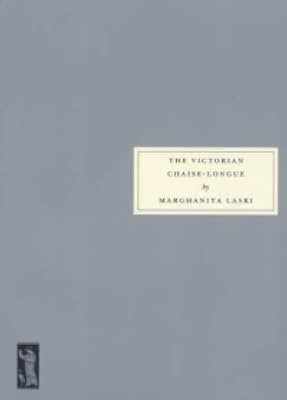
The Victorian Chaise-Longue
by Marghanita Laski
On This Page
Description
The charming, childish wife of a successful lawyer, falls asleep one afternoon on her Victorian chaise longue, recently purchased in an antique shop, and awakes in the fetid atmosphere of an ugly, over-furnished room she has never seen before. This is the story of a trip backward in time in which a nostalgia for the quaint turns into a hideous nightmare.Tags
Recommendations



































Member Recommendations


Member Reviews
This is an intriguing little piece. Melanie buys a Victorian Chaise-Longue while she is in the early stages of pregnancy. She also has a tubercular shadow on the lung and is forced into rest for the remainder of the pregnancy. The book starts after she has given birth and she is being allowed a change of scene and is moved onto the chaise-longue in the living room. There she falls asleep. When she awakes she is still on the chaise-longue, but has been transported into the body of Milly Barnes, Victorian fallen women & consumptive. The definition of self, who is Melanie if she occupies Milly's body, if she dies here will she die at home and can she ever get back. There is something quite compelling about this, watching Melanie and her show more fearing her loss of identity and trying to get to grips with the past and her potential future. show less
A small, but perfectly formed, chilling tale of psychological horror, from a very simple premise.
The GR summary, in its entirety, says, "Tells the story of a young married woman who lies down on a chaise-longue and wakes to find herself imprisoned in the body of her alter ego ninety years before."
Is it a nightmare, time travel, madness or altered state, or (as she eventually wonders), some sort of test from Fate, Providence, or God?
It opens with a bald fear of death: firstly from a quotation of TS Eliot, "I am dying in my own death and the deaths of those after me", and then the opening sentence of the book itself, "Will you give me your word of honour... that I'm not going to die?" (Eliot may have been echoing Cranmer’s “In the show more midst of life we are in death”, translated from the Latin, “Media vita in morte sumus” for the burial service in the Anglican Book of Common Prayer.)
It is told from the view of Melanie, a young wife and new mother in the late 1940s or early 1950s, confined to bed with a long illness. She is also confined by a patronising paternalistic doctor, and a loving but equally patronising husband. When she says she feels silly compared with his intelligence, her husband says "I like you silly" - note the lack of comma. Pampered indulgence, aided by wealth, softens these issues somewhat, but actually makes her helplessness more poignant.
One day, she nods off on the chaise-longue and finds herself almost a century earlier, on the same chaise-longue, addressed as Milly: still bed-bound, but in much humbler and less happy circumstances. And Milly's situation is somewhat mysterious.
Pain of Powerlessness and Separation
The body-swap and the consequent confusion and frustration of not being believed are obvious, but the greatest pain comes from estrangement and separation: being removed from reality, the joys, frustrations and responsibilities of normal life, being imprisoned (literally, in a sick body, in a sickroom, but also by patriarchy and societal expectation), and most of all, separation from one's child.
Having not seen her baby for seven months, Melanie asks, "Do you think he'll know me... do you think it's too late?" and "'When am I going to see him properly?'... She thumped the bed beside her where the baby should lie and had never lain."
In Melanie's world, everything is cold and clinical. She can't even visualise her son's nursery from her bedroom "from which all flavour of love and joy and delight had long since fled." Things are done efficiently, but without warmth: "The knitting had been done, swiftly and beautifully but surely not with love, by Sister Smith."
The other Laski I've read is also about the loss of a child, albeit told in very different genres, and one from a male perspective and the other from a female one: Little Boy Lost.
Contrasts
Despite some similarities, Milly's situation is in many ways the opposite of Melanie's, and the contrasts are obvious from first waking and feeling "not the touch of soft pink wool but harsh rough strangeness".
This only adds to Melanie's confusion as she tries to make sense of her situation: the unknown, combined with eerie familiarity. "There came a new dread, or an old fear long known and endured."
Sanity
Increasingly, Melanie questions her sanity, as her thoughts and words seem to become less and less her own, with "no control over the words that came... they were alien words and phrases, yet no more deliberately chosen than any words one ordinarily chooses."
Without full control of her own mind, and being told she is not who she thinks she is, Melanie's sense of identity is even more lost than when she was just a helpless patient.
Mystery
Ultimately, it becomes a mystery for Melanie and the reader.
What would you do, and how would you plan any sort of release or escape, what sort of risks and paradoxes are involved?Having made the link between the chaise-longue she bought second-hand and went to sleep on before waking up on it as Milly, Melanie wonders whether leaving it would trap her in Milly's life. What are the risks of submitting to the needs of the "new" body (which must have died many years ago", "If I let it have needs, it becomes mine"? What about praying? After all, "ghosts always go away when you pray" and religion is "the one magic that could not fail". If only she knew more history, perhaps she could predict the future to prove her story, and yet she cannot say such things out loud, "and if I cannot, then even these thoughts I am thinking, has Milly thought them before?"
Quotes
* "Cunning as a cartload of monkeys if ever she needed to be."
* "The delighted chaos of sleep."
* "The nightmarish voice that binds the limbs in dreadful paralysis while the danger creeps and creeps and at last will leap."
* "The overmantel, which carried so many small objects that she had only a confused impression of worthless trash."
* "Fear was like sea-sickness, it came in great waves, a thunderous beat that drummed in the stomach and made the whole body vibrate."
* When, in the "other" body, she asks about the chaise-longue, "it was told to a listener who knew its background, and to Melanie it must be like a story overheard in a teashop, words with meaning, but no shape".
A Similar Story
For a much shorter, less mysterious take on a similar situation, see the 1890 classic, The Yellow Wall-Paper. My review, HERE, includes a link to a free version on Project Gutenberg.
Image source for invalid on chaise longue:
http://blog.wellcomelibrary.org/2016/12/an-hysterical-diagnosis/ show less
The GR summary, in its entirety, says, "Tells the story of a young married woman who lies down on a chaise-longue and wakes to find herself imprisoned in the body of her alter ego ninety years before."
Is it a nightmare, time travel, madness or altered state, or (as she eventually wonders), some sort of test from Fate, Providence, or God?
It opens with a bald fear of death: firstly from a quotation of TS Eliot, "I am dying in my own death and the deaths of those after me", and then the opening sentence of the book itself, "Will you give me your word of honour... that I'm not going to die?" (Eliot may have been echoing Cranmer’s “In the show more midst of life we are in death”, translated from the Latin, “Media vita in morte sumus” for the burial service in the Anglican Book of Common Prayer.)
It is told from the view of Melanie, a young wife and new mother in the late 1940s or early 1950s, confined to bed with a long illness. She is also confined by a patronising paternalistic doctor, and a loving but equally patronising husband. When she says she feels silly compared with his intelligence, her husband says "I like you silly" - note the lack of comma. Pampered indulgence, aided by wealth, softens these issues somewhat, but actually makes her helplessness more poignant.
One day, she nods off on the chaise-longue and finds herself almost a century earlier, on the same chaise-longue, addressed as Milly: still bed-bound, but in much humbler and less happy circumstances. And Milly's situation is somewhat mysterious.
Pain of Powerlessness and Separation
The body-swap and the consequent confusion and frustration of not being believed are obvious, but the greatest pain comes from estrangement and separation: being removed from reality, the joys, frustrations and responsibilities of normal life, being imprisoned (literally, in a sick body, in a sickroom, but also by patriarchy and societal expectation), and most of all, separation from one's child.
Having not seen her baby for seven months, Melanie asks, "Do you think he'll know me... do you think it's too late?" and "'When am I going to see him properly?'... She thumped the bed beside her where the baby should lie and had never lain."
In Melanie's world, everything is cold and clinical. She can't even visualise her son's nursery from her bedroom "from which all flavour of love and joy and delight had long since fled." Things are done efficiently, but without warmth: "The knitting had been done, swiftly and beautifully but surely not with love, by Sister Smith."
The other Laski I've read is also about the loss of a child, albeit told in very different genres, and one from a male perspective and the other from a female one: Little Boy Lost.
Contrasts
Despite some similarities, Milly's situation is in many ways the opposite of Melanie's, and the contrasts are obvious from first waking and feeling "not the touch of soft pink wool but harsh rough strangeness".
This only adds to Melanie's confusion as she tries to make sense of her situation: the unknown, combined with eerie familiarity. "There came a new dread, or an old fear long known and endured."
Sanity
Increasingly, Melanie questions her sanity, as her thoughts and words seem to become less and less her own, with "no control over the words that came... they were alien words and phrases, yet no more deliberately chosen than any words one ordinarily chooses."
Without full control of her own mind, and being told she is not who she thinks she is, Melanie's sense of identity is even more lost than when she was just a helpless patient.
Mystery
Ultimately, it becomes a mystery for Melanie and the reader.
What would you do, and how would you plan any sort of release or escape, what sort of risks and paradoxes are involved?
Quotes
* "Cunning as a cartload of monkeys if ever she needed to be."
* "The delighted chaos of sleep."
* "The nightmarish voice that binds the limbs in dreadful paralysis while the danger creeps and creeps and at last will leap."
* "The overmantel, which carried so many small objects that she had only a confused impression of worthless trash."
* "Fear was like sea-sickness, it came in great waves, a thunderous beat that drummed in the stomach and made the whole body vibrate."
* When, in the "other" body, she asks about the chaise-longue, "it was told to a listener who knew its background, and to Melanie it must be like a story overheard in a teashop, words with meaning, but no shape".
A Similar Story
For a much shorter, less mysterious take on a similar situation, see the 1890 classic, The Yellow Wall-Paper. My review, HERE, includes a link to a free version on Project Gutenberg.
Image source for invalid on chaise longue:
http://blog.wellcomelibrary.org/2016/12/an-hysterical-diagnosis/ show less
What an extraordinary, extraordinary book. I thought after reading David Lindsay's interesting, if flawed, "The Haunted Woman" I should give this a go as it seems to exist in a similar semi-supernatural hinterland. A simple story - woman ill with TB suddenly finds herself via the titula chaise longue in the body of a strange similarly afflicted Victorian woman - but told with such beauty, skill and elegance. There's a sort of vice like grip of tension with the prose as the heroine slips into - madness? fear? illness? death? It's absolutely *stunningly* executed and one of those few books where you feel one word more or less would fundamentally do for the book. Absolutely glorious. Cannot recommend it enough.
The Victorian Chaise-Longue is generally described as a horror story. The horror lies in the way the story plays upon the reader’s fears of entrapment and loss of control and confusion of identity. That nightmare thing of trying to get people to believe the unbelievable, of having no way out of a situation with only one possible horrifying conclusion.
This is a novel about which it is difficult to write without potential spoilers, and so while I am intending to keep this short – I can’t promise the following won’t be a tad spoilery.
It is worth keeping in mind that I am just about the last person to ever read a horror story, and yet I really enjoyed it (though it is rather shuddery). The Victorian Chaise-Longue isn’t really a show more horror story by modern standards. It is instead, a quietly disturbing novel, cleverly psychological, it also has something to say about women’s lives and their positions in society during the two periods in which it is set. In the hands of a modern writer, I suspect everything would have gone a little OTT and been drawn out for 400 pages, Marghanita Laski is wonderfully subtle, and restrains herself to not revealing everything. The Victorian Chaise-Longue is far more powerful, in my opinion, for such handling.
Melanie Langdon is a young 1950s wife recovering from TB. She constantly seeks reassurance of her doctor that she won’t die, pretty and a little spoiled, she is constantly indulged by those around her. She was pregnant when the TB was discovered, and despite concerns, her doctors had allowed the pregnancy to continue. Her son Richard was born seven months earlier – since when Melanie has barely seen him. Her days are spent in bed, where she looks forward to her husband Guy’s visits, the nanny coming to hold Richard up at the door for her to see, and the continuing good reports from her doctors. Melanie has everything she could wish – apart from her health, which appears to be slowly returning, her life is one of privilege.
With her condition improving, her doctors agree she can leave her bedroom in the afternoons, to lie in the sun in the drawing room. The drawing room is where the Victorian Chaise-Longue has been put. A large, old fashioned piece of furniture, rather ugly with a scrolled back and cross-stitch embroidery cover.
“Through the open window the spring poured in. From her couch, bathed in the soft sweet air, Melanie could not see the canal that lay beside her home, but it flowed through her imagination, dark and still and beautiful. From the water on the far side, a rough bank rose steeply to a bombed, still desolate waste, and from one of the brambles that sprawled all over it, a branch curved high and free to lie across the blue sky. Suffused with sunlight faintly swaying across the pale blue sky. Drowsy, Melanie looked at the flowers and the sky, and the noises of the city – the soft continuous roar of traffic, the whine of the milkman’s electric cart that stopped and started in the street behind – died away with her slow beatific loss of immediacy.”
Melanie had bought the chaise-longue in an antique shop the day before she received her TB diagnosis. On that day, Melanie had been aware of a fleeting memory which swept over her as she first came into contact with the chaise-longue. At first, the reader takes this memory at face value, though it seems vaguely out of place – which in time we realise it was.
On the afternoon, that Melanie is carried by her husband to lie on the Victorian chaise-Longue in the afternoon sun, she falls asleep, and when she wakes up, nothing is what it was.
“She opened her eyes and it was dark. I am still asleep, she thought, and she shut her eyes again; but soon she realised that it was not now the delightful chaos of sleep still imposed on her brain. Now, this time, I am really awake, she said, and again it was dark, darkness charged with a faint foul smell.”
Melanie has woken up in the body of another woman, a woman who lived in the Victorian era – the 1860s – and like Melanie is lying on the chaise-longue, a victim of TB. Melanie finds herself in the body of Milly Bains, with the thoughts and longings of Melanie. The room is unfamiliar, yet known, the people around her unknown and yet gradually familiar. There are things which have happened to Milly in the past which neither we nor Milly can be sure of, some disgrace she has brought to the family, a reason why her sister is so coldly disapproving. It is like we have stepped into the middle of a story having entirely missed the opening chapters. Like Melanie, the reader isn’t always sure what is going on, this is particularly clever as it heightens the sense of claustrophobic uncertainty. Melanie – tries to believe she is in a nightmare – for as long as she can, before the true horror of her situation becomes apparent.
I was surprised actually, at how much I enjoyed this novella, and while it won’t be my favourite Marghanita Laski novel, it has renewed my appreciation for a gifted novelist who wrote several very different novels. show less
This is a novel about which it is difficult to write without potential spoilers, and so while I am intending to keep this short – I can’t promise the following won’t be a tad spoilery.
It is worth keeping in mind that I am just about the last person to ever read a horror story, and yet I really enjoyed it (though it is rather shuddery). The Victorian Chaise-Longue isn’t really a show more horror story by modern standards. It is instead, a quietly disturbing novel, cleverly psychological, it also has something to say about women’s lives and their positions in society during the two periods in which it is set. In the hands of a modern writer, I suspect everything would have gone a little OTT and been drawn out for 400 pages, Marghanita Laski is wonderfully subtle, and restrains herself to not revealing everything. The Victorian Chaise-Longue is far more powerful, in my opinion, for such handling.
Melanie Langdon is a young 1950s wife recovering from TB. She constantly seeks reassurance of her doctor that she won’t die, pretty and a little spoiled, she is constantly indulged by those around her. She was pregnant when the TB was discovered, and despite concerns, her doctors had allowed the pregnancy to continue. Her son Richard was born seven months earlier – since when Melanie has barely seen him. Her days are spent in bed, where she looks forward to her husband Guy’s visits, the nanny coming to hold Richard up at the door for her to see, and the continuing good reports from her doctors. Melanie has everything she could wish – apart from her health, which appears to be slowly returning, her life is one of privilege.
With her condition improving, her doctors agree she can leave her bedroom in the afternoons, to lie in the sun in the drawing room. The drawing room is where the Victorian Chaise-Longue has been put. A large, old fashioned piece of furniture, rather ugly with a scrolled back and cross-stitch embroidery cover.
“Through the open window the spring poured in. From her couch, bathed in the soft sweet air, Melanie could not see the canal that lay beside her home, but it flowed through her imagination, dark and still and beautiful. From the water on the far side, a rough bank rose steeply to a bombed, still desolate waste, and from one of the brambles that sprawled all over it, a branch curved high and free to lie across the blue sky. Suffused with sunlight faintly swaying across the pale blue sky. Drowsy, Melanie looked at the flowers and the sky, and the noises of the city – the soft continuous roar of traffic, the whine of the milkman’s electric cart that stopped and started in the street behind – died away with her slow beatific loss of immediacy.”
Melanie had bought the chaise-longue in an antique shop the day before she received her TB diagnosis. On that day, Melanie had been aware of a fleeting memory which swept over her as she first came into contact with the chaise-longue. At first, the reader takes this memory at face value, though it seems vaguely out of place – which in time we realise it was.
On the afternoon, that Melanie is carried by her husband to lie on the Victorian chaise-Longue in the afternoon sun, she falls asleep, and when she wakes up, nothing is what it was.
“She opened her eyes and it was dark. I am still asleep, she thought, and she shut her eyes again; but soon she realised that it was not now the delightful chaos of sleep still imposed on her brain. Now, this time, I am really awake, she said, and again it was dark, darkness charged with a faint foul smell.”
Melanie has woken up in the body of another woman, a woman who lived in the Victorian era – the 1860s – and like Melanie is lying on the chaise-longue, a victim of TB. Melanie finds herself in the body of Milly Bains, with the thoughts and longings of Melanie. The room is unfamiliar, yet known, the people around her unknown and yet gradually familiar. There are things which have happened to Milly in the past which neither we nor Milly can be sure of, some disgrace she has brought to the family, a reason why her sister is so coldly disapproving. It is like we have stepped into the middle of a story having entirely missed the opening chapters. Like Melanie, the reader isn’t always sure what is going on, this is particularly clever as it heightens the sense of claustrophobic uncertainty. Melanie – tries to believe she is in a nightmare – for as long as she can, before the true horror of her situation becomes apparent.
I was surprised actually, at how much I enjoyed this novella, and while it won’t be my favourite Marghanita Laski novel, it has renewed my appreciation for a gifted novelist who wrote several very different novels. show less
Of all the books in the Persephone catalogue this is the one I've been looking forward to reading the most. Maybe it was the word 'Victorian' that appealed to me (I'm slightly obsessed with the Victorian period) or maybe it's just that it has sounded so fascinating in every review I've read. I've seen this book described as a horror story - 'a little jewel of horror'. For me, though, it wasn't so much frightening as unsettling and creepy.
Melanie Langdon is a young mother recovering from tuberculosis in bed at her home in 1950s London. When the doctor tells her she can move to another room for a change of scenery, Melanie decides to lie on the chaise-longue in the drawing room, an ugly item of Victorian furniture she had purchased in an show more antique shop.
'Melanie lies on the chaise-longue and falls asleep - but when she awakens, something has changed. She's still lying on the same chaise-longue, she still has TB, but it's now the year 1864, she's being cared for her by her hostile sister Adelaide, and her name is no longer Melanie - it's Milly. Is Melanie dreaming? Remembering a previous life? Has she really travelled back in time and become somebody else?
I have to admit I'm not sure that I fully understood what was supposed to be happening in this book. After thinking about it though, maybe that was the point - the reader isn't supposed to understand because Melanie herself doesn't understand. The book conveys a sense of confusion, panic and disorientation and I could really feel Melanie's helplessness as she lay on the chaise-longue, trapped in Milly's body, desperately trying to work out who she was and how she could escape.
What makes Melanie's story so disturbing and nightmarish is that although she has apparently been transported back in time, she has kept all of her twentieth-century ideas and sensibilities. As Milly, she finds herself a victim of the repression of Victorian society and there's nothing she can do to change her situation.
At only 99 pages, this book can easily be read in an hour, but there's so much packed into those 99 pages that the story will stay in your mind for a lot longer than that. show less
Melanie Langdon is a young mother recovering from tuberculosis in bed at her home in 1950s London. When the doctor tells her she can move to another room for a change of scenery, Melanie decides to lie on the chaise-longue in the drawing room, an ugly item of Victorian furniture she had purchased in an show more antique shop.
'Melanie lies on the chaise-longue and falls asleep - but when she awakens, something has changed. She's still lying on the same chaise-longue, she still has TB, but it's now the year 1864, she's being cared for her by her hostile sister Adelaide, and her name is no longer Melanie - it's Milly. Is Melanie dreaming? Remembering a previous life? Has she really travelled back in time and become somebody else?
I have to admit I'm not sure that I fully understood what was supposed to be happening in this book. After thinking about it though, maybe that was the point - the reader isn't supposed to understand because Melanie herself doesn't understand. The book conveys a sense of confusion, panic and disorientation and I could really feel Melanie's helplessness as she lay on the chaise-longue, trapped in Milly's body, desperately trying to work out who she was and how she could escape.
What makes Melanie's story so disturbing and nightmarish is that although she has apparently been transported back in time, she has kept all of her twentieth-century ideas and sensibilities. As Milly, she finds herself a victim of the repression of Victorian society and there's nothing she can do to change her situation.
At only 99 pages, this book can easily be read in an hour, but there's so much packed into those 99 pages that the story will stay in your mind for a lot longer than that. show less
I was browsing in my fabulous local independent booksellers (Mostly Books, Abingdon, UK) and thought I'd buy a 'Persephone' book to add to my collection - I couldn't choose, and Mark suggested this superb novella - imagine a Victorian horror version of 'Life on Mars' (the hit TV series) he said, knowing my tastes pretty well by now.
Well it didn't disappoint. When Melanie, a new mother recuperating from TB falls asleep on her old chaise-longue, she wakes up in the body of young Victorian Milly who is dying of consumption and living in somewhat mysterious circumstances dominated by her sister Adelaide.
As Milly's body is ravaged by the end-stage TB, Melanie's total mental anguish as she discovers more about her situation is horrifying, show more when she reads the clues from conversations with Adelaide, and other visitors to the house. Add the choking atmosphere of the sickroom and the London fog lurking outside and you have a claustrophobic masterpiece that must ultimately burst from its bounds. A brilliant psychological drama. show less
Well it didn't disappoint. When Melanie, a new mother recuperating from TB falls asleep on her old chaise-longue, she wakes up in the body of young Victorian Milly who is dying of consumption and living in somewhat mysterious circumstances dominated by her sister Adelaide.
As Milly's body is ravaged by the end-stage TB, Melanie's total mental anguish as she discovers more about her situation is horrifying, show more when she reads the clues from conversations with Adelaide, and other visitors to the house. Add the choking atmosphere of the sickroom and the London fog lurking outside and you have a claustrophobic masterpiece that must ultimately burst from its bounds. A brilliant psychological drama. show less
This slim volume is a horror story, a time travel story, and an examination of how sexual mores have changed from the mid nineteenth to the mid twentieth century. Or, is it a realistic nightmare that can come to an end?
Melanie has everything a 1950's cherished, somewhat pampered, wife could want: a loving husband, a beautiful child and a charming restored Regency home. The only problem, and it is a major one, is that she was diagnosed with tuberculosis early in her pregnancy and is in the slow process of recovery. She is still bedridden and can only see her baby when the nanny brings him to her door and holds him up to her gaze. Melanie has become restless with her forced solitude and her doctor suggests that she can be moved to the show more drawing room for a change of scene. Delighted, Melanie suggests that a Victorian chaise longue she had purchased the day she had been diagnosed with tb might be the perfect day bed.
This is an ugly piece of furniture and Melanie surprised herself when she was drawn to it in the antique/junk store. She seems to have responded to the flowered upholstery, even though there is a faded dark stain on the seat, and to a tingle of desire when she touched it. It is bulky and has no charm, quite unlike the delicate Georgian furniture she and her husband Guy favor. As she now rests on the longue, she enjoys the scene out the window, a sunny day and a flowering tree. She drifts off to sleep....
To awaken in a dark, stuffy room with a headache so bad she is dizzy with the pain. A not very friendly woman is nearby who addresses her as Milly and offers her some barley water. Melanie finds herself, she believes, in a very vivid nightmare. Over the next hours she tries to force herself to wake up. Gradually, she begins to think that this existence is real and that, somehow, her personality/brain/essence are in the body of a woman, long dead, whose life bears an eerie resemblance to hers. Milly, too, has tb, and it is her chaise longue that Melanie purchased on that fateful day.
The remaining part of the novel is Melanie finding more and more parallels between their two lives and her desperate search for a means to get back to her own life. Milly is mortally ill and is there a way for Melanie to escape the dying body?
The horror, of course, is in Melanie's impossible circumstances. She is too weak to stand; any treatments to keep her borrowed body alive are impractical since sunshine and fresh dairy and fruit products just don't exist in 1860's London; anyhow, no one would even begin to believe her predicament. Somehow, her speech patterns and vocabulary are nineteenth century, her thoughts more and more those of a Victorian lady. Is she actually becoming Milly who must surely die? Does Melanie really exist?
Laski skillfully writes a horror story with just the bare bones of a plot and does it so well that it will linger in my thoughts for far longer than the 90 minutes it took me to read.
Note about the title because I was puzzled about the spelling:
From Wikipedia
A chaise longue is an upholstered couch in the shape of a chair that is long enough to support the legs.
It is sometimes erroneously written as "chaise lounge", which has persisted so strongly in America that it is no longer considered incorrect there, and can even be found in its dictionaries. show less
Melanie has everything a 1950's cherished, somewhat pampered, wife could want: a loving husband, a beautiful child and a charming restored Regency home. The only problem, and it is a major one, is that she was diagnosed with tuberculosis early in her pregnancy and is in the slow process of recovery. She is still bedridden and can only see her baby when the nanny brings him to her door and holds him up to her gaze. Melanie has become restless with her forced solitude and her doctor suggests that she can be moved to the show more drawing room for a change of scene. Delighted, Melanie suggests that a Victorian chaise longue she had purchased the day she had been diagnosed with tb might be the perfect day bed.
This is an ugly piece of furniture and Melanie surprised herself when she was drawn to it in the antique/junk store. She seems to have responded to the flowered upholstery, even though there is a faded dark stain on the seat, and to a tingle of desire when she touched it. It is bulky and has no charm, quite unlike the delicate Georgian furniture she and her husband Guy favor. As she now rests on the longue, she enjoys the scene out the window, a sunny day and a flowering tree. She drifts off to sleep....
To awaken in a dark, stuffy room with a headache so bad she is dizzy with the pain. A not very friendly woman is nearby who addresses her as Milly and offers her some barley water. Melanie finds herself, she believes, in a very vivid nightmare. Over the next hours she tries to force herself to wake up. Gradually, she begins to think that this existence is real and that, somehow, her personality/brain/essence are in the body of a woman, long dead, whose life bears an eerie resemblance to hers. Milly, too, has tb, and it is her chaise longue that Melanie purchased on that fateful day.
The remaining part of the novel is Melanie finding more and more parallels between their two lives and her desperate search for a means to get back to her own life. Milly is mortally ill and is there a way for Melanie to escape the dying body?
The horror, of course, is in Melanie's impossible circumstances. She is too weak to stand; any treatments to keep her borrowed body alive are impractical since sunshine and fresh dairy and fruit products just don't exist in 1860's London; anyhow, no one would even begin to believe her predicament. Somehow, her speech patterns and vocabulary are nineteenth century, her thoughts more and more those of a Victorian lady. Is she actually becoming Milly who must surely die? Does Melanie really exist?
Laski skillfully writes a horror story with just the bare bones of a plot and does it so well that it will linger in my thoughts for far longer than the 90 minutes it took me to read.
Note about the title because I was puzzled about the spelling:
From Wikipedia
A chaise longue is an upholstered couch in the shape of a chair that is long enough to support the legs.
It is sometimes erroneously written as "chaise lounge", which has persisted so strongly in America that it is no longer considered incorrect there, and can even be found in its dictionaries. show less
Members
- Recently Added By
Lists

The Guardian's 1000 Novels Everyone Must Read
1,005 works; 550 members

Persephone
148 works; 3 members
Author Information

23+ Works 1,819 Members
Some Editions
Awards and Honors
Series
Belongs to Publisher Series
Persephone (6)
Common Knowledge
- Canonical title
- The Victorian Chaise-Longue
- Original publication date
- 1953
- People/Characters
- Melanie Langdon; Milly Baines; Richard Langdon; Guy Langdon; Sister Smith; Dr. Gregory (show all 12); Dr. Macpherson; Adelaide; Lizzay; Mr. Endworthy; Mr. Charters; Dr. Philip Blundell
- Dedication
- TO JOHN HAYWARD
- First words
- "Will you give me your word of honour", said Melanie, "that I am not going to die?"
- Last words
- (Click to show. Warning: May contain spoilers.)She could not know, there was no way to tell, but there they stood, Dr. Gregory and Sister Smith and Guy, Adelaide and Mr. Charters and the doctor, and now they dimmed and faded, shimmering an instant in the fading darkness, and in the darkness the ecstasy, and after the ecstasy, death and life.
Classifications
Statistics
- Members
- 517
- Popularity
- 58,031
- Reviews
- 25
- Rating
- (3.53)
- Languages
- English, German, Italian, Spanish
- Media
- Paper, Ebook
- ISBNs
- 10
- ASINs
- 17