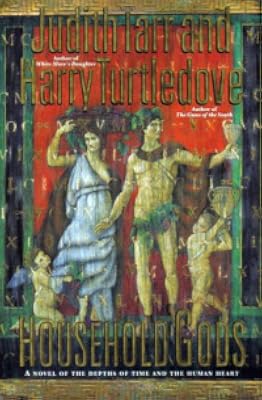
Household Gods
by Judith Tarr, Harry Turtledove
On This Page
Description
Nicole Gunther-Perrin is a modern young professional, proud of her legal skills but weary of the daily grind, of childcare, and of sexist coworkers and her deadbeat ex-husband. Then after one exceptionally awful day, she awakens to find herself in a different life, that of a widowed tavernkeeper on the Roman frontier around A.D. 170. Delighted at first, she quickly begins to realize that her new world is as complicated as her old one. Violence, dirt, adn pain are everywhere; slavery is show more commonplace, gladiators kill for sport, and drunkenness is taken for granted. Yet, somehow, people manage to face life everyday with humor and goodwill. No quitter, Nicole manages to adapt, despite endless worry about the fate of her children "back" in the twentieth century. Then plague sweeps through Carnuntum, followed by brutal war. Amidst pain and loss on a level she had never imagined, Nicole must find reserved of the sort of strength she had never known. show lessTags
Recommendations



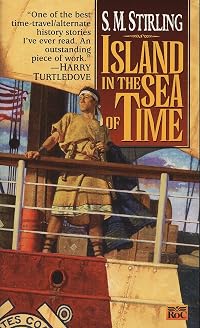


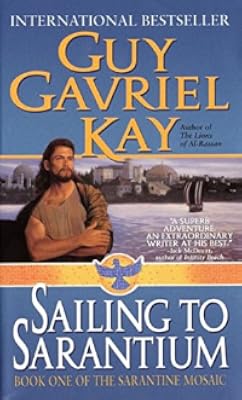
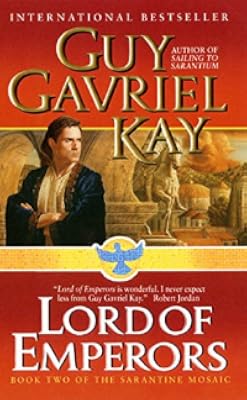

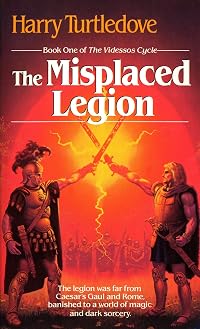


























Member Recommendations
Member Reviews
Time-travel is not something I'd read by choice but I'm so very desperate for novels set in Rome I haven't read I picked this one up. Delightful and quick read--most of it taking place in the Pannonia of Marcus Aurelius' time--but for a beginning and ending telling how the heroine got to and from the city of Carnuntus, which I found out actually existed, as well as the main male character, the fuller/dyer [in the story] Titus Calidius Severus, historically a former Roman soldier stationed in that area with Legion XV. We know him by a funerary monument; I commend whoever invented a personality for him and used him in a story.
Nicole is a lady lawyer, a divorced, single mother of two preschoolers. She has a terrible day--an show more understatement. She's been passed over for partnership in her law firm and her child care worker has quit on the same day. From her honeymoon in Austria, land of some of her ancestors, she has a souvenir kept by her bedside: a plaque of a god and goddess. Frustrated, angry, overwhelmed, she offers a facetious prayer that they take her to their world, somewhere "not so...artificial, not so hateful."
The main thrust of the novel is how a 20th century woman--fully aware of male chauvinism, modern society and all its amenities and comforts--copes with a society so different. It's dirty, unhygienic, smelly, primitive but peoples' personalities after millennia haven't changed. She goes to sleep in modern L.A., awakes in this garrison town in the body of her ancestress, a widowed tavern keeper and single mother of two. The deities have given her a bonus: ability to speak, understand, read and write Latin. We witness her comparisons of everything in the 2nd century A.D. with modern times. We see Nicole first as an obnoxious, arrogant, self-righteous know-it-all but her experiences with this simpler time--lice [ugh], mores, war, deadly pestilence [probably measles], rape, AND a romance with the aforementioned Titus--cause her to reflect, empathize, and to change her attitude, once she returns to the present.
The book was somewhat dated with references to popular culture of when it was written: 1999. And it was probably average for its genre, but I did get the lesson, the old saw, "Be careful what you wish for, you may get it". It's a book I won't soon forget. Recommended. show less
Nicole is a lady lawyer, a divorced, single mother of two preschoolers. She has a terrible day--an show more understatement. She's been passed over for partnership in her law firm and her child care worker has quit on the same day. From her honeymoon in Austria, land of some of her ancestors, she has a souvenir kept by her bedside: a plaque of a god and goddess. Frustrated, angry, overwhelmed, she offers a facetious prayer that they take her to their world, somewhere "not so...artificial, not so hateful."
The main thrust of the novel is how a 20th century woman--fully aware of male chauvinism, modern society and all its amenities and comforts--copes with a society so different. It's dirty, unhygienic, smelly, primitive but peoples' personalities after millennia haven't changed. She goes to sleep in modern L.A., awakes in this garrison town in the body of her ancestress, a widowed tavern keeper and single mother of two. The deities have given her a bonus: ability to speak, understand, read and write Latin. We witness her comparisons of everything in the 2nd century A.D. with modern times. We see Nicole first as an obnoxious, arrogant, self-righteous know-it-all but her experiences with this simpler time--lice [ugh], mores, war, deadly pestilence [probably measles], rape, AND a romance with the aforementioned Titus--cause her to reflect, empathize, and to change her attitude, once she returns to the present.
The book was somewhat dated with references to popular culture of when it was written: 1999. And it was probably average for its genre, but I did get the lesson, the old saw, "Be careful what you wish for, you may get it". It's a book I won't soon forget. Recommended. show less
This was pretty retro for a book that came out in 1999. I mean, I kept having to remind myself that this "have it all" feminist mom was probably not wearing shoulder pads. In any case, I enjoyed it, although sometimes the authors hit us over the head with the life lessons that our heroine was learning as she kicked it with the Romans. I thought the matter-of-fact discussions of sanitation and PTSD were fairly well done, and it was honestly refreshing to read some time travel/historical stuff that discussed things like bad teeth and hygiene. I am pushing it to 4 stars because it was nice to read a sci-fi book that was honest-to-goodness feminist from the (sort of) modern era.
The concept of this novel is interesting - a modern day woman transported to Ancient Rome and forced to cope with a pre-technological society which challenges every assumption about what she believes is right. Unfortunately, the central character is deeply unlikeable and very self-centered from the very first few pages where she is rude to her childminder over the illness of the latter's mother. This continues with her constant simmering hatred of all men in all circumstances, ancient and modern, and her failure to grasp the essential concept that a 2nd century Roman province is a different society from 1990s California - her colossal ignorance of basic history is appalling for someone who is theoretically intelligent. She did mellow show more slightly as she got used to life in Carnuntum in the reign of Marcus Aurelius, but still too often reverted to type. The novel is far too long at 660 pages - it could have been 300 pages shorter and I nearly gave up about 140 pages in, but there were some dramatic and tense passages later on, so on the whole I am glad I persevered. She largely reverts to type when she returns to the present day and becomes very unlikeable again. I would love to know what happened to Umma, and how life turned out for Julia, and I regret the death of Titus Severus - the latter two are among the few really likeable characters in the book (along with Marcus Aurelius, who emerges very well). show less
A very good, readable book that explores the dysfunction in both late 20th century Los Angeles and 6th Century BCE Roman Empire. The narrator, Nicole, is really rather quite annoying (I agree with another reviewer on that score) who is a successful lawyer passed over for a promotion, divorced and needing those child support checks, and two kids who vie for her attention. All well and normal and a life that many can relate to. When she decides that the sexism she encountered after her non-promotion, the headaches of driving through LA's traffic and smog are too much for her, and her life is just unmanageable, she prays to a small stone plaque with a bas-relief sculpture of Liber and Liberia and finds herself in the Roman outpost of show more Carnuntum on the Danube. Her perceptions change forever.
Both Tarr and Turtledove put some great research into the day-to-day life of a Roman citizen: the public baths, using olive oil instead of soap, the stench, the endless work that a tavern keeper must go through, the sadness of plague, the terror of invasion and rape, and finally the order that is restored. Nicole is in the body of one of her ancestors and must confront a slave who is owned by the tavern, family whom she does not even know who have bullied her her entire life long, and a dyer across the street who is her lover in her widowhood. Good plot, great details, and a good resolution at the end.
While I haven't read anything by Tarr, I have found Turtledove's tendency to belabor a point in a character's thoughts mind-numbingly unnecessary. In this book we hear all about Nicole's problems with her ex a whole lot less than I would have expected, and the repetitions are limited to when Nicole learns the point her experiences have taught her. For example, she was brought up in an alcoholic household, so drinking wine freaks her out. She switches the household to water, once, and learns why ancient cultures drank alcohol on a daily basis after they spend a night over the chamber pot. Her kids come down with the runs, too. Once she resolves herself to drinking alcohol, her long-winded ruminations are kept to a slight plot-point, no more.
A very good book, recommended for readers who enjoy these authors and readers who want to learn more details about everyday Roman citizens. show less
Both Tarr and Turtledove put some great research into the day-to-day life of a Roman citizen: the public baths, using olive oil instead of soap, the stench, the endless work that a tavern keeper must go through, the sadness of plague, the terror of invasion and rape, and finally the order that is restored. Nicole is in the body of one of her ancestors and must confront a slave who is owned by the tavern, family whom she does not even know who have bullied her her entire life long, and a dyer across the street who is her lover in her widowhood. Good plot, great details, and a good resolution at the end.
While I haven't read anything by Tarr, I have found Turtledove's tendency to belabor a point in a character's thoughts mind-numbingly unnecessary. In this book we hear all about Nicole's problems with her ex a whole lot less than I would have expected, and the repetitions are limited to when Nicole learns the point her experiences have taught her. For example, she was brought up in an alcoholic household, so drinking wine freaks her out. She switches the household to water, once, and learns why ancient cultures drank alcohol on a daily basis after they spend a night over the chamber pot. Her kids come down with the runs, too. Once she resolves herself to drinking alcohol, her long-winded ruminations are kept to a slight plot-point, no more.
A very good book, recommended for readers who enjoy these authors and readers who want to learn more details about everyday Roman citizens. show less
I purchased this book at a tag sale with little expectations - having taken several years of Latin during high school provided the groundwork to entice me once I read the back.
The book centers around a woman attorney and single mother suffering from a rather bitter day of events. In a fit of pique she wishes she lived in a simpler time, before a carved plaque of the gods Liber and Libera, who grants her wish by replacing one of her ancestors, Umma, who lived in Carnuntum during the second century AD, with her own soul and consciousness. The book is mostly about the various revelations that come to the protagonist as she learns that simpler may or may not be better. The book was both interesting and surprised me by being much better than show more I thought it would be. As both a fan of Roman history and fantasy, this novel brought both together in a delightful, insightful way. No dragons or high-handed elves here - just good "Twilight Zone" like reality shifting. show less
The book centers around a woman attorney and single mother suffering from a rather bitter day of events. In a fit of pique she wishes she lived in a simpler time, before a carved plaque of the gods Liber and Libera, who grants her wish by replacing one of her ancestors, Umma, who lived in Carnuntum during the second century AD, with her own soul and consciousness. The book is mostly about the various revelations that come to the protagonist as she learns that simpler may or may not be better. The book was both interesting and surprised me by being much better than show more I thought it would be. As both a fan of Roman history and fantasy, this novel brought both together in a delightful, insightful way. No dragons or high-handed elves here - just good "Twilight Zone" like reality shifting. show less
It took me a long time to get into this one, but once I did, I enjoyed it. The protaganist is a type of person all to real and to distasteful to me (i.e., a certain stereotype overachieving yet uncontemplative modern american woman)... That said, once I felt like the story really got going and the character started to engage and not just react with her world--it became very interesting. Oddly, the book has left me feeling both somewhat justified in my distaste for the stereotype, and also more sympathetic to it.
NOTE: Borrowed from the Anne Arundel County Library
(2014 Review #16)
NOTE: Borrowed from the Anne Arundel County Library
(2014 Review #16)
Nicole Gunther-Perrin, a California lawyer and divorced mother of two, thinks her life is rough, what with on-the-job sexual harassment, an ex- who's late with his child support, and bratty kids.
Somehow, she gets the pea-brained idea that life would have been better in the Roman Empire. Ah, for those simple, bucolic times!
With the help of an ancient plaque of a god & goddess that she picked up on her honeymoon, the teetotalling, prissy, christian, politically correct Nicole is zapped back to the 2nd century AD, into the body of a widowed tavern-keeper.
It doesn't take her long to learn that Roman times were not the haven of equality and justice that she imagined. Gradually, as she comes to adjust to the shock, filth, licentiousness, lack show more of health care, violence & etc... of ancient times, she also learns a lot about life, love, friendship and coping with difficulties.
It's a bit hard to believe how ignorant a well-educated modern character like Nicole is about the realities of life during Roman times, and I do disagree with a few of the authors "messages" - such as that children need corporal punishment to be disciplined (Kids aren't stupid. Explanations of WHY they shouldn't do something are liable to go a lot further than a smack.) But overall I found this to be a really entertaining read show less
Somehow, she gets the pea-brained idea that life would have been better in the Roman Empire. Ah, for those simple, bucolic times!
With the help of an ancient plaque of a god & goddess that she picked up on her honeymoon, the teetotalling, prissy, christian, politically correct Nicole is zapped back to the 2nd century AD, into the body of a widowed tavern-keeper.
It doesn't take her long to learn that Roman times were not the haven of equality and justice that she imagined. Gradually, as she comes to adjust to the shock, filth, licentiousness, lack show more of health care, violence & etc... of ancient times, she also learns a lot about life, love, friendship and coping with difficulties.
It's a bit hard to believe how ignorant a well-educated modern character like Nicole is about the realities of life during Roman times, and I do disagree with a few of the authors "messages" - such as that children need corporal punishment to be disciplined (Kids aren't stupid. Explanations of WHY they shouldn't do something are liable to go a lot further than a smack.) But overall I found this to be a really entertaining read show less
Members
- Recently Added By
Lists

What Makes This Book So Great
102 works; 16 members

KayStJ's to-read list
1,616 works; 11 members
Author Information

88+ Works 8,006 Members
Judith Tarr was born in Augusta, Maine on January 30, 1955. She received a B.A. in Latin and English from Mount Holyoke College, an M.A. in Classics from Cambridge University, and an M.A. and a Ph.D. in Medieval studies from Yale University. She is the author of more than twenty novels including The Golden Horn, The Hound and the Falcon, Avaryan show more Rising, Alamut, The Daggar and the Cross, The Lord of Two Lands, Pillar of Fire, The Throne of Isis, White Mare's Daughter, Queen of Swords, Arrows of the Sun, and Spear of Heaven. She also wrote a juvenile book entitled His Majesty's Elephant. (Bowker Author Biography) show less

279+ Works 43,163 Members
Harry Turtledove was born in Los Angeles, California on June 14, 1949. He received a Ph.D. in Byzantine history from UCLA in 1977. From the late 1970's to the early 1980's, he worked as a technical writer for the Los Angeles County Office of Education. He left in 1991 to become full-time writer. His first two novels, Wereblood and Werenight, were show more published in 1979 under the pseudonym Eric G. Iverson because his editor did not think people would believe that Turtledove was his real name. He used this name until 1985 when he published Herbig-Haro and And So to Bed under his real name. He has received numerous awards including the Homer Award for Short Story for Designated Hitter in 1990, the John Esthen Cook Award for Southern Fiction for Guns of the Southand in 1993, and the Hugo Award for Novella for Down in the Bottomlands in 1994. (Bowker Author Biography) show less
Some Editions
Common Knowledge
- Original publication date
- 1999-09
- People/Characters
- Marcus Aurelius
- Important places
- Carnuntum, Pannonia (modern day Austria)
- Publisher's editor
- Nielsen Hayden, Patrick
Classifications
- Genres
- Fiction and Literature, Science Fiction, Fantasy, General Fiction, Historical Fiction
- DDC/MDS
- 813.54 — Literature & rhetoric American literature in English American fiction in English 1900-1999 1945-1999
- LCC
- PS3570 .A655 .H68 — Language and Literature American literature American literature Individual authors 1961-
- BISAC
Statistics
- Members
- 607
- Popularity
- 48,247
- Reviews
- 24
- Rating
- (3.59)
- Languages
- English
- Media
- Paper, Ebook
- ISBNs
- 4
- ASINs
- 3