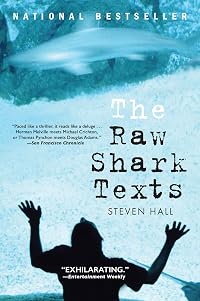
The Raw Shark Texts
by Steven Hall
On This Page
Description
Welcome to Unspace Eric Sanderson wakes up in a place he doesn't recognise, unable to remember who he is. All he has left are journal entries recalling Clio, a perfect love now gone. So begins a thrilling adventure that will send Eric and his cynical cat Ian on a search for the Ludovician, the force that is threatening his life, and Dr Trey Fidorus, the only man who knows its secrets.Tags
Recommendations



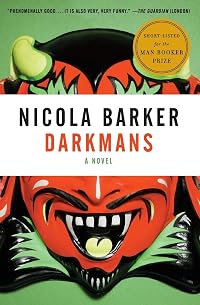
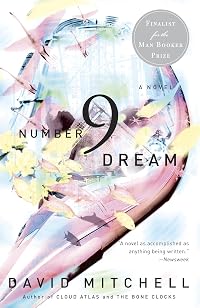
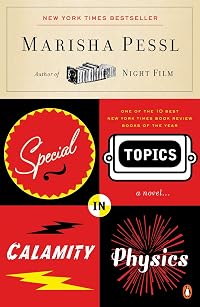
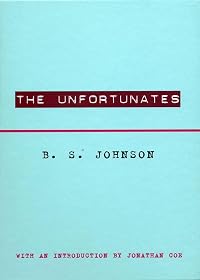








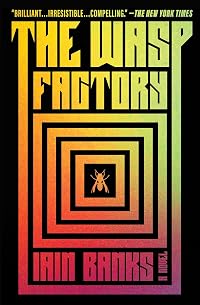

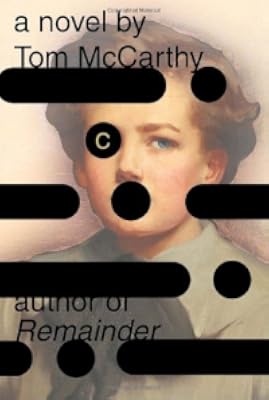

Member Recommendations

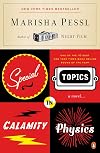
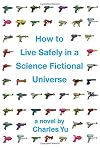
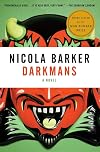

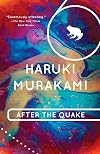
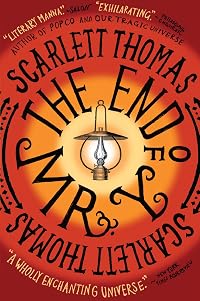
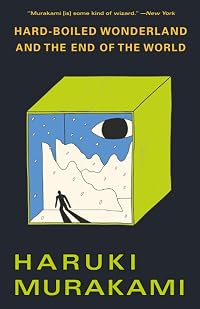
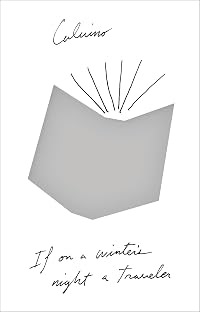
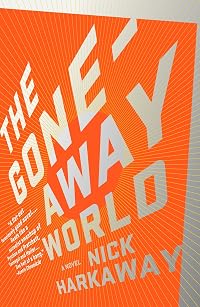
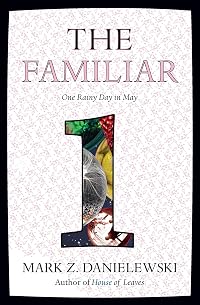
anonymous user Particularly SuperFrog Saves Tokyo - that story has many thematic connections.
by sduff222
Member Reviews
"since his death my Granddad had become more a collection of scenes than a real man to me." (79)
When I was assigned to teach The Modern Novel, I wanted to teach a novel about being a book-- in the physical sense. Novels are often books, of course, but in this electronic age they don't have to be. My students were pretty split on the far-out ideas Hall advances in The Raw Shark Texts-- some thought the book was baffling in the extreme, others thought it was the coolest thing they'd ever read. I'm okay with such a contradiction.
We read the book in the context of what N. Katherine Hayles in Writing Machines calls the "technotext": "When a literary work interrogates the inscription technology that produces it." (An "inscription technology" show more is a device that initiates material changes that can be read as marks, e.g., print books, computers, telegraphy, video and film, basically any technology that produces interpretable, linguistic information.) When a print book calls attention to the fact that it is a print book, it is a technotext, and Hayles argues that you should look at technotexts not just to see what the text "means," but how that meaning interacts with the material form of the text. (Hayles has actually written about The Raw Shark Texts herself, but ended up going in a different direction than what I'm going to do with her ideas here.)
The Raw Shark Texts is preoccupied with inscription technologies and how we're remediated through them: there's the quotation I opened this review with, but also: the idea that when a person dies, they leave an afterimage in the machinery they set up to run their life, which slowly runs down and dies itself (101); "I think we’re going to wear away from the world, just like the writing wears off old gravestones in the aisles of churches" (229); the narrator, Eric, reading the guidebook of Clio, a woman he supposedly had a relationship with but doesn't remember (266); Eric's admission that the journal we're reading is incomplete: they were never that witty or cool, Clio wasn’t always sexy, and all he has now is stories: "well edited tall tales with us in the starring roles," as the characters in the journal aren’t the two of them but actors regurgitating Hollywood clichés (412-13). And of course The Raw Shark Texts itself is a life remediated through an inscription technology: we only know what happened to Eric Sanderson because we have this book to tell us.
The book ends ambiguously. Did Eric die? Was anything Eric experienced even real? My students wanted to say "no" to the latter question, that he was hallucinating to cope with grief, but I reject that interpretation on the grounds of it not being very interesting. As for the first question, I think it depends on what you mean by "die." As the book emphasizes over and over again, we are the marks we make on the world. We are the scrapbooks, the gravestone inscriptions, the journals, the stories we wrote down about ourselves. Eric Sanderson didn't die fighting the conceptual shark, and we know this because we're holding Eric Sanderson in our hands. The Raw Shark Texts records his very existence. He is the sum of the inscription technologies used to mark his place in the world, much as we all are. The postcard at the end of the book-- another inscription technology-- shows that he continues to exist, that he hasn't worn away from the world yet. show less
When I was assigned to teach The Modern Novel, I wanted to teach a novel about being a book-- in the physical sense. Novels are often books, of course, but in this electronic age they don't have to be. My students were pretty split on the far-out ideas Hall advances in The Raw Shark Texts-- some thought the book was baffling in the extreme, others thought it was the coolest thing they'd ever read. I'm okay with such a contradiction.
We read the book in the context of what N. Katherine Hayles in Writing Machines calls the "technotext": "When a literary work interrogates the inscription technology that produces it." (An "inscription technology" show more is a device that initiates material changes that can be read as marks, e.g., print books, computers, telegraphy, video and film, basically any technology that produces interpretable, linguistic information.) When a print book calls attention to the fact that it is a print book, it is a technotext, and Hayles argues that you should look at technotexts not just to see what the text "means," but how that meaning interacts with the material form of the text. (Hayles has actually written about The Raw Shark Texts herself, but ended up going in a different direction than what I'm going to do with her ideas here.)
The Raw Shark Texts is preoccupied with inscription technologies and how we're remediated through them: there's the quotation I opened this review with, but also: the idea that when a person dies, they leave an afterimage in the machinery they set up to run their life, which slowly runs down and dies itself (101); "I think we’re going to wear away from the world, just like the writing wears off old gravestones in the aisles of churches" (229); the narrator, Eric, reading the guidebook of Clio, a woman he supposedly had a relationship with but doesn't remember (266); Eric's admission that the journal we're reading is incomplete: they were never that witty or cool, Clio wasn’t always sexy, and all he has now is stories: "well edited tall tales with us in the starring roles," as the characters in the journal aren’t the two of them but actors regurgitating Hollywood clichés (412-13). And of course The Raw Shark Texts itself is a life remediated through an inscription technology: we only know what happened to Eric Sanderson because we have this book to tell us.
The book ends ambiguously. Did Eric die? Was anything Eric experienced even real? My students wanted to say "no" to the latter question, that he was hallucinating to cope with grief, but I reject that interpretation on the grounds of it not being very interesting. As for the first question, I think it depends on what you mean by "die." As the book emphasizes over and over again, we are the marks we make on the world. We are the scrapbooks, the gravestone inscriptions, the journals, the stories we wrote down about ourselves. Eric Sanderson didn't die fighting the conceptual shark, and we know this because we're holding Eric Sanderson in our hands. The Raw Shark Texts records his very existence. He is the sum of the inscription technologies used to mark his place in the world, much as we all are. The postcard at the end of the book-- another inscription technology-- shows that he continues to exist, that he hasn't worn away from the world yet. show less
Oh, the promise this novel held. The sheer possibility of greatness.
Too bad Hall couldn't bring it home.
I absolutely devoured the first half of this story. I was on board for the full ride, happily nodding along as it got weirder and weirder. Theoretical memory-devouring sharks? Sure.
And the characters where amazing. Clio, in particular. I could feel myself completely understanding why Eric loved her. Hell, I was falling in love with her myself.
I was onboard for the whole search for Fidorous. Yup, I was good for the full ride. And this is where I will simply warn you about the serious SPOILER I'm about to drop. Honestly, if you haven't read the book and plan to, stop now, because I'm going to officially kill the second half of the show more book.
You've been warned.
Somewhere just past the middle, Hall veered distressingly away from all that promise, all that possibility. I am never more disappointed than when a theoretical model is set up, a strange, hard to grasp yet somehow workable idea, a feat of overwhelming imagination, is presented, then, for the purposes of story, the author diverts to a banal real-world model. That's exactly what Hall did.
Seriously. The last 200-ish pages of this novel (including 60 pages of typography illustrated shark to, you know, made it edgy) is about the last 45 minutes of the movie version of Jaws .
No. Seriously.
He couldn't even be bothered to change anything up. It's like he didn't know what the hell to do, so he just turned on the TV, saw a rerun of a movie and thought, hell, yeah, I can steal that!
I have rarely felt so cheated by a book as I feel with this one. Hall? You're a smart guy and a good writer (the ONLY reason you got two stars instead of one), but you committed an unpardonable sin here: You fucked over your readers.
Leave this one to die. It'll only be good when it's floating belly up in the tank. show less
Too bad Hall couldn't bring it home.
I absolutely devoured the first half of this story. I was on board for the full ride, happily nodding along as it got weirder and weirder. Theoretical memory-devouring sharks? Sure.
And the characters where amazing. Clio, in particular. I could feel myself completely understanding why Eric loved her. Hell, I was falling in love with her myself.
I was onboard for the whole search for Fidorous. Yup, I was good for the full ride. And this is where I will simply warn you about the serious SPOILER I'm about to drop. Honestly, if you haven't read the book and plan to, stop now, because I'm going to officially kill the second half of the show more book.
You've been warned.
Somewhere just past the middle, Hall veered distressingly away from all that promise, all that possibility. I am never more disappointed than when a theoretical model is set up, a strange, hard to grasp yet somehow workable idea, a feat of overwhelming imagination, is presented, then, for the purposes of story, the author diverts to a banal real-world model. That's exactly what Hall did.
Seriously. The last 200-ish pages of this novel (including 60 pages of typography illustrated shark to, you know, made it edgy) is about the last 45 minutes of the movie version of Jaws .
No. Seriously.
He couldn't even be bothered to change anything up. It's like he didn't know what the hell to do, so he just turned on the TV, saw a rerun of a movie and thought, hell, yeah, I can steal that!
I have rarely felt so cheated by a book as I feel with this one. Hall? You're a smart guy and a good writer (the ONLY reason you got two stars instead of one), but you committed an unpardonable sin here: You fucked over your readers.
Leave this one to die. It'll only be good when it's floating belly up in the tank. show less
This is one of the best books I'd never heard of before that I've picked up lately, and it was all thanks to the title. This novel is a brilliant blend of genres that leaves you constantly wondering what is about to happen next and at the same time it constructs this entire other fantastical world beneath our own made of words and thoughts. In the end you're not entirely sure if he's crazy, if it's all real, or if it even matters. He's happy. And somehow after that journey that is all you need.
The cover bears the quote:
"The bastard love child of the Matrix, Jaws and The Da Vinci Code. Very entertaining."
--Mark Haddon
That's not what I would have said about it though. It's more Nolan than Wachowski and infinitely more Borges than Brown. There is a huge fucking shark though.
A conceptual shark.
It starts with a man regaining consciousness. He doesn't know who he is or where he is...but there's a letter on the table for him, Eric Sanderson, from the first Eric Sanderson. This is the first of many of letters from the first of Eric Sanderson, usually signed "with regret and also hope". Initially Eric ignores his former self's correspondence as advised by his psychologist. It will just set back his recovery she says. But as things show more get stranger and a new threat appears Eric turns to his collection of unopened letters for answers.
It seems, according to the letters, Eric's condition is not the simple dis-associative state he's been told. No, Eric Sanderson was preyed upon by a conceptual fish. A beast not of flesh and bones but of ideas. A beast that hungered not for his flesh, but his Eric-ness, and ate until there was nothing left.
I'd like to say more, but it's not the sort of book about which you can say much with certainty. Hall plays deftly with the surreal while grounding it in the real. After all, what is more tenacious than and idea? More dangerous than a doubt? Is there any parasite more damaging than our own misplaced fixations and errant convictions?
I'm also undecided on how I actually interpret Eric's journey. Did the first Eric pull off an amazing feat of surrealistic heroism, or was he simply a tragic figure driven to madness by his own pain? Is this a man surviving against all odds in mad world or a mad man quietly slipping out of a real world he can no longer cope with? There are no easy answers here.
I'm probably going to have to read it again. show less
"The bastard love child of the Matrix, Jaws and The Da Vinci Code. Very entertaining."
--Mark Haddon
That's not what I would have said about it though. It's more Nolan than Wachowski and infinitely more Borges than Brown. There is a huge fucking shark though.
A conceptual shark.
It starts with a man regaining consciousness. He doesn't know who he is or where he is...but there's a letter on the table for him, Eric Sanderson, from the first Eric Sanderson. This is the first of many of letters from the first of Eric Sanderson, usually signed "with regret and also hope". Initially Eric ignores his former self's correspondence as advised by his psychologist. It will just set back his recovery she says. But as things show more get stranger and a new threat appears Eric turns to his collection of unopened letters for answers.
It seems, according to the letters, Eric's condition is not the simple dis-associative state he's been told. No, Eric Sanderson was preyed upon by a conceptual fish. A beast not of flesh and bones but of ideas. A beast that hungered not for his flesh, but his Eric-ness, and ate until there was nothing left.
I'd like to say more, but it's not the sort of book about which you can say much with certainty. Hall plays deftly with the surreal while grounding it in the real. After all, what is more tenacious than and idea? More dangerous than a doubt? Is there any parasite more damaging than our own misplaced fixations and errant convictions?
I'm also undecided on how I actually interpret Eric's journey. Did the first Eric pull off an amazing feat of surrealistic heroism, or was he simply a tragic figure driven to madness by his own pain? Is this a man surviving against all odds in mad world or a mad man quietly slipping out of a real world he can no longer cope with? There are no easy answers here.
I'm probably going to have to read it again. show less
The last quarter of this book is a scintillating shark hunt "Jaws" style (if you remember the book or the movie). The big white shark, the harpoons, the barrels and the shark cage it's all the same and very entertaining but the twist is this is not a real shark. It's something even worse.
Welcome to the world of Eric Sanderson, who has dissociative amnesia. He wakes up one day with all his memory wiped off he has to learn everything about himself from the start. While investigating into his condition he discovers that every interaction a person has with other people or his surroundings creates a thought stream and over the years these streams have formed into channels where single cell organisms had appeared first and later complex show more fishes. Eric's mind has been invaded by such a shark which feeds on his memories. Eric sets off in search of a permanent solution and finds many surprises on the way.
An entertaining, intelligent book. A four star book. show less
Welcome to the world of Eric Sanderson, who has dissociative amnesia. He wakes up one day with all his memory wiped off he has to learn everything about himself from the start. While investigating into his condition he discovers that every interaction a person has with other people or his surroundings creates a thought stream and over the years these streams have formed into channels where single cell organisms had appeared first and later complex show more fishes. Eric's mind has been invaded by such a shark which feeds on his memories. Eric sets off in search of a permanent solution and finds many surprises on the way.
An entertaining, intelligent book. A four star book. show less
One morning as Eric Sanderson awoke from uneasy dreams, he found himself transformed into himself. Except he doesn't remember the uneasy dreams. He doesn't remember himself. He's got more or less complete amnesia (think Eco's The Mysterious Flame of Queen Loana - he's forgotten everything about himself, but every piece of historical and pop-cultural trivia, every turn of phrase, every cultural meme is still there). He's a blank slate. Except for the letters his old self keeps sending him, warning him of a conceptual shark - the idea of a predator, lurking in the stream of information surrounding all human interaction, and feeding on memories. The ultimate representation of self-destructive thoughts.
You'd think the best thing that could show more have happened to Eric - the new Eric, Eric II - would have been if Eric I had never told him about this, because once he knows, the shark is after him too. And so he has to set out on a quest to find himself - literally and figuratively, in both the subterranean and subtextual world under the consensus of what life in 21st century Britain is like. (Possibly, he's mad and it's all in his head. Possibly, the shark is very real. Possibly, both; after all, if you have an idea in your head, then that idea is real - the only reality there is, perhaps?)
It's difficult to explain, but it's really a quite clever idea, weaving in themes about language, subjective construction of reality, memetic mutation and evolution, dealing with grief, and a bunch of stuff that might have fit well in a Paul Auster or Haruki Murakami story (unsurprisingly, Hall namedrops both, along with Borges and other metafictional superstars). He's not quite the writer it takes to say anything truly profound about it, and rather than a new Kafka On The Shore it ends up more as a mixture of Snow Crash and Neverwhere with some unfortunate overtones of the Big Purple Dan Brown Book Which Shall Not Be Named. But hey, I really like two of those, and as metaphysical thrillers go it's entertaining. I'll put up with some clunky prose if it serves an original idea, and for a long while it does.
So I'm coasting along merrily on the streams of consciousness - not stream-of-consciousness - in Eric's wake until I hit the last 120 pages. Which, without giving away any details, are anything but original. In fact, I've both read and seen them. As in literally scene by scene, word for word. I get the point of it, but there's using pop culture references to make a point and there's outright plagiarism, and the fact that the characters acknowledge the original in the text while playing it out only makes it all the more stupid, and the book sinks like a stone.
Beach closed. show less
You'd think the best thing that could show more have happened to Eric - the new Eric, Eric II - would have been if Eric I had never told him about this, because once he knows, the shark is after him too. And so he has to set out on a quest to find himself - literally and figuratively, in both the subterranean and subtextual world under the consensus of what life in 21st century Britain is like. (Possibly, he's mad and it's all in his head. Possibly, the shark is very real. Possibly, both; after all, if you have an idea in your head, then that idea is real - the only reality there is, perhaps?)
It's difficult to explain, but it's really a quite clever idea, weaving in themes about language, subjective construction of reality, memetic mutation and evolution, dealing with grief, and a bunch of stuff that might have fit well in a Paul Auster or Haruki Murakami story (unsurprisingly, Hall namedrops both, along with Borges and other metafictional superstars). He's not quite the writer it takes to say anything truly profound about it, and rather than a new Kafka On The Shore it ends up more as a mixture of Snow Crash and Neverwhere with some unfortunate overtones of the Big Purple Dan Brown Book Which Shall Not Be Named. But hey, I really like two of those, and as metaphysical thrillers go it's entertaining. I'll put up with some clunky prose if it serves an original idea, and for a long while it does.
So I'm coasting along merrily on the streams of consciousness - not stream-of-consciousness - in Eric's wake until I hit the last 120 pages. Which, without giving away any details, are anything but original. In fact, I've both read and seen them. As in literally scene by scene, word for word. I get the point of it, but there's using pop culture references to make a point and there's outright plagiarism, and the fact that the characters acknowledge the original in the text while playing it out only makes it all the more stupid, and the book sinks like a stone.
Beach closed. show less
The book struck me as a sort of cross between The Eyre Affair and House of Leaves, combining the sort of inventive alternate realities of Fforde with the pomo typographical play of Danielewski. As with most X meets Y formulations, this one does not really do the book justice. Despite Hall's invetive metatextual world of word sharks, un-spaces, thought virus tycoons and conceptual boats the emotional core of the story is the protagonist's attempts to come to grips with the past and his own grief, guilt, memory. (A comparison with the movie Memento might also be apt, though Shark is more hopeful, less nihilistic.) An engaging, playful, but also very moving book.
Members
- Recently Added By
Published Reviews
ThingScore 80
The Raw Shark Texts manages to reach the loftiest goal of speculative fiction: making its outlandish situations illuminate real human emotion. When the second Sanderson begins to share his previous incarnation's affecting grief over his lost love Clio, the concept of a memory-eating shark takes on additional layers of significance.
Comparisons with The Matrix, Fight Club and Memento have been show more thrown around, and it's telling that all these action-thrillers were on the big screen. The prose is often self-important and less brilliant than the situations it describes, and many of the story elements dogmatically adhere to Hollywood conventions. But Hall borrows a number of effective techniques from film. A metaphysical book such as this easily could have become dense and inaccessible, but Hall's unrelenting focus on visual storytelling keeps it lucid.
The book fully succeeds in exploring the tenuous hold we have on our sense of self, which is, after all, only "a concept wrapped in skin and chemicals." show less
Comparisons with The Matrix, Fight Club and Memento have been show more thrown around, and it's telling that all these action-thrillers were on the big screen. The prose is often self-important and less brilliant than the situations it describes, and many of the story elements dogmatically adhere to Hollywood conventions. But Hall borrows a number of effective techniques from film. A metaphysical book such as this easily could have become dense and inaccessible, but Hall's unrelenting focus on visual storytelling keeps it lucid.
The book fully succeeds in exploring the tenuous hold we have on our sense of self, which is, after all, only "a concept wrapped in skin and chemicals." show less
added by sduff222
The rest of Hall's ambitiously conceived but irritatingly self-serious novel concerns Sanderson's "Jaws"-like quest to put an end to the shark before it eats him, punctuated by a stock romantic plot and pictorial games that include a flip-book shark attack. Oddly, given all the textual high jinks, Hall's weakness for ending chapters on cliffhangers suggests that his book may actually wish it show more were a film. show less
added by sduff222
Quirky even for metafiction--the novel includes abstract diagrams and flipbooks--Hall's debut can be confusing. But when he hits his stride, particularly during a climactic manversus-shark chase on the high seas, Texts is exhilarating. B+
added by sduff222
Lists

Top Five Books of 2013
1,562 works; 721 members

Best books about books
209 works; 106 members

Best books read in 2011
200 works; 51 members

Books as Objects & Metatextual Works
32 works; 3 members

Mind-Benders: Fiction that Hurts Your Head
34 works; 8 members

Arthur C. Clarke Award Winners and Shortlisted Books
219 works; 14 members

to get
244 works; 2 members

Books Read in 2021
5,361 works; 113 members

Wyrd as Folk
43 works; 4 members

Books We Couldn't Put Down
443 works; 197 members

Books We Want To Read Again For The First Time
384 works; 160 members

Favorite Science Fiction
456 works; 218 members
Talk Discussions
Past Discussions
YA book with secret chapters online in Name that Book (June 2016)
Author Information

5+ Works 3,178 Members
Some Editions
Awards and Honors
Awards
Notable Lists
Series
Belongs to Publisher Series
Serie Piper (5204)
Common Knowledge
- Canonical title
- The Raw Shark Texts
- Original title
- The raw shark texts
- Original publication date
- 2007-04-10
- People/Characters
- Eric Sanderson the First; Eric Sanderson the Second; Doctor Helen Randle; Clio Aames; Doctor Trey Fidorous; Scout (show all 9); Ian; Mr. Nobody; Mycroft Ward
- Important places
- Naxos, Cyclades Islands, Greece; Manchester, England, UK; Derby, Derbyshire, England, UK
- Epigraph*
- Er is een niet zo sterke, steeds flauwer wordende
herinnering blijven bestaan aan Herbert Ashe,
ingenieur bij de zuidelijke spoorwegen, in hotel
Adrogue, tussen de expansieve kamperfoeliestruiken en
in de bedr... (show all)iegelijke diepte van de spiegels.
Jorge Luis Borges - Dedication
- For Stanley Hall
1927-1998
A gentleman and a scholar - First words
- I was unconscious. I'd stopped breathing.
- Quotations
- "Since I've left home on this journey, I've thought a lot about this–how a big part of any life is about the hows and the whys of setting up machinery. It's building systems, devices, motors. Winding up the clockwork of dir... (show all)ect debits, configuring newspaper deliveries and anniversaries and photographs and credit card repayments and anecdotes. Starting their engines, setting them in motion and sending them chugging off into the future to do their thing at regular or irregular intervals. When a person leaves or dies or ends, they leave an afterimage; their outline in the devices they've set up around them. The image fades to the winding down of springs, the slow running out of fuel as the machines of a life lived in certain ways in certain places and from certain angles are shut down or seize up or blink off one by one. It takes time. Sometimes, you come across the dusty lights or electrical hum of someone else's machine, maybe a long time after you ever expected to, still running, lonely in the dark. Still doing its thing for the person who started it up long, long after they've gone."
- Last words
- (Click to show. Warning: May contain spoilers.)Here's looking at you kid, Eric Sanderson
(Click to show. Warning: May contain spoilers.)As night drew in, we steered the dinghy towards a stretch of friendly looking coastline, a long strip of beach where the hanging lanterns of tavernas and waterfront bars laid multicoloured stripes out across the waves. - Original language*
- englanti
- Canonical DDC/MDS
- 823.92
- Canonical LCC
- PR6108.A494
*Some information comes from Common Knowledge in other languages. Click "Edit" for more information.
Classifications
Statistics
- Members
- 2,893
- Popularity
- 6,223
- Reviews
- 121
- Rating
- (3.71)
- Languages
- 16 — Catalan, Chinese, Czech, Danish, Dutch, English, Finnish, French, German, Hungarian, Italian, Norwegian, Portuguese, Romanian, Spanish, Swedish
- Media
- Paper, Audiobook, Ebook
- ISBNs
- 47
- ASINs
- 13