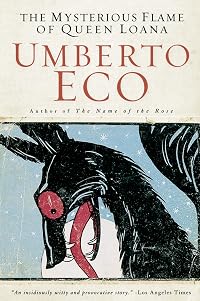
The Mysterious Flame of Queen Loana
by Umberto Eco
On This Page
Description
When book dealer Yambo suffers amnesia, he loses all sense of who he is, but retains memories of all the books, poems, songs and movies he has ever experienced. To reclaim his identity, he retreats to the family home and rummaged through the old letters, photographs and mementos stored in the attic. Yambo's mind swirls with thoughts, and he struggles to retrieve the one memory that may be most sacred--that of Lila Saba, his first love.Tags
Recommendations



Member Recommendations
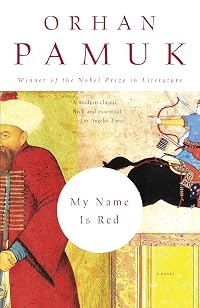
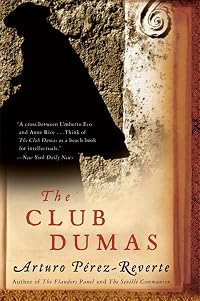
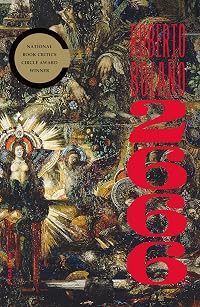
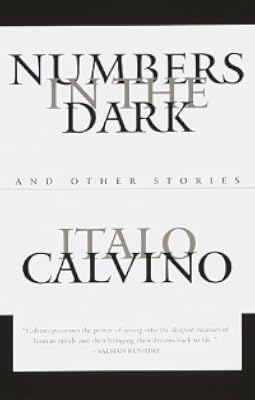
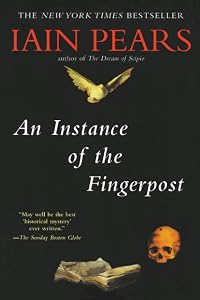
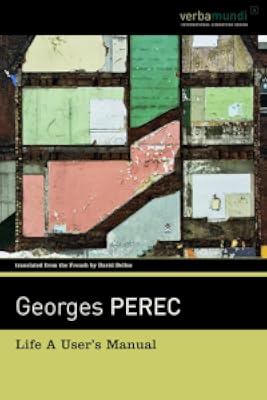
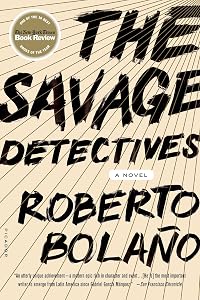
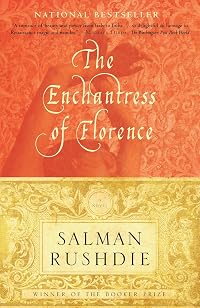
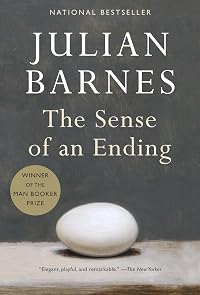
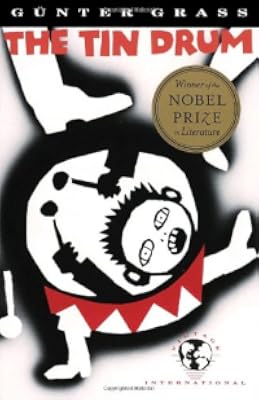
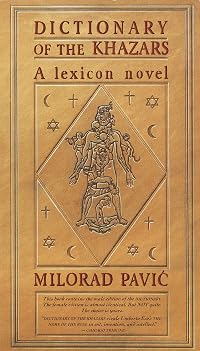
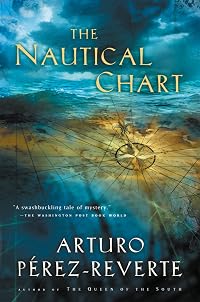
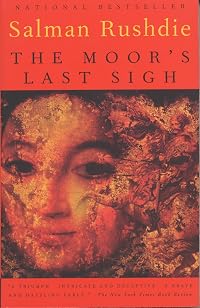
Cecrow The tale of Queen Loana bears a passing resemblance to Haggard's famous novel.
Alixtii Both books having writers getting meta about the nature of writing and reading as a protagonist goes through a process of reading very (and I mean very) many books. Both are written with wit and insight, although Eco's book is better.
Cecrow Significantly referenced by Eco.
Member Reviews
This is a surprisingly accessible novel compared to others by this author. It's almost autobiographical and is more pop culture focused on the 20th century than historical. Yambo, the main character, is only about a month older than Eco himself. He awakens in 1991 from an accident to discover he has amnesia, which provides the perfect pretext for Eco to review Italian memorabilia from the 1930s onward as Yambo searches for a trigger that will return his past to him. When Yambo's memory does begin to return, he discovers the contrast between what he's tried to piece together and what actually happened.
I thought at first that this would have been even more fun if the character (and Eco) had been raised in a culture I could relate to, but show more then I would have missed the exposure to learning about Italian childhood in the 1940s when mass media was being manipulated to serve Il Duce. Yambo is searching for the "reverberation of forgotten delights", but this alone isn't much to hang a plot on. In "Island of the Day Before", something similar happened where the main character was mostly just studious and we were treated to all sorts of history lessons. In that instance there was a fair hope of at least absorbing something educational. Some readers will find the travail more tiring this time, since it's difficult to imagine the same benefit arising from a close study of Italian propaganda from the early 20th century. I strongly suspect we're being treated to a tour through Eco's own childhood and teenage favourites as he indulges in personal nostalgia. Along the way he treats us to all sorts of illustrations from the comics, stamp collections and movie posters of the period.
A significant mystery lingers: we don't find out - or perhaps Yambo never finds out - how he transitioned from a young man who identified with Cyrano and idealized his first love into an adult who has a dozen casual dalliances behind his wife's back. That leaves me to speculate that Yambo is a man who has lived all his life in the past. When it's taken from him, this makes it a kind of double amnesia. He really has no life that matters to him without it. show less
I thought at first that this would have been even more fun if the character (and Eco) had been raised in a culture I could relate to, but show more then I would have missed the exposure to learning about Italian childhood in the 1940s when mass media was being manipulated to serve Il Duce. Yambo is searching for the "reverberation of forgotten delights", but this alone isn't much to hang a plot on. In "Island of the Day Before", something similar happened where the main character was mostly just studious and we were treated to all sorts of history lessons. In that instance there was a fair hope of at least absorbing something educational. Some readers will find the travail more tiring this time, since it's difficult to imagine the same benefit arising from a close study of Italian propaganda from the early 20th century. I strongly suspect we're being treated to a tour through Eco's own childhood and teenage favourites as he indulges in personal nostalgia. Along the way he treats us to all sorts of illustrations from the comics, stamp collections and movie posters of the period.
A significant mystery lingers: we don't find out - or perhaps Yambo never finds out - how he transitioned from a young man who identified with Cyrano and idealized his first love into an adult who has a dozen casual dalliances behind his wife's back. That leaves me to speculate that Yambo is a man who has lived all his life in the past. When it's taken from him, this makes it a kind of double amnesia. He really has no life that matters to him without it. show less
Umberto Eco always puzzles me, yet I read his novels whenever I find them. This novel is no exception, puzzling and intriguing, exploring questions about memory, storytelling, imagination, and the construction of reality. First, the narrator Yambo has a stroke which leaves him with stories and images from the literature he has read, but with no knowledge of his own past. Later, after a second stroke, he recovers his memory but cannot communicate and imagines a story line that may or may not resolve his life’s desires.
Eco says that we need our memories to know who we are and what to do. If we don’t know our past, what is the meaning of the present? How are we to know what we want for the future? As Yambo thinks, I recognize this show more image that I see in a flea market, but I don’t know if I like it or if I want to escape from it. Should I buy it or leave it? I don’t know. His wife even has to tell him what food he likes. Embarrassingly, he doesn’t know if he’s having an affair with his assistant or not.
He returns to his childhood home, where books and papers from his past have been stored. He hopes to recreate his past, but finds that it just raises more questions. When he reads the fascist Italian propaganda from his school days, it seems at first a happy memory, but reading more he sees that the reality of fascism led to his disillusionment. He realizes that the consciousness of his youth was shaped by the comic books he loved to read, which may have been more influential than the slanted education he received in schools. That consciousness he acquired from eclectic – and unreliable – sources seems to be part of his mature life.
This raises a question that we all face if we choose to think about it: how much of our current consciousness, values, beliefs comes from comic books, television, games that we encountered and continue to encounter as adults? How much comes from government, schools, religion, families and the formal sources that society entrusts with forming our minds? And setting the story in the period of Italian fascism and its aftermath, Eco implicitly asks if societies entrust the formation of consciousness to institutions that have their own flawed values. In the current social struggle for the minds of people in Canada (and the USA and elsewhere), questions about trust in social institutions are fundamental to both liberals and conservatives (as they always have been to radicals.)
It's interesting when this story moves into Yambo’s recovered memories. It becomes a time when he can relive the pleasures of his life and imagine a happy future without having to worry about time or what’s happening with his body in care. It becomes a positive way to exist in a coma, unlike the endless frustration that I would have imagined otherwise.
Woven into all this internal reflection are a number of intriguing stories that reflect on Yambo’s life. The story he finds about his grandfather’s treatment by local fascists and the revenge he executes after the war are hard to forget. His own role in the death of some German soldiers and the saving of some partisans become part of the guilt he feels through his life, although he’s forgotten the incident itself. Leading through the whole narrative is a highly idealized love, which he can realize as a comic-book blaze of glory in his detached state. But he says, “I want to know who I am. Life may be indistinguishable from a dream, but in life we have to choose to believe in what we see and know.” He does make a choice to reject illusion and live a mature life. Inevitably, or ironically, he can make a choice, but he cannot change the reality of his life.
Like all of Eco’s books, this is a book of philosophy as well as a curious story. It’s puzzling and sometimes frustrating to understand what’s going on in the narrative, but Eco always has something to say that makes the reading stimulating. show less
Eco says that we need our memories to know who we are and what to do. If we don’t know our past, what is the meaning of the present? How are we to know what we want for the future? As Yambo thinks, I recognize this show more image that I see in a flea market, but I don’t know if I like it or if I want to escape from it. Should I buy it or leave it? I don’t know. His wife even has to tell him what food he likes. Embarrassingly, he doesn’t know if he’s having an affair with his assistant or not.
He returns to his childhood home, where books and papers from his past have been stored. He hopes to recreate his past, but finds that it just raises more questions. When he reads the fascist Italian propaganda from his school days, it seems at first a happy memory, but reading more he sees that the reality of fascism led to his disillusionment. He realizes that the consciousness of his youth was shaped by the comic books he loved to read, which may have been more influential than the slanted education he received in schools. That consciousness he acquired from eclectic – and unreliable – sources seems to be part of his mature life.
This raises a question that we all face if we choose to think about it: how much of our current consciousness, values, beliefs comes from comic books, television, games that we encountered and continue to encounter as adults? How much comes from government, schools, religion, families and the formal sources that society entrusts with forming our minds? And setting the story in the period of Italian fascism and its aftermath, Eco implicitly asks if societies entrust the formation of consciousness to institutions that have their own flawed values. In the current social struggle for the minds of people in Canada (and the USA and elsewhere), questions about trust in social institutions are fundamental to both liberals and conservatives (as they always have been to radicals.)
It's interesting when this story moves into Yambo’s recovered memories. It becomes a time when he can relive the pleasures of his life and imagine a happy future without having to worry about time or what’s happening with his body in care. It becomes a positive way to exist in a coma, unlike the endless frustration that I would have imagined otherwise.
Woven into all this internal reflection are a number of intriguing stories that reflect on Yambo’s life. The story he finds about his grandfather’s treatment by local fascists and the revenge he executes after the war are hard to forget. His own role in the death of some German soldiers and the saving of some partisans become part of the guilt he feels through his life, although he’s forgotten the incident itself. Leading through the whole narrative is a highly idealized love, which he can realize as a comic-book blaze of glory in his detached state. But he says, “I want to know who I am. Life may be indistinguishable from a dream, but in life we have to choose to believe in what we see and know.” He does make a choice to reject illusion and live a mature life. Inevitably, or ironically, he can make a choice, but he cannot change the reality of his life.
Like all of Eco’s books, this is a book of philosophy as well as a curious story. It’s puzzling and sometimes frustrating to understand what’s going on in the narrative, but Eco always has something to say that makes the reading stimulating. show less
This was my most dragged read ever. It was also beautiful in some parts but extremely depressing and miserable in a lot of pages. I was looking forward to dwelling in Eco's magic. I came away feeling a little disappointed. The Italian landscapes described by Eco's dazzling lyrical wordplay had me travelling dreamily for hours. I couldn't for any librarian's or a book lover's nightmare imagine to lose memory and then have to rewind and relearn all the details of the pre-memory loss life, once again from the wife, daughters, grandchildren. A terrible ordeal one would be put in. Yet this happens with a lot of people around the world who suffer from Alzheimer's and gradually lose their memory and threads of life. There were times when I show more couldn't stop from tearing my heart over the melancholy and sadness of the people inside the story. I kept linking them to all the strong people I know in my life. it just made reading more worse. Having said this, I would love to read Umberto Eco again. show less
I haven't participated in Nanowriomo for a few years, but two of my attempts were similar to this offering by Eco: a novel of stories prompted by books I own, and one of stories prompted by books I have read. There ends the comparison, but maybe if I had added a similar frame to what Eco did here those novels may have proved more promising.
All this being said, this is my least favorite of the Eco books I have read. I got the impression that the author had dragged four or five boxes full of junk out of the attic and he was telling us what every little scrap of paper was all about. Yambo, the protagonist, remembers everything he's ever read, but not much else. Because he's read so much and so widely, there is a wide, ugly ditch (to borrow show more Lessing's phrase) between him and the readers of his story. It is so wide, and so ugly, so as to leave the less-than-ideal reader wondering what the hell he is on about. To be fair, those in the know will really resonate with this, but the majority, I fear, will not.
Near the end of the novel (actually about 110 pages before the end), I was struck by Yambo's apparent uncritical acceptance of Fascist propaganda that they were making Italy great again (this should sound familiar). For I am reading at the same time [[William Shirer]]'s [The Rise and Fall of the Third Reich], which indicates some hesitancy on the part of Mussolini to support Hitler in what he was trying to do. This was an interesting juxtaposition for me. show less
All this being said, this is my least favorite of the Eco books I have read. I got the impression that the author had dragged four or five boxes full of junk out of the attic and he was telling us what every little scrap of paper was all about. Yambo, the protagonist, remembers everything he's ever read, but not much else. Because he's read so much and so widely, there is a wide, ugly ditch (to borrow show more Lessing's phrase) between him and the readers of his story. It is so wide, and so ugly, so as to leave the less-than-ideal reader wondering what the hell he is on about. To be fair, those in the know will really resonate with this, but the majority, I fear, will not.
Near the end of the novel (actually about 110 pages before the end), I was struck by Yambo's apparent uncritical acceptance of Fascist propaganda that they were making Italy great again (this should sound familiar). For I am reading at the same time [[William Shirer]]'s [The Rise and Fall of the Third Reich], which indicates some hesitancy on the part of Mussolini to support Hitler in what he was trying to do. This was an interesting juxtaposition for me. show less
Bizarre and compelling, Umberto Eco has written a wonderful book. Yambo, a 60 year old antiquarian bookseller, wakes from a coma unable to remember his life. Characters, plots and quotes from the books he has read free-wheel through his brain but he doesn't know his wife and children, or what has shaped his life. In an attempt to reconnect with his past he returns to the house where he spent part of his childhood — his grandfather's home where he spent holidays and was evacuated during the war. What follows is a trip through the culture of 1930's/1940's Italy. A feast of comic books; music; books and propaganda.
Lavishly illustrated with memorabilia; nostalgic and descriptive of a childhood, this is a book that feeds the senses. show more Surreal chain of consciousness prose flows effortlessly; building to a culminating dream like sequence. I loved this book, but I can see that it wouldn't be to everybody's taste. show less
Lavishly illustrated with memorabilia; nostalgic and descriptive of a childhood, this is a book that feeds the senses. show more Surreal chain of consciousness prose flows effortlessly; building to a culminating dream like sequence. I loved this book, but I can see that it wouldn't be to everybody's taste. show less
Giambattista "Yambo" Bodoni, a 60-year-old rare book dealer from Milan, has "paper memory" after suffering a stroke. He has no autobiographical memory—he cannot identify his wife, daughters, or his own past—but he can remember every book, poem, and song he has ever come across. Yambo withdraws to his Solara childhood home at his wife Paola's suggestion. He searches his grandfather's large attic, which is stocked with diaries, comic books, old newspapers, and records.
Yambo recreates his generation's experiences with Catholic guilt, wartime propaganda, and American pop culture icons like Flash Gordon and Fred Astaire by using these artifacts to recreate the world of his childhood in Mussolini's fascist Italy. After a second show more "incident," Yambo experiences a coma during which his real memories resurface.
The book is renowned for its nearly 200 illustrations, which show how culture shapes individual identity and include comic strips, posters, and ads from Eco's own collection. Yambo is used by Eco as a metaphor for a "truly postmodern figure"—someone whose identity is derived more from literature and media than from personal experience.
The title "Mysterious Flame" alludes to a particular Tim Tyler's Luck comic. show less
Yambo recreates his generation's experiences with Catholic guilt, wartime propaganda, and American pop culture icons like Flash Gordon and Fred Astaire by using these artifacts to recreate the world of his childhood in Mussolini's fascist Italy. After a second show more "incident," Yambo experiences a coma during which his real memories resurface.
The book is renowned for its nearly 200 illustrations, which show how culture shapes individual identity and include comic strips, posters, and ads from Eco's own collection. Yambo is used by Eco as a metaphor for a "truly postmodern figure"—someone whose identity is derived more from literature and media than from personal experience.
The title "Mysterious Flame" alludes to a particular Tim Tyler's Luck comic. show less
I lucked onto this in the unsightly bookcase in the bungalow resort where I stayed on Koh Lipe (in the Tarutao islands, very far south of Thailand) over New Year's. Especially lucky considering that the second-hand book stalls were packed only with John Grisham and The Devil Wears Prada in six languages. I traded Jonathan Lethem for it.
So it was a great holiday read, though it isn't particularly intellectually, philosophically stimulating in the way you might expect an Eco to be.
So the narrator character, a man probably about Eco's age, has a stroke and loses his memory. How to recover it? He goes back to the ancestral farmhouse and discovers the comic books, comics pages, music records, news magazines and other detritus of his youth. show more Which stimulate memories.
Since the character, Yambo, was a boy during World War II, the general terrain we're covering is awfully familiar. The great part is that there are actual pix of this stuff, translated lyrics of songs and so on. What happens to the American comics when the US becomes the enemy? (Who knew how Terry and the Pirates started out?) How was Mussolini depicted?
How I wish there was a novel, memoir--anything remotely like this--set in Malaysia, China, Burma, etc., during World War II and in a bordering era. That is, an absorbing, easy read. Well, there are a few Japanese novels, I guess ...but there are just so many European ones on the era.
I can well imagine many a potential reader glancing at this book and thinking: "Enough already. I've read that." show less
So it was a great holiday read, though it isn't particularly intellectually, philosophically stimulating in the way you might expect an Eco to be.
So the narrator character, a man probably about Eco's age, has a stroke and loses his memory. How to recover it? He goes back to the ancestral farmhouse and discovers the comic books, comics pages, music records, news magazines and other detritus of his youth. show more Which stimulate memories.
Since the character, Yambo, was a boy during World War II, the general terrain we're covering is awfully familiar. The great part is that there are actual pix of this stuff, translated lyrics of songs and so on. What happens to the American comics when the US becomes the enemy? (Who knew how Terry and the Pirates started out?) How was Mussolini depicted?
How I wish there was a novel, memoir--anything remotely like this--set in Malaysia, China, Burma, etc., during World War II and in a bordering era. That is, an absorbing, easy read. Well, there are a few Japanese novels, I guess ...but there are just so many European ones on the era.
I can well imagine many a potential reader glancing at this book and thinking: "Enough already. I've read that." show less
Members
- Recently Added By
Lists

Unread books
1,063 works; 83 members

Italian Literature
558 works; 40 members

SHOULD Read Books!
354 works; 9 members
EU Fiction: 1950-2022
223 works; 70 members
Author Information

514+ Works 115,736 Members
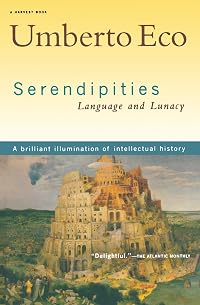
Umberto Eco was born in Alessandria, Italy on January 5, 1932. He received a doctorate of philosophy from the University of Turin in 1954. His first book, Il Problema Estetico in San Tommaso, was an extension of his doctoral thesis on St. Thomas Aquinas and was published in 1956. His first novel, The Name of the Rose, was published in 1980 and won show more the Premio Strega and the Premio Anghiar awards in 1981. In 1986, it was adapted into a movie starring Sean Connery. His other works include Foucault's Pendulum, The Island of the Day Before, Baudolino, The Prague Cemetery, and Numero Zero. He also wrote children's books and more than 20 nonfiction books including Serendipities: Language and Lunacy. He taught philosophy and then semiotics at the University of Bologna. He also wrote weekly columns on popular culture and politics for L'Espresso. He died from cancer on February 19, 2016 at the age of 84. (Bowker Author Biography) show less
Some Editions
Awards and Honors
Series
Belongs to Publisher Series
Common Knowledge
- Canonical title
- The Mysterious Flame of Queen Loana
- Original title
- La misteriosa fiamma della regina Loana
- Original publication date
- 2004 (original Italian) (original Italian); 2005 (English translation) (English translation)
- People/Characters
- Yambo
- Important places
- Italy; Admiral Benbow Inn
- Important events
- World War II
- Related movies
- The Name of the Rose (1986 | IMDb)
- First words
- "And what's your name?"
"Wait, it's on the tip of my tongue." - Last words
- (Click to show. Warning: May contain spoilers.)But a faint, mouse-colored fumifugium is spreading from the top of the stairs, veiling the entrance.
I feel a cold gust, I look up.
Why is the sun turning black? - Original language
- Italian
Classifications
- Genres
- General Fiction, Fiction and Literature
- DDC/MDS
- 853.914 — Literature & rhetoric Italian, Romanian & related literatures Italian fiction 1900- 20th Century 1945-1999
- LCC
- PQ4865 .C6 .M5713 — Language and Literature French, Italian, Spanish and Portuguese literatures Italian literature Individual authors, 1961-2000
- BISAC
Statistics
- Members
- 5,667
- Popularity
- 2,341
- Reviews
- 102
- Rating
- (3.34)
- Languages
- 23 — Bulgarian, Catalan, Czech, Danish, Dutch, English, Finnish, French, German, Greek, Hungarian, Italian, Latvian, Lithuanian, Norwegian (Bokmål), Polish, Portuguese, Romanian, Russian, Serbian, Spanish, Swedish, Turkish
- Media
- Paper, Audiobook, Ebook
- ISBNs
- 82
- UPCs
- 1
- ASINs
- 28