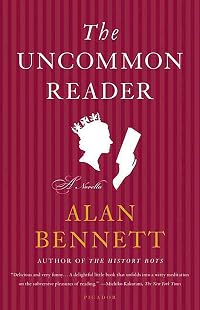
The Uncommon Reader
by Alan Bennett
On This Page
Description
In this deliciously funny novella that celebrates the pleasure of reading, the Uncommon reader is none other than Her Majesty the Queen who drifts accidentally into reading when her corgis stray into a mobile library parked at Buckingham Palace. She reads widely (J.R. Ackerley, Jean Genet, Ivy Compton Burnett, and the classics) and intelligently. Her reading naturally changes her world view and her relationship with people such as the oleaginous prime minister and his repellent advisers. She show more comes to question the prescribed order of the world, and loses patience with much that she has to do. In short, her reading is subversive. The consequence is, of course, surprising, mildly shocking and very funny. With the poignant and mischievous wit of The history boys, England's best loved author revels in the power of literature to change even the most uncommon reader's life. show lessTags
Recommendations











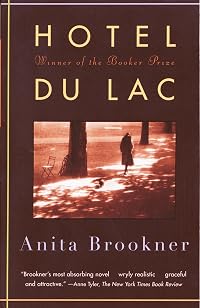
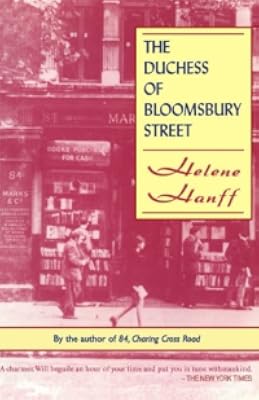
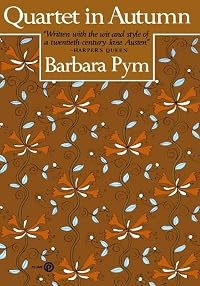
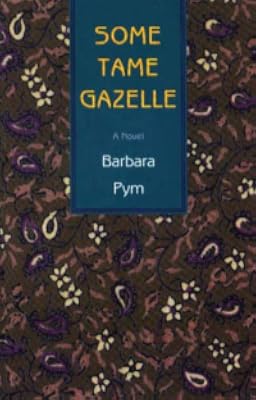






Member Recommendations
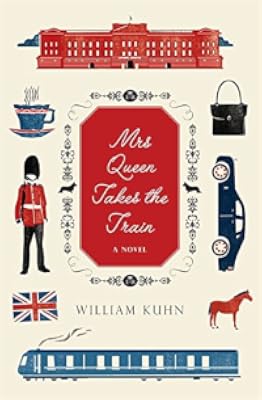
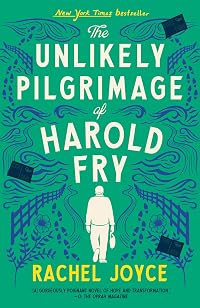
BookshelfMonstrosity Going in to the bookmobile to apologize for the disturbance created by one of her corgis, Queen Elizabeth II feels it would only be polite to check out a book. When she returns it, she checks out another . . . and then another. One of her pages becomes her abettor in the matter of securing books and reading them. Thus begins an amusing but also thought-provoking saga of how reading can change a person's habits and even outlook.
52
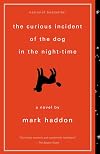

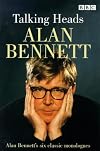
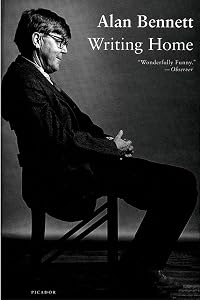
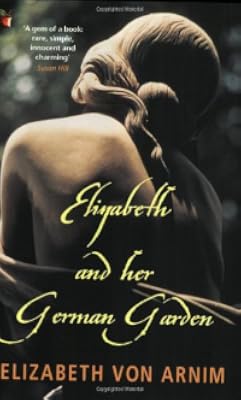
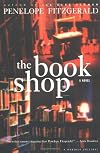
akfarrar Both these books explore the byways of characters whilst remaining unsentimental. They both expose weaknesses in modern British society if not in humanity. There is a wit in both and a degree of black humour.
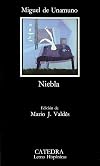
albavirtual También sobre libros y lecturas, pero sobre todo sobre el juego de la creación literaria, y sobre como los personajes de una novela quieren influir sobre el creador de la misma ¡¡¡¡¡¡
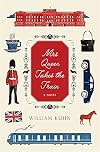
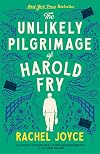
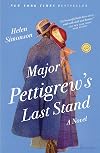
BookshelfMonstrosity Brimming with quirky Britishness, these novels take on the transformative powers of doing something different. While the more humorous, satirical Uncommon Reader imagines the Queen as an increasingly sophisticated reader, the more reflective Unlikely Pilgrimage is moving and poignant.
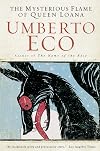
Alixtii Both books having writers getting meta about the nature of writing and reading as a protagonist goes through a process of reading very (and I mean very) many books. Both are written with wit and insight, although Eco's book is better.
03


Member Reviews
January's book club book - which I read in one sitting. the surmise is brilliantly simple, but the writing is sparkling and funny. The Queen discovers that there's a mobile library that arrives at the palace once a week when the corgis charge off after it. For politeness sake, she borrows a book, and then becomes an avid reader. A little late in life, maybe, a fact of which she is most aware. The progress of her reading is followed, from scatter gun beginnings to obsession. This is met with some resistance in various places, and there is a conspiracy to try and stop her - some of which backfire spectacularly! She progresses from reader to wanna be writer (and who of us has not had that thought). The sting in the tail is deliciously show more delivered, and thoroughly thought provoking.
Just brilliant, and I just know I'll be reading it again before we discuss it next month.
Yes, a re-read, but I now own a copy. Found it at the library book sale and simply had to have it. In fact I snaffled it as I was unpacking the books, that's how much I wanted it. And I'd finished it by tea-time.
We had a desert island discs conversation, but books & this is on my list. Just a sparkling good read, a simple surmise, but so well plotted that the ending takes my breath away every time.
An another re-read. In the mood for some "safe" reading and this gem, yet again, hits the spot. It's full of the most beautiful observational comment, some of it wryly funny, some of it quite poignant. The discovery of what it is to read, what it does to the person, stretches them yet can be diminishing at the same time, it's all in here. I still love the twist at the end, and the observation of the old school form of education - and how much more widely read those of the older generation seem to have been - is what struck me this time. If I were the Queen, I;d have whacked the Prime Minister over the head with a weighty handbag a long time ago!
Another re-read. I like the way that Alan Bennet captures what is probably our idea of the Queen and then subverts it ever so slightly. She starts behaving in a way that's not in keeping with out picture of her. Being late because she has her nose in a book is entirely understandable in a normal human, but it so at odds with our mental picture of the Queen that it is quite startling. And it doesn't matter how many times I read this, the whole universe of possibilities opened up by that last line still takes my breath away. Just imagine... show less
Just brilliant, and I just know I'll be reading it again before we discuss it next month.
Yes, a re-read, but I now own a copy. Found it at the library book sale and simply had to have it. In fact I snaffled it as I was unpacking the books, that's how much I wanted it. And I'd finished it by tea-time.
We had a desert island discs conversation, but books & this is on my list. Just a sparkling good read, a simple surmise, but so well plotted that the ending takes my breath away every time.
An another re-read. In the mood for some "safe" reading and this gem, yet again, hits the spot. It's full of the most beautiful observational comment, some of it wryly funny, some of it quite poignant. The discovery of what it is to read, what it does to the person, stretches them yet can be diminishing at the same time, it's all in here. I still love the twist at the end, and the observation of the old school form of education - and how much more widely read those of the older generation seem to have been - is what struck me this time. If I were the Queen, I;d have whacked the Prime Minister over the head with a weighty handbag a long time ago!
Another re-read. I like the way that Alan Bennet captures what is probably our idea of the Queen and then subverts it ever so slightly. She starts behaving in a way that's not in keeping with out picture of her. Being late because she has her nose in a book is entirely understandable in a normal human, but it so at odds with our mental picture of the Queen that it is quite startling. And it doesn't matter how many times I read this, the whole universe of possibilities opened up by that last line still takes my breath away. Just imagine... show less
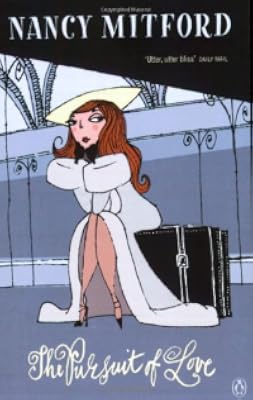
While out walking the corgis the Queen discovers the City of Westminster mobile library parked in one of the yards at Buckingham Palace, the only occupants being the driver/librarian Mr Hutchings and Norman Seakins who works in the palace kitchens. To be polite she borrows a book, a novel by Ivy Compton-Burnett, and in line with her philosophy of life dutifully finishes it despite finding it very dry. Returning the next week, she finds herself borrowing The Pursuit of Love by Nancy Mitford and so begins a love affair with reading which worries and irritates her staff, especially her over-conscientious private secretary Sir Kevin Scatchard, as once she begins to devote so much of her attention to books, she has much less attention to show more devote to the duties of being queen. A shared love of books liberates Norman from the kitchens to wait on the Queen personally, much to the irritation of the longer established staff, who manouever to get rid of him (and the books) from the Queen's life.
I love Alan Bennett's writing in general and I really love this book. I think it portrays beautifully the delights of reading: of how one book leads to another and how reading can been seen as a muscle that can be developed. The chasm between the reading world and the non-reading world is portrayed so well, for example where the Queen's equerries try to brief the people she meets about any likely conversation and warn them that:
'these days she was more likely to ask what the person was currently reading. At this most people looked blank (and sometimes panic-stricken) but nothing daunted the equerries came up with a list of suggestions. Though this meant that the Queen came away with a disproportionate notion of the popularity of Andy McNab and the near univeral affection for Joanna Trollope, no matter; at least embarrassment had been avoided.'
I should say at this point that I am a fairly ardent anti-royalist, who would vote to abolish the monarchy tomorrow if we had a referendum on the issue - not that that's at all likely of course. But that doesn't affect my love for this book which reads so much like a modern fairy tale. show less
I love Alan Bennett's writing in general and I really love this book. I think it portrays beautifully the delights of reading: of how one book leads to another and how reading can been seen as a muscle that can be developed. The chasm between the reading world and the non-reading world is portrayed so well, for example where the Queen's equerries try to brief the people she meets about any likely conversation and warn them that:
'these days she was more likely to ask what the person was currently reading. At this most people looked blank (and sometimes panic-stricken) but nothing daunted the equerries came up with a list of suggestions. Though this meant that the Queen came away with a disproportionate notion of the popularity of Andy McNab and the near univeral affection for Joanna Trollope, no matter; at least embarrassment had been avoided.'
I should say at this point that I am a fairly ardent anti-royalist, who would vote to abolish the monarchy tomorrow if we had a referendum on the issue - not that that's at all likely of course. But that doesn't affect my love for this book which reads so much like a modern fairy tale. show less
It was a hobby and it was in the nature of her job that she didn't have hobbies. ... Hobbies involved preferences and preferences had to be avoided; preferences excluded people. (p. 6)
Alan Bennett's wonderful novella imagines what would happen if the Queen suddenly became an avid reader. When her much-loved corgis get loose and charge into a mobile library, Queen Elizabeth II charges in after them, and then feels an obligation to check out a book. And thus begins her obsession with reading; her discovery of great literature. Reading very quickly takes precedence over a multitude of royal obligations, sometimes causing her to be late, or creating conversational cul-de-sacs with staff and subjects alike:
Still, though reading absorbed her, show more what the Queen had not expected was the degree to which it drained her of enthusiasm for anything else. It's true that the at prospect of opening yet another swimming-baths her heart didn't exactly leap up, but even so, she had not exactly resented having to do it. ... Now she surveyed the unrelenting progression of tours, travels, and undertakings stretching years into the future only with dread. (p. 60)
Well, what avid reader hasn't felt the same way from time to time? Bennett keeps tongue firmly in cheek throughout this short book, satirizing the royals and English society. Yet he also paints an engaging portrait of the "real life" led by a public figure. The Uncommon Reader was a wonderful diversion that could be read again and again with enjoyment. show less
Alan Bennett's wonderful novella imagines what would happen if the Queen suddenly became an avid reader. When her much-loved corgis get loose and charge into a mobile library, Queen Elizabeth II charges in after them, and then feels an obligation to check out a book. And thus begins her obsession with reading; her discovery of great literature. Reading very quickly takes precedence over a multitude of royal obligations, sometimes causing her to be late, or creating conversational cul-de-sacs with staff and subjects alike:
Still, though reading absorbed her, show more what the Queen had not expected was the degree to which it drained her of enthusiasm for anything else. It's true that the at prospect of opening yet another swimming-baths her heart didn't exactly leap up, but even so, she had not exactly resented having to do it. ... Now she surveyed the unrelenting progression of tours, travels, and undertakings stretching years into the future only with dread. (p. 60)
Well, what avid reader hasn't felt the same way from time to time? Bennett keeps tongue firmly in cheek throughout this short book, satirizing the royals and English society. Yet he also paints an engaging portrait of the "real life" led by a public figure. The Uncommon Reader was a wonderful diversion that could be read again and again with enjoyment. show less
I avoided this book for some time, under the vague impression that it was all about how special books are, how special people who read books are, how Great Literature can change your life. I hate stuff like that. The Uncommon Reader does have that theme, but in a completely unpretentious, charming way. The Queen is a wonderful character and the book is very funny. I love how disturbed the palace staff is by the Queen's new hobby - they can't quite figure out why reading books is a problem, but are sure that it is. And, of course, as the Queen grows bored with her duties and expands her mental horizons, they are proven perfectly correct.
Die Queen, der Inbegriff von Verantwortungsbewusstsein und Pflichterfüllung! Doch dann lernt sie das Lesen lieben - und zwar das Lesen von Büchern, nicht von Regierungserklärungen oder anderen drögen Vorlagen. Je mehr sie liest umso intensiver beschäftigt sie sich mit Büchern, sodass ihre Umgebung nach und nach zu spüren beginnt, wie ihr ihre Aufgabe als Repräsentantin des British Empire immer mehr zur Last wird. Undenkbar, die Queen hat keine Lust mehr! Während das Oberhaupt der Royals in seiner neuen Leidenschaft völlig aufgeht, werden von anderer Seite Pläne geschmiedet, wie man ihr das Lesen verleiden kann.
Gerade mal 111 zu lesende Seiten hat dieses feine Büchlein, dass in einem edlen, leuchtend roten Leineneinband mit show more Silberaufdruck daherkommt. Leicht zu lesen ist es, aber dennoch so viel mehr als eine seichte Unterhaltungslektüre. Lesen bildet, das wusste die Queen schon zuvor. Doch dass auch Romane nicht nur reiner Zeitvertreib sind, erkennt sie erst nach und nach. Ihr Blickfeld weitet sich, sie beginnt die Menschen um sich herum mit anderen Augen wahrzunehmen, erkennt ihre Beweggründe und Motivationen. Allmählich wird ihr bewusst, was wichtig und unwichtig ist und hinterfragt ihr eigenes Handeln: Ist Pflichterfüllung wirklich das Wichtigste im Leben?
Ein schöneres Plädoyer für's Lesen kann es kaum geben, das dazu noch wie gewohnt von Alan Bennett in wundervoll britischer Art und Weise formuliert wurde. Ein Buch, dass BücherliebhaberInnen lieben werden - aber auch die Anderen werden ihre Freude daran haben. Einfach schön! show less
Gerade mal 111 zu lesende Seiten hat dieses feine Büchlein, dass in einem edlen, leuchtend roten Leineneinband mit show more Silberaufdruck daherkommt. Leicht zu lesen ist es, aber dennoch so viel mehr als eine seichte Unterhaltungslektüre. Lesen bildet, das wusste die Queen schon zuvor. Doch dass auch Romane nicht nur reiner Zeitvertreib sind, erkennt sie erst nach und nach. Ihr Blickfeld weitet sich, sie beginnt die Menschen um sich herum mit anderen Augen wahrzunehmen, erkennt ihre Beweggründe und Motivationen. Allmählich wird ihr bewusst, was wichtig und unwichtig ist und hinterfragt ihr eigenes Handeln: Ist Pflichterfüllung wirklich das Wichtigste im Leben?
Ein schöneres Plädoyer für's Lesen kann es kaum geben, das dazu noch wie gewohnt von Alan Bennett in wundervoll britischer Art und Weise formuliert wurde. Ein Buch, dass BücherliebhaberInnen lieben werden - aber auch die Anderen werden ihre Freude daran haben. Einfach schön! show less
Utterly charming book about the Queen stumbling across a mobile library that visits Buckingham Palace regularly and being helped to choose reading matter by the helpful Norman. It's unusual because it shows how limited the Queen is by her very proper job which might not look like one, christening ships, knighting people, opening hospitals, hosting dinner parties and being nice to foreign politicians, but it certainly would feel like one. She escapes not from reality with a book, but into it, into our reality, how we all live.
To say more about the story would spoil this absolute gem of a book. Each facet is a carefully-polished, succinct paragraph of the best of slightly-comic writing on the surface, but there are always glints of show more Bennett's attitudes, tastes and where he would like to influence the reader with his obviously socialist stance. (Note to Americans, this is quite acceptable, and might even be praiseworthy, in Europe).
Bennett says that the reader creates the character as much as the author, which is, of course, self-evident. It is the reason why films often disappoint - the director's vision has clashed with that of the readers. That said, I would still love to see a play, a small film of this book. No one has ever written about the Queen in quite this way before: someone who would deeply like to be human and explore herself rather than being some sort of demi-god in a gilded cage of utmost comfort and deepest isolation.
In real life the Queen is supposed to have plastic containers of cereals on her breakfast table (placed there by the butler or the footman) and for holidays in a cottage in Scotland actually cooks for and washes up after the family and wears exactly what she pleases. A holiday? Not for us, oh no, she's not like us at all. show less
To say more about the story would spoil this absolute gem of a book. Each facet is a carefully-polished, succinct paragraph of the best of slightly-comic writing on the surface, but there are always glints of show more Bennett's attitudes, tastes and where he would like to influence the reader with his obviously socialist stance. (Note to Americans, this is quite acceptable, and might even be praiseworthy, in Europe).
Bennett says that the reader creates the character as much as the author, which is, of course, self-evident. It is the reason why films often disappoint - the director's vision has clashed with that of the readers. That said, I would still love to see a play, a small film of this book. No one has ever written about the Queen in quite this way before: someone who would deeply like to be human and explore herself rather than being some sort of demi-god in a gilded cage of utmost comfort and deepest isolation.
In real life the Queen is supposed to have plastic containers of cereals on her breakfast table (placed there by the butler or the footman) and for holidays in a cottage in Scotland actually cooks for and washes up after the family and wears exactly what she pleases. A holiday? Not for us, oh no, she's not like us at all. show less
One hates to say too much about this charming bauble of a book for fear of impinging upon the fragile spell it casts. One can say simply that it is a tale of how history might proceed were Queen Elizabeth II of the United Kingdom to become a dedicated and very good reader. What would she read? Where would she get her books? How would her staff react? How would her subjects react? What would the prime minister do? Would she scribble in the margins? Would she proselytize about reading? Would she begin to write?
There is no booklover who would not love to find this little tale in his Christmas stocking or as one of her Hanukkah gifts. You may find that the recipient is absent from the dishwashing after a holiday meal, reading this beautiful show more little soap bubble by the fireplace, utterly engrossed, but won't it feel good to know that your gift was so happily received? show less
There is no booklover who would not love to find this little tale in his Christmas stocking or as one of her Hanukkah gifts. You may find that the recipient is absent from the dishwashing after a holiday meal, reading this beautiful show more little soap bubble by the fireplace, utterly engrossed, but won't it feel good to know that your gift was so happily received? show less
Members
- Recently Added By
Published Reviews
ThingScore 88
Det är träffsäkert, roligt och nästan oanständigt underhållande...
added by andejons
Bennett manages to touch on some pointed issues in this little volume: life experience versus book experience; the pleasure of reading versus the sterility of being briefed; the riddle of what is "natural" behavior when a person lives so much in the public eye. And he makes you whoop with laughter while he's at it.
added by DieFledermaus
In recounting this story of a ruler who becomes a reader, a monarch who’d rather write than reign, Mr. Bennett has written a captivating fairy tale. It’s a tale that’s as charming as the old Gregory Peck-Audrey Hepburn movie “Roman Holiday,” and as keenly observed as Stephen Frears’s award-winning movie “The Queen” — a tale that showcases its author’s customary élan and show more keen but humane wit. show less
added by DieFledermaus
Lists

The Guardian's 1000 Novels Everyone Must Read
1,005 works; 549 members

Best books about books
209 works; 106 members

Best Contemporary Literary Fiction (Around the Last 30 Years)
400 works; 124 members

Recommend the 20 best books you've read in the last five years
2,168 works; 608 members

Best Books about Readers
23 works; 14 members

Best 21st Century Books (So Far)
679 works; 86 members

Favourite Books
1,820 works; 308 members

Books about Books
149 works; 24 members

Short and Sweet
246 works; 24 members

Best Laugh Out Loud Books
143 works; 49 members

Comfort Reads
221 works; 41 members

Books tagged favorites
390 works; 30 members

the old and the restless
62 works; 14 members

Favorite Short Fiction
228 works; 99 members

2000s (the decade, not the century)
184 works; 11 members

Global Reads: Books Set in the United Kingdom and Ireland
109 works; 5 members

Best Books Read for TIOLI
49 works; 14 members

End of Your Life Book Club
134 works; 4 members

A's favorite novels
100 works; 3 members

Authors from England
147 works; 4 members

Books Read in 2023
5,638 works; 147 members
Five star books
1,767 works; 110 members
Books Read in 2016
4,666 works; 199 members

Books Read in 2017
4,249 works; 129 members

Books Read in 2020
4,379 works; 123 members
SantaThing 2014 Gifts
299 works; 17 members

Books We Discovered On LibraryThing
530 works; 130 members

Top Five Books of 2024
795 works; 264 members

Books Read in 2024
4,727 works; 128 members

Books We Love to Reread
695 works; 298 members

Top Five Books of 2025
954 works; 304 members
Books We Want To Read Again For The First Time
384 works; 160 members

Books Read in 2021
5,361 works; 113 members

Mustich's 1000 Books to Read Before You Die: A Life Changing List
1,001 works; 20 members
Ten Books That Have Stayed With Me
160 works; 30 members

Books Read in 2011
684 works; 19 members

Books discovered on LibraryThing
256 works; 36 members

Books Read in 2013
1,630 works; 51 members

Books Read in 2018
4,360 works; 110 members

Art of Reading
188 works; 5 members

Books You Can Read in a Weekend
7 works; 1 member
Author Information

154+ Works 17,228 Members
Bennett was born in Armley in Leeds, West Yorkshire. He decided to apply for a scholarship at Oxford University. He was accepted by Exeter College, Oxford from which he graduated with a first-class degree in history. He was born on May 9, 1934; he is an English author, actor, humorist and playwright. Bennett was made an Honorary Fellow of Exeter show more College, Oxford in 1987. He was also awarded a D.Litt by the University of Leeds in 1990 and an Hon. PhD from Kingston in 1996. In October 2008 Bennett announced that he was donating his entire archive of working papers, unpublished manuscripts, diaries and books to the Bodleian Library free of charge, as a gesture of thanks and repaying a debt he felt he owed to the UK's social welfare system that had given him educational opportunities which his humble family background would otherwise never have afforded. In 2015 his title, Six Poets: Hardy to Larkin: An Anthology by Alan Bennett, made The New Zealand Best Seller List. He also made the list in 2016 with his title The Lady in the Van. (Bowker Author Biography) show less
Some Editions
Awards and Honors
Awards
Distinctions
Series
Belongs to Publisher Series
Common Knowledge
- Canonical title
- The Uncommon Reader
- Original title
- The uncommon reader
- Original publication date
- 2006
- People/Characters
- Elizabeth II, Queen of the United Kingdom; Sir Kevin Scatchard; Norman Seakins; Mr Hutchings; Prince Philip, Duke of Edinburgh; Sir Claude Pollington
- Important places
- Berkshire, England, UK; Buckingham Palace, London, England, UK; London, England, UK; Windsor, Berkshire, England, UK; Windsor Castle, Windsor, Berkshire, England, UK
- First words
- At Windsor it was the evening of the state banquet and as the president of France took his place beside Her Majesty, the royal family formed up behind and the procession slowly moved off and through into the Waterloo Chamber.
- Quotations
- Reading is untidy, discursive and perpetually inviting.
Had she been asked if reading had enriched her life she would have had to say yes, undoubtedly, though adding with equal certainty that it had at the same time drained her life of all purpose.
She read, of course, as one did, but liking books was something she left to other people. It was a hobby and it was in the nature of her job that she didn't have hobbies. Jogging, growing roses, chess or rock climbing, cake... (show all) decoration, model aeroplanes. No. Hobbies involved preferences and preferences had to be avoided; preferences excluded people.
The appeal of reading, she thought, lay in its indifference: there was something undeferring about literature. Books did not care who was reading them or whether one read them or not. All readers were equal, herself include... (show all)d.
Indulged and bad-tempered though they were, the dogs were not unintelligent, so it was not surprising that in a short space of time they came to hate books as the spoilsports that they were (and always have been).
What she was finding also was how one book led to another, doors kept opening wherever she turned and the days weren't long enough for the reading she wanted to do.
She switched the light on again and reached for her notebook and wrote:'You don't put your life into your books. You find it there.'
‘But ma'am must have been briefed, surely?' ‘Of course,' said the Queen, ‘but briefing is not reading. In fact it is the antithesis of reading. Briefing is terse, factual and to the point. Reading is untidy, discursive ... (show all)and perpetually inviting. Briefing closes down a subject, reading opens it up.'
‘Pass the time?' said the Queen. ‘Books are not about passing the time. They're about other lives. Other worlds. Far from wanting time to pass, Sir Kevin, one just wishes one had more of it. If one wanted to pass the time... (show all) one could go to New Zealand.'
Books did not defer. All readers were equal, and this took her back to the beginning of her life. As a girl, one of her greatest thrills had been on VE night when she and her sister had slipped out of the gates and mingled un... (show all)recognised with the crowds. There was something of that, she felt, to reading. It was anonymous; it was shared; it was common. And she who had led a life apart now found that she craved it. Here in these pages and between these covers she could go unrecognised.
...being a writer didn't excuse one from being a human being. Whereas (one didn't say this) being Queen does. I have to seem like a human being all the time, but I seldom have to be one. I have people to do that for me.'
...being a reader was next door to being a spectator, whereas when she was writing she was doing, and doing was her duty.
Between one day and the next, though, she sacked somebody else, and Sir Kevin came into his office the next morning to find his desk cleared. Though Norman's stint at the university had been advantageous, Her Majesty did not ... (show all)like being deceived, and though the real culprit was the prime minister's special adviser, Sir Kevin carried the can. Once it would have brought him to the block; these days it brought him a ticket back to New Zealand and an appointment as high commissioner. It was the block but it took longer.
‘Though it is true one is eighty and this is a sort of birthday party. But quite what there is to celebrate I'm not sure. I suppose one of the few things to be said for it is that one has at least achieved an age at which o... (show all)ne can die without people being shocked.' - Last words
- (Click to show. Warning: May contain spoilers.)'But . . . why do you think you're all here?'
- Blurbers
- Robertson, Greg; Fielding, Helen; Herman, Carol; Minzesheimer, Bob; Dirda, Michael; Newton, Maud (show all 18); McCarter, Jeremy; Kirn, Walter; Fried, Kerry; Shilling, Jane; Metcalf, Steven; Ketates, Jonathan; Thompson, David; Gates, David; McGrath, Charles; Devonshire, Deborah; Major, John; Kakutani, Michiko
- Original language
- English
- Canonical DDC/MDS
- 823.914
- Canonical LCC
- PR6052.E5
Classifications
Statistics
- Members
- 6,236
- Popularity
- 2,001
- Reviews
- 593
- Rating
- (3.92)
- Languages
- 18 — Catalan, Chinese, Czech, Danish, Dutch, English, Estonian, Finnish, French, German, Hebrew, Hungarian, Italian, Norwegian (Bokmål), Portuguese, Spanish, Swedish, Turkish
- Media
- Paper, Audiobook, Ebook
- ISBNs
- 77
- UPCs
- 1
- ASINs
- 25
