
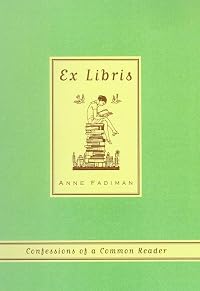
Ex Libris: Confessions of a Common Reader
by Anne Fadiman
On This Page
Description
Anyone who has ever loved a book will relish this playful, yet deeply literate collection of essays celebrating the joy of reading. From building castles with books as a child, to the trauma of joining her library with her husband's, the author reveals, with much warmth and humor, the intimate details of her lifelong affair with books. For Anne Fadiman, books are not built for function, and certainly not for decoration. They are close personal friends who never fail to delight and amaze. show more Fadiman gives a whole new meaning to the phrase "reading for pleasure" with her lyrical descriptions of the range of emotions evoked by literary experiences. And being read to is one of the greatest pleasures of all, according to Fadiman. You will understand just what she means as you sit back and enjoy Suzanne Toren's delightful reading. show lessTags
Recommendations
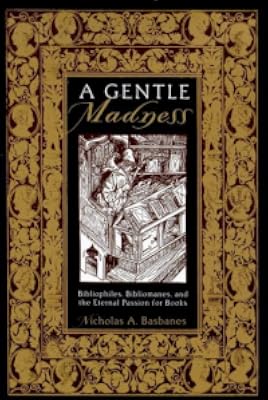
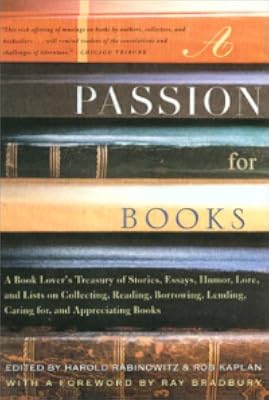
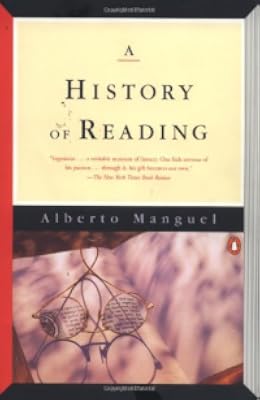
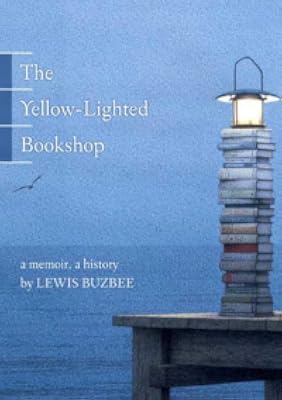
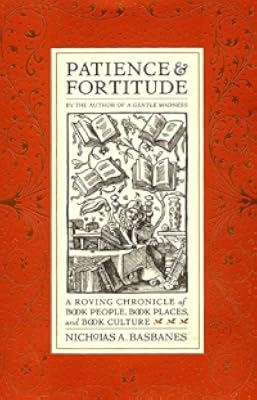
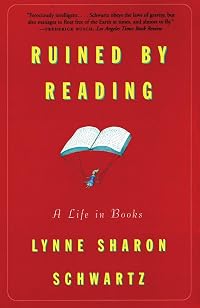
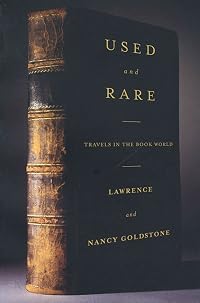
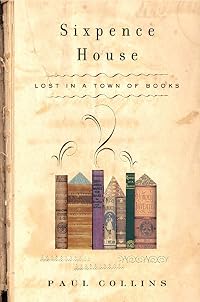
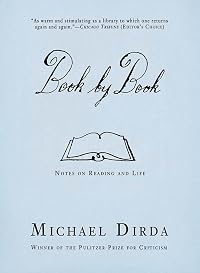
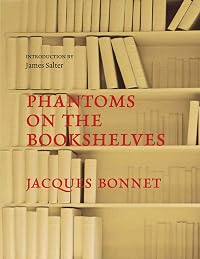
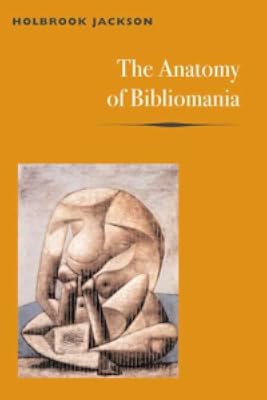
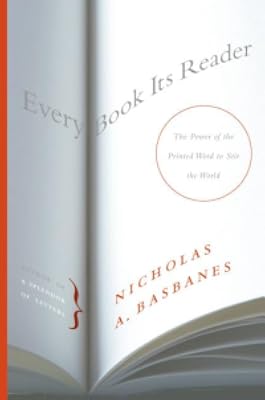

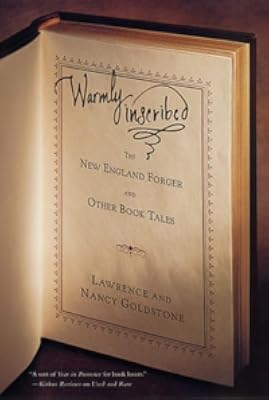
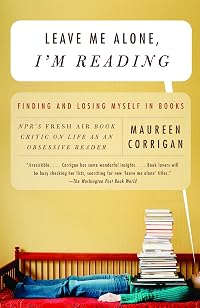
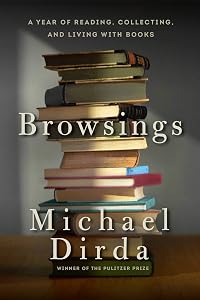
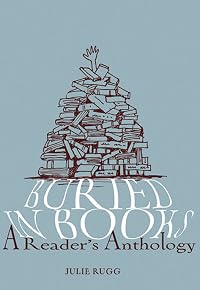
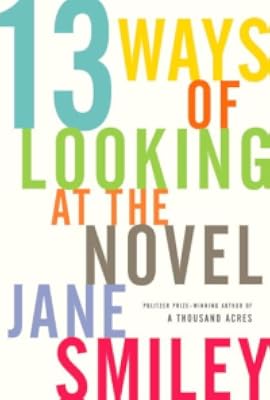
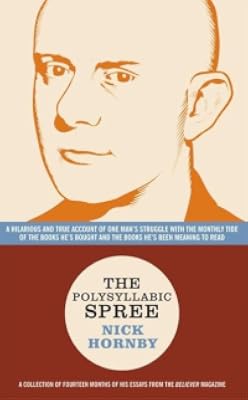

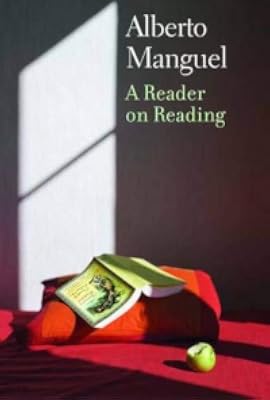
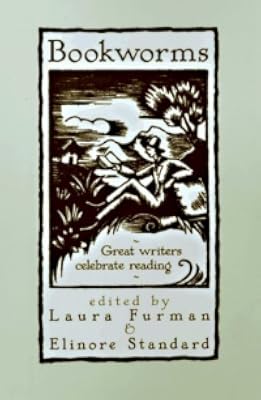
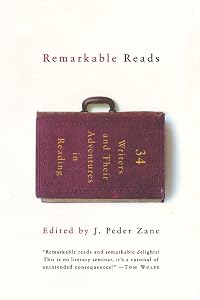
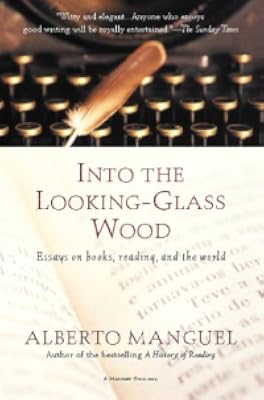
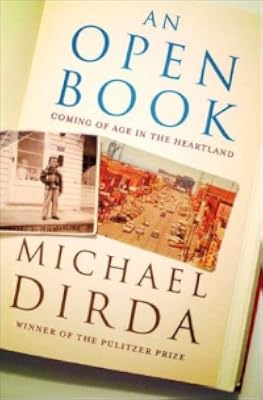
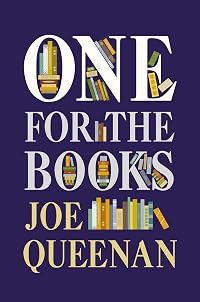
Member Recommendations
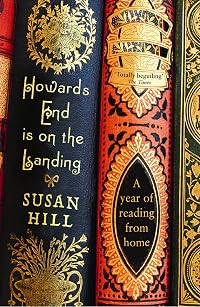
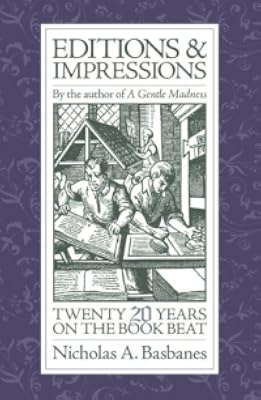
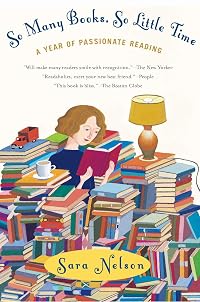
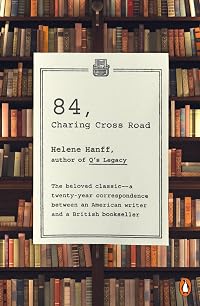
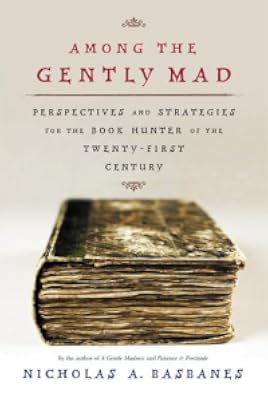
arcona How books brought together a community
90

generalkala More essays regarding habits of book-lovers everywhere!
40

souloftherose Anne Fadiman comments on Gladstone's On Books and the Housing of Them in her book about books entitiled Ex Libris. Both are wonderful short books about books which would be enjoyed by most book lovers.
betterthanchocolate Memoir of a reading life.
11
Member Reviews
This book has been recommended by so many here on LT I don't know why it took me so long to get to it. Simply a delightful book of essays about Fadiman's love of books and the role they've played in her life. And, surprise, it resonated with me just as much as any of the other wonderful books about books that I've read. Funny? Oh my yes.
Fadiman, who is hooked on books about polar explorations, on John Franklin's expedition:
"Who but an Englishman,Sir John Franklin, could have managed to die of starvation and scurvy along with all 129 of his men in a region of the Canadian Arctic whose game had supported an Eskimo colony for centuries? When the corpses of some of Franklin's officers and crew were later discovered, miles from their ships, show more the men were found to have left behind their guns but to have lugged such essentials as monogrammed silver cutlery, a backgammon board, a cigar case, a clothes brush, a tin of button polish, and a copy of The Vicar of Wakefield. These men may have been incompetent bunglers, but, by God, they were gentleman." (Page 25)
Oh my, she really knows how to turn a phrase. And who of us, has not found themselves in a similar situation and reacted exactly as she did here:
"I have spent many a lonely night in small town hotel rooms consoled by the Yellow Pages. Once, long ago, I bested a desperate bout of insomnia by studying the only piece of written material in my apartment that I had not already read twice: my roommate's 1974 Toyota Corolla manual. Under the circumstances (addiction, withdrawal, craving, panic), the section on the manual gearshift was as beautiful to me as Dante's vision of the Sempiternal in canto XXXI of Paradiso.(Page 113)
My husband has accused me of studying the phone book on more than one occasion. But my absolute favorite has got to be the essay about proofreading. My hubby has walked away from me in embarrassment as I pulled out a black marker and corrected a sign or three in the produce department at the local grocery store so I laughed out loud at this, as a pedant could only be expected to do, because it hit so close to home. Fadiman is lucky to be joined by her immediate family in the proofreading business:
"Of course, if you are a compulsive proofreader yourself---and if you are, you know it, since for the afflicted it is a reflex no more avoidable than a sneeze---you are thinking something quite different: What a fine, public-spirited family are the Fadimans! How generous, in these slipshod times, to share their perspicacity with the unenlightened!"
Why can't my hubby be more understanding? Anyway, if you want to laugh and pass a couple of hours in sheer delight, do pick up this little gem. Highly recommended. show less
Fadiman, who is hooked on books about polar explorations, on John Franklin's expedition:
"Who but an Englishman,Sir John Franklin, could have managed to die of starvation and scurvy along with all 129 of his men in a region of the Canadian Arctic whose game had supported an Eskimo colony for centuries? When the corpses of some of Franklin's officers and crew were later discovered, miles from their ships, show more the men were found to have left behind their guns but to have lugged such essentials as monogrammed silver cutlery, a backgammon board, a cigar case, a clothes brush, a tin of button polish, and a copy of The Vicar of Wakefield. These men may have been incompetent bunglers, but, by God, they were gentleman." (Page 25)
Oh my, she really knows how to turn a phrase. And who of us, has not found themselves in a similar situation and reacted exactly as she did here:
"I have spent many a lonely night in small town hotel rooms consoled by the Yellow Pages. Once, long ago, I bested a desperate bout of insomnia by studying the only piece of written material in my apartment that I had not already read twice: my roommate's 1974 Toyota Corolla manual. Under the circumstances (addiction, withdrawal, craving, panic), the section on the manual gearshift was as beautiful to me as Dante's vision of the Sempiternal in canto XXXI of Paradiso.(Page 113)
My husband has accused me of studying the phone book on more than one occasion. But my absolute favorite has got to be the essay about proofreading. My hubby has walked away from me in embarrassment as I pulled out a black marker and corrected a sign or three in the produce department at the local grocery store so I laughed out loud at this, as a pedant could only be expected to do, because it hit so close to home. Fadiman is lucky to be joined by her immediate family in the proofreading business:
"Of course, if you are a compulsive proofreader yourself---and if you are, you know it, since for the afflicted it is a reflex no more avoidable than a sneeze---you are thinking something quite different: What a fine, public-spirited family are the Fadimans! How generous, in these slipshod times, to share their perspicacity with the unenlightened!"
Why can't my hubby be more understanding? Anyway, if you want to laugh and pass a couple of hours in sheer delight, do pick up this little gem. Highly recommended. show less
Ex Libris is a thoroughly charming collection of eighteen short-form essays, all written on the theme of books. Fadiman's prose style is erudite and entertaining, and her reflections on life, love, and literature are consistently acute and insightful. Each essay, though brief, is chock-full of anecdotes and historical research, presented in a tone which is light without being fluffy, assertive without being dogmatic. For pretty much the entire book, it felt as if Fadiman were speaking directly to me and my soul, and again and again I found myself struck by strong feelings of kinship with everything she had to say (cf. "Never Do That To a Book", "You Are There", and "Secondhand Prose"). The essays I enjoyed the most, however, were the show more ones about books and marriage, and the role books have played between Fadiman and her spouse (esp. "Marrying Libraries", "Words on a Flyleaf").
Ex Libris is a humble book, but also a perfect one. Every bibliophile should do themselves the favor of reading it. show less
Ex Libris is a humble book, but also a perfect one. Every bibliophile should do themselves the favor of reading it. show less
36. Ex Libris: Confessions of a Common Reader by Anne Fadiman (1998, 165 pages, read July 20 - Aug 8)
There are so many things a writer can do with words, things that go beyond the basic, almost laconic straightforward meaning of the words. They can stir emotions, and suddenly writing can become wistful. They can hint and without ever saying anything challenging, create tension in the reader. It’s almost magic how they create something out of nothing.
I’m thinking about this after finishing [Ex Libris], which receives raves from widely spread areas of the LibraryThing spectrum. It’s, of course, a book of essays on the theme of reading and books. I can’t quite place my skepticism, but while I wanted to read this, I could not show more imagine what could possible be so special...and it’s variety I’m thinking of. Readers tends to have reading personalities characterized by certain kinds and ways of reading. I have never met anyone that reads quite the way I do. So, I just assume a book about reading will cover other ground, something of peripheral interest to me personally...and cover it in a way that is only peripherally interesting to me. What this means other than that I have some kind of personal issues about reading another reader’s writing on reading, I haven’t figured out yet.
Anyway, to Fadiman. Fadiman comes across to me as a highly skilled essay writer who can be great on occasion. She is exceptionally polished, and knows how to bring in many different things to link the reader to her points, and bring the reader in; and always one of those things has to do with some kind of literary anecdote.
She opens her preface with a short paragraph about an obsessed reader (of course) and a short paragraph highlighting her own reading obsession (we guessed that from the title), and then paragraph three opens:
I began to write Ex Libris when it occurred to me how curious it was that books are so often written about as if they were toasters. Is this brand of toaster better than that brand of toaster? At $24.95, is this toaster a best buy? There is nothing in how I may feel about my toaster ten years hence, and nothing about the tender feelings I may yet harbor for my old toaster. This model of readers as consumers--one I have abetted in many a book review myself--nearly omits what I consider the heart of reading:
If you need to find out what she considers the heart of reading, then, those few of you who haven’t read this yet, you’ll have to get your hands on your own copy. It’s outside my point. It’s that just like that Fadiman has captured my imagination. She’d pulled me away from my regular concerns and anxieties about life, she has my attention. And she did this over and over again. A wonderful collection of essays.
2013
http://www.librarything.com/topic/154187#4302388 show less
There are so many things a writer can do with words, things that go beyond the basic, almost laconic straightforward meaning of the words. They can stir emotions, and suddenly writing can become wistful. They can hint and without ever saying anything challenging, create tension in the reader. It’s almost magic how they create something out of nothing.
I’m thinking about this after finishing [Ex Libris], which receives raves from widely spread areas of the LibraryThing spectrum. It’s, of course, a book of essays on the theme of reading and books. I can’t quite place my skepticism, but while I wanted to read this, I could not show more imagine what could possible be so special...and it’s variety I’m thinking of. Readers tends to have reading personalities characterized by certain kinds and ways of reading. I have never met anyone that reads quite the way I do. So, I just assume a book about reading will cover other ground, something of peripheral interest to me personally...and cover it in a way that is only peripherally interesting to me. What this means other than that I have some kind of personal issues about reading another reader’s writing on reading, I haven’t figured out yet.
Anyway, to Fadiman. Fadiman comes across to me as a highly skilled essay writer who can be great on occasion. She is exceptionally polished, and knows how to bring in many different things to link the reader to her points, and bring the reader in; and always one of those things has to do with some kind of literary anecdote.
She opens her preface with a short paragraph about an obsessed reader (of course) and a short paragraph highlighting her own reading obsession (we guessed that from the title), and then paragraph three opens:
I began to write Ex Libris when it occurred to me how curious it was that books are so often written about as if they were toasters. Is this brand of toaster better than that brand of toaster? At $24.95, is this toaster a best buy? There is nothing in how I may feel about my toaster ten years hence, and nothing about the tender feelings I may yet harbor for my old toaster. This model of readers as consumers--one I have abetted in many a book review myself--nearly omits what I consider the heart of reading:
If you need to find out what she considers the heart of reading, then, those few of you who haven’t read this yet, you’ll have to get your hands on your own copy. It’s outside my point. It’s that just like that Fadiman has captured my imagination. She’d pulled me away from my regular concerns and anxieties about life, she has my attention. And she did this over and over again. A wonderful collection of essays.
2013
http://www.librarything.com/topic/154187#4302388 show less
I loved this. Adored it. It's been a long time since I finished a book and wanted to start all over again. I even read the acknowledgments to make it last longer. And when was the last time anyone said all that about a book of essays?
This is a book about books. It's actually a collection of essays that Fadiman (daughter of the late famed scholar and book lover Clifton Fadiman) wrote for Civilization, the magazine of the Library of Congress. I'm not sure the magazine exists anymore (which is a shame), but for several years at least, Fadiman wrote a column there called "The Common Reader." We're talking about essays such as "Marrying Libraries," which is all about how Fadiman and her husband George Howe Colt -- after several years living show more together and several more as a married couple -- finally took the leap and merged their book collections. Before that they each had their books segregated on opposite walls in their NYC loft apartment. Now, combining libraries doesn't sound like such a big deal. The hardest decision would be what to do about duplicates. Do you keep both, or does that imply a lack of faith in the relationship and a potential for splitting the libraries apart again in the future? But no. The most difficult aspect for Fadiman and Colt appeared to be deciding whose classification system they would use.
There's another essay on Fadiman's love of big words, otherwise known as sesquipedalians. (And yes, I already knew that. I just have trouble spelling it.) Her family used to collect them, trade them, and try to one up each other. I must add here that this is the first book I've read in a very long time where I actually needed to reach for the dictionary a couple of times. Though that might say more about what I'm reading than what Fadiman was writing.
At the end of the day, I found myself really wanting to know Anne Fadiman. I wanted to compare book collections with her, and chat over dinner. I wanted to have a dinner party, invite her, and ask her to bring along half a dozen of her friends that she mentions in the book. These are people who don't mind when she calls them up and asks what titles they used to steal off their parents bookshelves when they were kids. They sounded like good folks.
Anyway, I guess you could say I liked this book. By the end I really felt like I'd made a new friend. Not to mention a really long list of books that my new friend had recommended... show less
This is a book about books. It's actually a collection of essays that Fadiman (daughter of the late famed scholar and book lover Clifton Fadiman) wrote for Civilization, the magazine of the Library of Congress. I'm not sure the magazine exists anymore (which is a shame), but for several years at least, Fadiman wrote a column there called "The Common Reader." We're talking about essays such as "Marrying Libraries," which is all about how Fadiman and her husband George Howe Colt -- after several years living show more together and several more as a married couple -- finally took the leap and merged their book collections. Before that they each had their books segregated on opposite walls in their NYC loft apartment. Now, combining libraries doesn't sound like such a big deal. The hardest decision would be what to do about duplicates. Do you keep both, or does that imply a lack of faith in the relationship and a potential for splitting the libraries apart again in the future? But no. The most difficult aspect for Fadiman and Colt appeared to be deciding whose classification system they would use.
There's another essay on Fadiman's love of big words, otherwise known as sesquipedalians. (And yes, I already knew that. I just have trouble spelling it.) Her family used to collect them, trade them, and try to one up each other. I must add here that this is the first book I've read in a very long time where I actually needed to reach for the dictionary a couple of times. Though that might say more about what I'm reading than what Fadiman was writing.
At the end of the day, I found myself really wanting to know Anne Fadiman. I wanted to compare book collections with her, and chat over dinner. I wanted to have a dinner party, invite her, and ask her to bring along half a dozen of her friends that she mentions in the book. These are people who don't mind when she calls them up and asks what titles they used to steal off their parents bookshelves when they were kids. They sounded like good folks.
Anyway, I guess you could say I liked this book. By the end I really felt like I'd made a new friend. Not to mention a really long list of books that my new friend had recommended... show less
A delightful collection of essays by a bibliophile, for fellow bibliophiles. Small enough for a pocket, great for dipping in to.
She describes growing up a sesquipedalian, the joys (and otherwise) of trying to merge her library with that of her husband, the quirks of proof reading, and much more, as she shares her love of all things literary.
A delight from cover to cover and worth every one of the very pennies it costs.
She describes growing up a sesquipedalian, the joys (and otherwise) of trying to merge her library with that of her husband, the quirks of proof reading, and much more, as she shares her love of all things literary.
A delight from cover to cover and worth every one of the very pennies it costs.
This tidy little volume is a treasure. I find myself returning to it over and over for comfort, for amusement, for, most of all, a sense of belonging. I find myself wistfully nodding along as I read Ms. Fadiman describe her ink-soaked childhood, her library organizing dilemmas, her love affair with obscure interests. Ex Libris is the sort of book that makes you want to find someone, anyone who's willing to stand still long enough so that you might read a passage or two aloud to him or her. Oh, and you must hear this next bit as well...
A must for all true bibliophiles.
A must for all true bibliophiles.
Ah hopeful conceit, that borrowing this book would suffice! I ought to have known better, and indeed, after reading Anne Fadiman's entertaining collection of essays, it is clear that I will need to obtain a copy of my own. Such was my sense of recognition when reading some of these pieces, that I get the sense that I will be revisiting this title periodically.
A collection of eighteen short essays devoted to the author's "lifelong love affair with books and language," some of the delights of Ex-Libris include: Fadiman's account of the "marriage" of her library to that of her husband's; the distinction she draws between "courtly" and "carnal" bibliophiles (she classifies herself as one of the latter); the joys of inscriptions (in which I show more learned that the title page is customarily reserved for the author's signature); and the author's thoughtful discussion of gender issues in language.
Some of the author's bibliophilic idiosyncrasies, such as her incurable penchant for proofreading in any and all situations, and her preference for the "eternal" medium of ink, are quite familiar to me. Others, such as the joy of catalogs, were entirely new. I too can remember paging through the J. Peterman catalog, but my predominant reaction was one of irritation at their classist pretension. Does anyone remember the shirt that was meant to recall those "good old days" when your father put down a peasant revolt? Revolting is the right word!
Her taste for questionable catalogs notwithstanding, I found myself mostly in sympathy with Fadiman, whose essays reveal a wonderful sense of humor, tempered by a deeply-felt humanity. My only true criticism is reserved for the final essay Secondhand Reading, in which I believe the author completely misses the mark on used bookstores. To require that they provide the same sense of personality and intellectual community and cohesion, as would a personal library, is somewhat unreasonable (Heavens! An unreasonable bibliophile?).
It would be like reproaching Grand Central, an institution ineffably linked with all that is transitory in the human experience, with providing the onlooker too brief a glimpse of its travelers' lives. The view of the Grand Concourse may be somewhat overwhelming: looking out at all the many people coming and going, seemingly unrelated, each with a story unfolding behind and before them; but then, it is not meant to be a place of repose. The home, and the personal library, are. In much the same fashion, a used bookstore is merely a way-station through which countless books pass. It is melancholy only because all journeys are melancholy...
Finally, as another reviewer noted, this book provides the basis for a lively and satisfying conversation about the topic so dear to many of the readers here on goodreads. To wit: the beauty of books and the pleasure of reading. For that, I thank Anne Fadiman. I will close by noting (mostly because I couldn't find a way to work it into the main body of my review), that I did indeed know one of the sesqipedalians that so puzzled the author. It was, of course, "grimoire." YES! Finally! Intellectual vindication of my adult enjoyment of juvenile fantasy novels! show less
A collection of eighteen short essays devoted to the author's "lifelong love affair with books and language," some of the delights of Ex-Libris include: Fadiman's account of the "marriage" of her library to that of her husband's; the distinction she draws between "courtly" and "carnal" bibliophiles (she classifies herself as one of the latter); the joys of inscriptions (in which I show more learned that the title page is customarily reserved for the author's signature); and the author's thoughtful discussion of gender issues in language.
Some of the author's bibliophilic idiosyncrasies, such as her incurable penchant for proofreading in any and all situations, and her preference for the "eternal" medium of ink, are quite familiar to me. Others, such as the joy of catalogs, were entirely new. I too can remember paging through the J. Peterman catalog, but my predominant reaction was one of irritation at their classist pretension. Does anyone remember the shirt that was meant to recall those "good old days" when your father put down a peasant revolt? Revolting is the right word!
Her taste for questionable catalogs notwithstanding, I found myself mostly in sympathy with Fadiman, whose essays reveal a wonderful sense of humor, tempered by a deeply-felt humanity. My only true criticism is reserved for the final essay Secondhand Reading, in which I believe the author completely misses the mark on used bookstores. To require that they provide the same sense of personality and intellectual community and cohesion, as would a personal library, is somewhat unreasonable (Heavens! An unreasonable bibliophile?).
It would be like reproaching Grand Central, an institution ineffably linked with all that is transitory in the human experience, with providing the onlooker too brief a glimpse of its travelers' lives. The view of the Grand Concourse may be somewhat overwhelming: looking out at all the many people coming and going, seemingly unrelated, each with a story unfolding behind and before them; but then, it is not meant to be a place of repose. The home, and the personal library, are. In much the same fashion, a used bookstore is merely a way-station through which countless books pass. It is melancholy only because all journeys are melancholy...
Finally, as another reviewer noted, this book provides the basis for a lively and satisfying conversation about the topic so dear to many of the readers here on goodreads. To wit: the beauty of books and the pleasure of reading. For that, I thank Anne Fadiman. I will close by noting (mostly because I couldn't find a way to work it into the main body of my review), that I did indeed know one of the sesqipedalians that so puzzled the author. It was, of course, "grimoire." YES! Finally! Intellectual vindication of my adult enjoyment of juvenile fantasy novels! show less
Members
- Recently Added By
Published Reviews
ThingScore 88
The book is a modest, charming, lighthearted gambol among the stacks. It serves up neither ideas nor theories but anecdotes about the joys of collecting and reading books.
added by jburlinson
A terribly entertaining collection of personal essays about books, reading, language, and the endearing pathologies of those who love books.
added by jburlinson
Witty, enchanting and supremely well-written... One of the most delightful volumes to have come across my desk in a long while, a book of essays in celebration of bibliophilia that will appeal to anyone who's ever tootled about in a secondhand bookshop and who loves books.
added by Lemeritus
Lists

Books about Books
149 works; 24 members

Best books about books
209 works; 106 members

Bibliomemoirs
46 works; 8 members
Best Essay Collections
61 works; 24 members

Best Biographies, Autobiographies and Memoirs
465 works; 160 members

Top Five Books of 2013
1,562 works; 721 members

Recommend the 20 best books you've read in the last five years
2,168 works; 606 members

Books We Discovered On LibraryThing
530 works; 130 members

Books We Want To Read Again For The First Time
384 works; 160 members

Top Five Books of 2024
795 works; 264 members

Books Read in 2024
4,623 works; 126 members

Books We Love to Reread
688 works; 296 members
Club Read's Recommended Nonfiction Written by Women
618 works; 30 members

Books Read in 2017
4,249 works; 129 members

Books Read in 2018
4,360 works; 110 members

Books Read in 2016
4,666 works; 197 members
Five star books
1,755 works; 108 members

Favourite Books
1,817 works; 316 members

Female Author
1,235 works; 67 members

Books You Couldn't Finish
202 works; 32 members
Books tagged favorites
390 works; 30 members

The Five Books That Represent Us
390 works; 147 members
Author Information

28+ Works 12,461 Members
Anne Fadima is the editor of The American Scholar, Recipient of a National Magazine Award for Reporting, she has written for Civilization, Harper's, Life, and The New York Times, among other publications. She lives in New York City. (Bowker Author Biography)
Awards and Honors
Distinctions
Series
Belongs to Publisher Series
detebe (23646)
Work Relationships
Was inspired by
Common Knowledge
- Canonical title
- Ex Libris: Confessions of a Common Reader
- Original title
- Ex libris: Confessions of a Common Reader
- Original publication date
- 1998
- Dedication
- For Clifton Fadiman
and Annalee Jacoby Fadiman,
who built my ancestral castles - First words
- Preface:
When the Irish novelist John McGahern was a child, his sisters unlaced and removed one of his shoes while he was reading.
A few months ago, my husband and I decided to mix our books together. - Quotations
- Wake is just the right verb, because there is a certain kind of child who awakens from a book as from an abyssal sleep, swimming heavily up through layers of consciousness toward a reality that seems less real than the dream-... (show all)state that has been left behind.
I, on the other hand, believe that books, maps, scissors, and Scotch tape dispensers are all unreliable vagrants, likely to take off for parts unknown unless strictly confined to quarters.
It has long been my belief that everyone's library contains an Odd Shelf. On this shelf rests a small, mysterious corpus of volumes whose subject matter is completely unrelated to the rest of the library, yet which, upon clos... (show all)er inspection, reveals a good deal about its owner.
Americans admire success. Englishmen admire heroic failure.
In The Common Reader, Virginia Woolf (who borrowed her title from a phrase in Samuel Johnson’s Life of Gray) wrote of “all those rooms, too humble to be called libraries, yet full of books, where the pursuit of reading is... (show all) carried on by private people.” The common reader, she said, “differs from the critic and the scholar. He is worse educated, and nature has not gifted him so generously. He reads for his own pleasure rather than to impart knowledge or correct the opinions of others. Above all, he is guided by an instinct to create for himself, out of whatever odds and ends he can come by, some kind of whole.”
Promising to love each other for richer or for poorer, in sickness and in health—even promising to forsake all others—had been no problem, but it was a good thing the Book of Common Prayer didn’t say anything about marr... (show all)ying our libraries and throwing out the duplicates. That would have been a far more solemn vow, one that would probably have caused the wedding to grind to a mortifying halt.
Once, looking up from a passage on the ideal wife, I asked George, “Do you consider me a peerless flower of beauty and spotless purity which has been laid upon your bosom?” George responded with a neutral, peace-preservin... (show all)g, but not quite affirmative grunt.
How melancholy, by contrast, are the legions of inscribed copies one finds in any used-book rack, each a memorial to a betrayed friendship. Do the traitors believe that their faithlessness will remain secret? If so, they are ... (show all)sadly deluded. Hundreds of people will witness it, including, on occasion, the inscriber. Shaw once came across one of his books in a secondhand shop, inscribed To———with esteem, George Bernard Shaw. He bought the book and returned it to ———, adding the line, With renewed esteem, George Bernard Shaw.
Why should people instantly know if a woman, but not a man, was married? Why should they care? The need for Ms. was indisputable. The hitch was feeling comfortable saying it. It sounded too much like a lawn mower. Gradually, ... (show all)my ear retuned. Now, although it’s probably a moot point—everyone except telephone solicitors calls me Anne—I am, by process of elimination, Ms. Fadiman. I can’t be Miss Fadiman because I’m married. I can’t be Mrs. Fadiman because my husband is Mr. Colt. I can’t be Mrs. Colt because my name is still Fadiman. I am, to my surprise, the very woman for whom Ms. was invented.
My reactionary self, however, prevails when I hear someone attempt to purge the bias from “to each his own” by substituting “to each their own.” The disagreement between pronoun and antecedent is more than I can bear.... (show all) To understand how I feel about grammar, you need to remember that I come from the sort of family in which, at the age of ten, I was told I must always say hoi polloi, never “the hoi polloi,” because hoi meant “the,” and two “the’s” were redundant—indeed something only hoi polloi would say. (Why any ten-year-old would say hoi polloi in the first place is another, more pathological matter, but we won’t go into that here.)
I realize this is damning evidence—that once, when I ordered a chocolate cake to commemorate the closely proximate birthdays of my three co-Fadimans, I grabbed the order form from the bakery clerk, who had noted that it was... (show all) to say “HAPPY BIRTHDAY’S,” and corrected it. I knew my family would not be distracted by the silver dragées or the pink sugar rose; had I not narrowly averted the punctuational catastrophe, they would all have cried, in chorus, “There’s a superfluous apostrophe!”
The offenses included fifty-six disagreements between subject and verb, eight dangling participles, three improper subjunctives, three double negatives, twelve uses of “it‘s” for “its,” three uses of “its” for â... (show all)€œit’s,” three uses of “there” for “their,” three uses of “they’re” for “their,” and one use of “their” for “they’re.” Hunters shot dear; lovers exchanged martial vows; mental patients escaped from straight jackets; pianos tinkered; and Charles celebrated his twenty-fifth anniversary as the Prince of Whales. “There’s a huge demographic out there,” commented the News-Press film critic, “who appreciate good film and shouldn’t be taken for granite.” Even before I bumped into the large boulder at the end of that sentence, I had the feeling that I was reading a language other than English. I vowed I would never again take an intact declarative sentence for granite.
Our father, who often boasted that he had never actually done anything except think, was still the same person he had been when he started collecting books in the early 1920s. He and his library had never diverged. Our mother... (show all), on the other hand, had once led a life of action. And why had she stopped? Because she had had children. Her books, which seemed the property of a woman I had never met, defined the size of the sacrifice my brother and I had exacted.
The four hundred volumes that passed to me (which included the Trollopes but, unfortunately, not Fanny Hill) were at first segregated on their own wall, the bibliothecal equivalent of a separate in-law apartment. “You just ... (show all)don’t want your father’s Hemingways to be sullied by my Stephen Kings,” said George accusingly. “That’s not true.” He tried another tack. “Your father wouldn’t want his books to be a shrine. Didn’t you say he used to let you build castles with them?” This hit home. I realized that by keeping his library intact, I had hoped I might be able to keep my father, who was then eighty-six, intact as well. It was a strategy unlikely to succeed.
I lost the little volume. Or rather, it lost itself. Too slender to bear a title on its vermilion spine, On Books and the Housing of Them was invisibly squashed between two obese shelf-neighbors, much as a flimsy blouse on a ... (show all)wire hanger can disappear for months in an overstuffed closet. Then, last summer, when I pried out one of the adjacent books—the shelf was so crowded that a crowbar would have aided the operation—out tumbled the vanished ectomorph.
books get their value from the way they coexist with the other books a person owns, and that when they lose their context, they lose their meaning. - Last words
- (Click to show. Warning: May contain spoilers.)"I bought it," he said, "and took it home."
- Publisher's editor
- Galassi, Jonathan; Wimmer, Natasha
- Blurbers
- Lehmann-Haupt, Christopher; Minzesheimer, Bob; Baudoin, Patsy; Harlan, Megan; McCrum, Robert; Merriman, Ann Lloyd (show all 11); Steiner, Andy; Zane, J. Peder; Gopnik, Adam; Ozick, Cynthia; Hoagland, Edward
- Original language
- English
- Canonical DDC/MDS
- 814.54
- Canonical LCC
- PN4874
- Disambiguation notice
- The essays in this book appeared in a slightly different form, in Civilization magazine.
Classifications
- Genres
- Nonfiction, Literature Studies and Criticism, Biography & Memoir, General Nonfiction
- DDC/MDS
- 814.54 — Literature & rhetoric American literature in English American essays in English 20th Century 1945-1999
- LCC
- PN4874 — Language and Literature Literature (General) Literature (General) Journalism. The periodical press, etc. By region or country
- BISAC
Statistics
- Members
- 4,840
- Popularity
- 2,922
- Reviews
- 224
- Rating
- (4.19)
- Languages
- 12 — Catalan, Chinese, Danish, English, French, German, Norwegian (Bokmål), Norwegian, Polish, Portuguese, Spanish, Swedish
- Media
- Paper, Audiobook, Ebook
- ISBNs
- 23
- UPCs
- 1
- ASINs
- 17