
The Library at Night
by Alberto Manguel
On This Page
Description
Inspired by the process of creating a library for his fifteenth-century home near the Loire, in France, Alberto Manguel, the acclaimed writer on books and reading, has taken up the subject of libraries. "Libraries," he says, "have always seemed to me pleasantly mad places, and for as long as I can remember I've been seduced by their labyrinthine logic." In this personal, deliberately unsystematic, and wide-ranging book, he offers a captivating meditation on the meaning of libraries. Manguel, show more a guide of irrepressible enthusiasm, conducts a unique library tour that extends from his childhood bookshelves to the "complete" libraries of the Internet, from Ancient Egypt and Greece to the Arab world, from China and Rome to Google. He ponders the doomed library of Alexandria as well as the personal libraries of Charles Dickens, Jorge Luis Borges, and others. He recounts stories of people who have struggled against tyranny to preserve freedom of thought-the Polish librarian who smuggled books to safety as the Nazis began their destruction of Jewish libraries; the Afghani bookseller who kept his store open through decades of unrest. Oral "memory libraries" kept alive by prisoners, libraries of banned books, the imaginary library of Count Dracula, the library of books never written-Manguel illuminates the mysteries of libraries as no other writer could. With scores of wonderful images throughout, The Library at Night is a fascinating voyage through Manguel's mind, memory, and vast knowledge of books and civilizations. show lessTags
Recommendations
























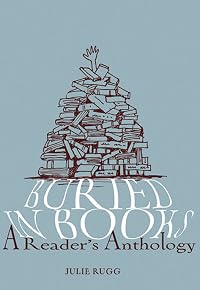
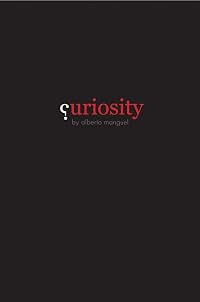
Member Recommendations
CGlanovsky Does for Maps what Manguel's book does for libraries.
CGlanovsky Bibliophiles meditate on the considerations of assembling a library
Jannes Nice Coffee table-ish book that should be a treat for anyone with an interest in libraries and library history.
CGlanovsky A bibliophile reflects on books, bookselling, writing and reading in the book-filled Welsh town of Hay-on-Wye

Member Reviews
There are many ways of thinking about libraries — many more than I had ever thought of until dipping into Alberto Manguel's The Library at Night. As a former librarian I was drawn to this book, especially since it was written by the author of A History of Reading which I read and enjoyed when it first appeared in the mid nineties.
Manguel, whose father was a diplomat, spent his teenage and college years in Argentina where he met the blind Jorge Luis Borges and became one of his readers.
Now in his sixties, Manguel has created an idyllic library, one wall of which is what is left of a 15th century barn near the Loire. His library at night provides a convenient jumping off point for many and various erudite ruminations on the idea of "the show more library" through the ages.
One of the delights of this book is the assemblage of many quotes from all times and all places about the significance of libraries for individuals and for communities. One could fill a commonplace book with all these quotes. And he is eminently quotable himself throughout as well. For example:
"I've spent half a century collecting books. Immensely generous, my books make no demands on me but offer all kinds of illuminations."
He occasionally says things with which I gently disagree. For instance:
"The love of libraries, like most loves, must be learned. No one stepping for the first time into a room made of books can know instinctively how to behave, what is expected, what is promised, what is allowed."
The instinctive love of libraries is not necessarily a function of "knowing how to behave, what is expected," etc. My love of libraries from my earliest memory was instantaneous, intense and absolutely instinctive. But this is a minor quibble.
He begins by asking the question: Why the human compulsion to collect and assemble and analyze information and organize it in books and libraries? And in a series of essays with titles that make vague reference to the subject matter, Manguel thinks out loud — and shares with us many anecdotes of what others have said and thought — about the Library of Alexandria, cataloging, the limitations of space and the development of encyclopedias as solutions to space problems, banned books, vanished and destroyed libraries, design of libraries, the chance juxtaposition of books on shelves that one finds serendipitously, the library as study, unread books, imaginary books and libraries, the implications of national libraries for national identity, the infinity of libraries and the World Wide Web. All these topics are peppered with anecdotes regarding famous collections ranging from the libraries of famous persons to great national collections.
4 stars show less
Manguel, whose father was a diplomat, spent his teenage and college years in Argentina where he met the blind Jorge Luis Borges and became one of his readers.
Now in his sixties, Manguel has created an idyllic library, one wall of which is what is left of a 15th century barn near the Loire. His library at night provides a convenient jumping off point for many and various erudite ruminations on the idea of "the show more library" through the ages.
One of the delights of this book is the assemblage of many quotes from all times and all places about the significance of libraries for individuals and for communities. One could fill a commonplace book with all these quotes. And he is eminently quotable himself throughout as well. For example:
"I've spent half a century collecting books. Immensely generous, my books make no demands on me but offer all kinds of illuminations."
He occasionally says things with which I gently disagree. For instance:
"The love of libraries, like most loves, must be learned. No one stepping for the first time into a room made of books can know instinctively how to behave, what is expected, what is promised, what is allowed."
The instinctive love of libraries is not necessarily a function of "knowing how to behave, what is expected," etc. My love of libraries from my earliest memory was instantaneous, intense and absolutely instinctive. But this is a minor quibble.
He begins by asking the question: Why the human compulsion to collect and assemble and analyze information and organize it in books and libraries? And in a series of essays with titles that make vague reference to the subject matter, Manguel thinks out loud — and shares with us many anecdotes of what others have said and thought — about the Library of Alexandria, cataloging, the limitations of space and the development of encyclopedias as solutions to space problems, banned books, vanished and destroyed libraries, design of libraries, the chance juxtaposition of books on shelves that one finds serendipitously, the library as study, unread books, imaginary books and libraries, the implications of national libraries for national identity, the infinity of libraries and the World Wide Web. All these topics are peppered with anecdotes regarding famous collections ranging from the libraries of famous persons to great national collections.
4 stars show less
Alberto Manguel's examination of the whats, hows, whys and wheretos of libraries starts with his own private library, constructed from a mediaeval wall in France and filled with everything from ancient tomes to cheap paperbacks, and ends up... well, like a book version of a private library. He divides his book not by strict, Dewey-like categories, but rather by free association, tackling his subject from different angles. The shelves say the library as myth, the library as shadow, the library as memory, the library as home... Like any private book collector, he returns time and again to his favourites, to his favourite topics, to anecdotes he can't shake, to literary figures he relates to - ending up with the rather heartbreaking image show more of Frankenstein's monster, "disappearing forever in the Arctic ice on the frozen blank page that is Canada, the garbage dump of so many of the world's daydreams."
And yet, of course, he keeps finding new ways out of it, into it, through it, within it. Yes, he covers the basics - why do we have libraries, what is their function, what is their history - and gives us brief glimpses and stories of book collectors, writers, critics and readers through the ages. But the philosophical, poetic view he takes of his subject means that the reader ends up not perhaps with hard, sequential knowledge, but with a great deal of understanding of their meaning, both historically and to Manguel himself; a cosmopolitan, born in Israel, raised in Argentina, working in Canada, living in France, he's built a Borgesian paradise of his own in his library. As, perhaps, all of us do to some extent.
The Library At Night is a curious concoction, part history, part memoir, all love letter; like a well-ordered but chaotic library, you'll glimpse long dusty corridors full of knowledge you'll make mental notes to visit at some point, well-lit ones full of people you've already met. It leaves you pleasantly full and refreshed, just a tiny bit drunk, yet already planning tomorrow's meal. As he notes, the best libraries are round, so you can always imagine that the last page of one book leads directly into the first of the next one. show less
And yet, of course, he keeps finding new ways out of it, into it, through it, within it. Yes, he covers the basics - why do we have libraries, what is their function, what is their history - and gives us brief glimpses and stories of book collectors, writers, critics and readers through the ages. But the philosophical, poetic view he takes of his subject means that the reader ends up not perhaps with hard, sequential knowledge, but with a great deal of understanding of their meaning, both historically and to Manguel himself; a cosmopolitan, born in Israel, raised in Argentina, working in Canada, living in France, he's built a Borgesian paradise of his own in his library. As, perhaps, all of us do to some extent.
The Library At Night is a curious concoction, part history, part memoir, all love letter; like a well-ordered but chaotic library, you'll glimpse long dusty corridors full of knowledge you'll make mental notes to visit at some point, well-lit ones full of people you've already met. It leaves you pleasantly full and refreshed, just a tiny bit drunk, yet already planning tomorrow's meal. As he notes, the best libraries are round, so you can always imagine that the last page of one book leads directly into the first of the next one. show less
Alberto Manguel's latest book is The Library at Night (published in the U.S. by Yale, 2008). The book emerged, he writes, out of his quest to discover why, in the face of the knowledge that all our human efforts to "lend the world a semblance of sense and order ... are sadly doomed to failure," we still try. "Though I knew from the start that the question would most likely remain unanswered, the quest seemed worthwhile for its own sake." The chapters, which all begin "The Library as ___," include anecdotal musings from Manguel's own life as a bibliophile and personal librarian, combined with always-pertinent historical background.
In his unmatched lyrical prose, Manguel treats many varied aspects of book collecting, librarianship and show more reading: library catalogs, reading out loud (I'm glad I'm not the only one who does that), the exclusiveness inherent in every library collection, Google Books, Borges' manufactured and hilarious list of "things to avoid in literature," &c. I could spend pages going through the various chapters, but I think I'll settle for just including a few quotes which I found particularly interesting:
- On the differences between a library at different times of day: "If the library of the morning suggests an echo of the severe and reasonably wishful order of the world, the library at night seems to rejoice in the world's essential, joyful muddle" (p. 14).
- On price stickers: "Old or new, the only sign I always try to rid my books of (usually with little success) is the price-sticker that malignant booksellers attach to the backs. These evil white scabs rip off with difficulty, leaving leprous wounds and traces of slime to which adhere the dust and fluff of ages, making me wish for a special gummy hell to which the inventor of these stickers would be condemned" (p. 17). Let's just say I couldn't agree more.
- "In a library, no shelf remains empty for long. Like Nature, libraries abhor a vacuum, and the problem of space is inherent in the very nature of any collection of books" (p. 66). Oh, too true!
- "Books come together because of the whims of a collector, the avatars of a community, the passing of war and time, because of neglect, care, the imponderability of survival, the random culling of the rag-and-bone trade, and it may take centuries before their congregation acquires the identifiable shape of a library" (p. 165).
- "What makes a library a reflection of its owner is not merely the choice of the titles themselves, but the mesh of associations implied in the choice. Our experience builds on experience, our memory on other memories. Our books build on other books that change or enrich them, that grant them a chronology apart from that of literary dictionaries" (p. 194).
- On how a modern-day Gulliver would view the reading habits of contemporary humans: "What would he see? He would see huge commercial temples in which books are sold in their thousands, immense edifices in which the published world is divided and arranged in tidy categories for the guided consumption of the faithful. He would see libraries with readers milling about in the stacks as they have done for centuries. He would see them exploring the virtual collections into which some of the books have been mutated, leading the fragile existence of electronic ghosts. Outside, too, the time-traveller would find a host of readers: on park benches, in the subway, on buses and trams and trains, in apartments and houses, everywhere. Our visitor could be excused if he supposed that ours was a literate society. On the contrary. Our society accepts the book as a given, but the act of reading - once considered useful and important, as well as potentially dangerous and subversive - is now condescendingly accepted as a pastime, a slow pastime that lacks efficiency and does not contribute to the common good. As our visitor would eventually realize, in our society reading is nothing but an ancillary act, and the great repository of our memory and experience, the library, is considered less a living entity than an inconvenient storage room" (p. 223). I'm not quite as sanguine as Manguel seems to be about the vibrancy of the biblio-universe, but I still found the quote fairly apt.
- Naturally there were points where I disagreed strongly with Manguel; most notably, he seems to have a soft spot for the Nicholson Bakers of the world, who don't seem to comprehend the limits of spatial and fiscal resources or the simple fact that some things (i.e. newspapers) just weren't meant to last forever in their original, highly-acidic form (p. 72-3).
- "Books may not change our suffering, books may not protect us from evil, books may not tell us what is good or what is beautiful, and they will certainly not shield us from the common fate of the grave. But books grant us myriad possibilities: the possibility of change, the possibility of illumination. It may be that there is no book, however well written, that can remove an ounce of pain from the tragedy of Iraq or Rwanda, but it may also be that there is no book, however foully written, that does not allow an epiphany for its destined reader" (p. 232).
- "As readers, we have gone from learning a precious craft whose secret was held by a jealous few, to taking for granted a skill that has become subordinate to principles of mindless financial profit or mechanical efficiency, a skill for which governments care almost nothing. We have gone from one scale of values to the other many times, and will no doubt do so again. We can't be spared this erratic course, which seems to be an intrinsic part of our human nature, but we can at least sway with the knowledge of our swaying, and with the conviction that at one point or another our skill will once again be recognized as of the essence" (p. 232-3)..
- On not reading all the books in your library: "... a library, whatever its size, need not be read in its entirety to be useful; every reader profits from a fair balance between knowledge and ignorance, recall and oblivion" (p. 254).
- "Electronic text that requires no page can amicably accompany the page that requires no electricity; they need not exclude each other in an effort to serve us best" (p. 321-2).
As one of the preeminent contemporary writers on biblio-things, Manguel's views and musings are always welcome, even in the infrequent cases where I didn't share his position. His rich, delightful writing is a pleasure to read, and as with all of his other works, this one is well worth reading.
http://philobiblos.blogspot.com/2008/06/book-review-library-at-night.html show less
In his unmatched lyrical prose, Manguel treats many varied aspects of book collecting, librarianship and show more reading: library catalogs, reading out loud (I'm glad I'm not the only one who does that), the exclusiveness inherent in every library collection, Google Books, Borges' manufactured and hilarious list of "things to avoid in literature," &c. I could spend pages going through the various chapters, but I think I'll settle for just including a few quotes which I found particularly interesting:
- On the differences between a library at different times of day: "If the library of the morning suggests an echo of the severe and reasonably wishful order of the world, the library at night seems to rejoice in the world's essential, joyful muddle" (p. 14).
- On price stickers: "Old or new, the only sign I always try to rid my books of (usually with little success) is the price-sticker that malignant booksellers attach to the backs. These evil white scabs rip off with difficulty, leaving leprous wounds and traces of slime to which adhere the dust and fluff of ages, making me wish for a special gummy hell to which the inventor of these stickers would be condemned" (p. 17). Let's just say I couldn't agree more.
- "In a library, no shelf remains empty for long. Like Nature, libraries abhor a vacuum, and the problem of space is inherent in the very nature of any collection of books" (p. 66). Oh, too true!
- "Books come together because of the whims of a collector, the avatars of a community, the passing of war and time, because of neglect, care, the imponderability of survival, the random culling of the rag-and-bone trade, and it may take centuries before their congregation acquires the identifiable shape of a library" (p. 165).
- "What makes a library a reflection of its owner is not merely the choice of the titles themselves, but the mesh of associations implied in the choice. Our experience builds on experience, our memory on other memories. Our books build on other books that change or enrich them, that grant them a chronology apart from that of literary dictionaries" (p. 194).
- On how a modern-day Gulliver would view the reading habits of contemporary humans: "What would he see? He would see huge commercial temples in which books are sold in their thousands, immense edifices in which the published world is divided and arranged in tidy categories for the guided consumption of the faithful. He would see libraries with readers milling about in the stacks as they have done for centuries. He would see them exploring the virtual collections into which some of the books have been mutated, leading the fragile existence of electronic ghosts. Outside, too, the time-traveller would find a host of readers: on park benches, in the subway, on buses and trams and trains, in apartments and houses, everywhere. Our visitor could be excused if he supposed that ours was a literate society. On the contrary. Our society accepts the book as a given, but the act of reading - once considered useful and important, as well as potentially dangerous and subversive - is now condescendingly accepted as a pastime, a slow pastime that lacks efficiency and does not contribute to the common good. As our visitor would eventually realize, in our society reading is nothing but an ancillary act, and the great repository of our memory and experience, the library, is considered less a living entity than an inconvenient storage room" (p. 223). I'm not quite as sanguine as Manguel seems to be about the vibrancy of the biblio-universe, but I still found the quote fairly apt.
- Naturally there were points where I disagreed strongly with Manguel; most notably, he seems to have a soft spot for the Nicholson Bakers of the world, who don't seem to comprehend the limits of spatial and fiscal resources or the simple fact that some things (i.e. newspapers) just weren't meant to last forever in their original, highly-acidic form (p. 72-3).
- "Books may not change our suffering, books may not protect us from evil, books may not tell us what is good or what is beautiful, and they will certainly not shield us from the common fate of the grave. But books grant us myriad possibilities: the possibility of change, the possibility of illumination. It may be that there is no book, however well written, that can remove an ounce of pain from the tragedy of Iraq or Rwanda, but it may also be that there is no book, however foully written, that does not allow an epiphany for its destined reader" (p. 232).
- "As readers, we have gone from learning a precious craft whose secret was held by a jealous few, to taking for granted a skill that has become subordinate to principles of mindless financial profit or mechanical efficiency, a skill for which governments care almost nothing. We have gone from one scale of values to the other many times, and will no doubt do so again. We can't be spared this erratic course, which seems to be an intrinsic part of our human nature, but we can at least sway with the knowledge of our swaying, and with the conviction that at one point or another our skill will once again be recognized as of the essence" (p. 232-3)..
- On not reading all the books in your library: "... a library, whatever its size, need not be read in its entirety to be useful; every reader profits from a fair balance between knowledge and ignorance, recall and oblivion" (p. 254).
- "Electronic text that requires no page can amicably accompany the page that requires no electricity; they need not exclude each other in an effort to serve us best" (p. 321-2).
As one of the preeminent contemporary writers on biblio-things, Manguel's views and musings are always welcome, even in the infrequent cases where I didn't share his position. His rich, delightful writing is a pleasure to read, and as with all of his other works, this one is well worth reading.
http://philobiblos.blogspot.com/2008/06/book-review-library-at-night.html show less
I so enjoyed this book, an homage to libraries of all sorts - personal, public, national, and even imaginary. Each chapter is almost an essay in its own right, though Manguel often builds on thoughts from one to the next. This book was as much over my head when it came to literature as Stephen Hawking's A Brief History of Time was over my head in science (and I was an English major!). Manguel's erudition often intimidated me, yet he is never stuffy. His musings become an interesting mix of philosophy, history, and literary criticism that made me wish my mental library was a little closer to his so that I could follow more of his thoughts. I most loved the book when he was meandering, talking about personal libraries or love of books, show more and I wish the book was my own so I could underline passages or revisit it whenever I like. show less
Manguel's musings about libraries and related matters are, as is to be expected from this most genial and educated of writers, wide ranging and fascinating. I especially enjoyed the anecdotes and the stories about Jorge Luis Borges, the great Argentinian writer who Manguel knew, and whom he seems most to resemble in his effortless erudition. I envy both Manguel's writing and his life--such as sitting at nighttime beneath the trees outside his French home discussing imaginary books and libraries with his friends. Could there be a better life? Still, when all is said and done, as enjoyable as this book is, it isn't quite in the same league as his A History of Reading, so I have withheld one star--and I'm already feeling guilty about it!
I love libraries, visit one weekly and, appropriately enough, I borrowed this book from my local library. In my youth my dream had been to own a large library with walled shelves along with comfortable chairs, low lighting, and reading tables. That hasn't quite worked out like I had hoped-my books are double-stacked on my shelves and sitting in piles on the floor! Alberto Manguel built his dream library out of the remains of an old stone barn and filled it with his many books. It sounds so beautiful and I am so very envious.
The book describes libraries of the past, and in many forms and settings. I found out that the famous Library at Alexandria did not burn down in one big conflagration, it more just withered away. He writes of secret show more libraries, historical libraries, national libraries, imagined libraries, book burnings (sadly they still happen, and here in the United States), and much more. We live in a society where books are being banned and librarians and teachers can be arrested for carrying or promoting certain books. Where the U.S government can flag library patrons for books that they take out. Funds are being dramatically cut to libraries. This is very sad and terrible. For many, libraries are the only source of books, study, and reading. Libraries are necessary for a free society. I think I need to re-read Bradbury's Fahrenheit 451...
Manguel writes almost poetically in his descriptions, and this was a joy to read. Anyone who loves books and libraries (everyone in Goodreads?) will enjoy this. And use an "I read banned books" bookmark-I did!! show less
The book describes libraries of the past, and in many forms and settings. I found out that the famous Library at Alexandria did not burn down in one big conflagration, it more just withered away. He writes of secret show more libraries, historical libraries, national libraries, imagined libraries, book burnings (sadly they still happen, and here in the United States), and much more. We live in a society where books are being banned and librarians and teachers can be arrested for carrying or promoting certain books. Where the U.S government can flag library patrons for books that they take out. Funds are being dramatically cut to libraries. This is very sad and terrible. For many, libraries are the only source of books, study, and reading. Libraries are necessary for a free society. I think I need to re-read Bradbury's Fahrenheit 451...
Manguel writes almost poetically in his descriptions, and this was a joy to read. Anyone who loves books and libraries (everyone in Goodreads?) will enjoy this. And use an "I read banned books" bookmark-I did!! show less
Librarians are really good at telling each other about how wonderful and essential libraries are. I don't mean that as a statement of judgement. I think our affinity for libraries and what can be found in them is more than justified, but that of course is what brought me to the program and to this book. Manguel affirms through this beautiful exegesis just how very magical libraries are--as place, as identity, as mind, as shadow. I read it through saying yes, yes that's why libraries matter, that's what they've done, that's what they've been, this is what they are and this is what the humans that felt the desire for them are.
I want to sneak into Manguel's library in France and live there (would he mind? would I find a colony of migrant show more librarians already there? I can't be the first to have thought of this). I was sorry to have missed his talk at the Library and Archives Canada by just a few days. He draws from a vast array of knowledge, gives you the impression he's pulled it from his shelves, coming across strongly like an Argentinian Eco. The book is, of course, rich with reference to other books which means my reading list will bulk up exponentially, especially if another of his books appears on it. show less
I want to sneak into Manguel's library in France and live there (would he mind? would I find a colony of migrant show more librarians already there? I can't be the first to have thought of this). I was sorry to have missed his talk at the Library and Archives Canada by just a few days. He draws from a vast array of knowledge, gives you the impression he's pulled it from his shelves, coming across strongly like an Argentinian Eco. The book is, of course, rich with reference to other books which means my reading list will bulk up exponentially, especially if another of his books appears on it. show less
Members
- Recently Added By
Published Reviews
ThingScore 85
The Library at Night, fortunately, is more than a tour of the microcosm contained in Manguel's converted barn. Its fondness for leathery bindings and its fussy annoyance about the 'evil white scabs' of price-stickers slimily glued to book jackets soon give way to a crusading defence of the library as a mental sanctuary, a repository of memory, the only kind of home that has any emotional value show more for Manguel the deracinated cosmopolitan. show less
added by Ludi_Ling
Manguel beschrijft de vele facetten en problemen van het verzamelen, zowel voor de particuliere verzamelaar als voor de professionele bibliothecaris.
Wie het boek van Alberto Manguel leest, maakt een boeiende en interessante reis door de boekenwereld van vele eeuwen. Boeiende beschrijvingen, doortrokken met anekdotes die in Manguels fabelachtige geheugen liggen opgeslagen. Ik raad iedereen die show more meer dan honderd boeken heeft aan dit boek te kopen en te lezen show less
Wie het boek van Alberto Manguel leest, maakt een boeiende en interessante reis door de boekenwereld van vele eeuwen. Boeiende beschrijvingen, doortrokken met anekdotes die in Manguels fabelachtige geheugen liggen opgeslagen. Ik raad iedereen die show more meer dan honderd boeken heeft aan dit boek te kopen en te lezen show less
added by sneuper
De bibliotheek bij nacht is een boek over de manieren waarop de mens door de eeuwen heen boeken heeft verzameld en bibliotheken heeft vormgegeven. Manguel is niet alleen geïnteresseerd in geschiedenis en architectuur, maar ook in de psychologie van de bibliothecaris, waarbij hij volop ruimte biedt aan anekdotes die ergens in zijn fabelachtige geheugen lagen opgeslagen („Ik denk in citaten”).
added by sneuper
Lists

Books about Books
149 works; 24 members

Best books about books
209 works; 106 members

Bibliomemoirs
46 works; 8 members

Recommend the 20 best books you've read in the last five years
2,168 works; 606 members

Top Five Books of 2016
795 works; 228 members

Used books to buy next
565 works; 1 member

Favourite Books
1,819 works; 316 members

Books Read in 2016
4,666 works; 199 members

Books Read in 2021
5,361 works; 114 members

2024 Reads
31 works; 1 member

Books Read in 2008
335 works; 8 members

Books Read in 2025
4,128 works; 98 members
Author Information

Alberto Manguel is a Canadian writer, translator, editor, and critic. Born in Buenos Aires, he has since resided in Israel, Argentina, Europe, the South Pacific, and Canada.
Some Editions
Series
Belongs to Publisher Series
Common Knowledge
- Canonical title*
- Nattens bibliotek
- Original title
- The Library at Night
- Alternate titles*
- De bibliotheek bij nacht : de liefde voor boeken en de kunst van het verzamelen
- Original publication date
- 2006
- People/Characters
- Denis Diderot
- Epigraph
- In the sixteenth century, the Ottoman poet Adbullatif Celebi, better known as Latifi, called each of the books in his library "a true and loving friend who drives away all cares."
- Dedication
- This book is for Craig.
- First words
- The library in which I have at long last collected my books began life as a barn sometime in the fifteenth century, perched on a small hill south of the Loire.
- Quotations
- If a library is a mirror of the universe, then a catalogue is a mirror of that mirror.
Writing about the librarian's action [hiding the books], Borzykowski remarked that it was carried out "without any consideration as to whether anyone would ever need the saved books": it was an act of rescuing memory per se. ... (show all)The universe, the ancient cabbalists believed, is not contingent on our reading it; only on the possibility of our reading it.
In order for these nightly imaginations to flourish, I must allow my other senses to awaken—to see and touch the pages, to hear the crinkle and the rustle of the paper and the fearful crack of the spine, to smell the wood o... (show all)f the shelves, the musky perfume of the leather bindings, the acrid scent of my yellowing pocket books. Then I can sleep.
"...the Library of Congress's catalogues...include such curious categories as:
~ banana research
~ bat binding
~ boots and shoes in art
~ chickens in religion and folklore
~ sewage: collected wor... (show all)ks - Last words
- (Click to show. Warning: May contain spoilers.)Perhaps consolation.
- Blurbers
- Kurzweil, Allen; Lessing, Doris
- Original language
- English
- Canonical DDC/MDS
- 027.009
- Canonical LCC
- Z721
*Some information comes from Common Knowledge in other languages. Click "Edit" for more information.
Classifications
- Genres
- Nonfiction, General Nonfiction, History, Literature Studies and Criticism
- DDC/MDS
- 027.009 — Computer science, information & general works Library & information sciences General libraries and archives
- LCC
- Z721 — Bibliography, Library Science and Information Resources Libraries Libraries (General)
- BISAC
Statistics
- Members
- 2,864
- Popularity
- 6,333
- Reviews
- 73
- Rating
- (4.12)
- Languages
- 15 — Arabic, Chinese, Czech, Dutch, English, French, German, Italian, Norwegian (Bokmål), Portuguese, Romanian, Slovenian, Spanish, Swedish, Turkish
- Media
- Paper, Ebook
- ISBNs
- 36
- ASINs
- 7