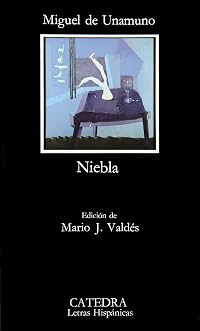
Mist
by Miguel de Unamuno
On This Page
Description
Mist (Niebla), published in 1914, is one of Miguel de Unamuno's key works; a truly Modernist work of Europe-wide significance which aims to shatter the conventions of fiction, using the novel as a vehicle for exploration of philosophical themes.The plot revolves around the character of Augusto, a wealthy, intellectual and introverted young man and his love affair with Eugenia, which eventually ends in heartbreak. Augusto decides to kill himself, but decides that he needs to consult Unamuno show more himself, who had written an article on suicide which Augusto had read. When Augusto speaks with Unamuno, the truth is revealed that Augusto is actually a fictional character whom Unamuno has created. Augusto is not real, Unamuno explains, and for that reason cannot kill himself. Augusto asserts that he exists, even though he acknowledges internally that he doesn't, and threatens Unamuno by telling him that he is not the ultimate author. Augusto reminds Unamuno that he might be just one of God's dreams. Augusto dies and the book ends with the author himself debating to himself about bringing back the character of Augusto. He establishes, however, that this would not be feasible.Following on from his translation of Abel Sanchez , John Macklin's edition provides a much needed new English translation, alongside the Spanish text, together with a substantial introduction. show lessTags
Recommendations


















Member Recommendations

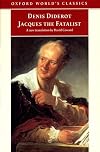
thorold Although the philosophical ideas discussed are rather different, Diderot and Unamuno have a lot of common ground in the random, discursive way they tell the story.
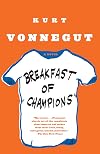
CGlanovsky Books in which the author appears as himself and interacts with the characters while manipulating their fates.
Member Reviews
Originally published in 1914, this is Unamuno's best-known work of fiction. It's very much a novel written by a philosophy professor, where the characters are constantly breaking off the action to discuss the fundamental problems of human existence, but it's presented in a very playful and entertaining way. The ostensible storyline is a rather silly romantic comedy full of rival suitors, servants, scheming aunts and misunderstandings: it could a P.G. Wodehouse story, but it also has an Enlightenment flavour that would go well with Beaumarchais, Diderot, or Sterne (in fact, it would have been perfect for the plot of a Mozart/Da Ponte opera). However, the Bertie Wooster/Almaviva protagonist, Augusto, is not a romantic buffoon, but a show more tragic existentialist hero after the manner of Meursault, who is ultimately destroyed by his inability to find convincing evidence of his own existence. There is also a metatextual element, with not one but two putative authors jumping in and out of the story and arguing about whether it is a novel or something quite different, a nivola. It sounds like a mess, but Unamuno has both the charm and the intellectual strength of purpose to get away with it, and I think it would be quite readable even for someone who doesn't really care for philosophy. show less
I have read some heavy handed pseudo-philosophy novels recently [The Elegance of the Hedgehog] immediately springs to mind and so it was a joy to read Unamuno’s Mist, which refuses to take itself too seriously although it deals with issues such as the insecurity of modern man and existential existence. Published in 1914 and translated from the Spanish by Marciano Guerre as recently as 2013 it starts by telling the simple story of Augusto Perez: a well to do young man who has recently lost his mother. He is out for his morning constitutional and for no particular reason finds himself following a young woman back to her house. He makes enquiries through the concierge and finds out that the young woman (Eugenia) is a piano teacher, he show more soon fancies himself as a suitor and makes more polite enquiries. Augusto lives alone with his two servants and a foundling dog and is vaguely seeking some direction to his life. He has monologues mainly addressed to his dog, has conversations with his servants and a couple of friends on the subject of women (whom he has only recently discovered) and finds himself chatting up his laundry maid Rosario. Eugenia rejects his suite as she is in love with the lazy out of work Mauricio, but when she learns about Rosario she feels slighted and sets out to win back Augusto.
The reader is alerted by the Prologue written by Victor Goti (who is a character in the novel) that all is not as it seems. A post prologue written by Unamuno questions the existence of Señor Goti and takes him to task about questioning the fate of Augusto. Goti has hinted in his prologue that Unamuno delights in playing tricks with metaphysical concepts and has been criticised for producing material that is for jesting and romping. It soon becomes clear that this is exactly what Unamuno is doing with Mist. There is irony and there is satire all encompassed in the story of Augusto’s love life which is a mystery to him and for which he seeks answers, but they all gets lost in the mist/fog of love. That may well be because of the characters that Augusto seeks out: for example the author and philosopher Paparrigopulos who is writing a book on a study of Spanish women maintaining that he only needs to study one. Paparrigopulos is also writing a book on forgotten Spanish authors who have had work published and is about to write a further book of that third class of authors; those who having thought of writing, had never got to the point of doing so.
Never trust yourself to a surgeon who has not amputated a limb of his own
Don’t take a woman to Paris; that is like taking codfish to Scotland
matrimony is an experiment …. a psychological experiment; paternity is also an experiment but … pathological
These are some of the nuggets of wisdom an ever more confused Augusto is given as he tries to make up his mind whether to pursue Eugenia or Rosario, of course he never really has that choice.
Half way into the book, Victor reveals that he is writing a novel which he calls a nivola and tells Augusto what he is doing. He says he is writing a novel just as we live and so he doesn’t know where it is going. He is asked if there is any psychology in it and he sidesteps this by saying that it will consist mainly of dialogue, because people like conversation even when it says nothing. He may be guiding his characters but at the end of the day they may well be guiding him “It often happens that an author ends by being the plaything of his own inventions” Umanuno then interjects himself to say:
“While Augusto and Victor were carrying on this ‘nivolistic' conversation, I the author of this nivola which you my dear readers are holding in your hand and reading, I was smiling enigmatically seeing my nivolistic characters advocating my case and justifying my methods of procedure. And I said to myself “Think how far these poor fellows are from suspecting that they are only trying to justify what I am doing with them! In the same fashion, whenever a man is seeking for reasons wherewith to justify himself, he is, strictly speaking, only seeking to justify God, and I am God of these two poor novelistic devils”
As a piece of Meta-fiction this book is taken right up to the denouement when Augusto travels to Salamanca to meet the author Unamuno to ague about his right to commit suicide. Unamuno will have none of it explaining that Augusto does not really exist. And so from a simple story of Augusto looking for a wife the reader is gently led down a path that becomes more weird, but the signs have been there from the start and the ride along the way if full of fun moments. I was soon entranced by this Novel/nivola’s unique atmosphere and so 4.5 stars. show less
The reader is alerted by the Prologue written by Victor Goti (who is a character in the novel) that all is not as it seems. A post prologue written by Unamuno questions the existence of Señor Goti and takes him to task about questioning the fate of Augusto. Goti has hinted in his prologue that Unamuno delights in playing tricks with metaphysical concepts and has been criticised for producing material that is for jesting and romping. It soon becomes clear that this is exactly what Unamuno is doing with Mist. There is irony and there is satire all encompassed in the story of Augusto’s love life which is a mystery to him and for which he seeks answers, but they all gets lost in the mist/fog of love. That may well be because of the characters that Augusto seeks out: for example the author and philosopher Paparrigopulos who is writing a book on a study of Spanish women maintaining that he only needs to study one. Paparrigopulos is also writing a book on forgotten Spanish authors who have had work published and is about to write a further book of that third class of authors; those who having thought of writing, had never got to the point of doing so.
Never trust yourself to a surgeon who has not amputated a limb of his own
Don’t take a woman to Paris; that is like taking codfish to Scotland
matrimony is an experiment …. a psychological experiment; paternity is also an experiment but … pathological
These are some of the nuggets of wisdom an ever more confused Augusto is given as he tries to make up his mind whether to pursue Eugenia or Rosario, of course he never really has that choice.
Half way into the book, Victor reveals that he is writing a novel which he calls a nivola and tells Augusto what he is doing. He says he is writing a novel just as we live and so he doesn’t know where it is going. He is asked if there is any psychology in it and he sidesteps this by saying that it will consist mainly of dialogue, because people like conversation even when it says nothing. He may be guiding his characters but at the end of the day they may well be guiding him “It often happens that an author ends by being the plaything of his own inventions” Umanuno then interjects himself to say:
“While Augusto and Victor were carrying on this ‘nivolistic' conversation, I the author of this nivola which you my dear readers are holding in your hand and reading, I was smiling enigmatically seeing my nivolistic characters advocating my case and justifying my methods of procedure. And I said to myself “Think how far these poor fellows are from suspecting that they are only trying to justify what I am doing with them! In the same fashion, whenever a man is seeking for reasons wherewith to justify himself, he is, strictly speaking, only seeking to justify God, and I am God of these two poor novelistic devils”
As a piece of Meta-fiction this book is taken right up to the denouement when Augusto travels to Salamanca to meet the author Unamuno to ague about his right to commit suicide. Unamuno will have none of it explaining that Augusto does not really exist. And so from a simple story of Augusto looking for a wife the reader is gently led down a path that becomes more weird, but the signs have been there from the start and the ride along the way if full of fun moments. I was soon entranced by this Novel/nivola’s unique atmosphere and so 4.5 stars. show less
Philosophies with legs, academics abstracted from academia, a fervor of dialogue and an idleness of musing, an anti-novel insistent upon self-discovery and a little man thinking himself into oblivion. Augusto strains to understand-the nature of love, of women, of self-but for all his talk-for he never ceases to talk-he manages only to, in straining for sense, leave himself senseless. At its best it brims with humorous wit, at its worst it drags with dry tedium, but it is always unique, and well worth the read. The work leaves me with the impression that if all of language is a construct, and we realize ourselves through language, then we are ourselves fictions. A book thus steeped in such linguistic self-realization really ought to be show more read in its own context, in its own language, but, having no intention of learning Spanish, this is the best I'll ever manage.
The letter from Eugenia is, by the way, one of the funniest missives in fiction. show less
The letter from Eugenia is, by the way, one of the funniest missives in fiction. show less
Niebla es una obra literaria muy curiosa. Tiene un pie en la pieza teatral, otro pie en el ensayo filosófico y el cuerpo en la novela. O "nivola" como se autodefine en boca de uno de sus personajes. Unamuno emplea varios trucos fácilmente visibles para el lector. Trae caracteres de otros de sus trabajos, no rompe sino que elimina por completo la cuarta pared y autodefine y autocritica el libro en medio del texto. Un texto sin historia predefinida donde el curso del libro lo marcan las conversaciones cortas y rápidas, entre sus personajes. Que cuando haga falta más profundidad en algo, se haga en un monólogo a un perro. Eso, lo llama su personaje "nivola" y se lo proyecta al protagonista. Y para añadir velocidad al remolino, con la show more escucha y sonrisa de Unamuno ante esta conversación. Esta "nivola" es el altar donde Unamuno deposita en forma de preguntas sin respuestas todas sus inquietudes filosóficas: Sobre el amor, el matrimonio, la paternidad, el anarquismo, Dios, la razón y las letras. Como pieza de literatura, es muy recomendable. Como novela, entretenimiento de ficción sin buceos literarios o filosóficos, también. Es un libro muy ameno. Los personajes están magníficamente representados, con una voz propia realista y distintiva. La historia es una tragicomedia sobre un rico bobalicón con un claro complejo de Edipo que se enamorisca sin ton ni son pero al que sus dudas e indecisiones no le permiten cruzar ningún Rubicón. Tiene un sabor claramente de obra de teatro, casi de Zarzuela y se lee con una sonrisa. Es un buen libro. show less
In his introduction to this English edition of Miguel de Unamuno’s Niebla (“Mist” or, as in [a:Elena Barcia|15816815|Elena Barcia|https://s.gr-assets.com/assets/nophoto/user/u_50x66-632230dc9882b4352d753eedf9396530.png]’s new translation – “Fog”), [a:Alberto Manguel|3602|Alberto Manguel|https://images.gr-assets.com/authors/1227041892p2/3602.jpg] makes a bold claim for the novel. Critics, he tells us, have almost unanimously placed it amongst the great Modernist texts, next to Virginia Woolf’s The Waves and Pirandello’s [b:Sei personaggi in cerca d'autore|11483158|Sei personaggi in cerca d'autore|Luigi Pirandello|https://images.gr-assets.com/books/1374151596s/11483158.jpg|15468851]. Except that Unamuno’s novel show more precedes them both, having been published in 1914 and commenced years before.
Now I have a confession to make. Although a fan of Italian literature, I have never read [a:Luigi Pirandello|7702|Luigi Pirandello|https://images.gr-assets.com/authors/1464208347p2/7702.jpg], mainly because I have always been afraid that my tastes are too traditional to appreciate this experimental master. As for [b:The Waves|46114|The Waves|Virginia Woolf|https://images.gr-assets.com/books/1439492320s/46114.jpg|6057263] – I did read the novel over twenty years ago, but that was only because it was lent to me by a girl I fancied. And if the rocker Meat Loaf sang that he “would do anything for Love”, I guessed that having a go at Woolf was no big deal. Alas, The Waves washed over me without leaving any long-lasting ripples and I’ve never felt any inclination to tackle Woolf since then. It was therefore with some trepidation that I approached Unamuno’s book. I needn’t have worried, as the novel turned out to be really fun to read. And by “fun” I do not simply mean that it is “interesting” and “intellectually satisfying” (although it is that is well) but it is also seriously entertaining.
As in any self-respecting Modernist novel, the plot is secondary, if not inexistent. Bored bachelor Augusto Pérez has lost his doting mother who, before passing on, insists that he find himself a wife. It takes the gaze of piano-teacher Eugenia to finally awake Augusto’s passions. There is a problem though - the wilful Eugenia is not particularly drawn to Augusto. Apart from the fact that she already has a fiancé. Moreover, thanks to Eugenia, Augusto’s eyes are finally open to the charms of women in general, and the ones who surround him in particular. Meaning that he is soon embroiled in a nascent affair with the earthier Rosario, the young woman who does his laundry. In between Augusto’s hapless attempts at lovemaking, he indulges in philosophical discussions and meta-fictional discourses with the other characters, which culminate in a showdown with the Author himself. Add a prologue purportedly written by one of Unamuno’s fictional characters, a “postprologue” by the author, and an epilogue by Augusto’s dog, and you have the makings of a Modernist text, a work which challenges preconceptions about the role of the author, his characters and his readers.
What is surprising is that even at his most abstruse, Unamuno retains a light and comic touch. Indeed, when not exploding novelistic conventions to smithereens, he indulges in a type of comedy which reminds me of early [a:Evelyn Waugh|11315|Evelyn Waugh|https://images.gr-assets.com/authors/1357463949p2/11315.jpg]. I particularly enjoyed the scenes involving Eugenia’s uncle - a self-declared “theoretical, mystical anarchist” who believes that Esperanto will bring about world peace.
I sincerely hope that Elena Barcia’s translation will bring this novel to the attention of a wider English-speaking (and reading) public. It deserves to be known not only for its literary-historical merits, but also – and perhaps more importantly – because it is such a great read. show less
Now I have a confession to make. Although a fan of Italian literature, I have never read [a:Luigi Pirandello|7702|Luigi Pirandello|https://images.gr-assets.com/authors/1464208347p2/7702.jpg], mainly because I have always been afraid that my tastes are too traditional to appreciate this experimental master. As for [b:The Waves|46114|The Waves|Virginia Woolf|https://images.gr-assets.com/books/1439492320s/46114.jpg|6057263] – I did read the novel over twenty years ago, but that was only because it was lent to me by a girl I fancied. And if the rocker Meat Loaf sang that he “would do anything for Love”, I guessed that having a go at Woolf was no big deal. Alas, The Waves washed over me without leaving any long-lasting ripples and I’ve never felt any inclination to tackle Woolf since then. It was therefore with some trepidation that I approached Unamuno’s book. I needn’t have worried, as the novel turned out to be really fun to read. And by “fun” I do not simply mean that it is “interesting” and “intellectually satisfying” (although it is that is well) but it is also seriously entertaining.
As in any self-respecting Modernist novel, the plot is secondary, if not inexistent. Bored bachelor Augusto Pérez has lost his doting mother who, before passing on, insists that he find himself a wife. It takes the gaze of piano-teacher Eugenia to finally awake Augusto’s passions. There is a problem though - the wilful Eugenia is not particularly drawn to Augusto. Apart from the fact that she already has a fiancé. Moreover, thanks to Eugenia, Augusto’s eyes are finally open to the charms of women in general, and the ones who surround him in particular. Meaning that he is soon embroiled in a nascent affair with the earthier Rosario, the young woman who does his laundry. In between Augusto’s hapless attempts at lovemaking, he indulges in philosophical discussions and meta-fictional discourses with the other characters, which culminate in a showdown with the Author himself. Add a prologue purportedly written by one of Unamuno’s fictional characters, a “postprologue” by the author, and an epilogue by Augusto’s dog, and you have the makings of a Modernist text, a work which challenges preconceptions about the role of the author, his characters and his readers.
What is surprising is that even at his most abstruse, Unamuno retains a light and comic touch. Indeed, when not exploding novelistic conventions to smithereens, he indulges in a type of comedy which reminds me of early [a:Evelyn Waugh|11315|Evelyn Waugh|https://images.gr-assets.com/authors/1357463949p2/11315.jpg]. I particularly enjoyed the scenes involving Eugenia’s uncle - a self-declared “theoretical, mystical anarchist” who believes that Esperanto will bring about world peace.
I sincerely hope that Elena Barcia’s translation will bring this novel to the attention of a wider English-speaking (and reading) public. It deserves to be known not only for its literary-historical merits, but also – and perhaps more importantly – because it is such a great read. show less
In his introduction to this English edition of Miguel de Unamuno’s Niebla (“Mist” or, as in [a:Elena Barcia|15816815|Elena Barcia|https://s.gr-assets.com/assets/nophoto/user/u_50x66-632230dc9882b4352d753eedf9396530.png]’s new translation – “Fog”), [a:Alberto Manguel|3602|Alberto Manguel|https://images.gr-assets.com/authors/1227041892p2/3602.jpg] makes a bold claim for the novel. Critics, he tells us, have almost unanimously placed it amongst the great Modernist texts, next to Virginia Woolf’s The Waves and Pirandello’s [b:Sei personaggi in cerca d'autore|11483158|Sei personaggi in cerca d'autore|Luigi Pirandello|https://images.gr-assets.com/books/1374151596s/11483158.jpg|15468851]. Except that Unamuno’s novel show more precedes them both, having been published in 1914 and commenced years before.
Now I have a confession to make. Although a fan of Italian literature, I have never read [a:Luigi Pirandello|7702|Luigi Pirandello|https://images.gr-assets.com/authors/1464208347p2/7702.jpg], mainly because I have always been afraid that my tastes are too traditional to appreciate this experimental master. As for [b:The Waves|46114|The Waves|Virginia Woolf|https://images.gr-assets.com/books/1439492320s/46114.jpg|6057263] – I did read the novel over twenty years ago, but that was only because it was lent to me by a girl I fancied. And if the rocker Meat Loaf sang that he “would do anything for Love”, I guessed that having a go at Woolf was no big deal. Alas, The Waves washed over me without leaving any long-lasting ripples and I’ve never felt any inclination to tackle Woolf since then. It was therefore with some trepidation that I approached Unamuno’s book. I needn’t have worried, as the novel turned out to be really fun to read. And by “fun” I do not simply mean that it is “interesting” and “intellectually satisfying” (although it is that is well) but it is also seriously entertaining.
As in any self-respecting Modernist novel, the plot is secondary, if not inexistent. Bored bachelor Augusto Pérez has lost his doting mother who, before passing on, insists that he find himself a wife. It takes the gaze of piano-teacher Eugenia to finally awake Augusto’s passions. There is a problem though - the wilful Eugenia is not particularly drawn to Augusto. Apart from the fact that she already has a fiancé. Moreover, thanks to Eugenia, Augusto’s eyes are finally open to the charms of women in general, and the ones who surround him in particular. Meaning that he is soon embroiled in a nascent affair with the earthier Rosario, the young woman who does his laundry. In between Augusto’s hapless attempts at lovemaking, he indulges in philosophical discussions and meta-fictional discourses with the other characters, which culminate in a showdown with the Author himself. Add a prologue purportedly written by one of Unamuno’s fictional characters, a “postprologue” by the author, and an epilogue by Augusto’s dog, and you have the makings of a Modernist text, a work which challenges preconceptions about the role of the author, his characters and his readers.
What is surprising is that even at his most abstruse, Unamuno retains a light and comic touch. Indeed, when not exploding novelistic conventions to smithereens, he indulges in a type of comedy which reminds me of early [a:Evelyn Waugh|11315|Evelyn Waugh|https://images.gr-assets.com/authors/1357463949p2/11315.jpg]. I particularly enjoyed the scenes involving Eugenia’s uncle - a self-declared “theoretical, mystical anarchist” who believes that Esperanto will bring about world peace.
I sincerely hope that Elena Barcia’s translation will bring this novel to the attention of a wider English-speaking (and reading) public. It deserves to be known not only for its literary-historical merits, but also – and perhaps more importantly – because it is such a great read. show less
Now I have a confession to make. Although a fan of Italian literature, I have never read [a:Luigi Pirandello|7702|Luigi Pirandello|https://images.gr-assets.com/authors/1464208347p2/7702.jpg], mainly because I have always been afraid that my tastes are too traditional to appreciate this experimental master. As for [b:The Waves|46114|The Waves|Virginia Woolf|https://images.gr-assets.com/books/1439492320s/46114.jpg|6057263] – I did read the novel over twenty years ago, but that was only because it was lent to me by a girl I fancied. And if the rocker Meat Loaf sang that he “would do anything for Love”, I guessed that having a go at Woolf was no big deal. Alas, The Waves washed over me without leaving any long-lasting ripples and I’ve never felt any inclination to tackle Woolf since then. It was therefore with some trepidation that I approached Unamuno’s book. I needn’t have worried, as the novel turned out to be really fun to read. And by “fun” I do not simply mean that it is “interesting” and “intellectually satisfying” (although it is that is well) but it is also seriously entertaining.
As in any self-respecting Modernist novel, the plot is secondary, if not inexistent. Bored bachelor Augusto Pérez has lost his doting mother who, before passing on, insists that he find himself a wife. It takes the gaze of piano-teacher Eugenia to finally awake Augusto’s passions. There is a problem though - the wilful Eugenia is not particularly drawn to Augusto. Apart from the fact that she already has a fiancé. Moreover, thanks to Eugenia, Augusto’s eyes are finally open to the charms of women in general, and the ones who surround him in particular. Meaning that he is soon embroiled in a nascent affair with the earthier Rosario, the young woman who does his laundry. In between Augusto’s hapless attempts at lovemaking, he indulges in philosophical discussions and meta-fictional discourses with the other characters, which culminate in a showdown with the Author himself. Add a prologue purportedly written by one of Unamuno’s fictional characters, a “postprologue” by the author, and an epilogue by Augusto’s dog, and you have the makings of a Modernist text, a work which challenges preconceptions about the role of the author, his characters and his readers.
What is surprising is that even at his most abstruse, Unamuno retains a light and comic touch. Indeed, when not exploding novelistic conventions to smithereens, he indulges in a type of comedy which reminds me of early [a:Evelyn Waugh|11315|Evelyn Waugh|https://images.gr-assets.com/authors/1357463949p2/11315.jpg]. I particularly enjoyed the scenes involving Eugenia’s uncle - a self-declared “theoretical, mystical anarchist” who believes that Esperanto will bring about world peace.
I sincerely hope that Elena Barcia’s translation will bring this novel to the attention of a wider English-speaking (and reading) public. It deserves to be known not only for its literary-historical merits, but also – and perhaps more importantly – because it is such a great read. show less
Caposaldo della letteratura Spagnola, all'occhio inesperto Niebla potrebbe apparire come la solita storia romantica borghese. Unamuno invece presenta al lettore con una Nivola degna di essere chiamata tale: l'opera stessa mira a distruggere le fondamenta sulle quali si regge, creando un romanzo meta-letterario allo stato puro.
In primis pensavo che Niebla fosse ''bello'' solo per il suo finale (gli ultimi capitoli sono passaggi incredibili, intendiamoci) ma avendolo studiato a fondo (anche se non abbastanza secondo me) ho potuto meglio apprezzare quei piccoli particolari che rendono l'opera unica nel suo genere.
P.S
Apprezzato molto lo zio Esperantista di Eugenia.
Voto finale: 5 stelle
In primis pensavo che Niebla fosse ''bello'' solo per il suo finale (gli ultimi capitoli sono passaggi incredibili, intendiamoci) ma avendolo studiato a fondo (anche se non abbastanza secondo me) ho potuto meglio apprezzare quei piccoli particolari che rendono l'opera unica nel suo genere.
P.S
Apprezzato molto lo zio Esperantista di Eugenia.
Voto finale: 5 stelle
Members
- Recently Added By
Lists

Philosophical Fiction
97 works; 27 members

Las 100 Mejores Novelas en Castellano del Siglo XX
105 works; 13 members
Existentialism
90 works; 11 members

Books Read in 2016
4,666 works; 197 members

Books as Objects & Metatextual Works
32 works; 3 members

España en cien libros
100 works; 1 member
Author Information

371+ Works 7,408 Members
Miguel de Unamuno y Jugo was born in Bilbao, Spain on September 29, 1864. He received a doctorate in philosophy and letters from the University of Madrid in 1884. He became a professor of Greek language and literature at the University of Salamanca in 1891. Although he also wrote poetry and plays, Unamuno was primarily known as an essayist and show more novelist. His works include The Life of Don Quixote and Sancho, The Tragic Sense of Life, and The Agony of Christianity. His novels include Peace in War, Mist, and Abel Sanchez. He took a controversial, vocal stance on political and social issues. He was removed as rector of the University of Salamanca in 1914 after publicly espousing the Allied cause in World War I. He was forced into exiled in 1924 because of his opposition to General Miguel Primo de Rivera's rule in Spain. When Primo de Rivera's dictatorship fell, Unamuno returned to the University of Salamanca and was reelected rector of the university in 1931. He was removed again in October 1936 after he denounced General Francisco Franco's Falangists and was placed under house arrest. He died of a heart attack on December 31, 1936. (Bowker Author Biography) show less
Some Editions
Awards and Honors
Series
Belongs to Publisher Series
Work Relationships
Has the adaptation
Common Knowledge
- Canonical title
- Mist
- Original title
- Niebla
- Alternate titles
- Fog
- Original publication date
- 1914
- People/Characters
- Augusto Pérez (protagonista); Eugenia Domingo del Arco (pretendida por Augusto); Víctor (amigo de Augusto); Domingo (criado de Augusto, marido de Liduvina); Liduvina (criada de Augusto, mujer de Domingo); Orfeo (perro de Augusto) (show all 12); Rosario (criada de Augusto); Ermelinda (madre de Eugenia); Fermín (padre de Eugenia); Mauricio (novio de Eugenia); Antolín S. Paparrigopoulos (filósofo e historiador); Marta (portera casa de Eugenia)
- Related movies
- Niebla (1975)
- First words
- Al aparecer Augusto a la puerta de su casa extendió el brazo derecho, con la mano palma abajo y abierta, y dirigiendo los ojos al cielo quedóse un momento parado en esta actitud estatuaria y augusta. No era que tomaba poses... (show all)ión del mundo exterior, sino que observaba si llovía.
- Quotations
- Sólo se aprende a vivir viviendo, y cada hombre tiene que recomenzar el aprendizaje de la vida de nuevo.
- Last words
- (Click to show. Warning: May contain spoilers.)Y aquí está la historia de Augusto Pérez.
- Original language
- Spanish
- Disambiguation notice
- This work is a novel. Do not combine with collections.
Classifications
Statistics
- Members
- 1,478
- Popularity
- 15,727
- Reviews
- 31
- Rating
- (4.03)
- Languages
- 17 — Armenian, Catalan, Danish, Dutch, English, Finnish, French, German, Hungarian, Italian, Norwegian (Bokmål), Norwegian, Portuguese, Romanian, Russian, Spanish, Turkish
- Media
- Paper, Audiobook, Ebook
- ISBNs
- 148
- ASINs
- 25