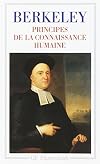
A Treatise Concerning the Principles of Human Knowledge
by George Berkeley
On This Page
Description
Born and educated in Ireland, the eighteenth-century philosopher George Berkeley developed an influential school of thought that later came to be described as "subjective idealism." In A Treatise Concerning the Principles of Human Knowledge, Berkeley lays out the basic principles of his theory..
Tags
Recommendations
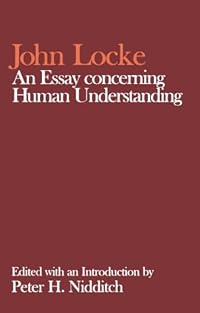
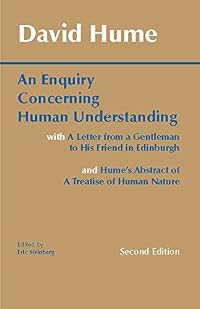
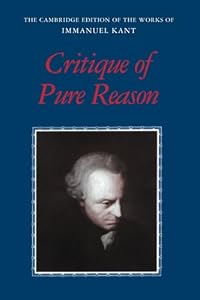
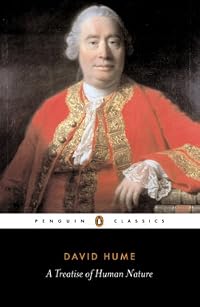










Member Reviews
Have you ever been to one of those parties where, at about 1.30 a.m., some want-to-be intellectual who, like yourself, has imbibed too frequently and slept too infrequently, insinuates himself next to you and asks, "If a tree falls in the forest, when nobody is there to hear; does it make a sound?"
I must have something about me that draws these pseudo philosophers into my orbit because it has happened sufficiently often for me to develop a means of dealing with the situation. I simply reply, "Yes." and move in the opposite direction as fast as my booze befuddled legs will take me. Not elegant, not witty, but effective.
Why do I bring this up now? Because, this book is the written version of how that stupid question develops, if one show more doesn't deal with the inquisitor promptly, and firmly.
It is pleasing to note that three hundred years ago some twonk could seriously propose, as an antidote to the flawed argument of Locke, that material objects do not exist. All that exists is our perception of them, given by God. What is less pleasing is the thought of another drunken know-it-all reworking the thesis at the next party that I attend: perhaps I'll take this book, sit him (why is it always a 'him'?) down in a corner and delight for the rest of the night/morning in wicked thoughts of what the next poor sap to be cornered by him will get.
You will notice that I gave this book one and a half stars; this was for the excellent introduction by G.J. Warnock: were I to possess the intelligence to have taken his excellent précis of the thoughts of Berkeley and Locke and deduced that all further effort would be waste, I might have at least doubled the star content of the review. So, who's the fool? show less
I must have something about me that draws these pseudo philosophers into my orbit because it has happened sufficiently often for me to develop a means of dealing with the situation. I simply reply, "Yes." and move in the opposite direction as fast as my booze befuddled legs will take me. Not elegant, not witty, but effective.
Why do I bring this up now? Because, this book is the written version of how that stupid question develops, if one show more doesn't deal with the inquisitor promptly, and firmly.
It is pleasing to note that three hundred years ago some twonk could seriously propose, as an antidote to the flawed argument of Locke, that material objects do not exist. All that exists is our perception of them, given by God. What is less pleasing is the thought of another drunken know-it-all reworking the thesis at the next party that I attend: perhaps I'll take this book, sit him (why is it always a 'him'?) down in a corner and delight for the rest of the night/morning in wicked thoughts of what the next poor sap to be cornered by him will get.
You will notice that I gave this book one and a half stars; this was for the excellent introduction by G.J. Warnock: were I to possess the intelligence to have taken his excellent précis of the thoughts of Berkeley and Locke and deduced that all further effort would be waste, I might have at least doubled the star content of the review. So, who's the fool? show less
Out of Spinoza, Locke, Descartes, Hume and Berkeley, I certainly found Berkeley the most interesting; but, then, I am into Idealism, so it is to some degree understandable and indicates my bias really. Out of 17th-early 18th century philosophers, Berkeley intrigues me as much as Leibniz does. I might, if I were to expand philosophy to include quasi-mystical writers of the same era, include Swedenborg, Hutchinson, Boehme and Sterry.
Berkeley has often been misrepresented as being a philosopher that denied the existence of matter in the sense of real external objects. This is definitely not accurate. Some of his statements are ambiguous and can be wrenched from context and made to look like he supported the non-reality of the outside show more physical world, but, really, he denied the existence of matter in the philosophical sense of a substrate made up of abstracted accidents and qualities. Like other Idealists going back to Plato, Berkeley believed in a universal Spirit or Mind that necessitates that all reality is perceived and cannot exist apart from this perception. It is an interesting theory when one notes that quantum mechanics supports the notion that reality at the particle level does seem to presuppose an observer. It seems that there may be very current scientific support for Berkeley's supposition on some level.
It does seem that in the concluding remarks that Berkeley supports some kind of pantheism; at least, some of his statements appear to strongly support that reading. Pantheism I do not support, so I have some reservations about Berkeley's philosophy, but it is well worth studying at least. It is also interesting that Berkeley appears to have anticipated the pseudo-spiritual abstract philosophy of German Idealists like Hegel; of course, while anticipating it he was also against any such marriage of spirituality with abstract knowledge systems.
As it stands, Berkeley was a worth while read and I may revisit this work in the future. show less
Berkeley has often been misrepresented as being a philosopher that denied the existence of matter in the sense of real external objects. This is definitely not accurate. Some of his statements are ambiguous and can be wrenched from context and made to look like he supported the non-reality of the outside show more physical world, but, really, he denied the existence of matter in the philosophical sense of a substrate made up of abstracted accidents and qualities. Like other Idealists going back to Plato, Berkeley believed in a universal Spirit or Mind that necessitates that all reality is perceived and cannot exist apart from this perception. It is an interesting theory when one notes that quantum mechanics supports the notion that reality at the particle level does seem to presuppose an observer. It seems that there may be very current scientific support for Berkeley's supposition on some level.
It does seem that in the concluding remarks that Berkeley supports some kind of pantheism; at least, some of his statements appear to strongly support that reading. Pantheism I do not support, so I have some reservations about Berkeley's philosophy, but it is well worth studying at least. It is also interesting that Berkeley appears to have anticipated the pseudo-spiritual abstract philosophy of German Idealists like Hegel; of course, while anticipating it he was also against any such marriage of spirituality with abstract knowledge systems.
As it stands, Berkeley was a worth while read and I may revisit this work in the future. show less
Berkeley's alterations to justify the world's causes and effects by appealing to God is pitiful and contradicts his whole ontological argument. A couple of questions regarding his idea of transcendental being suffice to poke holes through his system and invalidate his whole philosophy: If God is truly transcends our senses, how could we possibly know that he perceives the world around us? How could a transcendental God even perceive anything despite the fact that it is flawless and ineffable? Berkeley's argument is extremely weak and unconvincing, it is no wonder that few have taken him seriously throughout the ages.
In his introduction, David Armstrong argues that Berkeley is studied because he was a trailblazer in philosophical thought, despite the fact that his assumptions are invalid. Berkeley actually made multiple attempts to convince others of his thesis, following this essay with a more casual style in his "Three Dialogues." I found Berkeley very difficult to read, mostly because the meaning of specific terms seems to shift throughout the argument. Perhaps better scholars than I are able to follow the flow. Nonetheless, I hold to the conviction that part of our advance in argument has come about through the use of more specific terms. The point with which I am most in agreement is more of an aside by Berkeley -- that man tends to show more over-complicate thinking and therefore loses the true meaning behind many things. Unfortunately, he seems to do the same within the pages after that point. Even if all of his points held, he results in a metaphyisical world that appears and disappears as we blink. Berkeley goes on to expound upon certain possibilities, such as God also perceiving that the objects exist and thus holding that they always exist. show less
Those familiar with Norton's series of critical editions might be startled by the layout of this volume; since the critical essays precede the text, instead of following behind at a properly obsequious distance. Please do not be enticed into following this format. Turn immediately to the Principles, for if you start with the critical material you will likely never reach the promised land. Berkeley had many original things to say, and he was gifted with an excellent prose style. Neither, unfortunately, was passed along to all of his commentators; although I did particularly enjoy the essay "The place of God in Berkeley's philosophy", by J. D. Mabbott.
I have used the LOC publications data for the 2003 Dover, 048643253X (pbk.) edition because per LOC notes "Originally published: Lasalle, Ill. : Open Court Pub., 1940. Includes bibliographical references." and that is the closest I can find to my book.
Não lido
Members
- Recently Added By
Lists

Filosofía - Clásicos
217 works; 1 member

How to Read a Book's Recommended Reading List
309 works; 10 members

Greatest Books, allegedly
484 works; 9 members

Philosophy, Politics and Economics
61 works; 1 member

In Our Time books
4,934 works; 2 members
Author Information

127+ Works 3,545 Members
Born and reared in Ireland, George Berkeley studied at Trinity College, Dublin, and then taught as a fellow there, eventually becoming Dean of Derry (1724) and Bishop of Cloyne (1734) in the Irish branch of the Anglican church. His primary philosophical interests included metaphysics and epistemology, the psychology of perception, philosophy of show more science, and natural theology. But he is best known for his defense of metaphysical idealism and denial of the existence of matter. Berkeley's best-known writings were produced relatively early in his life, between the ages of 24 and 28: They included Essay Towards a New Theory of Vision (1709), Treatise Concerning the Principles of Human Knowledge (1710), and Three Dialogues (1713). In 1728 Berkeley made a voyage to the United States in an unsuccessful attempt to found a college in Bermuda. He lived for two years at Newport, Rhode Island, and had a significant influence on American education, chiefly through his association with and donation of books to Yale University and his correspondence with Samuel Johnson, the first president of what is now Columbia University. (Bowker Author Biography) show less
Awards and Honors
Series
Belongs to Publisher Series
Work Relationships
Is contained in
The Empiricists : Locke, An Essay Concerning Human Understanding (Abridged) ; Berkeley, Principles of Human Knowledge, and 3 Dialogues ; Hume, An Enquiry Concerning Human Understanding, and Dialogues Concerning Natural Religion by Richard Taylor (indirect)
Is abridged in
Common Knowledge
- Original title
- Treatise Concerning the Principles of Human Knowledge
- Original publication date
- 1710
- Dedication
- To the Right Honourable THOMAS, EARL OF PEMBROKE, &C., Knight of the most Noble Order of the Garter and one of the Lords of Her Majesty's most honourable privy council.
My Lord,
You will perhaps wonder that an obscure p... (show all)erson, who has not the honour to be known to your lordship, should presume to address you in this manner. But that a man who has written something with a design to promote Useful Knowledge and Religion in the world should make choice of your lordship for his patron, will not be thought strange by any one that is not altogether unacquainted with the present state of the church and learning, and consequently ignorant how great an ornament and support you are to both. Yet, nothing could have induced me to make you this present of my poor endeavours, were I not encouraged by that candour and native goodness which is so bright a part in your lordship's character. I might add, my lord, that the extraordinary favour and bounty you have been pleased to show towards our Society gave me hopes you would not be unwilling to countenance the studies of one of its members. These considerations determined me to lay this treatise at your lordship's feet, and the rather because I was ambitious to have it known that I am with the truest and most profound respect, on account of that learning and virtue which the world so justly admires in your lordship, MY LORD, Your lordship's most humble and most devoted servant,
GEORGE BERKELEY - First words
- OBJECTS OF HUMAN KNOWLEDGE.--It is evident to any one who takes a survey of the objects of human knowledge, that they are either IDEAS actually imprinted on the senses; or else such as are perceived by attending to the passio... (show all)ns and operations of the mind; or lastly, ideas formed by help of memory and imagination--either compounding, dividing, or barely representing those originally perceived in the aforesaid ways.
- Last words
- (Click to show. Warning: May contain spoilers.)For, after all, what deserves the first place in our studies is the consideration of GOD and our DUTY; which to promote, as it was the main drift and design of my labours, so shall I esteem them altogether useless and ineffectual if, by what I have said, I cannot inspire my readers with a pious sense of the Presence of God; and, having shown the falseness or vanity of those barren speculations which make the chief employment of learned men, the better dispose them to reverence and embrace the salutary truths of the Gospel, which to know and to practice is the highest perfection of human nature.
Classifications
Statistics
- Members
- 936
- Popularity
- 28,291
- Reviews
- 9
- Rating
- (3.39)
- Languages
- 11 — Chinese, Danish, Dutch, English, French, German, Hungarian, Italian, Polish, Portuguese, Spanish
- Media
- Paper, Audiobook, Ebook
- ISBNs
- 86
- UPCs
- 1
- ASINs
- 20