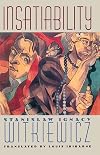
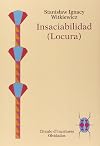
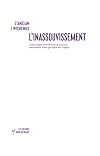
Insatiability
by Stanisław Ignacy Witkiewicz
On This Page
Description
Correspondences of Stanisław Ignacy Witkiewicz, also known as Witkacy, with his wife, Jadwiga. The book contains 238 letters, notes, postcards and telegrams written from March 21, 1923 to December 31, 1927, during the time he stayed in Warsaw where his wife lived. They present the testimony of the complicated love between these two people, as well as how their marriage survived during hard times. The book also describes the life and creations of Witkacy, an avant-garde Polish artist.Tags
Recommendations























Member Recommendations
Member Reviews
Insatiability, by Stanislaw Ignacy Witkiewicz is a difficult book to explain. It fits within the strange and perverse literary universe, between Lautréamont's Songs of Maldoror and Alfred Jarry's Days & Nights. Complicated, perverse and at times unwieldy, I was mesmerized and overwhelmed, simultaneously. I vacillated between being unable to put the book down, to being incapable of reading another sentence; but I finished it.
Oddly, I encountered Witkiewicz, Witacy, when I was 16, but did not know it at the time. I used to skip classes while in high school and I would spend my days at the college library. I was wander through the stacks and read whatever seemed leaped out at me. One day it was a book of surrealist plays, once which was show more titled, The Water Hen. I read it, I did not understand it very well, but I always remembered it. The playwright's name did not stay with me however, (due to its difficult Polish name) and I went through life with this play and no author. Then I came across Insatiability and its author and realized the connection. Nothing, not ever that play, with its absurdist plot and its suicidal, nihilistic overtones, could prepare me for the madness of this novel.
Written in a language that is fantastic and punful, even in translation, with grotesque and unreal characters; it has a basic story plot: a coming of age story for the main character, Genezip Kapen, and his initiation into the sexual world of women. His initial sexual, romantic relationship (and involvement with a group of artistic sadists) eventually corrupts him and he loses his mind. Genezip, or Zip, runs off to join the military and then has a few more mind-loosening romances, which he ends up committing and participating in some unforeseeable acts. Zip occupies an unsettling world, where Europe is under threat of Communist China's takeover, and Poland is embroiled in war with China.
Overall, Insatiability is a difficult novel to write about, because it spans so many ideas that it would take another book to explain it all. It doesn't deal with the development of characters, rather, the characters- like Zip, are an unfolding of a reaction. What happens when a young, freedom seeker comes into contact with decadence, artistic ideas, unfettered sexuality, and war? It is as though Witkiewicz decided to conduct an experiment in a future world where values and intimacy and been replaced by lust and neurosis, and the novel became the document. Witkiewicz wrote Insatiability during the two world wars; the erosion of idealism and the political anxiety for the future are presented. Witkiewicz throws his combating constructs of art, politics, and individuality into the word mix which make up this novel. A painter, playwright, philosopher, he used his novels as a hulking receptacle where these raucous conceits run amok. show less
Oddly, I encountered Witkiewicz, Witacy, when I was 16, but did not know it at the time. I used to skip classes while in high school and I would spend my days at the college library. I was wander through the stacks and read whatever seemed leaped out at me. One day it was a book of surrealist plays, once which was show more titled, The Water Hen. I read it, I did not understand it very well, but I always remembered it. The playwright's name did not stay with me however, (due to its difficult Polish name) and I went through life with this play and no author. Then I came across Insatiability and its author and realized the connection. Nothing, not ever that play, with its absurdist plot and its suicidal, nihilistic overtones, could prepare me for the madness of this novel.
Written in a language that is fantastic and punful, even in translation, with grotesque and unreal characters; it has a basic story plot: a coming of age story for the main character, Genezip Kapen, and his initiation into the sexual world of women. His initial sexual, romantic relationship (and involvement with a group of artistic sadists) eventually corrupts him and he loses his mind. Genezip, or Zip, runs off to join the military and then has a few more mind-loosening romances, which he ends up committing and participating in some unforeseeable acts. Zip occupies an unsettling world, where Europe is under threat of Communist China's takeover, and Poland is embroiled in war with China.
Overall, Insatiability is a difficult novel to write about, because it spans so many ideas that it would take another book to explain it all. It doesn't deal with the development of characters, rather, the characters- like Zip, are an unfolding of a reaction. What happens when a young, freedom seeker comes into contact with decadence, artistic ideas, unfettered sexuality, and war? It is as though Witkiewicz decided to conduct an experiment in a future world where values and intimacy and been replaced by lust and neurosis, and the novel became the document. Witkiewicz wrote Insatiability during the two world wars; the erosion of idealism and the political anxiety for the future are presented. Witkiewicz throws his combating constructs of art, politics, and individuality into the word mix which make up this novel. A painter, playwright, philosopher, he used his novels as a hulking receptacle where these raucous conceits run amok. show less
What is "Insatiability"? So many ways to answer that question. For starters, it could be described as a masterful psychological, historical, political, and cultural critique. Witkiewicz demonstrates a familiarity with all these domains as he develops his story. The potential reader would be well served by a sophisticated intellectual familiarity. Fortunately for me, such a background isn't required to enjoy the book's excellence.
Another amazing characteristic of the work is its modernity. Despite being published in 1927, the book's themes, characters and insights resonate with the 21st century reader. One facet of its modernity is its unremitting intensity. One reviewer mentioned that at times she couldn't stop reading the book while at show more others, she couldn't read another page. There are no calm interludes.
Another predominant feature of the work is cynicism. This cynicism is reflected in the eloquent while at the same time, often amusing, prose. In my mind at least, one finds a literary gem on almost every page.
What the book is? Passionate. Unstable. Sexual. Unsettling.
What the book is not? Optimistic. Peaceful. Delicate. Shy. Prudish.
"Insatiability" is, as you can no doubt sense already, one of my new favorite books. I believe any serious student of modern (or perhaps more accurately post-modern) literature must read this book. I understand that many readers may not enjoy the work. Yet, the author's genius and the book's prophetic quality, remain.
Addendum:
Some reviewers frame this book as a critical premonition of the socialist regimes of Eastern Europe in the 1930's. Although it could be read in that fashion, I think that interpretation does not do justice to the complexity and universality of it's analysis and critique. The book is far from that simplistic. show less
Another amazing characteristic of the work is its modernity. Despite being published in 1927, the book's themes, characters and insights resonate with the 21st century reader. One facet of its modernity is its unremitting intensity. One reviewer mentioned that at times she couldn't stop reading the book while at show more others, she couldn't read another page. There are no calm interludes.
Another predominant feature of the work is cynicism. This cynicism is reflected in the eloquent while at the same time, often amusing, prose. In my mind at least, one finds a literary gem on almost every page.
What the book is? Passionate. Unstable. Sexual. Unsettling.
What the book is not? Optimistic. Peaceful. Delicate. Shy. Prudish.
"Insatiability" is, as you can no doubt sense already, one of my new favorite books. I believe any serious student of modern (or perhaps more accurately post-modern) literature must read this book. I understand that many readers may not enjoy the work. Yet, the author's genius and the book's prophetic quality, remain.
Addendum:
Some reviewers frame this book as a critical premonition of the socialist regimes of Eastern Europe in the 1930's. Although it could be read in that fashion, I think that interpretation does not do justice to the complexity and universality of it's analysis and critique. The book is far from that simplistic. show less
A challenging, vengeful, manic, weird, gloriously random, obscure panegyric. A dystopian, war-like, anti-war novel. The Polish Gravity's Rainbow, rendered less comprehensible via translation. There is still a lot to gain, absorb and relish about this book, even if every other sentence goes in one ear and out the other. The punning goes on and on an on, and examine the evidence of hundreds of notes before deciding whether your efforts to understand this book in its entirety are worthwhile. Self-references abound, along with comments on war, personal hygiene, lots of phallocentric jokes, goofy asides, well-formed rational arguments alongside pure, indulgent sexual fantasy.
Like Wyndham Lewis' The Apes of God, this is a book adored by other show more writers (among them Gombrowicz) but difficult for readers of our age to appreciate. A profusion of characters carry on conversations containing so many scattered references of the early Twentieth Century European variety, that you will undoubtedly feel mind-boggled at some point, unless you are an expert in that slice of political history.
The anti-imperialism undercurrent is a little distracting, but so is everything else. This is a big book of distractions. A high-brow, low-brow grimacing anomaly.
I much prefer Alfred Doblin's Berlin Alexanderplatz and the aforementioned work of Wyndham Lewis. But Genezip feels akin to Pynchon's protagonists in that we rarely get the chance to form a picture of his adventures because so many contradictions and accusations and thoughts and digressions interpolate the flow of narrative, but his charm and obvious intelligence inspire confidence, and keep us turning pages (hopefully). Brilliantly witty in parts, abstruse and variable in its literary delivery of straight-faced fecal humor, Insatiability is a way-ahead-of-its-time tome.
It will superimpose a unique frame of mind upon your own. Some call it an experimental masterpiece. I call it a guaranteed amusing, re-readable puzzle, that is both tiresome and impenetrable, while never ceasing to enjoy it out of the crevices of my squinting-with-consternation eyes. show less
Like Wyndham Lewis' The Apes of God, this is a book adored by other show more writers (among them Gombrowicz) but difficult for readers of our age to appreciate. A profusion of characters carry on conversations containing so many scattered references of the early Twentieth Century European variety, that you will undoubtedly feel mind-boggled at some point, unless you are an expert in that slice of political history.
The anti-imperialism undercurrent is a little distracting, but so is everything else. This is a big book of distractions. A high-brow, low-brow grimacing anomaly.
I much prefer Alfred Doblin's Berlin Alexanderplatz and the aforementioned work of Wyndham Lewis. But Genezip feels akin to Pynchon's protagonists in that we rarely get the chance to form a picture of his adventures because so many contradictions and accusations and thoughts and digressions interpolate the flow of narrative, but his charm and obvious intelligence inspire confidence, and keep us turning pages (hopefully). Brilliantly witty in parts, abstruse and variable in its literary delivery of straight-faced fecal humor, Insatiability is a way-ahead-of-its-time tome.
It will superimpose a unique frame of mind upon your own. Some call it an experimental masterpiece. I call it a guaranteed amusing, re-readable puzzle, that is both tiresome and impenetrable, while never ceasing to enjoy it out of the crevices of my squinting-with-consternation eyes. show less
Ratings
Members
- Recently Added By
Lists

1001 Books You Must Read Before You Die
1,448 works; 1,136 members
Author Information

104 Works 839 Members
Some Editions
Awards and Honors
Series
Belongs to Publisher Series
Common Knowledge
- Canonical title
- Insatiability
- Original title
- Nienasycenie
- Alternate titles*
- Onverzadigbaarheid : roman
- Original publication date
- 1930; 1970 (French) (French)
- Important places*
- Polen
- Epigraph
- Scegliendo il mio destino
ho scelto la pazzia.
Tadeusz Miciński - First words
- Genezyp Kapen non tollerava freni di nessun genere.
- Last words
- (Click to show. Warning: May contain spoilers.)Tutto andava evolvendo verso una situazione che in termini polacchi rimane, ancor oggi, inesprimibile. Chissà, magari qualche sapiente, spiritualmente molto cinese ma capace, al tempo stesso, di vedere le cose da un punto di vista non cinese, potrebbe in futuro descriverle in inglese. Ma anche questo è improbabile.
- Blurbers
- Gombrowicz, Witold
- Original language
- Polish
*Some information comes from Common Knowledge in other languages. Click "Edit" for more information.
Classifications
- Genres
- Fiction and Literature, General Fiction
- DDC/MDS
- 891.8537 — Literature & rhetoric Literatures of other languages East Indo-European and Celtic literatures West and South Slavic languages (Bulgarian, Slovene, Polish, Czech, Slovak, Serbo-Croatian, and Macedonian) Polish Polish fiction 1919–1989
- LCC
- PG7158 .W52 — Language and Literature Slavic languages and literatures. Baltic languages. Albanian language Slavic. Baltic. Albanian Slavic Polish
- BISAC
Statistics
- Members
- 311
- Popularity
- 102,889
- Reviews
- 3
- Rating
- (3.71)
- Languages
- 8 — Dutch, English, French, German, Hungarian, Polish, Russian, Spanish
- Media
- Paper, Audiobook, Ebook
- ISBNs
- 19
- ASINs
- 3