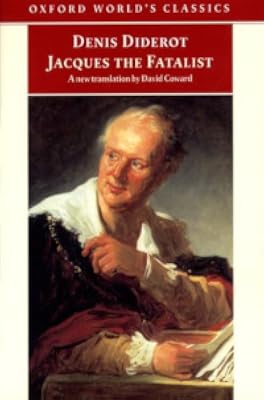
Jacques the Fatalist
by Denis Diderot
On This Page
Description
'Your Jacques is a tasteless mishmash of things that happen, some of them true, others made up, written without style and served up like a dog's breakfast.'Jacques the Fatalist is Diderot's answer to the problem of existence. If human beings are determined by their genes and their environment, how can they claim to be free to want or do anything? Where are Jacques and his Master going? Are they simply occupying space, living mechanically until theydie, believing erroneously that they are in show more charge of their Destiny? Diderot intervenes to cheat our expectations of what fiction should be and do, and behaves like a provocative, ironic and unfailingly entertaining master of revels who finally show why Fate is not to be equated with doom.In the introduction to this brilliant new translation, David Coward explains the philosophical basis of Diderot's fascination with Fate and shows why Jacques the Fatalist pioneers techniques of fiction which, two centuries on, novelists still regard as experimental. show lessTags
Recommendations













Member Recommendations
thorold Although the philosophical ideas discussed are rather different, Diderot and Unamuno have a lot of common ground in the random, discursive way they tell the story.
Member Reviews
I read Diderot's The Dream of D'Alembert 20 years ago (written in 1769, but published much later), and that was quite difficult reading, because it dealt with a number of philosophical-scientific issues of that time (mid-18th century). It wasn't the form that was the problem, because Diderot had wrapped it in dialogue form, which is always more pleasant to read than a dry argument. It wasn't the 18th century French either (I read this in the original version), because that differs relatively little from modern French, which I understand well (although it is not my mother tongue). I think it rather was the dry, topic-based treatment that did me in.
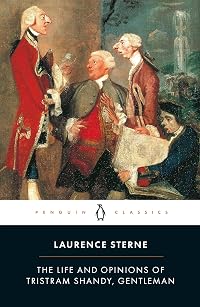
This book, Jacques the Fatalist (1785), actually also is a philosophical story in dialogue show more form. But Diderot wrote it in a much lighter style, with a clear ironic-picaresque slant, and that makes it much more digestible. The dialogue takes place between the servant Jacques and his unnamed boss (the master). Jacques is an inveterate chatterbox who loves to talk about his time in the army and his amorous adventures. His boss is particularly interested in the latter, but he remains dissatisfied because Jacques jumps from topic to topic, is interrupted by the master and other people. The broken storyline leads to irritation and frustration with the master, but also with the reader. And that is apparently deliberately intended by Diderot, who regularly interrupts the novel to address the reader directly and to comment on the events himself, which of course only makes matters worse. In this Diderot was inspired by Tristam Shandy, the voluminous novel by the English writer Laurence Sterne, the first parts of which had been published a few years earlier. And that of course explains a few things. Because if there is one novel that tests the patience of the reader, with constant interruptions and digressions, it is this one. But Diderot was also clearly inspired by the ironic and picaresque nature of Sterne's novel. Jacques Le Fataliste also excels in his laconic, satirical and often simply absurd nature. And the entertaining stories within the story (such as the delightful one about the Marquis des Arcis and the Marquise de Pommeraye) certainly compensate for the reading difficulties.
Okay, fine, but what about the philosophy? That is certainly there, even on almost every page. Because chatterbox Jacques turns out to be a fatalist, who attributes everything he experiences to Providence, "everything good and bad that happens to us here below was written up there”. In the dialogue with the master, that providence is constantly being sounded out, and with it inevitably the question of man's free will, one of the most fundamental philosophical issues. Every adventure, every prank, every bit of luck or misfortune is weighed up and discussed in this light, by each of the three main characters (Jacques, the master ànd the writer). Not with weighty philosophical arguments, no, on the contrary, light-heartedly and with a wink, and therefore also constantly undermining (false) certainties: “It is because, for lack of knowing what is written up there, we know neither what we want nor what we do, and we follow our fantasy which we call reason, or our reason which often just is a dangerous fantasy that sometimes turns out well, sometimes badly.” (what a great quote”!). I enjoyed this delicious, mischievous novel immensely. For me, this is the best thing Diderot ever put to paper. show less
This book, Jacques the Fatalist (1785), actually also is a philosophical story in dialogue show more form. But Diderot wrote it in a much lighter style, with a clear ironic-picaresque slant, and that makes it much more digestible. The dialogue takes place between the servant Jacques and his unnamed boss (the master). Jacques is an inveterate chatterbox who loves to talk about his time in the army and his amorous adventures. His boss is particularly interested in the latter, but he remains dissatisfied because Jacques jumps from topic to topic, is interrupted by the master and other people. The broken storyline leads to irritation and frustration with the master, but also with the reader. And that is apparently deliberately intended by Diderot, who regularly interrupts the novel to address the reader directly and to comment on the events himself, which of course only makes matters worse. In this Diderot was inspired by Tristam Shandy, the voluminous novel by the English writer Laurence Sterne, the first parts of which had been published a few years earlier. And that of course explains a few things. Because if there is one novel that tests the patience of the reader, with constant interruptions and digressions, it is this one. But Diderot was also clearly inspired by the ironic and picaresque nature of Sterne's novel. Jacques Le Fataliste also excels in his laconic, satirical and often simply absurd nature. And the entertaining stories within the story (such as the delightful one about the Marquis des Arcis and the Marquise de Pommeraye) certainly compensate for the reading difficulties.
Okay, fine, but what about the philosophy? That is certainly there, even on almost every page. Because chatterbox Jacques turns out to be a fatalist, who attributes everything he experiences to Providence, "everything good and bad that happens to us here below was written up there”. In the dialogue with the master, that providence is constantly being sounded out, and with it inevitably the question of man's free will, one of the most fundamental philosophical issues. Every adventure, every prank, every bit of luck or misfortune is weighed up and discussed in this light, by each of the three main characters (Jacques, the master ànd the writer). Not with weighty philosophical arguments, no, on the contrary, light-heartedly and with a wink, and therefore also constantly undermining (false) certainties: “It is because, for lack of knowing what is written up there, we know neither what we want nor what we do, and we follow our fantasy which we call reason, or our reason which often just is a dangerous fantasy that sometimes turns out well, sometimes badly.” (what a great quote”!). I enjoyed this delicious, mischievous novel immensely. For me, this is the best thing Diderot ever put to paper. show less
A wonderful "anti-novel", obviously inspired in part by Tristram Shandy, teasing the reader with all sorts of ideas about how narrative works in an endless and constantly-interrupted discussion between the valet Jacques and his employer as they make their way from somewhere unspecified to somewhere else. We get humour both subtle and coarse; the odd bit of good old-fashioned slapstick; high-flying philosophical discussions; love stories high and low; all manner of knavery; discourses on medicine, law, religion, finance and cart-making; and more than a bit of down-to-earth common sense. At one point we even get an authorial aside of a couple of pages defending the use of the French "F-word" in print with arguments that are still just as show more valid today as they were 200 years ago.
Between the lines, Diderot has a go at putting us right about social relations in France shortly before the revolution: even if Jacques' peasant bolshieness is an exaggeration, there's no way we can fit his nameless "Maître" into the traditional category of big-wigged aristocrats with absolute power over their peasants. This is a world where the minor gentry, at least, are all in debt to middle-class tradesmen or crooked moneylenders and can't go around offending people at will. Philosophers, on the other hand, seem to be quite happy to offend everyone...
Like so many light, effortlessly discursive books, it seems to have had a difficult birth: Diderot tinkered with it and expanded it over a period of some twenty years. There's obviously more to it than fun and paradox. Diderot's trying to make us think, evidently, and pushing his belief that the world is not as ordered and straightforward as we might think. An alarmingly modern way of looking at things. Obviously, part of it is the recurrent theme of determinism implied by Jacques and his catch-phrase "il est écrit là-haut". We don't get a Candide-style rubbishing of an over-simplified philosophical idea - while Jacques' fatalism is clearly ridiculous, and his behaviour isn't consistent with a belief that everything is predetermined, Diderot also takes care to remind us how difficult it is to demonstrate free will. In the interpolated stories, we're often forced into paradoxical moral positions. Against our best instincts, we are led to admire the tricksters and look down on their dupes, except in the case of Mme de La Pommeraye, who ought by rights to have our sympathy, but loses it because her revenge is so out of proportion with the offence that provokes it. show less
Between the lines, Diderot has a go at putting us right about social relations in France shortly before the revolution: even if Jacques' peasant bolshieness is an exaggeration, there's no way we can fit his nameless "Maître" into the traditional category of big-wigged aristocrats with absolute power over their peasants. This is a world where the minor gentry, at least, are all in debt to middle-class tradesmen or crooked moneylenders and can't go around offending people at will. Philosophers, on the other hand, seem to be quite happy to offend everyone...
Like so many light, effortlessly discursive books, it seems to have had a difficult birth: Diderot tinkered with it and expanded it over a period of some twenty years. There's obviously more to it than fun and paradox. Diderot's trying to make us think, evidently, and pushing his belief that the world is not as ordered and straightforward as we might think. An alarmingly modern way of looking at things. Obviously, part of it is the recurrent theme of determinism implied by Jacques and his catch-phrase "il est écrit là-haut". We don't get a Candide-style rubbishing of an over-simplified philosophical idea - while Jacques' fatalism is clearly ridiculous, and his behaviour isn't consistent with a belief that everything is predetermined, Diderot also takes care to remind us how difficult it is to demonstrate free will. In the interpolated stories, we're often forced into paradoxical moral positions. Against our best instincts, we are led to admire the tricksters and look down on their dupes, except in the case of Mme de La Pommeraye, who ought by rights to have our sympathy, but loses it because her revenge is so out of proportion with the offence that provokes it. show less
Hilarious. I didn’t know how funny, when I bought this in Quebec City, Libraire Generale Française, over two decades ago. Nor did I know how metaliterary, like its contemporary, Sterne’s Tristram Shandy, but here, Diderot notes all the fictional clichés he refuses to write, telling only the truth. Ignorant of its humor, I chose this book because of a couple passages in the middle: one, "Never pay in advance, unless you want to be badly served"(112); the other directly opposed my Puritan upbringing, where I/ one must work to get ahead, but one must act morally, or be wracked with guilt. Here? Not at all. All is pre-determined on high, “ecrit en haut” (236).
Such rollicking humor. The surgeon who must repair Jacques’ knee show more broken by a fall from his horse, tells the housewife to go down “à la cave,” to the wine-cellar, “boirons un coup, cela rends la main sûre.” I’ll have a drink, it’ll make my hand more steady (56). Benefits of wine: Jacques says it helps his memory, "refraîchit la memoire"(182). The surgeon sets up his host holding one leg, the wife holding another, turning patient on his side, then sends the wife back down to the cellar for another bottle. (Why only wives to the wine-cellar? Maybe the ceiling height, maybe her pacing her supply.)
Meanwhile, the patient, Jacques quizzes the chirurgeon, “Will I boiter/limp?” The doctor says, You should be glad I didn’t amputate like that other doctor suggested. “Je vous aie vous sauvé votre jambe” I’ve saved your leg. Do you like dancing? You may walk a little worse, but “danserez que mieux …Commère, le vin chaud.” You will dance better…Ma’am, some warm wine? (58)
Mostly a play, with two main speakers, Jacques and Le Maître / Master (no given or family name). Meta-literary, writing about writing, Jacques / the writer again and again rejects interruption to fulfill narrative clichés. But he does employ one common 18th Century novel device, direct address of the reader: “Vous concevez, lecteur…”(26), “Où? lecteur, vous êtes d’une curiosité bien incommode!” Where? What does it matter if the road’s going to Pontoise or Saint-Germain? Your curiosity’s inconvenient.(44) “Je vous supplie, lecteur…”(48). “Ma, si vous m’interrompez, lecteur…”(61).
This book contrasts the speakers (Jacques, Mme La Pommeraye) versus the non-speakers, though sometimes it's merely a situation, as when the Marquis is silent from worry, afraid to tell Mme La P that he did what she told hi not to. He walks around the room, stops in front of her, goes to the windo, then back to the door, all silent. "il se promener...sans mot dire: il allait au fenêtres, il regardait le ciel"(188).
Again and again, Diderot tells us what he will surely not tell us, the expected stories of fiction. For instance, Master and Jacques debate women, one saying “qu’elles étaient bonnes, l’autres méchantes,” and they were both right, one saying they were “sottes, l’autre pleines d’esprit” and they were both right. The one said miserly, the other, generous; the one, they were liars, the other, honest…and again , both were right (44).
After the surgery when the couple learn of the months of recovery, they suggest the “soeurs gris,” the nuns of St Vincent de Paul— who, by the way, had a home for wayward boys (to avoid jail time) down the street from us, at the end of Cornell Road, Westport. (Now they’ve torn down all the bunk rooms, turned the land over to a grandiose Land Trust property, with spindly acceptable maples replacing the century old Norway maples along the road. Invasive Norwegians. But so are Rosa Rugosa, and I don’t see anyone pulling beach roses up.)
One of several times Jacques falls from his horse, he's rescued by a well-dressed man who even gives him a horse--though a badly behaved one which eventually throws him. Later Jacques sees a man with braided hat, well clothed with gold braid, with two big dogs; he runs up to him and embraes him, thanking him. The man is impassive, hardly acknowledges, though he admits he did help him (103). (BTW, Jacques newly-given horse had run straight for the scaffold.) When Jacques askes his Maître who the man is, he is shocked to find he's "Le Bourreau'/ the undertaker. (No wonder the man is unused to gratitude.)
BTW, Diderot wrote this at the end of his life—he a central philosophe whose Enlightenment Encyclopédie suggested the future could be better, a founding idea of the United States. Previously, in the Renaissance, authors like Ben Jonson looked backward to the Golden Age.
Jacques says many things which draw universal agreement, like Long live Dogs (146):
"Vivent les chiens! il n'y a rien de plus parfait sous le ciel."
Read in 1989 edition, Pocket, 1989. ISBN 2-266-8322-8 show less
Such rollicking humor. The surgeon who must repair Jacques’ knee show more broken by a fall from his horse, tells the housewife to go down “à la cave,” to the wine-cellar, “boirons un coup, cela rends la main sûre.” I’ll have a drink, it’ll make my hand more steady (56). Benefits of wine: Jacques says it helps his memory, "refraîchit la memoire"(182). The surgeon sets up his host holding one leg, the wife holding another, turning patient on his side, then sends the wife back down to the cellar for another bottle. (Why only wives to the wine-cellar? Maybe the ceiling height, maybe her pacing her supply.)
Meanwhile, the patient, Jacques quizzes the chirurgeon, “Will I boiter/limp?” The doctor says, You should be glad I didn’t amputate like that other doctor suggested. “Je vous aie vous sauvé votre jambe” I’ve saved your leg. Do you like dancing? You may walk a little worse, but “danserez que mieux …Commère, le vin chaud.” You will dance better…Ma’am, some warm wine? (58)
Mostly a play, with two main speakers, Jacques and Le Maître / Master (no given or family name). Meta-literary, writing about writing, Jacques / the writer again and again rejects interruption to fulfill narrative clichés. But he does employ one common 18th Century novel device, direct address of the reader: “Vous concevez, lecteur…”(26), “Où? lecteur, vous êtes d’une curiosité bien incommode!” Where? What does it matter if the road’s going to Pontoise or Saint-Germain? Your curiosity’s inconvenient.(44) “Je vous supplie, lecteur…”(48). “Ma, si vous m’interrompez, lecteur…”(61).
This book contrasts the speakers (Jacques, Mme La Pommeraye) versus the non-speakers, though sometimes it's merely a situation, as when the Marquis is silent from worry, afraid to tell Mme La P that he did what she told hi not to. He walks around the room, stops in front of her, goes to the windo, then back to the door, all silent. "il se promener...sans mot dire: il allait au fenêtres, il regardait le ciel"(188).
Again and again, Diderot tells us what he will surely not tell us, the expected stories of fiction. For instance, Master and Jacques debate women, one saying “qu’elles étaient bonnes, l’autres méchantes,” and they were both right, one saying they were “sottes, l’autre pleines d’esprit” and they were both right. The one said miserly, the other, generous; the one, they were liars, the other, honest…and again , both were right (44).
After the surgery when the couple learn of the months of recovery, they suggest the “soeurs gris,” the nuns of St Vincent de Paul— who, by the way, had a home for wayward boys (to avoid jail time) down the street from us, at the end of Cornell Road, Westport. (Now they’ve torn down all the bunk rooms, turned the land over to a grandiose Land Trust property, with spindly acceptable maples replacing the century old Norway maples along the road. Invasive Norwegians. But so are Rosa Rugosa, and I don’t see anyone pulling beach roses up.)
One of several times Jacques falls from his horse, he's rescued by a well-dressed man who even gives him a horse--though a badly behaved one which eventually throws him. Later Jacques sees a man with braided hat, well clothed with gold braid, with two big dogs; he runs up to him and embraes him, thanking him. The man is impassive, hardly acknowledges, though he admits he did help him (103). (BTW, Jacques newly-given horse had run straight for the scaffold.) When Jacques askes his Maître who the man is, he is shocked to find he's "Le Bourreau'/ the undertaker. (No wonder the man is unused to gratitude.)
BTW, Diderot wrote this at the end of his life—he a central philosophe whose Enlightenment Encyclopédie suggested the future could be better, a founding idea of the United States. Previously, in the Renaissance, authors like Ben Jonson looked backward to the Golden Age.
Jacques says many things which draw universal agreement, like Long live Dogs (146):
"Vivent les chiens! il n'y a rien de plus parfait sous le ciel."
Read in 1989 edition, Pocket, 1989. ISBN 2-266-8322-8 show less
I love this book and have already started to reread it in anticipation of my French book club's discussion. Diderot pays unabashed obeisance to Sterne's Tristram Shandy with his constantly interrupted, disrupted, and recommenced tale. As noted in the Preface to the novel (or anti-novel, as Diderot might have considered it)Jacques le fataliste is composed of one long chapter (over 300 pages in this edition)and includes around 60 characters, 21 stories and 180 breaks in the narrative. This is 18th century postmodernism and more evidence (if you're not yet convinced) that contemporary literary "experiments" have illustrious antecedents. Jacques (the fatalist) questions our ideas about fate, accident, human liberty, the (im)possibility of show more judging the morality of human actions as well as our notions of what constitutes a novel. It's a road trip (on horseback), a more than twice-told tale, and a carnivalesque romp with some serious underpinnings. show less
'Jacques le Fataliste et son maître' is hardly a novel. In fact, it's a very clever parody on the clichés of narration, blind faith and many other things. One should always keep in mind that this is a conceptual novel, written to challenge the standards and thoughts of 18th century France.
Jacques is marked by a form of extreme fatalism - everything that happens to him happens because it was 'meant to be so'; everything is 'written in the stars'. There is, however, no mention of a God who determines this course of events, which points towards an atheism of Diderot's part. Ironically, the figure of Jacques dominates that of his Master, who is much more passive and lacks the talktative nature of Jacques. Whereas the conversations between show more Jacques and his Master challenge the philosophical and social climate of the time, the narrator exposes the problems of the novel form. Diderot often underlines the fact that this book is in fact not a novel, but a truthful representation of events. Again, this is very ironic, since the narrator intrudes often and violently. The main problems are verisimilitude (how true is a story?) and the boundaries of the author (what is and isn't possible in a novel?).
The whole makes for a very fragmented book, with lots of unfinished stories and puzzling events. This does not, however, mean that the structure of the book is completely random. The chaos of events and stories hides a very clever attempt to challenge the central themes of 18th century literature, and makes this book a very unique document. show less
Jacques is marked by a form of extreme fatalism - everything that happens to him happens because it was 'meant to be so'; everything is 'written in the stars'. There is, however, no mention of a God who determines this course of events, which points towards an atheism of Diderot's part. Ironically, the figure of Jacques dominates that of his Master, who is much more passive and lacks the talktative nature of Jacques. Whereas the conversations between show more Jacques and his Master challenge the philosophical and social climate of the time, the narrator exposes the problems of the novel form. Diderot often underlines the fact that this book is in fact not a novel, but a truthful representation of events. Again, this is very ironic, since the narrator intrudes often and violently. The main problems are verisimilitude (how true is a story?) and the boundaries of the author (what is and isn't possible in a novel?).
The whole makes for a very fragmented book, with lots of unfinished stories and puzzling events. This does not, however, mean that the structure of the book is completely random. The chaos of events and stories hides a very clever attempt to challenge the central themes of 18th century literature, and makes this book a very unique document. show less
This book is such a joy! It's really difficult to describe what it is about: Jacques and his master are going somewhere and they have some adventures, but it doesn't really matter - this book could have no plot at all and it would still be wonderful. There are lots of fun stories, lots of discussions about life, God and philosophy, the book is still really fresh, entertaining and original, although it was written so many years ago. Definitely five stars.
Jacques and his nameless master are travelling through the French countryside on a mission that is only revealed later in the story. On the way, they recount tales to each other and the people they encounter, have various adventures in inns and meet other travellers on the road. A picaresque romp through pre-Revolutionary France, the book is at the same time an extended trick on the reader, a long shaggy dog story, in which the central narrative - the story of Jacques’s loves - is never completed: pleasure is always deferred. ...
Read the full review on The Lectern:
http://thelectern.blogspot.com/2009/06/jacques-le-fataliste-dennis-diderot.html
Read the full review on The Lectern:
http://thelectern.blogspot.com/2009/06/jacques-le-fataliste-dennis-diderot.html
Members
- Recently Added By
Lists

1001 Books You Must Read Before You Die
1,448 works; 1,134 members

The Guardian's 1000 Novels Everyone Must Read
1,005 works; 551 members

Philosophical Fiction
97 works; 27 members

Best of French Literature
138 works; 27 members

The 100 Best Books of All Time by Norwegian Book Club (World Library)
104 works; 23 members

100 Books to Read in a Lifetime (That Are Older Than 200 Years)
415 works; 173 members

Philip Ward's Lifetime Reading Plan
592 works; 22 members

French Books
102 works; 15 members

18th Century
42 works; 12 members

Western World's Greatest Books - Project Gutenberg
295 works; 15 members

1,001 BYMRBYD Concensus
723 works; 27 members

Experimental Literature
141 works; 19 members

Quirky Characters
24 works; 7 members

Recommended Philosophic Novels
26 works; 1 member

All Things France
100 works; 8 members

My TBR
371 works; 3 members

Books Read in 2019
4,052 works; 110 members

Books Read in 2024
4,727 works; 128 members

DigitalDreamDoor top 300
300 works; 4 members

.
396 works; 1 member

Fiction with Men's Given Names in the Title
302 works; 11 members
Author Information

Denis Diderot was a French philosopher and critic during the Age of Enlightenment. Born in 1713 in Langres, France, Diderot was educated at the University of Paris. From 1745 to 1772 he served as editor of L'Encyclopedie, which he fashioned as a journal of radical revolutionary opinion. He was a leader in the movement to challenge both church and show more state by furthering knowledge. Diderot also wrote several critical and philosophical works including Pensees sur l'interpretation de la nature (Thoughts on the Interpretation of Nature, 1754). In addition, he published essays based on personal experience, as well as several plays. As a philosopher, Diderot speculated on free will and held a completely materialistic view of the universe; he suggested all human behavior is determined by heredity. He is recognized now as an art critic of the first rank. His Essai sur la peinture (Essay on Painting, 1796) won him posthumous praise as a critic of painting technique and aesthetics. He died in Paris in 1784 and was buried in the city's Église Saint-Roch. His heirs sent his vast library to Catherine II, who had it deposited at the National Library of Russia. (Bowker Author Biography) show less
Some Editions
Awards and Honors
Notable Lists
Series
Belongs to Publisher Series
Koliber (101)
Alianza Tres (32)
Colecção História da Literatura (Livro 80)
Les ales esteses (292)
GF Flammarion (1310)
Die Andere Bibliothek (170)
Gallimard, Folio (430-763)
Work Relationships
Is contained in
Has the adaptation
Was inspired by
Inspired
Has as a study
Common Knowledge
- Canonical title
- Jacques the Fatalist
- Original title
- Jacques le fataliste et son maître
- Alternate titles
- Jacques the fatalist and his master
- Original publication date
- 1796
- People/Characters*
- Jacques
- Important places
- France
- First words*
- Come s'erano incontrati? Per caso, come tutti. Come si chiamavano? Che vi importa? Di dove venivano? Dal luogo più vicino. Dove andavano? Si sa forse dove si va? Che dicevano? Il padrone non diceva niente; e Jacques diceva c... (show all)he il suo capitano diceva che tutto ciò che quaggiù ci accade di bene e di male, era scritto lassù.
- Last words*
- (Click to show. Warning: May contain spoilers.)Hanno voluto farmi credere che il suo padrone e Desglands s'erano innamorati di sua moglie. Non so che ci sia di vero, ma sono sicuro ch'egli diceva la sera a sé stesso: "Se è scritto lassù che devi essere cornuto, Jacques, avrai un bel da fare, lo sarai; se è scritto al contrario che non devi esserlo, avranno un bel da fare, non lo sarai; dormi quindi tranquillo, amico mio..." e s'addormentava.
- Blurbers
- Kundera, Milan
- Original language
- French
*Some information comes from Common Knowledge in other languages. Click "Edit" for more information.
Classifications
Statistics
- Members
- 2,049
- Popularity
- 10,196
- Reviews
- 30
- Rating
- (3.81)
- Languages
- 20 — Catalan, Czech, Danish, Dutch, English, Estonian, Finnish, French, German, Galician, Hungarian, Icelandic, Italian, Norwegian (Bokmål), Polish, Portuguese, Slovak, Spanish, Swedish, Turkish
- Media
- Paper, Audiobook, Ebook
- ISBNs
- 142
- ASINs
- 55