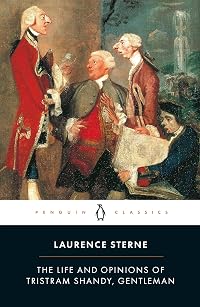
The Life and Opinions of Tristram Shandy, Gentleman
by Laurence Sterne
On This Page
Description
This multi-volume comic masterpiece is a must-read for fans of literary humor writing. An inventive pastiche of a staggering array of eighteenth-century thinkers, writers, and artists, Tristram Shandy combines intellectual allusions with rollicking—and sometimes bawdy—humor..
Tags
Recommendations

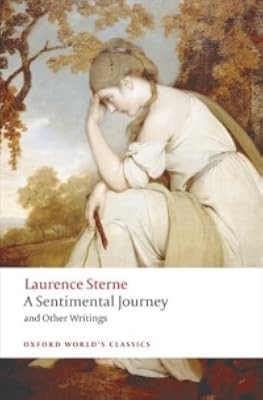
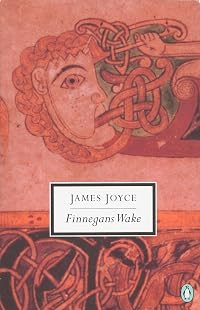
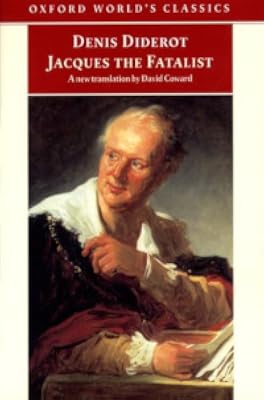


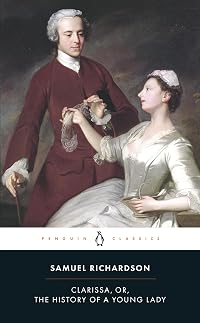



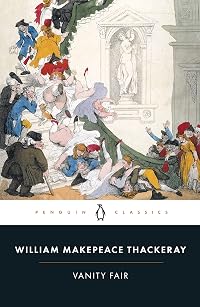
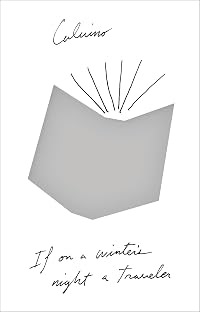
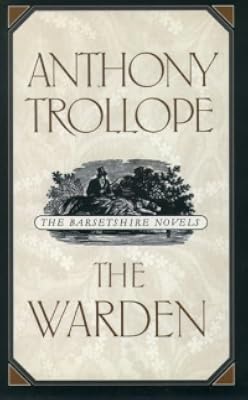

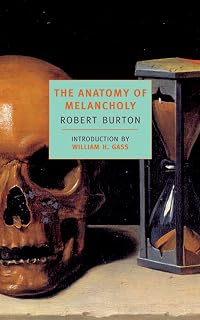





Member Recommendations
90
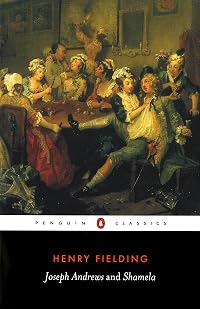
Widsith The obvious companion book...funnier but less story-driven
60
laurapickle Midnight's Children borrows much from Sterne (as well as many other novels!), reworking it into his Booker winning novel.
20
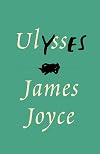
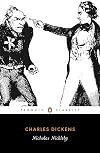
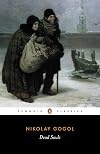
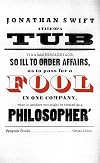
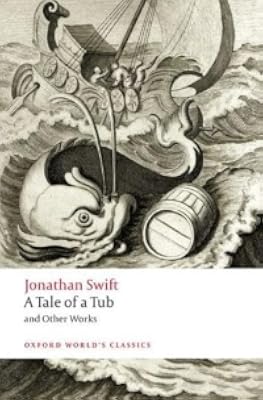
Cecrow Earlier influential work of satire, that also indulged in digression and lost its narrative.

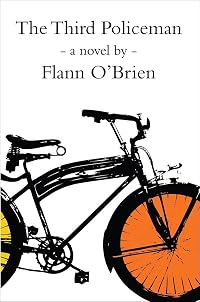
Bill-once Sterne's work and style subtly suffuse Douglas'
Member Reviews
This is a novel that has, since it’s publication in 1759, divided opinion throughout the ages. It certainly divided mine as you can tell from the review radar below.
While I’m all for authors trying to push the envelope of what a novel can do, such experimentation often comes at a price. In this case, the price to be paid was a great deal of readability and, unless you can excuse an autobiography dedicating hundreds of pages solely to the birth of the protagonist, any sense of plot.
Sterne was both a genius and massively influential. But genii are often unaware of the masses’ need for accessibility, much like most of us are unaware how hard using scissors is for lefties.
I’m not going to lie and say I enjoyed having this read to show more me. I didn’t. In fact, I let out a loud cheer in the car when it finally finished. But in reading further online, I can see quite how foundational this novel was. It set standards for what writers could do, how cheeky they could be, and asked questions of what the novel was fundamentally for.
However, I think it’s more than fair to say that it is foundational to literature in the same way that Leviticus is foundational to Holy Scripture: tediously. show less
While I’m all for authors trying to push the envelope of what a novel can do, such experimentation often comes at a price. In this case, the price to be paid was a great deal of readability and, unless you can excuse an autobiography dedicating hundreds of pages solely to the birth of the protagonist, any sense of plot.
Sterne was both a genius and massively influential. But genii are often unaware of the masses’ need for accessibility, much like most of us are unaware how hard using scissors is for lefties.
I’m not going to lie and say I enjoyed having this read to show more me. I didn’t. In fact, I let out a loud cheer in the car when it finally finished. But in reading further online, I can see quite how foundational this novel was. It set standards for what writers could do, how cheeky they could be, and asked questions of what the novel was fundamentally for.
However, I think it’s more than fair to say that it is foundational to literature in the same way that Leviticus is foundational to Holy Scripture: tediously. show less
I wonder what Sterne would have thought of all the theorising about this book? The introduction to this volume claims that we should read 'Shandy' because it will help us avoid the 'rationalism' of 'totalitarianism' of the twentieth century; that we are too much like Mrs Wadman, who wants to know if Uncle Toby has a penis or not. We should leave the fortress unpenetrated, the mystery unrevealed, the riddle unsolved.
Of course, this idiocy is exactly what Sterne was writing against- not against rationalism, but against superstition uninformed by history or heart; not against rationalism, but against stupidity. That many literary critics (especially the 'postmodern' ones) can't distinguish between the two says more about the way we talk show more about our world than about the world itself, which is plainly and continuously stupid, and not at all rational.
Roy Porter says this book is 250 years ahead of its time, but the truth is, Barth and Leyner - and all the over specialists without spirit & sensualists without heart - are 250 years behind it. Sterne exhausted the form he created.
That rant over, this is a really funny dick joke. Plenty of the references are stale (unless you're really into seventeenth and eighteenth century theories of medicine, warfare, etc etc...), but you'll get the point pretty quickly anyway. But whatever you do, read it without the introductory material- there's nothing worse than explaining a dick joke as if it were an earth-shatteringly huge political statement, and Sterne knew it. show less
Of course, this idiocy is exactly what Sterne was writing against- not against rationalism, but against superstition uninformed by history or heart; not against rationalism, but against stupidity. That many literary critics (especially the 'postmodern' ones) can't distinguish between the two says more about the way we talk show more about our world than about the world itself, which is plainly and continuously stupid, and not at all rational.
Roy Porter says this book is 250 years ahead of its time, but the truth is, Barth and Leyner - and all the over specialists without spirit & sensualists without heart - are 250 years behind it. Sterne exhausted the form he created.
That rant over, this is a really funny dick joke. Plenty of the references are stale (unless you're really into seventeenth and eighteenth century theories of medicine, warfare, etc etc...), but you'll get the point pretty quickly anyway. But whatever you do, read it without the introductory material- there's nothing worse than explaining a dick joke as if it were an earth-shatteringly huge political statement, and Sterne knew it. show less
This book is an amazing and wonderful encapsulation of the complexity of knowledge and perception and understanding; it is crass; it is clever; it is witty; it is fantastically cultured and informed, without the slightest care for wisdom or information. It is no wonder that Laurence Sterne's colleagues despaired at him - but this may just be one of the great achievements of the Anglican mind. It is one of the relatively few books which is consistently genuinely funny, and like all real humour it is horribly true.
There's scarcely a page's worth of Tristram's life in this satirical novel outside of a mad dash through France, but perhaps there's some of his opinions. Sterne's joke is that Tristram gets so terribly sidetracked into setting up the background for launching into his autobiography, he never really gets around to it. We are introduced to the circumstances of Tristram's birth - but then there comes an aside while he auctions his biography's dedication, and then come several details about the midwife who served at his birth; then about the parson who paid for her credentials; then the story of the parson's horse ... and already we are getting nowhere fast. Another 500 pages of this lies ahead. It can frustrate or amuse, and may often do show more both.
There's all kinds of playfulness with exploring the limitations of literature, and in drawing comparisons with the strengths and weaknesses of other forms of art. The novel was a new and exciting form in the 1700s and Sterne was happy to indulge, but at the same time refute any thought that it was an ideal medium for delivering all human experience. When he uses a page and a half to describe someone's stance, it's of no matter except to demonstrate how poorly the written word captures what an actor conveys instantly. Similarly when he hums a tune, it demonstrates failure to convey an emotive melody. In addition, this work is littered with 1770s postmodernism: interrupting the narrative with a page of black ink or marbling, interweaving Latin with English translations and Greek footnotes, tossing symbols onto the page to illustrate a point, skipping a chapter or leaving one blank, etc. It's easy to find modern authors who 'push the envelope' (e.g. Lemony Snicket, Mark Danielewski etc.) but this work reveals they only follow Sterne's lead from centuries earlier.
Sterne gets shovelled in alongside Fielding and Richardson as representing the state of literature in his period, but his format links more directly to the satirical works of Swift (especially seen in "A Tale of a Tub"). In that light there's many good bits: the cursing of Obadiah, Slawkenbergius' tale, the adventure of the chestnut, and nearly anything that prompts Uncle Toby to start whistling, to highlight a few. Doctor Slop might be my favourite character for dryly recognizing the nuttiness of the conversation, where even the digressions have their digressions. I anticipated I would find this "novel" either fun or frustrating. I've landed on the fun side but I could have done without Part Seven, and the last two parts contain signs of Sterne's diminishing health. This is a classic I'm glad to have read on paper. The Penguin edition's comprehensive endnotes were helpful, and otherwise I would have missed some of the gags. show less
There's all kinds of playfulness with exploring the limitations of literature, and in drawing comparisons with the strengths and weaknesses of other forms of art. The novel was a new and exciting form in the 1700s and Sterne was happy to indulge, but at the same time refute any thought that it was an ideal medium for delivering all human experience. When he uses a page and a half to describe someone's stance, it's of no matter except to demonstrate how poorly the written word captures what an actor conveys instantly. Similarly when he hums a tune, it demonstrates failure to convey an emotive melody. In addition, this work is littered with 1770s postmodernism: interrupting the narrative with a page of black ink or marbling, interweaving Latin with English translations and Greek footnotes, tossing symbols onto the page to illustrate a point, skipping a chapter or leaving one blank, etc. It's easy to find modern authors who 'push the envelope' (e.g. Lemony Snicket, Mark Danielewski etc.) but this work reveals they only follow Sterne's lead from centuries earlier.
Sterne gets shovelled in alongside Fielding and Richardson as representing the state of literature in his period, but his format links more directly to the satirical works of Swift (especially seen in "A Tale of a Tub"). In that light there's many good bits: the cursing of Obadiah, Slawkenbergius' tale, the adventure of the chestnut, and nearly anything that prompts Uncle Toby to start whistling, to highlight a few. Doctor Slop might be my favourite character for dryly recognizing the nuttiness of the conversation, where even the digressions have their digressions. I anticipated I would find this "novel" either fun or frustrating. I've landed on the fun side but I could have done without Part Seven, and the last two parts contain signs of Sterne's diminishing health. This is a classic I'm glad to have read on paper. The Penguin edition's comprehensive endnotes were helpful, and otherwise I would have missed some of the gags. show less
I find it nearly impossible to review this, since it is one of my favorite novels of all time, makes me laugh even on a crowded Boston, MA bus and is apparently a classic that few people read (at least according to the essay in the back of my Signet Classics edition). Walter and Toby Shandy, Doctor Slop and Corporal Trim are as real to me as my bus companions -- more real, in fact, because at least the characters in Tristram Shandy have emotions.
https://fromtheheartofeurope.eu/tristram-shandy-by-laurence-sterne/
I first read Tristram Shandy when I was 23, more than thirty years ago, and still have the slightly mildewed paperback that I picked up off a Cambridge bookstall one day in late 1990. I can’t honestly tell you what happens in it; I can’t find any particular lines that resonate or are very quotable; the most memorable moment is when our hero’s penis gets caught in the windowframe in Book 5 Chapter 17. (Sorry for the spoiler.)
And yet somehow I love it. It’s rambling, self-indulgent, full of references to things I know nothing about; and at the same time the stream-of-consciousness narrative, the refusal to make many concessions to the reader who wants to know what show more is actually going on, are part of the charm. It’s clearly an inspiration for Joyce, Woolf, and lots of the modernist writers who I really like; but it’s a book of its own time, requiring friendly engagement and repaying that engagement with warmth and humour. show less
I first read Tristram Shandy when I was 23, more than thirty years ago, and still have the slightly mildewed paperback that I picked up off a Cambridge bookstall one day in late 1990. I can’t honestly tell you what happens in it; I can’t find any particular lines that resonate or are very quotable; the most memorable moment is when our hero’s penis gets caught in the windowframe in Book 5 Chapter 17. (Sorry for the spoiler.)
And yet somehow I love it. It’s rambling, self-indulgent, full of references to things I know nothing about; and at the same time the stream-of-consciousness narrative, the refusal to make many concessions to the reader who wants to know what show more is actually going on, are part of the charm. It’s clearly an inspiration for Joyce, Woolf, and lots of the modernist writers who I really like; but it’s a book of its own time, requiring friendly engagement and repaying that engagement with warmth and humour. show less
What a ride! Tristram Shandy is a complete jumble of frustrating digressions, absurd (Monty Python-esque?) form, laugh-out-loud humor, and philosophical musings on various important topics such as religion, morality, hobbyhorses, and noses. You'll notice I didn't include plot in this list. Indeed, while the novel claims to be about his life, Tristram isn't actually born for the first few volumes - no need to rush things I suppose. But then again, when an author kindly requests that you "cleanse your emunctories" in preparation for a particularly important chapter, relates Slawkenbergius's tale of how a nose sent all of Strassburg into a tizzy, or extols the "unaccountably becalming" effect of fishponds, it's hard to complain.
Members
- Recently Added By
Lists

1001 Books You Must Read Before You Die
1,448 works; 1,136 members

The Guardian's 1000 Novels Everyone Must Read
1,005 works; 551 members
Best of British Literature
226 works; 41 members

Metafiction
86 works; 23 members

The 100 Best Books of All Time by Norwegian Book Club (World Library)
104 works; 23 members

100 Books to Read in a Lifetime (That Are Older Than 200 Years)
415 works; 176 members
The Top Ten: Writers Pick Their Favorite Books
240 works; 32 members

Favorite Long Books
330 works; 42 members

Unread books
1,063 works; 87 members

Favourite Books
1,820 works; 316 members

Philip Ward's Lifetime Reading Plan
592 works; 22 members

18th Century
42 works; 12 members

Stream of Consciousness
87 works; 8 members
Best Satire
188 works; 29 members

50 Tough Books for Extreme Readers
71 works; 39 members

The Guardian's 100 greatest novels of all time
100 works; 16 members

Significant works of postmodern fiction
86 works; 25 members

Unreliable Narrators
170 works; 43 members

Best books about books
209 works; 106 members
Favorite Coming of Age Novels.
164 works; 51 members

Experimental Literature
141 works; 18 members

Harold Bloom - The Western Canon: B. The Aristocratic Age
231 works; 13 members

Western World's Greatest Books - Project Gutenberg
295 works; 15 members

Books I've Read More Than Once
602 works; 49 members
Most difficult novels
68 works; 27 members

Picaresque Novels
22 works; 9 members
Folio Society
831 works; 53 members
Blue Pyramid 1,276 Best Books of All Time
1,248 works; 32 members
LibraryThingers' 1001 Books You Must Read Before You Die
442 works; 30 members
Best First Lines
133 works; 8 members

Top Five Books of 2022
736 works; 272 members

Best of Irish Literature
37 works; 7 members

A Novel Cure
742 works; 23 members
Out of Copyright
244 works; 14 members
How to Read a Book's Recommended Reading List
309 works; 10 members
The Greatest Books
99 works; 5 members

The Road to Freedom (Will Durant's 100 Best Books for an Education)
100 works; 8 members
1,001 BYMRBYD Concensus
723 works; 27 members

Favorite Audiobooks Listened to in 2011
33 works; 11 members

The Guardian's 100 Best Novels Written in English
105 works; 13 members
Five star books
1,767 works; 110 members
Elegant Prose
80 works; 4 members
United Kingdom
82 works; 5 members
Books with a Character's Name as the Title
130 works; 10 members

A's favorite novels
100 works; 3 members

1750s
3 works; 1 member
Best Domestic Fiction
77 works; 6 members

Books Read in 2023
5,638 works; 147 members

University literature
145 works; 5 members
Trinity College Booklist (1951): Class Ten, English Literature
358 works; 5 members

Books Read in 2022
5,226 works; 115 members

Books Read in 2015
3,299 works; 129 members

A Good Read (Radio 4)
287 works; 1 member
http://thegreatestbooks.org's Greatest Fiction Books
59 works; 1 member
W. S. Maugham's Reading Suggestions for Spiritual Enrichment: British
24 works; 3 members

Comedy of Manners
73 works; 1 member

The 150 Greatest Novels of All Time
150 works; 6 members

Books We Resisted Reading
178 works; 110 members

In Our Time books
4,934 works; 2 members

Fiction with Men's Given Names in the Title
302 works; 11 members
.
396 works; 1 member
Reading LIst
648 works; 1 member

DigitalDreamDoor top 300
300 works; 4 members

Recommended Reading : 600 Classics Reviewed, Editors of Salem Press, 2015
634 works; 6 members

Javier Marías: 10 libros que me han cambiado la vida
12 works; 1 member

Reading Glasses Podcast
410 works; 3 members

Books Read in 2018
4,360 works; 110 members
My List
302 works; 1 member

A Reading List
100 works; 3 members
Books We'd Want on a Desert Island
204 works; 133 members
New Lifetime Reading Plan by Fadiman and Major
225 works; 5 members

Literary Works Read in College
316 works; 15 members

Mustich's 1000 Books to Read Before You Die: A Life Changing List
1,001 works; 20 members

AP Lit
363 works; 6 members

Greatest Books, allegedly
484 works; 9 members
Books You Read For University
184 works; 3 members

Best of World Literature
436 works; 52 members
Talk Discussions
Past Discussions
the life and Opinions of Tristram Shandy in Folio Society Devotees (June 2022)
Laurence Sterne - Tristram Shandy in Literary Centennials (March 2014)
The Life And Opinions Of Tristram Shandy, Gentleman by Laurence Sterne - lyzard tutoring keristars in 75 Books Challenge for 2012 (April 2012)
Tristram Shandy: Books 7-9 in Group Reads - Literature (February 2012)
Tristram Shandy, Books 4-6 in Group Reads - Literature (August 2011)
Tristram Shandy: Books 1-3 in Group Reads - Literature (August 2011)
Author Information

If Fielding showed that the novel (like the traditional epic or drama) could make the chaos of life coherent in art, Sterne only a few years later in The Life and Opinions of Tristram Shandy, Gentleman (1760--67) laughed away the notion of order. In Sterne's world, people are sealed off in their own minds so that only in unpredictable moments of show more spontaneous feeling are they aware of another human being. Reviewers attacked the obscenity of Tristram's imagined autobiography as it was published (two volumes each in 1759, early 1761, late 1761, 1765, and one in 1767), particularly when the author revealed himself as a clergyman, but the presses teemed with imitations of this great literary hit of the 1760s. Through the mind of the eccentric hero, Sterne subverted accepted ideas on conception, birth, childhood, education, and the contemplation of maturity and death, so that Tristram's concerns touched his contemporaries and are still important. Since Tristram Shandy is patently a great and lasting comic work that yet seems, as E. M. Forster said, "ruled by the Great God Muddle," much recent criticism has centered on the question of its unity or lack of it; and its manipulation of time and of mental processes has been considered particularly relevant to the problems of fiction in our day. Sterne's Sentimental Journey (1768) has been immensely admired by some critics for its superb tonal balance of irony and sentiment. His Sermons of Mr. Yorick (1760) catches the spirit of its time by dramatically preaching benevolence and sympathy as superior to doctrine. Whether as Tristram or as Yorick, Sterne is probably the most memorably personal voice in eighteenth-century fiction. (Bowker Author Biography) show less
Some Editions
Awards and Honors
Notable Lists
Daniel S. Burt's Novel 100 (032 – 32)
Series
Belongs to Publisher Series
Visual Editions (1)
Arion Press (26)
Manesse Bibliothek der Weltliteratur (1948 + 1999)
The World's Classics (40)
Perpetua reeks (69)
Penguin English Library, 2012 series (2012-10)
The Pocket Library (PL-511)
Winkler Weltliteratur Dünndruckausgabe (Sterne 2)
Airmont Classics (152)
A tot vent (308)
Everyman's Library (617)
Work Relationships
Is contained in
Is abridged in
Inspired
Has as a study
Has as a commentary on the text
Has as a student's study guide
Common Knowledge
- Canonical title
- The Life and Opinions of Tristram Shandy, Gentleman
- Original title
- Life and opinions of Tristram Shandy Gentleman
- Alternate titles
- Tristram Shandy
- Original publication date
- 1759-1767
- People/Characters
- Tristram Shandy; Uncle Toby; Doctor Slop; Yorick; Corporal Trim
- Related movies
- A Cock and Bull Story (2005 | IMDb)
- Epigraph
- ταρασσει τους ἀνθρωπους οὐ τα πραγματα ἀλλα τα περι των πραγματων δογματα.
What stresses mankind is not things, but opinions about things --- Epictetus - Dedication
- To the Right Honourable Mr. Pitt.
Sir,
Never poor Wight of a Dedicator had less hopes from his Dedication, than I have from this of mine; for it is written in a bye corner of the kingdom, and in a retir'd thatch... (show all)'d house, where I live in a constant endeavour to fence against the infirmities of ill health, and other evils of life, by mirth; being firmly persuaded that every time a man smiles,—but much more so, when he laughs, it adds something to this Fragment of Life.
I humbly beg, Sir, that you will honour this book, by taking it—(not under your Protection,—it must protect itself, but)—into the country with you; where, if I am ever told, it has made you smile; or can conceive it has beguiled you of one moment's pain—I shall think myself as happy as a minister of state;—perhaps much happier than any one (one only excepted) that I have read or heard of.
I am, Great Sir, (and, what is more to your Honour) I am, Good Sir, Your
Well-wisher, and most humble Fellow-subject,
The Author. - First words
- "I wish either my father or my mother, or indeed both of them, as they were in duty both equally bound to it, had minded what they were about when they begot me; had they duly considered how much depended upon what they were ... (show all)then doing; - that not only the production of a rational Being was concerned in it, but that possibly the happy formation and temperature of his body, perhaps his genius and the very cast of his mind; - and, for aught they knew to the contrary, even the fortunes of his whole house might take their turn from the humours and dispositions which were then uppermost: ---Had they duly weighed and considered all this, and proceeded accordingly, ---I am verily persuaded I should have made a quite different figure in the world from that in which the reader is likely to see me."
- Quotations
- and so long as a man rides his Hobby-Horse peaceably and quietly along the King's highway, and neither compels you or me to get up behind him, - pray, Sir, what have either you or I to do with it?
What is best to take out the fire? ... If it is in a tender part, and a part which can conveniently be wrapt up ... Send to the next printer, and trust your cure to a soft sheet of paper just come off the press - you need do ... (show all)nothing more than twist it round. - The damp paper has a refreshing coolness in it - and the oil and lamp-black with which the paper is so strongly impregnated, does the business. - Last words
- (Click to show. Warning: May contain spoilers.)A COCK and a BULL, said Yorick - And one of the best of its kind, I ever heard.
- Original language
- English
- Disambiguation notice
- This is the original work by Laurence Sterne, not the graphic novel adaptation/commentary by Martin Rowson. It should not be combined with the Norton Critical Edition, nor with single volumes of a two or three volume set.
Classifications
Statistics
- Members
- 8,576
- Popularity
- 1,287
- Reviews
- 125
- Rating
- (3.91)
- Languages
- 19 — Catalan, Chinese, Czech, Danish, Dutch, English, Finnish, French, German, Hungarian, Italian, Norwegian (Bokmål), Polish, Portuguese, Romanian, Serbian, Spanish, Swedish, Turkish
- Media
- Paper, Audiobook, Ebook
- ISBNs
- 252
- UPCs
- 2
- ASINs
- 254