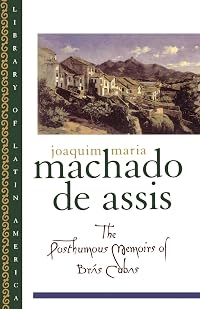
The Posthumous Memoirs of Brás Cubas
by Machado de Assis
On This Page
Description
"One of the wittiest, most playful, and . . . most alive and ageless books ever written." --Dave Eggers, The New Yorker A revelatory new translation of the playful, incomparable masterpiece of one of the greatest Black authors in the Americas A Penguin Classic The mixed-race grandson of ex-slaves, Machado de Assis is not only Brazil's most celebrated writer but also a writer of world stature, who has been championed by the likes of Philip Roth, Susan Sontag, Allen Ginsberg, John Updike, and show more Salman Rushdie. In his masterpiece, the 1881 novel The Posthumous Memoirs of Brás Cubas (translated also as Epitaph of a Small Winner), the ghost of a decadent and disagreeable aristocrat decides to write his memoir. He dedicates it to the worms gnawing at his corpse and tells of his failed romances and halfhearted political ambitions, serves up harebrained philosophies, and complains with gusto from the depths of his grave. Wildly imaginative, wickedly witty, and ahead of its time, the novel has been compared to the work of everyone from Cervantes to Sterne to Joyce to Nabokov to Borges to Calvino, and has influenced generations of writers around the world. This new English translation is the first to include extensive notes providing crucial historical and cultural context. Unlike other editions, it also preserves Machado's original chapter breaks--each of the novel's 160 short chapters begins on a new page--and includes excerpts from previous versions of the novel never before published in English. show lessTags
Recommendations











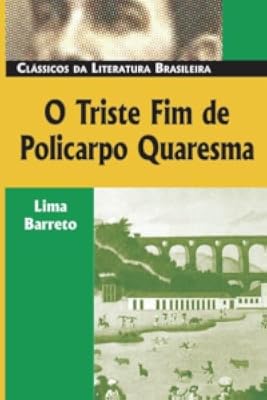
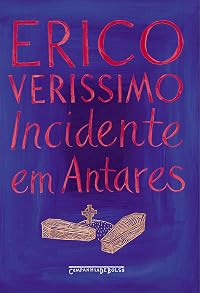
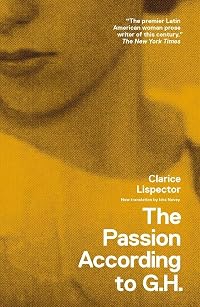








Member Recommendations

by anonymous user
fspyck Ik vond er eenzelfde terughoudenheid in, Machado de Assis is misschien wat grimmiger, en speelt nog meer met vorm en intertekstualiteit, Svevo is ietwat hilarischer

Member Reviews
A literary gem!
The book is written, as the author puts it, with a playful pen and melancholy ink. Resplendent with wit and continuously breaks the fourth wall to talk directly with the reader which catches you offguard every single time.
Warning: Don't read in public if you are easily embarrassed by people staring at you as you laugh while you are reading the book.
The book is written, as the author puts it, with a playful pen and melancholy ink. Resplendent with wit and continuously breaks the fourth wall to talk directly with the reader which catches you offguard every single time.
Warning: Don't read in public if you are easily embarrassed by people staring at you as you laugh while you are reading the book.
witty, funny, brisk, ingenious, and weirdly relatable. i did not quite like the main character's character. he's self-centered and strikes me as lazy and borderline delusional. but he feels like a very real person living in his times. the social commentaries on slavery and the morality of the privileged were almost subtle, but always striking. i think it deserves a more critical reading than i did.
As usual, our fearless Reading Group leader came up with a book no one had heard of and was glad to read.
This sometimes satiric, sometimes hilarious novel is written by the title character from the grave - literally. He dedicates it to the worms that will eat his body. Its main preoccupation is Bras Cubas himself, an upper class, lazy, amoral gentleman in Rio de Janiero in the late 1800s, his life and loves, his acute perceptions of the society around him and the history of this very mixed race place. Some of the chapters are reasonably long - maybe 8 pages. Some are just one page. One is empty. The titles are signals, for instance, 'An Immoral Reflection', 'Sad, but Short', followed by 'Short, but Happy'. But Blas being dead, he has show more decided to tell it like it was, warts and and slavery and all. As a picture of a petty, scrupulous, self-absorbed society, it's terrific. (Look out for the hippopotamus in chapter VII.)
There are at least three translations out, one from the 1950s, two more recent. They are all good. The one I read had extensive footnotes from the author. Interestingly, the book was not well received in Brazil, at least in part because it is such a strange departure from the previous writing, the straight narrative romances that were so popular. But it has haunted many writers in English, and speaks as much to the 21st century as to its own. show less
This sometimes satiric, sometimes hilarious novel is written by the title character from the grave - literally. He dedicates it to the worms that will eat his body. Its main preoccupation is Bras Cubas himself, an upper class, lazy, amoral gentleman in Rio de Janiero in the late 1800s, his life and loves, his acute perceptions of the society around him and the history of this very mixed race place. Some of the chapters are reasonably long - maybe 8 pages. Some are just one page. One is empty. The titles are signals, for instance, 'An Immoral Reflection', 'Sad, but Short', followed by 'Short, but Happy'. But Blas being dead, he has show more decided to tell it like it was, warts and and slavery and all. As a picture of a petty, scrupulous, self-absorbed society, it's terrific. (Look out for the hippopotamus in chapter VII.)
There are at least three translations out, one from the 1950s, two more recent. They are all good. The one I read had extensive footnotes from the author. Interestingly, the book was not well received in Brazil, at least in part because it is such a strange departure from the previous writing, the straight narrative romances that were so popular. But it has haunted many writers in English, and speaks as much to the 21st century as to its own. show less
The fictional memoir of a wastrel asshole of a 19th-century Brazilian aristocrat which in terms of style reads startlingly ahead of its time. For me, the main pleasure of The Posthumous Memoirs of Brás Cubas lay in the eponymous character's voice, which is at once ironic and capricious, insightful and self-deluded. I found this fitfully engaging—passages of brilliance succeeded by sections of tedium—and the whole perhaps a little less than the sum of its parts.
What a romp! Who new a posthumous memoir could be so wonderful? Our narrator, Bras Cubas, the dead one, finally makes his mark in the world by inventing the posthumous memoir. According to Susan Sontag, in the introduction, this occurs in counterpoint to "Tristram Shandy" speaking to his audience before birth. (I need to read that novel) Finally, Cubas can heave his eternal sigh of relief by achieving a worthy epitaph. His life was pretty typical, full of love, envy, profound delusions, a touch of intrigue, a variety of failures, petty maneuvering, and embarrassing moments. So what the heck, is it so much to ask for an eternal sigh of relief now and then? I think not!
This is a novel lost in time.
I can hardly believe it was written 140 years ago. Were it not for the occasional mention of slaves and references to outmoded technology like stagecoaches, I would be none the wiser—in fact, with those still intact, I’d probably be more likely to believe this to be a popular historical fiction novel written in 2015 which the London Review of Books would have called “a work of brilliant tragicomedy” or somesuch. But no, Joaquim Maria Machado de Assis delivers this gem to us from 1881, and somehow, somehow, it has not, in all the intervening years, taken the world by storm.
As for what this book is, well it’s all in the title really. Well, the original title—Memórias Póstumas de Brás Cubas, show more which ought to be translated to The Posthumous Memoirs of Brás Cubas and not, as it appears inexplicably on the cover of my copy and many others, Epitaph of a Small Winner. So yes, this is a posthumous memoir, that is, Sr. Cubas is dictating it from beyond the grave (using a method, he tells us, that would take far too much time to explain but he can assure us is very interesting). With this otherworldly insight, he reflects frankly upon the events of his life and death and uses them to occasionally expound upon his philosophies on conscience, melancholy, avarice, love, and many other facets of the human condition.
I suspect the structure of the book has a lot to do with its sense of innovation and timelessness. It’s told in many short chapters, some a few pages long and some just a paragraph or a few sentences, all numbered and titled, every thought and aside compartmentalised instead of being woven into the larger text as is the case with most novels. And have I mentioned how incredibly creative this book is? There’s a chapter titled simply “...”. Cubas often refers to other chapters or comments upon the book itself, redactions he intends to make or things he has decided not to describe further; in one episode he even imagines a book collector stumbling upon a first edition copy of this obscure volume, The Posthumous Memoirs of Brás Cubas. If you need further proof of Machado de Assis’ humour and creativity, when you inevitably buy this book for yourself, just find the chapter titled “Venerable Dialogue of Adam & Eve”.
And Cubas himself is as charming a narrator as they come. His voice is supremely engaging; I felt more involved with the reading of this book than with perhaps any other. He interrupts himself, censors himself, undermines his own philosophising, anticipates your reactions, proactively answers your questions, edits the book as he goes, forgets the point he was trying to make, gets distracted or annoyed or drawn into a philosophical mire... and you can’t help but love every second you spend tagging along behind him, helpless in his narrative caprice. He feels much more intimately connected to the reader than any other narrator I’ve experienced, and I wonder if this is the secret to the book’s timelessness: Brás Cubas’ humanity and eccentricity which positively pours from every page, reminding us that, whether in 1881 or 2020, people haven’t really changed.
I highly, highly recommend this novel and I feel absolutely shocked that nobody has recommended it to me or made me read it in school—I had to discover this on my own, in a bargain bin at a secondhand shop? For shame. This title should be at least as well known as The Scarlet Letter, which is about a thousand times more ghastly and impenetrable and just flat-out terrible, and was only published thirty years prior to this if you can believe it; so Hawthorne really had no excuse to be so deadly dull. The only thing keeping me from giving these posthumous memoirs five stars is that I felt the conclusion was a bit abrupt—but that may well be a reflection of my selfish desire for this book to go on and on. show less
I can hardly believe it was written 140 years ago. Were it not for the occasional mention of slaves and references to outmoded technology like stagecoaches, I would be none the wiser—in fact, with those still intact, I’d probably be more likely to believe this to be a popular historical fiction novel written in 2015 which the London Review of Books would have called “a work of brilliant tragicomedy” or somesuch. But no, Joaquim Maria Machado de Assis delivers this gem to us from 1881, and somehow, somehow, it has not, in all the intervening years, taken the world by storm.
As for what this book is, well it’s all in the title really. Well, the original title—Memórias Póstumas de Brás Cubas, show more which ought to be translated to The Posthumous Memoirs of Brás Cubas and not, as it appears inexplicably on the cover of my copy and many others, Epitaph of a Small Winner. So yes, this is a posthumous memoir, that is, Sr. Cubas is dictating it from beyond the grave (using a method, he tells us, that would take far too much time to explain but he can assure us is very interesting). With this otherworldly insight, he reflects frankly upon the events of his life and death and uses them to occasionally expound upon his philosophies on conscience, melancholy, avarice, love, and many other facets of the human condition.
I suspect the structure of the book has a lot to do with its sense of innovation and timelessness. It’s told in many short chapters, some a few pages long and some just a paragraph or a few sentences, all numbered and titled, every thought and aside compartmentalised instead of being woven into the larger text as is the case with most novels. And have I mentioned how incredibly creative this book is? There’s a chapter titled simply “...”. Cubas often refers to other chapters or comments upon the book itself, redactions he intends to make or things he has decided not to describe further; in one episode he even imagines a book collector stumbling upon a first edition copy of this obscure volume, The Posthumous Memoirs of Brás Cubas. If you need further proof of Machado de Assis’ humour and creativity, when you inevitably buy this book for yourself, just find the chapter titled “Venerable Dialogue of Adam & Eve”.
And Cubas himself is as charming a narrator as they come. His voice is supremely engaging; I felt more involved with the reading of this book than with perhaps any other. He interrupts himself, censors himself, undermines his own philosophising, anticipates your reactions, proactively answers your questions, edits the book as he goes, forgets the point he was trying to make, gets distracted or annoyed or drawn into a philosophical mire... and you can’t help but love every second you spend tagging along behind him, helpless in his narrative caprice. He feels much more intimately connected to the reader than any other narrator I’ve experienced, and I wonder if this is the secret to the book’s timelessness: Brás Cubas’ humanity and eccentricity which positively pours from every page, reminding us that, whether in 1881 or 2020, people haven’t really changed.
I highly, highly recommend this novel and I feel absolutely shocked that nobody has recommended it to me or made me read it in school—I had to discover this on my own, in a bargain bin at a secondhand shop? For shame. This title should be at least as well known as The Scarlet Letter, which is about a thousand times more ghastly and impenetrable and just flat-out terrible, and was only published thirty years prior to this if you can believe it; so Hawthorne really had no excuse to be so deadly dull. The only thing keeping me from giving these posthumous memoirs five stars is that I felt the conclusion was a bit abrupt—but that may well be a reflection of my selfish desire for this book to go on and on. show less
Machado’s commentary on human folly is presented as the memoir of a dead man. A dead man. Some chapters are sad, but short; others are short, but sad. Some chapters, according to the narrator, are a mistake; others are unnecessary, or explanations of a previous chapter. About the most brilliant phase of his life he is determined to say nothing. He responds preemptively (but posthumously) to his critics, abandons and embraces the teachings (‘Humanitism’) of the philosopher-tramp Quincas Borba, and confirms the parable of the Athenian maniac. That Brás Cubas is an unreliable narrator is beside the point, really, since language and the mind from which it springs are not to be trusted. A brilliant book.
…this is what makes us the show more lords of the Earth, this ability to restore the past, to realize the fragility of our impressions and the futility of our affections. Pascal may say that man is a thinking reed, but he isn’t, he’s a thinking erratum. Each season in life is a new edition that corrects the preceding one, which will in turn be corrected again, until we reach the definitive edition, which the editor donates for free to the worms. show less
…this is what makes us the show more lords of the Earth, this ability to restore the past, to realize the fragility of our impressions and the futility of our affections. Pascal may say that man is a thinking reed, but he isn’t, he’s a thinking erratum. Each season in life is a new edition that corrects the preceding one, which will in turn be corrected again, until we reach the definitive edition, which the editor donates for free to the worms. show less
Members
- Recently Added By
Published Reviews
ThingScore 75
This new translation, by Flora Thomson-DeVeaux, is the perfect chance to get reacquainted with the delights of a book written with “the pen of mirth and the ink of melancholy”, or to discover it for the first time.
added by Nevov
Lists

The Guardian's 1000 Novels Everyone Must Read
1,005 works; 552 members

501 Must-Read Books
529 works; 72 members

Classics you know you should have read but probably haven't
421 works; 409 members

Unreliable Narrators
170 works; 43 members

Best Literature in Portuguese
15 works; 2 members

Dead narrators
50 works; 4 members

Recommended Literary Books
111 works; 1 member

Mustich's 1000 Books to Read Before You Die: A Life Changing List
1,001 works; 20 members

The 10 greatest novels ever in portuguese language
10 works; 1 member

DigitalDreamDoor top 300
300 works; 4 members
Reading LIst
648 works; 1 member

.
396 works; 1 member
Talk Discussions
Past Discussions
Group Read, February 2021: The Posthumous Memoirs of Bras Cubas in 1001 Books to read before you die (February 2021)
Author Information

674+ Works 12,957 Members

Machado de Assis has a Legacy Library. Legacy libraries are the personal libraries of famous readers, entered by LibraryThing members from the Legacy Libraries group.
Some Editions
Awards and Honors
Notable Lists
Series
Belongs to Publisher Series
Common Knowledge
- Canonical title
- The Posthumous Memoirs of Brás Cubas
- Original title
- Memórias Póstumas de Brás Cubas
- Alternate titles
- Epitaph of a Small Winner
- Original publication date
- 1881; 1952 (English: Grossman) (English: Grossman)
- People/Characters
- Brás Cubas; Virgilia; Lobo Neves; Marcella
- Important places
- Rio de Janeiro, Brazil; Brazil; Coimbra, Portugal; Portugal
- Dedication
- AO VERME
QUE
PRIMEIRO ROEU AS FRIAS
CARNES
DO MEU CADÁVER
DEDICO,
COMO SAUDOSA LEMBRANÇA,
ESTAS
MEMÓRIAS PÓSTUMAS - First words
- "Que Stendhal confessasse haver escrito um de seus livros para cem leitores, coisa é que admira e consterna. O que não admira, nem provavelmente consternará é se este outro livro não tiver os cem leitores de Stendhal, ne... (show all)m cinquenta, nem vinte e, quando muito, dez. Dez? Talvez cinco."
To the Reader: When we learn from Stendhal that he wrote one of his books for only a hundred readers, we are both astonished and disturbed. - Quotations
- (Chapter 1) The Death of the Author. I hesitated some time, not knowing whether to open these memoirs at the beginning or at the end, ie whether to start with my birth or with my death.
- Last words
- (Click to show. Warning: May contain spoilers.)"Somadas umas coisas e outras, qualquer pessoa imaginará que não houve míngua nem sobra e, conseguintemente, que saí quite com a vida. E imaginará mal; porque a chegar a este outro lado do mistério, achei-me com um pequeno saldo, que é a derradeira negativa deste capítulo de negativas: - Não tive filhos, não transmiti a nenhuma criatura o legado da nossa miséria."
(Click to show. Warning: May contain spoilers.)And he will conclude falsely; for upon arriving on the other side of the mystery, I found that I had a small surplus, which provides the final negative of this chapter of negatives: I had no progeny, i transmitted to no one the legacy of our misery. - Original language
- Portuguese
Classifications
- Genres
- Fiction and Literature, General Fiction
- DDC/MDS
- 869.3 — Literature & rhetoric Spanish Literature Literatures of Portuguese and Galician languages Portuguese fiction
- LCC
- PQ9697 .M18 .M513 — Language and Literature French, Italian, Spanish and Portuguese literatures Portuguese literature Provincial, local, colonial, etc. Brazil
- BISAC
Statistics
- Members
- 3,187
- Popularity
- 5,461
- Reviews
- 85
- Rating
- (4.19)
- Languages
- 19 — Catalan, Danish, Dutch, English, Finnish, French, German, Greek, Hebrew, Italian, Norwegian (Bokmål), Farsi/Persian, Romanian, Russian, Croatian, Spanish, Swedish, Portuguese (Portugal), Portuguese (Brazil)
- Media
- Paper, Audiobook, Ebook
- ISBNs
- 195
- ASINs
- 68