
Will Self
Author of Great Apes
About the Author
William Woodard "Will" Self was born on September 26, 1961. He is a British author, journalist and political commentator. He wrote ten novels, five collections of short fiction, three novellas and five collections of non-fiction writing. His novel Umbrella was shortlisted for the Man Booker Prize. show more His subject matter often includes mental illness, illegal drugs and psychiatry. Self is a regular contributor to publications including Playboy, The Guardian, Harpers, The New York Times and the London Review of Books. He also writes a column for New Statesman, and over the years he has been a columnist for The Observer, The Times and the Evening Standard. His columns for Building Design on the built environment, and for the Independent Magazine on the psychology of place brought him to prominence as a thinker concerned with the politics of urbanism. Will Self will deliver the closing address at the 2015 Melbourne Writers Festival (MWF) 2015. (Bowker Author Biography) show less
Series
Works by Will Self
The Book of Dave: a revelation of the recent past and the distant future (2006) 1,102 copies, 27 reviews
Psychogeography: Disentangling the Modern Conundrum of Psyche and Place (2007) 250 copies, 11 reviews
Lullaby 1 copy
Ciger 1 copy
Zack Busner 1 copy
The Long Drop 1 copy
Architectural salvage 1 copy
False Blood 1 copy
Sex er også kapital 1 copy
Self Love 1 copy
Associated Works
The Man Who Mistook His Wife for a Hat and Other Clinical Tales (1985) — Introduction, some editions — 13,073 copies, 237 reviews
The Life and Opinions of Tristram Shandy, Gentleman (-0001) — Introduction, some editions — 8,581 copies, 125 reviews
Red Pyramid: Selected Stories (New York Review Books Classics) (2024) — Introduction, some editions — 81 copies
Little People in the City: The Street Art of Slinkachu (BOXTREE) (2011) — Foreword, some editions — 37 copies
Tagged
Common Knowledge
- Other names
- Self, William Woodard
- Birthdate
- 1961-09-26
- Gender
- male
- Education
- University of Oxford (Exeter College)
- Occupations
- writer
cartoonist - Organizations
- The New Statesman
City Limits - Awards and honors
- Granta's Best of Young British Novelists (1993)
- Relationships
- Self, Jonathan (brother)
Orr, Deborah (ex-wife) - Nationality
- UK
- Birthplace
- London, England, UK
- Places of residence
- Oxford, Oxfordshire, England, UK
- Map Location
- England, UK
Members
Discussions
Group Read, September 2019: Great Apes in 1001 Books to read before you die (October 2019)
Umbrella by Will Self in Booker Prize (October 2012)
Reviews
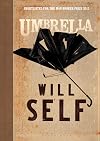
This is not an easy book to read. Paragraphs go on for page after page, so few are the breaks between them that on first sight it seems that there are no paragraphs at all. Streams of consiousnesses flow as the boundaries between the four main characters and three main time periods are endlessly blurred. A sentence will start out at the beginning of the twentieth century and transform seamlessly somewhere in the middle to the thoughts of character nearly a hundred years later. Snippets of show more songs, and random thoughts force their way into the narrative; a sizeable portion of the text is printed in italics for reasons that are not completely obvious. Looking at the first few pages I very nearly made the decision not to read the book at all, it seemed so obviously to be hard work. But when I started reading, I found that it wasn't the uphill struggle that it had seemed to be. While I certainly couldn't understand everything that was written, or all or even most of the references, by letting it just flow over me I found that I was very engaged with the book, interested in the characters and didn't for a moment think of putting it to one side. In particular I loved the lack of boundaries: the way a Victorian pocket watch transforms within a single sentence to become a digital wrist watch, and the reader suddenly realises that the narrative has changed character and moved forward seventy years.
Audrey Death, (or De'Ath, or Deer as her name endlessly mutates) is a long-term patient in the Frien Barnet mental hospital of 1971 Britain. She is one of a number of patients who are believed to be suffering from encephalitis lethargica, a disease which spread throughout Europe in the aftermath of World War I, leaving a third of its sufferers dead and another third completely unable to interact with the world around them, while at the same time suffering from compulsive repetive tics performed at astonishing speed. Dr Zachary Busner, a psychiatrist at the hospital recognises a similarity between certain of their symptoms and those of Parkinson's disease, for which the drug L-DOPA has had positive results. Deciding to treat the sufferers with this drug in a somewhat unorthodox trial, he discovers that the drug has dramatic effects, and the somnambulant patients wake. Interwoven with this narrative is one of Britain during and immediately after the First World War: Audrey's life as an intelligent and politically active young woman working at the Arsenal munitions factory in London; her younger brother Stanley who is obsessed with the mechanical progress that the new century offers; and her older brother Albert whose astonishing calculating power propels him out of the reach of his working class family. The third and final narrative strand is that of the older Dr Busner, retired and looking back on his life and in particular the summer when he awoke the encephalitic patients.
I found this to be a very rewarding read, and, apart from The Garden of Evening Mists, the most thought-provoking of my Booker short-list reads. I found the awakening of the patients particularly interesting as it is loosely based on a true story, detailed in Oliver Sacks' book Awakenings and also the subject of the film of the same name with Robin Williams and Robert de Niro (neither of which I had come across before reading this book). But I also enjoyed the characters that Will Self had created against this backdrop and I enjoyed the blurring of time and consciousness that he employs. So while this is not a book for everyone, and requires quite slow and careful reading, I'd encourage people to read at least the first forty of fifty pages before deciding it's not for them. show less
Audrey Death, (or De'Ath, or Deer as her name endlessly mutates) is a long-term patient in the Frien Barnet mental hospital of 1971 Britain. She is one of a number of patients who are believed to be suffering from encephalitis lethargica, a disease which spread throughout Europe in the aftermath of World War I, leaving a third of its sufferers dead and another third completely unable to interact with the world around them, while at the same time suffering from compulsive repetive tics performed at astonishing speed. Dr Zachary Busner, a psychiatrist at the hospital recognises a similarity between certain of their symptoms and those of Parkinson's disease, for which the drug L-DOPA has had positive results. Deciding to treat the sufferers with this drug in a somewhat unorthodox trial, he discovers that the drug has dramatic effects, and the somnambulant patients wake. Interwoven with this narrative is one of Britain during and immediately after the First World War: Audrey's life as an intelligent and politically active young woman working at the Arsenal munitions factory in London; her younger brother Stanley who is obsessed with the mechanical progress that the new century offers; and her older brother Albert whose astonishing calculating power propels him out of the reach of his working class family. The third and final narrative strand is that of the older Dr Busner, retired and looking back on his life and in particular the summer when he awoke the encephalitic patients.
I found this to be a very rewarding read, and, apart from The Garden of Evening Mists, the most thought-provoking of my Booker short-list reads. I found the awakening of the patients particularly interesting as it is loosely based on a true story, detailed in Oliver Sacks' book Awakenings and also the subject of the film of the same name with Robin Williams and Robert de Niro (neither of which I had come across before reading this book). But I also enjoyed the characters that Will Self had created against this backdrop and I enjoyed the blurring of time and consciousness that he employs. So while this is not a book for everyone, and requires quite slow and careful reading, I'd encourage people to read at least the first forty of fifty pages before deciding it's not for them. show less

‘Stephen Gill’s photographs are devoid of sentiment or affectation – rather than showing the pigeon in our world, they take us into theirs. The lens noses in under bridges, squeezes through cracks and scopes out crannies. These are images that bestow on the despised flying rats that oft-trumpeted but seldom realised attribution: their dignity. Here are pigeons making their lives in a natural landscape, for whatever else humans may be, we are animals too, and as such our buildings are show more analogous to the earthworks of termites, and our bridges to the dams of beavers.
It’s this inversion of the anthropocentric view that makes Gill’s images so compelling. That, and another revelation – for fluffed-up and blinking in the dust and the grime and the rust and rime, we see those mythical beings: the young pigeons. I suspect it’s because we’ve entered this otherworldly realm that we find these juveniles to be arousing not of pity, but a grudging respect. Far from being scroungers or undeserving poor, these doughty birds survive and even thrive despite barbs and more barbs of outrageous human fortune. They are, like the urban foxes, the economic migrants of the animal world – forced into the cities to scratch a living as best they may – and before we condemn them, we would do well to ask ourselves this question: would we do as well were the tables to be turned?’ show less
It’s this inversion of the anthropocentric view that makes Gill’s images so compelling. That, and another revelation – for fluffed-up and blinking in the dust and the grime and the rust and rime, we see those mythical beings: the young pigeons. I suspect it’s because we’ve entered this otherworldly realm that we find these juveniles to be arousing not of pity, but a grudging respect. Far from being scroungers or undeserving poor, these doughty birds survive and even thrive despite barbs and more barbs of outrageous human fortune. They are, like the urban foxes, the economic migrants of the animal world – forced into the cities to scratch a living as best they may – and before we condemn them, we would do well to ask ourselves this question: would we do as well were the tables to be turned?’ show less
This book is not accessible at all. It’s like reading a different language.
It’s annoying because I love the way he paints a picture, but it’s so difficult to read. No chapters or paragraphs, switching between narrative and thoughts of different people and time periods in one sentence. You don’t know where one starts and another begins. It’s incredibly hard work.
I think sometimes he deliberately tries to be impenetrable, like he's challenging the reader to keep up with him. Which show more isn’t good story telling. It’s a way of saying ‘I’m cleverer than you, if you can crack this book you might enjoy it, but you have to decode it first’.
I stuck with it because I always finish a book, but the first half was painful to read, the second half once I grasped how he wrote, was VERY SLIGHTLY easier. It just seems like he’s trying to prove a point that he’s cleverer than us, like he’s used thesaurus on every word and it’s stopped making sense. I don’t think he writes for us, I think he writes to show off to other writers.
I’m sure if it made sense with correct punctuation it would be a great book. I understood about 60% of it. I only gave it more than one star because what I actually understood, could have been a great emotive story. Though the confusion of the writing took from that. show less
It’s annoying because I love the way he paints a picture, but it’s so difficult to read. No chapters or paragraphs, switching between narrative and thoughts of different people and time periods in one sentence. You don’t know where one starts and another begins. It’s incredibly hard work.
I think sometimes he deliberately tries to be impenetrable, like he's challenging the reader to keep up with him. Which show more isn’t good story telling. It’s a way of saying ‘I’m cleverer than you, if you can crack this book you might enjoy it, but you have to decode it first’.
I stuck with it because I always finish a book, but the first half was painful to read, the second half once I grasped how he wrote, was VERY SLIGHTLY easier. It just seems like he’s trying to prove a point that he’s cleverer than us, like he’s used thesaurus on every word and it’s stopped making sense. I don’t think he writes for us, I think he writes to show off to other writers.
I’m sure if it made sense with correct punctuation it would be a great book. I understood about 60% of it. I only gave it more than one star because what I actually understood, could have been a great emotive story. Though the confusion of the writing took from that. show less
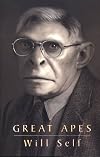
The best critique of footnotes came from the actor John Barrymore (or Noel Coward or I don't know who) who likened footnotes to something "rushing down the stairs every time the doorbell rings on one's wedding night." Well, encountering a twenty-five-cent word the same way with definition not obvious context is like having to leave the honeymoon suite to go to Western Union to send money to bail out a misbehaving friend. Self can't get past himself to do that often and so often he used a show more shoe horn to wedge in a word like spondee or other artifact of deep literature. Does he wish he was making the high art if not the crude if clever novel? Well, at least he hipped me to a definition of "gloss" that I can use at the day job.
As for the story, in a Planet of the Apes like parallel universe, a chimp artist has a psychotic break and like The Metamorphosis finds himself ostracized by transformation - he thinks he is human. While Franz Kafka explored the possibilities in about 200 hundred pages, Self takes twice that long to repeat his own tropes of his imaginative, mirror world and take us on a long walk to an anticlimactic end making a shaggy dog story out of a good premise seasoned with allusions to pop culture and more.
Don't get me wrong - Self is great. I love is mocking of the academic world, especially psychoanalysis and vain attempts to probe the human mind as well as the shallow affectations of knowledge, like in this quote:
"No, to catch one moiety of the members you’d need a pot or cage, baited with publicity, or gossip, or innuendo, or money, or all four; or combinations thereof: gossip about money, public innuendo, lucrative publicity, and so on. Because this lot were bottom feeders, pure and simple, who came to the club in the unadulterated spirit of undersea exploration, to check out how low they could go.
As for the other moiety, well, you’d have to say that they were even easier to catch, if no better to eat. All that would be required to land them was a low tide — which came twice in the twenty-four, at noon and three in the morning, when the barroom was little more than a muddy flat of wrack — a dinghy which could be maneuvered around the downlights — which were set behind horrid metal basketry — and a long knife-arm, with which to reach down and prise them from the carpeting.
For this box-load were bivalves — to an hermaphrodite. Eyeless in the gloom, de-tentacled by devolution, possessing at most one febrile limb with which to lift a glass or tote a cigarette, they reposed as the currents of conversation flowed through them, extracting sufficient nutriment simply by the act of being. Some argued — and Simon was on occasion among them, there had to be some defence — that if a grain of insight, a granule of originality, were inserted into their cloistered, sharp-edged minds, placed on the mantel where the invitations sat, it might well be cultured, swaddled in a carbonate of some kind until it formed, if not wisdom, at any rate something resembling culture. But Simon only ever said this when he was drunk and full of the world. Drunk, and so full of the world that the world must be good — or at any rate capable of inclusion — for him to be so full of it." show less
As for the story, in a Planet of the Apes like parallel universe, a chimp artist has a psychotic break and like The Metamorphosis finds himself ostracized by transformation - he thinks he is human. While Franz Kafka explored the possibilities in about 200 hundred pages, Self takes twice that long to repeat his own tropes of his imaginative, mirror world and take us on a long walk to an anticlimactic end making a shaggy dog story out of a good premise seasoned with allusions to pop culture and more.
Don't get me wrong - Self is great. I love is mocking of the academic world, especially psychoanalysis and vain attempts to probe the human mind as well as the shallow affectations of knowledge, like in this quote:
"No, to catch one moiety of the members you’d need a pot or cage, baited with publicity, or gossip, or innuendo, or money, or all four; or combinations thereof: gossip about money, public innuendo, lucrative publicity, and so on. Because this lot were bottom feeders, pure and simple, who came to the club in the unadulterated spirit of undersea exploration, to check out how low they could go.
As for the other moiety, well, you’d have to say that they were even easier to catch, if no better to eat. All that would be required to land them was a low tide — which came twice in the twenty-four, at noon and three in the morning, when the barroom was little more than a muddy flat of wrack — a dinghy which could be maneuvered around the downlights — which were set behind horrid metal basketry — and a long knife-arm, with which to reach down and prise them from the carpeting.
For this box-load were bivalves — to an hermaphrodite. Eyeless in the gloom, de-tentacled by devolution, possessing at most one febrile limb with which to lift a glass or tote a cigarette, they reposed as the currents of conversation flowed through them, extracting sufficient nutriment simply by the act of being. Some argued — and Simon was on occasion among them, there had to be some defence — that if a grain of insight, a granule of originality, were inserted into their cloistered, sharp-edged minds, placed on the mantel where the invitations sat, it might well be cultured, swaddled in a carbonate of some kind until it formed, if not wisdom, at any rate something resembling culture. But Simon only ever said this when he was drunk and full of the world. Drunk, and so full of the world that the world must be good — or at any rate capable of inclusion — for him to be so full of it." show less
Lists
Booker Prize (2)
satirical (1)
Awards


You May Also Like


Associated Authors
Statistics
- Works
- 66
- Also by
- 35
- Members
- 10,324
- Popularity
- #2,300
- Rating
- 3.9
- Reviews
- 189
- ISBNs
- 351
- Languages
- 16
- Favorited
- 44


