

Iain Sinclair
Author of London Orbital
About the Author
Iain Sinclair is a professional theatre director and dramaturge based in Sydney, Australia. He is a graduate of both The Royal Academy of Dramatic Art (RADA) and King's College London. His works includes Our Town and Blood Wedding for the Sydney Theatre Company, as well as The Seed for Company B. show more Belvoir. show less
Disambiguation Notice:
Wikipedia credits the author with an extensive IMDb history, but there's no evidence that this is the same person. It's a common enough name. The author is listed as "Iain Sinclair (III)" on IMDb. Details e.g. collaborations with Chris Petit.
Image credit: Ian Oliver, July 1, 2007
Series
Works by Iain Sinclair
Lights Out for the Territory: 9 Excursions in the Secret History of London (1997) 493 copies, 6 reviews
Edge of the Orison: In the Traces of John Clare's 'Journey Out Of Essex' (2005) 120 copies, 4 reviews
Living with Buildings: And Walking with Ghosts – On Health and Architecture (Wellcome Collection) (2018) 62 copies
My Favourite London Devils: A Gazetteer of Encounters with Local Scribes, Elective Shamen & Unsponsored Keepers of the Sacred Flame (2016) 20 copies
The face on the fork 3 copies
Mental Travailers: or, the Battle of the Books: Blake & Latham in Subtle Congress on Peckham Rye 2 copies
Westering 2 copies
Annie Oake's Orchids 1 copy
House of Flies 1 copy
Gifts returned by the river 1 copy
Hardball 1 copy
Jack Elams other eye 1 copy
Classics of Science Fiction 1 copy
Iain Sinclair and Jonathan Meades in Conversation, Oxford Brookes University, March 2013 [Video] 1 copy
Bohemia Road 2016 1 copy
Associated Works
BBC Proms 2019 : Prom 28 : Rachmaninov, Borodin & Huw Watkins [sound recording] (2019) — Contributor — 1 copy
Tagged
Common Knowledge
- Canonical name
- Sinclair, Iain
- Legal name
- Sinclair, Iain MacGregor
- Birthdate
- 1943-06-11
- Gender
- male
- Education
- Trinity College, Dublin
Courtauld Institute of Art, University of London
London School of Film Technique - Occupations
- novelist
gardener
filmmaker - Organizations
- Fellow, Royal Society of Literature (2009)
- Agent
- James Wills (Watson Little Ltd.)
- Relationships
- Carrión, Jorge (friend)
- Nationality
- UK
- Birthplace
- Cardiff, Wales, UK
- Places of residence
- Haggerston, London, England, UK
- Disambiguation notice
- Wikipedia credits the author with an extensive IMDb history, but there's no evidence that this is the same person. It's a common enough name. The author is listed as "Iain Sinclair (III)" on IMDb. Details e.g. collaborations with Chris Petit.
- Associated Place (for map)
- UK
Members
Reviews
Ghost milk : recent adventures among the future ruins of London on the eve of the Olympics by Iain Sinclair

More memoir than argument, Sinclair is content to suggest a picture of contemporary Britain not from an elevation, no overarching view, but from gravel paths and car parks. The result isn't precisely investigative journalism but a view on the ground (typically when walking), supplemented with cross-cutting images from film, literature, and visual art; selected interviews and excerpts from diaries; proceeds from council meetings and public debate. (He uses the term docunovel more than once.) show more The emergent mosaic offers up a broad perspective but not a definitive one, if for no other reason than it demands constant contribution from the reader -- to complete ellipses and supply connections in narrative lacunae. Is this because Sinclair hasn't a specific viewpoint to share, or because he's chosen an unorthodox way of writing about it?
Yet I am left with a fairly specific statement: Sinclair's bete noir is the Grand Project, run rampant in Britain at the open of the 21st century. He pokes at the perforated boundary between civic development and graft -- London's 2012 Olympics the crowning example -- and finds copycats across the UK (Old Trafford, O2 Arena) and the world (Athens Olympics, China Olympics). It becomes clear the GP is a blueprint used tiresomely, persistently, almost indiscriminately as though a complete lack of creativity drives all effort at restoring sound local economies, funding communal space or creating public art. Sinclair is certain communities are seldom enhanced during or after a GP except in terms of brute expenditure and those who profit from such ephemera. Little endures, and substance is vanishingly small when found at all.
A critique of urban design / architecture, aesthetically and regarding a premise of commerce, and more pointedly, that commercial enterprise simpliciter would ever stand in as cultural event.
//
Sinclair alludes at multiple points to J.G. Ballard: Crash and High Rise mostly, seemingly Concrete Island would resonate though doesn't mention that title. He does suggest at one point that he writes the manuscript as posthumous report to Ballard, as though honouring conversation no longer possible.
Includes photos of people mentioned in the book, and of the landscape of his walks. Each section is set off with an odd map by Oona Grimes, each map an inexplicable amalgam of precision & distortion, somehow just right for the book.
Original title: Ghost Milk: Calling Time on the Grand Project, more elegant than the American and neatly emphasising both his site visits (calling time) and his appeal for an end to proceedings (calling time). show less
Yet I am left with a fairly specific statement: Sinclair's bete noir is the Grand Project, run rampant in Britain at the open of the 21st century. He pokes at the perforated boundary between civic development and graft -- London's 2012 Olympics the crowning example -- and finds copycats across the UK (Old Trafford, O2 Arena) and the world (Athens Olympics, China Olympics). It becomes clear the GP is a blueprint used tiresomely, persistently, almost indiscriminately as though a complete lack of creativity drives all effort at restoring sound local economies, funding communal space or creating public art. Sinclair is certain communities are seldom enhanced during or after a GP except in terms of brute expenditure and those who profit from such ephemera. Little endures, and substance is vanishingly small when found at all.
A critique of urban design / architecture, aesthetically and regarding a premise of commerce, and more pointedly, that commercial enterprise simpliciter would ever stand in as cultural event.
//
Sinclair alludes at multiple points to J.G. Ballard: Crash and High Rise mostly, seemingly Concrete Island would resonate though doesn't mention that title. He does suggest at one point that he writes the manuscript as posthumous report to Ballard, as though honouring conversation no longer possible.
Includes photos of people mentioned in the book, and of the landscape of his walks. Each section is set off with an odd map by Oona Grimes, each map an inexplicable amalgam of precision & distortion, somehow just right for the book.
Original title: Ghost Milk: Calling Time on the Grand Project, more elegant than the American and neatly emphasising both his site visits (calling time) and his appeal for an end to proceedings (calling time). show less
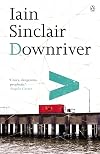
I’m fairly new to Sinclair’s oeuvre, and I sort of came to it sideways, through the films of Patrick Keiller, and perhaps even Derek Jarman, and maybe the historical novels of Philip Boast; and while I’m not a fan of London as a city per se (and I hate visiting it) I find myself fascinated by it as a psychogeographical place. Unsurprisingly no other city in the UK boasts the same psychogeographical footprint, although I like to think Sheffield has a notable one, through its connections show more to Victorian steel and, latterly, pop music and mountain-climbing.
But. Iain Sinclair. Who is very much London-centric. And whose novels are sort of meta, in as much as Sinclair is the narrator, although it’s not of course himself but a character based on himself, And in Downriver, as in other of his novels, he’s a book-dealer, who scours out-of-the-way junk shops and secondhand bookshops hunting for bargains, and is acquainted with a number of strange denizens from that world.
But, the thing is, I don’t think you read Sinclair’s novels so much as you open the cover and then hang on for dear life as you turn the pages.
If there’s a plot in Downriver, it’s buried beneath a relentless mind-battering stream of references to everything from London history to popular culture to the outer fringes of culture (John Clute is name-checked, for example). The end-result is a reading experience that careens between Ashes to Ashes on acid (which it predates by a good 15 years, but never mind) to Peter Greenaway on acid (which I’m not sure anything can predate, or acid alter). And the fun and joy in reading Downriver is as much in decoding the references as is it is in mapping out the psychogeography Sinclair has laid over London.
Downriver is a pastiche of the excesses of Thatcherism in London, but it’s also a paean to the history of the city. Its satire often seems more hatchet-like than scalpel-like, but like all of Sinclair’s fiction it’s entirely sui generis.
I’m late to Sinclair’s novels - Downriver was published in 1991 - so I’ve some catching-up to do. But I’m looking forward to it. show less
But. Iain Sinclair. Who is very much London-centric. And whose novels are sort of meta, in as much as Sinclair is the narrator, although it’s not of course himself but a character based on himself, And in Downriver, as in other of his novels, he’s a book-dealer, who scours out-of-the-way junk shops and secondhand bookshops hunting for bargains, and is acquainted with a number of strange denizens from that world.
But, the thing is, I don’t think you read Sinclair’s novels so much as you open the cover and then hang on for dear life as you turn the pages.
If there’s a plot in Downriver, it’s buried beneath a relentless mind-battering stream of references to everything from London history to popular culture to the outer fringes of culture (John Clute is name-checked, for example). The end-result is a reading experience that careens between Ashes to Ashes on acid (which it predates by a good 15 years, but never mind) to Peter Greenaway on acid (which I’m not sure anything can predate, or acid alter). And the fun and joy in reading Downriver is as much in decoding the references as is it is in mapping out the psychogeography Sinclair has laid over London.
Downriver is a pastiche of the excesses of Thatcherism in London, but it’s also a paean to the history of the city. Its satire often seems more hatchet-like than scalpel-like, but like all of Sinclair’s fiction it’s entirely sui generis.
I’m late to Sinclair’s novels - Downriver was published in 1991 - so I’ve some catching-up to do. But I’m looking forward to it. show less

I know I once read, and I suppose it may still be true, that London is the most surveilled city in the world, based on the number of CCTV cameras per person. An awareness of this reality is one of many that hovers in the margins of Iain Sinclair's Last London, but the lines of the pages are Sinclair's own indefatigable observation, overhearing, trailing, tailing, and cultural auditing, as he orbits through Olympicopolis, "Shardenfreude," and a variety of other psychogeographical states and show more locales. The text combines his own stream-of-consciousness flâneur experiences with kledomancy, graffiti transcription and exegesis, literary anecdote and gossip, and historical research.
In the 1925 story "He," H.P. Lovecraft wrote of New York City "the unwhisperable secret of secrets—the fact that this city of stone and stridor is not a sentient perpetuation of Old New York as London is of Old London and Paris of Old Paris, but that it is in fact quite dead, its sprawling body imperfectly embalmed and infested with queer animate things which have nothing to do with it as it was in life." In the twenty-first century New York's unlife has since spread to cities throughout the United States, and through the neoliberal metastases of capital it now spans the world, infecting even the London and Paris that Lovecraft used to supply a contrasting sense of durable urban vitality. (Not that HPL himself ever visited either city.) Arriving at this conclusion independently, Sinclair seeks in this book to preserve his observations of the "last London" as it succumbs to the virus.
The press of gentrification, speculative property redevelopment, and globalized real estate investment all contribute to the sense of expiration here. It's the sterility and expropriation that are so fatal, not the decay and mutation. The book's not sad, though. "I love it," Sinclair writes of the "panoramic edgeland vista" he encounters in his effort to walk to Barking, under the spectre of the US Presidential election of Donald Trump (241). The final chapter is festive in a manner that might take less artistic people 20 to 40 micrograms to achieve. Also notable throughout is Sinclair's network of fellow creatives, who accompany him and serve as rests, termini, and haunters of his walks.
Many allusions to contemporary literature, politics, commerce, and so on are made at a rapid pace with little assistance to the reader's comprehension. I guess that's what search engines are for, when it seems important. The book is longish for its style, but Sinclair's elliptical rants and musings all add up to a worthwhile read. He's an author I've been curious about for many years, and I'm glad to have finally gotten around to reading this very current work. show less
In the 1925 story "He," H.P. Lovecraft wrote of New York City "the unwhisperable secret of secrets—the fact that this city of stone and stridor is not a sentient perpetuation of Old New York as London is of Old London and Paris of Old Paris, but that it is in fact quite dead, its sprawling body imperfectly embalmed and infested with queer animate things which have nothing to do with it as it was in life." In the twenty-first century New York's unlife has since spread to cities throughout the United States, and through the neoliberal metastases of capital it now spans the world, infecting even the London and Paris that Lovecraft used to supply a contrasting sense of durable urban vitality. (Not that HPL himself ever visited either city.) Arriving at this conclusion independently, Sinclair seeks in this book to preserve his observations of the "last London" as it succumbs to the virus.
The press of gentrification, speculative property redevelopment, and globalized real estate investment all contribute to the sense of expiration here. It's the sterility and expropriation that are so fatal, not the decay and mutation. The book's not sad, though. "I love it," Sinclair writes of the "panoramic edgeland vista" he encounters in his effort to walk to Barking, under the spectre of the US Presidential election of Donald Trump (241). The final chapter is festive in a manner that might take less artistic people 20 to 40 micrograms to achieve. Also notable throughout is Sinclair's network of fellow creatives, who accompany him and serve as rests, termini, and haunters of his walks.
Many allusions to contemporary literature, politics, commerce, and so on are made at a rapid pace with little assistance to the reader's comprehension. I guess that's what search engines are for, when it seems important. The book is longish for its style, but Sinclair's elliptical rants and musings all add up to a worthwhile read. He's an author I've been curious about for many years, and I'm glad to have finally gotten around to reading this very current work. show less
 This review was written for LibraryThing Early Reviewers.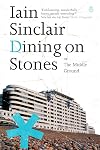
You know you’re in for a rough ride when the book you’re about to read is recommended by the lamentable Will Self.
When everything else fails, fall back on doctored autobiography.
p76
While this is ostensibly one of the musings of our protagonist, I believe this also provides us with an insight into exactly what Sinclair has done here.
Basically, Sinclair wandered the Ballardian wastes of Essex, came up with nothing worthwhile for a novel and then just decided to write what happened to him show more instead. Sadly for us, that was pretty much nothing.
One of the worst novels you’ll read in a good many years. For some reason, Sinclair (and apparently his publisher) thinks that he can write a novel.
Characters, plot, development… forget all that. They’re far too mundane for the great Sinclair. How anyone edited this is beyond me. Single. Word. Sentences. Abound.
Come now, I hear those of you who haven’t yet read it argue, many classic experimental novels lack the traditional ingredients for a novel. That is true.
But in the same way that I could make an experimental cake by substiting sperm, talc and tangerines for butter, flour and eggs, it would hardly be considered worthy of consumption by anyone except the most brown-nosed of my diners. It’s almost as if the title is a metaphor for what his readers will go through.
In an era which churns out more novels each month than the entire 18th century managed, surely there’s more need than ever for a title to justify its existence. Perhaps Stones does that by aiming to be the worst novel ever published.
He not only picks what is arguably the ugliest part of Britain to write about, he writes about it in prose that is barely recognisable as lucid. If you want to tell me that that is precisely the point, then fair play to you, but the resulting mess isn’t worth anyone’s time at all. show less
When everything else fails, fall back on doctored autobiography.
p76
While this is ostensibly one of the musings of our protagonist, I believe this also provides us with an insight into exactly what Sinclair has done here.
Basically, Sinclair wandered the Ballardian wastes of Essex, came up with nothing worthwhile for a novel and then just decided to write what happened to him show more instead. Sadly for us, that was pretty much nothing.
One of the worst novels you’ll read in a good many years. For some reason, Sinclair (and apparently his publisher) thinks that he can write a novel.
Characters, plot, development… forget all that. They’re far too mundane for the great Sinclair. How anyone edited this is beyond me. Single. Word. Sentences. Abound.
Come now, I hear those of you who haven’t yet read it argue, many classic experimental novels lack the traditional ingredients for a novel. That is true.
But in the same way that I could make an experimental cake by substiting sperm, talc and tangerines for butter, flour and eggs, it would hardly be considered worthy of consumption by anyone except the most brown-nosed of my diners. It’s almost as if the title is a metaphor for what his readers will go through.
In an era which churns out more novels each month than the entire 18th century managed, surely there’s more need than ever for a title to justify its existence. Perhaps Stones does that by aiming to be the worst novel ever published.
He not only picks what is arguably the ugliest part of Britain to write about, he writes about it in prose that is barely recognisable as lucid. If you want to tell me that that is precisely the point, then fair play to you, but the resulting mess isn’t worth anyone’s time at all. show less
Lists
Awards


You May Also Like


Associated Authors
Statistics
- Works
- 87
- Also by
- 23
- Members
- 4,602
- Popularity
- #5,467
- Rating
- 3.9
- Reviews
- 84
- ISBNs
- 171
- Languages
- 6
- Favorited
- 24
