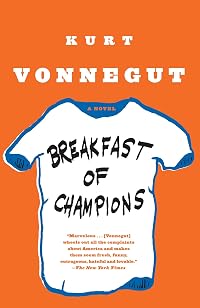
Breakfast of Champions: A Novel
by Kurt Vonnegut
On This Page
Description
Breakfast of Champions is vintage Vonnegut. One of his favorite characters, aging writer Kilgore Trout, finds to his horror that a Midwest car dealer is taking his fiction as truth. The result is murderously funny satire as Vonnegut looks at war, sex, racism, success, politics, and pollution in America and reminds us how to see the truth.Tags
Recommendations
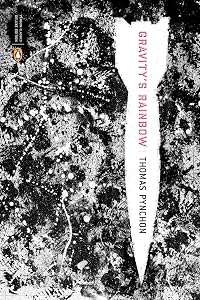
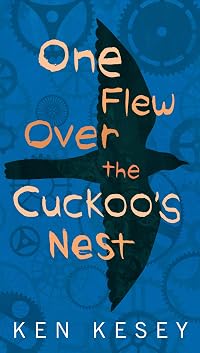
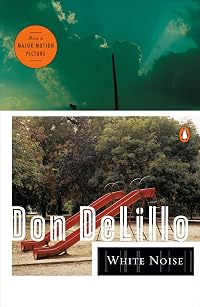
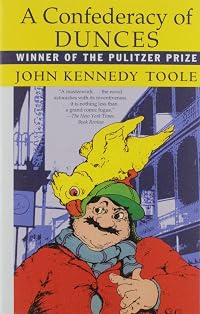





Member Recommendations

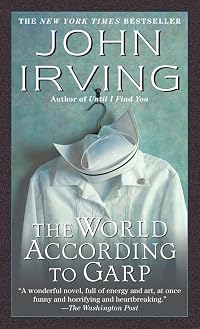
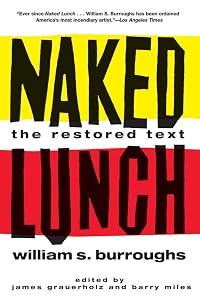
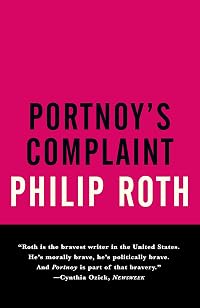
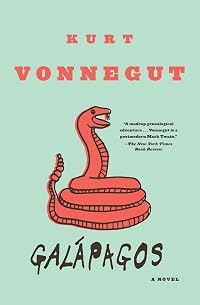
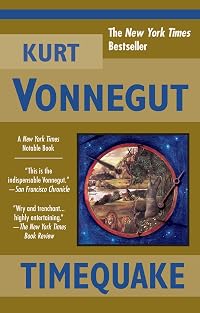
esswedl Both of these Vonnegut novels involve the question of free will (and both are great).
30
CGlanovsky Books in which the author appears as himself and interacts with the characters while manipulating their fates.
Member Reviews
Kilgore Trout, an obscure science fiction writer, is invited to an Arts Festival in a Midwest city where Dwayne Hoover, a successful business man and owner of many local institutions, is having a mental breakdown.
This book is very quintessential Vonnegut, with tons of absurd, dark humor and pessimistic views of the world around him (and rightly so in many cases). He even populates it with characters from his other books, such as the aforementioned Kilgore Trout as well as Eliot Rosewater.
Despite being published in 1973 and in some places showing its age (e.g., certain language used), this books feels surprisingly and perhaps disappointingly fresh as Vonnegut addresses the very same social and environmental issues that we are still show more grappling with today, from racism to pollution to gender identity to the way American history is taught and more. It's definitely a thought-provoking book. As the plot progresses, tension builds as Vonnegut clues you in to what will happen when Dwayne and Kilgore meet.
Unfortunately, towards the end of the book, Vonnegut goes from an omniscient narrator to actually inserting himself as a flesh-and-blood person in the book, walking around with his characters while acknowledging that they are fictional. I felt that the book lost some steam for me there. The big climactic scenes were a bit less climactic than they could have been, and the meta-ness was maybe a little too much. So, I was not thrilled with the ending and found it a little flat, although I thought the beginning and middle parts of the book were compelling.
Overall, I still recommend this book for raising lots of serious issues but in a way that is very readable with its biting satire. It's a classic for a reason and fans of Vonnegut will not be disappointed to come back to the world of characters he created. This book also includes some drawings from the author, which add to the story and its dark humor. show less
This book is very quintessential Vonnegut, with tons of absurd, dark humor and pessimistic views of the world around him (and rightly so in many cases). He even populates it with characters from his other books, such as the aforementioned Kilgore Trout as well as Eliot Rosewater.
Despite being published in 1973 and in some places showing its age (e.g., certain language used), this books feels surprisingly and perhaps disappointingly fresh as Vonnegut addresses the very same social and environmental issues that we are still show more grappling with today, from racism to pollution to gender identity to the way American history is taught and more. It's definitely a thought-provoking book. As the plot progresses, tension builds as Vonnegut clues you in to what will happen when Dwayne and Kilgore meet.
Unfortunately, towards the end of the book, Vonnegut goes from an omniscient narrator to actually inserting himself as a flesh-and-blood person in the book, walking around with his characters while acknowledging that they are fictional. I felt that the book lost some steam for me there. The big climactic scenes were a bit less climactic than they could have been, and the meta-ness was maybe a little too much. So, I was not thrilled with the ending and found it a little flat, although I thought the beginning and middle parts of the book were compelling.
Overall, I still recommend this book for raising lots of serious issues but in a way that is very readable with its biting satire. It's a classic for a reason and fans of Vonnegut will not be disappointed to come back to the world of characters he created. This book also includes some drawings from the author, which add to the story and its dark humor. show less
Breakfast of Champions seems to be Vonnegut's midlife crisis novel. He tells us he's about to turn 50 and this seems like a scattered attempt to make sense of a senseless world. What's most unusual about this book are Vonnegut's hand drawn illustrations. Most of them are symbols of American culture, which Vonnegut uses to explain things we already know about but that makes us consider them in a different light. These new definitions make most of the symbols in question seem ridiculous or absurd, ie. guns: "This was a tool whose only purpose was to make holes in human beings" or chicken "The idea was to kill it and pull out all its feathers, and cut off its head and feet and scoop out its internal organs- and then chop it into pieces and show more fry the pieces, and put the pieces in a waxed paper bucket with a lid on it."
How do you live a meaningful life in such a crazy world? What makes us different from the machines we are treated like? The answer comes from a painter, Rabo Karabekian, who explains that every living creature is a beam of pure awareness. This awareness, kind of like a soul, makes us more than just the machine our body is or above the bad chemicals in our brains. It's a simple idea, but a moving one. Every person you come in contact with is also just a beam of awareness.
The plot of Breakfast of Champion builds towards its two main characters meeting. Dwayne Hoover is a car salesman who gets progressively crazier and Kilgore Trout, a Vonnegut favourite, is an obscure sci-fi writer asked to speak at an arts festival in Midland City, Ohio. Dwayne reads one of Kilgore's books which is structured as a message from the Creator telling the reader that they are the only being on Earth with free will surrounded by unfeeling robots. This triggers Dwayne to go on a violent rampage, injuring most of the characters in the book. What's more dangerous- bad writing, or thinking that YOU are the only special/important person in the world?
It's also extremely postmodern, as Vonnegut inserts himself into the text, first as a narrator and then as a character. He constantly reminds us of his authorial power and that he can alter anything to make what he wants to happen occur. It's so weird to be a writer and invent people and situations like some kind of God, so it's cool of Vonnegut to make us aware of this process. He self-reflexively points out elements of the story that are influenced by his own personal life (ie. having Kilgore Trout share physical traits with his father), because the two cannot be separated. Life influences art, art influences life. Trout, the only character aware Vonnegut is his creator, speaks with him at the end of the novel when he is set free, which seems like it would be both liberating and nullifying.
The illustrations, fun plot, and wacky Vonnegut insertions makes this a really enjoyable read. It's always fun to see return characters, ie. Trout (I will now forever think of mirrors as leaks), Eliot Rosewater (Trout's newly sober patron), Kazak (the not-chrono synclastic infundibulated dog), and Rabo Karabekian. I also enjoyed new characters Dwayne Hoover (who will later show up in Deadeye Dick), crossdressing Harry LeSabre, and black convict Wayne Hoobler with dreams of FAIRY LAND. The only thing is Vonnegut is pretty bad at writing female characters ie. Francine and Patty, but I'll forgive him. This novel is definitely a hot mess, but I really liked it. Definitely one of my favourites! show less
How do you live a meaningful life in such a crazy world? What makes us different from the machines we are treated like? The answer comes from a painter, Rabo Karabekian, who explains that every living creature is a beam of pure awareness. This awareness, kind of like a soul, makes us more than just the machine our body is or above the bad chemicals in our brains. It's a simple idea, but a moving one. Every person you come in contact with is also just a beam of awareness.
The plot of Breakfast of Champion builds towards its two main characters meeting. Dwayne Hoover is a car salesman who gets progressively crazier and Kilgore Trout, a Vonnegut favourite, is an obscure sci-fi writer asked to speak at an arts festival in Midland City, Ohio. Dwayne reads one of Kilgore's books which is structured as a message from the Creator telling the reader that they are the only being on Earth with free will surrounded by unfeeling robots. This triggers Dwayne to go on a violent rampage, injuring most of the characters in the book. What's more dangerous- bad writing, or thinking that YOU are the only special/important person in the world?
It's also extremely postmodern, as Vonnegut inserts himself into the text, first as a narrator and then as a character. He constantly reminds us of his authorial power and that he can alter anything to make what he wants to happen occur. It's so weird to be a writer and invent people and situations like some kind of God, so it's cool of Vonnegut to make us aware of this process. He self-reflexively points out elements of the story that are influenced by his own personal life (ie. having Kilgore Trout share physical traits with his father), because the two cannot be separated. Life influences art, art influences life. Trout, the only character aware Vonnegut is his creator, speaks with him at the end of the novel when he is set free, which seems like it would be both liberating and nullifying.
The illustrations, fun plot, and wacky Vonnegut insertions makes this a really enjoyable read. It's always fun to see return characters, ie. Trout (I will now forever think of mirrors as leaks), Eliot Rosewater (Trout's newly sober patron), Kazak (the not-chrono synclastic infundibulated dog), and Rabo Karabekian. I also enjoyed new characters Dwayne Hoover (who will later show up in Deadeye Dick), crossdressing Harry LeSabre, and black convict Wayne Hoobler with dreams of FAIRY LAND. The only thing is Vonnegut is pretty bad at writing female characters ie. Francine and Patty, but I'll forgive him. This novel is definitely a hot mess, but I really liked it. Definitely one of my favourites! show less
This is a playful dark humor book that meanders about, making interesting observations about everything that the author feels is wrong with the world. At times, it’s a fiction version of a John Stewart rant. It is impressive that within so much blackness, a weird kind of hopefulness peeks out from behind the curtain. When you notice and describe awful things about reality, I suppose, you are at least illustrating that we are able to see that the awful things are awful, which suggests that the human spirit can indeed do something better. This book does not explain itself, at times. It depicts racism and sexism, for example, in images that make those two words pointlessly simplistic. This book could be banned for using the N word, for show more example, because it doesn’t go out of its way to couch each usage in a way that makes it clear the narrator knows the word is bad. The narrator doesn’t give a shit about mentioning slavery or rape in “just the right way” so as not to be offensive—the book depicts real things that real people really feel, all with the tone of Douglas Adams. Your job as the reader is to make the final step yourself. This isn’t a feel good book. It’s a downer disguised. Recommended. show less
The story Vonnegut tells in Breakfast of Champions isn’t the most compelling, but his commentary on America is blistering, and just as dead-on in 2022 as it was in 1973.
First and foremost, he is upfront about the two monstrous sins in America’s past, genocide and slavery, and the hypocrisy of the country never fully owning up them, yet passing itself off as a virtuous beacon of freedom. How fantastic is it that nearly 50 years ago he was casting the “discovery” of America in 1492 in a very different light, calling it “the year in which sea pirates began to cheat and rob and kill them [other human beings].” “Color was everything,” in America, he says, meaning including the present day, and “The chief weapon of the sea show more pirates was their capacity to astonish. Nobody else could believe, until it was much too late, how heartless and greedy they were.”
Vonnegut also comments on capitalistic greed and the country’s “every man for himself” attitude, resulting in extreme cruelty to other people and a destruction of the environment. There is a fossil fuel company called Rosewater in the book that strips the land and treats workers like animals, which reminded me of the real-world Duke Power. He points out the unfairness in the distribution of wealth, including those like Nelson Rockefeller who “owned or controlled more of the planet than many nations…his destiny since infancy.” On these points and others (racism, the patriarchy, commercialism) the book is still incredibly relevant today, which is as depressing as it is impressive.
Vonnegut also reveals a fair amount of pessimism about humanity as a whole, through his character Kilgore Trout believing that “humanity deserved to die horribly, since it had behaved so cruelly and wastefully on a planet so sweet.” He points out mankind’s inherent and dangerous tribalism when he says “Ideas on Earth were badges of friendship or enmity. Their content did not matter. Friends agreed with friends, on order to express friendliness. Enemies disagreed with friends, in order to express enmity.” He was 51 when he wrote the book, in the period of life when it does get difficult to remain sanguine about the human race.
The book starts incredibly strong, but it meanders as it plays out, and Vonnegut inserting his own illustrations often didn’t add much. However, the references to his personal life, including his mother’s suicide and his own struggles with mental health, were touching though. All in all, definitely a good read.
Just one more quote, on America:
“The undippable [American] flag was a beauty, and the anthem and the vacant motto [E pluribus unum] might not have mattered much, if it weren’t for this: a lot of citizens were so ignored and cheated and insulted that they thought they might be in the wrong country, or even on the wrong planet, that some terrible mistake had been made. It might have comforted them some if their anthem and their motto had mentioned fairness or brotherhood or hope or happiness, had somehow welcomed them to the society and its real estate.” show less
First and foremost, he is upfront about the two monstrous sins in America’s past, genocide and slavery, and the hypocrisy of the country never fully owning up them, yet passing itself off as a virtuous beacon of freedom. How fantastic is it that nearly 50 years ago he was casting the “discovery” of America in 1492 in a very different light, calling it “the year in which sea pirates began to cheat and rob and kill them [other human beings].” “Color was everything,” in America, he says, meaning including the present day, and “The chief weapon of the sea show more pirates was their capacity to astonish. Nobody else could believe, until it was much too late, how heartless and greedy they were.”
Vonnegut also comments on capitalistic greed and the country’s “every man for himself” attitude, resulting in extreme cruelty to other people and a destruction of the environment. There is a fossil fuel company called Rosewater in the book that strips the land and treats workers like animals, which reminded me of the real-world Duke Power. He points out the unfairness in the distribution of wealth, including those like Nelson Rockefeller who “owned or controlled more of the planet than many nations…his destiny since infancy.” On these points and others (racism, the patriarchy, commercialism) the book is still incredibly relevant today, which is as depressing as it is impressive.
Vonnegut also reveals a fair amount of pessimism about humanity as a whole, through his character Kilgore Trout believing that “humanity deserved to die horribly, since it had behaved so cruelly and wastefully on a planet so sweet.” He points out mankind’s inherent and dangerous tribalism when he says “Ideas on Earth were badges of friendship or enmity. Their content did not matter. Friends agreed with friends, on order to express friendliness. Enemies disagreed with friends, in order to express enmity.” He was 51 when he wrote the book, in the period of life when it does get difficult to remain sanguine about the human race.
The book starts incredibly strong, but it meanders as it plays out, and Vonnegut inserting his own illustrations often didn’t add much. However, the references to his personal life, including his mother’s suicide and his own struggles with mental health, were touching though. All in all, definitely a good read.
Just one more quote, on America:
“The undippable [American] flag was a beauty, and the anthem and the vacant motto [E pluribus unum] might not have mattered much, if it weren’t for this: a lot of citizens were so ignored and cheated and insulted that they thought they might be in the wrong country, or even on the wrong planet, that some terrible mistake had been made. It might have comforted them some if their anthem and their motto had mentioned fairness or brotherhood or hope or happiness, had somehow welcomed them to the society and its real estate.” show less
I never understood people who say Vonnegut is funny. He's never made me laugh out loud, and I never suspected he tried too hard. Funny? No. Clever? Sure. But he's no comedian.
Vonnegut's real talent, to me, is explaining things simply, concisely and elegantly. He's like a good teacher. Able to say it in the way that the whole class both understands and gets it. I get that that style might be infuriating to some, but it never feels like he's talking down to you. Sure, I know how the American national anthem goes. But now that you mention it, it is pretty preposterous.
This is a book about physical bodies. It is incredibly thematically dense with this. It's also a book about race, and as good as any white american could write it. The links show more from humans as machinery, to humans literally used as human machines, to the fact that their skin colour was the only factor that assigned them to this role are all incredibly deftly done. Everything comes back to this physicality - Vonnegut's and Trout's aging, Dwayne Hoover's bad chemicals, even the constant dick jokes.
And tying into this, it's also a book that is desperately asking us to think of other people as more than just machines. That the danger of thinking of yourself as the only aware person in the universe is something propagated by the art we're fed, and is a natural way to think about things, a way of thinking to fall into. That we are the only people who feel real pain, who feel the ecstasy of pleasure and happiness fully, that we are the only ones that really matter. That we are the main character in our story. But we're not. We're just another band of unwavering light. And we should probably go about life seeing all the other bands. show less
Vonnegut's real talent, to me, is explaining things simply, concisely and elegantly. He's like a good teacher. Able to say it in the way that the whole class both understands and gets it. I get that that style might be infuriating to some, but it never feels like he's talking down to you. Sure, I know how the American national anthem goes. But now that you mention it, it is pretty preposterous.
This is a book about physical bodies. It is incredibly thematically dense with this. It's also a book about race, and as good as any white american could write it. The links show more from humans as machinery, to humans literally used as human machines, to the fact that their skin colour was the only factor that assigned them to this role are all incredibly deftly done. Everything comes back to this physicality - Vonnegut's and Trout's aging, Dwayne Hoover's bad chemicals, even the constant dick jokes.
And tying into this, it's also a book that is desperately asking us to think of other people as more than just machines. That the danger of thinking of yourself as the only aware person in the universe is something propagated by the art we're fed, and is a natural way to think about things, a way of thinking to fall into. That we are the only people who feel real pain, who feel the ecstasy of pleasure and happiness fully, that we are the only ones that really matter. That we are the main character in our story. But we're not. We're just another band of unwavering light. And we should probably go about life seeing all the other bands. show less
Vonnegut's second piece I'm getting around to (after Slaughterhouse Five) is a witty and satirical post-modernist piece that is about nothing and everything. The prose takes time to get used to, there is little to no plot to speak of, and there's no point to the novel, which Vonnegut himself indirectly admits at one point, telling us that the worst books are one which do have a lesson - because there's no such thing in real life.
BoC follows a uniquely original medley of characters and backstories who live in a town colloquially known as "the asshole of America", as they go about their everyday lives. The satire ranges from Trout's stories poking fun at how seriously we take our arbitrary notions, to pointing out ingrained and show more internalised sexism, racism, consumerism and even some throwaway discussions on the environment.
Vonnegut's self-insertion, the amateurish drawings on display (always prefaced with "they look something like this"), and his warped worldview make for quite the ride. Even though I can understand why some might deride this, it made for brutal, maximalist and hilariously poignant reading. You go from "how the fuck did someone think of this?" to "yeah, I'm going to hell for laughing at this" in five seconds flat, and those are the best kinds of novels, as we all know. And so on. show less
BoC follows a uniquely original medley of characters and backstories who live in a town colloquially known as "the asshole of America", as they go about their everyday lives. The satire ranges from Trout's stories poking fun at how seriously we take our arbitrary notions, to pointing out ingrained and show more internalised sexism, racism, consumerism and even some throwaway discussions on the environment.
Vonnegut's self-insertion, the amateurish drawings on display (always prefaced with "they look something like this"), and his warped worldview make for quite the ride. Even though I can understand why some might deride this, it made for brutal, maximalist and hilariously poignant reading. You go from "how the fuck did someone think of this?" to "yeah, I'm going to hell for laughing at this" in five seconds flat, and those are the best kinds of novels, as we all know. And so on. show less
It's really indecent how much I like this book. It's nearly as indecent as how Vonnegut treated his character Kilgore Trout.
Mind you, he doesn't rob, cheat or abuse the character in the traditional sense. In fact, the author shows up, treats the damn guy to success, wealth and fame, tells him he's gonna win some fancy awards in the future, and he does it only because he can.
What a damn jerk.
I mean, look at all these other SF authors other than Kilgore Trout who spend their lives writing stories in perfect irony and obscurity, only to die unsung and unloved, UNLIKE Kilgore Trout.
This kind of unflinching gorgeous tribute (in perfect irony) to SF authors, in general, makes me weep. It stabs me in the heart.
Oh, other than that, this novel show more is PACKED with damn funny lines, ideas for SF novels, scathing satires of our entire way of life... including all the many racial and sexual horrorshows that we call our culture. Someone has probably counted all the myriad other preoccupations and nonsense. I did not. But it's overflowing. And funny.
And what's almost as good...? Idea after idea after idea of great SF novels meant to hold up a mirror to us and make us ashamed.
EAT YOUR WHEATIES!
Oddly enough, I was fully prepared to hate this book and Vonnegut in general because he's popular and so many people who would sneer at SF would swear by him. Unfortunately for me, he's WEIRD and screwball and a delight to read. Damn it! show less
Mind you, he doesn't rob, cheat or abuse the character in the traditional sense. In fact, the author shows up, treats the damn guy to success, wealth and fame, tells him he's gonna win some fancy awards in the future, and he does it only because he can.
What a damn jerk.
I mean, look at all these other SF authors other than Kilgore Trout who spend their lives writing stories in perfect irony and obscurity, only to die unsung and unloved, UNLIKE Kilgore Trout.
This kind of unflinching gorgeous tribute (in perfect irony) to SF authors, in general, makes me weep. It stabs me in the heart.
Oh, other than that, this novel show more is PACKED with damn funny lines, ideas for SF novels, scathing satires of our entire way of life... including all the many racial and sexual horrorshows that we call our culture. Someone has probably counted all the myriad other preoccupations and nonsense. I did not. But it's overflowing. And funny.
And what's almost as good...? Idea after idea after idea of great SF novels meant to hold up a mirror to us and make us ashamed.
EAT YOUR WHEATIES!
Oddly enough, I was fully prepared to hate this book and Vonnegut in general because he's popular and so many people who would sneer at SF would swear by him. Unfortunately for me, he's WEIRD and screwball and a delight to read. Damn it! show less
Members
- Recently Added By
Lists

The Guardian's 1000 Novels Everyone Must Read
1,005 works; 552 members

1001 Books You Must Read Before You Die
1,448 works; 1,137 members

Classics you know you should have read but probably haven't
421 works; 409 members

Metafiction
86 works; 23 members

Novels from The Guardian's Great American Novelist Tournament
148 works; 24 members
Best Satire
188 works; 29 members

Favourite Books
1,820 works; 316 members

Great American Novels
158 works; 42 members
20th Century Literature
1,161 works; 55 members

Significant works of postmodern fiction
86 works; 25 members

Weird and Weirder Fiction
270 works; 35 members

Best Laugh Out Loud Books
143 works; 49 members

Bibliography for Among Others
159 works; 15 members

1970s
657 works; 23 members

Readable Classics
110 works; 15 members

Experimental Literature
141 works; 19 members

Writers as Characters in Fiction
120 works; 19 members

Blue Pyramid 1,276 Best Books of All Time
1,248 works; 32 members

Books Set in Ohio
30 works; 6 members

Speculative Fiction: Slipstream Literature
166 works; 16 members
Daria Morgendorffer's Bookshelf
70 works; 5 members
Best of American Literature
146 works; 9 members

Books Read in 2023
5,638 works; 147 members

Top 50 Favourite Books
50 works; 2 members

Books Read in 2015
3,299 works; 129 members
Overdue Podcast
808 works; 9 members

recalling favorites...
105 works; 2 members

Publisher's Weekly Bestsellers - Part II - 1940 - 1979
355 works; 6 members
Books Read in 2016
4,666 works; 199 members
My Favourite Books
86 works; 4 members

Simulated Reality in Fiction
124 works; 7 members

Read
293 works; 4 members
Best Books of the 20th Century
193 works; 5 members

Books whose title names an object usually found in the kitchen
171 works; 14 members

Penguin Random House
458 works; 4 members

Books Read in 2018
4,360 works; 110 members

Books Read in 2013
1,630 works; 51 members

Books Read in 2021
5,361 works; 114 members

Global Reads: Books by American Authors
10 works; 1 member

Swinging Seventies
255 works; 18 members
NPRs audience picks: 100 best beach reads
105 works; 12 members

Unread books
1,063 works; 87 members
Author Information

The appeal of Kurt Vonnegut, especially to bright younger readers of the past few decades, may be attributed partly to the fact that he is one of the few writers who have successfully straddled the imaginary line between science-fiction/fantasy and "real literature." He was born in Indianapolis and attended Cornell University, but his college show more education was interrupted by World War II. Captured during the Battle of the Bulge and imprisoned in Dresden, he received a Purple Heart for what he calls a "ludicrously negligible wound." After the war he returned to Cornell and then earned his M.A. at the University of Chicago.He worked as a police reporter and in public relations before placing several short stories in the popular magazines and beginning his career as a novelist. His first novel, Player Piano (1952), is a highly credible account of a future mechanistic society in which people count for little and machines for much. The Sirens of Titan (1959), is the story of a playboy whisked off to Mars and outer space in order to learn some humbling lessons about Earth's modest function in the total scheme of things. Mother Night (1962) satirizes the Nazi mentality in its narrative about an American writer who broadcasts propaganda in Germany during the war as an Allied agent. Cat's Cradle (1963) makes use of some of Vonnegut's experiences in General Electric laboratories in its story about the discovery of a special kind of ice that destroys the world. God Bless You, Mr. Rosewater (1965) satirizes a benevolent foundation set up to foster the salvation of the world through love, an endeavor with, of course, disastrous results. Slaughterhouse-Five; or The Children's Crusade (1969) is the book that marked a turning point in Vonnegut's career. Based on his experiences in Dresden, it is the story of another Vonnegut surrogate named Billy Pilgrim who travels back and forth in time and becomes a kind of modern-day Everyman. The novel was something of a cult book during the Vietnam era for its antiwar sentiments. Breakfast of Champions (1973), the story of a Pontiac dealer who goes crazy after reading a science fiction novel by "Kilgore Trout," received generally unfavorable reviews but was a commercial success. Slapstick (1976), dedicated to the memory of Laurel and Hardy, is the somewhat wacky memoir of a 100-year-old ex-president who thinks he can solve society's problems by giving everyone a new middle name. In addition to his fiction, Vonnegut has published nonfiction on social problems and other topics, some of which is collected in Wampeters, Foma and Granfalloons (1974). He died from head injuries sustained in a fall on April 11, 2007. (Bowker Author Biography) show less
Awards and Honors
Awards
Distinctions
Series
Belongs to Publisher Series
Work Relationships
Is contained in
Has as a student's study guide
Common Knowledge
- Canonical title*
- Ice and Fire vol. I
- Original title
- Breakfast of Champions, or Goodbye Blue Monday
- Alternate titles
- Goodbye Blue Monday
- Original publication date
- 1974
- People/Characters
- Dwayne Hoover; Kilgore Trout; Eliot Rosewater; Rabo Karabekian; Francine Pefko; Philboyd Studge (show all 39); Sparky (Dog); Bill (Parakeet); Fred T. Barry; Harry LeSabre; Vernon Garr; Mary Young; Cyprian Ukwende; Wayne Hoobler; Leo Trout; Lyle Hoover; Kyle Hoover; Josephus Hoover; Patty Keene; Don Breedlove; George Hickman Bannister; Gloria Browning; Robert Pefko; Grace LeSabre; Bunny Hoover; Celia Hoover; Bonnie MacMahon; Beatrice Keedsler; Lancer (dog); Harold Newcomb Wilbur; Ned Lingamon; Eldon Robbins; Leroy Joyce; Mary Alice Miller; Milo Maritimo; Carlo Maritimo; Abe Cohen; Don Miller; Kurt Vonnegut
- Important places
- Bermuda; California, USA; Cohoes, New York, USA; Georgia, USA; Libertyville, Georgia, USA; Los Angeles, California, USA (show all 11); Midland City, Ohio, USA; New York, USA; New York, New York, USA; Ohio, USA; West Virginia, USA
- Related movies
- Breakfast of Champions (1999 | IMDb)
- Epigraph
- When he hath tried me,
I shall come forth as gold.
-JOB - Dedication
- In Memory of Phoebe Hurty,
who comforted me in Indianapolis--
during the Great Depression. - First words
- This is the tale of a meeting of two lonely, skinny, fairly old white men on a planet which was dying fast.
- Quotations
- Roses are red and ready for plucking; you’re sixteen and ready for high school.
Here is a picture of a wide open beaver.
Sometimes I wonder about the creator of the universe.
The chief weapon of sea pirates, however, was their capacity to astonish. Nobody else could believe, until it was too late, how heartless and greedy they were.
New knowledge is the most valuable commodity on earth. The more truth we have to work with, the richer we become.
There is no order in the world around us, we must adapt ourselves to the requirements of chaos instead.
His situation, insofar as he was a machine, was complex, tragic, and laughable. But the sacred part of him, his awareness, remained an unwavering band of light.
It was during that minute in nineteen hundred and eighteen, that millions upon millions of human beings stopped butchering one another. I have talked to old men who were on the battlefields during that minute. They have told ... (show all)me in one way or another that the sudden silence was the Voice of God. So we still have among us some men who can remember when God spoke clearly to mankind.
This was in a country where everybody was expected to pay his own bills for everything, and one of the most expensive things a person could do was get sick.
As I approached my fiftieth birthday, I had become more and more enraged and mystified by the idiot decisions made by my countrymen. And then I had come suddenly to pity them, for I understood how innocent and natural it was ... (show all)for them to behave so abominably, and with such abominable results: They were doing their best to live like people invented in story books. This was the reason Americans shot each other so often: It was a convenient literary device for ending short stories and books.
I thought Beatrice Keedsler had joined hands with other old-fashioned storytellers to make people believe that life had major characters, minor characters, significant details, insignificant details, that it had lessons to be... (show all) learned, tests to be passed, and a beginning, a middle, and an end.
Once I understood what was making America such a dangerous, unhappy nation of people who had nothing to do with real life, I resolved to shun storytelling. I would write about life. Every person would be exactly as important ... (show all)as any other. All facts would also be given equal weightiness. Nothing would be left out. Let others bring order to chaos. I would bring chaos to order, instead, which I think I have done.
The undippable flag was a beauty, and the anthem and the vacant motto might not have mattered much, if it weren’t for this: a lot of citizens were so ignored and cheated and insulted that they thought they might be in the w... (show all)rong country, or even on the wrong planet, that some terrible mistake had been made. It might have comforted them some if their anthem and their motto had mentioned fairness or brotherhood or hope or happiness, had somehow welcomed them to the society and its real estate. - Last words
- (Click to show. Warning: May contain spoilers.)Make me young!
- Original language
- English
*Some information comes from Common Knowledge in other languages. Click "Edit" for more information.
Classifications
Statistics
- Members
- 17,861
- Popularity
- 366
- Reviews
- 196
- Rating
- (3.99)
- Languages
- 26 — Catalan, Chinese, Czech, Danish, Dutch, English, Estonian, Finnish, French, German, Hungarian, Italian, Japanese, Latvian, Lithuanian, Polish, Romanian, Russian, Serbian, Slovak, Slovenian, Spanish, Swedish, Turkish, Ukrainian, Portuguese (Portugal)
- Media
- Paper, Audiobook, Ebook
- ISBNs
- 99
- UPCs
- 1
- ASINs
- 86