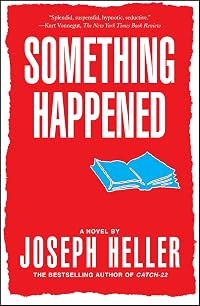
Something Happened
by Joseph Heller
On This Page
Description
Bob Slocum was living the American dream. He had a beautiful wife, three lovely children, a nice house...and all the mistresses he desired. He had it all -- all, that is, but happiness. Slocum was discontent. Inevitably, inexorably, his discontent deteriorated into desolation until...something happened.Something Happened is Joseph Heller's wonderfully inventive and controversial second novel satirizing business life and American culture. The story is told as if the reader was overhearing show more the patter of Bob Slocum's brain -- recording what is going on at the office, as well as his fantasies and memories that complete the story of his life. The result is a novel as original and memorable as his Catch-22.
. show less
Tags
Recommendations



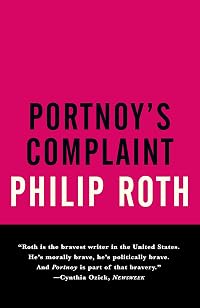

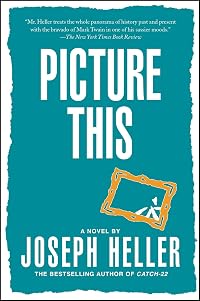
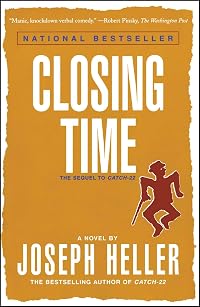



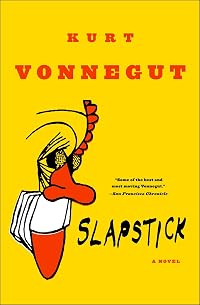









Member Recommendations
by ateolf
Member Reviews
Love the wild black humor of the something that happened and that Bob's discontent stemmed from his last real human bond. Now he can fully lean into being a worthless piece of shit without a pesky daily reminder that all humans start with the potential to be better beings, and that he's responsible, at least in part, for failing so completely to reach that potential.
But it was so long, and awfully redundant (which I understand is representative of how we mull things over and over in our heads to process them). The inner musings of a "successful" American business and family man in the 1960's likely would have been much more eye-opening when it was first published in the mid-1970's. Nowadays, we're all very familiar with just how vapid, show more selfish, and overall immature this type of man fundamentally is and the rippling harm of a society that produces and glorifies him.
---
Lost somewhere deep inside [myself] is the smaller boy [I] used to be, the original article. Or is there? If that is not so, if there is no vanished and irretrievable little me [...] so starkly different from what each of us since has been forced to become, if there is no wandering, desolate lost little being I yearn for and started from so far back in my history who took a sudden, inevitable lurch into some inaccessible black recess at a moment when I must have been staring the other way, for I am unable to pinpoint the moment, and left me disoriented all by myself to continue willy-nilly on my own—then how the fuck did I ever get here? Somebody pushed me. Somebody must have set me off in this direction, and clusters of other hands must have touched themselves to the controls at various times, for I would not have picked this way for the world. show less
But it was so long, and awfully redundant (which I understand is representative of how we mull things over and over in our heads to process them). The inner musings of a "successful" American business and family man in the 1960's likely would have been much more eye-opening when it was first published in the mid-1970's. Nowadays, we're all very familiar with just how vapid, show more selfish, and overall immature this type of man fundamentally is and the rippling harm of a society that produces and glorifies him.
---
Lost somewhere deep inside [myself] is the smaller boy [I] used to be, the original article. Or is there? If that is not so, if there is no vanished and irretrievable little me [...] so starkly different from what each of us since has been forced to become, if there is no wandering, desolate lost little being I yearn for and started from so far back in my history who took a sudden, inevitable lurch into some inaccessible black recess at a moment when I must have been staring the other way, for I am unable to pinpoint the moment, and left me disoriented all by myself to continue willy-nilly on my own—then how the fuck did I ever get here? Somebody pushed me. Somebody must have set me off in this direction, and clusters of other hands must have touched themselves to the controls at various times, for I would not have picked this way for the world. show less
This book is a well-orchestrated, slow, crushing train wreck. Never have I ever experienced any piece of art ever in which the artist hates his subjects so deeply. Jesus H. Macy! Heller drives his characters around an ugly, cyclical, bleak existence in slow motion. As impressed as I am with the book as a piece of literature, I did not enjoy reading it, and I do not feel like it has revealed anything to me. I need a beer now (and I think that's what Heller wanted me to need).
Joseph Heller’s claim to fame was "Catch 22"… a black comedy about the military service. "Something Happened" is also labeled a black comedy- so I was prepared for a unique story- something quirky, dark, and cynical. It’s black, quirky, and cynical alright, but I must have missed the comedy portion.
The story is written in stream of conscious format with Bob Slocum narrating. From the very beginning it is obvious Bob is different. The opening sentence is, “I get the willies when I see closed doors.” Unhappy, self-centered, angry, insecure, disappointed in life both in his job and marriage- all obvious. But dangerous? Scary? Mentally deranged? That remains to be seen. One sure thing, Bob Slocum is not a likable character.
In show more 1974 when "Something Happened" was written the sexual revolution was in full swing. After decades of forced modesty, strict rules on sexual behavior (especially for girls), young women were suddenly realizing it was okay to have sex before marriage. And many unhappily married couples realized it was okay to break the rules, and if they got caught divorce was okay too.
But something did indeed happen in Bob Slocum’s life. He has no morals, no scruples, no respect for women. I don’t think he likes women. In fact, he harbors ill-will towards everyone. He goes way beyond having casual affairs with mutually consenting women. He visits prostitutes, picks up strangers regularly which would be no-one’s business but his own if he were not a married man with children. He thinks about divorce a lot. Wishes his wife would cheat on him so he could have grounds for divorce. But then he can’t decide if he would leave her or kill her. His imagination is unlimited. He has violent thoughts, and a depressing outlook.
And he lies. He contradicts himself in self-analysis- lies to himself. As the story unfolds the readers starts to question the validity of Bob’s thoughts. Bob seems to be coming unhinged.
Joseph Heller is good at character development, and dialogue. I wasn’t crazy about the plot. Many reviews of Something Happened complain of the repetition of the writing, rehashing the same information over and over, but isn’t that a normal part of the thinking process? Repeating one’s thoughts expresses truly authentic stream-of-conscious writing. "Something Happened" would be good fodder for book clubs... especially with the “Me Too” movement in full swing. Because according to Bob Slocum the women were just as frequently the aggressors. But then again, could you really trust Bob Slocum’s judgement? show less
The story is written in stream of conscious format with Bob Slocum narrating. From the very beginning it is obvious Bob is different. The opening sentence is, “I get the willies when I see closed doors.” Unhappy, self-centered, angry, insecure, disappointed in life both in his job and marriage- all obvious. But dangerous? Scary? Mentally deranged? That remains to be seen. One sure thing, Bob Slocum is not a likable character.
In show more 1974 when "Something Happened" was written the sexual revolution was in full swing. After decades of forced modesty, strict rules on sexual behavior (especially for girls), young women were suddenly realizing it was okay to have sex before marriage. And many unhappily married couples realized it was okay to break the rules, and if they got caught divorce was okay too.
But something did indeed happen in Bob Slocum’s life. He has no morals, no scruples, no respect for women. I don’t think he likes women. In fact, he harbors ill-will towards everyone. He goes way beyond having casual affairs with mutually consenting women. He visits prostitutes, picks up strangers regularly which would be no-one’s business but his own if he were not a married man with children. He thinks about divorce a lot. Wishes his wife would cheat on him so he could have grounds for divorce. But then he can’t decide if he would leave her or kill her. His imagination is unlimited. He has violent thoughts, and a depressing outlook.
And he lies. He contradicts himself in self-analysis- lies to himself. As the story unfolds the readers starts to question the validity of Bob’s thoughts. Bob seems to be coming unhinged.
Joseph Heller is good at character development, and dialogue. I wasn’t crazy about the plot. Many reviews of Something Happened complain of the repetition of the writing, rehashing the same information over and over, but isn’t that a normal part of the thinking process? Repeating one’s thoughts expresses truly authentic stream-of-conscious writing. "Something Happened" would be good fodder for book clubs... especially with the “Me Too” movement in full swing. Because according to Bob Slocum the women were just as frequently the aggressors. But then again, could you really trust Bob Slocum’s judgement? show less
Joseph Heller may be one of the great writers of the past century, but I wouldn't swear to it after reading Something Happened.
I will admit to tempering my own opinion of this book based on the opinions of two people I respect very much: K and Kurt Vonnegut, both of whom rank this among their favorites. In fact, it was a deal with K which led me to finally reading this one, after years of her urgings. (She read Special Topics in Calamity Physics as her part of the deal and wasn't blown away by that one, either... not that you should compare the two books at all.) So let me start off by saying that I wanted to like this one. I wanted to like it very much. This, perhaps, led to some unrealistic expectations on my part.
But let me blame the show more author for setting those expectations too high. I mean, seriously, if you're going to name the book Something Happened, you damn well expect something to bloody happen. And I do mean before page 561 (out of 569). No, don't skip ahead to the end to see what finally happens. That will ruin it for you. Something does happen, eventually, but in a story this long and depressing, you know it's not going to be good.
Heller is a great writer, no doubt about it. He can lay down one great sentence after another. His voice is well crafted, which is important for a first-person narrative. He knows who his main character, Bob Slocum, is. He understands him inside and out. He understands Bob's family and co-workers, who are the focal points of the various chapters. Heller has great characters. Multi-layered and flawed, just like real people tend to be.
Here's my gripe. He doesn't craft a good tale. But maybe I was expecting too much. This isn't a plot-driven story. This is a character driven story. There are scenes upon scenes, told in rambling tangents, one after another, to show what kind of person Bob is and what kind of world he lives in, where (contrary to your expectations) nothing much happens except that you begin to understand for yourself that Bob and most people around him are extremely unhappy, to the point where you, also, become unhappy, and you read furiously trying to find something to be happy about, and then something happens (finally, at the end) and...
And I won't tell you. But you're left at the end of the book wondering, literally – and I think even the most prudish would echo these sentiments verbatim – what the fuck did I just read, before you come to your senses, put down the hose and air out the garage.
Which is probably the brilliance of the book. It's a finely crafted story about depressing people weighted evenly on every single page as if Heller himself doled out the misery measured precisely for every word. Oh, yes, I loved the writing and the characters. I just hated reading it.
And dammit if I don't think I'm going to have to read it again some day. show less
I will admit to tempering my own opinion of this book based on the opinions of two people I respect very much: K and Kurt Vonnegut, both of whom rank this among their favorites. In fact, it was a deal with K which led me to finally reading this one, after years of her urgings. (She read Special Topics in Calamity Physics as her part of the deal and wasn't blown away by that one, either... not that you should compare the two books at all.) So let me start off by saying that I wanted to like this one. I wanted to like it very much. This, perhaps, led to some unrealistic expectations on my part.
But let me blame the show more author for setting those expectations too high. I mean, seriously, if you're going to name the book Something Happened, you damn well expect something to bloody happen. And I do mean before page 561 (out of 569). No, don't skip ahead to the end to see what finally happens. That will ruin it for you. Something does happen, eventually, but in a story this long and depressing, you know it's not going to be good.
Heller is a great writer, no doubt about it. He can lay down one great sentence after another. His voice is well crafted, which is important for a first-person narrative. He knows who his main character, Bob Slocum, is. He understands him inside and out. He understands Bob's family and co-workers, who are the focal points of the various chapters. Heller has great characters. Multi-layered and flawed, just like real people tend to be.
Here's my gripe. He doesn't craft a good tale. But maybe I was expecting too much. This isn't a plot-driven story. This is a character driven story. There are scenes upon scenes, told in rambling tangents, one after another, to show what kind of person Bob is and what kind of world he lives in, where (contrary to your expectations) nothing much happens except that you begin to understand for yourself that Bob and most people around him are extremely unhappy, to the point where you, also, become unhappy, and you read furiously trying to find something to be happy about, and then something happens (finally, at the end) and...
And I won't tell you. But you're left at the end of the book wondering, literally – and I think even the most prudish would echo these sentiments verbatim – what the fuck did I just read, before you come to your senses, put down the hose and air out the garage.
Which is probably the brilliance of the book. It's a finely crafted story about depressing people weighted evenly on every single page as if Heller himself doled out the misery measured precisely for every word. Oh, yes, I loved the writing and the characters. I just hated reading it.
And dammit if I don't think I'm going to have to read it again some day. show less
Family dynamics and office politics are explored with acerbic wit in the ranting, eccentric ramblings of our sleaze ball narrator in Something Happened. The internal monologue is so steeped in hate and vindictive self-righteousness that it will easily polarize half the readers. But following the main character’s galloping train of thought is like having a lucid nightmare. The endless parentheses and asides, pages dripping with spittle and spite ring true to me. You don’t have to agree with anything the narrator says, or the author, for that matter.
Is it possible to write a great American novel about the depressing lie of the American dream? How oppressive and selfish it is? How the American dream every salesman, and most every man show more dreams, can quite possibly lead to personal tragedy? More than that though, I feel that most people can sympathize with the self-destructive tendencies of our over-stimulated, Consumerist state of mind. In this book there are a plethora of self-created problems. It reads like the sorry tale you might hear if you interviewed the well-dressed man at the end of most of the bars in America. Even so, it is indicative of, and a product of, the time in which it was written. Open commentary, racism, misogyny and nihilism played for cheap laughs, lascivious daydreaming, anxiety-ridden whimpering, and a slew of other incantatory criticisms, extrapolated and examined endlessly from a solitary point of view.
In the end, after the storm passes, a vast emptiness is left in its wake. Perhaps it is a warning against perpetuation, an entreaty to make more of an effort at kindness. More likely, it is a purgative, a way to become conscious of the little devil on your shoulder, who whispers bad things, who always points out how fat or lazy people are, which is always pointlessly going on about stupidity, incompetence and denial. The trap of self-loathing and of loathing everyone and everything is almost more natural than complacency, than quiet acceptance. It is possible to be alone, even around other people, but it is never necessary.
Joseph Heller’s Catch-22 is an established classic, cause for much grumbling in high school English classrooms, and is a more positive satire.
But if you aren’t scared of a little negativity, if you find you can rise above complainers and reflect upon the sheer volume of complaining that warrants tuning out, then there is a lot of value in this prolonged tirade against the cruel and inhuman state of our own minds, enmeshed in a prison society of corporate greed and filial pressures. Love it or hate it, you will not set the book down unmoved. show less
Is it possible to write a great American novel about the depressing lie of the American dream? How oppressive and selfish it is? How the American dream every salesman, and most every man show more dreams, can quite possibly lead to personal tragedy? More than that though, I feel that most people can sympathize with the self-destructive tendencies of our over-stimulated, Consumerist state of mind. In this book there are a plethora of self-created problems. It reads like the sorry tale you might hear if you interviewed the well-dressed man at the end of most of the bars in America. Even so, it is indicative of, and a product of, the time in which it was written. Open commentary, racism, misogyny and nihilism played for cheap laughs, lascivious daydreaming, anxiety-ridden whimpering, and a slew of other incantatory criticisms, extrapolated and examined endlessly from a solitary point of view.
In the end, after the storm passes, a vast emptiness is left in its wake. Perhaps it is a warning against perpetuation, an entreaty to make more of an effort at kindness. More likely, it is a purgative, a way to become conscious of the little devil on your shoulder, who whispers bad things, who always points out how fat or lazy people are, which is always pointlessly going on about stupidity, incompetence and denial. The trap of self-loathing and of loathing everyone and everything is almost more natural than complacency, than quiet acceptance. It is possible to be alone, even around other people, but it is never necessary.
Joseph Heller’s Catch-22 is an established classic, cause for much grumbling in high school English classrooms, and is a more positive satire.
But if you aren’t scared of a little negativity, if you find you can rise above complainers and reflect upon the sheer volume of complaining that warrants tuning out, then there is a lot of value in this prolonged tirade against the cruel and inhuman state of our own minds, enmeshed in a prison society of corporate greed and filial pressures. Love it or hate it, you will not set the book down unmoved. show less
It's Freudian psychoanalysis, isn't it, that requires the patient to speak his every thought aloud to the psychiatrist, literally for months or years of sessions, until the central issue is discovered? This novel reads like a transcript of such sessions, where it's the mid-1960s and forty-ish Bob Slocum relates his anxieties about his middle-manager office job; his mother, father, siblings; his wife; his current, former, and potential lovers; his increasingly independent teenage daughter; his very sensitive pre-teen son; and his mentally disabled pre-school son. That's pretty much the story: his anxieties. Everything feels true to the '60s; it feels true to today, too, though politically incorrect.
In Catch-22, Heller balanced the show more horrors of war with laugh-out-loud hilarity. Those extremes aren't present in this novel; instead, the general anxiety and melancholy are balanced only with mild smiles. Here, the polarity is the narrative focus -- 569 pages recounting absolute minutiae, contrasted with the merest paragraph that summarizes a terrible event. And when that event is voiced, as in psychoanalysis, the rest is wrapped up in short order.
One must be in the mood for Heller, and be agreeable to his methods of storytelling. If you are, or are interested in a retro story (think Mad Men), this novel is worth reading. show less
In Catch-22, Heller balanced the show more horrors of war with laugh-out-loud hilarity. Those extremes aren't present in this novel; instead, the general anxiety and melancholy are balanced only with mild smiles. Here, the polarity is the narrative focus -- 569 pages recounting absolute minutiae, contrasted with the merest paragraph that summarizes a terrible event. And when that event is voiced, as in psychoanalysis, the rest is wrapped up in short order.
One must be in the mood for Heller, and be agreeable to his methods of storytelling. If you are, or are interested in a retro story (think Mad Men), this novel is worth reading. show less
This book was terrible. I might not have been the target audience, being a European who’s never been particularly successful in business, but it just slogged on and on, and on. And on.
It’s supposed to be an insight into the psyche of the typical American mid-century middle class middle aged man who’s average at just about everything and depraved as all get out. Now this insight is difficult to write, and the fact that Heller has done it so skilfully here just speaks to his overwhelming talent as a writer. It’s an extremely well written book.
But I just don’t find an account of an everyman’s day to day life interesting. Hell, like everyone else, I go to work and live that life, every day. Why would I want to vicariously live show more it through the eyes of someone else in my spare time? I get that it leads up to something happening at the end. But by the time we got there, I didn’t care. It had no impact. Bob Slocum is the most boring villain in literary existence and I did not enjoy this book. show less
It’s supposed to be an insight into the psyche of the typical American mid-century middle class middle aged man who’s average at just about everything and depraved as all get out. Now this insight is difficult to write, and the fact that Heller has done it so skilfully here just speaks to his overwhelming talent as a writer. It’s an extremely well written book.
But I just don’t find an account of an everyman’s day to day life interesting. Hell, like everyone else, I go to work and live that life, every day. Why would I want to vicariously live show more it through the eyes of someone else in my spare time? I get that it leads up to something happening at the end. But by the time we got there, I didn’t care. It had no impact. Bob Slocum is the most boring villain in literary existence and I did not enjoy this book. show less
Members
- Recently Added By
Lists

Novels from The Guardian's Great American Novelist Tournament
148 works; 24 members

Backlisted
109 works; 9 members

Amanda's Guaranteed Books
110 works; 5 members

Publisher's Weekly Bestsellers - Part II - 1940 - 1979
355 works; 6 members

Read
293 works; 4 members

National Book Award Finalists - Fiction
377 works; 12 members
Backlisted Podcast
65 works; 3 members

Mustich's 1000 Books to Read Before You Die: A Life Changing List
1,001 works; 20 members
Talk Discussions
Past Discussions
63. Something Happened by Joseph Heller in Backlisted Book Club (March 2022)
Author Information

19+ Works 54,406 Members
American novelist and dramatist Joseph Heller was born in Brooklyn, N.Y. on May 1, 1923. Heller started off his writing career by publishing a series of short stories, but he is most famous for his satirical novel Catch-22. Set in the closing months of World War II, Catch-22 tells the story of a bombardier named Yossarian who discovers the horrors show more of war and its aftereffects. This novel brought the phrase "catch-22," defined in Webster's Dictionary as "a situation presenting two equally undesirable alternatives," into everyday use. Heller wrote Closing Time, the sequel to Catch-22, in 1994. Other novels include As Good As Gold and God Knows. He also wrote No Laughing Matter, an account of his struggles with Guillain-Barr Syndrome, a neurological disorder, in 1986. Thirty-five years after writing his first book, Heller wrote his autobiography, entitled Now and Then: From Coney Island to Here. In his memoirs, Heller reminisces about what it was like growing up in Coney Island in the 1930s and 1940s. On December 13, 1999, Heller died of a heart attack in his home on Long Island. His last novel, Portrait of the Artist as an Old Man, was published shortly after his death. (Bowker Author Biography) show less
Awards and Honors
Awards
Distinctions
Series
Belongs to Publisher Series
Work Relationships
Is contained in
Common Knowledge
- Canonical title*
- Was geschah mit Slocum?
- Original title
- Something Happened
- Original publication date
- 1974-09
- People/Characters
- Bob Slocum; Bob's Mother; Bob's Father; Eddie Slocum; Bob's Sister; Geraldine Foster (show all 35); Mrs. Yerger; Virginia Markowitz; Jack Green; Andy Kagle; Martha; Jane; Red Parker; Holloway; Horace White; Johnny Brown; Lester Black; Arthur Baron; Mildred; Phillip Reeves; Ed Phelps; Miss Lamb; Mrs. Wolf; Tom Johnson; Marie Jencks; Ben Zack; Sarah; Bob's Wife; Bob's Daughter; Bob's Son; Derek Slocum; Mr. Forgione; Penny; Laura; Lucille Baron
- Important places
- New York, New York, USA; Connecticut, USA; New York, USA; USA; Puerto Rico; New Orleans, Louisiana, USA (show all 7); Louisiana, USA
- First words
- I get the willies when I see closed doors.
- Last words
- (Click to show. Warning: May contain spoilers.)Everyone seems pleased with the way I've taken command.
- Canonical DDC/MDS
- 813.54
- Canonical LCC
- PS3558.E476
*Some information comes from Common Knowledge in other languages. Click "Edit" for more information.
Classifications
Statistics
- Members
- 2,624
- Popularity
- 7,230
- Reviews
- 28
- Rating
- (3.41)
- Languages
- 14 — Czech, Danish, Dutch, English, Finnish, French, German, Hungarian, Italian, Polish, Slovak, Spanish, Swedish, Portuguese (Brazil)
- Media
- Paper, Audiobook, Ebook
- ISBNs
- 54
- ASINs
- 29