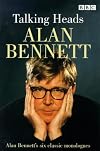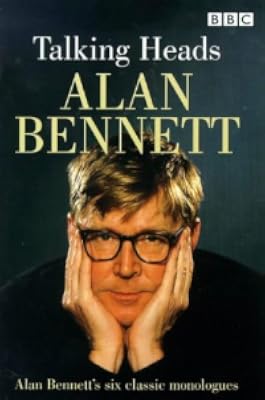
Talking Heads
by Alan Bennett
On This Page
Description
Alan Bennett sealed his reputation as the master of observation with this series of 12 groundbreaking monologues, originally filmed for BBC Television. At once darkly comic, tragically poignant and wonderfully uplifting, Talking Heads is widely regarded as a modern classic. This edition, which contains the complete collection of Talking Heads, as well as his earlier monologue, A Woman of No Importance, is a celebration of Alan Bennett's finest work.Tags
Recommendations







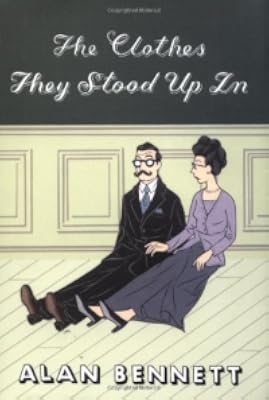
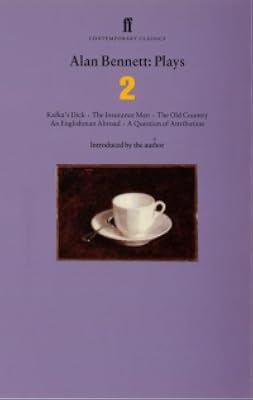


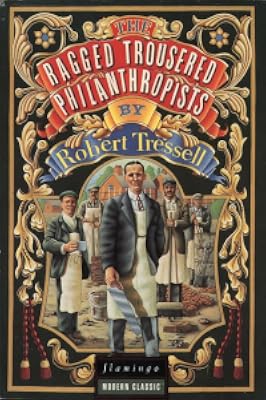
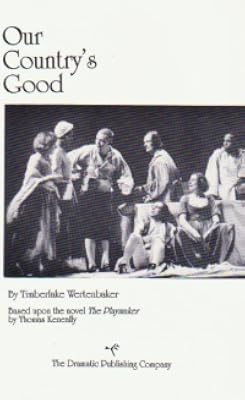






Member Recommendations
akfarrar Both these books explore the byways of characters whilst remaining unsentimental. They both expose weaknesses in modern British society if not in humanity. There is a wit in both and a degree of black humour.
Member Reviews
Intimate isolation, amid loss: pandemic reading and viewing
This book contains thirteen sharp, intimate, but unsentimental monologues: eleven by middle-aged or elderly women, plus a couple of men. Their bittersweet lives, mostly in and around a version of Leeds in Yorkshire, are carefully revealed by Alan Bennett, an archetypal “national treasure” (a term of endearment he resists).
They were written for performance, mostly with specific actors in mind (Bennett himself played Graham in "A Chip in the Sugar"). The first batch was in 1988 and the second in 1998. In 2020, ten of them, plus a couple of new ones, were cast with different actors, filmed, and broadcast during Coronavirus lockdown, then staged when lockdown eased. They’re show more brilliant in all three mediums, though I find it most powerful when I can see and hear the body language and intonation of the specific actor, as I read.
Slow, partial exposition
Each narrator describes their apparently simple, straightforward, and conventional life, but gradually hints at sadness, secrets, and sinister undercurrents. In some, it’s just a breach of etiquette or societal expectations; in a couple, the taboo is far greater.
As a reader or viewer, you fill in the gaps before the narrator does. The clues are in what is unsaid. They all hold something back, even from themselves. It’s the opposite of confessional “reality” TV.
Image: Missing pieces in a blank jigsaw (Source.)
On first encounter, the stories are darker than you initially expect. On subsequent occasions, you relish spotting the clues, and yet each retains the power to surprise and move - and sometimes to shock. Quiet catastrophes, not cosy ones.
They’ve been part of the literary and TV fabric throughout my adult life. I regularly return to them with the fond familiarity of visiting great aunts who I’m concerned about.
Doubly powerful in a pandemic
Loneliness, loss, and isolation are horribly real for many of us right now, as well as being common themes in the monologues. Watching the new versions on TV, when I’ve hardly met, let alone touched anyone from another household, is especially poignant. Losing faith, wanting escape, drinking too much, and keeping or uncovering secrets take on new resonance. Guilt is another recurring theme, especially guilt about things not done or not acknowledged. Something about lockdown triggers guilt, I find. Another touchpoint.
Intimate pieces, intimately done
Theatres in London’s West End have not reopened yet (September 2020). Even at drastically reduced capacity, the pinch-points of entrances, exits, aisles, and loos in old theatres would not meet current guidelines. But the Bridge Theatre, less than three years old, and with links to The National Theatre, Nicholas Hytner, and Alan Bennett, is more spacious and adaptable, so they have started staging pairs of Talking Heads. They’ve ripped out 75% of the seats, there’s no interval, and everyone is masked throughout, except the two actors (who perform separately). It’s not financially viable; it’s about morale more than money.
After months where the only public indoor space I’ve been is the supermarket and, recently, hairdresser, my excitement was tinged with anxiety.
As we walked into the auditorium, this is what we saw:
Image: Bridge Theatre, as the audience took their seats for a Covid-safe performance of two Talking Heads monologues, 7 September 2020
We sat in intimate isolation, amid loss: a missing row in front, a missing row behind, and seats to our left and right were absent. Tragically apt.
When the lights went down, it felt as if the two of us were alone with the actor. So much so that at times, I wanted to reach out and touch her hand consolingly - except I’ve been conditioned out of such gestures in recent months.
The Shrine, performed by Monica Dolan.
This is a new one for 2020. It’s not one of my favourites, but that may be because it’s not yet as familiar (I saw it on TV before the stage, and haven’t read it), but also because the ending was something of an anticlimax.
When Lorna’s birdwatching biker husband dies, she visits the site of the fatal collision. Rather than reaching closure, she cultivates it as a shrine, with flowers, a seat, and a schedule of rituals. It was no surprise when, one day, she finds flowers left by someone else...
Bed Among the Lentils, performed by Lesley Manville.
It was originally performed by Maggie Smith (known to many as Professor McGonagall, Dowager Countess of Grantham, and/or Bennett’s The Lady in the Van). Manville made it her own, though.
“The Sermon was about sex. I didn’t actually nod off, though I have heard it before. Marriage gives the OK to sex is the gist of it, but while it is far from being the be all and end all (you can say that again) sex is nevertheless the supreme joy of the married state and a symbol of the relationship between us and God. So, Geoffrey concludes, when we put our money in the plate it is a symbol of everything in our lives we are offering to God and that includes our sex. I could only find 10p.”
Susan is married to a vicar, but is unsuited to the role: she’s not a fan of God or attending church (as she says, if her husband were a barrister she wouldn’t have to attend court), submits to occasional “dessicated couplings” with him, and has no skill or interest in flower-arranging, which her husband’s “fan club” treat as a competitive sport (Mrs Shrubsole’s “Forest Murmurs” especially). She’s lonely, bored, and unfulfilled: there’s no mention of a previous career nor children. She seeks solace in predictable and then less predictable ways. One secret is revealed and another remains hidden. Salvation is prompted by one, worked at by another, and credit for both is claimed by another. Ultimately, the most “Christian” characters are not those who would claim the label.
“The only preference I have is to shove my chrysanthemums up her nose but instead I practise a bit of Christian forbearance and go stick them in a vase by the lectern.”
Image: Monica Dolan (left) and Lesley Manville (right) in 2020 TV productions. (Source.)
Read and watch
Background to and history of the series: HERE, including a list of titles, with a plot situation summary of each.
Depending what country you live in, you can find video or audio of individual monologues broadcast by BBC or PBS. See the Wiki link, above, for a list of the titles, and Google them individually.
It’s best to read or watch no more than two at a time. show less
This book contains thirteen sharp, intimate, but unsentimental monologues: eleven by middle-aged or elderly women, plus a couple of men. Their bittersweet lives, mostly in and around a version of Leeds in Yorkshire, are carefully revealed by Alan Bennett, an archetypal “national treasure” (a term of endearment he resists).
They were written for performance, mostly with specific actors in mind (Bennett himself played Graham in "A Chip in the Sugar"). The first batch was in 1988 and the second in 1998. In 2020, ten of them, plus a couple of new ones, were cast with different actors, filmed, and broadcast during Coronavirus lockdown, then staged when lockdown eased. They’re show more brilliant in all three mediums, though I find it most powerful when I can see and hear the body language and intonation of the specific actor, as I read.
Slow, partial exposition
Each narrator describes their apparently simple, straightforward, and conventional life, but gradually hints at sadness, secrets, and sinister undercurrents. In some, it’s just a breach of etiquette or societal expectations; in a couple, the taboo is far greater.
As a reader or viewer, you fill in the gaps before the narrator does. The clues are in what is unsaid. They all hold something back, even from themselves. It’s the opposite of confessional “reality” TV.
Image: Missing pieces in a blank jigsaw (Source.)
On first encounter, the stories are darker than you initially expect. On subsequent occasions, you relish spotting the clues, and yet each retains the power to surprise and move - and sometimes to shock. Quiet catastrophes, not cosy ones.
They’ve been part of the literary and TV fabric throughout my adult life. I regularly return to them with the fond familiarity of visiting great aunts who I’m concerned about.
Doubly powerful in a pandemic
Loneliness, loss, and isolation are horribly real for many of us right now, as well as being common themes in the monologues. Watching the new versions on TV, when I’ve hardly met, let alone touched anyone from another household, is especially poignant. Losing faith, wanting escape, drinking too much, and keeping or uncovering secrets take on new resonance. Guilt is another recurring theme, especially guilt about things not done or not acknowledged. Something about lockdown triggers guilt, I find. Another touchpoint.
Intimate pieces, intimately done
Theatres in London’s West End have not reopened yet (September 2020). Even at drastically reduced capacity, the pinch-points of entrances, exits, aisles, and loos in old theatres would not meet current guidelines. But the Bridge Theatre, less than three years old, and with links to The National Theatre, Nicholas Hytner, and Alan Bennett, is more spacious and adaptable, so they have started staging pairs of Talking Heads. They’ve ripped out 75% of the seats, there’s no interval, and everyone is masked throughout, except the two actors (who perform separately). It’s not financially viable; it’s about morale more than money.
After months where the only public indoor space I’ve been is the supermarket and, recently, hairdresser, my excitement was tinged with anxiety.
As we walked into the auditorium, this is what we saw:
Image: Bridge Theatre, as the audience took their seats for a Covid-safe performance of two Talking Heads monologues, 7 September 2020
We sat in intimate isolation, amid loss: a missing row in front, a missing row behind, and seats to our left and right were absent. Tragically apt.
When the lights went down, it felt as if the two of us were alone with the actor. So much so that at times, I wanted to reach out and touch her hand consolingly - except I’ve been conditioned out of such gestures in recent months.
The Shrine, performed by Monica Dolan.
This is a new one for 2020. It’s not one of my favourites, but that may be because it’s not yet as familiar (I saw it on TV before the stage, and haven’t read it), but also because the ending was something of an anticlimax.
When Lorna’s birdwatching biker husband dies, she visits the site of the fatal collision. Rather than reaching closure, she cultivates it as a shrine, with flowers, a seat, and a schedule of rituals. It was no surprise when, one day, she finds flowers left by someone else...
Bed Among the Lentils, performed by Lesley Manville.
It was originally performed by Maggie Smith (known to many as Professor McGonagall, Dowager Countess of Grantham, and/or Bennett’s The Lady in the Van). Manville made it her own, though.
“The Sermon was about sex. I didn’t actually nod off, though I have heard it before. Marriage gives the OK to sex is the gist of it, but while it is far from being the be all and end all (you can say that again) sex is nevertheless the supreme joy of the married state and a symbol of the relationship between us and God. So, Geoffrey concludes, when we put our money in the plate it is a symbol of everything in our lives we are offering to God and that includes our sex. I could only find 10p.”
Susan is married to a vicar, but is unsuited to the role: she’s not a fan of God or attending church (as she says, if her husband were a barrister she wouldn’t have to attend court), submits to occasional “dessicated couplings” with him, and has no skill or interest in flower-arranging, which her husband’s “fan club” treat as a competitive sport (Mrs Shrubsole’s “Forest Murmurs” especially). She’s lonely, bored, and unfulfilled: there’s no mention of a previous career nor children. She seeks solace in predictable and then less predictable ways. One secret is revealed and another remains hidden. Salvation is prompted by one, worked at by another, and credit for both is claimed by another. Ultimately, the most “Christian” characters are not those who would claim the label.
“The only preference I have is to shove my chrysanthemums up her nose but instead I practise a bit of Christian forbearance and go stick them in a vase by the lectern.”
Image: Monica Dolan (left) and Lesley Manville (right) in 2020 TV productions. (Source.)
Read and watch
Background to and history of the series: HERE, including a list of titles, with a plot situation summary of each.
Depending what country you live in, you can find video or audio of individual monologues broadcast by BBC or PBS. See the Wiki link, above, for a list of the titles, and Google them individually.
It’s best to read or watch no more than two at a time. show less
Really excellent. Alan Bennett writes just the most amazing text. This is a collection of monologues, two sets of 6 and an individual that were written and them filmed by the BBC. The text tells you something about the backgrounds the person is to be filmed against, and a line or two about who they are. It also gives the person who gave the performance. Some of them I can remember having seen, but not all.
They are not cheery. They are mostly melancholy, they are usually dark and they deal with the grubby side of life. They have flashes of humour, and some hints of hope, but the tone is not upbeat. But there is so much going on in here. In several stories, the person has suspicions about their partner, but they're never confirmed. In show more other instances the person ends up being incarcerated, and you are left with a conflict between what they've done and the person conjured up in front of you. However it is the last one in the collection that is the jewel in the collection. It tugs right at the heart strings and ties them in knots.
If you ever get the chance to read the collection, or to see the filmed results, grasp it with both hands. This is a man at the top of his game and it manages to be both breathtakingly brilliant, and appears as easy as pie. I bet it isn't. show less
They are not cheery. They are mostly melancholy, they are usually dark and they deal with the grubby side of life. They have flashes of humour, and some hints of hope, but the tone is not upbeat. But there is so much going on in here. In several stories, the person has suspicions about their partner, but they're never confirmed. In show more other instances the person ends up being incarcerated, and you are left with a conflict between what they've done and the person conjured up in front of you. However it is the last one in the collection that is the jewel in the collection. It tugs right at the heart strings and ties them in knots.
If you ever get the chance to read the collection, or to see the filmed results, grasp it with both hands. This is a man at the top of his game and it manages to be both breathtakingly brilliant, and appears as easy as pie. I bet it isn't. show less
The quality of Bennet's writing is indisputable. There are phrases in these monologues that perfectly illumine some small element of daily life and there are pauses and juxtapositions that even on the page have power beyond the sum of their parts. Reading drama is always difficult; to some extent the reader imposes their own pace and voice onto the pieces, and these pieces certainly have more impact when coming from the actors and actresses that Bennet chose for each of the roles. However, as Bennet says in his introduction to the first series "to watch a monologue on the screen is closer to reading a short story than watching a play", and these definitely work as read pieces. There are moments of gorgeous insight in this collection. show more Bennet writes convincingly from the point of view of a child molester who strains to keep away from the behaviours of his past, but succumbs to his belief that his victims are willing, eager even. Among the more sympathetic characters are Susan the vicar's wife and Rosemary the murderer's next door neighbour who both find tender, reciprocal love with people who are the very antithesis to their controlling husbands, but as Bennet never fully lets his characters embrace freedom they are, like so many others, brought back into check, and forced to return to reality.
There are, obviously, downsides to reading a collection of monologues. The intensity of reading a series of pieces of the same length, form and style over and over can leave the reader looking for a break or shift in tone. Bennet's voices are also slightly relentless, what starts as a refreshingly quiet, modest middle England voice soon appears to swamp all differences in the characters. The stories are diverse, but any one of Bennet's ladies could have been the protagonist of any of the pieces. This becomes more and more obvious when the same turns of phrases, or viewpoints are shared out among the players - even Bennet recognises that every dog in the book is called Tina. It would be refreshing to see him breaking the mould, to see his deft observation applied to a new set of voices. The other inconvenience of reading the whole series all together is that Bennet's twist in the tale very quickly appears clumsy and obvious. Even if the shock is artfully concealed, the reader knows it is coming from the off.
For all this, Talking Heads is a classic contribution to British drama, and hasn't lost its ability to raise a laugh or to tug the heartstrings. The final piece 'Waiting for the Telegram' is perhaps one of the most esoteric of the lot and the one that least obviously clunks the reader with The Shocking Facts. The delicate friendship between two people on entirely separate ends of the social spectrum, each with their own thoughts weighing down on them is at once beautiful and unutterably sad.
A book to keep on the bedside table and enjoy gradually, in small doses, like a good box of chocolates. show less
There are, obviously, downsides to reading a collection of monologues. The intensity of reading a series of pieces of the same length, form and style over and over can leave the reader looking for a break or shift in tone. Bennet's voices are also slightly relentless, what starts as a refreshingly quiet, modest middle England voice soon appears to swamp all differences in the characters. The stories are diverse, but any one of Bennet's ladies could have been the protagonist of any of the pieces. This becomes more and more obvious when the same turns of phrases, or viewpoints are shared out among the players - even Bennet recognises that every dog in the book is called Tina. It would be refreshing to see him breaking the mould, to see his deft observation applied to a new set of voices. The other inconvenience of reading the whole series all together is that Bennet's twist in the tale very quickly appears clumsy and obvious. Even if the shock is artfully concealed, the reader knows it is coming from the off.
For all this, Talking Heads is a classic contribution to British drama, and hasn't lost its ability to raise a laugh or to tug the heartstrings. The final piece 'Waiting for the Telegram' is perhaps one of the most esoteric of the lot and the one that least obviously clunks the reader with The Shocking Facts. The delicate friendship between two people on entirely separate ends of the social spectrum, each with their own thoughts weighing down on them is at once beautiful and unutterably sad.
A book to keep on the bedside table and enjoy gradually, in small doses, like a good box of chocolates. show less
This is a collection of twelve (volumes one and two are put together here) monologues, which were performed on the BBC in the late 1980s (volume 1) and late 1990s (volume 2). Some were also performed with different actors in 2020.
All but two of the collection are narrated by female characters, and there is fairly common theme of loneliness or isolation. They are not cheerful, although they are also not without dark humour. However, they are all entirely believable – Bennett certainly knows how the human psyche works, and unlike a lot of male writers, he knows how to write women.
People’s favourites were inevitably vary but the ones I enjoyed the most were A Chip in the Sugar, A Lady of Letters and Waiting for the Telegram. However, show more and unusually for a collection, there are no duds here. Highly recommended. show less
All but two of the collection are narrated by female characters, and there is fairly common theme of loneliness or isolation. They are not cheerful, although they are also not without dark humour. However, they are all entirely believable – Bennett certainly knows how the human psyche works, and unlike a lot of male writers, he knows how to write women.
People’s favourites were inevitably vary but the ones I enjoyed the most were A Chip in the Sugar, A Lady of Letters and Waiting for the Telegram. However, show more and unusually for a collection, there are no duds here. Highly recommended. show less
Goodreads didn’t have this one listed in the English language so I recorded it against this listing. This was a bit of a roller coaster ride, emotionally. Really enjoyed the ending.
Riveting. My first Alan Bennett read, but not my last. Well played!
saw some in the bennett dvd collection--none of which are here-- and the maggie smith one in her dvd collection. enjoyed all of them and would like to see/read more. not available!
they are little treats.
they are little treats.
Members
- Recently Added By
Lists

School Made Us Read It
380 works; 197 members
Author Information

154+ Works 17,228 Members
Bennett was born in Armley in Leeds, West Yorkshire. He decided to apply for a scholarship at Oxford University. He was accepted by Exeter College, Oxford from which he graduated with a first-class degree in history. He was born on May 9, 1934; he is an English author, actor, humorist and playwright. Bennett was made an Honorary Fellow of Exeter show more College, Oxford in 1987. He was also awarded a D.Litt by the University of Leeds in 1990 and an Hon. PhD from Kingston in 1996. In October 2008 Bennett announced that he was donating his entire archive of working papers, unpublished manuscripts, diaries and books to the Bodleian Library free of charge, as a gesture of thanks and repaying a debt he felt he owed to the UK's social welfare system that had given him educational opportunities which his humble family background would otherwise never have afforded. In 2015 his title, Six Poets: Hardy to Larkin: An Anthology by Alan Bennett, made The New Zealand Best Seller List. He also made the list in 2016 with his title The Lady in the Van. (Bowker Author Biography) show less
Awards and Honors
Series
Belongs to Publisher Series
Work Relationships
Has as a student's study guide
Common Knowledge
- Canonical title*
- Signore e signori
- Original title
- Talking Heads
- Original publication date
- 1988 (Series 1) (Series 1); 1998 (Series 2) (Series 2)
- Related movies
- Talking Heads (1987 | IMDb)
*Some information comes from Common Knowledge in other languages. Click "Edit" for more information.
Classifications
Statistics
- Members
- 503
- Popularity
- 60,149
- Reviews
- 8
- Rating
- (4.20)
- Languages
- English, French, German, Italian
- Media
- Paper, Audiobook, Ebook
- ISBNs
- 14
- ASINs
- 8