
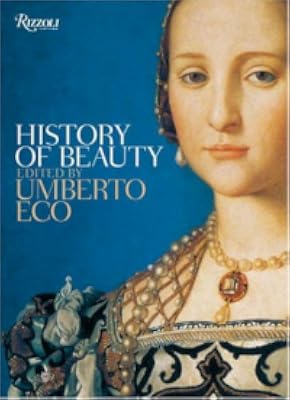
History of Beauty
by Umberto Eco, Girolamo De Michele (Editor)
On This Page
Description
"This volume, with supplements and adaptations, derives from the CD-rom Bellezza, storia di un'idea dell'occident, edited by Umberto Eco, produced by Motta On Line in 2002"--T.p. verso.Tags
Recommendations






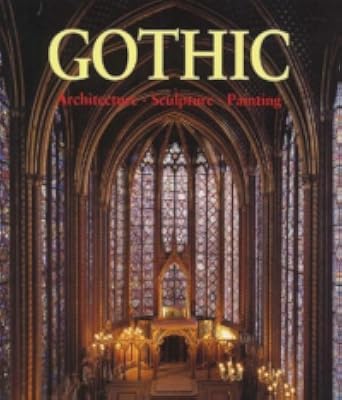
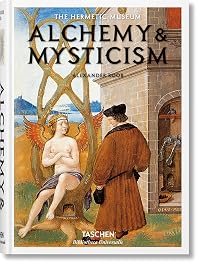








Member Recommendations
Member Reviews
It's an interesting topic: what is beauty? It might seem like a trivial question, but think about it: esthetics run through everything we do. Everything we read, watch, listen to, right down to the houses we live in, the cars we drive, the cans we buy food in are made to correspond to some standard of beauty. Where does all that come from? What makes us think a Rolls looks better than a Datsun? What makes Dickens a better writer than Stephenie Meyer? Why did medieaval Christ figures look triumphant and baroque ones suffering? Why is Kate Moss a supermodel and Roseanne Barr not? Can something tragic be beautiful?
If you've read Eco before you know he's good at picking up patterns, memes, ideas and how they mutate with time and context. So show more this is Eco the non-fiction writer tracing society's concept of beauty from pre-historic time to the 21st century, richly illustrated with artworks and architecture and quotes from poets, philosophers and novelists ranging from Plato to Wilde. Venus of Willendorf and Naomi Campbell, Apollo and George Clooney, Warhol and Tizian, Thomas Aquinus and Kafka, they're all in here. Inevitably, even at 400 pages, it becomes a bit of a coffee table book; it's a huge topic, and he doesn't really have time to cover everything (plus, it's all pretty Eurocentric, of course). But being Eco, what he does cover is covered in-depth, giving you a great understanding of how and why standards change and how they relate to changes in the world - the relationships between religion and art, between revolution and poetry, technology and design. Rather brilliant.
Plus, obviously, the book itself is beautiful.
Now I'm even more intrigued by the sequel On Ugliness; Eco has said that after writing the first book, he realised he'd been writing about standards, about conformity. What about the things that don't conform to the traditional standards? That's another doorstopper. show less
If you've read Eco before you know he's good at picking up patterns, memes, ideas and how they mutate with time and context. So show more this is Eco the non-fiction writer tracing society's concept of beauty from pre-historic time to the 21st century, richly illustrated with artworks and architecture and quotes from poets, philosophers and novelists ranging from Plato to Wilde. Venus of Willendorf and Naomi Campbell, Apollo and George Clooney, Warhol and Tizian, Thomas Aquinus and Kafka, they're all in here. Inevitably, even at 400 pages, it becomes a bit of a coffee table book; it's a huge topic, and he doesn't really have time to cover everything (plus, it's all pretty Eurocentric, of course). But being Eco, what he does cover is covered in-depth, giving you a great understanding of how and why standards change and how they relate to changes in the world - the relationships between religion and art, between revolution and poetry, technology and design. Rather brilliant.
Plus, obviously, the book itself is beautiful.
Now I'm even more intrigued by the sequel On Ugliness; Eco has said that after writing the first book, he realised he'd been writing about standards, about conformity. What about the things that don't conform to the traditional standards? That's another doorstopper. show less
This is a beautiful book that I thought I woould just quickly browse through. But as I began to read it more intently, I relished not only the descriptions that Eco adjoins to the various eras of Western art he covers, but also the numerous quotations from various authors, philosphers, and artist themselves as to the import of various topics Eco unfolds. It's intriguing to read the contents of such chaper headings as "architectonic proportion," "conformity with purpose," "ugliness as a requirement for beauty," "heroes, bodies, and ruins," and so forth. Eco gives a little short shrift to the modern era, otherwsie this is a marvelous book.
Pictorially speaking this is a beautiful book. There are so many images to illustrate "Beauty" that it almost looks like an art book. Then you start reading and everything you thought you'd read about the history of beauty if forgotten and suddenly you have an art book in your hands with concepts of beauty in different artistic styles. The book is not what I thought. I expected contextualization of the theme... but it never got there.
A História da Beleza de Umberto Eco não trata da beleza apenas nas pinturas explicada em textos curtos e fáceis, como foi propagandeado. Ele trata enciclopedicamente da beleza em várias formas, auxiliado por citações.
É um ótimo livro para ler do início ao fim, de forma a melhor entender a evolução dos conceitos de beleza, mas também é um bom livro para ler aos poucos e focar nos conceitos de cada época, e também um bom livro de referência, ou seja, um bom livro para reler várias vezes.
É um ótimo livro para ler do início ao fim, de forma a melhor entender a evolução dos conceitos de beleza, mas também é um bom livro para ler aos poucos e focar nos conceitos de cada época, e também um bom livro de referência, ou seja, um bom livro para reler várias vezes.
A collection of images and literary extracts about beauty and beautiful things. This is the kind of book to dip into now and again to see how different times and cultures have approached the idea of beauty. But just one word of caution: be aware that it's quite expensive and fundamentally a pretty coffee-table book - this is a selection of snippets which has been put together by Eco, not written by him.
Texto que trata acerca de las diversas ideas de belleza que se han propuesto o discutido desde los tiempos de la Grecia Clásica. Como se concibe el concepto de belleza.
Un sujet passionnant mais survolé, avec très peu de contenu original, l'essentiel est constitué par les illustrations et par des citations. Beaucoup de thèmes sont suggérés mais il faudrait être aussi érudit que l'est Umberto Eco pour en saisir toutes les implications, ce qui n'est pas mon cas. J'attendais avec impatience la partie sur l'époque contemporaine mais elle est encore plus frustrante que le reste.
Dec 12, 2010 (Edited)French
Members
- Recently Added By
Author Information

503+ Works 115,238 Members
Umberto Eco was born in Alessandria, Italy on January 5, 1932. He received a doctorate of philosophy from the University of Turin in 1954. His first book, Il Problema Estetico in San Tommaso, was an extension of his doctoral thesis on St. Thomas Aquinas and was published in 1956. His first novel, The Name of the Rose, was published in 1980 and won show more the Premio Strega and the Premio Anghiar awards in 1981. In 1986, it was adapted into a movie starring Sean Connery. His other works include Foucault's Pendulum, The Island of the Day Before, Baudolino, The Prague Cemetery, and Numero Zero. He also wrote children's books and more than 20 nonfiction books including Serendipities: Language and Lunacy. He taught philosophy and then semiotics at the University of Bologna. He also wrote weekly columns on popular culture and politics for L'Espresso. He died from cancer on February 19, 2016 at the age of 84. (Bowker Author Biography) show less

Some Editions
Common Knowledge
- Canonical title
- History of Beauty
- Original title
- Bellezza. Storia di un'idea dell'occidente
- Alternate titles
- On Beauty
- Original publication date
- 2004 (original Italian) (original Italian); 2004 (English translation) (English translation)
- Original language*
- Italian
- Canonical DDC/MDS
- 701.17
*Some information comes from Common Knowledge in other languages. Click "Edit" for more information.
Classifications
Statistics
- Members
- 2,113
- Popularity
- 9,699
- Reviews
- 12
- Rating
- (3.85)
- Languages
- 25 — Chinese, Czech, Danish, Dutch, English, Estonian, Finnish, French, German, Hebrew, Hungarian, Italian, Japanese, Latvian, Norwegian (Bokmål), Norwegian, Polish, Portuguese, Romanian, Russian, Serbian, Slovenian, Spanish, Swedish, Turkish
- Media
- Paper
- ISBNs
- 49
- ASINs
- 4