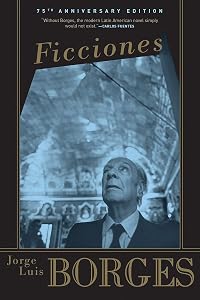
Fictions
by Jorge Luis Borges
On This Page
Description
The seventeen pieces in Ficciones demonstrate the gargantuan powers of imagination, intelligence, and style of one of the greatest writers of this or any other century. Borges sends us on a journey into a compelling, bizarre, and profoundly resonant realm; we enter the fearful sphere of Pascal's abyss, the surreal and literal labyrinth of books, and the iconography of eternal return. More playful and approachable than the fictions themselves are Borges's Prologues, brief elucidations that show more offer the uninitiated a passageway into the whirlwind of Borges's genius and mirror the precision and potency of his intellect and inventiveness, his piercing irony, his skepticism, and his obsession with fantasy. To enter the worlds in Ficciones is to enter the mind of Jorge Luis Borges, wherein lies Heaven, Hell, and everything in between. show lessTags
Recommendations

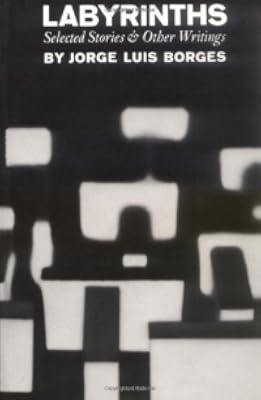
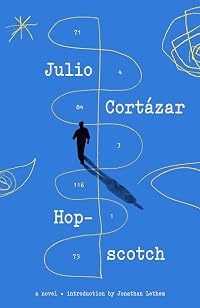
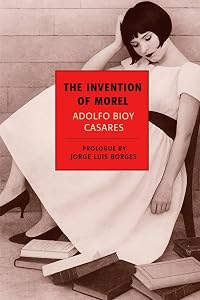







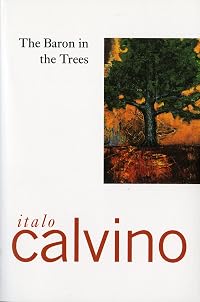
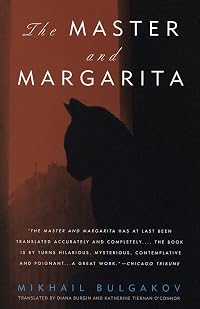
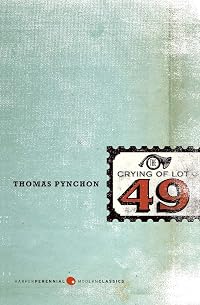
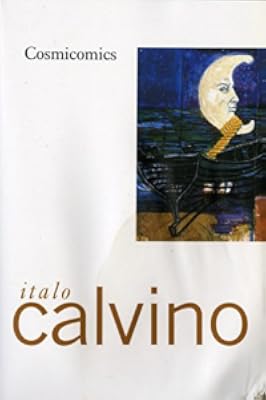








Member Recommendations
Carnophile While Ficciones is a subset of Collected Fictions, it is nice to have two translations of the same material. Each translator captures nuances the other misses.
100
Carnophile Both books are liesurely contemplations of fantastical situations, not plot- or character-driven, but conceptual.
81
lewbs Borges admired The Martian Chronicles. The two books have much in common.
41
Oct326 Due esempi di narrazioni fantastiche di grande ricchezza e suggestione, più cristalline e sfaccettate quelle di Borges, più morbida e avvolgente quella di Tokarczuk.
Member Reviews
I've never read anything similar to Borges. Several of the works here are written as official reports documenting alternate worlds or realities. Even the ones that are in traditional story format border on uncanny territory, almost but not quite like the world we live in. It's so surreal and confusing to read but also curiosity-inducing. I probably don't understand half of what he is trying to say as I'm reading but the joy is also in analyzing and trying to make sense of it.
My favorites: The Garden of Forking Paths, The Library of Babel, and Tlön, Uqbar, Orbis Tertius
My favorites: The Garden of Forking Paths, The Library of Babel, and Tlön, Uqbar, Orbis Tertius
The most remarkable thing about Borges' esoteric contraptions is not their remarkableness, but the fact that they are accessible, like the start of a maze even if you get lost within. Dense and labyrinthine, Fictions nevertheless remains endlessly fascinating and the reader's goodwill is maintained throughout. Partly this is because Borges is an excellently lucid writer, even when discussing high concepts, and a storyteller (see 'The End' for some excellent storyteller's writing), and partly because he brings a natural playfulness to the prose. Borges doesn't make you feel stupid for not understanding him immediately, and whilst the short stories in Fictions require thought, they never feel like homework.
However, the main reason they show more stay fresh and fascinating is that there is nothing quite like them. They are intensely real and yet also mythic; resolutely human and yet, as Andrew Hurley remarks in his Afterword (which would have worked better as an introduction), seem to come from another planet (pg. 162). In terms of ideas, structure and originality, they stand apart, as though an alien polymath studied mankind for centuries and decided to write in High English. So much of Borges' quantum occultism has not yet resolved in my mind, but I am glad he has planted these stories there. show less
However, the main reason they show more stay fresh and fascinating is that there is nothing quite like them. They are intensely real and yet also mythic; resolutely human and yet, as Andrew Hurley remarks in his Afterword (which would have worked better as an introduction), seem to come from another planet (pg. 162). In terms of ideas, structure and originality, they stand apart, as though an alien polymath studied mankind for centuries and decided to write in High English. So much of Borges' quantum occultism has not yet resolved in my mind, but I am glad he has planted these stories there. show less
One of the charms and mysteries of reading Borges is his habit of rearranging stories into new combinations, under different names. It is thus very difficult to tell discern how much of his work you have read, and indeed to tell if you’ve read it all. That is rather the point, though. One of the stories in this collection, titled ‘Pierre Menard, Author of Don Quixote’, centres around the importance of context to literature. Even if a work contains exactly the same words as another, it differs because the author is not the same. Likewise, I’ve read ‘The Library of Babel’ and ‘Tlön, Uqbar, Orbis Tertius’ several times before in other collections. Each reading of them differs according to what preceded and followed. I show more don’t know of any other author who could get away with this behaviour, however. Such is Borges’ extraordinary talent at producing short stories. He is one of my all-time favourite authors and reading his work inevitably transforms my mood for the better.
In this particular collection, my favourite stories were ‘The Circular Ruins’, ‘The Babylon Lottery’, and ‘The Secret Miracle’. As far as I can recall, I hadn’t read any of them before, but I can’t be certain. It may be that my especial appreciation of those three stems from some particularity of who I am today. ‘The Circular Ruins’ delighted me with its descriptions of dreaming. This sentence stood out:
‘The Babylon Lottery’ read to me as a seductive and beautiful analogy for the chaos of life and the human liking for conspiracy. ‘The Secret Miracle’, however, deeply unsettled me by describing a habit I’ve long had and never mentioned to anyone:
It is both wonderful and profoundly disconcerting to read fiction that peers into your mind like that. Upon reflection, I don’t ever want to be sure that I’ve read all of Borges. One of his themes is the infinitude of the written word. His rearrangements allow the reader a perpetual fount of new stories and a new perspective from each collection or re-reading. That is a gift I wish I could thank him for. show less
In this particular collection, my favourite stories were ‘The Circular Ruins’, ‘The Babylon Lottery’, and ‘The Secret Miracle’. As far as I can recall, I hadn’t read any of them before, but I can’t be certain. It may be that my especial appreciation of those three stems from some particularity of who I am today. ‘The Circular Ruins’ delighted me with its descriptions of dreaming. This sentence stood out:
He understood that modelling the incoherent and vertiginous matter of which dreams are composed was the most difficult task that a man could undertake, even though he should penetrate all the enigmas of a superior or inferior order; much more difficult than weaving a rope out of sand or coining the faceless wind.
‘The Babylon Lottery’ read to me as a seductive and beautiful analogy for the chaos of life and the human liking for conspiracy. ‘The Secret Miracle’, however, deeply unsettled me by describing a habit I’ve long had and never mentioned to anyone:
Then he would reflect that reality does not tend to coincide with forecasts about it. With perverse logic he inferred that to foresee a circumstantial detail is to prevent its happening. Faithful to this feeble magic, he would invent, so that they might not happen, the most atrocious particulars. Naturally, he finished by fearing that these particulars were prophetic.
It is both wonderful and profoundly disconcerting to read fiction that peers into your mind like that. Upon reflection, I don’t ever want to be sure that I’ve read all of Borges. One of his themes is the infinitude of the written word. His rearrangements allow the reader a perpetual fount of new stories and a new perspective from each collection or re-reading. That is a gift I wish I could thank him for. show less
There have been far better storytellers than Borges, but most of them are chemists at best.
Borges' Fictions is (are?) curiously fragile. Which is not to say that they're poorly written, or that they don't hold up 70 years later, but simply that for most of these stories, I find myself wondering if they are indeed stories or simply thought experiments, essays on potential stories, a literary criticism of things never written (or, taken somewhat less literally, always and constantly written). There is always narrating going on, but it's ... diaphanous is a good word. You could make an argument that Borges, had he been a different kind of writer, could have written the novels or the short stories which he here prefers to simply outline and show more then pick apart - or let the audience pick apart - and made a pretty good career out of that. Instead, he gives us that fantastic moment in A Survey of the Works of Herbert Quain, where he tells us (fuck "show don't tell") that the greatest detective fiction can quite simply be wrong.
And yet, rereading (some of) these stories after almost 20 years I remember them, so clearly there's something more going on than just a sharp critical eye. Or if it's simply that I recognize just how much he's obviously influenced some of my best reading over the last few years, from Eco to Hoppe.
He understood that modeling the incoherent and vertiginous matter of which dreams are composed was the most difficult task that a man could undertake, even though he should penetrate all the enigmas of a superior and inferior order; much more difficult than weaving a rope out of sand or coining the faceless wind.
Time, literature, narrative, language - the idea that conceptualizing them not only makes for intriguing literature, but even the so-called "real life". Borges wrote literary viruses, little stories that should be periodically re-read to recalibrate. show less
Like a grindcore album in book form: short, intricate, brimming with exciting ideas and thought experiments. Dense and twisty tales often alluding to writing, reading, and to diverse, increasingly abstract configurations of maker and perceiver. Just try not to be too bothered by the characters' irrational compulsion to read any book they come across, regardless of context.
Highlights: Lottery of Bablyon, Circular Ruins, Death and the Compass
Highlights: Lottery of Bablyon, Circular Ruins, Death and the Compass
I generally stay away from short stories. For some reason I tend not to enjoy them, but I made an exception here because I've heard so many fantastic things about this particular collection. I'm so very glad that I did. Borges combines fantasy with the world of books in a way that makes me absolutely giddy: reviews of books that don't actually exist, the discovery of an encyclopedia detailing a country that never was, the description of a(n) (possibly) infinite labyrinthine library that includes every possible book that could ever possibly be written,... And he does it all so beautifully. If heaven itself were a book, it would look something like this.
The stories in this collection often had a peculiar twist that exploded suddenly into a vast plane of possibilities and nuances. While reading the twist you can feel the physical effect on your brain - it goes from a calm cozy contemplation to a violent combustion of grappling and grasping for explanations and boundaries. It's a stimulating ride at the end of which you tilt your head back and quietly whisper: "wtf".
Members
- Recently Added By
Lists

1001 Books You Must Read Before You Die
1,448 works; 1,137 members
501 Must-Read Books
529 works; 72 members

Best books about books
209 works; 106 members

Best of World Literature
437 works; 52 members

Magic Realism
371 works; 52 members

Le Monde - Les 100 livres du siècle
121 works; 25 members

Metafiction
86 works; 23 members

Top-Rated Books on LibraryThing
272 works; 118 members

The 100 Best Books of All Time by Norwegian Book Club (World Library)
104 works; 23 members
Favourite Books
1,820 works; 308 members
New York Public Library's Books of the Century
120 works; 20 members

20th Century Literature
1,161 works; 55 members
The Top Ten: Writers Pick Their Favorite Books
240 works; 33 members

Weird and Weirder Fiction
270 works; 34 members
1940s
221 works; 25 members

Philip Ward's Lifetime Reading Plan
592 works; 22 members

Philosophical Fiction
97 works; 26 members

Significant works of postmodern fiction
86 works; 25 members

Recommend the 20 best books you've read in the last five years
2,168 works; 608 members

Short Story Collections and Anthologies
261 works; 42 members

Canon de la narrativa universal del siglo XX
254 works; 6 members

Favorite Short Fiction
228 works; 99 members

Experimental Literature
141 works; 19 members
Latin American Literature
50 works; 11 members
Global Reads: Books Set South and Central America
40 works; 7 members
Harold Bloom - The Western Canon: D. The Chaotic Age
833 works; 24 members

Short and Sweet
246 works; 24 members
Blue Pyramid 1,276 Best Books of All Time
1,248 works; 32 members

Top Five Books of 2020
982 works; 350 members
Las 100 Mejores Novelas en Castellano del Siglo XX
105 works; 13 members

Five star books
1,767 works; 110 members

Top Five Books of 2022
736 works; 272 members
LibraryThingers' 1001 Books You Must Read Before You Die
442 works; 30 members
Books tagged favorites
390 works; 30 members

Twentieth Century Greatest Hits
27 works; 11 members
Latin America
26 works; 9 members
Speculative Fiction from around the World
610 works; 18 members

Books Read in 2014
2,344 works; 89 members

Books You Read During High School (For School)
301 works; 52 members

SomethingAwful TBB BOTM
66 works; 2 members
Elegant Prose
80 works; 4 members
Fake Top 100 Fiction
81 works; 4 members

Greatest Books
40 works; 3 members

Favourite Books by Male Authors
29 works; 2 members

Books Read in 2017
4,249 works; 129 members

Short Stories, Tales and Novellas
31 works; 1 member

The 150 Greatest Novels of All Time
150 works; 6 members

Cult Classics
30 works; 1 member
Widely acclaimed, one book per year
105 works; 3 members
Buenos Aires Oculta: La Ciudad como Laberinto y Revelación
9 works; 1 member

Magia en los Adoquines: Fantasía Urbana y Realismo Mágico
7 works; 1 member

Laberintos de Tinta y Realidad: Ficciones Metafísicas
5 works; 1 member

Books mentioned in Vandermeer's Wonderbook
34 works; 2 members

Top Five Books of 2025
954 works; 304 members

Magical Realism
23 works; 2 members

Recommended Reading : 600 Classics Reviewed, Editors of Salem Press, 2015
634 works; 6 members
.
396 works; 1 member

Mustich's 1000 Books to Read Before You Die: A Life Changing List
1,001 works; 20 members

Greatest Books, allegedly
484 works; 9 members

Favourite Short Stories
157 works; 9 members

Jones & Newman: Best Horror Books Further Recommended Reading
577 works; 4 members

Bibliografia essenziale
86 works; 2 members

SF & Fantasy in Translation
95 works; 18 members

Mind-Benders: Fiction that Hurts Your Head
34 works; 8 members

New York Public Library's Books of the Century - All
170 works; 14 members
Most difficult novels
68 works; 27 members

Unread books
1,063 works; 87 members

Classics you know you should have read but probably haven't
421 works; 409 members
Author Information

Born in Buenos Aires, Argentina, in 1899, Jorge Borges was educated by an English governess and later studied in Europe. He returned to Buenos Aires in 1921, where he helped to found several avant-garde literary periodicals. In 1955, after the fall of Juan Peron, whom he vigorously opposed, he was appointed director of the Argentine National show more Library. With Samuel Beckett he was awarded the $10,000 International Publishers Prize in 1961, which helped to establish him as one of the most prominent writers in the world. Borges regularly taught and lectured throughout the United States and Europe. His ideas have been a profound influence on writers throughout the Western world and on the most recent developments in literary and critical theory. A prolific writer of essays, short stories, and plays, Borges's concerns are perhaps clearest in his stories. He regarded people's endeavors to understand an incomprehensible world as fiction; hence, his fiction is metaphysical and based on what he called an esthetics of the intellect. Some critics have called him a mystic of the intellect. Dreamtigers (1960) is considered a masterpiece. A central image in Borges's work is the labyrinth, a mental and poetic construct, that he considered a universe in miniature, which human beings build and therefore believe they control but which nevertheless traps them. In spite of Borges's belief that people cannot understand the chaotic world, he continually attempted to do so in his writing. Much of his work deals with people's efforts to find the center of the labyrinth, symbolic of achieving understanding of their place in a mysterious universe. In such later works as The Gold of the Tigers, Borges wrote of his lifelong descent into blindness and how it affected his perceptions of the world and himself as a writer. Borges died in Geneva in 1986. (Bowker Author Biography) show less
Some Editions
Awards and Honors
Awards
Notable Lists
Series
Belongs to Publisher Series
ラテンアメリカの文学(単行本版) (1)
Crisolín (44)
Gli Oscar Mondadori - L (169)
Oscar Narrativa (208)
Colecção Mil Folhas (39)
ET Tascabili [Einaudi] (328)
Nuovi Coralli [Einaudi] (214)
Gli Adelphi [Adelphi] (473)
Gli Oscar [Mondadori] (1128)
Gallimard, Folio (614)
Work Relationships
Is contained in
Contains
Has the adaptation
Inspired
Common Knowledge
- Canonical title
- Fictions
- Original title
- Ficciones
- Original publication date
- 1944
- People/Characters
- Don Quixote de la Mancha; Judas Iscariot; Phoenix
- Important events
- Irish Revolution
- Related movies
- Strategia del ragno (1970 | IMDb); Spiderweb (1975 | IMDb); El sur (1992 | IMDb); Death and the Compass (1992 | IMDb); El milagro secreto (1998 | IMDb)
- Dedication
- To
Esther Zemborain de Torres - First words
- I owe the discovery of Uqbar to the conjunction of a mirror and an encyclopedia. (Tlön, Uqbar, Orbis Tertius)
The work of Jorge Luis Borges is a species of international literary metaphor. (Introduction)
The eight pieces of this book do not require extraneous elucidation. (Prologue, Part One)
Though less torpidly executed, the pieces in this section are similar to those which form the first part of the book. (Prologue, Part Two) - Last words
- (Click to show. Warning: May contain spoilers.)Such at least are some of the thoughts summoned by Ficciones; the variants are numberless... (Introduction)
(Click to show. Warning: May contain spoilers.)The narrator, in James's delicate novel, investigates whether or not B is influenced by A or C; in "The Approach to Al-Mu'tasim" the narrator feels a presentment or divines through B the extremely remote existence of Z, whom B does not know. (Prologue, Part One)
(Click to show. Warning: May contain spoilers.)I believe I perceive the remote influence of the last-mentioned in the Christological fantasy entitled "Three Versions of Judas." (Prologue, Part Two) - Blurbers
- Fuentes, Carlos; Barth, John; Llosa, Mario Vargas; Updike, John
- Original language
- Spanish
Classifications
Statistics
- Members
- 8,884
- Popularity
- 1,222
- Reviews
- 135
- Rating
- (4.36)
- Languages
- 20 — Catalan, Chinese, Danish, English, Estonian, French, German, Greek, Hebrew, Italian, Japanese, Korean, Lithuanian, Polish, Portuguese, Russian, Serbian, Spanish, Swedish, Turkish
- Media
- Paper, Audiobook, Ebook
- ISBNs
- 118
- ASINs
- 60