
Ruthven Todd (1914–1978)
Author of Bodies in a Bookshop
About the Author
Image credit: Scottish poetry 1949
Series
Works by Ruthven Todd
Poems (Tod Ruthven ed.) — Editor — 2 copies
A mantelpiece of shells 1 copy
Jim Bird 1 copy
The geography of faces 1 copy
Associated Works
A Choice of Murders: 23 Stories by Members of the Mystery Writers of America (1958) — Contributor — 5 copies
American Aphrodite: A Quarterly for the Fancy-Free (Volume 4, Number 13) (1954) — Contributor — 2 copies
Tagged
Common Knowledge
- Legal name
- Todd, Ruthven Campbell
- Other names
- Campbell, R. T. (pen-name)
- Birthdate
- 1914-06-14
- Date of death
- 1978
- Gender
- male
- Education
- Fettes College, Edinburgh, Scotland, UK
Edinburgh School of Art - Occupations
- novelist
poet
art critic - Awards and honors
- American Academy of Arts and Letters Academy Award (Literature, 1954)
- Nationality
- UK
- Birthplace
- Edinburgh, Scotland, UK
- Place of death
- Majorca, Spain
- Associated Place (for map)
- UK
Members
Reviews
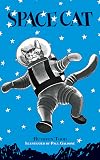
An adventurous gray tabby kitten wanders into an airport and gets himself on board a passenger aircraft. He’s discovered by passenger Fred Stone mid-flight. Stone picks him up and asks, “Here’s Flyball. Someone seems to have lost him.” When no one claims him, Stone, impressed by the kitten’s spunk, adopts him. Captain Stone, a military officer and test pilot takes him back to his base to settle in.
Flyball, who’s delighted with his new name is soon strutting around the airfield show more inspecting his new surroundings and endearing himself to the ground crew and the engineers working on a new experimental rocket. And when Flyball sees Stone put on a goldfish bowl helmet and get on board this same rocket, the adventurous cat stows away again. The rocket’s take off far exceeds Flyball’s previous flight experience on a passenger jet, so for the next flight, the lunar mission, he is fitted out with his own space suit.
Scottish born author Todd’s 1952 children’s book is a delightful science fiction tale, charmingly illustrated by Galdone who captures the feel of both the self-assured feline and the eager anticipation of human space flight for young readers of the 1950s. I enjoyed it as a child then and still love it when I reread it in the 21st century. show less
Flyball, who’s delighted with his new name is soon strutting around the airfield show more inspecting his new surroundings and endearing himself to the ground crew and the engineers working on a new experimental rocket. And when Flyball sees Stone put on a goldfish bowl helmet and get on board this same rocket, the adventurous cat stows away again. The rocket’s take off far exceeds Flyball’s previous flight experience on a passenger jet, so for the next flight, the lunar mission, he is fitted out with his own space suit.
Scottish born author Todd’s 1952 children’s book is a delightful science fiction tale, charmingly illustrated by Galdone who captures the feel of both the self-assured feline and the eager anticipation of human space flight for young readers of the 1950s. I enjoyed it as a child then and still love it when I reread it in the 21st century. show less
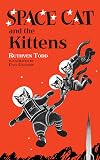
Space Cat and the Kittens is the fourth and final book in Ruthven Todd's Space Cat series. The kittens are Marty and Tailspin, the offspring of Flyball the Space Cat and his mate, Moofa, the red Martian cat who was introduced in book 3, Space Cat Meets Mars. The kittens are red and gray with red tails. They look the same except for the gray tuft at the end of Tailspin's tail. Marty is the elder by a few minutes and is so proud of that fact.
The first chapter tells readers about the kittens' show more antics on Luna Port, where they were born. (The soup incident made me feel sorry for the chef.) It's a good thing the residents like the cat. Flyball is somewhat reluctant to take the kittens on the latest space trip, but Moofa says they must.
Not only will this be their longest voyage yet, but there will also be another human along, Bill Parks. Flyball's human, Colonel Fred Stone, brings Bill home to meet the rest of the crew. Luckily for Bill, the cats do not reject him.
This voyage will be on a new, faster-than-light rocketship named 'Einstein'. They're heading for Alpha Centauri.
The voyage takes up chapters three and four. Bill is kind enough to provide the kittens with an impromptu toy. I smiled at Fred having to get the kittens into their space suits. They may be used to traveling from the moon to Earth and back, but they hate their suits. Of course, Flyball and Moofa don't like their suits either, but they're adults and put up with Fred suiting them up.
The astronauts do find a livable planet, although it is considerably smaller than Earth. It's apparently a case of parallel evolution, although the new planet is well behind the home planet. The pygmy mammal and pygmy dinosaurs encountered make sense, given what happened to large animals stranded on islands over generations here.
Bill gets in some action, but the real danger involves Marty and Tailspin being rescued by Fred and Flyball.
I loved the fact that Flyball has implied he was better at catching birds and mice than he actually was to his sons. I also enjoyed finding out how Moofa knows when the boys have actually tried to clean themselves off or not. Marty and Tailspin are definitely chips off the old Flyball block.
While I liked Fred's comment about the natural balance of life on the new planet, and that the thought of what human settlers would probably do to the native fauna made him sigh; I am not happy that he said it was none of his and Bill's business. I also didn't like Moofa being left behind with Bill during the rescue.
Other than those things, this book was every bit as charming as its predecessors. I wish there were more Space Cat books. show less
The first chapter tells readers about the kittens' show more antics on Luna Port, where they were born. (The soup incident made me feel sorry for the chef.) It's a good thing the residents like the cat. Flyball is somewhat reluctant to take the kittens on the latest space trip, but Moofa says they must.
Not only will this be their longest voyage yet, but there will also be another human along, Bill Parks. Flyball's human, Colonel Fred Stone, brings Bill home to meet the rest of the crew. Luckily for Bill, the cats do not reject him.
This voyage will be on a new, faster-than-light rocketship named 'Einstein'. They're heading for Alpha Centauri.
The voyage takes up chapters three and four. Bill is kind enough to provide the kittens with an impromptu toy. I smiled at Fred having to get the kittens into their space suits. They may be used to traveling from the moon to Earth and back, but they hate their suits. Of course, Flyball and Moofa don't like their suits either, but they're adults and put up with Fred suiting them up.
The astronauts do find a livable planet, although it is considerably smaller than Earth. It's apparently a case of parallel evolution, although the new planet is well behind the home planet. The pygmy mammal and pygmy dinosaurs encountered make sense, given what happened to large animals stranded on islands over generations here.
Bill gets in some action, but the real danger involves Marty and Tailspin being rescued by Fred and Flyball.
I loved the fact that Flyball has implied he was better at catching birds and mice than he actually was to his sons. I also enjoyed finding out how Moofa knows when the boys have actually tried to clean themselves off or not. Marty and Tailspin are definitely chips off the old Flyball block.
While I liked Fred's comment about the natural balance of life on the new planet, and that the thought of what human settlers would probably do to the native fauna made him sigh; I am not happy that he said it was none of his and Bill's business. I also didn't like Moofa being left behind with Bill during the rescue.
Other than those things, this book was every bit as charming as its predecessors. I wish there were more Space Cat books. show less
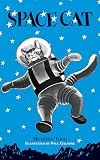
was published in 1952, two years before I was born, five years before the Space Age began, and 17 years before the first landing on the moon. How I loved reading library copies when I was a child! Alas, this was not one of my old library favorites that I was able to buy a used copy of when I was grown. Then another fan of the book recently mentioned how glad he was when he'd learned that Dover had reprinted it. I ordered myself a copy and, for the first time in probably over 50 years, I was show more able to reread it.
One thing I had not remembered was that Flyball is described as a gray cat in the text, but the illustrations show him as a gray tabby. No matter. It's obvious that the author was familiar with cats. I particularly enjoyed Flyball's belief that there is a Cat in the moon, and that dogs howl at it because there's no dog in the moon.
adventurous kitten manages to stow away for a couple of rides, one of which introduces him to his future slave [as he thinks of pilot Captain Fred Stone], who gives him his name.
Captain Stone lives and works at an experimental station in a desert. Flyball is quite a favorite with the station personnel. He enjoys letting the station dogs imagine they'll catch him when they chase him. He inspects everywhere except the large rocket, which is always closed off. Flyball is not pleased.
Anyone who has ever tried to keep a cat out of some place that cat wants to go will not be surprised that Flyball manages to stow away on the rocket test flight. This gives Captain Stone the idea to have a pressure suit made for Flyball. A General shows up to growl about Stone insisting on taking his lucky cat to the moon, but Stone's Colonel and Flyball himself soon win the General over.
The trip to the moon is quite an adventure for man and cat. Indeed, without Flyball, Stone would not have survived.
Even though science has taught us that the cave of moon creatures is fiction, this is still a charming story. I would recommend it to any cat lover, but particularly readers who love science fantasy and cats. The illustrations are good. Mr. Galdone really captured cat expressions. show less
One thing I had not remembered was that Flyball is described as a gray cat in the text, but the illustrations show him as a gray tabby. No matter. It's obvious that the author was familiar with cats. I particularly enjoyed Flyball's belief that there is a Cat in the moon, and that dogs howl at it because there's no dog in the moon.
adventurous kitten manages to stow away for a couple of rides, one of which introduces him to his future slave [as he thinks of pilot Captain Fred Stone], who gives him his name.
Captain Stone lives and works at an experimental station in a desert. Flyball is quite a favorite with the station personnel. He enjoys letting the station dogs imagine they'll catch him when they chase him. He inspects everywhere except the large rocket, which is always closed off. Flyball is not pleased.
Anyone who has ever tried to keep a cat out of some place that cat wants to go will not be surprised that Flyball manages to stow away on the rocket test flight. This gives Captain Stone the idea to have a pressure suit made for Flyball. A General shows up to growl about Stone insisting on taking his lucky cat to the moon, but Stone's Colonel and Flyball himself soon win the General over.
The trip to the moon is quite an adventure for man and cat. Indeed, without Flyball, Stone would not have survived.
Even though science has taught us that the cave of moon creatures is fiction, this is still a charming story. I would recommend it to any cat lover, but particularly readers who love science fantasy and cats. The illustrations are good. Mr. Galdone really captured cat expressions. show less

"Bodies in a Bookshop" is a well-paced, old-fashioned British mystery. With its book collecting backdrop, this is a great read for bibliophiles. The author flashes sly wit throughout, and plants some good red herrings to keep things interesting to the end.
Lists
Awards

You May Also Like


Associated Authors
Statistics
- Works
- 30
- Also by
- 6
- Members
- 674
- Popularity
- #37,467
- Rating
- 4.3
- Reviews
- 22
- ISBNs
- 37
- Favorited
- 2
