
John Sturrock (1930–2017)
Author of Brief Notes on the Art and Manner of Arranging One's Books
About the Author
John Sturrock is a sometime deputy editor of the Times Literary Supplement, and consulting editor on the London Review of Books.
Works by John Sturrock
Brief Notes on the Art and Manner of Arranging One's Books (2020) — Translator — 200 copies, 4 reviews
Associated Works
Tagged
Common Knowledge
- Other names
- Sturrock, John Anning Leng
- Birthdate
- 1930-06-14
- Date of death
- 2017-08-15
- Gender
- male
- Occupations
- editor
literary journalist
translator - Organizations
- The Times Literary Supplement
The London Review of Books - Nationality
- UK
- Places of residence
- West Sussex, England, UK
- Map Location
- England
Members
Reviews

In the essay "Notes on What I'm Looking For," Georges Perec proposes that his writings orbit around four preoccupations or targets for inquiry: the quotidian, introspection, games, and fictions. These are certainly illustrated in the slim book of essays Brief Notes on the Art and Manner of Arranging One's Books, named after the second-longest selection in the volume.
Perec is known for his association with OuLiPo, a group of writers using ludic constraints to produce texts, and an example of show more that engagement is in the book's final and longest piece, "Think/Classify," which has subheadings lettered in conspicuously non-alphabetic sequence. It's not until the penultimate section W (directly following K) that he discloses the series to be the order of the appearance of the alphabet in a chapter of Italo Calvino's If on a Winter's Night a Traveller ... .
This book reads quickly and offers a lot of variety while keeping to its central themes. The essays are structured unconventionally, and even when they address rather routine topics (e.g. a "bucket list" in "Some of the Things I Really Must Do Before I Die") they have surprising and entertaining details (e.g. "Get drunk with Malcolm Lowry"). show less
Perec is known for his association with OuLiPo, a group of writers using ludic constraints to produce texts, and an example of show more that engagement is in the book's final and longest piece, "Think/Classify," which has subheadings lettered in conspicuously non-alphabetic sequence. It's not until the penultimate section W (directly following K) that he discloses the series to be the order of the appearance of the alphabet in a chapter of Italo Calvino's If on a Winter's Night a Traveller ... .
This book reads quickly and offers a lot of variety while keeping to its central themes. The essays are structured unconventionally, and even when they address rather routine topics (e.g. a "bucket list" in "Some of the Things I Really Must Do Before I Die") they have surprising and entertaining details (e.g. "Get drunk with Malcolm Lowry"). show less

jerking the train of thought off its tracks
Published 1979, Structuralism and Since discusses five influential French thinkers (Lévi-Strauss, Barthes, Foucault, Lacan & Derrida) and their contributions to the history of ideas. Organized as a collection of five chapters by five different anglophone scholars (sympathetic but critical), the book aims to confer some measure of coherence on a multifarious intellectual tendency (only Lévi-Strauss ever called himself a structuralist). As John show more Sturrock writes in the Introduction, structuralism (then post-structuralism) took the field once existentialism went defunct, but the designation remained imprecise. Was it an ideology, a sociological phenomenon, a set of principles, a creed, a method, a cognitive tool, a slogan? Structuralists, whoever they were, refused to answer.
The five thinkers under consideration (The Five) produced numerous works across a range of topics, so Structuralism and Since is necessarily selective (without feeling unduly reductive). The authors of the various chapters here uncover robust continuities within the oeuvres of each of The Five and clearly establish the evidence for their kinship as a matter of ideational genealogy—their common ancestry in vocabulary derived from the schema developed by the Swiss linguist Ferdinand de Saussure (‘the lexicon of signification,’ per Barthes). (C.S. Peirce developed similar ideas independently around the same time). Language in all its power and limitations can be taken as the hub around which structuralism spins/span/spun. The Five were all provocative writers (if not always lucid), especially when reformulating older ideas. For example, the idea that writing is a deformation or distortion of speech goes back at least to Plato in Phaedrus, and, in Lacan’s view, 'truth which seeks to remove itself from the contradictory process of language becomes falsehood there and then.' Every statement that does not provoke change and strangeness within itself fails. Derrida wrote that language has powers that we cannot control, and Barthes said that we cannot call our language our own, since language is a system to which we must surrender much of our individuality whenever we enter it. The Five still managed to develop distinctive intellectual styles, sometimes by making a virtue of their own unintelligibility. Barthes embraced cacography, the written version of an aural cacophony. According to Hayden White, Foucault rejected the authority of both logic and conventional narrative; ‘his style appeared to be consciously designed to render his discourse impenetrable to any critical technique based on ideological principles different from his own.’ Just what those ideological principles were is hard to say, but White suggests that Foucault’s book on Raymond Roussel can be read as an analysis of his own idiosyncratic style. Malcolm Bowie describes Lacan’s style in terms of ‘syntactic turmoil’ and as (even better) ‘high buffoonery.’
Western culture, philosophy and literature needed a good scrubbing by the second half of the 20th c., and The Five obliged. They challenged individualism by calling into question the notion of the self as a subject or consciousness which might serve as a source of meaning and a principle of explanation (so long, Cogito ergo sum). They did not believe that everything could be explained. They insisted that a plurality of meanings may and should coexist; one perspective need not be exalted at the expense of others. Principles are transient. Fact and fancy change places arbitrarily. In the interplay of discourse, desire & power, Foucault was on the side of the free play of desire. (The representative vignette—Foucault’s fisting tour of San Francisco bathhouses in the early 1980s—comes from James Miller).
‘Reverberations are to be preferred to the thing itself.’ Jonathan Culler’s last chapter on Jacques Derrida serves as an excellent review of the assumptions and after-effects of structuralism (and the insignificance of intellectual labels). Derrida wrote about particular texts (including works by the other writers in this volume) and related them to the central problems of structuralist and post-structuralist theory: the relation between event and structure, the empirical and the ideal, system and origin, speech and writing. Indeed, suggests Culler, the notion of ‘structuralism’ only came into focus with the writings of Derrida, though he practiced the kind of writing that explores the impossibility of a comprehensive & coherent theoretical system. Key insights from Derrida have been thoroughly loosed into the world, like his idea that an author can have no special authority over what she has written since she has committed it to strangers and to the future, and its meaning henceforth need not coincide with her intentions. Or the technique of deconstruction, whereby the internal contradictions in seemingly coherent systems of thought are brought to light. (It is no fault of Derrida’s that his insights sometimes turn to mush in the hands of lesser lights). Derrida’s deconstruction of Saussure, Lévi-Strauss, Lacan, Foucault and Barthes revealed the lingering problem of their own discourse: the claim to new knowledge after calling all knowledge into question (ref. Ben-Ami Scharfstein). Culler says that Derrida’s role was both urgent and antithetical—the philosopher who wants to identify the conditions of thought imposed by philosophy undertakes to address that which philosophy seeks to repress.
The Five thinkers under discussion in Structuralism and Since left many rich fields to plow and plunder. In the chapter on Lévi-Strauss, Dan Sperber says that the idea that myths and cultural symbols are food for thought led to the introduction of new perspectives on language, culture and society. And, in what could serve as a judgement on all the so-called structuralists, Sperber writes, ‘the use he makes of these perspectives is sometimes seminal, sometimes unconvincing, but this matters less than the fact of his having opened them up at all.’ show less
Published 1979, Structuralism and Since discusses five influential French thinkers (Lévi-Strauss, Barthes, Foucault, Lacan & Derrida) and their contributions to the history of ideas. Organized as a collection of five chapters by five different anglophone scholars (sympathetic but critical), the book aims to confer some measure of coherence on a multifarious intellectual tendency (only Lévi-Strauss ever called himself a structuralist). As John show more Sturrock writes in the Introduction, structuralism (then post-structuralism) took the field once existentialism went defunct, but the designation remained imprecise. Was it an ideology, a sociological phenomenon, a set of principles, a creed, a method, a cognitive tool, a slogan? Structuralists, whoever they were, refused to answer.
The five thinkers under consideration (The Five) produced numerous works across a range of topics, so Structuralism and Since is necessarily selective (without feeling unduly reductive). The authors of the various chapters here uncover robust continuities within the oeuvres of each of The Five and clearly establish the evidence for their kinship as a matter of ideational genealogy—their common ancestry in vocabulary derived from the schema developed by the Swiss linguist Ferdinand de Saussure (‘the lexicon of signification,’ per Barthes). (C.S. Peirce developed similar ideas independently around the same time). Language in all its power and limitations can be taken as the hub around which structuralism spins/span/spun. The Five were all provocative writers (if not always lucid), especially when reformulating older ideas. For example, the idea that writing is a deformation or distortion of speech goes back at least to Plato in Phaedrus, and, in Lacan’s view, 'truth which seeks to remove itself from the contradictory process of language becomes falsehood there and then.' Every statement that does not provoke change and strangeness within itself fails. Derrida wrote that language has powers that we cannot control, and Barthes said that we cannot call our language our own, since language is a system to which we must surrender much of our individuality whenever we enter it. The Five still managed to develop distinctive intellectual styles, sometimes by making a virtue of their own unintelligibility. Barthes embraced cacography, the written version of an aural cacophony. According to Hayden White, Foucault rejected the authority of both logic and conventional narrative; ‘his style appeared to be consciously designed to render his discourse impenetrable to any critical technique based on ideological principles different from his own.’ Just what those ideological principles were is hard to say, but White suggests that Foucault’s book on Raymond Roussel can be read as an analysis of his own idiosyncratic style. Malcolm Bowie describes Lacan’s style in terms of ‘syntactic turmoil’ and as (even better) ‘high buffoonery.’
Western culture, philosophy and literature needed a good scrubbing by the second half of the 20th c., and The Five obliged. They challenged individualism by calling into question the notion of the self as a subject or consciousness which might serve as a source of meaning and a principle of explanation (so long, Cogito ergo sum). They did not believe that everything could be explained. They insisted that a plurality of meanings may and should coexist; one perspective need not be exalted at the expense of others. Principles are transient. Fact and fancy change places arbitrarily. In the interplay of discourse, desire & power, Foucault was on the side of the free play of desire. (The representative vignette—Foucault’s fisting tour of San Francisco bathhouses in the early 1980s—comes from James Miller).
‘Reverberations are to be preferred to the thing itself.’ Jonathan Culler’s last chapter on Jacques Derrida serves as an excellent review of the assumptions and after-effects of structuralism (and the insignificance of intellectual labels). Derrida wrote about particular texts (including works by the other writers in this volume) and related them to the central problems of structuralist and post-structuralist theory: the relation between event and structure, the empirical and the ideal, system and origin, speech and writing. Indeed, suggests Culler, the notion of ‘structuralism’ only came into focus with the writings of Derrida, though he practiced the kind of writing that explores the impossibility of a comprehensive & coherent theoretical system. Key insights from Derrida have been thoroughly loosed into the world, like his idea that an author can have no special authority over what she has written since she has committed it to strangers and to the future, and its meaning henceforth need not coincide with her intentions. Or the technique of deconstruction, whereby the internal contradictions in seemingly coherent systems of thought are brought to light. (It is no fault of Derrida’s that his insights sometimes turn to mush in the hands of lesser lights). Derrida’s deconstruction of Saussure, Lévi-Strauss, Lacan, Foucault and Barthes revealed the lingering problem of their own discourse: the claim to new knowledge after calling all knowledge into question (ref. Ben-Ami Scharfstein). Culler says that Derrida’s role was both urgent and antithetical—the philosopher who wants to identify the conditions of thought imposed by philosophy undertakes to address that which philosophy seeks to repress.
The Five thinkers under discussion in Structuralism and Since left many rich fields to plow and plunder. In the chapter on Lévi-Strauss, Dan Sperber says that the idea that myths and cultural symbols are food for thought led to the introduction of new perspectives on language, culture and society. And, in what could serve as a judgement on all the so-called structuralists, Sperber writes, ‘the use he makes of these perspectives is sometimes seminal, sometimes unconvincing, but this matters less than the fact of his having opened them up at all.’ show less
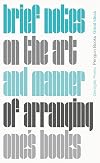
A window into the inquisitive, playful and, at times, obsessive mind of Georges Perec, the French master of OuLiPo. this is a short collection of essays that appeared in newspapers and magazines. I especially enjoyed, "Some of the Things I Really Must Do Before I Die", and "Think/Classify".
Besides wishing to "arrange my books once and for all" he would also "like to get drunk with Malcolm Lowry" before his time ends. He explores the arbitrary structure of the alphabet, organizing one's show more library, and the general dearth of verbs to describe discreet actions in various languages:
"The Americans also have a verb that means 'to live in the suburbs and work in the town': to commute. But they don't, any more than we do, have one which would mean: 'drink a glass of white wine with a friend from Burgundy, at the Cafe des Deux-Magots, around six o'clock on a rainy day, while talking about the non-meaningfulness of the world, knowing that you have just met your old chemistry teacher and that next to you a young woman is saying to her neighbour: 'You know, I showed her some in every colour!'
An amusing, easy introduction to a unique writer.
Part of the interesting collection: Penguin Books-Great Ideas show less
Besides wishing to "arrange my books once and for all" he would also "like to get drunk with Malcolm Lowry" before his time ends. He explores the arbitrary structure of the alphabet, organizing one's show more library, and the general dearth of verbs to describe discreet actions in various languages:
"The Americans also have a verb that means 'to live in the suburbs and work in the town': to commute. But they don't, any more than we do, have one which would mean: 'drink a glass of white wine with a friend from Burgundy, at the Cafe des Deux-Magots, around six o'clock on a rainy day, while talking about the non-meaningfulness of the world, knowing that you have just met your old chemistry teacher and that next to you a young woman is saying to her neighbour: 'You know, I showed her some in every colour!'
An amusing, easy introduction to a unique writer.
Part of the interesting collection: Penguin Books-Great Ideas show less
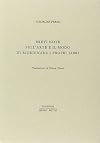
Iniziare l'anno con piacevolezza perecchiana (e con un proposito di riordino che difficilmente si concretizzerà).
Lists
You May Also Like


Associated Authors
Statistics
- Works
- 18
- Also by
- 8
- Members
- 563
- Popularity
- #44,420
- Rating
- 4.1
- Reviews
- 5
- ISBNs
- 27
- Languages
- 2