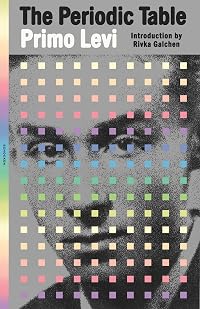
The Periodic Table
by Primo Levi
On This Page
Description
The Periodic Table by Primo Levi is an impassioned response to the Holocaust: consisting of twenty one short stories, each possessing the name of a chemical element, the collection tells of the author's experiences as a Jewish-Italian chemist before, during and after Auschwitz in luminous, clear, and unfailingly beautiful prose. It has been named the best science book ever by the Royal Institution of Great Britain and is considered to be Levi's crowning achievement.Tags
Recommendations



















Member Recommendations


Member Reviews
Thomas Mann began his tetralogy, Joseph and His Brothers, with this sentence: "Very deep is the well of the past." Primo Levi's memoir, The Periodic Table, demonstrates this metaphor in a much smaller, compact space. The lives of Levi and his Piedmont ancestors are explored through stories that illuminate the nature of the past and the source of those people's and our own humanity. This is done through vignettes that demonstrate Levi's love of chemistry and literature, his relations and relationships, while exploring his own attitude and thoughts.
Some of his thoughts are about reading and its meaning for his life. This is a topic that I especially love to explore and learn about; I will take it up in this introductory commentary on his show more memoir. His reading is based on his love for great literature particularly his appreciation for the writings of Thomas Mann, whom he holds in the highest esteem.
Early in the narrative during his sojourn as a chemistry student he meets Rita, a fellow student, and is attracted to her although, due to his shyness, he does not know how to approach her. He reaches a point where "I thought myself condemned to a perpetual masculine solitude, denied a woman's smile forever". Yet one day he found beside her, peeking out of her bag, a book. It was The Magic Mountain. He relates, "it was my sustenance during those months, the timeless story of Hans Castorp in enchanted exile on the magic mountain. I asked Rita about it, on tenterhooks to hear her opinion, as if I had written the book: and soon enough I had to realize that she was reading the novel in an entirely different way. As a novel, in fact: she was very interested in finding out exactly how far Hans would go with Madame Chauchat, and mercilessly skipped the fascinating (for me) political, theological, and metaphysical discussions between the humanist Settembrini and the Jewish Jesuit Naphtha." (p 38)
We all may have had a similar experience more than once: finding someone (whether drawn to them by Eros or not) reading a book we love, but not reading the same book.
Levi's love for Mann's writing also provided him solace while working on a demanding project during the war. He was sequestered in a laboratory next to a nickel mine and forced to work long hours. He dared not venture far from the mine, so "Sometimes I stayed in the lab past quitting time or went back there after dinner to study, or to meditate on the problem of nickel. At other times I shut myself in to read Mann's Joseph stories in my monastic cell in the submarine. On nights when the moon was up I often took long solitary walks through the wild countryside around the mine". (p 79)
One can picture Levi pondering while walking by the light of the Tuscan moon finding comfort as did Jacob in Mann's novel when he walked in the moonlight. It is the moonlight with its "magically ambiguous precision" that mirrored for Jacob the way the traditions of the children and grandchildren of Abraham are "spun out over generations and solidified as a chronicle only much later--". ("The Tales of Jacob")
Each chapter of the memoir is named for a chemical element, explores Levi’s work in the laboratory, and relates that work to his personal, social, and political experience. It is a cliché to speak of human chemistry when discussing human nature. The virtue of Levi’s book is that he refreshes the cliché and shows the profound connections between chemical elements and the elements of human behavior. The chapters can be read as a discrete piece of work, concentrating on some episode or period in Levi’s life. Nevertheless, the chapters are also unified by the author’s growth in perception. As he learns more about specific chemical elements and about the procedures required to study those elements, so he also discovers life in more depth, encountering unusual characters who teach him about the meaning of their lives and about existence as a whole. The form of The Periodic Table can be roughly cnaracterized as a chronology; however there are chapters which are difficult to date and some that are fictions in part or in whole. While his experience in Auschwitz is almost entirely avoided (he had written a separate book about this, If This is a Man), he does include a brief episode in the chapter "Cerium" that highlights his friendship with a young man named Alberto whi bouyed his spirits.
By titling his memoir The Periodic Table, Levi suggests that there is a structure to his writing about experience that is analogous to the way elements are analyzed in chemistry. Like the various substances the chemist tests in his laboratory, the author’s experiences have different degrees of purity, different weights, and different reactions, depending on what he uses to stimulate them. Human character in the memoir, in other words, has certain properties from the beginning, but it can be transformed in a number of ways given the changing nature of environments.
Throughout his memoir Primo Levi shares other literature and experiences as he narrates the lives of his friends, family, and ancestors. Just as he is inspired by reading Thomas Mann and the moonlight that inspired Jacob so many centuries ago he is imbued with the life of the people around him. Yes, The Periodic Table is deep, and one wonders at the lives narrated by this brilliant Jewish Italian chemist and humanist.
There are lessons to be learned in the humanity of people, but also in their frailties and foibles. Ultimately this is one of the most humane works of literature that this reader has encountered. With a unique style and appreciation for the importance of both science and literature for humanity The Periodic Table stands as a twentieth-century classic that I would recommend to all readers. show less
Some of his thoughts are about reading and its meaning for his life. This is a topic that I especially love to explore and learn about; I will take it up in this introductory commentary on his show more memoir. His reading is based on his love for great literature particularly his appreciation for the writings of Thomas Mann, whom he holds in the highest esteem.
Early in the narrative during his sojourn as a chemistry student he meets Rita, a fellow student, and is attracted to her although, due to his shyness, he does not know how to approach her. He reaches a point where "I thought myself condemned to a perpetual masculine solitude, denied a woman's smile forever". Yet one day he found beside her, peeking out of her bag, a book. It was The Magic Mountain. He relates, "it was my sustenance during those months, the timeless story of Hans Castorp in enchanted exile on the magic mountain. I asked Rita about it, on tenterhooks to hear her opinion, as if I had written the book: and soon enough I had to realize that she was reading the novel in an entirely different way. As a novel, in fact: she was very interested in finding out exactly how far Hans would go with Madame Chauchat, and mercilessly skipped the fascinating (for me) political, theological, and metaphysical discussions between the humanist Settembrini and the Jewish Jesuit Naphtha." (p 38)
We all may have had a similar experience more than once: finding someone (whether drawn to them by Eros or not) reading a book we love, but not reading the same book.
Levi's love for Mann's writing also provided him solace while working on a demanding project during the war. He was sequestered in a laboratory next to a nickel mine and forced to work long hours. He dared not venture far from the mine, so "Sometimes I stayed in the lab past quitting time or went back there after dinner to study, or to meditate on the problem of nickel. At other times I shut myself in to read Mann's Joseph stories in my monastic cell in the submarine. On nights when the moon was up I often took long solitary walks through the wild countryside around the mine". (p 79)
One can picture Levi pondering while walking by the light of the Tuscan moon finding comfort as did Jacob in Mann's novel when he walked in the moonlight. It is the moonlight with its "magically ambiguous precision" that mirrored for Jacob the way the traditions of the children and grandchildren of Abraham are "spun out over generations and solidified as a chronicle only much later--". ("The Tales of Jacob")
Each chapter of the memoir is named for a chemical element, explores Levi’s work in the laboratory, and relates that work to his personal, social, and political experience. It is a cliché to speak of human chemistry when discussing human nature. The virtue of Levi’s book is that he refreshes the cliché and shows the profound connections between chemical elements and the elements of human behavior. The chapters can be read as a discrete piece of work, concentrating on some episode or period in Levi’s life. Nevertheless, the chapters are also unified by the author’s growth in perception. As he learns more about specific chemical elements and about the procedures required to study those elements, so he also discovers life in more depth, encountering unusual characters who teach him about the meaning of their lives and about existence as a whole. The form of The Periodic Table can be roughly cnaracterized as a chronology; however there are chapters which are difficult to date and some that are fictions in part or in whole. While his experience in Auschwitz is almost entirely avoided (he had written a separate book about this, If This is a Man), he does include a brief episode in the chapter "Cerium" that highlights his friendship with a young man named Alberto whi bouyed his spirits.
By titling his memoir The Periodic Table, Levi suggests that there is a structure to his writing about experience that is analogous to the way elements are analyzed in chemistry. Like the various substances the chemist tests in his laboratory, the author’s experiences have different degrees of purity, different weights, and different reactions, depending on what he uses to stimulate them. Human character in the memoir, in other words, has certain properties from the beginning, but it can be transformed in a number of ways given the changing nature of environments.
Throughout his memoir Primo Levi shares other literature and experiences as he narrates the lives of his friends, family, and ancestors. Just as he is inspired by reading Thomas Mann and the moonlight that inspired Jacob so many centuries ago he is imbued with the life of the people around him. Yes, The Periodic Table is deep, and one wonders at the lives narrated by this brilliant Jewish Italian chemist and humanist.
There are lessons to be learned in the humanity of people, but also in their frailties and foibles. Ultimately this is one of the most humane works of literature that this reader has encountered. With a unique style and appreciation for the importance of both science and literature for humanity The Periodic Table stands as a twentieth-century classic that I would recommend to all readers. show less
As a concept The Periodic Table may come across as lofty or even obtuse. Upon reading there is a depth that overwhelms these trite notions of judgement. Levi's wit, candor, existential musings, and heartache are all rendered in a constellation of essays that define strict genre categorization. Levi writes that all writing is autobiography, and he's mapped out himself in this book in a way that is bare and buried, much like the elements that guide the reader through his life and memories.
A grad school colleague, knowing of my interest in literature and science, recommended this book to me. I couple years later I bought it so I could scan a couple chapters and teach it in my "vision of science"–themed academic writing class. Based on a quick skim, I selected a couple that looked good to teach, but this did not happen; a couple weeks into the course, it became clear to me I had assigned too much reading, and I dropped the readings from the schedule, much to my students' relief. But of course I chucked the book onto my reading list, and some six years later I have finally gotten around to it.
The book consists of twenty-one chapters, each titled after an element of the periodic table. They cover Levi's life, from his show more childhood to his adulthood, with a particular emphasis on his career as an industrial chemist and some discussion of his time in a concentration camp (which he covered in more detail elsewhere), but also a number of embedded narratives about other people.
It's my first work by Levi, and an interesting one. Like a lot of collections, I did not glom onto every story but there were a number of good ones. A lot of the stuff about Levi's young attempt to get into chemistry are quite funny, especially his attempts at romance, and there's an interesting tale of his attempt to solve contamination at a chemical site.
But it is also, of course, a book about fascism and how it affects our lives. I found this passage from "Potassium" about the certainty of chemistry fascinating:
Or is there? Later, in "Chromium," he solves a bit of a scientific mystery and imparts to his coworkers a new process they have to follow to avoid contamination issues. Years later, he has long left that plant, but the process remains:
The best story in the book is "Vanadium," where Levi bumps into a German chemist he knows from the concentration camp. Levi wants to find the man a monster against which to validate himself; the German chemist wants to use Levi to vindicate himself as someone who really was not that bad. Neither gets what he wants—it's a really touching meditation on complicity and blame. It ends kind of uncertainly, but how else could it? show less
The book consists of twenty-one chapters, each titled after an element of the periodic table. They cover Levi's life, from his show more childhood to his adulthood, with a particular emphasis on his career as an industrial chemist and some discussion of his time in a concentration camp (which he covered in more detail elsewhere), but also a number of embedded narratives about other people.
It's my first work by Levi, and an interesting one. Like a lot of collections, I did not glom onto every story but there were a number of good ones. A lot of the stuff about Levi's young attempt to get into chemistry are quite funny, especially his attempts at romance, and there's an interesting tale of his attempt to solve contamination at a chemical site.
But it is also, of course, a book about fascism and how it affects our lives. I found this passage from "Potassium" about the certainty of chemistry fascinating:
the Fascism around us did not have opponents. We had to begin from scratch, 'invent' our anti-Fascism, create it from the germ, from the roots, from our roots. We looked around us and traveled up roads that led not very far away. The Bible, Croce, geometry, and physics seemed to use sources of certainty.We may like to think of science as source of certainty in an uncertain world, but Levi argues that the truths of science are as arbitrary the truths of humans when you come down to it—there is nothing to be found in science that will let you resist fascism.
[...]
Chemistry, for me, had stopped being such a source. It led to the heart of Matter, and Matter was our ally precisely because the Spirit, dear to Fascism, was our enemy; but having reached the fourth year of Pure Chemistry, I could no longer ignore that chemistry itself, or at least that which we were being administered, did not answer my questions. To prepare phenyl bromide or methyl violet... was amusing, even exhilarating, but... [w]hy in that particular way and not in another? After having been force fed in liceo [school] the truth revealed by Fascist Doctrine, all revealed, unproven truths either bored me stiff or aroused my suspicion. (43-4)
Or is there? Later, in "Chromium," he solves a bit of a scientific mystery and imparts to his coworkers a new process they have to follow to avoid contamination issues. Years later, he has long left that plant, but the process remains:
my report went the way of all flesh: but formulas are as holy as prayers, decree-laws, and dead languages, and not an iota in them can be changed. As so my ammonium chloride... by now completely useless and probably a bit harmful, is religiously ground into the chromate anti-rust paint on the shore of that lake, and nobody knows why anymore. (133)There's an odd sort of hope in this, tinged with melancholy. The good you do can linger for a long time... albeit until it has become actively harmful in its own way! Humans cling on to revealed truths, for good or for ill—this is probably the lasting lesson of fascism, religion, science, and The Periodic Table.
The best story in the book is "Vanadium," where Levi bumps into a German chemist he knows from the concentration camp. Levi wants to find the man a monster against which to validate himself; the German chemist wants to use Levi to vindicate himself as someone who really was not that bad. Neither gets what he wants—it's a really touching meditation on complicity and blame. It ends kind of uncertainly, but how else could it? show less
Primo Levi may or may not have committed suicide in 1987 and it is all too convenient for myth-makers to say, as Elie Wiesel did, that Levi had died at Auschwitz forty years earlier.
However, there is one section of this book - Vanadium - where one understands the possibility of existential despair for Levi, his exchange with a German who was 'on the other side' at Auschwitz.
It is not that the German was wholly obtuse and certainly the man knows that bad things were done. By all 'conventional' standards, he is not a 'bad man' - indeed, he reminds one of Arendt's description of evil as fundamentally banal.
But the world views of victim and (relatively) minor participant are so utterly different that the only conclusion to be drawn is that show more empathy is always going to be the human exception rather than the human rule.
The Royal Institution awarded this book the title of 'best science book ever written' in 2006 (it was written in 1975) but it isn't. This is pure sentimentality - rather it is a very well written series of memoirs and some stories, hung together around a scientific theme.
It is, in fact, a bit of a mish-mash and it is perhaps time to 'toughen up' and stop missing the point. If Levi was defined by his experience in Auschwitz, the world has colluded out of what can only be described as a mass guilt trip that, I think, insults the dead.
We know now that - separated from the eurocentric view that rediscovered Nazi attrocities in the 1960s and after - the human species is capable of atrocity by its very nature. We live in a world of discovered and new atrocities, of Milgram experiments and Rwanda.
Primo Levi's testimony is important because he was in the heart of hell but we diminish him by patronising him. He does not come to terms with anything in this book and we should not either - we cannot 'empathise' or believe we have any conception of what he experienced.
Indeed, that is the flaw of the book - a set of incidents for which the periodic table is an excuse skirt around the elephant in the room, a 'why' that has no answer.
It is as if he is clearing his mental deck of thoughts and memories but we come out none the wiser as to the reality. We are filled with sympathy but blocked from anything but a very sentimentalised empathy.
At the end of this book, I deeply cared about this man - not humanity - but this man and in that sense the book is a success insofar as it helps us see each victim of these grinding machines to be a person.
But it takes us no nearer to coherence or understanding. The lack of anger or rage in itself seems to be taken as a good sign, that Levi was not a man who hated or seeked vengeance. I disagree.
The sweet reasonableness is what most people want to see but it does not look like a truth, only a repression out of confusion. Levi never ever says he forgives here or elsewhere. He is simply pining in 'Vanadium' for a German to understand what it is to be Primo Levi.
The tragedy is not only that the German does not understand what it is to be Primo Levi but, bluntly, none of us do. If we claim to do, because of his fine writing, then we are self-deluding liars.
The praise and the awards and the claims about the man are almost piling insult on injury. No one understands what it is to be Primo Levi any more than anyone can understand who it is to be me or you.
Atrocity is now understand to be common enough - Stalin and Mao were both responsible for more deaths than Hitler. It cannot be great to be in Guantanamo or see your family blown to bits in a drone attack or macheted in Rwanda - but each person in each atrocity is unique.
Worse, the dead person no longer suffers - only those left behind suffer and we cannot 'get' this essential injustice where we cannot be sure whether it is better to be alive or dead.
So, Levi is important because of what he fails to be able to say not because of what he actually says.
Who knows what he thought on the night of his death but it is a fair guess that he would have given up all his writing just to know that someone, anyone, could actually communicate that they knew precisely what he had become because of the cold brutality of others.
It just can't be done. So, by all means read this book and get what you can from it (including insights into life in pre-war Italy) but do not expect to really understand what is going on here.
Or, at the least, read and re-read 'Vanadium' and be humbled at the inexpressible sadness of the human condition. Sometimes, all that is left is a respectful loving silence. Literature is an ambiguous friend in such circumstances. show less
However, there is one section of this book - Vanadium - where one understands the possibility of existential despair for Levi, his exchange with a German who was 'on the other side' at Auschwitz.
It is not that the German was wholly obtuse and certainly the man knows that bad things were done. By all 'conventional' standards, he is not a 'bad man' - indeed, he reminds one of Arendt's description of evil as fundamentally banal.
But the world views of victim and (relatively) minor participant are so utterly different that the only conclusion to be drawn is that show more empathy is always going to be the human exception rather than the human rule.
The Royal Institution awarded this book the title of 'best science book ever written' in 2006 (it was written in 1975) but it isn't. This is pure sentimentality - rather it is a very well written series of memoirs and some stories, hung together around a scientific theme.
It is, in fact, a bit of a mish-mash and it is perhaps time to 'toughen up' and stop missing the point. If Levi was defined by his experience in Auschwitz, the world has colluded out of what can only be described as a mass guilt trip that, I think, insults the dead.
We know now that - separated from the eurocentric view that rediscovered Nazi attrocities in the 1960s and after - the human species is capable of atrocity by its very nature. We live in a world of discovered and new atrocities, of Milgram experiments and Rwanda.
Primo Levi's testimony is important because he was in the heart of hell but we diminish him by patronising him. He does not come to terms with anything in this book and we should not either - we cannot 'empathise' or believe we have any conception of what he experienced.
Indeed, that is the flaw of the book - a set of incidents for which the periodic table is an excuse skirt around the elephant in the room, a 'why' that has no answer.
It is as if he is clearing his mental deck of thoughts and memories but we come out none the wiser as to the reality. We are filled with sympathy but blocked from anything but a very sentimentalised empathy.
At the end of this book, I deeply cared about this man - not humanity - but this man and in that sense the book is a success insofar as it helps us see each victim of these grinding machines to be a person.
But it takes us no nearer to coherence or understanding. The lack of anger or rage in itself seems to be taken as a good sign, that Levi was not a man who hated or seeked vengeance. I disagree.
The sweet reasonableness is what most people want to see but it does not look like a truth, only a repression out of confusion. Levi never ever says he forgives here or elsewhere. He is simply pining in 'Vanadium' for a German to understand what it is to be Primo Levi.
The tragedy is not only that the German does not understand what it is to be Primo Levi but, bluntly, none of us do. If we claim to do, because of his fine writing, then we are self-deluding liars.
The praise and the awards and the claims about the man are almost piling insult on injury. No one understands what it is to be Primo Levi any more than anyone can understand who it is to be me or you.
Atrocity is now understand to be common enough - Stalin and Mao were both responsible for more deaths than Hitler. It cannot be great to be in Guantanamo or see your family blown to bits in a drone attack or macheted in Rwanda - but each person in each atrocity is unique.
Worse, the dead person no longer suffers - only those left behind suffer and we cannot 'get' this essential injustice where we cannot be sure whether it is better to be alive or dead.
So, Levi is important because of what he fails to be able to say not because of what he actually says.
Who knows what he thought on the night of his death but it is a fair guess that he would have given up all his writing just to know that someone, anyone, could actually communicate that they knew precisely what he had become because of the cold brutality of others.
It just can't be done. So, by all means read this book and get what you can from it (including insights into life in pre-war Italy) but do not expect to really understand what is going on here.
Or, at the least, read and re-read 'Vanadium' and be humbled at the inexpressible sadness of the human condition. Sometimes, all that is left is a respectful loving silence. Literature is an ambiguous friend in such circumstances. show less
Primo libro di Levi, avvicinato perche' spaventato dal suo piu' famoso. Cosi', tanto per tentare l'approccio.
Il libro e' netto e inerte, come alcuni viali milanesi la mattina presto. Mi rimanda la noia della mediocrità, del caffelatte, dei cappotti lisi.
Ma nonostante questo, in quei giorni nebbiosi e grigi, c'e' un uomo che ha visto cose che noi mortali ce le sogniamo solo nei nostri peggiori incubi e che conduce una vita banale, di lavoratore in una fabbrica, e cerca di espellere sostanze da vernici raggrumate, e registra le sue attivita' con correttezza e imparzialita'.
E' questa distanza apparente dalle emozioni della lingua scritta che piu' di altre cose mi colpisce. L'Uomo ha sofferto, e' stato distante, e' stato allontanato, ha show more strappato la sua vita futura nei posti più lontani da Dio che la nostra civilta' serbi in memoria: e nonostante tutto non è ricco, e' famoso ma di una fama non appariscente, prende uno stipendio e probabilmente accantona una liquidazione, nel suo quotidiano svolge una attivita' che gia' al suo nominarsi fa arretrare.
Eppure attraverso quegli occhi sono passate immagini indicibili; attraverso quelle orecchie e quella pelle sono trasmigrati suoni e climi non di questa terra. Quell'uomo ha visto un inferno e parla di vanadio, oro e carbonio.
Ancora non mi capacito, e leggo affascinato le sue storie sull'autobus. show less
Il libro e' netto e inerte, come alcuni viali milanesi la mattina presto. Mi rimanda la noia della mediocrità, del caffelatte, dei cappotti lisi.
Ma nonostante questo, in quei giorni nebbiosi e grigi, c'e' un uomo che ha visto cose che noi mortali ce le sogniamo solo nei nostri peggiori incubi e che conduce una vita banale, di lavoratore in una fabbrica, e cerca di espellere sostanze da vernici raggrumate, e registra le sue attivita' con correttezza e imparzialita'.
E' questa distanza apparente dalle emozioni della lingua scritta che piu' di altre cose mi colpisce. L'Uomo ha sofferto, e' stato distante, e' stato allontanato, ha show more strappato la sua vita futura nei posti più lontani da Dio che la nostra civilta' serbi in memoria: e nonostante tutto non è ricco, e' famoso ma di una fama non appariscente, prende uno stipendio e probabilmente accantona una liquidazione, nel suo quotidiano svolge una attivita' che gia' al suo nominarsi fa arretrare.
Eppure attraverso quegli occhi sono passate immagini indicibili; attraverso quelle orecchie e quella pelle sono trasmigrati suoni e climi non di questa terra. Quell'uomo ha visto un inferno e parla di vanadio, oro e carbonio.
Ancora non mi capacito, e leggo affascinato le sue storie sull'autobus. show less
In three haunting reflections, Primo Levi, a chemist by training, takes
the elements of the periodic table as his inspiration. He ranges from
young love to political savagery; from the inert gas argon - and 'inert' relatives
like the uncle who stayed in bed for twenty-two years- to life- giving carbon. 'Iron'
honours the mountain -climbing resistance hero who put iron in Levi's student soul,
'Cerium' recalls the improvised cigarette lighters which saved his life in Auschwitz, while
'Vanadium' describes an eerie post-war correspondence with the man who had been his
'boss' there.
All are written with characteristically understated eloquence and shot through with deep humanity.
the elements of the periodic table as his inspiration. He ranges from
young love to political savagery; from the inert gas argon - and 'inert' relatives
like the uncle who stayed in bed for twenty-two years- to life- giving carbon. 'Iron'
honours the mountain -climbing resistance hero who put iron in Levi's student soul,
'Cerium' recalls the improvised cigarette lighters which saved his life in Auschwitz, while
'Vanadium' describes an eerie post-war correspondence with the man who had been his
'boss' there.
All are written with characteristically understated eloquence and shot through with deep humanity.
One of the most imaginitive ways of constructing a remembrance of history, biography and trauma. Levi, a Jewish-Italian chemical engineer who was sent to Auschwitz, uses the Periodic Table of Elements as frame and metaphoric language. It is so unique and thought-provoking, and completely bypasses my "I've read so much on the Holocaust that i can't really get hit with anything new, okay?" filter. I am curious to know how the word choices and language seem and feel in Italian which I can't read. In any case the translated text is good.
Members
- Recently Added By
Lists

501 Must-Read Books
529 works; 72 members

To Read - Non Fiction
46 works; 4 members

Jewish Books
367 works; 24 members

Top Five Books of 2014
1,064 works; 398 members

Books Set in Italy
167 works; 19 members

Folio Society
831 works; 49 members

EU Fiction: 1950-2022
223 works; 68 members

Books Read in 2021
5,361 works; 113 members

Blackwell's Five Foot Bookshelf
72 works; 4 members

Books Read in 2020
4,379 works; 123 members

The Guardian's 100 greatest novels of all time
100 works; 16 members

Read This Next
120 works; 3 members

Harold Bloom - The Western Canon: D. The Chaotic Age
833 works; 24 members

Fiction for Readers Who Love Science and Math
57 works; 15 members

1970s
657 works; 23 members

20th Century Literature
1,161 works; 54 members

Philosophical Fiction
97 works; 26 members
Italian Literature
558 works; 43 members

A Good Read (Radio 4)
287 works; 1 member
Author Information

168+ Works 25,455 Members
Primo Levi was born on July 31, 1919 in Turin, Italy. He pursued a career in chemistry, and spent the early years World War II as a research chemist in Milan. Upon the German invasion of northern Italy, Levi, an Italian Jew, joined an anti-fascist group and was captured and sent to the Auschwitz concentration camp in Poland. He was able to survive show more the camp, due in part to his value to the Nazis as a chemist. After the war ended, Levi did chemistry work in a Turin paint factory while beginning his writing career. His first book, If This Is a Man (title later was changed to Survival in Auschwitz) was published in 1947 and its sequel, The Truce (later retitled The Reawakening) came out in 1958. These two books recount Levi's story of surviving concentration camp life. Levi also published poetry, short stories, and novels, some under the pen name Damianos Malabaila. His 1985, largely autobiographical work, The Periodic Table, cemented his world fame. Awards in tribute to his writing included the Kenneth B. Smilen fiction award, presented by the Jewish Museum in New York. Ironically, despite his surviving Auschwitz, Primo Levi appears to have died by suicide, in Turin on April 11, 1987. (Bowker Author Biography) show less
Some Editions
Awards and Honors
Distinctions
Series
Belongs to Publisher Series
Línia d'ombra (12)
Work Relationships
Common Knowledge
- Canonical title
- The Periodic Table
- Original title
- Il sistema periodico
- Alternate titles*
- Het periodiek systeem : verhalen van een leven
- Original publication date
- 1975
- People/Characters
- Sandro Delmastro; Giulia Vineis
- Important places
- Piedmont, Italy; Auschwitz concentration camp, Oświęcim, Lesser Poland, Poland; Turin, Piedmont, Italy
- Important events
- Holocaust (1933 | 1945)
- Epigraph*
- Ibergekumene zoress is gut zu derzajln.
Überstandene Leiden lassen sich gut erzählen. - First words
- There are the so-called inert gases in the air we breathe.
- Last words
- (Click to show. Warning: May contain spoilers.)It is that which at this instant, issuing out of a labyrinthine tangle of yeses and nos, makes my hand run along a certain path on the paper, mark it with these volutes that are signs: a double snap, up and down, between two levels of energy, guides this hand of mine to impress on the paper this dot, here, this one.
- Blurbers
- Bellow, Saul; Eco, Umberto; Calvino, Italo; Ozick, Cynthia
- Original language
- Italian
*Some information comes from Common Knowledge in other languages. Click "Edit" for more information.
Classifications
Statistics
- Members
- 4,515
- Popularity
- 3,273
- Reviews
- 74
- Rating
- (4.15)
- Languages
- 15 — Catalan, Chinese, Danish, Dutch, English, Finnish, French, German, Hebrew, Italian, Polish, Portuguese, Russian, Spanish, Swedish
- Media
- Paper, Audiobook, Ebook
- ISBNs
- 63
- UPCs
- 1
- ASINs
- 26