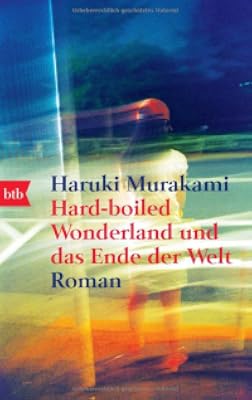
End of the World and Hard-Boiled Wonderland
by Haruki Murakami
On This Page
Description
"Hyperkinetic and relentlessly inventive, The End of the World and Hard-Boiled Wonderland is Haruki Murakami's deep dive into the very nature of consciousness. Across two parallel narratives, Murakami draws readers into a mind-bending universe in which Lauren Bacall, Bob Dylan, a split-brained data processor, a deranged scientist, his shockingly undemure granddaughter, and various thugs, librarians, and subterranean monsters collide to dazzling effect. What emerges is a novel that is at once show more hilariously funny and a deeply serious meditation on the nature and uses of the mind. Everyman's Library pursues the highest production standards, printing on acid-free cream-colored paper, with full-cloth cases with two-color foil stamping, decorative endpapers, silk ribbon markers, European-style half-round spines, and a full-color illustrated jacket"-- show lessTags
Recommendations














Member Recommendations

Member Reviews
Two nameless voices narrate alternate chapters one from the hard-boiled, dangerous Wonderland of Tokyo above and below ground and one from the peaceful End of the World. The first gets a job from a very eccentric old scientist in his underground lab, where he’s experimenting with removing sound from the world and using a tuning fork to gather information from animal skulls. Meanwhile in the End of the World, where the coming of autumn means that the coats of the unicorns turn to a thick silky gold color, the narrator must go the library to begin his new work: reading the old dreams from the beast skulls kept in the library. As they rush rapidly forward the stories begin to converge.
Intricately plotted, reflective, suspenseful, and show more compelling this is what a few decades ago would be described as mind-blowing. Once I started it, I found it impossible to put down. This is a masterwork of literary imagination. show less
Intricately plotted, reflective, suspenseful, and show more compelling this is what a few decades ago would be described as mind-blowing. Once I started it, I found it impossible to put down. This is a masterwork of literary imagination. show less
mentre tutti quanti ancora acclamavano come capolavoro "Kafka sulla spiaggia", io mi leggevo "la fine del mondo e il paese delle meraviglie", uscito quasi in sordina poco tempo dopo... Visto che si trattava di un libro dell'85 pensavo che si trattasse di un'opera minore, ma già dalle prime pagine mi sono dovuto ricredere: Murakami riesce sempre a sorprendermi, a prendere la mia testa e tenerla immersa a forza nei mondi che crea.
Sara la capacità dell'autore di passare con così tanta naturalezza da una terrorizzante esplorazione dei sotterranei di Tokyo alla disquisizione sul sandwich perfetto. Oppure l'inquietante sensazione di prossimità che riesce a dare la descrizione di una città popolata da unicorni e uomini separati dalle show more proprie ombre o, ancora, l'atmosfera satura di una tristezza densa, disperata ma allo stesso tempo pacata, tipicamente giapponese. Non so...
ma leggere questo libro è stato come visitare le macerie lasciate da una qualche tragedia del passato: infinitamente triste e infinitamente ricco di significati...indimenticabile.
PS. a chi apprezza gli anime giapponesi, consiglio di guardare la serie Haibane Renmei che riprende in maniera originale liberamente atmosfere e temi da questo meraviglioso romanzo. show less
Sara la capacità dell'autore di passare con così tanta naturalezza da una terrorizzante esplorazione dei sotterranei di Tokyo alla disquisizione sul sandwich perfetto. Oppure l'inquietante sensazione di prossimità che riesce a dare la descrizione di una città popolata da unicorni e uomini separati dalle show more proprie ombre o, ancora, l'atmosfera satura di una tristezza densa, disperata ma allo stesso tempo pacata, tipicamente giapponese. Non so...
ma leggere questo libro è stato come visitare le macerie lasciate da una qualche tragedia del passato: infinitamente triste e infinitamente ricco di significati...indimenticabile.
PS. a chi apprezza gli anime giapponesi, consiglio di guardare la serie Haibane Renmei che riprende in maniera originale liberamente atmosfere e temi da questo meraviglioso romanzo. show less
Es una historia extraña. Se compone de dos hilos narrativos. En uno de ellos el protagonista es un calculador, una especie de decodificador humano, que es requerido por un profesor, un anciano científico, para codificar los datos de su último experimento. La seguridad es crucial, ya que los semióticos y su Factoría, rivales del Sistema, donde trabaja el protagonista, quieren hacerse con este invento. Además, La Factoría parece que ha logrado aliarse con los tinieblos, unas criaturas carnívoras que viven en el subsuelo.
Paralelamente, en la otra historia el protagonista ha llegado, sin saber cómo, ya que no recuerda su otra vida, a una extraña ciudad en el fin del mundo, una ciudad rodeada por una muralla, de la que no se puede show more salir. Como trabajo se le asigna el de lector de sueños (!). Nada más llegar a la ciudad, el guardián le quitó su sombra, y esta es una particularidad que comparten el resto de habitantes. En esta ciudad también viven unas bestias de pelaje dorado y con un cuerno en la frente, como los unicornios.
Murakami ha escrito una historia original, imaginativa y hermosa, con una prosa, como siempre, exquisita. Mención aparte para su traductora habitual, Lourdes Porta, que realiza un trabajo excepcional. Traducir el japonés no debe ser nada fácil. También debo alabar el trabajo de Tusquets. En casi 500 páginas, no hay ni un sólo error tipográfico. Increíble.
Terminaré con un extracto:
"[...] En este mundo existe un tipo de tristeza que no te permite verter lágrimas. Es una de esas cosas que no puedes explicar a nadie y, aunque pudieras, nadie te comprendería. Y esa tristeza, sin cambiar de forma, va acumulándose en silencio en tu corazón como la nieve durante una noche sin viento." show less
Paralelamente, en la otra historia el protagonista ha llegado, sin saber cómo, ya que no recuerda su otra vida, a una extraña ciudad en el fin del mundo, una ciudad rodeada por una muralla, de la que no se puede show more salir. Como trabajo se le asigna el de lector de sueños (!). Nada más llegar a la ciudad, el guardián le quitó su sombra, y esta es una particularidad que comparten el resto de habitantes. En esta ciudad también viven unas bestias de pelaje dorado y con un cuerno en la frente, como los unicornios.
Murakami ha escrito una historia original, imaginativa y hermosa, con una prosa, como siempre, exquisita. Mención aparte para su traductora habitual, Lourdes Porta, que realiza un trabajo excepcional. Traducir el japonés no debe ser nada fácil. También debo alabar el trabajo de Tusquets. En casi 500 páginas, no hay ni un sólo error tipográfico. Increíble.
Terminaré con un extracto:
"[...] En este mundo existe un tipo de tristeza que no te permite verter lágrimas. Es una de esas cosas que no puedes explicar a nadie y, aunque pudieras, nadie te comprendería. Y esa tristeza, sin cambiar de forma, va acumulándose en silencio en tu corazón como la nieve durante una noche sin viento." show less
Questo è il Murakami che amo, capace di entrare nella testa e nel cuore delle persone mettendo tarli e andando a scuotere idee sommesse.
Questo libro è un viaggio alternato in due mondi che sembrano totalmente distanti: una città nel cui sottosuolo si svolgono scientifiche attività di ricerca e una città recintata tra mura da cui è impossibile uscire e dove gli abitanti vivono senza ombre e senza sentimenti.
Per emozionare non è indispensabile che i mondi siano reali e non è indispensabile che le storie si concludano in modo cristallino, è sufficiente leggere quello che accade nei mondi paralleli e speculari per riflettere sul tempo, sulle scelte, sul passato e sul futuro.
Questo libro non ha neanche esatte connotazioni show more storiche, non ha nomi (se non per le immancabili citazioni musicali), non è ambientato in luoghi definiti eppure riesce ad essere tangibile e reale anche quando ti porta in uno studio ricavato nelle profondità del sottosuolo della città.
Sono contenta di aver ritrovato (dopo due libri così così) il Murakami di cui mi sono innamorata e consiglio questo libro a tutti quelli che lo amano perchè è davvero un bel viaggio. show less
Questo libro è un viaggio alternato in due mondi che sembrano totalmente distanti: una città nel cui sottosuolo si svolgono scientifiche attività di ricerca e una città recintata tra mura da cui è impossibile uscire e dove gli abitanti vivono senza ombre e senza sentimenti.
Per emozionare non è indispensabile che i mondi siano reali e non è indispensabile che le storie si concludano in modo cristallino, è sufficiente leggere quello che accade nei mondi paralleli e speculari per riflettere sul tempo, sulle scelte, sul passato e sul futuro.
Questo libro non ha neanche esatte connotazioni show more storiche, non ha nomi (se non per le immancabili citazioni musicali), non è ambientato in luoghi definiti eppure riesce ad essere tangibile e reale anche quando ti porta in uno studio ricavato nelle profondità del sottosuolo della città.
Sono contenta di aver ritrovato (dopo due libri così così) il Murakami di cui mi sono innamorata e consiglio questo libro a tutti quelli che lo amano perchè è davvero un bel viaggio. show less
Published in English as Hard-Boiled Wonderland and the End of the World
In the "hard-boiled wonderland", watashi is a human data-processor. This is a highly lucrative, if rather taxing, profession. It's definitely not a job you can practice till you're old and wrinkly. If you're good enough, you can carve yourself a pretty comfy future... provided of course, you survive the cut-throat world of data processors.
Boku is living at the end of the world, an isolated town surrounded by an impenetrable wall. He doesn't know how he got there, nor what he is ultimately meant to achieve in this place, and he definitely can't turn back at this point. For now, he cut off his shadow and is working as a dream reader.
So what do boku and watashi have in show more common? Well for starters they are both Japanese words for "I" (first person singular). While boku is a less formal word used only by men, watashi has a more generic and formal use and can be attributed to both men and women.
So how do you make the difference between them? In the Romanian translation: you don't. All chapters are written in first person narrative, which makes it appear like someone living two lives in parallel for no reason whatsoever. Confusing? Definitely. Especially since the rest of the cast isn't named either.
I loved absolutely everything about the "end of the world". Whenever it was time to explore this story, I would instantly see myself in the middle of the mysteriously peaceful town. I literally wanted to go and live there... at least while I was reading about it.
To a certain extent, I also liked exploring the "hard-boiled wonderland", genuinely curious to unveil as many of its aspects as possible. Being a technical person myself, I was very interested in understanding watashi's job, which seemed to be an apt profession in a futuristic megalopolis. It's just that, it constantly felt like I was overlooking some important detail.
In true avid-Murakami-reader fashion, I just went with the flow, deciding that the wonderland was meant to be a complete mystery. At the end tough, I just couldn't accept the reasoning if the final solution. To me, it just came out of nowhere.
Score 4.2/5
Despite the many complaints, I did actually enjoy reading the book, and can hardly wait to start my next Murakami. show less
In the "hard-boiled wonderland", watashi is a human data-processor. This is a highly lucrative, if rather taxing, profession. It's definitely not a job you can practice till you're old and wrinkly. If you're good enough, you can carve yourself a pretty comfy future... provided of course, you survive the cut-throat world of data processors.
Boku is living at the end of the world, an isolated town surrounded by an impenetrable wall. He doesn't know how he got there, nor what he is ultimately meant to achieve in this place, and he definitely can't turn back at this point. For now, he cut off his shadow and is working as a dream reader.
So what do boku and watashi have in show more common? Well for starters they are both Japanese words for "I" (first person singular). While boku is a less formal word used only by men, watashi has a more generic and formal use and can be attributed to both men and women.
So how do you make the difference between them? In the Romanian translation: you don't. All chapters are written in first person narrative, which makes it appear like someone living two lives in parallel for no reason whatsoever. Confusing? Definitely. Especially since the rest of the cast isn't named either.
I loved absolutely everything about the "end of the world". Whenever it was time to explore this story, I would instantly see myself in the middle of the mysteriously peaceful town. I literally wanted to go and live there... at least while I was reading about it.
To a certain extent, I also liked exploring the "hard-boiled wonderland", genuinely curious to unveil as many of its aspects as possible. Being a technical person myself, I was very interested in understanding watashi's job, which seemed to be an apt profession in a futuristic megalopolis. It's just that, it constantly felt like I was overlooking some important detail.
In true avid-Murakami-reader fashion, I just went with the flow, deciding that the wonderland was meant to be a complete mystery. At the end tough, I just couldn't accept the reasoning if the final solution. To me, it just came out of nowhere.
Score 4.2/5
Despite the many complaints, I did actually enjoy reading the book, and can hardly wait to start my next Murakami. show less
Der Roman erzählt zwei Geschichten: Die eines namlenlosen Kalkulators, der für das "System" in seinem Kopf Daten verschlüsselt,um diese vor den "Semioten" zu sichern, welche sich in einem Datenkrieg mit dem System befinden. Als er enen Auftrag von einem geheim forschenden Wissenschaftler erhält, dessen Daten sogar mit einem speziellen, eigentlich verbotenenem Verfahren, dem "Shufflen" zu verschlüsseln, verliert er sein normales Leben und gerät zwischen die rivalisierenden Gruppen. Die wohlgenährte 17 Jahre junge Enkelin des Wissenschaftlers findet er anziehend und sie macht ihn nervös; die Bibliothekarin aus der Stadtbücherei aber hilft ihm.
In der zweiten Geschichte, genau wie die erste Geschichte von einem Ich-Erzähler show more aufgeschrieben, kommt dieser in eine Stadt, umgeben von einer hohen Mauer, in der er sich von seinem Schatten trennen muss, und welche er, so sagt es ihm der Wächter niemals wieder verlassen kann. Er bekommt den Auftrag, aus vielen alten Schädeln Träume zu lesen. Eine Bibliothekarin unterstützt ihn dabei. Vor der Stadt leben Einhörer, die regelmäßig im Winter sterben.
Mich hat das Buch, das ja Mitte der 1980er Jahre erschienen ist, von Anfang an in seinen Bann gezogen. David Nathans Stimme hat vermutlich zusätzlich zum Hörgenuss beigetragen. Da ich bislang von Murakami wenig gelesen habe und davon nicht so angetan war, ist das eine schöne Überraschung für mich gewesen. show less
In der zweiten Geschichte, genau wie die erste Geschichte von einem Ich-Erzähler show more aufgeschrieben, kommt dieser in eine Stadt, umgeben von einer hohen Mauer, in der er sich von seinem Schatten trennen muss, und welche er, so sagt es ihm der Wächter niemals wieder verlassen kann. Er bekommt den Auftrag, aus vielen alten Schädeln Träume zu lesen. Eine Bibliothekarin unterstützt ihn dabei. Vor der Stadt leben Einhörer, die regelmäßig im Winter sterben.
Mich hat das Buch, das ja Mitte der 1980er Jahre erschienen ist, von Anfang an in seinen Bann gezogen. David Nathans Stimme hat vermutlich zusätzlich zum Hörgenuss beigetragen. Da ich bislang von Murakami wenig gelesen habe und davon nicht so angetan war, ist das eine schöne Überraschung für mich gewesen. show less
A book about identity and unconsciousness (and impotence and whiskey). It's humorously and cleverly written, but it takes 250 pages (the first half of the book) to get into. It has some great moments though.
I don't know if it was intended, maybe just a matter of translation, but the overall style changes a lot. First it's very kafkaesque, then it's adventurous like an Harry Potter novel, later it gets a realistic touch of Dostoevsky, and in the end it has the melancholy I'd only seen from the author's colleague Yoshimoto - but it's never all at once.
Certainly worth the read, it gets especially enjoyable in the end, with an unexpected ending you will meditate over quite some time.
I don't know if it was intended, maybe just a matter of translation, but the overall style changes a lot. First it's very kafkaesque, then it's adventurous like an Harry Potter novel, later it gets a realistic touch of Dostoevsky, and in the end it has the melancholy I'd only seen from the author's colleague Yoshimoto - but it's never all at once.
Certainly worth the read, it gets especially enjoyable in the end, with an unexpected ending you will meditate over quite some time.
Members
- Recently Added By
Published Reviews
He has become the foremost representatives of a new style of Japanese writing: hip, cynical and highly stylized, set at the juncture of cyberpunk, postmodernism, and hard-boiled detective fiction.... Murakami [is] adept at deadpan wit, outrageous style.
added by GYKM
Murakami's bold willingness to go straight over the top [is] a signal indication of his genius... a world-class writer who has both eyes open and takes big risks.
added by GYKM
Lists

Emo Books
14 works; 1 member

Book Worlds We'd Like To Visit
322 works; 158 members
Talk Discussions
Past Discussions
New Murakami Translation in Folio Society Devotees (March 2024)
Science Fiction in Name that Book (January 2018)
Author Information

293+ Works 174,930 Members
Haruki Murakami was born on January 12, 1949 in Kyoto, Japan and studied at Tokyo's Waseda University. He opened a coffeehouse/jazz bar in the capital called Peter Cat with his wife. He became a full-time author following the publication of his first novel, Hear the Wind Sing, in 1979. He writes both fiction and non-fiction works. His fiction show more works include Norwegian Wood, Colorless Tsukuru Tazaki and His Years of Pilgrimage, The Strange Library, and Men Without Women. Several of his stories have been adapted for the stage and as films. His nonfiction works include What I Talk About When I Talk About Running. He has received numerous literary awards including the Franz Kafka Prize for Kafka on the Shore, the Yomiuri Prize for The Wind-Up Bird Chronicle, and the Jerusalem Prize. He has translated into Japanese literature written by F. Scott Fitzgerald, Raymond Carver, Truman Capote, John Irving, and Paul Theroux. (Bowker Author Biography) show less
Some Editions
Awards and Honors
Awards
Distinctions
Series
Belongs to Publisher Series
Work Relationships
Common Knowledge
- Canonical title
- End of the World and Hard-Boiled Wonderland
- Original title
- 世界の終りとハードボイルド・ワンダーランド; Sekai no owari to ha-doboirudo wanda-rando
- Original publication date
- 1985 (Japanese) (Japanese); 1991 (English; abridged) (English | abridged); 1992 (French) (French); 2009 (Spanish) (Spanish); 2014 (Danish) (Danish); 2024-12-10 (English; new, unabridged translation) (English | new, unabridged translation)
- People/Characters
- The Librarian; Shadow
- Important places
- Tokyo, Japan; The End of the World (fictional); Shadow Grounds, The End of the World (fictional); Library, The End of the World (fictional)
- Important events
- End of the World
- Epigraph
- Why does the sun go on shining?
Why do the birds go on singing?
Don't they know it's the end of the world?
The End of the World (Sylvia Dee/Arthur Kent) - First words
- The elevator continued its impossibly slow ascent.
- Quotations
- But on the phenomenological level, this world is only one out of countless possibillities. As you create memories, you're creatin' a parallel world
...I walked right into her backside. It was wonderfully cushioning, like a firm rain cloud. - Last words
- (Click to show. Warning: May contain spoilers.)All that is left to me is the sound of the snow underfoot.
- Blurbers*
- Michelle de Waard
- Original language
- Japanese
- Disambiguation notice
- This work includes:
- Haruki Murakami's original Japanese novel, 世界の終りとハードボイルド・ワンダーランド (1985);
- Jay Rubin's new, unabridged English language translation (2024); and... (show all)li>
- other language translations that are not known to be abridged.
*Some information comes from Common Knowledge in other languages. Click "Edit" for more information.
Classifications
- Genres
- Fiction and Literature, General Fiction
- DDC/MDS
- 895.635 — Literature & rhetoric Literatures of other languages Literatures of East and Southeast Asia Japanese Japanese fiction 1945–2000
- LCC
- PL856 .U673 .S4513 — Language and Literature Languages and literatures of Eastern Asia, Africa, Oceania Languages of Eastern Asia, Africa, Oceania Japanese language and literature Japanese literature Individual authors and works
- BISAC
Statistics
- Members
- 1,486
- Popularity
- 15,661
- Reviews
- 40
- Rating
- (4.09)
- Languages
- 27 — Bosnian, Bulgarian, Catalan, Chinese, Czech, Danish, Dutch, English, Finnish, French, German, Greek, Hebrew, Hungarian, Italian, Japanese, Latvian, Lithuanian, Norwegian (Bokmål), Norwegian, Polish, Portuguese, Romanian, Russian, Serbian, Spanish, Turkish
- Media
- Paper, Audiobook, Ebook
- ISBNs
- 96
- UPCs
- 1
- ASINs
- 12