
Jay Rubin
Author of Haruki Murakami and the Music of Words
About the Author
Jay Rubin is a professor of Japanese Literature at Harvard University
Works by Jay Rubin
Hunting Knife 4 copies
All God's Children Can Dance 2 copies
Associated Works
End of the World and Hard-Boiled Wonderland (1985) — Translator, some editions — 1,488 copies, 40 reviews
Absolutely on Music: Conversations with Seiji Ozawa (2011) — Translator, some editions — 803 copies, 17 reviews
The Little Green Monster — Translator, some editions — 4 copies
Green Onions [short story] — Translator, some editions — 1 copy
Horse Legs [short story] — Translator, some editions — 1 copy
Dr. Ogata Ryosai: Memorandum [short story] — Translator, some editions — 1 copy
Loyalty [short story] — Translator, some editions — 1 copy
Death Register [short story] — Translator, some editions — 1 copy
O-Gin [short story] — Translator, some editions — 1 copy
The Baby's Sickness [short story] — Translator, some editions — 1 copy
Spinning Gears [short story] — Translator, some editions — 1 copy
The Story of a Head That Fell Off [short story] — Translator, some editions — 1 copy
The Writer's Craft [short story] — Translator, some editions — 1 copy
Tagged
Common Knowledge
- Birthdate
- 1941
- Gender
- male
- Education
- University of Chicago
- Occupations
- academic
translator - Organizations
- Harvard University
University of Washington - Relationships
- Murakami, Haruki (translated)
- Nationality
- USA
- Birthplace
- Washington, D.C., USA
- Associated Place (for map)
- D.C., USA
Members
Reviews
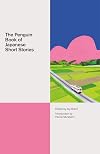
Since I've read every word Haruki Murakami has published in English I felt obligated to read his introduction once it showed up in the preview on Amazon. People saying "Haruki Murakami is my favorite author" has now become a cliche. But cliches can sometimes be true.
His introduction was nice and long and juicy. My impression of the collection of stories was that they were chosen, as Mr. Rubin explains, for the casual reader. Maybe it's pretentious but I consider myself more than a casual show more reader of Japanese fiction. I have an entire bookcase devoted to Japanese literature.
I like to imagine what stories I would have picked if I had the opportunity to compile an anthology of this kind.
There are new translations, which are sorely needed in this day and age. Akutagawa's previously untranslated short story "General Kim" was my favorite inclusion. Out of Akutagawa's 300 works only 77 have thus far been translated into English. Since he's one of my other favorite authors I've actually gone to extremely nerdy lengths to read them all. I wish Rubin would just translate all of Akutagawa already. And maybe Bakin while he's at it.
I am glad that he put a lot of translating into this volume, but why include "Patriotism" and the first chapter of Sanshiro? Not only do they take up valuable space but they are available almost anywhere. I buy anthologies because they contain stories on the brink of obscurity. Where are all the translations of Hiromi Kawakami or Junnosuke Yoshiyuki? I would have liked to see something new from Ryu Murakami, who never gets anthologized but is one of the best Japanese writers of all time.
I gave this book four stars because it was excellent, but it really could've gotten five. The two stories by Haruki are previously available, but luckily we get something new by Banana Yoshimoto and Akutagawa which save this collection, in my opinion, from being a rehashing. It's hard to find Kenji Nakagami and we are treated to a new story by Mieko Kawakami, which was appreciated, so while I would not recommend this for your shelf if you can only have one Japanese literature anthology - it's hard to beat the two volume Columbia anthology - I'd put it in my top 5 Japanese literature anthologies. Yes, I am that much of a geek that I would create a top five.
Though this is a step in the right direction there's about 3000 miles of stepping left to do if we are ever going to get the most out of J. Lit. I keep asking myself, why can't I just read Japanese? Oh yeah, it's insanely difficult. Anyway, check it out if you are a fan. show less
His introduction was nice and long and juicy. My impression of the collection of stories was that they were chosen, as Mr. Rubin explains, for the casual reader. Maybe it's pretentious but I consider myself more than a casual show more reader of Japanese fiction. I have an entire bookcase devoted to Japanese literature.
I like to imagine what stories I would have picked if I had the opportunity to compile an anthology of this kind.
There are new translations, which are sorely needed in this day and age. Akutagawa's previously untranslated short story "General Kim" was my favorite inclusion. Out of Akutagawa's 300 works only 77 have thus far been translated into English. Since he's one of my other favorite authors I've actually gone to extremely nerdy lengths to read them all. I wish Rubin would just translate all of Akutagawa already. And maybe Bakin while he's at it.
I am glad that he put a lot of translating into this volume, but why include "Patriotism" and the first chapter of Sanshiro? Not only do they take up valuable space but they are available almost anywhere. I buy anthologies because they contain stories on the brink of obscurity. Where are all the translations of Hiromi Kawakami or Junnosuke Yoshiyuki? I would have liked to see something new from Ryu Murakami, who never gets anthologized but is one of the best Japanese writers of all time.
I gave this book four stars because it was excellent, but it really could've gotten five. The two stories by Haruki are previously available, but luckily we get something new by Banana Yoshimoto and Akutagawa which save this collection, in my opinion, from being a rehashing. It's hard to find Kenji Nakagami and we are treated to a new story by Mieko Kawakami, which was appreciated, so while I would not recommend this for your shelf if you can only have one Japanese literature anthology - it's hard to beat the two volume Columbia anthology - I'd put it in my top 5 Japanese literature anthologies. Yes, I am that much of a geek that I would create a top five.
Though this is a step in the right direction there's about 3000 miles of stepping left to do if we are ever going to get the most out of J. Lit. I keep asking myself, why can't I just read Japanese? Oh yeah, it's insanely difficult. Anyway, check it out if you are a fan. show less
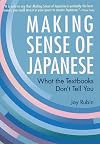
It does not seem possible that a book providing a rigorous comparative grammar for Japanese and English could be funny, well paced, and well written. But Making Sense of Japanese does just that. For those in the first three years of the difficult climb to proficiency in Japanese, this book will give you a pleasant lift. Rubin's concept of the "zero pronoun" provides an elegant answer to the enigma of the particles は and が。

A tidy little book on Japanese language and usage, which I looked into as a possible pathway to the intermediate level after working through the two volumes of Genki. It is not a textbook in the usual sense, but a set of concise essays or expositions of particular parts of the language. The section on the use of the particles wa and ga, usually called 'subject matters' in a loose sense, is particularly detailed: the author demonstrates the subtle, but very real differences in the sense show more conveyed by the two particles respectively, and the misunderstandings that can arise if they are used mechanically. It's a short book, so you don't mind if it doesn't actually drill you in higher grammar or new vocabulary. At the end of this short but dense essay, one realizes that an average Japanese sentence has a number of particles and connectors, that are probably not covered in an introductory course, but which have to be sorted out if any sense is to be made! So this book is not for the beginner. show less
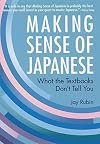
What a treat! Almost 5 stars, if only I wasn't lost for most of it. I don't know how to speak Japanese, and am a rank beginner in terms of learning to read it, so some of the trickier bits sailed past me--but it was astonishing how much I grasped, and how enjoyable it was to read about the intricacies of this language from an opinionated, humorous, knowledgeable author.
I even ran around quoting bits of it to uninterested friends, colleagues, and family, that's how much I liked it. It reads show more like a series of blog posts of varying lengths on several subjects, and you're sure to find a few of them to your taste, if not all.
(Note: 5 stars = amazing, wonderful, 4 = very good book, 3 = decent read, 2 = disappointing, 1 = awful, just awful. I'm fairly good at picking for myself so end up with a lot of 4s). I feel a lot of readers automatically render any book they enjoy 5, but I grade on a curve! show less
I even ran around quoting bits of it to uninterested friends, colleagues, and family, that's how much I liked it. It reads show more like a series of blog posts of varying lengths on several subjects, and you're sure to find a few of them to your taste, if not all.
(Note: 5 stars = amazing, wonderful, 4 = very good book, 3 = decent read, 2 = disappointing, 1 = awful, just awful. I'm fairly good at picking for myself so end up with a lot of 4s). I feel a lot of readers automatically render any book they enjoy 5, but I grade on a curve! show less
Awards

You May Also Like


Associated Authors
Statistics
- Works
- 19
- Also by
- 49
- Members
- 1,510
- Popularity
- #17,027
- Rating
- 3.9
- Reviews
- 15
- ISBNs
- 26
- Languages
- 3
