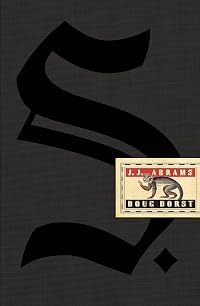
S.
by Doug Dorst, J.J. Abrams (Creator), V.M. Straka (Pseudonym)
On This Page
Description
"A young woman picks up a book left behind by a stranger. Inside it are his margin notes, which reveal a reader entranced by the story and by its mysterious author. She responds with notes of her own, leaving the book for the stranger, and so begins an unlikely conversation that plunges them both into the unknown. The book: Ship of Theseus, the final novel by a prolific but enigmatic writer named V.M. Straka, in which a man with no past is shanghaied onto a strange ship with a monstrous crew show more and launched onto a disorienting and perilous journey. The writer: Straka, the incendiary and secretive subject of one of the world's greatest mysteries, a revolutionary about whom the world knows nothing apart from the words he wrote and the rumors that swirl around him. The readers: Jennifer and Eric, a college senior and a disgraced grad student, both facing crucial decisions about who they are, who they might become, and how much they're willing to trust another person with their passions, hurts, and fears."--Slipcase. show lessTags
Recommendations



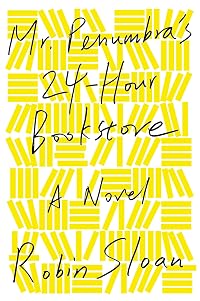

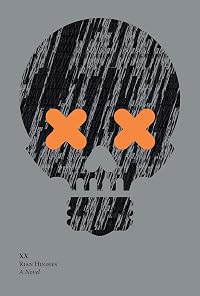
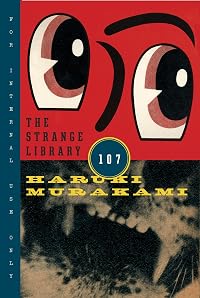

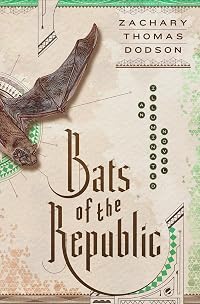








Member Recommendations

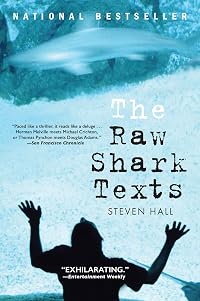
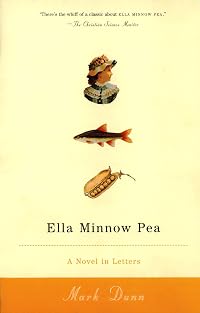
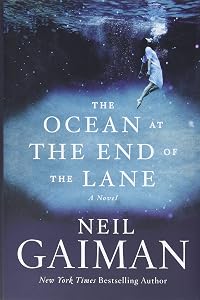
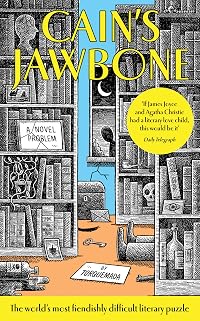
dizzyweasel Interactive letter writing between two persons who become romantically involved without meeting. Real letters, postcards interspersed throughout.
50
Forgotten Bookmarks: A Bookseller's Collection of Odd Things Lost Between the Pages by Michael Popek
Taphophile13 A collection of actual items (letters, poems, photographs, of course, but some strange things too) found in books by a used bookstore owner.
20
2wonderY Marginalia is a scholarly look at the phenomenon of margin notes.
by anonymous user
Member Reviews
"That's why people like Vévoda always have the advantage, you know," Corbeau says, rubbing her nose. "Over people like us. Because we're cursed with the belief that people matter. It's much, much easier to bend the world to your will if bending the world is what matters most to you."
S. is several different books at once. At the base, there's the physical book; a very satisfyingly weighty object with library binding and a library sticker on the spine called, rather obviously, Ship of Theseus. That volume holds the last work of famed author V.M. Straka, a mysterious person whose identity is the subject of debate. In this novel, a man washes ashore at a small industrial port city currently in the midst of a labor strike. He is quickly show more swept up in the chaos and ends up taking shelter with the ringleaders of the strike as things rapidly fall apart and they are forced to flee across the mountains. Eventually, the man ends up back on board the ship that had left him at the city, and no matter what he does, he ends up back on this ship, one that becomes more and more battered as damaged parts are replaces with ever flimsier substitutions.
The next part of this book are the footnotes written by his translator, a person who never met Straka, but who has spent their life working for him. Straka himself was seemingly disappeared, or chose to disappear, the pages of this novel left scattered in the alleyway behind the hotel where he was taken. There are clues and codes embedded in the footnotes and relate to Straka's history of being part of a band of artists fighting an evil corporate entity.
Then there's the story of an English major working part-time in the university library who finds a copy of Ship of Theseus "owned" (see library markings) by a graduate student expelled from the university who is desperately trying to find out who Straka really was, even as the professor he had studied under has taken his work and is trying to discredit him. As the two correspond through notes written in the margins, they begin to work together to find out who Straka was and what exactly happened to him, leaving information between the pages of the book. There's an added layer in this correspondence, as they go back and forth through the book with their messages, so that a single page can hold messages from different times in their storyline.
The result of all of this is a very tactile and interactive book, where there are maps scrawled on napkins and all sorts of comments on the text as the story progresses. Doug Dorst has created an intricate work where the various elements enhance each other. It's a slow reading process, and one that requires more from the reader than just turning pages, and I very much enjoyed my time with this book. There is an audio version of this book, which boggles my mind. show less
S. is several different books at once. At the base, there's the physical book; a very satisfyingly weighty object with library binding and a library sticker on the spine called, rather obviously, Ship of Theseus. That volume holds the last work of famed author V.M. Straka, a mysterious person whose identity is the subject of debate. In this novel, a man washes ashore at a small industrial port city currently in the midst of a labor strike. He is quickly show more swept up in the chaos and ends up taking shelter with the ringleaders of the strike as things rapidly fall apart and they are forced to flee across the mountains. Eventually, the man ends up back on board the ship that had left him at the city, and no matter what he does, he ends up back on this ship, one that becomes more and more battered as damaged parts are replaces with ever flimsier substitutions.
The next part of this book are the footnotes written by his translator, a person who never met Straka, but who has spent their life working for him. Straka himself was seemingly disappeared, or chose to disappear, the pages of this novel left scattered in the alleyway behind the hotel where he was taken. There are clues and codes embedded in the footnotes and relate to Straka's history of being part of a band of artists fighting an evil corporate entity.
Then there's the story of an English major working part-time in the university library who finds a copy of Ship of Theseus "owned" (see library markings) by a graduate student expelled from the university who is desperately trying to find out who Straka really was, even as the professor he had studied under has taken his work and is trying to discredit him. As the two correspond through notes written in the margins, they begin to work together to find out who Straka was and what exactly happened to him, leaving information between the pages of the book. There's an added layer in this correspondence, as they go back and forth through the book with their messages, so that a single page can hold messages from different times in their storyline.
The result of all of this is a very tactile and interactive book, where there are maps scrawled on napkins and all sorts of comments on the text as the story progresses. Doug Dorst has created an intricate work where the various elements enhance each other. It's a slow reading process, and one that requires more from the reader than just turning pages, and I very much enjoyed my time with this book. There is an audio version of this book, which boggles my mind. show less
What S. looks like is a book called Ship of Theseus by V. M. Straka, published in 1949. Translated into English, the book has footnotes by its translator, F. X. Caldeira. It's a specific copy, taken out of a high school library and never returned by a guy named Eric; the book is filled with his annotations as he (much later) prepares to write his doctoral thesis on it. His copy is found by an undergraduate library worker named Jen, who responds to his annotations, and then he replies to hers, and so on. (Different colors of ink allow you to partially decode the sequence of annotations.) There are also physical objects in the book, like longer letters between the two, postcards, newspaper clippings, photocopies of journal articles, show more and so on. (The book was originally published with a slipcase that I believe credits the real author—Doug Dorst, from an idea by film director J. J. Abrams—but my library copy doesn't have that, so someone who picked the book up off the shelf without context would, I suspect, be somewhat baffled!)
S. is the kind of book that scholar Katherine Hayles would call a "technotext": one that draws attention to the fact that it is a text, a physical assemblage, like Steven Hall's The Raw Shark Texts. (This is distinct from metafictions, works that call attention to the fact that they are fictions, though some books are both metafiction and technotext.) Back in grad school I was briefly obsessed with these kinds of books, though I had the much more awkward descriptor "non-novel novels," novels told in the forms of things that were not novels; many years later I discovered the much better descriptor of "hermit crab fictions" for this kind of thing.
S. was certainly inspired by Nabokov's Pale Fire, where you have a book that's been translated and annotated, and the narrative emerges from the tension between the embedded story and the act of annotation. But it goes further. We have a few different stories here: 1) There's the actual story of Ship of Theseus, a sort of Kafkaesque one about a guy who ends up on a mysterious ship and in the employ of a mysterious group. 2) There's the story of how Ship of Theseus was written and its mysterious author, Straka, and his relationship with his translator, Caldeira. 3) There's the story of Eric and Jen and their growing relationship with each other as they work to uncover the story of Straka, Caldeira, and the mysterious S., while competing with Eric's former Ph.D. advisor. (I'm much less certain if Dorst read this, but there's definitely resonances with the best novel about literary criticism ever written, A. S. Byatt's Possession. The other book this reminded me a lot of, actually, is Daniel Handler's Lemony Snicket: The Unauthorized Autobiography. Is S. just A Series of Unfortunate Events for grownups?)
o it's a complicated book, and a bit difficult to read. According to the Internet, some people actually read Ship of Theseus first, and then the footnotes, and then the first time track of Jen/Eric interactions, and then the second, and so on! I ended up reading one chapter with its footnotes, and then doubling back and reading all the Eric/Jen annotations for that chapter, just doing my best to keep in mind what had happened when in each of the three parallel tracks. (I wasn't capable of reading more than one chapter in a single sitting; it took up a lot of cognitive load to read this book!) I don't think I could have read all of Ship of Theseus on its own without the other layers; the embedded novel is intermittently interesting, but it never grabbed me, possibly because one never shakes the feeling its been constructed as a clue in a mystery and not a genuine novel.
It is beautiful to look at; the team that designed it did an excellent job, as it really looks like a 1930s library book, and the annotations and the interpolated objects all look authentic. (Nice of Eric and Jen to be very consistent about their ink colors, though!) I loved the very dumb articles in the student newspaper; they are all quite accurate to my experience reading many many student newspapers. It's just a pleasure to thumb through the book and consider it. Back when I was in grad school, people were arguing about books-as-conveyors-of-information and books-as-physical-objects, and what we lose through digitization (they might still be arguing about these things, I don't know, I've moved on), and this is definitely a book that trades on the power of the latter. There is an ebook and even an audiobook... but why? what would be the point of reading the book in such forms? The pleasure of the book is remembering the pleasure of reading any well-loved book, thumbing through it, trying to find its depths and mysteries, something any lover of literature can identify with, I am sure.
As I said, I didn't find the Ship of Theseus story terribly interesting; I also wasn't very much into the mystery of Straka and Caldeira. Thinking of books as a series of mysteries to decode, with right or wrong answers, just doesn't resonate with how I read literature. (It doesn't seem too much of a surprise, however, to discover that J. J. Abrams thinks of literature this way.) There's some good stuff here but I just wasn't interested in the puzzle-solving aspect of the book, and I was very happy for Eric and Jen to do all that work for me. Some people who've read the book have done deep dives on exactly who Straka and Caldeira and S. were and what happened between them. I can't imagine myself doing that!
What I can imagine doing, however, is doing a deep dive on Eric and Jen. They, for me, were the real success of the book. What the annotations also capture is that feeling of being in love with a book and the joy of exploring it with someone else. Reading is a solitary activity in some ways but it's also a communal one. We bond over books, we love it when we can share a book we love with someone else who ends up loving it as much as we do. And loving stories in this way can be an aspect of actual love, of coming to know and love someone else. I recommended the book to an acquaintance (after a discussion of Nabokov with her lead me to Pale Fire and then to S.), and she told me it was one of the best romance novels she'd ever read. I hadn't thought of it as a romance novel, but I immediately knew that she was right.
Here is a bit of a spoiler, buta bit I found particularly interesting was when you find out Jen and Eric have had sex. Obviously you discover that fictional characters have had sex all the time! But when I found out they had had sex, I had a little bit of a shudder, like I had found out something I wasn't supposed to find out, like the time I was helping a student do something on her laptop and a sext from her boyfriend popped up. (Macs are weird.) The form of the book creates an intimacy with Eric and Jen, but a voyeuristic one. They're falling in love, but you're overhearing it, and you're not supposed to. This is their copy of the book, not yours . The ending of their story is particularly cute.
It's been over a decade since the book came out, and I think it's probably set when it came out, so Eric and Jen would be in their mid-to-late thirties now. It's easy to imagine them still existing, though I don't know exactly what they would be doing. I hope they're happy together still, and I hope they've figured out their lives. It's hard work to figure yourself out, but figuring out literature gives you a blueprint to do it, so they ought to be able to if they put in the effort. show less
S. is the kind of book that scholar Katherine Hayles would call a "technotext": one that draws attention to the fact that it is a text, a physical assemblage, like Steven Hall's The Raw Shark Texts. (This is distinct from metafictions, works that call attention to the fact that they are fictions, though some books are both metafiction and technotext.) Back in grad school I was briefly obsessed with these kinds of books, though I had the much more awkward descriptor "non-novel novels," novels told in the forms of things that were not novels; many years later I discovered the much better descriptor of "hermit crab fictions" for this kind of thing.
S. was certainly inspired by Nabokov's Pale Fire, where you have a book that's been translated and annotated, and the narrative emerges from the tension between the embedded story and the act of annotation. But it goes further. We have a few different stories here: 1) There's the actual story of Ship of Theseus, a sort of Kafkaesque one about a guy who ends up on a mysterious ship and in the employ of a mysterious group. 2) There's the story of how Ship of Theseus was written and its mysterious author, Straka, and his relationship with his translator, Caldeira. 3) There's the story of Eric and Jen and their growing relationship with each other as they work to uncover the story of Straka, Caldeira, and the mysterious S., while competing with Eric's former Ph.D. advisor. (I'm much less certain if Dorst read this, but there's definitely resonances with the best novel about literary criticism ever written, A. S. Byatt's Possession. The other book this reminded me a lot of, actually, is Daniel Handler's Lemony Snicket: The Unauthorized Autobiography. Is S. just A Series of Unfortunate Events for grownups?)
o it's a complicated book, and a bit difficult to read. According to the Internet, some people actually read Ship of Theseus first, and then the footnotes, and then the first time track of Jen/Eric interactions, and then the second, and so on! I ended up reading one chapter with its footnotes, and then doubling back and reading all the Eric/Jen annotations for that chapter, just doing my best to keep in mind what had happened when in each of the three parallel tracks. (I wasn't capable of reading more than one chapter in a single sitting; it took up a lot of cognitive load to read this book!) I don't think I could have read all of Ship of Theseus on its own without the other layers; the embedded novel is intermittently interesting, but it never grabbed me, possibly because one never shakes the feeling its been constructed as a clue in a mystery and not a genuine novel.
It is beautiful to look at; the team that designed it did an excellent job, as it really looks like a 1930s library book, and the annotations and the interpolated objects all look authentic. (Nice of Eric and Jen to be very consistent about their ink colors, though!) I loved the very dumb articles in the student newspaper; they are all quite accurate to my experience reading many many student newspapers. It's just a pleasure to thumb through the book and consider it. Back when I was in grad school, people were arguing about books-as-conveyors-of-information and books-as-physical-objects, and what we lose through digitization (they might still be arguing about these things, I don't know, I've moved on), and this is definitely a book that trades on the power of the latter. There is an ebook and even an audiobook... but why? what would be the point of reading the book in such forms? The pleasure of the book is remembering the pleasure of reading any well-loved book, thumbing through it, trying to find its depths and mysteries, something any lover of literature can identify with, I am sure.
As I said, I didn't find the Ship of Theseus story terribly interesting; I also wasn't very much into the mystery of Straka and Caldeira. Thinking of books as a series of mysteries to decode, with right or wrong answers, just doesn't resonate with how I read literature. (It doesn't seem too much of a surprise, however, to discover that J. J. Abrams thinks of literature this way.) There's some good stuff here but I just wasn't interested in the puzzle-solving aspect of the book, and I was very happy for Eric and Jen to do all that work for me. Some people who've read the book have done deep dives on exactly who Straka and Caldeira and S. were and what happened between them. I can't imagine myself doing that!
What I can imagine doing, however, is doing a deep dive on Eric and Jen. They, for me, were the real success of the book. What the annotations also capture is that feeling of being in love with a book and the joy of exploring it with someone else. Reading is a solitary activity in some ways but it's also a communal one. We bond over books, we love it when we can share a book we love with someone else who ends up loving it as much as we do. And loving stories in this way can be an aspect of actual love, of coming to know and love someone else. I recommended the book to an acquaintance (after a discussion of Nabokov with her lead me to Pale Fire and then to S.), and she told me it was one of the best romance novels she'd ever read. I hadn't thought of it as a romance novel, but I immediately knew that she was right.
Here is a bit of a spoiler, but
It's been over a decade since the book came out, and I think it's probably set when it came out, so Eric and Jen would be in their mid-to-late thirties now. It's easy to imagine them still existing, though I don't know exactly what they would be doing. I hope they're happy together still, and I hope they've figured out their lives. It's hard work to figure yourself out, but figuring out literature gives you a blueprint to do it, so they ought to be able to if they put in the effort. show less
Ship of Theseus looks like something you might find at a yard sale or in a dark corner of a secondhand bookshop. It has an old Dewey Decimal label glued on the spine and the binding is that old buckram kind, reminiscent of school libraries. As you glance inside you immediately notice that the pages are stained and discolored with age. Well, it was published in 1949 so that's not too surprising. But more startling is that people have been using the margins to write notes to each other. (Why would anyone write in a book; besides, I thought young people only knew how to text today.) Almost every page has been violated by these unknown scribblers. One set of handwriting is rounded and school-girlish while the second is controlled printing show more rather than cursive (apparently no longer taught in many schools). As you idly flip through a few more pages while deciding if this book is even worth your time, you come across a couple sheets of paper tucked between pages. (I have occasionally found an old shopping list or the like but this is quite different.) This is a copy of a copy of a copy of a typed letter which appears to be in Swedish. Fortunately the second page looks like a translation. You continue turning pages and you come across a page from a memo pad. It says V. M. Straka (wait, that's the author!) is accused of a list of horrendous crimes. (Could this be true? What kind of dreadful person was he?) As you continue paging through the book you come across more items hidden within: postcards, black and white photos, yellowed newspaper articles and note cards. It begins to feel almost like trespassing as you realize these things belong to the as yet unknown correspondents but you are intrigued by the mystery of it all and decide to purchase this strange book.
Ship of Theseus by V. M. Straka is an allegorical noir novel filled with atmospheric descriptions which almost echo in the ear: fricative static, cicatricose tissue, susurrus, helices of smoke and the like. Hissing S-sounds abound and create a mood of wary uneasiness. The protagonist suffers from amnesia and thus lacks both a name and an identity. He is in a harbor city but has no idea who he is or how he came to be there, wherever there is. He makes his way to a tavern and encounters a vaguely familiar young woman named Sola (alone?) who seems, perhaps, to be expecting him. While conversing with her and trying to determine if she knows him and might give him some clue as to who he is, he is suddenly rendered unconscious, possibly with a type of chloroform. He awakens on a ship that is "midway between decrepitude and tidy renovation." The deck is freshly re-planked in some areas and rotting away in others. This description as well as the title reference the Ship of Theseus paradox: whether an object which has had all its components replaced remains fundamentally the original object or does the object become a replica of itself at some point? There are eerie echoes of The Rime of the Ancient Mariner or Jonah or the Flying Dutchman. The crew is mostly silent, communicating only by bird calls, because their (no, that is just too awful to say). S. as the man comes to be called learns what terrible role he is expected to play (he has no choice in the matter) and hopes that someday he will reconnect with Sola.
Most pages have handwritten margin notes which turn out to be from Eric, an expelled graduate student and Jen, a naïve undergrad. Some pages are so filled with their comments that the effect of reading is almost claustrophobic. One becomes so used to seeing their commentary on each page that it is jarring to find a few pages have been left unmarked. This continues as their only form of communication as they discuss the book and begin to confide in each other, learning to understand who they are, how their histories shaped them and that they can trust each other. Only then do they meet which means we may no longer be privy to all their thoughts, only those they still write down.
S. is immersive and interactive. One might even be tempted to leave some notes of one's own for Jen and Eric. It is full of mysteries within mysteries. Who is the character S. and how does he know Sola? Who was V. M. Straka and what was the nature of his relationship with his translator Caldeira? Are Eric and Jen completely honest with each other? Reading S./Ship of Theseus is at times like feeling one's way through a dark maze or labyrinth as themes and identities curl back upon themselves, showing up time and again, altered yet still recognizable. The various items found between the pages may explicate or confound. (One photograph was just a black and white picture of a wall, or at least that is what I remembered, but each time I looked at it I saw things that I was sure weren't there before. I even began to see some color – am I hallucinating?)
So what is this book about? It is about birds, lots of birds . . . it is about loss and longing . . . it is about loyalty and about following orders — or maybe not . . . it is about falling, from significant heights or out of windows . . . it is about vulnerability and trust . . . it is about monkeys . . . it is about the sea and ships . . . it is about falling in (ah, you really should experience that for yourself).
Some Recommendations as You Begin Your Adventure:
Ship of Theseus by V. M. Straka is an allegorical noir novel filled with atmospheric descriptions which almost echo in the ear: fricative static, cicatricose tissue, susurrus, helices of smoke and the like. Hissing S-sounds abound and create a mood of wary uneasiness. The protagonist suffers from amnesia and thus lacks both a name and an identity. He is in a harbor city but has no idea who he is or how he came to be there, wherever there is. He makes his way to a tavern and encounters a vaguely familiar young woman named Sola (alone?) who seems, perhaps, to be expecting him. While conversing with her and trying to determine if she knows him and might give him some clue as to who he is, he is suddenly rendered unconscious, possibly with a type of chloroform. He awakens on a ship that is "midway between decrepitude and tidy renovation." The deck is freshly re-planked in some areas and rotting away in others. This description as well as the title reference the Ship of Theseus paradox: whether an object which has had all its components replaced remains fundamentally the original object or does the object become a replica of itself at some point? There are eerie echoes of The Rime of the Ancient Mariner or Jonah or the Flying Dutchman. The crew is mostly silent, communicating only by bird calls, because their (no, that is just too awful to say). S. as the man comes to be called learns what terrible role he is expected to play (he has no choice in the matter) and hopes that someday he will reconnect with Sola.
Most pages have handwritten margin notes which turn out to be from Eric, an expelled graduate student and Jen, a naïve undergrad. Some pages are so filled with their comments that the effect of reading is almost claustrophobic. One becomes so used to seeing their commentary on each page that it is jarring to find a few pages have been left unmarked. This continues as their only form of communication as they discuss the book and begin to confide in each other, learning to understand who they are, how their histories shaped them and that they can trust each other. Only then do they meet which means we may no longer be privy to all their thoughts, only those they still write down.
S. is immersive and interactive. One might even be tempted to leave some notes of one's own for Jen and Eric. It is full of mysteries within mysteries. Who is the character S. and how does he know Sola? Who was V. M. Straka and what was the nature of his relationship with his translator Caldeira? Are Eric and Jen completely honest with each other? Reading S./Ship of Theseus is at times like feeling one's way through a dark maze or labyrinth as themes and identities curl back upon themselves, showing up time and again, altered yet still recognizable. The various items found between the pages may explicate or confound. (One photograph was just a black and white picture of a wall, or at least that is what I remembered, but each time I looked at it I saw things that I was sure weren't there before. I even began to see some color – am I hallucinating?)
So what is this book about? It is about birds, lots of birds . . . it is about loss and longing . . . it is about loyalty and about following orders — or maybe not . . . it is about falling, from significant heights or out of windows . . . it is about vulnerability and trust . . . it is about monkeys . . . it is about the sea and ships . . . it is about falling in (ah, you really should experience that for yourself).
Some Recommendations as You Begin Your Adventure:
- Find or make a list of all the loose items and where they belong (just in case you drop the book).
- Decide how you are going to read the book. Read Ship of Theseus all the way through and then all the margins notes or read a chapter at a time and then the marginalia according to color or read everything on each page as it comes.
- Don't skip the footnotes. A magnifying glass might come in handy.
- Brush up on your cipher skills.
- It may be a good idea to take notes as you read so that you can remember where you read a name or idea.
- Have a good dictionary and an atlas available.
- Seek out online discussion sites. There are also some YouTube videos that may help (or further confuse) you.
A very very interesting book, honestly an experience in itself. A brilliant idea and concept, beautifully designed but perhaps not perfectly executed. I feel like we lack the full information and depth, I love the annotating characters and the mystery, laughed out loud at a lot of their comments and snarky retorts back and forth. I love the growth and how included and immersed I felt reading this story. Personally I opted to read the entirety of the actual book and then go back and read the annotations and inserts, this worked well but you do need to pay attention to the order and age of each part of the annotations (pen colours and arrows work well to help you). It is an absolutely gorgeous book that feels very well made and authentic, show more I loved every minute of it. I just wish we had a little more information and a better/more substantial ending show less
As if an epic tale of shadow societies, institutionalized violence, war profiteering, ghostly pirate ships, obsidian islands, painful longing, and creepy descents into the unknown isn't enough, S. creates a parallel narrative that, though far less of a swashbuckling adventure, completes the story's theme. Convincing marginalia documents the relationship between a disengaged lit major and a jaded, arrogant graduate student who find each other through mutual fascination with the mysterious author of the aforementioned epic tale.
There isn't a plot in the traditional sense; instead, the book takes 450 pages or so to deal with the theme of identity. S., the protagonist of the novel-with-a-novel "The Ship of Theseus", emerges from the water show more into an unknown city. He has no memory of who he is, and spends the rest of the book trying to bring himself into focus as he goes about his various exploits as an accidental assassin. At every moment of extreme crisis (and there are many), he is saved, though "saved" is a questionable term, by a ramshackle ship with a deeply odd crew (think sewn-shut lips) who ferry him between horrible adventure after horrible adventure.
The question of the author's identity (one V.M. Straka) and his relationship with his translator is explained in a series of footnotes throughout the novel. The parallels between S. and Straka form the initial reason why the other two protagonists, Eric and Jen, begin their conversation. The evolution of their relationship and their research into the Straka question is documented through the changing colors of the ink in the margins. Even their nerdly, academic lives are touched, if not manipulated, by the dark exploits inherent in anything associated with "the S." and V.M. Straka.
This shit is complex and great fun to read. There are secret codes; there are letters and postcards a la Bantock's "Griffin and Sabine"; there are photocopies and maps on napkins; there is this wheel...thingy...that I still haven't figured out how to use. There's a secret code, see, that the reader has to figure out. And throughout the whole messy, beautiful thing, the concept of words as weapons, ink as blood, pervades.
10/10, will read again. show less
There isn't a plot in the traditional sense; instead, the book takes 450 pages or so to deal with the theme of identity. S., the protagonist of the novel-with-a-novel "The Ship of Theseus", emerges from the water show more into an unknown city. He has no memory of who he is, and spends the rest of the book trying to bring himself into focus as he goes about his various exploits as an accidental assassin. At every moment of extreme crisis (and there are many), he is saved, though "saved" is a questionable term, by a ramshackle ship with a deeply odd crew (think sewn-shut lips) who ferry him between horrible adventure after horrible adventure.
The question of the author's identity (one V.M. Straka) and his relationship with his translator is explained in a series of footnotes throughout the novel. The parallels between S. and Straka form the initial reason why the other two protagonists, Eric and Jen, begin their conversation. The evolution of their relationship and their research into the Straka question is documented through the changing colors of the ink in the margins. Even their nerdly, academic lives are touched, if not manipulated, by the dark exploits inherent in anything associated with "the S." and V.M. Straka.
This shit is complex and great fun to read. There are secret codes; there are letters and postcards a la Bantock's "Griffin and Sabine"; there are photocopies and maps on napkins; there is this wheel...thingy...that I still haven't figured out how to use. There's a secret code, see, that the reader has to figure out. And throughout the whole messy, beautiful thing, the concept of words as weapons, ink as blood, pervades.
10/10, will read again. show less
the physical and narrative framing of this book—that there is a base text (narrative layer 1) which two people annotate (narrative layer 2), and their annotations concern the in-universe conspiracy that led to the creation of the base text (narrative layer 3)—is an immediately interesting setup. and the base text is intriguing for its curiously distant narration, and the long stretches of time it covers, and the misty purposed opaqueness of its plot.
that's about all the praise i can offer this book. despite the framing of annotations, this book failed to *convince* with those annotations—not even from the start was there a pretence of the two annotators actually trying to research or annotate the text; it was purely conversation, show more purely dumping their personal selves onto the page. they do of course discuss the conspiracy of narrative layer 3—else we would not know about it—and i was interested in that! but the book utterly fails to deliver on the tension of the conspiracy. we get to hear about a couple of tense moments for the characters, and then find out they successfully got away [from an ultimately foggy and imprecise threat] and live together in love and harmony. we get to hear about a few tantalizing details of the political "S." and "new S." and their struggles, but there is never any divulgence of the full details, and the base text's ending is one of those where the protagonist suddenly realizes his true calling is to retire happily and without final deliverance on his goal.
ultimately this book opens with conspiracy and intrigue and *quickly* discards the draw of its premise to say: "This is, above all, a love story. You should only care about the love, because that's the only thing we're gonna follow through on." and the romance isnt even fucking compelling.
2 characters """annotate""" a book to each other, lie to each other, run away from each other, fall into paranoia, don't even physically meet for like half the book, and they fall in love? the only thing they have in common is analysis of Straka's work and they rarely analyze it, and when they do, eric spends the first third of the book dismissing jen's reading of the text, and they Fell In Love? they spend a good stretch of the thing each mired in paranoia and mental health spirals and they have room to Love amidst all that? Sorry, I don't believe that even remotely. I was bored, irritated, exasperated every time the love story came back into play. And it's the whole damn book.
"genres: fiction, mystery, fantasy" this should be labeled a romance and the mystery label should be burned because we get no deliverance. nothing show less
that's about all the praise i can offer this book. despite the framing of annotations, this book failed to *convince* with those annotations—not even from the start was there a pretence of the two annotators actually trying to research or annotate the text; it was purely conversation, show more purely dumping their personal selves onto the page. they do of course discuss the conspiracy of narrative layer 3—else we would not know about it—and i was interested in that! but the book utterly fails to deliver on the tension of the conspiracy. we get to hear about a couple of tense moments for the characters, and then find out they successfully got away [from an ultimately foggy and imprecise threat] and live together in love and harmony. we get to hear about a few tantalizing details of the political "S." and "new S." and their struggles, but there is never any divulgence of the full details, and the base text's ending is one of those where the protagonist suddenly realizes his true calling is to retire happily and without final deliverance on his goal.
ultimately this book opens with conspiracy and intrigue and *quickly* discards the draw of its premise to say: "This is, above all, a love story. You should only care about the love, because that's the only thing we're gonna follow through on." and the romance isnt even fucking compelling.
2 characters """annotate""" a book to each other, lie to each other, run away from each other, fall into paranoia, don't even physically meet for like half the book, and they fall in love? the only thing they have in common is analysis of Straka's work and they rarely analyze it, and when they do, eric spends the first third of the book dismissing jen's reading of the text, and they Fell In Love? they spend a good stretch of the thing each mired in paranoia and mental health spirals and they have room to Love amidst all that? Sorry, I don't believe that even remotely. I was bored, irritated, exasperated every time the love story came back into play. And it's the whole damn book.
"genres: fiction, mystery, fantasy" this should be labeled a romance and the mystery label should be burned because we get no deliverance. nothing show less
All style and no substance. I've read S twice, following two different systems, and listened to the audiobook of Ship of Theseus. I really wanted to enjoy it. As a book designer and bibliophile, I was overwhelmed with the level of production. Every detail of the book is perfect, from the choice of paper stock for the various inserts to the naturalistic foxing of the book's pages. It looks like the Famous Five adventure of my childhood dreams. Unfortunately the stories (in both book and margins) are thin gruel and the themes float on the surface like a puddle of oil. I had expected a cross between Exit: The Game and Abrams' Lost, but S fails to deliver on either count. A beautiful failure.
Members
- Recently Added By
Published Reviews
As viewers of the final episode of Lost know, Abrams has form in creating an addictive narrative and then disappointing at the end. And, despite delivering regular high-concept pleasures, S. is finally a brilliant piece of publishing rather than a wholly coherent rethinking of the novel.
added by amanda4242
Lists

Favourite Books
1,820 works; 316 members

Experimental Literature
141 works; 19 members

Top Five Books of 2014
1,064 works; 398 members

Epistolary Books
105 works; 27 members

One Letter Books
26 works; 1 member

Story Within a Story
65 works; 17 members

Books as Objects & Metatextual Works
32 works; 3 members

Books Read in 2016
4,666 works; 199 members
Books Read in 2015
3,299 works; 129 members
One Letter Titles
31 works; 4 members

Reading list
170 works; 1 member

Gimmicks
56 works; 12 members

Efemeridades e Possibilidades futuras (Personal wishlist)
24 works; 1 member

Ergodic Literature
11 works; 1 member

Books Read in 2019
4,052 works; 110 members

Books Read in 2024
4,727 works; 128 members
Talk Discussions
Past Discussions
Geek alert! JJ Abrams & Doug Dorst book in The Green Dragon (April 2014)
Author Information

5+ Works 4,793 Members
Doug Dorst is the author of Alive in Necropolis, which was a runner-up for the 2009 PEN/Hemingway, a New York Times Book Review Editors' Choice, and one of Amazon.com's Best Books of 2008. His short story collection, The Surf Guru, was also an NYTBR Editors' Choice New York Times Book Review Editors' Choice as well as a Rumpus Book Club selection. show more His stories have appeared in numerous journals and anthologies Doug is a graduate of the Iowa Writers' Workshop. He is a former Wallace Stegner Fellow at Stanford, and he has received Fellowships from the Michener-Copernicus Society and the National Endowment for the Arts. He co-wrote New York Times bestseller S. with J. J. Abrams which was released October 2013 from Little Brown imprint Mulholland Book. (Bowker Author Biography) show less

Some Editions
Awards and Honors
Awards
Distinctions
Notable Lists
Common Knowledge
- Canonical title*
- S. Das Schiff des Theseus
- Original title
- S.
- Alternate titles
- Ship of Theseus
- Original publication date
- 2013-10-29
- People/Characters
- V. M. Straka; F. X. Caldeira (Filamela); Eric Husch; Jennifer Heyward; S.; Sola (Szalό | mé | ) (show all 14); Vaclav M. Straka; Jean-Bernard Desjardins; Ilsa; Professor Moody; Stenfalk; Ostrero; Pfeifer; Corbeau
- First words
- If found, please return to Workroom B19,
Main Library, Pollard State University. [in pencil]
Translator's Note
And Foreword
by
F. X. Caldeira
I.
Who was V.M. Straka?
Chapter 1
What Begins,
What Ends
Dusk. The Old Quarter of a city where river meets sea. - Quotations
- What begins at the water shall end there and what ends there shall once more begin.
Words are a gift to the dead and a warning to the living.
The story you walk into, he has learned, is always more complex than it first appears.
They're good questions, to be sure, but they have no answers, and at some point one chooses not to ask anymore.
But you ought to understand, too, that there's an attrition that takes place inside, one in which options and choices and even desires are ground ever smaller until finally their existence can no longer be confirmed by obs... (show all)ervation or weight or displacement but only by faith. Until desire is a ghost.
Artifacts found in the book -
vi - vii Aug 17, 1929 letter to Jrhahn from V.M. Straka (w/German translation) (2 sheets)
10-11 Pollard State University note paper “VMS Accused Of…” (1 sheet)
20-21 Photocopy p 33... (show all) Toronto Review for History and the Humanities (1 sheet)
32-33 The Daily Pronghorn (college newspaper) (1 sheet)
54-55 Telegram Nov. 19, 1924 in German with English translation (2 sheets)
69 Photocopy & transcript - Lampa October 31, 1910 (1 sheet)
86-87 blue note paper to M. Husch from J.B. Desjardins (1 sheet)
100-101 gray note paper to Eric from Jen (2 sheets)
112-113 postcard Brazil To Fellow Birders 12 April (1 card)
130-131 photograph of stone wall with raised arch and ivy (1 photo)
178-179 postcard Native Birds of Brazil to Fellow Birders 15 April (1 card)
190-191 postcard Palm Avenue with lampposts to Fellow Birders 18 April (1 card)
192-193 postcard Brazil beach to Fellow Birders 19 April (1 card)
200-201 postcard Pictorial Brazil to Fellow Birders 20 April (1 card)
203 yellow ruled note paper (legal size) beginning So...my uncle Zeke (3 sheets)
242-243 photograph 4x3” woman standing above ropes (1 photo)
256-257 greeting card Gastrimargus ocivaceus w/newspaper obituary clipping (2 items)
306-307 Pronghorn Java napkin with hand drawn map (1 item)
360-361 Religious card Jean-Bernard Desjardins (1 card)
376-377 white Pollard State Univ. Libraries letterhead to Eric from Jen (2 sheets)
416-417 blue-bordered note paper to My New Friends (1 sheet)
end paper code wheel (1 item) - Last words
- (Click to show. Warning: May contain spoilers.)Hey, put the book down.
Come in here & stay.OK - Original language
- English US; Inglés
- Canonical DDC/MDS
- 813.6
- Canonical LCC
- PS3601.B7367
- Disambiguation notice
- Should not be confused or merged with S. [http://www.librarything.com/work/1379...] by John Updike.
-or with-
S. [... (show all)//www.librarything.com/work/107751" rel="nofollow" target="_new">http://www.librarything.com/work/1077...] by Slavenka Drakulic.
*Some information comes from Common Knowledge in other languages. Click "Edit" for more information.
Classifications
Statistics
- Members
- 4,413
- Popularity
- 3,394
- Reviews
- 98
- Rating
- (3.83)
- Languages
- 9 — Chinese, Dutch, English, French, German, Hungarian, Italian, Portuguese, Spanish
- Media
- Paper, Audiobook, Ebook
- ISBNs
- 20
- ASINs
- 17