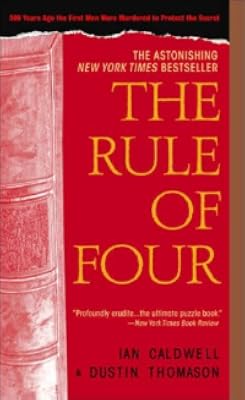
The Rule of Four
by Ian Caldwell, Dustin Thomason
On This Page
Description
A mysterious coded manuscript, a violent Ivy League murder, and the secrets of a Renaissance prince collide in a labyrinth of betrayal, madness, and genius. THE RULE OF FOUR. Princeton. Good Friday, 1999. On the eve of graduation, two students are a hairsbreadth from solving the mysteries of the Hypnerotomachia Poliphili. Famous for its hypnotic power over those who study it, the five-hundred-year-old Hypnerotomachia may finally reveal its secrets -- to Tom Sullivan, whose father was show more obsessed with the book, and Paul Harris, whose future depends on it. As the deadline looms, research has stalled -- until an ancient diary surfaces. What Tom and Paul discover inside shocks even them: proof that the location of a hidden crypt has been ciphered within the pages of the obscure Renaissance text. Armed with this final clue, the two friends delve into the bizarre world of the Hypnerotomachia -- a world of forgotten erudition, strange sexual appetites, and terrible violence. But just as they begin to realize the magnitude of their discovery, Princeton's snowy campus is rocked: a longtime student of the book is murdered, shot dead in the hushed halls of the history department. A tale of timeless intrigue, dazzling scholarship, and great imaginative power, The Rule of Four is the story of a young man divided between the future's promise and the past's allure, guided only by friendship and love. show lessTags
Recommendations
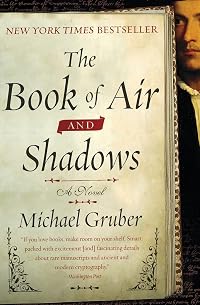

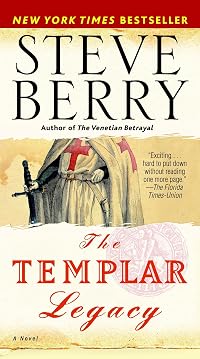
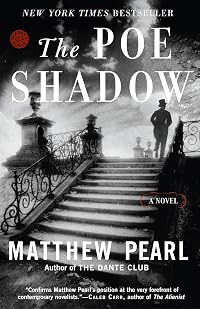
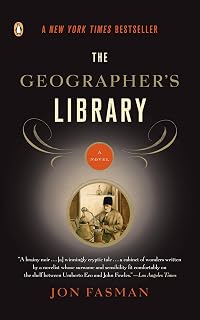

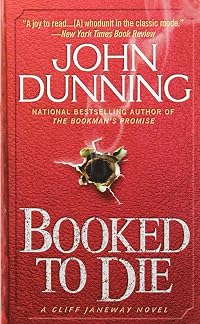
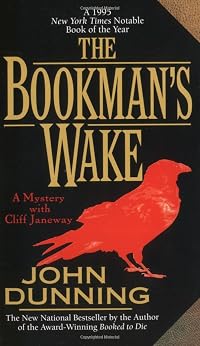

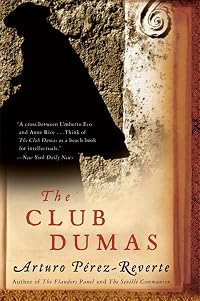
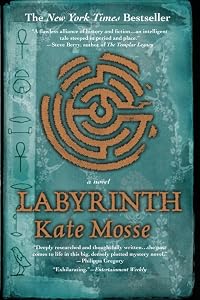

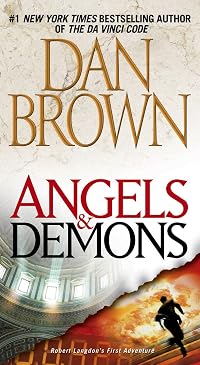
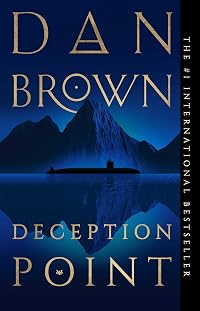

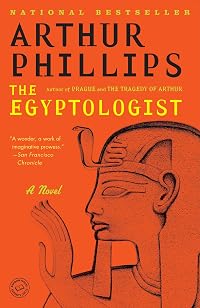
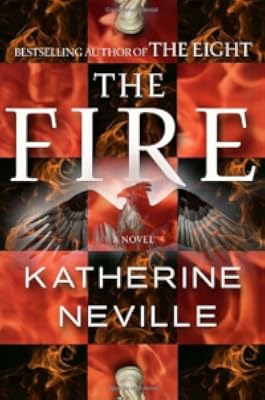
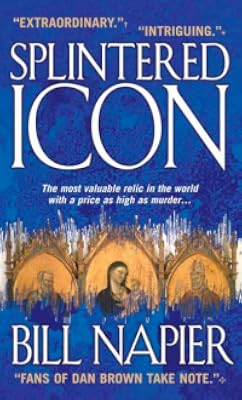
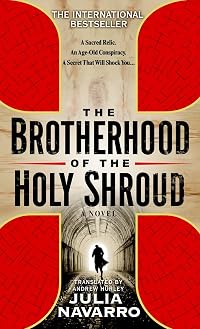



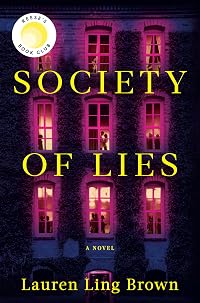
Member Recommendations

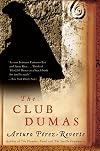
paradoxosalpha Textual obsession, intrigue, multiple authorship conundrums
60
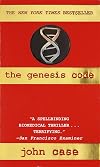
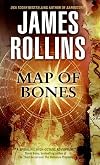
Gaelstirler Hunt for a lost manuscript by Wm Shakespeare using clues left in the letters of a Renaissance smuggler found hidden inside the bindings of an antiquarian's book. The hunt includes deciphering coded messages and maps, murder, suspense, and greed as in The Rule of Four by Ian Caldwell.

dafkah This award-winning bestseller is a Jewish version of The Da Vinci Code.
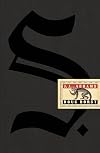
S. by Doug Dorst
by anonymous user
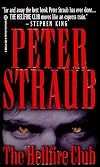
paradoxosalpha The Hellfire Club is what The Rule of Four might be if it had graduated college and grown up some. The thrills are more thrilling, the enigmatic text is more imaginary, and the characters are deeper and more perplexing. Yale is a bit of background in Straub's book, contrasted with the foregrounded Princeton in The Rule of Four.
Member Reviews
Where Do I Sign Up for a Refund?
This book is the work of amateurs. Plot elements are laid bare with only superficial attempts at building suspense. The central quartet of characters are shallow and unendearing. This reads more like a freshman guide to Princeton than a mystery novel. The 'mystery' of the book is dull and predictable, and the 'climax' was reminiscent of bad sexual experiences - unfulfilling and making me happy it was over. Instead of buying this book, light a $20 bill on fire. It will save you from wasting time on this pathetic story and you can warm your hands with it.
This book is the work of amateurs. Plot elements are laid bare with only superficial attempts at building suspense. The central quartet of characters are shallow and unendearing. This reads more like a freshman guide to Princeton than a mystery novel. The 'mystery' of the book is dull and predictable, and the 'climax' was reminiscent of bad sexual experiences - unfulfilling and making me happy it was over. Instead of buying this book, light a $20 bill on fire. It will save you from wasting time on this pathetic story and you can warm your hands with it.
A good idea but very poorly executed. The overall plot line and the detective work of finding the meaning of the manuscript is good but the writing style made me batty. There were large chunks of action that were almost impossible to follow, bigger chunks of pretentious moralizing, and even larger parts of "Ah, poor me, so hard to live a life of privelege at Princeton." There were also annoying things like verb tenses changing in the midst of paragraphs. The ending was a long slow let down as well. Overall, I felt like the angst of the 20 somethings was in full flower.
A debut novel by two Princeton grads, this story has a Dan Brown quality immersing the reader into the Renaissance years while the main two characters work to uncover the meaning of a mysterious book written in 1499. Well researched, paced and developed it engages the reader, raises questions and demonstrates good storytelling. The only fault I can find is somewhat of a let down with the finale. This isn't uncommon with first books though it did diminish the six years of work the authors invested. Regardless, I enjoyed it thoroughly and recommend it to anyone.
This tale of four Princeton students trying to discover a coded message in an ancient Renaissance text could have been worthwhile. Alas, besides a few interesting insights into Renaissance history, this book disappoints on almost every imaginable level.
Not that Da Vinci code sets the bar very high, but the plot of Rule of Four lurches from boring to preposterous, with the authors occassionally achieving both of these states simultaneously, which I suppose is a literary feat of sorts. Long, tedious chapters about undergrad life at Princeton, a half dozen pointless subplots, and awkward/unconvincing character development alternate with brief moments of action that feel contrived and silly. There's simply no logical reason for the boys to show more expend all that time and energy evading police inquiries that can't possibly implicate them; no explanation for why the boys suddenly figure out how to unlock codes whose solutions have eluded them for years; and no excuse for the preposterous motive attributed to the baddie of the piece.
Above all, if you're going to market yourself as a Da Vinci code rival, you need a boffo reveal at the end ... something like, say, Jesus was married! The secret revealed at the end of this tale is neither original nor particularly interesting. Even worse (from a plotting standpoint), it's buried after a long passage of endnote-type text, way after whatever shreds of suspense the authors managed to generate have unravelled and you're just wishing the thing would dribble to an end.
Rarely have I ever read a book that was in more desperate need of workshopping! I have to believe a group of professional writers, given the chance, would have warned the authors that (1) giving characters elaborate backstories doesn't necessarily make them interesting or likeable, (2) manufacturing/sustaining suspense requires pacing and a credible threat, (3) if you're going to write a book about codes and puzzles, your readers are going to expect you to sustain a certain standard of logic, and (4) leave present tense to the professionals! show less
Not that Da Vinci code sets the bar very high, but the plot of Rule of Four lurches from boring to preposterous, with the authors occassionally achieving both of these states simultaneously, which I suppose is a literary feat of sorts. Long, tedious chapters about undergrad life at Princeton, a half dozen pointless subplots, and awkward/unconvincing character development alternate with brief moments of action that feel contrived and silly. There's simply no logical reason for the boys to show more expend all that time and energy evading police inquiries that can't possibly implicate them; no explanation for why the boys suddenly figure out how to unlock codes whose solutions have eluded them for years; and no excuse for the preposterous motive attributed to the baddie of the piece.
Above all, if you're going to market yourself as a Da Vinci code rival, you need a boffo reveal at the end ... something like, say, Jesus was married! The secret revealed at the end of this tale is neither original nor particularly interesting. Even worse (from a plotting standpoint), it's buried after a long passage of endnote-type text, way after whatever shreds of suspense the authors managed to generate have unravelled and you're just wishing the thing would dribble to an end.
Rarely have I ever read a book that was in more desperate need of workshopping! I have to believe a group of professional writers, given the chance, would have warned the authors that (1) giving characters elaborate backstories doesn't necessarily make them interesting or likeable, (2) manufacturing/sustaining suspense requires pacing and a credible threat, (3) if you're going to write a book about codes and puzzles, your readers are going to expect you to sustain a certain standard of logic, and (4) leave present tense to the professionals! show less
Having heard this mentioned as 'Dan Brown for people without massive brain damage' I was very interested to see if it would live up to that (admittedly faint) praise. The Rule of Four, about two Princeton students obsession for the secrets locked in the Hypnerotomachia Poliphili, doesn't disappoint.
In contrast with the action-packed, Mary Sue-riddled work of Brown 'The Rule of Four' might seem positively boring. There are deaths, murders in fact, ancient treasures, riddles hidden in the text of the book by the use of cryptography and steganography and yet there are no chase scenes, no exploding buildings or larger than life villains. It feels like something that could happen, not something that could be shot as a movie.
What 'The Rule show more of Four' does have is characters you grow to care about, people who operate in a moral shade of grey where obsession and love battle for attention throughout their life. I've never set foot on an American university campus and yet I felt like I belonged there, drawn into the atmosphere by Caldwell and Thomason.
The main antagonist, scholar Vincent Taft, is equally convincing as a brilliant but petty man who can't abide to see his work reduced to nothing by a young student and his fellows and the protagonists' friends are real, not handy plot devices to pull the story along.
I enjoyed it immensely. show less
In contrast with the action-packed, Mary Sue-riddled work of Brown 'The Rule of Four' might seem positively boring. There are deaths, murders in fact, ancient treasures, riddles hidden in the text of the book by the use of cryptography and steganography and yet there are no chase scenes, no exploding buildings or larger than life villains. It feels like something that could happen, not something that could be shot as a movie.
What 'The Rule show more of Four' does have is characters you grow to care about, people who operate in a moral shade of grey where obsession and love battle for attention throughout their life. I've never set foot on an American university campus and yet I felt like I belonged there, drawn into the atmosphere by Caldwell and Thomason.
The main antagonist, scholar Vincent Taft, is equally convincing as a brilliant but petty man who can't abide to see his work reduced to nothing by a young student and his fellows and the protagonists' friends are real, not handy plot devices to pull the story along.
I enjoyed it immensely. show less
I came across this as I was cataloguing my collection and then remembered why I kept it.
I kept it as a reminder to never believe blurbers who promise the next F. Scott Fitzgerald, Umberto Eco and Dan Brown in a new book and to never believe Nelson DeMille as a blurber ever again. I think I also had an expectation that this book would have some tie-in to Arthur Conan Doyle's The Sign of Four, but I don't remember that being met.
I've forgotten all of this book except that it took place at a university and the characters and the plot were tiresome.
Caveat emptor.
I kept it as a reminder to never believe blurbers who promise the next F. Scott Fitzgerald, Umberto Eco and Dan Brown in a new book and to never believe Nelson DeMille as a blurber ever again. I think I also had an expectation that this book would have some tie-in to Arthur Conan Doyle's The Sign of Four, but I don't remember that being met.
I've forgotten all of this book except that it took place at a university and the characters and the plot were tiresome.
Caveat emptor.
The "Rule of Three" in Freemasonry refers to the ritual pronunciation of a secret word that can only be properly spoken "in a trible voice," i.e. by three initiates working together. Similarly, Ian Caldwell and Dustin Thomason's bestseller debut novel The Rule of Four concerns itself with a secret that is only accessed by the combined efforts of four Princeton University roommates. The text of the novel never mentions the Masonic Rule of Three, and instead explains the title as the name for a purported textual code. But that sort of indirection is not out of keeping for a book that is preoccupied with tacit allusions as riddles.
While the publishers have understandably chosen to pitch The Rule of Four to the enormous (and apparently show more undiscriminating) DaVinci Code market, the bestseller to which it most deserves comparison is Arturo Perez-Reverte's The Club Dumas. Not only are both of them fast-paced, literary thrillers, but they share a thematic concern with the phenomena of textual obsession and multiple authorship. In the case of The Rule of Four, there are actually two credited authors of the novel itself, a pair of men who "have been best friends since they were eight years old," who have now written what they describe as "a book about friendship."
Perez-Reverte invented the diabolist tome The Book of the Nine Doors of the Kingdom of Shadows by Aristide Torchia (Venice 1666) as the obsessive focus for his novel. Certain features of that imaginary book--its scarcity and value, offensiveness to Christian sensibilities, provocative woodcut illustrations, and impenetrable text--suggest that it may have been modeled on the actual Hypnerotomachia Poliphili (Venice 1499), which serves as the enigmatic text around which The Rule of Four is constructed. At this point, I drop the third-person objectivity of the reviewer, since I wrote my own Doctorandus Degree Thesis on the Hypnerotomachia.
Caldwell and Thomason write (in the voice of their principal character): "My father, who understood the way the Hypnerotomachia had seduced him, once compared the book to an affair with a woman. It makes you lie, he said, even to yourself." (98) The authors have perhaps lied to themselves a little regarding the feasibility of the code that their characters discover in the Hypnerotomachia, and they resolve the authorship controversy regarding this superfically anonymous book differently than my studies have led me to do. But I admit that my breath caught with wonder at the possibility that they had shared some of my own discoveries about the book, when the solution to one of its alleged riddles was approached through a Thomas More quote regarding a game "rather like chess" involving "a pitched battle between virtues and vices." (202-03) But I was relieved to find that, after all, these novelists and I were not unwittingly duplicating each other's ideas.
I recommend Hypnerotomachia translator Joscelyn Godwin's "unauthorized guide" to the novel: The Real Rule of Four, which exposes some of the points where Caldwell and Thomason get their history wrong, and fascinating points that they missed. Despite its inaccuracies and failings, The Rule of Four is an elegant, engaging read, with its own literary depth. It is a fiction, and its claims about the Hypnerotomachia text are inventive (and sometimes quite unlikely). But in one lovely passage of sustained metaphor with multiple allusions, the authors highlight the power of fiction:
"For a moment I feel like Sancho Panza, listening to Don Quixote. The giants he sees are nothing but windmills, I know, and yet he's the one who sees clearly in the dark, and I'm the one doubting my eyes. Maybe that's been the rub all along, I think: we are animals of imagination. Only a man who sees giants can ever stand upon their shoulders."
The imaginative vision of The Rule of Four makes it a worthwhile read. show less
While the publishers have understandably chosen to pitch The Rule of Four to the enormous (and apparently show more undiscriminating) DaVinci Code market, the bestseller to which it most deserves comparison is Arturo Perez-Reverte's The Club Dumas. Not only are both of them fast-paced, literary thrillers, but they share a thematic concern with the phenomena of textual obsession and multiple authorship. In the case of The Rule of Four, there are actually two credited authors of the novel itself, a pair of men who "have been best friends since they were eight years old," who have now written what they describe as "a book about friendship."
Perez-Reverte invented the diabolist tome The Book of the Nine Doors of the Kingdom of Shadows by Aristide Torchia (Venice 1666) as the obsessive focus for his novel. Certain features of that imaginary book--its scarcity and value, offensiveness to Christian sensibilities, provocative woodcut illustrations, and impenetrable text--suggest that it may have been modeled on the actual Hypnerotomachia Poliphili (Venice 1499), which serves as the enigmatic text around which The Rule of Four is constructed. At this point, I drop the third-person objectivity of the reviewer, since I wrote my own Doctorandus Degree Thesis on the Hypnerotomachia.
Caldwell and Thomason write (in the voice of their principal character): "My father, who understood the way the Hypnerotomachia had seduced him, once compared the book to an affair with a woman. It makes you lie, he said, even to yourself." (98) The authors have perhaps lied to themselves a little regarding the feasibility of the code that their characters discover in the Hypnerotomachia, and they resolve the authorship controversy regarding this superfically anonymous book differently than my studies have led me to do. But I admit that my breath caught with wonder at the possibility that they had shared some of my own discoveries about the book, when the solution to one of its alleged riddles was approached through a Thomas More quote regarding a game "rather like chess" involving "a pitched battle between virtues and vices." (202-03) But I was relieved to find that, after all, these novelists and I were not unwittingly duplicating each other's ideas.
I recommend Hypnerotomachia translator Joscelyn Godwin's "unauthorized guide" to the novel: The Real Rule of Four, which exposes some of the points where Caldwell and Thomason get their history wrong, and fascinating points that they missed. Despite its inaccuracies and failings, The Rule of Four is an elegant, engaging read, with its own literary depth. It is a fiction, and its claims about the Hypnerotomachia text are inventive (and sometimes quite unlikely). But in one lovely passage of sustained metaphor with multiple allusions, the authors highlight the power of fiction:
"For a moment I feel like Sancho Panza, listening to Don Quixote. The giants he sees are nothing but windmills, I know, and yet he's the one who sees clearly in the dark, and I'm the one doubting my eyes. Maybe that's been the rub all along, I think: we are animals of imagination. Only a man who sees giants can ever stand upon their shoulders."
The imaginative vision of The Rule of Four makes it a worthwhile read. show less
Members
- Recently Added By
Published Reviews
ThingScore 63
As a thriller, The Rule of Four is not especially fast-paced, but the personalities and relationships are well-handled, as is the narrator's conflict between his desire for a normal relationship with his girlfriend and the sense that he is being dragged into dangerous obsession. This is good entertainment, a Da Vinci Code for people with brains.
This promises well for the future of the authors, either together or separately. Next time, their ambition may vault lower and their presentation smoother, but meanwhile The Rule of Four is a great read on its own youthfully brash terms. The title, by the way, refers not (or not only) to the roommates or to their college years but again to the encryption in the Hypnerotomachia. It is never show more fully explained. show less
added by simon_carr
Lists

Crime and Mysteries to Read
746 works; 31 members

Dark Academia Novels
59 works; 11 members

Best Campus Novels
99 works; 18 members

Academia in Fiction
158 works; 23 members

Cryptology - non-fiction and fiction
57 works; 4 members

First Novels
373 works; 16 members

Unread books
1,063 works; 87 members
Author Information

6+ Works 9,418 Members
Ian Caldwell is an American novelist who co-authored the 2004 novel The Rule of Four. His second book, The Fifth Gospel, was published in 2015. He was born in Virginia where he met his future writing collaborator, Dustin Thomason. Caldwell was a Phi Beta Kappa at Princeton University where he graduated in 1998 with a degree in history. After show more college, while working with Thomason on their first novel, Caldwell worked at MicroStrategy in Tyson Corner and taught test preparation for Kaplan. After graduating from their respective colleges, Caldwell began working with Thomason on the novel The Rule of Four. After writing together for a summer, the two continued to collaborate online for the next five years. The plot centers on four Princeton seniors attempting to solve a mystery related to the Hypnerotomachia Poliphili, an Italian work from the early Renaissance. The book was published by Dial Press in 2004, spent 49 weeks on The New York Times Best Seller list. It took Caldwell ten years to complete his second work, The Fifth Gospel, which was published by Simon and Schuster in 2015. This solo work tells the fictional story of two brothers, both priests, exploring the Diatessaron, the "fifth" gospel, and how it might lead to reconciliation between the Roman Catholic and Eastern Orthodox churches. (Bowker Author Biography) show less

3 Works 8,911 Members
Some Editions
Awards and Honors
Distinctions
Series
Belongs to Publisher Series
Zwarte Beertjes (3501)
Work Relationships
Was inspired by
Has as a reference guide/companion
Common Knowledge
- Canonical title*
- Een Venetiaans Geheim
- Original title
- The Rule of Four
- Original publication date
- 2004
- People/Characters
- Thomas Sullivan; Paul Harris; Gil; Charlie Freeman; Richard Curry; Vincent Taft (show all 8); Bill Stein; Katie Marchand
- Important places
- Princeton University, Princeton, New Jersey, USA; Florence, Italy
- Epigraph*
- Gentle reader, hear Poliphilo tell of his dreams,
Dreams sent by the highest heaven.
You will note waste your labour, nor will listening irk you,
For this wonderful work abounds in so many things.
If, grave and... (show all) dour, you despise love-stories,
Know, I pray, that things are will ordered herein.
You refuse? But at least the style, with its novel language,
Grave discourse and wisdom, commands attention.
If you refuse this, too, note the geometry,
The many ancient things expressed in Nilotic signs . . .
Here you will see the perfect palaces of kings,
The worship of nymphs, fountains and rich banquets.
The guards dance, dressed in motley, and the whole
Of human life is expressed in dark labyrinths.
- Anonymous Elegy to the Reader, Hypnerotomachia Polilphili - Dedication
- For our parents
- First words
- Prologue: Like many of us, I think, my father spent the measure of his life piecing together a story he would never understand.
Strange thing, time. - Quotations*
- Edele lezer, laat Poliphilo u zijn dromen vertellen, dromen afkomstig uit de hoogste hemel. Uw inspanning wordt beloond, het lezen verveelt niet, want dit wonderbaarlijke boek zal u een schatkamer blijken . Als liefdesver... (show all)halen u tegenstaan door ernst en somberte, weet dan, ik smeek u, dat dit werk goed geordend is. Weigert u? Maar dan toch zullen de stijl en originele taal, het degelijk vertoog en de wijsheid u bekoren. Weigert u ook dat, let dan op de geometrie en de vele oude dingen in nilotisch schrift.U komt er de volmaaktheid van koninklijke paleizen,
aanbidding van nimfen, fonteinen en overvloedige feestmalen tegen. Bontgeklede wachters dansen, en het geheel van het mensenleven is als duister labyrint verbeeld . (Anonieme elegie aan de lezer, Hypnerotomachia Poliphili) - Last words
- (Click to show. Warning: May contain spoilers.)In Italy, the sun is rising.
- Original language
- English
*Some information comes from Common Knowledge in other languages. Click "Edit" for more information.
Classifications
Statistics
- Members
- 8,509
- Popularity
- 1,293
- Reviews
- 180
- Rating
- (3.06)
- Languages
- 21 — Catalan, Chinese, Danish, Dutch, English, Estonian, Finnish, French, German, Greek, Hungarian, Italian, Lithuanian, Norwegian (Bokmål), Norwegian, Polish, Portuguese, Russian, Spanish, Swedish, Turkish
- Media
- Paper, Audiobook, Ebook
- ISBNs
- 86
- UPCs
- 1
- ASINs
- 36