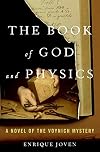
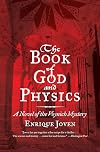
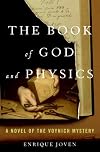
The Book of God and Physics: A Novel of the Voynich Mystery
by Enrique Joven
On This Page
Description
In his search for truth, a young Jesuit joins a group that has for centuries been trying to decipher the secrets of a mysterious book known as the Voynich Manuscript. When a key to unlocking it is discovered in the church where the young Jesuit teachers, powerful forces conspire to keep the contents of the manuscript from being decoded.--From publisher's description.Tags
Recommendations





Member Recommendations
Member Reviews
Joven tells a simple tale that demands a complex background in history to follow. Fortunately, the exposition is very well done, presenting an intriguing history lesson about the state of astronomy (and astrology) during the Renaissance. I have some acquaintance with one of the historical characters featured in the novel – John Dee, once court astrologer for Elizabeth I and a Legacy Library at LT – but my knowledge of the two other main players, Tycho Brahe and Johannes Kepler, was pretty much limited to a half-remembered episode of Carl Sagan’s Cosmos. This was an interesting period in European history when learned me likely all knew, or knew of, each other. The dance of people and ideas across the continent is fascinating. It is show more a credit to the author that the extensive exposition is eminently readable. However, I suspect it had more exposition than plot.
But, oh, yes, the plot. The novel centers on a genuine Renaissance artifact, the Voynich Manuscript, named for its 20th-century owner. This odd, hand-written book is filled with strange drawings and cryptic text -- quite literally cryptic, as the text is in no known language and has resisted deciphering to this day. The time period of the manuscript’s creation is crucial to the story, but he actual action takes place in the 21st century.
Joven, who is himself an astronomer, creates an unlikely crew of comrades-in-adventure who meet through a Voynich Manuscript e-mail discussion list. The chief of these, our narrator, Hector, is a Jesuit science teacher in Castile, Spain. Our hero (who, as a priest, expresses no interest in getting the girl, which eliminates one level of complication) stumbles upon tantalizing clues that link the mysterious manuscript to his own Order. He shares his findings with his e-list buddies, and off they go. I wouldn’t wish to reveal any plot spoilers, but it should be obvious that the manuscript code will not be cracked by the end of the book.
Some of the prose was a little stiff or sometimes awkward, but as this is a translation, I don’t know if one can point the figure at the author. However, as much of the lengthy history lessons are conveyed through dialogue, the conversations can seem pretty forced. This was especially noticeable with the character of a student whose lengthy speeches on history sounded more like an encyclopedia being read than the normal speech patterns of a teenage boy, Spanish or otherwise.
But all told, I enjoyed it, probably more for the history than the plot twists. As entertaining as the exposition could be, I did find myself on occasion wanting something to happen. Still, the book is, in its own pedantic way, a page-turner. show less
But, oh, yes, the plot. The novel centers on a genuine Renaissance artifact, the Voynich Manuscript, named for its 20th-century owner. This odd, hand-written book is filled with strange drawings and cryptic text -- quite literally cryptic, as the text is in no known language and has resisted deciphering to this day. The time period of the manuscript’s creation is crucial to the story, but he actual action takes place in the 21st century.
Joven, who is himself an astronomer, creates an unlikely crew of comrades-in-adventure who meet through a Voynich Manuscript e-mail discussion list. The chief of these, our narrator, Hector, is a Jesuit science teacher in Castile, Spain. Our hero (who, as a priest, expresses no interest in getting the girl, which eliminates one level of complication) stumbles upon tantalizing clues that link the mysterious manuscript to his own Order. He shares his findings with his e-list buddies, and off they go. I wouldn’t wish to reveal any plot spoilers, but it should be obvious that the manuscript code will not be cracked by the end of the book.
Some of the prose was a little stiff or sometimes awkward, but as this is a translation, I don’t know if one can point the figure at the author. However, as much of the lengthy history lessons are conveyed through dialogue, the conversations can seem pretty forced. This was especially noticeable with the character of a student whose lengthy speeches on history sounded more like an encyclopedia being read than the normal speech patterns of a teenage boy, Spanish or otherwise.
But all told, I enjoyed it, probably more for the history than the plot twists. As entertaining as the exposition could be, I did find myself on occasion wanting something to happen. Still, the book is, in its own pedantic way, a page-turner. show less
 This review was written for LibraryThing Early Reviewers.
This is a fascinating story interwoven with history, astronomy, alchemy and intrigue. Centered around a Jesuit trying to decipher it, the reader learns about the Voynich manuscript (which today is housed at Yale) and the mysteries surrounding it. The pages are dotted with many "Greats" of science such as Brahe, Kepler, and Galileo. For good measure, we also have Edward Kelley, John Dee, and a host of Jesuits and popes. Included almost as a side story is the debate between religion and science, creationism, intelligent design and evolution.
This book is more well written than Ian Caldwell's The Rule of Four, which, even though it shares the subject of old cryptic books, was a chore for me to finish. I found the translation of The Book of show more God and Physics to be a bit clunky, so it didn't read as smoothly as The Da Vinci Code, but overall I enjoyed the story and found it hard to put down. I'll be replacing my advance reader's copy with a hardcover. show less
This book is more well written than Ian Caldwell's The Rule of Four, which, even though it shares the subject of old cryptic books, was a chore for me to finish. I found the translation of The Book of show more God and Physics to be a bit clunky, so it didn't read as smoothly as The Da Vinci Code, but overall I enjoyed the story and found it hard to put down. I'll be replacing my advance reader's copy with a hardcover. show less
This review was written for LibraryThing Early Reviewers.I loved every single thing about this book. Except the writing. Or maybe the translation. Probably the translation. Either way, what could have been a story to blow The DaVinci Code out of the water, was instead a worthy read for only those that are interested in the Voynich Manuscript, astronomy, and/or the intersection of faith and science.
I am incredibly fascinated with all of those things - except astronomy, of course - so I couldn't give up on the book. For those unaware of the Voynich Manuscript, it is a real, illustrated manuscript believed to be about 500 years old. It's full of beautiful ink and watercolour drawings that encompass chemistry/alchemy, botanicals, and astronomy, and it's written in a language that doesn't exist show more anywhere else. It remains to this day undecipherable. The manuscript currently resides at the Beinecke Library of Yale University and they have it online here.
Anything that has remained untranslatable for over 500 years becomes an unavoidable conspiracy theorist magnet, but the author of this book includes an introduction, where he makes it clear that other than the creation of the MC and his two friends, everything else in the book is historically accurate; all the other characters are real and their back-stories were kept intact without creative license. Knowing this also kept me glued to the book when the prose would have sent me fleeing long before chapter 2.
The book is heavily centered in the Society of Jesus (the Jesuits). (They owned the Voynich Manuscript until 1912 when Voynich secretly bought it from them.) My gender aside, the Jesuits are my people. I make no secret of my faith in God and my faith in science; a stance that neatly pisses off everyone in one go: atheists because I believe in God, and those calling themselves Christians because I'm a heretic for accepting the Big Bang (first hypothesised by a Belgian priest*, btw) and evolution. The Jesuits also find no contradiction between God and science and in fact, most of the major contributions to science - experimental physics, specifically - in the 17th century were made by Jesuits. They weren't slackers in the 18th century either.
So, a story about a real coded manuscript, in its historically accurate setting, involving science and theology, taking place in a Jesuit school in Castile. And I haven't even mentioned the secret tunnels, hidden passages and coded messages, or the major supporting characters that include Tycho Brahe, Kepler, Dee, Kelly, Galileo and Cassini.
Unfortunately, as I've already said, the writing translation is the major sticking point. The narrative was choppy and there was a general abuse of pronouns, leaving the reader sometimes wondering who was being talked about at any given time. Dialogue jumped around too so that there were a few leaps of logic I couldn't follow because I couldn't parse the writing. The ultimate care the author takes to make sure the history and the science are explained carefully (and sometimes repetitively), inclines me to fault the translation. The author's love and knowledge of the subject matter screams from the page, as does his concern that the reader understand as much of the hard stuff as is possible, so it doesn't make sense that the story itself was written with so little care.
If I were only rating the writing, this would be 1 star. But the subject matter and the plot were 5 stars, so in the end I split the difference and went with 3. Don't bother with this one if you're only looking for a thriller or adventure, but if you're fascinated by the other stuff, maybe see if your library has this one and give is a go. It'll be work, but it'll be fascinating too.
(* Georges Lemaître was the first to formally propose his hypothesis of the primeval atom, which became known as the Big Bang Theory, first published in 1931 in Nature. He was a Jesuit priest and professor of physics. He was also the first to note the expansion of the universe, and the first to derive Hubble's law and made the first estimation of what is called Hubble's constant - all misattributed to Hubble, at least in name.) show less
I am incredibly fascinated with all of those things - except astronomy, of course - so I couldn't give up on the book. For those unaware of the Voynich Manuscript, it is a real, illustrated manuscript believed to be about 500 years old. It's full of beautiful ink and watercolour drawings that encompass chemistry/alchemy, botanicals, and astronomy, and it's written in a language that doesn't exist show more anywhere else. It remains to this day undecipherable. The manuscript currently resides at the Beinecke Library of Yale University and they have it online here.
Anything that has remained untranslatable for over 500 years becomes an unavoidable conspiracy theorist magnet, but the author of this book includes an introduction, where he makes it clear that other than the creation of the MC and his two friends, everything else in the book is historically accurate; all the other characters are real and their back-stories were kept intact without creative license. Knowing this also kept me glued to the book when the prose would have sent me fleeing long before chapter 2.
The book is heavily centered in the Society of Jesus (the Jesuits). (They owned the Voynich Manuscript until 1912 when Voynich secretly bought it from them.) My gender aside, the Jesuits are my people. I make no secret of my faith in God and my faith in science; a stance that neatly pisses off everyone in one go: atheists because I believe in God, and those calling themselves Christians because I'm a heretic for accepting the Big Bang (first hypothesised by a Belgian priest*, btw) and evolution. The Jesuits also find no contradiction between God and science and in fact, most of the major contributions to science - experimental physics, specifically - in the 17th century were made by Jesuits. They weren't slackers in the 18th century either.
So, a story about a real coded manuscript, in its historically accurate setting, involving science and theology, taking place in a Jesuit school in Castile. And I haven't even mentioned the secret tunnels, hidden passages and coded messages, or the major supporting characters that include Tycho Brahe, Kepler, Dee, Kelly, Galileo and Cassini.
Unfortunately, as I've already said, the writing translation is the major sticking point. The narrative was choppy and there was a general abuse of pronouns, leaving the reader sometimes wondering who was being talked about at any given time. Dialogue jumped around too so that there were a few leaps of logic I couldn't follow because I couldn't parse the writing. The ultimate care the author takes to make sure the history and the science are explained carefully (and sometimes repetitively), inclines me to fault the translation. The author's love and knowledge of the subject matter screams from the page, as does his concern that the reader understand as much of the hard stuff as is possible, so it doesn't make sense that the story itself was written with so little care.
If I were only rating the writing, this would be 1 star. But the subject matter and the plot were 5 stars, so in the end I split the difference and went with 3. Don't bother with this one if you're only looking for a thriller or adventure, but if you're fascinated by the other stuff, maybe see if your library has this one and give is a go. It'll be work, but it'll be fascinating too.
(* Georges Lemaître was the first to formally propose his hypothesis of the primeval atom, which became known as the Big Bang Theory, first published in 1931 in Nature. He was a Jesuit priest and professor of physics. He was also the first to note the expansion of the universe, and the first to derive Hubble's law and made the first estimation of what is called Hubble's constant - all misattributed to Hubble, at least in name.) show less
The Book of God and Physics: A Novel of the Voynich Mystery by Enrique Joven is the second book about the Voynich manuscript that I've read this month - In Tongues of the Dead by Brad Kelln being the first. Both are religious thrillers in the mode of The Da VInci Code, but the two authors take such a different approach that it turns out the two books don't really have that much in common beyond the Voynich manuscript itself.
In Tongues of the Dead tries hard to be The Da Vinci Code. There's plenty of action, conspiracy galore (although the flat characters and holey plot make it almost unreadable). Joven, on the other hand, writes a meandering mystery that doesn't have the sense of impending crisis a good thriller should have. Instead, show more it's mostly a disguised polemic against religious fundamentalism through the lens of the evolution/creationism/intelligent design issue, with a heaping helping of criticism of the theory that Johannes Kepler murdered Tycho Brahe for his astronomical data as put forward in Heavenly Intrigue: Johannes Kepler, Tycho Brahe, and the Murder Behind One of History's Greatest Scientific Discoveries by Joshua and Anne-Lee Gilder (yes, a real book!).
In the end, The Book of God and Physics mostly reminded me of Umberto Eco's [The Name of the Rose]. In spite of the difference in setting, Eco used the mystery as a framework for a discussion of Aristotle and philosophy in much the same way that Joven uses his mystery to serve as a framework for discussion of a history of early astronomy and alchemy, along with some of the more interesting characters from 16th century Europe. Eco does it better, but Joven's attempt is decent enough. It would have been better, though, if there was less of the polemic and the history and more of the mystery. show less
In Tongues of the Dead tries hard to be The Da Vinci Code. There's plenty of action, conspiracy galore (although the flat characters and holey plot make it almost unreadable). Joven, on the other hand, writes a meandering mystery that doesn't have the sense of impending crisis a good thriller should have. Instead, show more it's mostly a disguised polemic against religious fundamentalism through the lens of the evolution/creationism/intelligent design issue, with a heaping helping of criticism of the theory that Johannes Kepler murdered Tycho Brahe for his astronomical data as put forward in Heavenly Intrigue: Johannes Kepler, Tycho Brahe, and the Murder Behind One of History's Greatest Scientific Discoveries by Joshua and Anne-Lee Gilder (yes, a real book!).
In the end, The Book of God and Physics mostly reminded me of Umberto Eco's [The Name of the Rose]. In spite of the difference in setting, Eco used the mystery as a framework for a discussion of Aristotle and philosophy in much the same way that Joven uses his mystery to serve as a framework for discussion of a history of early astronomy and alchemy, along with some of the more interesting characters from 16th century Europe. Eco does it better, but Joven's attempt is decent enough. It would have been better, though, if there was less of the polemic and the history and more of the mystery. show less
Hector is a young Jesuit priest who becomes entangled in plot to destroy the school where he works and a race to uncover the meaning of a mysterious real-life book called the Voynich manuscript. During his off hours as a teacher at a Jesuit school in Spain, Hector teams up with two internet friends to track down clues hidden in tunnels and shadows that might help to decode a book which might be a hoax or might contain the secrets revealed by God him/herself.
Just finished an early review copy of this book called The Book of God and Physics by Enrique Joven, or I maybe should rather say Dr. Joven, and I'm completely confused. I'm not sure if I read a novel, a series of essays on the mitigation between creationists vs darwinists, a history show more textbook on astronomy or a scientific essay on the meaning of the Voynich manuscript. To finish this off the author tells us many times throughout the book that all the research was done with Google and Wikipedia. And exhale. Except that instead of telling us this at the end, we find it in the introduction. The introduction does not do the book much service. It sets up certain expectations and confusions as to what is going to follow. From the introduction and the comparisons to other works of the same genre, the author appears to want to show kids that anyone with a computer can unlock history's mysteries. A worthy goal to be honest, but the message gets diluted in between all the other imporant goals.
For the first time in reading a novel did I see an author directly compare his book to other people's works. Dr. Joven creates a direct parallel to Dan Brown's Da Vinci Code and later on uses the same foxhunt pattern to chase down an all important document. By doing so, the author invites the readers to keep comparing this book to the one by Dan Brown. Further on the author does something similar by comparing the sleuthing of Hector to that undertaken by the main character in the television show House MD. Even though the author's intentions are clearly very admirable, they result in setting up an arrogant tone with these comparisons. Throughout the book various puzzles are introduced that unlock the next step to finding more information that can help decode the Voynich manuscript. Some of the puzzles are quite clever and entertaining, some of them require a PhD in math and feel like another way in which the author places himself above the reader. This is too bad because the tone of the protagonist Hector has towards his students feels very real and genuine, not to mention endearing.
The sense that we're reading a book in which the author lists his favorite scientific conundrums and historical events is heightened by passages and paragraphs that stand alone and do not appear to have anything to do with the rest of the novel. For instance on page 173 the author elaborates in detail on a concept called Plank's Wall that does not seem to relate to anything else in the story. It is an interesting piece of knowledge but feels like an unused Chekov's Gun: we're told something that appears important but isn't used in the rest of the puzzle or the book.
In truth I must say that I enjoyed the book. Mainly because it is clear that the author has great potential. As such this book is pretty good for a first novel. I'm curious to see what the next installment will be because there are strong hints at the end towards a sequel. show less
Just finished an early review copy of this book called The Book of God and Physics by Enrique Joven, or I maybe should rather say Dr. Joven, and I'm completely confused. I'm not sure if I read a novel, a series of essays on the mitigation between creationists vs darwinists, a history show more textbook on astronomy or a scientific essay on the meaning of the Voynich manuscript. To finish this off the author tells us many times throughout the book that all the research was done with Google and Wikipedia. And exhale. Except that instead of telling us this at the end, we find it in the introduction. The introduction does not do the book much service. It sets up certain expectations and confusions as to what is going to follow. From the introduction and the comparisons to other works of the same genre, the author appears to want to show kids that anyone with a computer can unlock history's mysteries. A worthy goal to be honest, but the message gets diluted in between all the other imporant goals.
For the first time in reading a novel did I see an author directly compare his book to other people's works. Dr. Joven creates a direct parallel to Dan Brown's Da Vinci Code and later on uses the same foxhunt pattern to chase down an all important document. By doing so, the author invites the readers to keep comparing this book to the one by Dan Brown. Further on the author does something similar by comparing the sleuthing of Hector to that undertaken by the main character in the television show House MD. Even though the author's intentions are clearly very admirable, they result in setting up an arrogant tone with these comparisons. Throughout the book various puzzles are introduced that unlock the next step to finding more information that can help decode the Voynich manuscript. Some of the puzzles are quite clever and entertaining, some of them require a PhD in math and feel like another way in which the author places himself above the reader. This is too bad because the tone of the protagonist Hector has towards his students feels very real and genuine, not to mention endearing.
The sense that we're reading a book in which the author lists his favorite scientific conundrums and historical events is heightened by passages and paragraphs that stand alone and do not appear to have anything to do with the rest of the novel. For instance on page 173 the author elaborates in detail on a concept called Plank's Wall that does not seem to relate to anything else in the story. It is an interesting piece of knowledge but feels like an unused Chekov's Gun: we're told something that appears important but isn't used in the rest of the puzzle or the book.
In truth I must say that I enjoyed the book. Mainly because it is clear that the author has great potential. As such this book is pretty good for a first novel. I'm curious to see what the next installment will be because there are strong hints at the end towards a sequel. show less
I need to write a more complete review, but i recently finished reading God and Physics, so here goes my first thoughts.
This was a proof copy and i found the punctuation and capitalization errors distracting, they were so obvious. Some of the illustrations were missing, and some were tiny, very blurry and grey, and very dot-screen. Additionally some Spanish words were retained for alchemical concepts for which we have perfectly good words in English. I can only hope these are corrected or improved in the final edition.
I found the book a bit slow at first, but many good books are like this. Also, the writing, the narrator's voice, seemed a bit flat to me; that could be the translation, i don't know - i'm reading this in English.
God and show more Physics is in part a mystery, and in part a conversation about faith and fact, religion and science. For some characters in this conversation, there can be only one way of looking at things, either through the lens of extreme religious belief or extreme faith in science. The question is posed, is there a way of reconciling the two?
The plot concerns the Voynich Manuscript, a real book written either in code or in a fake alphabet, and attempts to translate it over the past 400 years, if that is even possible. Hector, a Jesuit and high school math teacher, is the main character. The school and faith community in which he lives is having some serious financial troubles, which will have a profound effect on Hector. In his spare time, he is a member of an on-line group attempting to solve the mystery of the Voynich Manuscript, written in strange characters and illustrated by puzzling drawings.
As the plot progresses, Hector is aided by a curious student, and by two of his on-line friends, who he eventually meets. To give us the actual historical background, large sections are rather didactic, expounding on astronomy, alchemy, Medieval mystics, supernovas, eclipses, Hermes Trismegisthus, cryptography and steganography, the trials and travails of the Jesuits, and the lives of individuals such as Tycho Brahe, Johannes Kepler, and Athanasius Kircher. I actually enjoyed these passages.
Much of what is contained in the book is factual, but the book is a fiction and does not pretend to be anything else, unlike Dan Brown's The Di Vinci Code and its ilk. However, because of this mix, the distinction between fact and fiction is somewhat blurred. The quest of the narrator and his friends takes them through underground catacombs, Roman sewers, and Renaissance castles and churches. Each journey leads to more clues, but also raises more questions.
I hope it is not too much of a spoiler to say that in the end there is still mystery. And i rather hope the author does NOT write a sequel. So often life it like that - it presents situations to us, about which we'd love to know the outcome, and then life continues and we never do find out.
I imagine that those who fall strongly on one side or the other of the science vs. religion issue will not enjoy this book. But i imagine that people who can or who wish to find where they can work together, will find something of interest in this book. show less
This was a proof copy and i found the punctuation and capitalization errors distracting, they were so obvious. Some of the illustrations were missing, and some were tiny, very blurry and grey, and very dot-screen. Additionally some Spanish words were retained for alchemical concepts for which we have perfectly good words in English. I can only hope these are corrected or improved in the final edition.
I found the book a bit slow at first, but many good books are like this. Also, the writing, the narrator's voice, seemed a bit flat to me; that could be the translation, i don't know - i'm reading this in English.
God and show more Physics is in part a mystery, and in part a conversation about faith and fact, religion and science. For some characters in this conversation, there can be only one way of looking at things, either through the lens of extreme religious belief or extreme faith in science. The question is posed, is there a way of reconciling the two?
The plot concerns the Voynich Manuscript, a real book written either in code or in a fake alphabet, and attempts to translate it over the past 400 years, if that is even possible. Hector, a Jesuit and high school math teacher, is the main character. The school and faith community in which he lives is having some serious financial troubles, which will have a profound effect on Hector. In his spare time, he is a member of an on-line group attempting to solve the mystery of the Voynich Manuscript, written in strange characters and illustrated by puzzling drawings.
As the plot progresses, Hector is aided by a curious student, and by two of his on-line friends, who he eventually meets. To give us the actual historical background, large sections are rather didactic, expounding on astronomy, alchemy, Medieval mystics, supernovas, eclipses, Hermes Trismegisthus, cryptography and steganography, the trials and travails of the Jesuits, and the lives of individuals such as Tycho Brahe, Johannes Kepler, and Athanasius Kircher. I actually enjoyed these passages.
Much of what is contained in the book is factual, but the book is a fiction and does not pretend to be anything else, unlike Dan Brown's The Di Vinci Code and its ilk. However, because of this mix, the distinction between fact and fiction is somewhat blurred. The quest of the narrator and his friends takes them through underground catacombs, Roman sewers, and Renaissance castles and churches. Each journey leads to more clues, but also raises more questions.
I hope it is not too much of a spoiler to say that in the end there is still mystery. And i rather hope the author does NOT write a sequel. So often life it like that - it presents situations to us, about which we'd love to know the outcome, and then life continues and we never do find out.
I imagine that those who fall strongly on one side or the other of the science vs. religion issue will not enjoy this book. But i imagine that people who can or who wish to find where they can work together, will find something of interest in this book. show less
This review was written for LibraryThing Early Reviewers.[LT early reviewer - These comments apply to the uncorrected proof of the Koch’s English translation of "The Book of God and Physics" - William Morrow, publishers]
This is a fascinating read for anyone with an interest in astronomy, old manuscripts, and European history. Joven weaves a wide ranging collection of historical and scientific details into a fictional search for the key to the (real life) un-deciphered Voynich Manuscript. Father Hector's background in physics, his role as a high-school teacher, his interest in decoding the 400-year-old manuscript, and his life as a Spanish Jesuit are all used by Joven to bring together a remarkable array of historical and scientific ephemera from which clues to the manuscript's secrets are show more gleaned. The main storyline, this search, is underlain by troubles at the Jesuit school - someone wants the land, and is pulling strings to get it.
Joven's story is ingenious and historically rich. It’s remarkable how much of the historical aspects of the story are factually accurate - little 'padding' is used to make the story work. As a scientist, history buff, and old book collector, I could hardly not enjoy this novel. If you don't have an interest in science (especially of the early Renaissance variety), you may get bogged down in the quantity of historical details Joven works into the story. I have only two complaints, and they are both related to the inclusion of these historical details - First, some of the tools Joven uses to work these into the storyline seem a bit contrived. Yes, the subject does come up in conversation with students and fellow clue hunters, but the encyclopedic way in which the information is sometimes presented seems unrealistic, and sometimes results in rather stilted dialogue. Second, the pure quantity of detail is a bit much, even for a history and science fan. The digressions needed to work it in sometimes take the reader away from the storyline for too long. These two factors give the impression that Joven sometimes tries too hard to work in all he knows on a subject. Most of these details turn out to have some relevance to the mystery of the manuscript, but there is a good bit that does not.
But, again, these are small complaints for someone who loves history, science, and old books and manuscripts. If that sounds like you, then you'll enjoy this book. And the ending is totally believable - The secret to the manuscript turns out to be...
Os. show less
This is a fascinating read for anyone with an interest in astronomy, old manuscripts, and European history. Joven weaves a wide ranging collection of historical and scientific details into a fictional search for the key to the (real life) un-deciphered Voynich Manuscript. Father Hector's background in physics, his role as a high-school teacher, his interest in decoding the 400-year-old manuscript, and his life as a Spanish Jesuit are all used by Joven to bring together a remarkable array of historical and scientific ephemera from which clues to the manuscript's secrets are show more gleaned. The main storyline, this search, is underlain by troubles at the Jesuit school - someone wants the land, and is pulling strings to get it.
Joven's story is ingenious and historically rich. It’s remarkable how much of the historical aspects of the story are factually accurate - little 'padding' is used to make the story work. As a scientist, history buff, and old book collector, I could hardly not enjoy this novel. If you don't have an interest in science (especially of the early Renaissance variety), you may get bogged down in the quantity of historical details Joven works into the story. I have only two complaints, and they are both related to the inclusion of these historical details - First, some of the tools Joven uses to work these into the storyline seem a bit contrived. Yes, the subject does come up in conversation with students and fellow clue hunters, but the encyclopedic way in which the information is sometimes presented seems unrealistic, and sometimes results in rather stilted dialogue. Second, the pure quantity of detail is a bit much, even for a history and science fan. The digressions needed to work it in sometimes take the reader away from the storyline for too long. These two factors give the impression that Joven sometimes tries too hard to work in all he knows on a subject. Most of these details turn out to have some relevance to the mystery of the manuscript, but there is a good bit that does not.
But, again, these are small complaints for someone who loves history, science, and old books and manuscripts. If that sounds like you, then you'll enjoy this book. And the ending is totally believable - The secret to the manuscript turns out to be...
Os. show less
This review was written for LibraryThing Early Reviewers.Members
- Recently Added By
Published Reviews
ThingScore 63
Author Information
8 Works 216 Members
Some Editions
Common Knowledge
- Canonical title
- The Book of God and Physics: A Novel of the Voynich Mystery
- Original title
- El Castillo de las Estrellas
- Original publication date
- 2007; 2009 (English translation) (English translation)
- People/Characters
- Father Hector; Tycho Brahe; Johannes Kepler; Juana Pizarro (Waldo | Joanna); John Dee (Dr.); Edward Kelley (show all 8); Wilfrid Voynich (a.k.a Michał Habdank-Wojnicz); Voynich manuscript
- Epigraph
- Anything that can be explored should certainly be interpreted.
—Max Planck, German Physicist (1958-1947) - First words
- Prologue
I became interested in the Voynich Manuscript shortly after being ordained as a Jesuit priest, more than two years ago.
On that particular Monday morning, everything seemed to be at a standstill. Perhaps the world had stopped, and if so, my trying to teach was totally useless. - Last words
- (Click to show. Warning: May contain spoilers.)"I have the tools but insufficient intelligence," he admitted. "I feel like Tycho Brahe facing his data on Mars. And the Holy Father is waiting impatiently."
Then he added, laughing, "I need a Johannes Kepler with me." - Disambiguation notice
- Original title: El castillo de las estrellas (2007); English translation by Koch: The Book of God and Physics (2009)
Classifications
- Genres
- Fiction and Literature, Mystery, General Fiction, Historical Fiction, Fantasy
- DDC/MDS
- 813 — Literature & rhetoric American literature in English American fiction in English
- LCC
- PQ6710 .O84 .C3713 — Language and Literature French, Italian, Spanish and Portuguese literatures Spanish literature Individual authors, 2001-
- BISAC
Statistics
- Members
- 192
- Popularity
- 170,719
- Reviews
- 23
- Rating
- (3.00)
- Languages
- English, Spanish
- Media
- Paper
- ISBNs
- 5
- ASINs
- 2