On This Page
Description
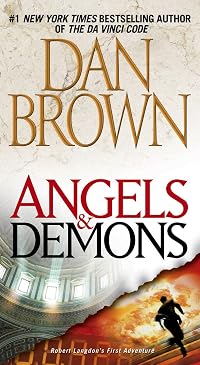
The murder of a world-famous physicist raises fears that the Illuminati are operating again after centuries of silence, and religion professor Robert Langdon is called in to assist with the case.Tags
Recommendations
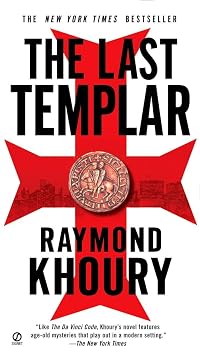
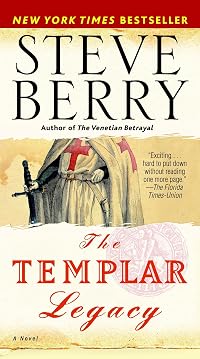
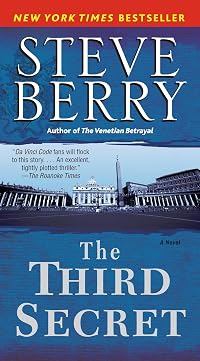
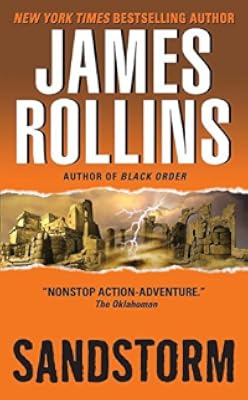

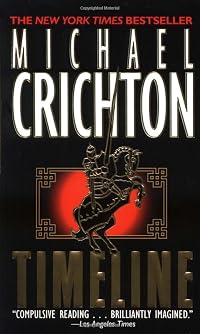
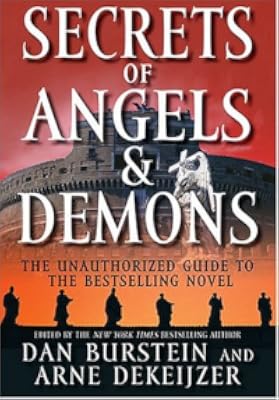
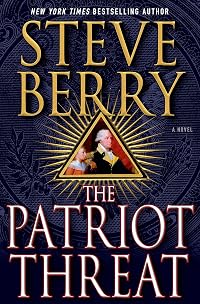
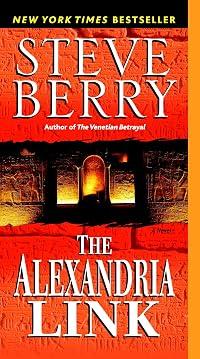

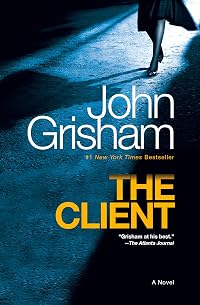
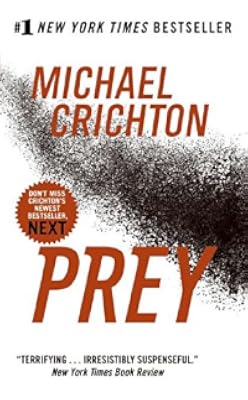
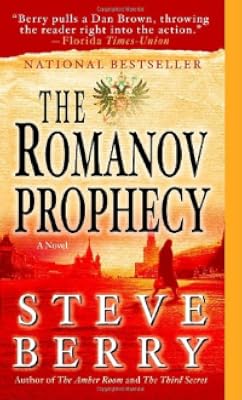
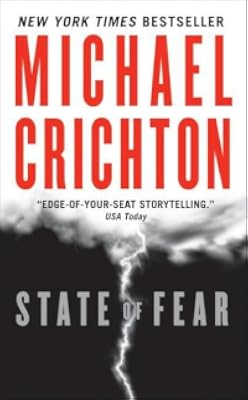



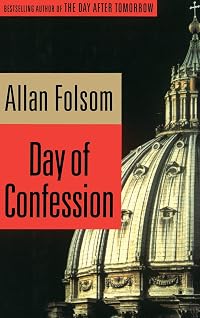
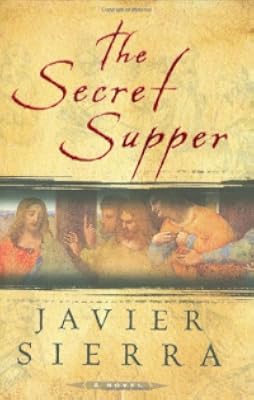
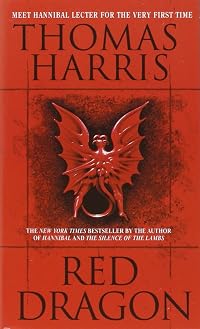
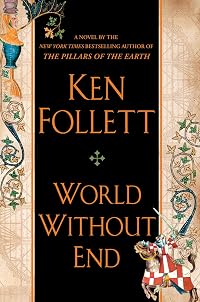
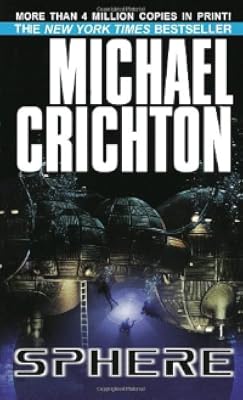
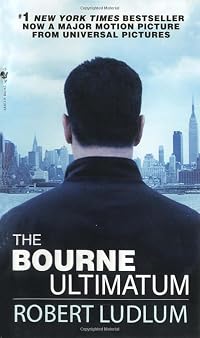
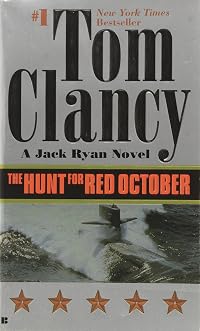
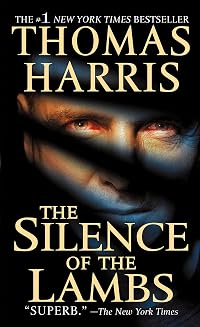
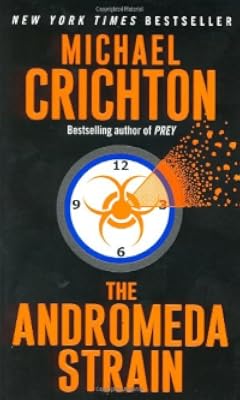
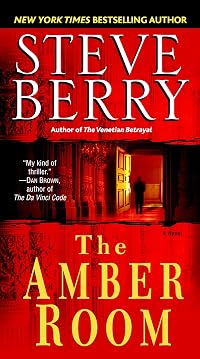
Member Recommendations
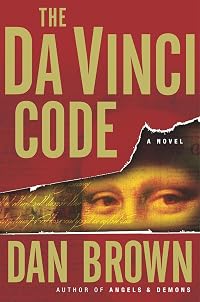
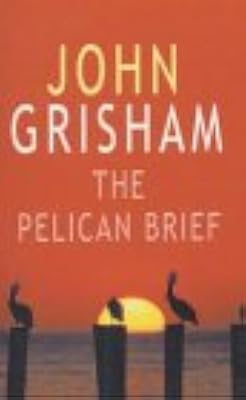
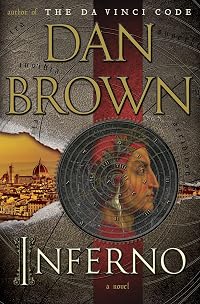
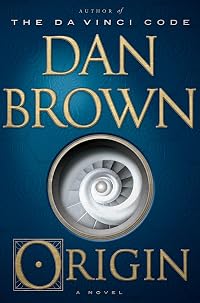
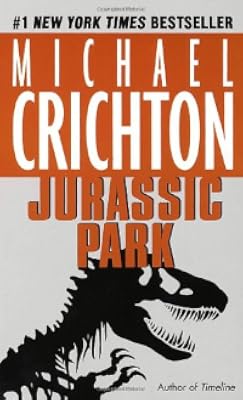
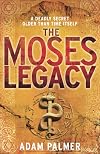
CarlosMcRey About as historically accurate but much more fun.
Also recommended by craigim
72

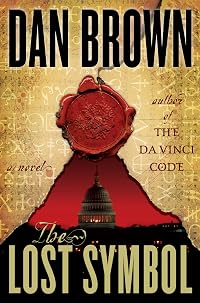
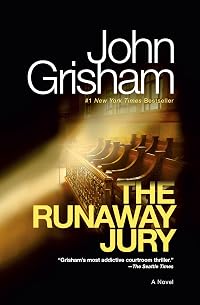
2810michael Necessary to read after Dan Brown...
52
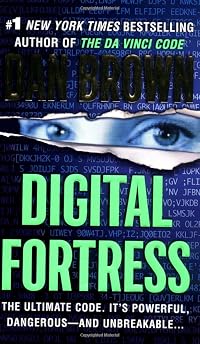
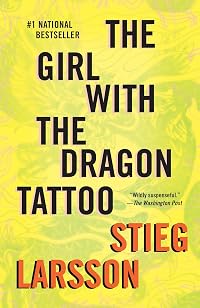
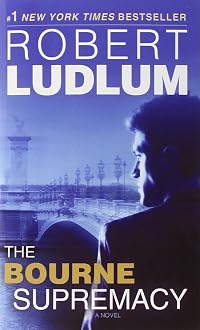
PghDragonMan Both works feature mystic orders carrying secret information. Both are founded on just enough history to leave you wondering if really could be true.
43

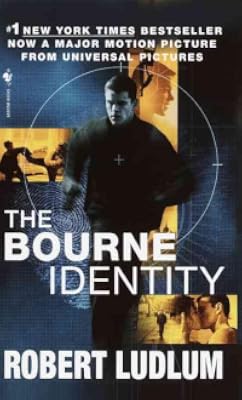
fulner The probably broach is a story of government secrecy, and cover ups. Its the story of a adventure so filled with wonder it can only be called Science Fiction. It's a mystery that needs to be solved. You need to read this book
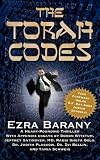
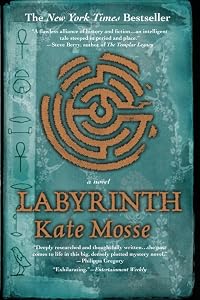
dafkah This award-winning bestseller is a Jewish version of The Da Vinci Code.
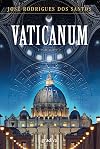
by anonymous user


Alexandria_annex I thought Hard Whispers had the same not stop action feel that kept me on the edge of the seat.
03

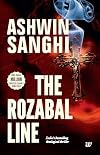
Alexandria_annex Darkness Left Undone is the second book in a series with Bartender Mike who gets caught up in international intrigue. I found Dan Brown's books and Carl Henegan's books both share similar themes and energy intensities and I like both authors styles very much.

Member Reviews
Angels & Demons is the kind of thriller that grabs you by the collar and keeps moving. The chapters are short, the stakes are huge, and Dan Brown knows exactly where to cut a scene so “one more page” becomes five more chapters. Robert Langdon is a great guide through all the symbols, codes, and chaos, and the Rome setting gives the whole story a dramatic, cinematic charge.
What worked best for me was the momentum. The blend of science, religion, history, and conspiracy is a lot, but the book sells it with confidence and speed. Vittoria Vetra adds a strong presence, and the central chase has that breathless countdown energy that makes it very easy to lose an entire evening to this book.
Some parts are definitely over the top, but that show more is part of the appeal. This is not a quiet or subtle novel. It is a glossy, brainy puzzle box built for suspense, and it delivers. I had a genuinely good time with this one 📚 show less
What worked best for me was the momentum. The blend of science, religion, history, and conspiracy is a lot, but the book sells it with confidence and speed. Vittoria Vetra adds a strong presence, and the central chase has that breathless countdown energy that makes it very easy to lose an entire evening to this book.
Some parts are definitely over the top, but that show more is part of the appeal. This is not a quiet or subtle novel. It is a glossy, brainy puzzle box built for suspense, and it delivers. I had a genuinely good time with this one 📚 show less
This is a near-future thriller about an Illuminati plot to destroy the Vatican, or maybe something else entirely is going on, but saying anything else would be a spoiler. The plot is exciting, the characters are very good; indeed, it's a tribute to how good these things are that I kept reading despite all the times I got kicked out of the plot by the author's own startling ignorance on things that could have been easily checked--some of them in any decent desk dictionary, such as the meaning of the word "canonization". At some points, Mr. Brown appears to think that it means "ordination". At other points, that's not a possible reading of his usage of it, but neither is the correct meaning a possible reading. He has notions about how show more papal elections work which are wrong, and which are clearly wrong just from an examination of the results of the last few, and which are important to the plot. There are other instances where he's assuming a general ignorance that seems improbable to me, although, given that Mr. Brown clearly has no clue what "canonization" means, I may be overly optimistic. The instance of this that hit me over the head at the beginning of the book: Our Hero, Robert Langdon, is a Harvard professor, who has written a book that makes him a magnet for conspiracy theorists whose obsessions center around the Illuminati. He has a website on which he has no contact information, in the interest of making it a little bit harder for the kooks to find him in the real world. He gets a phone call from someone who has found him through his website and wants him to come immediately to consult on a matter relating to his specialty, religious symbology--but the caller doesn't say where he's calling from. He does say that he has already sent a plane to pick up Langdon, and he can be at the destination in about an hour. He also says that he located Dr. Langdon through his website, and when Langdon says that's not possible, he says that he's from the laboratory where the Web was invented.
At this point, of course, a little bell went "ding" and I said, "But CERN is a lot more than an hour away from Boston."
Dr. Langdon does not say this, or think it, or anything similar. He does not realize until he's disembarking from the spiffy new space plane that the mysterious caller sent that he's not in North America anymore. (The space plane is a CERN invention, too.) There follows a discussion of how Americans all think that the Worldwide Web is American technology. Unfortunately, the content of the discussion leaves me in some doubt as to whether Mr. Brown realizes that there's a difference between the internet and the web, and that the internet is American technology.
The yawning factual errors in this book left me wondering how many yawning factual errors I was missing because I don't know enough about, say, anti-matter, or Renaissance art. Don't read it if you're feeling at all sensitive to such errors. If you're in the mood for a good brain-candy thriller, though, and prepared to slide over the factual errors, it's great fun. show less
At this point, of course, a little bell went "ding" and I said, "But CERN is a lot more than an hour away from Boston."
Dr. Langdon does not say this, or think it, or anything similar. He does not realize until he's disembarking from the spiffy new space plane that the mysterious caller sent that he's not in North America anymore. (The space plane is a CERN invention, too.) There follows a discussion of how Americans all think that the Worldwide Web is American technology. Unfortunately, the content of the discussion leaves me in some doubt as to whether Mr. Brown realizes that there's a difference between the internet and the web, and that the internet is American technology.
The yawning factual errors in this book left me wondering how many yawning factual errors I was missing because I don't know enough about, say, anti-matter, or Renaissance art. Don't read it if you're feeling at all sensitive to such errors. If you're in the mood for a good brain-candy thriller, though, and prepared to slide over the factual errors, it's great fun. show less
"Probably the most important thing about this book is that it is fiction. If you take ficiton personally, you might want to go talk to a professional about that. But if you like great characters, a page-turning plot, and a book that will make you think, then you're in luck here. And yup, you'll hop on google and try to figure out which if his details are historical and which are just plain fun. I like a book that makes me confront how subjective and fuzzy history is. Angels and Demons play in the gray areas; if you like black and white, look elsewhere."
*** Note : borrowed book from library. ***
Angels & Demons was gripping first book in Robert Langdon series that revolved around ancient Illuminati brotherhood and their vendetta against catholic church. It was about science vs religion, terrorism, hope and faith, good vs evil, catholic rituals and ceremony, history and art.
I watched movie ages ago. I vaguely remembered who was the real mastermind behind whole scheme of murders and destroying Vatican City and still I enjoyed reading the book. It made me curious to solve the mystery of finding Illuminati lair and catch the killer. (which I didn’t remember much)
Writing was amazing. It was gripping, fast paced, and descriptive with loads of information from the very first page. I always show more love fictions that provides factual information that I wouldn’t have read or known before. Characters were interesting, realistic, and well developed. Best part of the book was theme, description of setting and art and history.
The end was brilliant but I don’t agree with what they decided. Overall, Angels & Demons was brilliant, thought provoking, action packed and thrilling mystery filled with religious history, science and art.
Read full review on my book blog by following this link - https://booksteacupnreviews.com/2020/10/13/angels-demons-robert-langdon-1-by-dan... show less
Angels & Demons was gripping first book in Robert Langdon series that revolved around ancient Illuminati brotherhood and their vendetta against catholic church. It was about science vs religion, terrorism, hope and faith, good vs evil, catholic rituals and ceremony, history and art.
I watched movie ages ago. I vaguely remembered who was the real mastermind behind whole scheme of murders and destroying Vatican City and still I enjoyed reading the book. It made me curious to solve the mystery of finding Illuminati lair and catch the killer. (which I didn’t remember much)
Writing was amazing. It was gripping, fast paced, and descriptive with loads of information from the very first page. I always show more love fictions that provides factual information that I wouldn’t have read or known before. Characters were interesting, realistic, and well developed. Best part of the book was theme, description of setting and art and history.
The end was brilliant but I don’t agree with what they decided. Overall, Angels & Demons was brilliant, thought provoking, action packed and thrilling mystery filled with religious history, science and art.
Read full review on my book blog by following this link - https://booksteacupnreviews.com/2020/10/13/angels-demons-robert-langdon-1-by-dan... show less
A good page-turner, Brown's suspense style is definitely one of note. Although at times a bit "drug-out," the action seemed to be non-stop throughout the story, full of well-placed plot twists and turns. My beef with Brown is only that what he posits as "fact" is generally a simplistic version of what he determines as fact; meaning, his facts can easily be misconstrued from how he presents them. I know this is a work of fiction; however, this work of fiction is preceded by a listing of "facts" to help ease the readers into believing the storyline. This communication at the beginning of the work can confuse some (many) into believing that his presentation of fact is 100% accurate, which is definitely not the case. In this respect, I feel show more the author is being disingenuous, which taints the overall value of the work. show less
I think "The Da Vinci Code was a fluke. Everything else I've tried by Dan Brown is cliche, and predictable. And, unlike "The Da Vinci Code," Dan Brown's disdain for Catholicism shines quite clearly in this work. In Da Vinci, the mystery and ideas were interesting enough to take front stage; not so here. The villain was incredibly predictable, and Langdon is, well, boring. Sad, because the premise of a priest studying physics to prove the existence of God (and possibly doing so!) had a lot of potential. This was the last book by Brown I'll read.
OK, the story, if not even a little bit believable, was reasonably entertaining. I don't demand believability!
However, the way this book is written is just unbelievably condescending. Brown feels the need to explain what the BBC is, what a particle accelerator is, insists on translating VERY basic foreign phrases, and gets basic word definitions in repeatedly under the guise of not having his characters know what things are. This wouldn't be so bad if the characters weren't supposed to be a physicist/biologist and a professor/symbologist. (A college professor has never HEARD of CERN?) The 'obscure' tidbits of knowledge that supposedly prove Langdon is brilliant in his field are most often common, pop-culture kinda stuff. He also divides show more "Christian vs. Pagan" symbology up in a way that people of centuries past did not. (It really would not have been considered shocking for a religious sculptor to also carve pyramids and obelisks, for example. And as of when is a dove a solely 'pagan' symbol?)
Luckily, most of the really irritating bits are in the beginning of the book - once people start dying, things get moving and the definitions fall by the wayside.
Still, I was hoping for a bit more... I didn't find the descriptions of life either at CERN or in the Vatican to be realistic AT ALL. (Oh, and as a library person, the bits dealing with when Langdon is allowed into the archives alone, without the help/supervision of a professional - sorry, but no way. They couldn't go wake up an archivist/librarian? And I don't believe that there is ANY evidence that the Vatican denies access to the materials in its catalog to non-Catholic researchers on the basis of their religion. From what I've read, it operates much like any other restricted archive - you have to have credentials as a qualified researcher, you need to request an appointment and the specific articles you want to see in advance, etc. Standard practice. And I really don't know about suffocating to death in an archival vault in 20 minutes. Unlikely. At least it's not something they ever warned us about in library school.)
I've been to Rome, and the book didn't succeed in bringing me back to the aura or feel of that beautiful and ancient yet modern city.
The religion vs. science debates brought up in the book are certainly timely, but fairly basic - they never really delve that deeply into the issues. Still, there are some really amusing bits, and some unexpected twists and turns in the plot.
Still, I should probably mention that it follows a very similar formula as the Da Vinci Code - if you've read one recently, the other may seem sneakingly familiar.... show less
However, the way this book is written is just unbelievably condescending. Brown feels the need to explain what the BBC is, what a particle accelerator is, insists on translating VERY basic foreign phrases, and gets basic word definitions in repeatedly under the guise of not having his characters know what things are. This wouldn't be so bad if the characters weren't supposed to be a physicist/biologist and a professor/symbologist. (A college professor has never HEARD of CERN?) The 'obscure' tidbits of knowledge that supposedly prove Langdon is brilliant in his field are most often common, pop-culture kinda stuff. He also divides show more "Christian vs. Pagan" symbology up in a way that people of centuries past did not. (It really would not have been considered shocking for a religious sculptor to also carve pyramids and obelisks, for example. And as of when is a dove a solely 'pagan' symbol?)
Luckily, most of the really irritating bits are in the beginning of the book - once people start dying, things get moving and the definitions fall by the wayside.
Still, I was hoping for a bit more... I didn't find the descriptions of life either at CERN or in the Vatican to be realistic AT ALL. (Oh, and as a library person, the bits dealing with when Langdon is allowed into the archives alone, without the help/supervision of a professional - sorry, but no way. They couldn't go wake up an archivist/librarian? And I don't believe that there is ANY evidence that the Vatican denies access to the materials in its catalog to non-Catholic researchers on the basis of their religion. From what I've read, it operates much like any other restricted archive - you have to have credentials as a qualified researcher, you need to request an appointment and the specific articles you want to see in advance, etc. Standard practice. And I really don't know about suffocating to death in an archival vault in 20 minutes. Unlikely. At least it's not something they ever warned us about in library school.)
I've been to Rome, and the book didn't succeed in bringing me back to the aura or feel of that beautiful and ancient yet modern city.
The religion vs. science debates brought up in the book are certainly timely, but fairly basic - they never really delve that deeply into the issues. Still, there are some really amusing bits, and some unexpected twists and turns in the plot.
Still, I should probably mention that it follows a very similar formula as the Da Vinci Code - if you've read one recently, the other may seem sneakingly familiar.... show less
Members
- Recently Added By
Published Reviews
ThingScore 75
Romance, religion, science, murder, mysticism, architecture, action. Go!
added by Lemeritus
Pitting scientific terrorists against the cardinals of Vatican City, this well-plotted if over-the-top thriller is crammed with Vatican intrigue and high-tech drama... Though its premises strain credulity, Brown's tale is laced with twists and shocks that keep the reader wired right up to the last revelation.
added by Shortride
Lists

Read the book and saw the movie
1,170 works; 195 members

NPRs your picks: top 100 Killer Thrillers
100 works; 17 members

Novels that you shouldn't waste your time on
94 works; 50 members

Historical Fiction
889 works; 90 members

al.vick-series
381 works; 2 members

Books Read in 2003
258 works; 7 members

el
1,139 works; 1 member

One Day
27 works; 2 members

Books Read in 2024
4,727 works; 128 members

Florida
366 works; 3 members

American Lit for Eng 11 Research Project
368 works; 6 members

Books Read in 2005
179 works; 7 members

Books Set in Rome
98 works; 2 members

Luetut kirjat
74 works; 1 member

Books Read in 2017
4,249 works; 130 members

Watched the Movie, Probably Won't Read the Book
185 works; 34 members

Books Read in 2015
3,299 works; 129 members

Books I've Read
5 works; 1 member

Books I've read
87 works; 2 members

Books Read in 2014
2,343 works; 89 members

Cryptology - non-fiction and fiction
57 works; 4 members

Books Read in 2011
684 works; 20 members

Books Set in Italy
167 works; 19 members

Fiction With Familiar Settings
280 works; 93 members
Author Information

53+ Works 217,878 Members
Dan Brown was born in Exeter, New Hampshire on June 22, 1964. He was a graduate of Amherst College and Phillips Exeter Academy, where he spent time as an English teacher before turning his efforts to writing. In 1996, his interest in code-breaking and covert government agencies led him to write his first novel, Digital Fortress, which quickly show more became a #1 national bestselling eBook. In its first week on sale, The Da Vinci Code debuted at #1 on The New York Times Bestseller list, simultaneously topping bestseller lists at The Wall Street Journal, Publishers Weekly, and San Francisco Chronicle. Later, the book hit #1 on every major bestseller list in the country. The book was made into a motion picture by Columbia Pictures, starring Tom Hanks. Brown's other works include Deception Point; Angels and Demons, which was also adapted into a film, The Lost Symbol, and Inferno, which was recently adapted into a film. Origin is his latest New York Times bestseller. His novels have been translated and published in more than 50 languages around the world. (Bowker Author Biography) show less
Some Editions
Awards and Honors
Awards
Distinctions
Series

Belongs to Publisher Series
Work Relationships
Is contained in
Angels & Demons / The Da Vinci Code / Deception Point / Digital Fortress / The Lost Symbol by Dan Brown
Robert Langdon Series Collection 7 Books Set By Dan Brown (Angels And Demons, The Da Vinci Code, The Lost Symbol, Inferno, Origin, Digital Fortress, Deception Point) by Dan Brown
Contains
Is abridged in
Has as a reference guide/companion
Has as a study
Common Knowledge
- Canonical title*
- Angeli e demoni
- Original title
- Angels & Demons
- Alternate titles*
- Angels & Demons
- Original publication date
- 2000-05-12
- People/Characters
- Robert Langdon; Vittoria Vetra; Maximilian Kohler; Camerlengo Carlo Ventresca; Gunther Glick; Chinita Macri (show all 7); Saverio Morati
- Important places
- Rome, Italy; Vatican City; CERN, Meyrin, Geneva, Switzerland (headquarters)
- Important events
- Papal Election
- Related movies
- Angels & Demons (2009 | IMDb)
- Dedication
- For Blythe...
- First words
- Physicist Leonardo Vetra smelled burning flesh, and he knew it was his own.
- Last words
- (Click to show. Warning: May contain spoilers.)"You've never been to bed with a yoga master, have you?"
- Blurbers
- Flynn, Vince; DeMille, Nelson; Cussler, Clive; Crais, Robert; Brown, Dale
- Original language
- English
- Canonical DDC/MDS
- 813.54
- Canonical LCC
- PS3552.R685434
- Disambiguation notice
- Do NOT combine film adaptations (DVDs or other video formats) with the book.
*Some information comes from Common Knowledge in other languages. Click "Edit" for more information.
Classifications
Statistics
- Members
- 49,506
- Popularity
- 41
- Reviews
- 818
- Rating
- (3.64)
- Languages
- 39 — Arabic, Bosnian, Bulgarian, Catalan, Czech, Danish, Dutch, English, Estonian, Finnish, French, German, Galician, Greek, Hebrew, Hungarian, Indonesian, Italian, Japanese, Korean, Latvian, Lithuanian, Malayalam, Marathi, Norwegian (Bokmål), Norwegian, Polish, Romanian, Russian, Serbian, Croatian, Slovak, Slovenian, Spanish, Swedish, Turkish, Ukrainian, Portuguese (Brazil), Chinese, traditional
- Media
- Paper, Audiobook, Ebook
- ISBNs
- 302
- UPCs
- 1
- ASINs
- 120