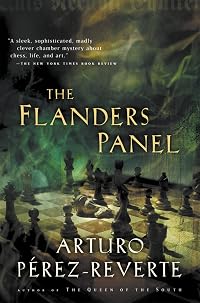
The Flanders Panel
by Arturo Pérez-Reverte
On This Page
Description
A fifteenth-century painting by a Flemish master is about to be auctioned when Julia, a young art restorer, discovers a peculiar inscription hidden in a corner: Who killed the knight? In the painting, the Duke of Flanders and his knight are locked in a game of chess, and a dark lady lurks mysteriously in the background. Julia is determined to solve the five-hundred-year-old murder, but as she begins to look for clues, several of her friends in the art world are brutally murdered in quick show more succession. Messages left with the bodies suggest a crucial connection between the chess game in the painting, the knight's murder, the sordid underside of the contemporary art world, and the latest deaths. Just when all of the players in the mystery seem to be pawns themselves, events race toward a shocking conclusion. A thriller like no other, The Flanders Panel presents a tantalizing puzzle for any connoisseur of mystery, chess, art, and history. show lessTags
Recommendations














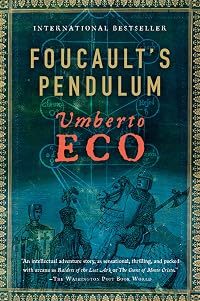







Member Recommendations


P_S_Patrick Arturo Perez-Reverte has recieved inspiration for his excellent mystery thriller from Hofstadter's Godel Escher Bach, even without some of the chapter introduciton quotes, that much is clear. He uses the bewildering Escherian theme of worlds within a world, Godels incompleteness theorum is alluded to in the monologue of one character, and Bach is discussed in relevance to the mystery too, along with a few miscellaneous paradoxes which are also slipped in, in a similar spirit in which they permeate the more complex non-fictional work. Non-fiction readers who have enjoyed GEB should be amused by the Flanders panel, and I think they should enjoy it even if they do not often indulge themselves in reading fiction. It would be harder to recommend GEB to fans of the Flanders Panel, due to its sheer length, but if you were intrigued by the themes in the story then it should at least be worth finding GEB in a library and dipping into it.

Member Reviews
This was the first of Arturo Perez-Reverte's books that I read and it was a great beginning. While he is a popular author in Spain he was not as well known in the United States prior to the success of this novel. At the center of the story is Julia, an art restorer who discovers a strange inscription on a Flemish painting and becomes drawn into a solving the mystery that is poses. While restoring "The Game of Chess", a painting by the fifteenth century Flemish master Pieter Van Huys, she uncovers the hidden inscription: "Who killed the knight?" Intrigued, she goes to her ex-lover, art historian Alvaro, for background information. Alvaro dies soon afterward under suspicious circumstances.
To solve the mystery of Alvaro's death Julia must show more first unravel the enigma of the painting and the complicated relations of the lives of the people depicted in the painting. The narrative effectively covers her struggles with this mystery as Spanish author Perez-Reverte analyzes the painting in great detail. Many questions are raised in this process. What were the chess moves that led to the position depicted in the painting? How will the game play out? The murderer taunts her by dropping notes to Julia, and each new move is reflected in threatening events around her. I was held in suspense as the narrative kept me oriented with diagrams of the board as positions changed and pieces were taken. There is the challenge of the chess problem as well as the murder mystery.
The milieu of museum curators and experts and auctioneers provides a convincing setting; the historical background is informative and entertaining. There is a marvelous intertwining of symbol with reality that makes The Flanders Panel a unique and intelligent mystery. It creates a sense of mystery that evokes John Fowles' The Magus or Thomas Pynchon's The Crying of Lot 49 from my reading memory. It was well-researched and suspenseful and my enjoyment of it led me to seek out other books by this author, among which I would recommend The Club Dumas. show less
To solve the mystery of Alvaro's death Julia must show more first unravel the enigma of the painting and the complicated relations of the lives of the people depicted in the painting. The narrative effectively covers her struggles with this mystery as Spanish author Perez-Reverte analyzes the painting in great detail. Many questions are raised in this process. What were the chess moves that led to the position depicted in the painting? How will the game play out? The murderer taunts her by dropping notes to Julia, and each new move is reflected in threatening events around her. I was held in suspense as the narrative kept me oriented with diagrams of the board as positions changed and pieces were taken. There is the challenge of the chess problem as well as the murder mystery.
The milieu of museum curators and experts and auctioneers provides a convincing setting; the historical background is informative and entertaining. There is a marvelous intertwining of symbol with reality that makes The Flanders Panel a unique and intelligent mystery. It creates a sense of mystery that evokes John Fowles' The Magus or Thomas Pynchon's The Crying of Lot 49 from my reading memory. It was well-researched and suspenseful and my enjoyment of it led me to seek out other books by this author, among which I would recommend The Club Dumas. show less
I'm conflicted about this book. Most of it was SO GOOD but the ending was absolutely awful. How should one feel? Is the journey more important than the destination?
For me, the story was spoiled when Julia decides to go to the room that the killer tells her to go to, instead of getting the hell out of there. A killer has been stalking her, it seems that he is in the building with her, and she doesn't get the hell out of there?! Bull. Shit. That is not feasible, I don't care how strongly she identifies with Wendy or Peter Pan or whoever. This hack writing device came out of nowhere; it made me lose respect for the writer, and also for the story.
From there it got even worse. I despise when mystery writers resort to having the villain or show more detective walk us back through the book, explaining who how why at each twist and turn. It is just so corny! Lazy! Shame shame shame. And not only did this eye-roll of a scene exist, but the author DRAGGED IT OUT. Two full pages describing how the killer puts out one cigarette and lights another one during his confession - give me a fucking break. Just end it already, put us out of our misery.
The biggest sin, however, is that the plot just doesn't make sense. Cesar has some disillusioning episode involving chess, and then seeing this painting triggers him to go on a killing spree? What about the mystery in the painting, about the duke and duchess and knight - all we get are Julia's weird drunken fantasies? Hugely disappointing. show less
From there it got even worse. I despise when mystery writers resort to having the villain or
The biggest sin, however, is that the plot just doesn't make sense. Cesar has some disillusioning episode involving chess, and then seeing this painting triggers him to go on a killing spree? What about the mystery in the painting, about the duke and duchess and knight - all we get are Julia's weird drunken fantasies? Hugely disappointing.
Julia, a young but highly respected art restorer, has been hired by her friend Menchu to restore a 15th century Flemish panel, The Game of Chess, which will be sold at auction in a few weeks. Using X-ray photography, Julia has discovered a hidden Latin inscription on the painting: who killed the knight? What does it mean? Does it refer to the knight in the painting, or to a knight in the chess game depicted in the painting? Julia needs to know more about the painting's history and the three people in the scene. She enlists the help of her friend and father figure César, her ex-lover Álvaro, and an enigmatic chess master, Muñoz. Julia's quest to solve a 500-year-old murder sets off a fresh chain of murders. Will Julia uncover the show more painting's mysteries in time to save her own life?
The author tried to do too much in a fairly short book. I was fascinated by the art history, the painting's Renaissance setting, and the intricacies and layers of the chess game depicted in the painting. The added twist of Freudian psychoanalysis was too much. The suspense built through the clues in the chess game, the modern murders, and Julia's near escapes is wasted by the lengthy explanation required to tie all of the plot elements together. The idea is better than its execution. I also had a hard time accepting Julia as one of the best art restorers in the field. Wouldn't an expert know better than to chain smoke in front of a valuable painting she's supposed to be restoring? show less
The author tried to do too much in a fairly short book. I was fascinated by the art history, the painting's Renaissance setting, and the intricacies and layers of the chess game depicted in the painting. The added twist of Freudian psychoanalysis was too much. The suspense built through the clues in the chess game, the modern murders, and Julia's near escapes is wasted by the lengthy explanation required to tie all of the plot elements together. The idea is better than its execution. I also had a hard time accepting Julia as one of the best art restorers in the field. Wouldn't an expert know better than to chain smoke in front of a valuable painting she's supposed to be restoring? show less
This is some groovy stuff! It is, all at once, a historical mystery, a chess mystery, and a contemporary thriller. Julia is an expert restorer of paintings, and she is hired to prepare for sale a study by an old Flemish master of two men playing a chess game. She discovers a (period) inscription under the paint that hints at a murder. She starts to investigate, learns that the chess game in the painting seems to contain vital clues, and then people start dying.
I don't think it's a spoiler to say that, while this description could suggest that this is another [b:The Da Vinci Code|968|The Da Vinci Code (Robert Langdon, #2)|Dan Brown|http://photo.goodreads.com/books/1303252999s/968.jpg|2982101], it's really not. It's much better than show more that.
I'll caution that there are some bits I found jarring, perhaps because of translation, or perhaps only because Spain in 1990 was a very different place from Seattle in 2012. Not really a problem for me, but if you are bothered by sexism, homophobia, or chain-smoking, you may want to stay away. show less
I don't think it's a spoiler to say that, while this description could suggest that this is another [b:The Da Vinci Code|968|The Da Vinci Code (Robert Langdon, #2)|Dan Brown|http://photo.goodreads.com/books/1303252999s/968.jpg|2982101], it's really not. It's much better than show more that.
I'll caution that there are some bits I found jarring, perhaps because of translation, or perhaps only because Spain in 1990 was a very different place from Seattle in 2012. Not really a problem for me, but if you are bothered by sexism, homophobia, or chain-smoking, you may want to stay away. show less
This book is so much more than a murder mystery. There are layers within layers. On the surface it appears to be about art restorer, Julia, and her commission to restore a painting by a Flemish master in the 1500's. The painting depicts two men sitting at a chess game and a woman by a window reading a book. Julia discovers, through the use of X-rays, that there is a hidden Latin inscription which, when translated, means "Who has killed the knight?". In her attempt to solve this puzzle Julia enlists the assistance of her guardian, Cesar, and her ex-lover. Cesar suggests seeking out a chess expert. The stratagem of having a chess board mimic a battlefield is not new but the device is given new depths in this book. Not a book to be read show more quickly and I thought a chess board at hand would have helped me visualize the game. The ending is just as fascinating as the rest of the book. show less
Julia, a 20-something art expert in Madrid, is hired to restore a painting about to be auctioned off by Claymore's, a prominent auction house. The Game of Chess, by fifteenth-century Flemish master Pieter Van Huys, depicts the Duke of Ostenburg and one of his knights seated at a chess board, engaged in a game, while in the background a lady in a black velvet dress sits reading by a window. When she has the painting X-rayed before cleaning, Julia discovers a hidden message in a corner of the work, presumably written and then deliberately painted over by the artist himself. The message is written in Latin: "Quis Necavit Equitem" ("Who Killed the Knight?"), and Julia's obsession with finding out more about the inscription, the picture and show more the historical events surrounding its creation are the basis of Arturo Perez-Reverte's mystery novel, The Flanders Panel.
As she turns up more information about the painting and the characters involved, Julia begins to realize she's uncovered a Renaissance murder mystery that seems to have ramifications in the present century. But even as violence and danger begin to erupt, her fascination with the painting and its story increases until it threatens her own life and the lives of her friends and loved ones.
As the book's advertising claims, The Flanders Panel is truly a "mystery for the connoisseur." The writing is sophisticated and elegant, the plot twists and turns, and the story shifts easily back and forth among many attractive (and yet somehow sinister) settings – auction houses and museums, antique shops and chess clubs, nightclubs and the streets of Madrid. The chess motif is well-researched, and runs through the whole book, but readers who know little about chess (and I'm one) can still enjoy the story. Images of Alice and her looking-glass are sprinkled through the book – another heroine caught up in a story based on a game of chess. The author also throws in several paradoxes and puzzles along the way, and many references to Edgar Allan Poe and Dupin, and to Sherlock Holmes and Watson, I suppose to emphasize the fact that the story is a mystery. And there are surprises (almost literally) around every corner.
This is the second Perez-Reverte novel I've read – the first was The Club Dumas; and I don't think "Flanders" quite comes up to that level. Still, it kept me turning pages into the wee hours, several nights running, and whetted my appetite for more of his work – and I consider that a pretty good recommendation. show less
As she turns up more information about the painting and the characters involved, Julia begins to realize she's uncovered a Renaissance murder mystery that seems to have ramifications in the present century. But even as violence and danger begin to erupt, her fascination with the painting and its story increases until it threatens her own life and the lives of her friends and loved ones.
As the book's advertising claims, The Flanders Panel is truly a "mystery for the connoisseur." The writing is sophisticated and elegant, the plot twists and turns, and the story shifts easily back and forth among many attractive (and yet somehow sinister) settings – auction houses and museums, antique shops and chess clubs, nightclubs and the streets of Madrid. The chess motif is well-researched, and runs through the whole book, but readers who know little about chess (and I'm one) can still enjoy the story. Images of Alice and her looking-glass are sprinkled through the book – another heroine caught up in a story based on a game of chess. The author also throws in several paradoxes and puzzles along the way, and many references to Edgar Allan Poe and Dupin, and to Sherlock Holmes and Watson, I suppose to emphasize the fact that the story is a mystery. And there are surprises (almost literally) around every corner.
This is the second Perez-Reverte novel I've read – the first was The Club Dumas; and I don't think "Flanders" quite comes up to that level. Still, it kept me turning pages into the wee hours, several nights running, and whetted my appetite for more of his work – and I consider that a pretty good recommendation. show less
She busied herself preparing a vodka-on-the-rocks and suddenly smiled in the dark as she stood in front of the Van Huys. She had the odd feeling that if anything bad was going to happen, it would happen to someone else. Nothing bad ever happened to the hero, she remembered as she drank her vodka and felt the ice clink against her teeth. Only other people died, secondary characters, like Alvaro.
While restoring a 15th-century painting called The Game of Chess, restoration expert Julia discovers a hidden inscription which seems to have been painted over by the original artist. She enlists the help of antiquarian César and chess-player Muñoz in tracking down the solution to a 500-year-old murder mystery., but their quest leads them into show more danger, as they soon realise that someone else is interested in the painting and in playing the game to its conclusion. All the squares, my dear, are grey, tinged by the awareness of Evil that we all acquire with experience, an awareness of how sterile and often abjectly unjust what we call Good can turn out to be.
They discover unexpected connections between the characters in the painting, their reflections in the painted mirror, the game they are playing, the history of the real people who were depicted in the painting, and the lives of the modern-day people investigating the riddle posed by the painting, and the book is full of references to mirrors and art and how both can give the viewer a different perspective on a scene.
Unfortunately I did not find any of the main characters sympathetic at all and was not really concerned whether any of them would survive to the end of the story. Julia was cold and vain, always admiring herself in a Venetian mirror that she had been told made her look like a Renaissance beauty, and although I think the reader is meant to like César more than Menchu, they are quite similar characters, one a homosexual male and and other a heterosexual female but both are arch, artistic, middle-aged and serial seducers of beautiful young men. I am also not keen on the way that descriptions of the characters are constantly repeated throughout the book, with Muñoz's frayed collar being mentioned rather more than was necessary to make it clear that he didn't really fit into Julia's world. But as the story is seen from Julia's point of view, the constant harping on about frayed collars and too short skirts may be there to show how judgmental and dismissive Julia is about her friends and acquaintances.
Although I am not a chess-player myself (having really bad spatial perception which prevents me from holding a picture of the board in my mind and moving the pieces mentally), and I didn't warm to the main characters, the mystery kept me interested throughout. show less
While restoring a 15th-century painting called The Game of Chess, restoration expert Julia discovers a hidden inscription which seems to have been painted over by the original artist. She enlists the help of antiquarian César and chess-player Muñoz in tracking down the solution to a 500-year-old murder mystery., but their quest leads them into show more danger, as they soon realise that someone else is interested in the painting and in playing the game to its conclusion. All the squares, my dear, are grey, tinged by the awareness of Evil that we all acquire with experience, an awareness of how sterile and often abjectly unjust what we call Good can turn out to be.
They discover unexpected connections between the characters in the painting, their reflections in the painted mirror, the game they are playing, the history of the real people who were depicted in the painting, and the lives of the modern-day people investigating the riddle posed by the painting, and the book is full of references to mirrors and art and how both can give the viewer a different perspective on a scene.
Unfortunately I did not find any of the main characters sympathetic at all and was not really concerned whether any of them would survive to the end of the story. Julia was cold and vain, always admiring herself in a Venetian mirror that she had been told made her look like a Renaissance beauty, and although I think the reader is meant to like César more than Menchu, they are quite similar characters, one a homosexual male and and other a heterosexual female but both are arch, artistic, middle-aged and serial seducers of beautiful young men. I am also not keen on the way that descriptions of the characters are constantly repeated throughout the book, with Muñoz's frayed collar being mentioned rather more than was necessary to make it clear that he didn't really fit into Julia's world. But as the story is seen from Julia's point of view, the constant harping on about frayed collars and too short skirts may be there to show how judgmental and dismissive Julia is about her friends and acquaintances.
Although I am not a chess-player myself (having really bad spatial perception which prevents me from holding a picture of the board in my mind and moving the pieces mentally), and I didn't warm to the main characters, the mystery kept me interested throughout. show less
Members
- Recently Added By
Lists

Crime and Mysteries to Read
746 works; 31 members

Literature in Translation
113 works; 5 members

Works referenced in The Turk by Tom Standage
37 works; 1 member

Favorite Books in Translation
320 works; 133 members
Author Information

75+ Works 37,986 Members
Novelist and former journalist Arturo Pérez-Reverte Gutiérrez was born in Cartagena, Spain on November 25, 1951. He started his journalistic career writing for the Spanish newspaper Pueblo and later for Television Espanola - the Spanish state owned television, in the role of war correspondant. He worked as a war correspondent from 1973 to1994 show more before becoming a full-time writer. His first novel, El húsar, which was set in the Napoleonic Wars, was published in 1986, and he is well-known internationally for his popular Captain Alatriste fiction series, which takes place in 17th-century Europe. Pérez-Reverte has been elected to the Spanish Royal Academy. (Bowker Author Biography) show less
Some Editions
Awards and Honors
Awards
Distinctions
Series
Belongs to Publisher Series
Work Relationships
Common Knowledge
- Canonical title
- The Flanders Panel
- Original title
- La tabla de Flandes
- Alternate titles
- The Flanders Panel
- Original publication date
- 1990
- People/Characters
- Julia; Muñoz; César; Menchu; Max
- Important places
- Madrid, Spain
- Related movies
- Uncovered (1994 | IMDb)
- Dedication
- For Julio and Rosa, Devils's advocates
And for Cristiane Sánchez Azevedo - First words
- A sealed envelope is an enigma containing further enigmas.
- Last words
- (Click to show. Warning: May contain spoilers.)And she wonders if, in the dark place to which she is heading, there will be enough mercy to erase from her mind the final shreds of memory.
- Original language
- Spanish
Classifications
- Genres
- Fiction and Literature, Mystery, Historical Fiction
- DDC/MDS
- 863.64 — Literature & rhetoric Spanish Literature Spanish fiction 20th Century 1945-2000
- LCC
- PQ6666 .E765 .T3313 — Language and Literature French, Italian, Spanish and Portuguese literatures Spanish literature Individual authors, 1961-2000
- BISAC
Statistics
- Members
- 4,099
- Popularity
- 3,794
- Reviews
- 84
- Rating
- (3.68)
- Languages
- 19 — Czech, Danish, Dutch, English, Finnish, French, German, Greek, Hungarian, Italian, Lithuanian, Norwegian (Bokmål), Polish, Portuguese, Romanian, Russian, Slovak, Spanish, Swedish
- Media
- Paper, Audiobook, Ebook
- ISBNs
- 98
- ASINs
- 27