On This Page
Description
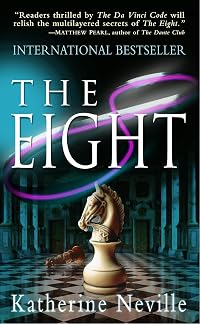
The riveting #1 international bestselling novel about the quest across centuries by two intrepid women in different eras to reunite the pieces of a powerful, ancient chess set A fabulous, bejeweled chess set that belonged to Charlemagne has been buried in a Pyrenees abbey for a thousand years. As the bloody French Revolution rages in Paris, the nuns dig it up and scatter its pieces across the globe because, when united, the set contains a secret power that could topple civilizations. To keep show more the set from falling into the wrong hands, two novices, Valentine and Mireille, embark on an adventure that begins in the streets of Paris and leads to Russia, Egypt, Corsica, and into the heart of the Algerian Sahara. Two hundred years later, while on assignment in Algeria, computer expert Catherine Velis finds herself drawn unwillingly into the deadly "Game" still swirling around the legendary chess set-a game that will require her to risk her life and match wits with diabolical forces. This ebook features an illustrated biography of Katherine Neville including rare images from her life and travels. show lessTags
Recommendations


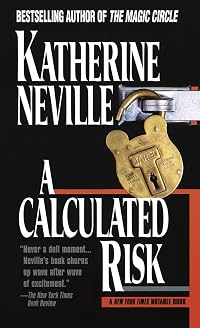
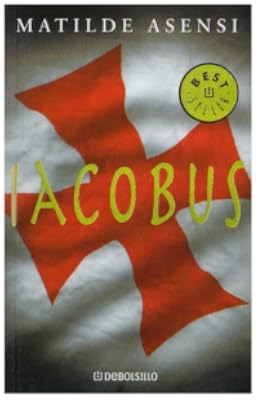



Member Recommendations


rarelibri A murder mystery within the backdrop of chess tourney. The name of the book itself is taken from a chess position where: A player whose turn it is to move who has no move that does not worsen their position is said to be in zugzwang (Soltis 2003:78). Thus every move would make their position worse, and they would be better off if they could pass and not move.
A great book and for fans of Neville.
rarelibri
30
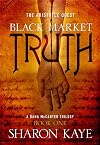
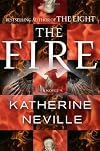
PghDragonMan The two books are connected by the Montglane Service and The Game
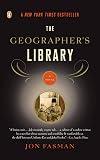

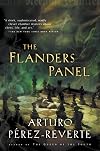
isabelx Historical mysteries involving chess.
majkia similar race to uncover mysteries.
by anonymous user
JAPerlmutter This books by Spanish author Asensi preceded Katherine Neville's The Eight and, in many ways, is more fascinating since it deals with the vagaries of Catholicism and the schisms, myths and spiritual journeys peculiar to the Church's dogma. Strong female protagonist and an ending just as satisfying as Neville's.
Member Reviews
I have a rule that if a book doesn't grab me after 60 pages, I put it down. Its very rare for me to put a book down after that point, as normally I know by then if its for me. To put a book down at page 317 is therefore very odd. But the simple truth was that I had stopped caring altogether. This book promised a lot, and was occasionally very exciting, but its flaws massively overshadow the good bits. So here are my two main problems with it. Spoilers may exist.
Firstly, it relies on too many coincidences. I never got to find why the narrator has been chosen to go and search for the magic chess set, but isn't it useful that she just happens to be friends with both a chess champion and a chess -obsessed cryptologist who can fill in all show more the details for her. That sort of thing.
Secondly, it relies on so many ethnic caricatures that it is utterly tiresome. Jewish people are grasping and over-dramatic, Arabs are either mystical sons of the desert or hook-nosed grand vizier types, the Soviets are all either authoritarian grey clones or secret capitalists running rings around the dull commies. As for the various peoples depicted in the 1790s plot, well, the French and the Corsicans should have cause to be offended too.
In the end it was too much for me and I tossed the book aside, utterly frustrated. show less
Firstly, it relies on too many coincidences. I never got to find why the narrator has been chosen to go and search for the magic chess set, but isn't it useful that she just happens to be friends with both a chess champion and a chess -obsessed cryptologist who can fill in all show more the details for her. That sort of thing.
Secondly, it relies on so many ethnic caricatures that it is utterly tiresome. Jewish people are grasping and over-dramatic, Arabs are either mystical sons of the desert or hook-nosed grand vizier types, the Soviets are all either authoritarian grey clones or secret capitalists running rings around the dull commies. As for the various peoples depicted in the 1790s plot, well, the French and the Corsicans should have cause to be offended too.
In the end it was too much for me and I tossed the book aside, utterly frustrated. show less
A very dense book, traveling between the French Revolution and its aftermath, and during the early 70's in the nascent OPEC coalition. The basis for the mystery is a chess set, the Montglane Service, given to Charlemagne by Moorish allies, that contained a formula and a power of raising and destroying great kingdoms. The Service is hidden for a thousand years in the Montglane Abbey until events leading up to the French Revolution cause it to be scattered throughout France, Algeria, Russia, and England.
The book opens with two young nuns at Montglane Abbey, Valentine and Mireille, who are called upon to be a conduit for the pieces as the Abbey is broken up and the pieces are scattered in 1792. These two young women are sent to live with show more the painter David as his wards and are later to get caught up in the September Massacres. Notable figures who have an interest in this chess set include the Bishop d'Autun (Charles-Maurice Talleyrand), Maras, Charlotte Corday, and Catherine the Great of Russia.
Fast forward to early 1970's New York, where a young computer programmer is given the task of creating a program to chart the oil output of the Middle Eastern countries that are becoming OPEC. Catherine (the narrator) is brought into events, all unwittingly, through the chess prowess of the Russian chess master Solarin, her cousin Lily and Lily's wealthy family, a mysterious friend named Nim who seems to have an understanding of the forces at work, and her contacts in Algeria, Dr. Kamel and Sharrif.
Both time periods have action that takes them from their native countries to Algeria with trusted guides, and both Mireille and Catherine grow to realize the burden of the tasks they are called upon: to find and guard the chessboard, its embroidered cover, and the fantastically wrought chess pieces. Because hidden within the formula carved on the pieces, the board, and embroidered in the cloth is the secret to their use and their power. The burden lies in discovering what piece they themselves represent on the board and how to keep the pieces from falling into the wrong hands.
It's been compared to "Raiders of the Lost Ark" and I tend to agree: once the reader suspends belief and becomes involved in the story, it becomes a rousing adventure. But the denseness of the narrative and the meandering nature of the events cause the readability to be difficult and its non-linear writing at times distracting. show less
The book opens with two young nuns at Montglane Abbey, Valentine and Mireille, who are called upon to be a conduit for the pieces as the Abbey is broken up and the pieces are scattered in 1792. These two young women are sent to live with show more the painter David as his wards and are later to get caught up in the September Massacres. Notable figures who have an interest in this chess set include the Bishop d'Autun (Charles-Maurice Talleyrand), Maras, Charlotte Corday, and Catherine the Great of Russia.
Fast forward to early 1970's New York, where a young computer programmer is given the task of creating a program to chart the oil output of the Middle Eastern countries that are becoming OPEC. Catherine (the narrator) is brought into events, all unwittingly, through the chess prowess of the Russian chess master Solarin, her cousin Lily and Lily's wealthy family, a mysterious friend named Nim who seems to have an understanding of the forces at work, and her contacts in Algeria, Dr. Kamel and Sharrif.
Both time periods have action that takes them from their native countries to Algeria with trusted guides, and both Mireille and Catherine grow to realize the burden of the tasks they are called upon: to find and guard the chessboard, its embroidered cover, and the fantastically wrought chess pieces. Because hidden within the formula carved on the pieces, the board, and embroidered in the cloth is the secret to their use and their power. The burden lies in discovering what piece they themselves represent on the board and how to keep the pieces from falling into the wrong hands.
It's been compared to "Raiders of the Lost Ark" and I tend to agree: once the reader suspends belief and becomes involved in the story, it becomes a rousing adventure. But the denseness of the narrative and the meandering nature of the events cause the readability to be difficult and its non-linear writing at times distracting. show less
My book club likes to choose different genres throughout the year in order to push each of us out of our reading ruts. Katherine Neville's The Eight was a push for me since I neither read thrillers nor play chess. I don't love mysteries and I haven't found a book that does slight of hand (eyes?) that I've liked since I was young and reading Ellen Raskin's masterful The Westing Game. I might have grumbled over the group's choice but I was a dutiful member and read it. And it was fine. It didn't really change my perceptions of the genre but since I didn't hate it, I consider the whole thing generally a success.
Opening at the end of the eighteenth century at Montglane Abbey in the south of France, two young novices are told of the show more existence of the Montglane Service, a chess set imbued with dangerous powers, given to Charlemagne and crafted by the Moors. The one who possesses all of the pieces will be immensely powerful, invincible and immortal. The nuns of the Abbey have guarded the service faithfully but now the political climate in France and the aspirations and cold intelligence of those on the rise have endangered its hiding place. The service must be scattered to the four winds in order to keep it from coming together as a set and granting the wrong person its strength. Mireille and her cousin Valentine are to take a piece of the service and flee to Paris to their guardian. They will risk everything to keep their piece and those of others safe even in the face of the Reign of Terror. And their opponents are some of the brightest, most calculating minds of their time.
Meanwhile, in 1972, Catherine (Cat) Velis is about to leave for Algeria for work when she is warned about the danger to her there. She is a computer expert for IBM being sent to work with the Algerian government where she will come into contact with the newly formed OPEC. Not long before she is to leave, she is approached by an antiques collector who wants her to negotiate for a very old chess service there. Her work and her search for the chess pieces will collide and make for a thrilling, cat-and-mouse game through Northern Africa as she learns more about this chess service that people will even kill to posses.
The novel is certainly rife with intrigue as this dangerous game plays out across Europe, Africa, and America and across history, touching many of the most famous people of the day. The characters are fairly typical for this genre and it is pretty easy to guess who is on the side of good and who is evil, even without putting them mentally on a chess board, although a knowledge of chess moves certainly helps a reader appreciate the novel and the characters who people it better. The double narratives are equally interesting and they do eventually intertwine in an unexpected way. They are always connected by the chess service but the way that the late eighteenth century directly touches the middle twentieth century is unexpected and mystical. Both parallel stories gallop along at a pretty decent clip with danger, close calls, mystery, and revelations around every corner. But the writing itself isn't outstanding and has the potential to bog the reader down although some of the ideas contained here are smart: Fibonacci numbers, chess strategy, music, and their connections to and mirrors of each other. Suspense and thriller fans who want a roller coaster ride will certainly appreciate this more than I, the non-mathematical, non-chess playing, tone deaf me, did. But over all, even for me, it was a quick and decent read. show less
Opening at the end of the eighteenth century at Montglane Abbey in the south of France, two young novices are told of the show more existence of the Montglane Service, a chess set imbued with dangerous powers, given to Charlemagne and crafted by the Moors. The one who possesses all of the pieces will be immensely powerful, invincible and immortal. The nuns of the Abbey have guarded the service faithfully but now the political climate in France and the aspirations and cold intelligence of those on the rise have endangered its hiding place. The service must be scattered to the four winds in order to keep it from coming together as a set and granting the wrong person its strength. Mireille and her cousin Valentine are to take a piece of the service and flee to Paris to their guardian. They will risk everything to keep their piece and those of others safe even in the face of the Reign of Terror. And their opponents are some of the brightest, most calculating minds of their time.
Meanwhile, in 1972, Catherine (Cat) Velis is about to leave for Algeria for work when she is warned about the danger to her there. She is a computer expert for IBM being sent to work with the Algerian government where she will come into contact with the newly formed OPEC. Not long before she is to leave, she is approached by an antiques collector who wants her to negotiate for a very old chess service there. Her work and her search for the chess pieces will collide and make for a thrilling, cat-and-mouse game through Northern Africa as she learns more about this chess service that people will even kill to posses.
The novel is certainly rife with intrigue as this dangerous game plays out across Europe, Africa, and America and across history, touching many of the most famous people of the day. The characters are fairly typical for this genre and it is pretty easy to guess who is on the side of good and who is evil, even without putting them mentally on a chess board, although a knowledge of chess moves certainly helps a reader appreciate the novel and the characters who people it better. The double narratives are equally interesting and they do eventually intertwine in an unexpected way. They are always connected by the chess service but the way that the late eighteenth century directly touches the middle twentieth century is unexpected and mystical. Both parallel stories gallop along at a pretty decent clip with danger, close calls, mystery, and revelations around every corner. But the writing itself isn't outstanding and has the potential to bog the reader down although some of the ideas contained here are smart: Fibonacci numbers, chess strategy, music, and their connections to and mirrors of each other. Suspense and thriller fans who want a roller coaster ride will certainly appreciate this more than I, the non-mathematical, non-chess playing, tone deaf me, did. But over all, even for me, it was a quick and decent read. show less
To say this book is simply about chess would be an egregious mistake. This book is about humanity’s love affair with power. It is about survival and finding the strength to care about something bigger than ourselves. Neville accomplishes this with an interesting duality in storytelling. The reader will cycle between viewpoints written by two different women in two very different centuries. We join young Kat in a dangerous game of survival that she is unprepared for, and nearly oblivious to, in the 20th century. This is interspersed with accounts from two centuries earlier, centering around young nuns escaping and enduring the French Revolution. The two stories dance around each other for over half the book before colliding into one show more another and leaving the reader ready for more. show less
The Eight uses a lot of ingredients that have been successfully incorporated many times since in popular books and movies - Freemasonry, alchemy, the mysterious Middle East. Because these tropes have become so popular as plot devices, the possibility of them feeling stale is high. I felt like this novel was able to stand on its own well, despite the passing of years, because of Neville's expert weaving together of all these familiar strands into a story both exciting and fresh.
Neville's two main heroines, Cat and Mireille, were intelligent and dauntless, and following their dangerous and heroic exploits was complete and utter fun. I genuinely felt anxious on more than one occasion, because I was that involved in their stories. Because show more this novel has been the inspiration for so much that followed, some of the plot twists were easier to predict, but there were still plenty of surprises along the way.
Very, very good - definitely recommended. show less
Neville's two main heroines, Cat and Mireille, were intelligent and dauntless, and following their dangerous and heroic exploits was complete and utter fun. I genuinely felt anxious on more than one occasion, because I was that involved in their stories. Because show more this novel has been the inspiration for so much that followed, some of the plot twists were easier to predict, but there were still plenty of surprises along the way.
Very, very good - definitely recommended. show less
“But she has risen now—like the pieces of the Montglane Service. And we may well tremble, all of us. For this is the end that was foretold."
I don't think that I will be able to explain just what an amazing adventure that this book turned out to be. I was invited by the publisher to read this book (this being the first time that the book is being published in ebook format) and even though I was a bit wary of it I decided to give it a try. Little did I know that once I picked it up it would be nearly impossible to put down.
This book switches between the 1970's and the 1790's. In the 1970's readers follow Cat as she is being shipped off to exile in Algeria after upsetting some major players at her work. Before she can even get to show more Algeria she is thrown into some mysteries in which she will only be able to find answers in Algeria. In the 1790's we follow two French novices, Valentine and Mireille, who are lead on a dangerous mission by their abbess.
I was originally wary about this book because I don't know how to play chess and I thought that I would need to know how to enjoy this book. While this book does have a lot of chess in it I still found it absolutely fascinating even with my lack of knowledge about chess. There was just so much adventure to this story and so many twists and turns that I was constantly amazed by this story and practically on the edge of my seat throughout. I don't want to give anything away about the plot as I feel that everyone should go into reading this with a clean slate.
I really loved the cast of characters in this book. There were characters that I really grew to love (and loved to follow) from both time periods. I originally did not like Lily at all but as the story progressed she really grew on me. There were plenty of characters from both time periods that I was unsure if they were trustworthy or not and was ultimately glad at where each of those characters ended up at the end.
This has most likely been my favorite read of 2015 so far and I really don't think that anything will be able to top this. I became a maniac absolutely obsessed with this book and felt like I was right there with the characters. I couldn't get enough of this while I was reading it and quite frankly I am a bit bummed that its over. Thank you (so very much) to Netgalley and the publisher for the opportunity to read this book. show less
I don't think that I will be able to explain just what an amazing adventure that this book turned out to be. I was invited by the publisher to read this book (this being the first time that the book is being published in ebook format) and even though I was a bit wary of it I decided to give it a try. Little did I know that once I picked it up it would be nearly impossible to put down.
This book switches between the 1970's and the 1790's. In the 1970's readers follow Cat as she is being shipped off to exile in Algeria after upsetting some major players at her work. Before she can even get to show more Algeria she is thrown into some mysteries in which she will only be able to find answers in Algeria. In the 1790's we follow two French novices, Valentine and Mireille, who are lead on a dangerous mission by their abbess.
I was originally wary about this book because I don't know how to play chess and I thought that I would need to know how to enjoy this book. While this book does have a lot of chess in it I still found it absolutely fascinating even with my lack of knowledge about chess. There was just so much adventure to this story and so many twists and turns that I was constantly amazed by this story and practically on the edge of my seat throughout. I don't want to give anything away about the plot as I feel that everyone should go into reading this with a clean slate.
I really loved the cast of characters in this book. There were characters that I really grew to love (and loved to follow) from both time periods. I originally did not like Lily at all but as the story progressed she really grew on me. There were plenty of characters from both time periods that I was unsure if they were trustworthy or not and was ultimately glad at where each of those characters ended up at the end.
This has most likely been my favorite read of 2015 so far and I really don't think that anything will be able to top this. I became a maniac absolutely obsessed with this book and felt like I was right there with the characters. I couldn't get enough of this while I was reading it and quite frankly I am a bit bummed that its over. Thank you (so very much) to Netgalley and the publisher for the opportunity to read this book. show less
In its early printings, The Eight was compared to Umberto Eco's puzzle-novels, but it doesn't really have their literary integrity. It's probably more deserving of comparison to Dan Brown's film-treatment-cum-novel conspiracy thrillers, which may have been influenced by (or even modeled on) this book.
Pluses: Enigmatic ages-spanning conspiracy constructed around chess. Efficiently told fast-paced adventure story. North African setting rendered with experienced detail and rich imagination. Surfeit of ass-kicking redhead heroines. Little bits of comedy. Cameos by William Blake, Giacomo Casanova, and practically anyone of note in the last decade of the 18th century.
Minuses: Use of third-person narrative in 18th-century plotline which is show more eventually revealed to be contained in a journal. Use of first-person narrative in 20th-century plotline, including chronological inclusion of events unknown at the time to the character describing them. 1970s protagonist of author Katherine Neville is named "Catherine Velis." Really? It's hard to care for Velis, who seems to have everything fall into her lap, and to have no real personal attachments: no reference to any prior lover (is she a 24-year-old virgin?) or close peers or blood relations, just an abundance of mentors and benefactors, who are nearly all eventually implicated in the conspiracy. She was a music major at an unnamed college, but never plays, sings, or actively listens to music during the nine months of her story in the book. Out of three or four major plot twists at the novel's end, I saw a couple of them coming at least 150 pages in advance. I groaned out loud at this passage from page 108, spoken to the French Abbess of Montglane by Catherine the Great in 1791:
"I know the secret is older than the Moors, older than the Basques. Older, indeed, than the Druids. I must ask you, my friend, have you ever heard of a society of men who sometimes call themselves the Freemasons?"
On the whole, it's a reasonably fun read for those of us who like this sort of thing. The historical parts audaciously conscript an enormous range of famous figures, usually with some level of believability, and the modern parts churn out a bewildering array of heterogeneous clues before the solutions start to cohere. I'm not signing up for the sequel, though. show less
Pluses: Enigmatic ages-spanning conspiracy constructed around chess. Efficiently told fast-paced adventure story. North African setting rendered with experienced detail and rich imagination. Surfeit of ass-kicking redhead heroines. Little bits of comedy. Cameos by William Blake, Giacomo Casanova, and practically anyone of note in the last decade of the 18th century.
Minuses: Use of third-person narrative in 18th-century plotline which is show more eventually revealed to be contained in a journal. Use of first-person narrative in 20th-century plotline, including chronological inclusion of events unknown at the time to the character describing them. 1970s protagonist of author Katherine Neville is named "Catherine Velis." Really? It's hard to care for Velis, who seems to have everything fall into her lap, and to have no real personal attachments: no reference to any prior lover (is she a 24-year-old virgin?) or close peers or blood relations, just an abundance of mentors and benefactors, who are nearly all eventually implicated in the conspiracy. She was a music major at an unnamed college, but never plays, sings, or actively listens to music during the nine months of her story in the book. Out of three or four major plot twists at the novel's end, I saw a couple of them coming at least 150 pages in advance. I groaned out loud at this passage from page 108, spoken to the French Abbess of Montglane by Catherine the Great in 1791:
"I know the secret is older than the Moors, older than the Basques. Older, indeed, than the Druids. I must ask you, my friend, have you ever heard of a society of men who sometimes call themselves the Freemasons?"
On the whole, it's a reasonably fun read for those of us who like this sort of thing. The historical parts audaciously conscript an enormous range of famous figures, usually with some level of believability, and the modern parts churn out a bewildering array of heterogeneous clues before the solutions start to cohere. I'm not signing up for the sequel, though. show less
Members
- Recently Added By
Published Reviews
ThingScore 100
****
Pawns and Kings.
I love reading and reviewing books. Yet if you read a lot of my reviews, (and I hope, Dear Reader, that you do), you will notice how frequently I write about the difficulty I find in reviewing certain books. More often than not I then precede to rave about that book. It’s because as a reviewer I feel that I am beheld to an oath similar to the Hippocratic one taken by show more doctors; first, do no harm.
Good books deserve to be experienced by their readers with as little interference as possible, so I try to give you a feel for the book without dropping spoilers and ruining the reader’s chance to revel in an exceptional work. All of which brings me to The Eight by Katherine Neville. It’s a novel that is tailor-made to fit my little manifesto. It’s very good, very original, and it deserves to be appreciated first-hand. Both the story and the plot are intricate, bordering on the Byzantine, but to break it down, it is about The Montglane Service, an antique Chess set, made in India, and gifted to Charlemagne, which holds mystical and mythic powers, and must be protected by the innocent from falling into the hands of the evil.
There are two main story-lines, one featuring Cat Velis, a computer expert and accountant, who works for Con Ed, in the 1970’s. After refusing to do something illegal for her boss she is sent from New York to a dead-end assignment to Algeria, to work with a then-unknown organization called OPEC. Before she leaves a fortune-teller at a party tells her that her life is in danger, and quick as a wink two people are dead and Cat is afraid that she might be next. The other story is about two young nuns, Valentine and Mirielle, and is set in France during the Revolution. These two are sent to Paris with a mission that involves the mythical Service. Before long everyone is either trying to hide or find this powerful artifact.
If that was all there was to the story, I would be done with my review. The Eight, however, is over 500 pages long, and Ms. Neville has plenty of stories up her sleeve. Historical figures, from the Freemasons to Catherine the Great, from Muammar Gaddafi to Cardinal Richelieu and Charles Maurice de Talleyrand all play significant roles, and Ms. Neville spins plenty of myths and history into her tale as well. Both backgrounds are solid and believable without being burdened by too much minutiae. The prose is solid, and all of the main characters ring true. What makes The Eight really special is the way that Ms. Neville makes the two storylines twist and turn, each enforcing and informing the other until they are, in the end, one. It’s something that is rarely accomplished, and deserves a tip of the cap.
The mythology of Chess also plays an integral part in this novel, and as a lifelong fan of Nabokov, I can say that she does the old master proud, both in her knowledge, and in her execution. Also worth noting is that the complexity of both the story and the plot are closely tied into the underlying motif of the game of Chess. In case you might find this intimidating, let me tell you that I am terrible at Chess, and my knowledge of it’s history is weak, and it never interfered my my enjoyment of this novel. What makes this book so good, in the end, is that all of this is subsumed by the narrative flow. You can read this big, smart novel as a thriller, and enjoy all of the tangents as just gravy. Smart, intricate and sophisticated gravy. Now how is that for an ending sentence?
Review by: Mark Palm
Full Reviews Available at: http://www.thebookendfamily.weebly.co... show less
Pawns and Kings.
I love reading and reviewing books. Yet if you read a lot of my reviews, (and I hope, Dear Reader, that you do), you will notice how frequently I write about the difficulty I find in reviewing certain books. More often than not I then precede to rave about that book. It’s because as a reviewer I feel that I am beheld to an oath similar to the Hippocratic one taken by show more doctors; first, do no harm.
Good books deserve to be experienced by their readers with as little interference as possible, so I try to give you a feel for the book without dropping spoilers and ruining the reader’s chance to revel in an exceptional work. All of which brings me to The Eight by Katherine Neville. It’s a novel that is tailor-made to fit my little manifesto. It’s very good, very original, and it deserves to be appreciated first-hand. Both the story and the plot are intricate, bordering on the Byzantine, but to break it down, it is about The Montglane Service, an antique Chess set, made in India, and gifted to Charlemagne, which holds mystical and mythic powers, and must be protected by the innocent from falling into the hands of the evil.
There are two main story-lines, one featuring Cat Velis, a computer expert and accountant, who works for Con Ed, in the 1970’s. After refusing to do something illegal for her boss she is sent from New York to a dead-end assignment to Algeria, to work with a then-unknown organization called OPEC. Before she leaves a fortune-teller at a party tells her that her life is in danger, and quick as a wink two people are dead and Cat is afraid that she might be next. The other story is about two young nuns, Valentine and Mirielle, and is set in France during the Revolution. These two are sent to Paris with a mission that involves the mythical Service. Before long everyone is either trying to hide or find this powerful artifact.
If that was all there was to the story, I would be done with my review. The Eight, however, is over 500 pages long, and Ms. Neville has plenty of stories up her sleeve. Historical figures, from the Freemasons to Catherine the Great, from Muammar Gaddafi to Cardinal Richelieu and Charles Maurice de Talleyrand all play significant roles, and Ms. Neville spins plenty of myths and history into her tale as well. Both backgrounds are solid and believable without being burdened by too much minutiae. The prose is solid, and all of the main characters ring true. What makes The Eight really special is the way that Ms. Neville makes the two storylines twist and turn, each enforcing and informing the other until they are, in the end, one. It’s something that is rarely accomplished, and deserves a tip of the cap.
The mythology of Chess also plays an integral part in this novel, and as a lifelong fan of Nabokov, I can say that she does the old master proud, both in her knowledge, and in her execution. Also worth noting is that the complexity of both the story and the plot are closely tied into the underlying motif of the game of Chess. In case you might find this intimidating, let me tell you that I am terrible at Chess, and my knowledge of it’s history is weak, and it never interfered my my enjoyment of this novel. What makes this book so good, in the end, is that all of this is subsumed by the narrative flow. You can read this big, smart novel as a thriller, and enjoy all of the tangents as just gravy. Smart, intricate and sophisticated gravy. Now how is that for an ending sentence?
Review by: Mark Palm
Full Reviews Available at: http://www.thebookendfamily.weebly.co... show less
added by thebookendfamily
Lists

Best Historical Fiction
620 works; 261 members

Historical Fiction
889 works; 91 members

Books with "Living Chess"
17 works; 12 members

NPRs your picks: top 100 Killer Thrillers
100 works; 17 members

Books I've Read More Than Once
602 works; 49 members

Books That Will Keep You on the Edge of Your Seat
73 works; 20 members

Favorite Long Books
330 works; 42 members

Crime and Mysteries to Read
746 works; 31 members

Female Author
1,234 works; 67 members
Female Protagonist
1,056 works; 57 members

Fiction Featuring Real People
81 works; 17 members

100 Best Thrillers of All Time
100 works; 6 members
Page Turners
185 works; 11 members

Mind Expanding Books by hackerkid
581 works; 8 members

BingoDOG - Prophecy, Signs, or Portents are part of the plot
18 works; 9 members

Off on a Quest
14 works; 5 members

Fiction Set During a Revolution
55 works; 24 members

Adult Books for YA Readers
194 works; 6 members

Books With Numbers in the Title
308 works; 13 members

Swinging Seventies
255 works; 18 members

Cryptology - non-fiction and fiction
57 works; 4 members

I Can't Finish This Book
189 works; 22 members
Books We'd Want on a Desert Island
204 works; 133 members

Best Mysteries With a Historical Setting
292 works; 160 members
Books We Love to Reread
695 works; 298 members

100 Mysteries and Thrillers to Read in a Lifetime
99 works; 22 members
Talk Discussions
Past Discussions
Has anyone ever read [Katherine Neville] The Eight? in Historical Mysteries (October 2008)
Author Information

16+ Works 8,823 Members
All Editions
Some Editions
Awards and Honors
Notable Lists
Series

Belongs to Publisher Series
Goldmann (44238)
Work Relationships
Common Knowledge
- Canonical title*
- De Acht
- Original title
- The Eight
- Original publication date
- 1988
- People/Characters
- Cat Velis; Mireille de Remy; Valentine de Remy; Charles-Maurice de Talleyrand-Périgord; Napoleon Bonaparte; Aleksandr Solarin (show all 10); Ladislaus Nim; Lily Rad; Jacques Louis-David; Catherine the Great
- Important places
- Algeria; Montglane Abbey, France (Fictional); New York, New York, USA
- Important events
- Reign of Terror (1792-1793)
- Epigraph
- Chess is Life. --- Bobby Fischer
Life is a kind of chess. --- Benjamin Franklin - First words
- A flock of nuns crossed the road, their crisp wimples fluttering about their heads like the wings of large sea birds.
- Quotations*
- Schaken is leven.
Bobby Ficher
Het leven is een soort schaken.
Benjamin Franklin
De typerende personages zijn ofwel voor, ofwel tegen de queeste. Helpers
worden geïdealiseerd als simpelweg galant of rein; wie tegenwerkt, wordt
afgeschilderd als simpelweg slecht of laf.
Vandaar dat ieder standa... (show all)ardpersonage...zijn morele tegenstander
tegenover zich krijgt, als zwarte en witte stukken in een schaakspel.
Anatomie van de kritiek
Northrop Frye - Last words
- (Click to show. Warning: May contain spoilers.)What would it taste like, what would it feel like, if that liquid sliding down my throat was not champagne. But the elixir of life.
- Blurbers
- Pearl, Matthew; Rollins, James
- Original language
- English
*Some information comes from Common Knowledge in other languages. Click "Edit" for more information.
Classifications
Statistics
- Members
- 5,285
- Popularity
- 2,582
- Reviews
- 147
- Rating
- (3.73)
- Languages
- 20 — Bulgarian, Catalan, Danish, Dutch, English, Estonian, Finnish, French, German, Greek, Hungarian, Italian, Lithuanian, Norwegian (Bokmål), Polish, Portuguese, Russian, Serbian, Spanish, Swedish
- Media
- Paper, Audiobook, Ebook
- ISBNs
- 90
- ASINs
- 30