On This Page
Description
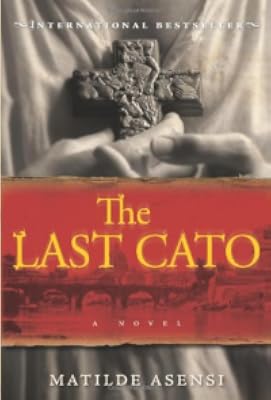
In the same vein as Ruiz-Zafon's "In the Shadow of the Wind" and Daniel Silva's "Prince of Fire" comes an internationally bestselling novel about the search for the secret location of the actual Holy Cross used to crucify Jesus.Tags
Recommendations

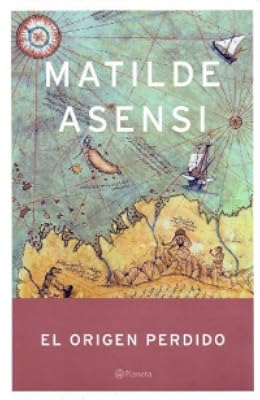

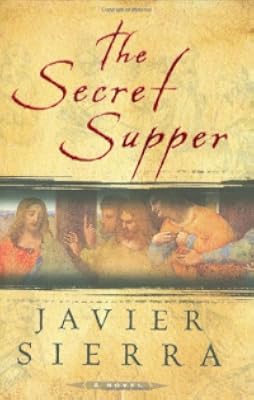

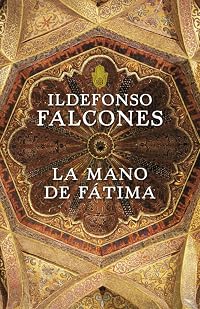


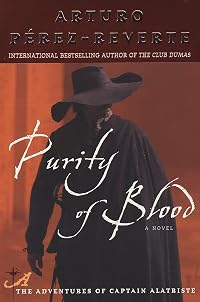
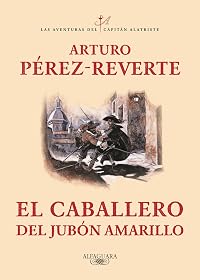




Member Recommendations
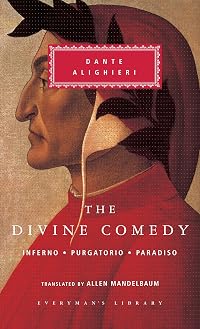
JAPerlmutter This books by Spanish author Asensi preceded Katherine Neville's The Eight and, in many ways, is more fascinating since it deals with the vagaries of Catholicism and the schisms, myths and spiritual journeys peculiar to the Church's dogma. Strong female protagonist and an ending just as satisfying as Neville's.
Member Reviews
I have absolutely no interest in The Da Vinci Code or any books of that sort, but I picked this up for two reasons: my last name is Cato, and it was only $2 for a hardcover at the Phoenix VNSA sale. Personally relevant and cheap!
I was pleasantly surprised by this massive book. Once it got going, I was completely snared. The main character, Ottavia, is a high-ranking nun working in the Vatican. She specializes in ancient manuscripts and research, and therefore she's stunned when her superiors need her expertise in a new assignment - identifying unusual tattoos on the corpse of a dead Ethiopian. To complicate things more, the dead man was carrying along bits of the True Cross - the one Jesus died upon - and bears scarification that show more suggests a long-lost religious order may not be lost after all. Along with a stoic Swiss Army captain and brilliant Coptic Egyptian, the three of them work through linguistic riddles and discover the key to everything is hidden in plain sight - Dante's The Divine Comedy. As other churches around the world reel from the theft of their fragments of the Cross, Ottavia and the others rush to join this hidden order so they can stop the pilfering and confront the enigmatic leader of the group, Cato.
Reading the book reminded me of Indiana Jones and the Last Crusade. This is an intelligent, well-researched book and it was a great deal of fun. The ending had a nice twist that was followed by a bit of a cliche, but that was fine. I was concerned that I'd go through all 458-pages and be disgusted by the ending, as I was recently with Edgar Sawtelle, but that wasn't the case here. It ended like it should. I have no regrets about this $2 purchase. show less
I was pleasantly surprised by this massive book. Once it got going, I was completely snared. The main character, Ottavia, is a high-ranking nun working in the Vatican. She specializes in ancient manuscripts and research, and therefore she's stunned when her superiors need her expertise in a new assignment - identifying unusual tattoos on the corpse of a dead Ethiopian. To complicate things more, the dead man was carrying along bits of the True Cross - the one Jesus died upon - and bears scarification that show more suggests a long-lost religious order may not be lost after all. Along with a stoic Swiss Army captain and brilliant Coptic Egyptian, the three of them work through linguistic riddles and discover the key to everything is hidden in plain sight - Dante's The Divine Comedy. As other churches around the world reel from the theft of their fragments of the Cross, Ottavia and the others rush to join this hidden order so they can stop the pilfering and confront the enigmatic leader of the group, Cato.
Reading the book reminded me of Indiana Jones and the Last Crusade. This is an intelligent, well-researched book and it was a great deal of fun. The ending had a nice twist that was followed by a bit of a cliche, but that was fine. I was concerned that I'd go through all 458-pages and be disgusted by the ending, as I was recently with Edgar Sawtelle, but that wasn't the case here. It ended like it should. I have no regrets about this $2 purchase. show less
I thought the plot of this True Cross conspiracy meets Dante was way over the top and I didn't like the ending. None of the main characters worked well for me and I found the heroine particularly implausible, especially her Sicilian background. That said, it was well researched and there was enough food for thought in parts of it to encourage me to read more of this writer. She is clearly very knowledgeable. I enjoyed what she had to say about Byzantium and she offered some very interesting insights into the Orthodox Church. I am currently reading Asensi's Iacobus, a medieval tale about the lost treasure of the Templars and so far, I think it is a much better book. The translation is better than in The Last Cato. This could be because show more the book is written in a medieval style and is suited to formal English. show less
A Dan Brown-esque adventure based on a complicated MacGuffin using Dante's Divine Comedy to provide clues to the whereabouts of the True Cross of Christ. Actually, a pretty entertaining story, plenty of action and characters that are believable and grow as the book unfolds. Definitely a good summer read although not without drawbacks. The story behind the nun's Sicilian family was not really developed.
Strangely, I found the passage of time in the book very hard to follow. Most of the action passes in hours, but then a sudden shift reveals months have gone by! The action seems to be described in short bursts with no linking narrative to convey the time passing as the characters follow their quest.
A disappointment for me is the show more translation. The language is stilted and clumsy, most of the jokes falling flat or not being properly told. It may be the troubles with time are a result of this translation rather than the original novel. Asensi has been done a disservice here. show less
Strangely, I found the passage of time in the book very hard to follow. Most of the action passes in hours, but then a sudden shift reveals months have gone by! The action seems to be described in short bursts with no linking narrative to convey the time passing as the characters follow their quest.
A disappointment for me is the show more translation. The language is stilted and clumsy, most of the jokes falling flat or not being properly told. It may be the troubles with time are a result of this translation rather than the original novel. Asensi has been done a disservice here. show less
It would be easy to pass Matilde Asensi's The Last Cato off as another of the myriad Da Vinci Code clones flooding the book-market today. Unfortunately, since this book was published in Spain back in 2001 (well before the antics of Robert Langdon rocketed Dan Brown to the top of the bestseller lists), Asensi's work isn't quite as easily ignored. Published in English for the first time this year by Rayo (a HarperCollins imprint), The Last Cato is very much in the same genre as Da Vinci, The Rule of Four, and all the others which use classical literature to uncover modern-day misdeeds.
In this case, the misdeeds are a string of thefts from churches around the world - thefts of the various slivers and chunks of the "True Cross." The show more culprits: the mysterious Staurofilakes, a mysterical brotherhood charged with protecting the Cross when it was whole. But why are they now collecting the pieces? Answering that question becomes the job of an unlikely team: Ottavia Salina, a scholarly nun who works in the Vatican Archives; Kasper Glauser-Roist, a meaty Swiss Guard and Vatican "consigliere" (in the Godfather sense); and Farag Boswell, an ethnically-mixed archaeologist from Egypt.
The trio set off on a bizarre but entirely expected quest through the route that aspiring Staurofilakes must take to prove themselves worthy of the honor. Their road map? Dante Alighieri's Purgatorio, which contains the clues they need to make their way from city to city and survive the challenges that await them there. Dante, you see, was himself one of these Staurofilax characters (although how no one ever noticed the sect's ritual scarifications on him remains undisclosed), and using his text, Salina and the others go on their not-so-merry way, &c. &c. I won't say any more and spoil the plot, but you get the drift.
I must say that within this genre, The Last Cato is one of the better examples I've read. Unfortunately that's not saying all that much. While I found the fairly lengthy explications of early church history and True Cross lore somewhat appealing, it would be nice to know what's real and what Asensi's making up (the lack of a "Historical Note" is one of the major faults, even if it was nice to see her footnoting some of the various quotations she uses in the text). The writing and/or the translation is uneven, which creates some weird Spanishized Latin names that haven't been rendered back into English, along with a few rough patches of dialogue. I had (very) high hopes that the heroine's religious status would preclude the obligatory romantic subplot, but alas, it's here.
All in all, not an awful book (and perhaps slightly better than Da Vinci Code), but that's as far as I'll go.
http://philobiblos.blogspot.com/2007/03/book-review-last-cato.html show less
In this case, the misdeeds are a string of thefts from churches around the world - thefts of the various slivers and chunks of the "True Cross." The show more culprits: the mysterious Staurofilakes, a mysterical brotherhood charged with protecting the Cross when it was whole. But why are they now collecting the pieces? Answering that question becomes the job of an unlikely team: Ottavia Salina, a scholarly nun who works in the Vatican Archives; Kasper Glauser-Roist, a meaty Swiss Guard and Vatican "consigliere" (in the Godfather sense); and Farag Boswell, an ethnically-mixed archaeologist from Egypt.
The trio set off on a bizarre but entirely expected quest through the route that aspiring Staurofilakes must take to prove themselves worthy of the honor. Their road map? Dante Alighieri's Purgatorio, which contains the clues they need to make their way from city to city and survive the challenges that await them there. Dante, you see, was himself one of these Staurofilax characters (although how no one ever noticed the sect's ritual scarifications on him remains undisclosed), and using his text, Salina and the others go on their not-so-merry way, &c. &c. I won't say any more and spoil the plot, but you get the drift.
I must say that within this genre, The Last Cato is one of the better examples I've read. Unfortunately that's not saying all that much. While I found the fairly lengthy explications of early church history and True Cross lore somewhat appealing, it would be nice to know what's real and what Asensi's making up (the lack of a "Historical Note" is one of the major faults, even if it was nice to see her footnoting some of the various quotations she uses in the text). The writing and/or the translation is uneven, which creates some weird Spanishized Latin names that haven't been rendered back into English, along with a few rough patches of dialogue. I had (very) high hopes that the heroine's religious status would preclude the obligatory romantic subplot, but alas, it's here.
All in all, not an awful book (and perhaps slightly better than Da Vinci Code), but that's as far as I'll go.
http://philobiblos.blogspot.com/2007/03/book-review-last-cato.html show less
Although a bit hard to follow at times and dealing with some concepts I was not knowledgeable about, I did enjoy reading this book and particularly liked the woman character.
I am definately going to abandon this particular thriller genre where an object of great historical signifigance -- in this case fragments of 'Lignum Crucis,' the wood of the cross on which Christ was crucified -- launch our protagonists on an international adventure. These stories almost always disappoint me in the end.
Our narrator is a nun who is swept up in this mystery - she and her colleagues (one of whom she so predictably falls in love with) use Dante's Divine Commedy as a guide to passing initiation rights and gleaning the location of the true cross. If this sounds ridiculous . . . it's because it is.
I did enjoy the plethora of history about the Ancient world, early Christianity, and the Byzantine Empire - truly it is the one show more thing that perhaps made it worth reading. But the prose and dialogue were wooden making it easy to put the book down down or drift off even during the ostensibly exciting parts.
Oh Well - as I said, last of this genre for me. A generous 3 stars. show less
Our narrator is a nun who is swept up in this mystery - she and her colleagues (one of whom she so predictably falls in love with) use Dante's Divine Commedy as a guide to passing initiation rights and gleaning the location of the true cross. If this sounds ridiculous . . . it's because it is.
I did enjoy the plethora of history about the Ancient world, early Christianity, and the Byzantine Empire - truly it is the one show more thing that perhaps made it worth reading. But the prose and dialogue were wooden making it easy to put the book down down or drift off even during the ostensibly exciting parts.
Oh Well - as I said, last of this genre for me. A generous 3 stars. show less
In the vein of "The Da Vinci Code", "The Last Cato" is a mystery in which the main characters follow guideposts written in the Purgatory section of "The Divine Comedy" to find the organization behind thefts of pieces of the cross on which Jesus was crucified - 'Lignum Crucis'.
The characters are an anthropologist, historian nun who works in a top secret section of the Vatican translating ancient writings; a Captain of the Guard of the Swiss Guard who works in the inner circles of the Vatican; and an archaeologist, linguist who is an expert in religious studies of the ancient world.
The first chapter was very difficult to get through, very wordy and skipping between different topics as the female main character is described. After that, show more the book read wonderfully. It was fun, albeit a total fantasy of situations. The ending was way off the edge of reality, but still fun.
The under-story is one of faith and our place in the world. The events the characters move through cause them to reexamine their lives and make crucial changes by the end. show less
The characters are an anthropologist, historian nun who works in a top secret section of the Vatican translating ancient writings; a Captain of the Guard of the Swiss Guard who works in the inner circles of the Vatican; and an archaeologist, linguist who is an expert in religious studies of the ancient world.
The first chapter was very difficult to get through, very wordy and skipping between different topics as the female main character is described. After that, show more the book read wonderfully. It was fun, albeit a total fantasy of situations. The ending was way off the edge of reality, but still fun.
The under-story is one of faith and our place in the world. The events the characters move through cause them to reexamine their lives and make crucial changes by the end. show less
Members
- Recently Added By
Published Reviews
Tras el éxito de El salón de ámbar e Iacobus, Matilde Asensi nos presenta una nueva novela tan impactante como aquellas. Todo comienza cuando una científica que trabaja para el Vaticano es llamada para descifrar las extrañas señales aparecidas en el cuerpo de un etíope fallecido en extrañas circunstancias. A partir de aquí se desplegará una trama trepidante y que pondrá al show more descubierto una siniestra conspiración para atentar contra las reliquias más sagradas de la Iglesia. show less
added by Pakoniet
Lists

Recommend the 20 best books you've read in the last five years
2,168 works; 606 members

EU Fiction: 1950-2022
223 works; 70 members
Author Information

23 Works 4,470 Members
Series

Belongs to Publisher Series
Common Knowledge
- Canonical title
- The Last Cato
- Original title
- El Ultimo Caton
- Original publication date
- 2001
- People/Characters
- Dr. Ottavia Salina; Professor Farag Boswell; Captain Kasper Glauser-Roist; Staurofilakes
- Important places
- Vatican City; Alexandria, Egypt; Greece; Sicily, Italy; Istanbul, Turkey; Bolonia
- Dedication
- For Pascual, Andres, Pablo, and Javier
- First words
- All things of beauty- from great works of art to sacred objects- suffer the unstoppable effects of the passage of time, just as we do.
- Last words
- (Click to show. Warning: May contain spoilers.)The letter from Captain Glauser-Roist, written in Captain Glauser-Roist's hand, with the name Captain Glauser-Roist on the envelope was singed Cato CCLVIII.
Classifications
Statistics
- Members
- 1,471
- Popularity
- 15,803
- Reviews
- 49
- Rating
- (3.61)
- Languages
- 9 — Catalan, Czech, English, French, German, Greek, Italian, Portuguese, Spanish
- Media
- Paper, Audiobook, Ebook
- ISBNs
- 55
- ASINs
- 18