On This Page
Description
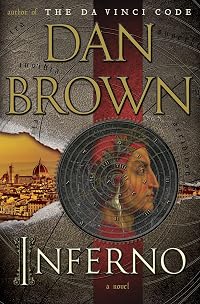
"In the heart of Italy, Harvard professor of symbology Robert Langdon is drawn into a harrowing world centered on one of history's most enduring and mysterious literary masterpieces: Dante's Inferno. Against this backdrop, Langdon battles a chilling adversary and grapples with an ingenious riddle that pulls him into a landscape of classic art, secret passageways, and futuristic science" -- vendor summary.Tags
Recommendations


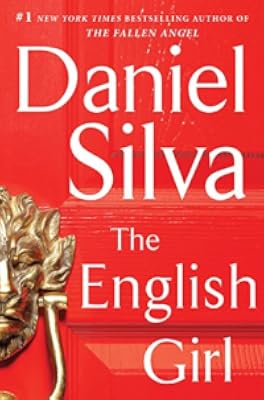
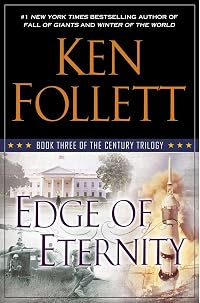

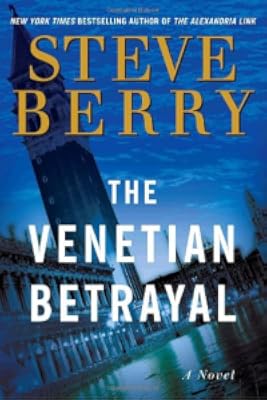
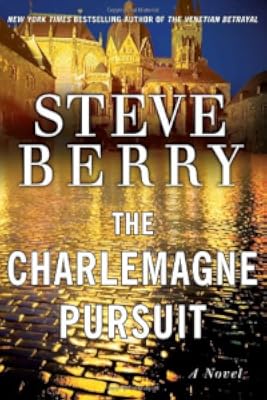
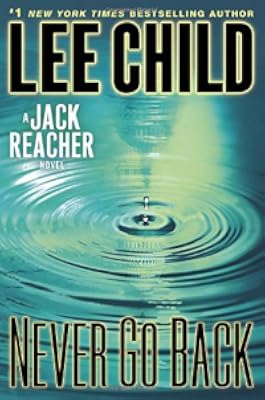
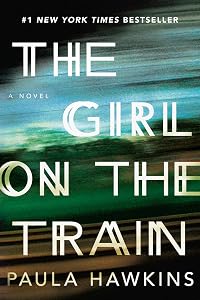
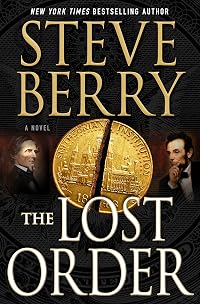
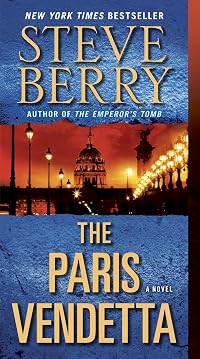
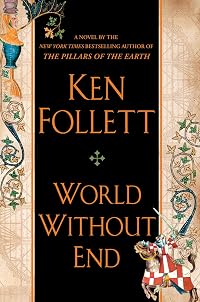
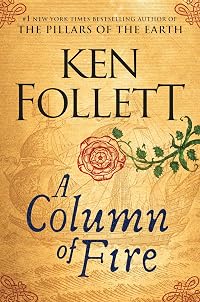
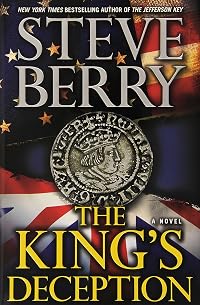
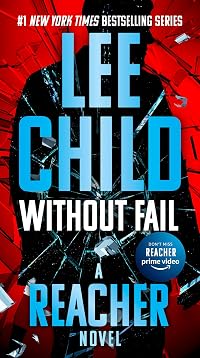
Member Recommendations
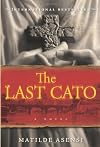
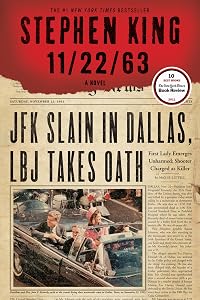
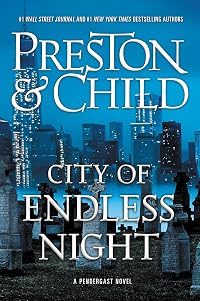
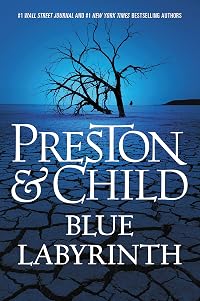
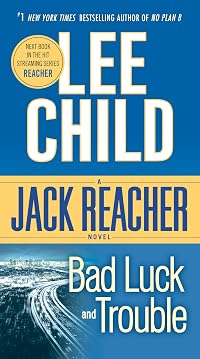
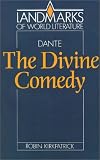
vpfluke Both books are thrillers where the main characters follow trails taken from Dante's Divine Comedy

Member Reviews
I have to say...I was pretty excited when I read the promotional revelation surrounding Dan Brown's latest book: a mystery based on Dante's "Inferno", centered in Florence. This is right up my alley. I've been to Italy twice, most recently this past summer which included my first trip to Florence. And despite Brown's reputation among the biblio-rati as too 'pop', too 'thin', and lacking any literate sensibilities, I've really enjoyed his novels.
And as long as the reader keeps his expectations measured, "Inferno" won't disappoint. In this saga of Robert Langdon, professor, symbologist, and unwitting adventurer-extraordinaire, we find our hero waking in a hospital, suffering from a gunshot wound and having completely lost all of his show more near-term memory. As the plot develops, Langdon must decipher clues that slowly reveal a mystery that he had already partially uncovered before his injury. Brown teases out his story through Dante's classic "Inferno" a tale of hell and damnation that's often considered among the top pieces of literature in the world. Having come from Florence, Dante-themed clues are found from one end of the city to the other, and are "masked" (this will be a great play on words once you read the story) in the city's art and architecture.
There is, naturally, a civilization-impacting consequence and the end of Langdon's mystery.
As always, Brown's fluid prose creates a magnetic tension from chapter-to-chapter. His descriptive abilities sometimes read like the paintings that become character-like in the story. The amnesiac Langdon recalls a hazy dream, that reads like a description of Michelangelo's "Last Judgement" fresco in The Vatican's Sistine Chapel:
"Langdon took a step toward the river, but he could see the waters were bloodred and too deep to traverse. When Langdon raised his eyes again to the veiled woman, the bodies at her feet had multiplied. There were hundreds of them now, maybe thousands, some still alive, writing in agony, dying unthinkable deaths...consumed by fire, buried in feces, devouring one another. He could hear the mournful cries of human suffering echoing across the water."
At times, Dan Brown's books evoke a very Michael Crichton vibe, where science-future meets the present day. But in Brown's worlds, future science, also meets past art, and it's continuing influence and relevance in the present day. Suffice it to say, that a key theme in "Inferno" is world overpopulation and one man's theories and attempts to curb inevitable population trends and the impact that could have on world civilization.
I thoroughly enjoyed "Inferno", but I don't consider it a great book. It's a fun book. It's a quick read. I was caught up in the mystery and thrill, and I feel fulfilled having been exposed to a plethora of Florentine and Renaissance-era art, architecture and history. There are two other primary locations that Langdon and his cohorts visit, but I don't want to expose too much of the plot, as the fun really is in the slow and very purposeful unveiling of each sub-mystery, and the realization of how each fits in with the overall uber-mysteries. show less
And as long as the reader keeps his expectations measured, "Inferno" won't disappoint. In this saga of Robert Langdon, professor, symbologist, and unwitting adventurer-extraordinaire, we find our hero waking in a hospital, suffering from a gunshot wound and having completely lost all of his show more near-term memory. As the plot develops, Langdon must decipher clues that slowly reveal a mystery that he had already partially uncovered before his injury. Brown teases out his story through Dante's classic "Inferno" a tale of hell and damnation that's often considered among the top pieces of literature in the world. Having come from Florence, Dante-themed clues are found from one end of the city to the other, and are "masked" (this will be a great play on words once you read the story) in the city's art and architecture.
There is, naturally, a civilization-impacting consequence and the end of Langdon's mystery.
As always, Brown's fluid prose creates a magnetic tension from chapter-to-chapter. His descriptive abilities sometimes read like the paintings that become character-like in the story. The amnesiac Langdon recalls a hazy dream, that reads like a description of Michelangelo's "Last Judgement" fresco in The Vatican's Sistine Chapel:
"Langdon took a step toward the river, but he could see the waters were bloodred and too deep to traverse. When Langdon raised his eyes again to the veiled woman, the bodies at her feet had multiplied. There were hundreds of them now, maybe thousands, some still alive, writing in agony, dying unthinkable deaths...consumed by fire, buried in feces, devouring one another. He could hear the mournful cries of human suffering echoing across the water."
At times, Dan Brown's books evoke a very Michael Crichton vibe, where science-future meets the present day. But in Brown's worlds, future science, also meets past art, and it's continuing influence and relevance in the present day. Suffice it to say, that a key theme in "Inferno" is world overpopulation and one man's theories and attempts to curb inevitable population trends and the impact that could have on world civilization.
I thoroughly enjoyed "Inferno", but I don't consider it a great book. It's a fun book. It's a quick read. I was caught up in the mystery and thrill, and I feel fulfilled having been exposed to a plethora of Florentine and Renaissance-era art, architecture and history. There are two other primary locations that Langdon and his cohorts visit, but I don't want to expose too much of the plot, as the fun really is in the slow and very purposeful unveiling of each sub-mystery, and the realization of how each fits in with the overall uber-mysteries. show less
In generosity, or in drunkenness, I might consider giving Dan an extra 1/2 star. But don't press me on it, because I might turn on you.
The best thing that ever happened to Dan Brown was Ron Howard. What great movies Howard has made out of adolescent drivel! What a genius Howard is ... for I truly love the "Dan Brown movies", but I have nothing but pity for the man who wrote the books -- and for the editor who let them escape into the world. I know, I know, Mr. Brown is laughing all the way to the bank. That's fine. He's got a great business going, and kudos to him for that because everybody has to pay the rent at the end of the day. But let's not pretend for a minute -- not even a nano-second -- that Dan Brown is a writer.
There is show more absolutely no complexity here. The complicated part was trying to fight my way through Brown's convoluted, almost-impenetrable juvenile reasonings.
Long before I had reached page 161, where the provost is circling the bottle of scotch, and "counting the days until his responsibilities to this client were over..." I had been circling my own liquor cabinet to see if there was anything in there to pull me through this one.
I read it. I read it to the bitter end, to page 462, where the Epilogue puts an end to my own particular brand of "inferno". I read it because it was a gift from my loving, significant other, who probably holds a secret passive-aggressive sentiment to my demise. (In his defence, he doesn't read fiction, ever, and only watches the movies, so he thinks the books are "just as good.") Poor sod, he. Poor sod me, for having been the recipient.
My daughter was delivering more complex plot lines at age 3 with Wonder Woman dolls, than we find in Brown's Inferno. My list of all the things I didn't like about the book are probably longer than 462 pages, so I will bow to the other great reviewers. In truth, I just don't want to relive the pain of Dan Brown by enumerating all his failings in this book. It was difficult enough to have lived through it the first time.
I should have listened to the song more closely, "I Would Do Anything for Love". Wisely, the man says, "... but I won't do that." I shouldn't have done it! show less
The best thing that ever happened to Dan Brown was Ron Howard. What great movies Howard has made out of adolescent drivel! What a genius Howard is ... for I truly love the "Dan Brown movies", but I have nothing but pity for the man who wrote the books -- and for the editor who let them escape into the world. I know, I know, Mr. Brown is laughing all the way to the bank. That's fine. He's got a great business going, and kudos to him for that because everybody has to pay the rent at the end of the day. But let's not pretend for a minute -- not even a nano-second -- that Dan Brown is a writer.
There is show more absolutely no complexity here. The complicated part was trying to fight my way through Brown's convoluted, almost-impenetrable juvenile reasonings.
Long before I had reached page 161, where the provost is circling the bottle of scotch, and "counting the days until his responsibilities to this client were over..." I had been circling my own liquor cabinet to see if there was anything in there to pull me through this one.
I read it. I read it to the bitter end, to page 462, where the Epilogue puts an end to my own particular brand of "inferno". I read it because it was a gift from my loving, significant other, who probably holds a secret passive-aggressive sentiment to my demise. (In his defence, he doesn't read fiction, ever, and only watches the movies, so he thinks the books are "just as good.") Poor sod, he. Poor sod me, for having been the recipient.
My daughter was delivering more complex plot lines at age 3 with Wonder Woman dolls, than we find in Brown's Inferno. My list of all the things I didn't like about the book are probably longer than 462 pages, so I will bow to the other great reviewers. In truth, I just don't want to relive the pain of Dan Brown by enumerating all his failings in this book. It was difficult enough to have lived through it the first time.
I should have listened to the song more closely, "I Would Do Anything for Love". Wisely, the man says, "... but I won't do that." I shouldn't have done it! show less
I enjoy reading Dan Brown, more for his sense of setting, which is its own character. He takes us on another wild ride, Robert Langdon fighting the clock to save the world, full of twists and turns and hidden passages through historical Florence, to Venice and ending in "The Final Destination." A mad scientist, frustrated that people aren't listening, takes matters into his own hands, a villain with a point. Dan brown walks the moral tightrope arguing the validity of the man's claims against the views of humanity and takes us to a satisfying conclusion. As with his other books, he gives you food for thought as he looks at global issues through the narrow lens of one very committed man.
The scenery interrupts the story in places, stopping show more to give the reader a travelogue of Italy. For my part, having visited Florence, I found it interesting, a tour guide's view of some of the places I'd seen, and places I hadn't seen. The artwork, the architecture, the literature all play a role in this story, and as much as I might admit there was overkill in some places, I enjoyed it thoroughly. show less
The scenery interrupts the story in places, stopping show more to give the reader a travelogue of Italy. For my part, having visited Florence, I found it interesting, a tour guide's view of some of the places I'd seen, and places I hadn't seen. The artwork, the architecture, the literature all play a role in this story, and as much as I might admit there was overkill in some places, I enjoyed it thoroughly. show less
Beginning novelists could never get away with writing so sloppy. While Brown's strengths are his big ideas and his clever plot twists, he is plagued (pun)by his own obsession with cliffhangers at the detriment of a real story. My feeling at the end of reading this nightmare is Good Riddance. I was not satisfied with any of his plot points..... The feeling that he has to show you all of his research feels like you are reading a term paper in high school! He continually repeats himself as if he is hitting you over the head. I get it, i know...Never a literary writer to begin with, but this was not even entertaining. It did get me interested in reading Dante but this book was terrible and to contrast Dante and Beatrice to Robert and show more Sienna, is no comparison at all. show less
Harvard symbologist Robert Langdon's fourth adventure 'Inferno' turns out to be more of a thriller-action movie script rather than a novel. It's fast, it's kaleidoscopic, it's dramatic. One may find 'Inferno' as a silhouette of 'The da Vinci Code' against the scintillating background of 'typical Dan Brown conspiracy theory'. From the previous experiences, you certainly remember Langdon's terrifically accurate memory and his profound knowledge of art. To make the battle fair, at all, you need a real smart villain who could possibly stand a chance against Langdon. A worthy contender. Thus, the blessedly brilliant yet a maniac scientist Bertrand Zobrist makes his grand entrance. And Robert Langdon simply can't work with normal people! He show more has quite an eye for picking up the incredibly intelligent heroines. Bingo! There you get Sienna Brooks, a flashing beauty with an IQ of 208. Three of the most smart people on the same boat, what else do you need? A little history of art and an intricate sabotage plot maybe? That's what, in a nutshell, 'Inferno is.
Based on history's one of the greatest poets Dante Alighieri's masterpiece 'The Divine Comedy', 'Inferno' is written. Well, at least, figuratively. In Divine Comedy, Dante made his travel through Hell (Inferno) and Purgatory to reach to the Paradise (Paradiso) finally, making a notion that one has to suffer Hell in order to enjoy Heaven. In the novel, the 'transhumanist' scientist Zobrist wants to raise a hell on Earth by 'eliminating' a portion of the overgrown global population with the help of his engineered virus, only to make the Earth a more habitable place; a true Paradise. Now it's entirely up to Robert Langdon. Can he save the world? In this mission Langdon had to run from USA to the historic cities of Italy and Turkey. He had to experience amnesia for which his memory for one whole day gets lost, an unbelievable event considering his eidetic memory. Car chase, gunfire, deception, nameless 'master of puppets' and what not; you've got a complete Hollywood package. I might add that the philosophy of demolishing today's millions for saving tomorrow's billions is indeed intriguing and may give you some food for thinking.
Myriad of information and references made the book a little boring at times. There were over dramatizations and there were pieces that don't fit together but, nevertheless, Dan Brown is a good storyteller and he manages to keep you glued to the book anyway. The plot probably suits best for a giant screen cineplex than paper books and I'm eagerly waiting to see Tom Hanks, again, in the 2015 movie adaptation.
P.S: I want to thank Dan Brown specially for one particular dialogue by Sienna Brooks and here it goes like this, "....but unfortunately, I've learned to expect the worst from people who hold power." Dude, you just read my mind! show less
Based on history's one of the greatest poets Dante Alighieri's masterpiece 'The Divine Comedy', 'Inferno' is written. Well, at least, figuratively. In Divine Comedy, Dante made his travel through Hell (Inferno) and Purgatory to reach to the Paradise (Paradiso) finally, making a notion that one has to suffer Hell in order to enjoy Heaven. In the novel, the 'transhumanist' scientist Zobrist wants to raise a hell on Earth by 'eliminating' a portion of the overgrown global population with the help of his engineered virus, only to make the Earth a more habitable place; a true Paradise. Now it's entirely up to Robert Langdon. Can he save the world? In this mission Langdon had to run from USA to the historic cities of Italy and Turkey. He had to experience amnesia for which his memory for one whole day gets lost, an unbelievable event considering his eidetic memory. Car chase, gunfire, deception, nameless 'master of puppets' and what not; you've got a complete Hollywood package. I might add that the philosophy of demolishing today's millions for saving tomorrow's billions is indeed intriguing and may give you some food for thinking.
Myriad of information and references made the book a little boring at times. There were over dramatizations and there were pieces that don't fit together but, nevertheless, Dan Brown is a good storyteller and he manages to keep you glued to the book anyway. The plot probably suits best for a giant screen cineplex than paper books and I'm eagerly waiting to see Tom Hanks, again, in the 2015 movie adaptation.
P.S: I want to thank Dan Brown specially for one particular dialogue by Sienna Brooks and here it goes like this, "....but unfortunately, I've learned to expect the worst from people who hold power." Dude, you just read my mind! show less
Ridiculously pretentious. In the previous Robert Langdon books (and to a lesser extent in Dan Brown's other works) the amount of researched facts came across in an interesting way. For the most part they were tied intricately into the plot and created interesting, if made up, historical and contextual puzzles. However, in this latest installment Browns number of research assistants has apparently outpaced his actual ability to write. Instead of interesting facts that make a thrilling plot more interesting we get a perhaps decent plot buried under page after page of completely irrelevant factoids. As Brown walks us through Venice he describes the architecture and history of every mildly important structure even if it has absolutely no show more place in the plot. I bought this book to read a thriller not a tour guide. WOULD NOT RECOMMEND, even if you are a huge Dan Brown fan (as I was even after The Lost Symbol, but certainly not now). show less
Non credo ci siano parole che possano descrivere un genio e un uomo dalla cultura così vasta come Dan Brown. Scordatevi le lezioni noiose di storia, letteratura o arte, perchè con uno dei suoi libri imparerete una valanga di cose senza neppure rendervene conto!
Come forse ho accennato alcune volte non sono un’appassionata di thriller/gialli, probabilmente perchè alla fine si somigliano un po’ tutti. Ebbene, i romanzi di Dan Brown sono l’eccezione che conferma la regola. Io mi chiedo: che mente può avere un autore del genere per ordire delle trame così complesse? Ti fa credere di aver capito tutto per farti rimanere con un palmo dal naso quando meno te l’aspetti. No, non è il maggiordomo il colpevole, mi dispiace. Vogliamo show more poi parlare dello splendido modo con cui descrive gli scenari? Per “colpa” sua vorrei fiondarmi a Firenze in questo esatto momento per ripercorrere i passi di Langdon.
E i personaggi? Imprevedibili fino alla fine, con delle personalità complesse e delle storie tutt’altro che trascurabili. Dan Brown riesce perfettamente ad intrecciare più storie che si riuniranno in un finale grandioso senza appesantire o complicare la lettura.
Inoltre come in ogni sua opera tratta tematiche attuali importanti, e ammetto che questa in particolare mi ha dato parecchio da pensare. Sono rimasta col fiato in gola fino alla fine! E, a proposito di quest’ultima, avrei preferito che fosse un po’ più lunga ma al tempo stesso credo che sia stato meglio concludere così, senza rischiare di rovinare tutto il libro.
Insomma: stupefacente, affascinante, inquietante, avventuroso, intrigante… si è capito che lo adoro? show less
Come forse ho accennato alcune volte non sono un’appassionata di thriller/gialli, probabilmente perchè alla fine si somigliano un po’ tutti. Ebbene, i romanzi di Dan Brown sono l’eccezione che conferma la regola. Io mi chiedo: che mente può avere un autore del genere per ordire delle trame così complesse? Ti fa credere di aver capito tutto per farti rimanere con un palmo dal naso quando meno te l’aspetti. No, non è il maggiordomo il colpevole, mi dispiace. Vogliamo show more poi parlare dello splendido modo con cui descrive gli scenari? Per “colpa” sua vorrei fiondarmi a Firenze in questo esatto momento per ripercorrere i passi di Langdon.
E i personaggi? Imprevedibili fino alla fine, con delle personalità complesse e delle storie tutt’altro che trascurabili. Dan Brown riesce perfettamente ad intrecciare più storie che si riuniranno in un finale grandioso senza appesantire o complicare la lettura.
Inoltre come in ogni sua opera tratta tematiche attuali importanti, e ammetto che questa in particolare mi ha dato parecchio da pensare. Sono rimasta col fiato in gola fino alla fine! E, a proposito di quest’ultima, avrei preferito che fosse un po’ più lunga ma al tempo stesso credo che sia stato meglio concludere così, senza rischiare di rovinare tutto il libro.
Insomma: stupefacente, affascinante, inquietante, avventuroso, intrigante… si è capito che lo adoro? show less
Members
- Recently Added By
Published Reviews
ThingScore 55
"In short, Dan Brown’s “Inferno” is the kind of satisfying escapist read that summers were made for."
added by bookfitz
... there is the sense of play that saves Brown's books from ponderousness, even when he is waxing wise about some ancient mystery or architectural wonder.
added by rodneyvc
"Unfortunately, at other times the book’s musty passageways seem to be not so much holding history up as sagging under its weight."
added by bookfitz
Lists

Top Five Books of 2013
1,562 works; 721 members

Luetut kirjat
74 works; 1 member

Books set in Firenze (Florence, Italy)
35 works; 1 member

Overdue Podcast
806 works; 9 members

Books Read in 2020
4,379 works; 124 members

Read the book and saw the movie
1,170 works; 195 members

Books Read in 2018
4,360 works; 110 members

Next in Series
85 works; 1 member

Huxley's reading log 2017
45 works; 1 member

Dishonourable Mentions of 2013
189 works; 63 members

Books Read in 2016
4,666 works; 199 members

Nieuwe aanwinsten 2016 Fictie
10 works; 1 member

Art of Reading
188 works; 5 members

The Worst Bestsellers Podcast
295 works; 5 members

Cryptology - non-fiction and fiction
57 works; 4 members

Carole's List
445 works; 13 members

Books We Want To Read Again For The First Time
384 works; 160 members
Author Information

53+ Works 217,878 Members
Dan Brown was born in Exeter, New Hampshire on June 22, 1964. He was a graduate of Amherst College and Phillips Exeter Academy, where he spent time as an English teacher before turning his efforts to writing. In 1996, his interest in code-breaking and covert government agencies led him to write his first novel, Digital Fortress, which quickly show more became a #1 national bestselling eBook. In its first week on sale, The Da Vinci Code debuted at #1 on The New York Times Bestseller list, simultaneously topping bestseller lists at The Wall Street Journal, Publishers Weekly, and San Francisco Chronicle. Later, the book hit #1 on every major bestseller list in the country. The book was made into a motion picture by Columbia Pictures, starring Tom Hanks. Brown's other works include Deception Point; Angels and Demons, which was also adapted into a film, The Lost Symbol, and Inferno, which was recently adapted into a film. Origin is his latest New York Times bestseller. His novels have been translated and published in more than 50 languages around the world. (Bowker Author Biography) show less
Some Editions
Awards and Honors
Awards
Series

Work Relationships
Is contained in
Has the adaptation
Is abridged in
Has as a reference guide/companion
Common Knowledge
- Canonical title*
- Inferno
- Original title
- Inferno
- Original publication date
- 2013-05-14
- People/Characters
- Robert Langdon; Sienna Brooks; Jonathan Ferris; Dante Alighieri
- Important places
- Florence, Tuscany, Italy; Venice, Veneto, Italy; Istanbul, Turkey
- Related movies
- Inferno (2016 | IMDb)
- Epigraph
- The darkest places in hell are reserved for those who maintain their neutrality in times of moral crisis.
- Dedication
- Signé
- First words
- I am the Shade. (Prologue)
- Quotations*
- «… Nell'uomo, la negazione è un fattore importante nei meccanismi di gestione dello stress. Se non ci fosse, ci sveglieremmo ogni mattina terrorizzati al pensiero di tutti i modi in cui potremmo morire. Invece la mente um... (show all)ana blocca ogni nostra paura esistenziale concentrandosi sugli stress che riesce a gestire, come per esempio arrivare in ufficio in orario o pagare le tasse. Se ci vengono in mente paure esistenziali più ampie, le rigettiamo subito e torniamo a concentrarci su compiti semplici e banalità quotidiane».
- Last words
- (Click to show. Warning: May contain spoilers.)The sky had become a glistening tapestry of stars. (Epilogue)
- Publisher's editor*
- Jason Kaufman
- Original language
- English
*Some information comes from Common Knowledge in other languages. Click "Edit" for more information.
Classifications
Statistics
- Members
- 14,013
- Popularity
- 534
- Reviews
- 540
- Rating
- (3.56)
- Languages
- 33 — Arabic, Bosnian, Catalan, Chinese, Czech, Danish, Dutch, English, Estonian, Finnish, French, German, Greek, Hungarian, Italian, Japanese, Korean, Latvian, Lithuanian, Malayalam, Marathi, Norwegian (Bokmål), Norwegian, Polish, Portuguese, Romanian, Russian, Serbian, Slovak, Spanish, Swedish, Turkish, Ukrainian
- Media
- Paper, Audiobook, Ebook
- ISBNs
- 204
- ASINs
- 40