On This Page
Description
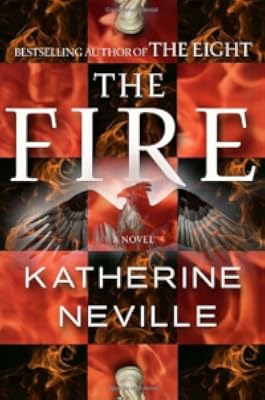
2003, Colorado: Alexandra Solarin is summoned home to her family's ancestral Rocky Mountain hideaway for her mother's birthday. Thirty years ago, her parents, Cat Velis and Alexander Solarin, believed that they had scattered the pieces of the Montglane Service around the world, burying with them the secrets of the power that comes with possessing it. But Alexandra arrives to find that her mother is missing and that a series of strategically placed clues, followed swiftly by the unexpected show more arrival of a mysterious assortment of houseguests, indicates that something sinister is afoot. 1822, Albania: Thirty years after the French Revolution, when the chess service was unearthed, all of Europe hovers on the brink of the War of Greek Independence. Ali Pasha, the most powerful ruler in the Ottoman Empire, has angered the sultan and is about to be attacked by Turkish forces. Now he sends the only person he can rely upon-his young daughter, Haidee--on a dangerous mission to smuggle a valuable relic out of Albania, through the mountains and over the sea, to the hands of the one man who might be able to save it. show lessTags
Recommendations







Member Recommendations
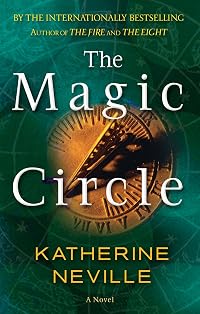
PghDragonMan Both works feature mystic orders carrying secret information. Both are founded on just enough history to leave you wondering if really could be true.

PghDragonMan Numerology, arcane science, secret societies and foreign languages bind these two works together.
PghDragonMan The two books are connected by the Montglane Service and The Game
Member Reviews
When I snagged The Fire as an Early Review book, I bought The Eight and read it first in order to become acquainted with the context. I did not enjoy The Eight, and found it to be cumbersome, ridiculous, and hard to read. But I got through it because I had already committed to reading and reviewing The Fire.
The Fire was even worse than The EIght. I could not even persuade myself to finish the last third of the book. Not only was it cumbersome and ridiculous, but there were just no characters that I found to be believable or sympathetic. As in The Eight, the characters would experience extreme emotions like rage or terror (or so the author said), and I'd have no idea why.
And then there's the puzzle quotient. Every time two or more show more characters are in a room together, there's a puzzle to solve, with ridiculously esoteric clues--but the brilliant main character always knows the inner workings of the puzzler's mind, and figures it out in mere minutes. The whole thing lacked credibility.
The story about a mysterious chess set with supernatural powers was told in parallel historic and modern settings. I didn't buy either of them. I like fantasy as much as the next girl--but I was never convinced that the characters had any reason at all to believe in The Game or the magical chess set.
I wondered if Neville actually had an editor, and if so, why didn't she red-ink the cliches that took the place of actual creativity.
I think Neville actually has an interesting story idea and a potentially fantastic historical-modern connection. It just wasn't executed well enough to be worth reading. show less
The Fire was even worse than The EIght. I could not even persuade myself to finish the last third of the book. Not only was it cumbersome and ridiculous, but there were just no characters that I found to be believable or sympathetic. As in The Eight, the characters would experience extreme emotions like rage or terror (or so the author said), and I'd have no idea why.
And then there's the puzzle quotient. Every time two or more show more characters are in a room together, there's a puzzle to solve, with ridiculously esoteric clues--but the brilliant main character always knows the inner workings of the puzzler's mind, and figures it out in mere minutes. The whole thing lacked credibility.
The story about a mysterious chess set with supernatural powers was told in parallel historic and modern settings. I didn't buy either of them. I like fantasy as much as the next girl--but I was never convinced that the characters had any reason at all to believe in The Game or the magical chess set.
I wondered if Neville actually had an editor, and if so, why didn't she red-ink the cliches that took the place of actual creativity.
I think Neville actually has an interesting story idea and a potentially fantastic historical-modern connection. It just wasn't executed well enough to be worth reading. show less
 This review was written for LibraryThing Early Reviewers.
I was unfamiliar with Katherine Neville and her earlier oeuvre, but the description of The Fire was one of the more interesting synopses from the July batch of the Early Reviewer's offerings. The story is promised to blend swashbuckling actions with suspenseful intrigues all the while folding in elements of History, Literature, Science, Math, and chess, among others.
The novel was an ambitious endeavor, but, alas, not a successful one. Less like an intricately woven tapestry, the book is a pastiche of hackneyed cliches of improbable coincidences, one dimensional characters, tedious anagram puzzles, and pedantic expositions over a parade of major and minor historical figures.
I also found Neville's writing style grating. Perhaps in a show more misplaced effort to create suspense, she has a penchant for constant cliffhangers and denouements. Flip to a random page, and you're likely to observe the pattern: Why this? Why that? Why the other thing? Announcement of some salient information to move the plot along. Dum dum dum! I can practically hear the organ chord soundtrack. She is also overly fond of using appositions -- every time Byron was invoked, it was "George Gordon, Lord Byron;" and well after the introduction, the narrator still refers to her mother in a stilted fashion: "my mother, Cat Velis." I felt very much beaten over the head throughout the book.
What was perhaps the most disappointing was that the chess hook was muddled. There was a great deal of smoke and mirrors about chess and some mystical Game that was being played out in real life, but every time Neville wrote about some aspect of chess playing, it just did not ring true. I'm not judging her understanding of chess theories, but the book failed to convey to this reader anything more interesting than a lot of jargon.
In summary, this is a book that aspire to be "more than just a suspense novel," but as one of the characters who peppered the book with dopey colloquialism might say, "her eyes were bigger than her stomach" and "she bit off more than she could chew." show less
The novel was an ambitious endeavor, but, alas, not a successful one. Less like an intricately woven tapestry, the book is a pastiche of hackneyed cliches of improbable coincidences, one dimensional characters, tedious anagram puzzles, and pedantic expositions over a parade of major and minor historical figures.
I also found Neville's writing style grating. Perhaps in a show more misplaced effort to create suspense, she has a penchant for constant cliffhangers and denouements. Flip to a random page, and you're likely to observe the pattern: Why this? Why that? Why the other thing? Announcement of some salient information to move the plot along. Dum dum dum! I can practically hear the organ chord soundtrack. She is also overly fond of using appositions -- every time Byron was invoked, it was "George Gordon, Lord Byron;" and well after the introduction, the narrator still refers to her mother in a stilted fashion: "my mother, Cat Velis." I felt very much beaten over the head throughout the book.
What was perhaps the most disappointing was that the chess hook was muddled. There was a great deal of smoke and mirrors about chess and some mystical Game that was being played out in real life, but every time Neville wrote about some aspect of chess playing, it just did not ring true. I'm not judging her understanding of chess theories, but the book failed to convey to this reader anything more interesting than a lot of jargon.
In summary, this is a book that aspire to be "more than just a suspense novel," but as one of the characters who peppered the book with dopey colloquialism might say, "her eyes were bigger than her stomach" and "she bit off more than she could chew." show less
This review was written for LibraryThing Early Reviewers.The Fire was a major drag to get through. I only slogged on because I got it as an ARC with a request from the publisher to send them my thoughts (although, I suppose my thoughts could have been, "God, this book is boring" and then I wouldn't have had to finish it). My biggest problem with the book is that everyone comes across as melodramatic because the author is pushing for it to be a thriller, but none of the events convey the urgency that a thriller should embody. So the urgent reactions that half the characters have are completely unwarranted. Plus, the main character, who is also the narrator through most of the story, has this "huh, that's weird" mentality and petulant child attitude that makes all the major plot points, as well show more as the reactions of other characters, seem like minor inconveniences; nothing to worry about really. The repeated emphasis on this supposedly "dangerous Game" became annoying quickly, given that nothing remotely dangerous happened past the prologue. There's no one pointing guns or being particularly menacing and nothing terribly mysterious happens (like a body falling out of window or something). Just the continued use of the word "dangerous," which wasn't terribly convincing. I'm sure if I were the main character I would have told everyone to go have their head examined. Although, if I were the main character, I would also have been a bit more concerned about the disappearance of my mother at the beginning of the book and probably would not have shrugged it off and flown home without a clue just because I had to get back to work. Who does that?
And just as the book starts to get interesting, after 300 pages of pure tedium, the author starts to skip through the story. "Oh, we have to fly from Alaska to Russia to bring back a key player in this Game. It's really dangerous. We could be killed by the elements or captured as traitors and spies!" End chapter. And then, "We're back in Seattle! Woo, that was some trip!" That's literally it. An awesome opportunity to throw in some real excitement and...nothing. And that basically sets the tone for the entire end of the book.
My point in this rambling review: This book was horrible. It was dull and unsatisfying, leaving one feeling confused and annoyed (not unlike the main character, I suppose). The only positive thing I can say about this book is it left me with warm fuzzy feelings about the first book (The Eight), which I had slightly less than lukewarm feelings about before; compared to this book, The Eight was a piece of brilliance. show less
And just as the book starts to get interesting, after 300 pages of pure tedium, the author starts to skip through the story. "Oh, we have to fly from Alaska to Russia to bring back a key player in this Game. It's really dangerous. We could be killed by the elements or captured as traitors and spies!" End chapter. And then, "We're back in Seattle! Woo, that was some trip!" That's literally it. An awesome opportunity to throw in some real excitement and...nothing. And that basically sets the tone for the entire end of the book.
My point in this rambling review: This book was horrible. It was dull and unsatisfying, leaving one feeling confused and annoyed (not unlike the main character, I suppose). The only positive thing I can say about this book is it left me with warm fuzzy feelings about the first book (The Eight), which I had slightly less than lukewarm feelings about before; compared to this book, The Eight was a piece of brilliance. show less
This review was written for LibraryThing Early Reviewers.An Early Reviewer book.
Twenty years ago, Neville published The Eight, which I read around that time. I reread The Eight recently, in order to prepare myself for the sequel, The Fire. I didn’t change my opinion of The Eight—good but writing that struck me as almost juvenile. The plot itself is hard to describe in terms of genre. Chess forms the matrix of the story. Puzzles (a la The Da Vinci Code, which was published much later, in 2003), murders, quests, history, two time frames (present and French Revolution)—a combination of all of those. Good premises for the story. But the combination of mediocre writing and too many disconnects in the twists and turns of the plot really detracted from the book. Still, it was a good if not show more outstanding read.
With The Fire, it really seems as if Neville took an outline of The Eight and just transposed new names and time frames into the plot. Again, chess is at the heart of the plot. Exactly the same format as The Eight, exactly the same plot development, even down to details of the romantic development, puzzles within puzzles, murders, history (this time set in 1822 and the present), quests, historical figures woven into the plot—you really feel you’re reading the same book only with its faults magnified.
Neville’s writing has improved although there are still lapses into a style that makes you cringe as you read it—again, juvenile—and I’m sure her historical research is excellent.
But everything else is over the top—too much of everything. Too many twists and turns, too many unexplained leaps in the plot, characters left dangling, too many absurd entries of historical figures such as Thomas Jefferson, and to top it all off, such a strained plot that it not just strains credulity but shatters it.
The best example I can give: about half way through the book, two chess Grand Masters are playing a game, with a chess expert watching. White is suddenly in an uncomfortable position in which, according to the book, she can see no way out. Neither can the expert and even the other Grand Master. Suddenly up trundles a 3 year old who, with one move with White’s knight, checkmates the Black king. Everyone just falls over themselves at this display of precocity.
I have no trouble whatsoever with the idea of precocity in a 3 year old but I have major heartburn with the concept that in one move with an obvious piece a child—or anyone—checkmates the other side’s king—and three chess experts didn’t see it. Give me a break. That’s going beyond suspension of belief into absurdity.
The entire book is more or less like that. Too much that strains credulity beyond reasonable limits.
The tension in the plot really doesn't justify the actions; everybody talks about the terrible dangers the protagonists are in but that's it--it's all talk. The climax is so pathetic that it's embarrassing. The ending is extremely weak and makes the whole plot seem pointless.
All in all a major disappointment. show less
Twenty years ago, Neville published The Eight, which I read around that time. I reread The Eight recently, in order to prepare myself for the sequel, The Fire. I didn’t change my opinion of The Eight—good but writing that struck me as almost juvenile. The plot itself is hard to describe in terms of genre. Chess forms the matrix of the story. Puzzles (a la The Da Vinci Code, which was published much later, in 2003), murders, quests, history, two time frames (present and French Revolution)—a combination of all of those. Good premises for the story. But the combination of mediocre writing and too many disconnects in the twists and turns of the plot really detracted from the book. Still, it was a good if not show more outstanding read.
With The Fire, it really seems as if Neville took an outline of The Eight and just transposed new names and time frames into the plot. Again, chess is at the heart of the plot. Exactly the same format as The Eight, exactly the same plot development, even down to details of the romantic development, puzzles within puzzles, murders, history (this time set in 1822 and the present), quests, historical figures woven into the plot—you really feel you’re reading the same book only with its faults magnified.
Neville’s writing has improved although there are still lapses into a style that makes you cringe as you read it—again, juvenile—and I’m sure her historical research is excellent.
But everything else is over the top—too much of everything. Too many twists and turns, too many unexplained leaps in the plot, characters left dangling, too many absurd entries of historical figures such as Thomas Jefferson, and to top it all off, such a strained plot that it not just strains credulity but shatters it.
The best example I can give: about half way through the book, two chess Grand Masters are playing a game, with a chess expert watching. White is suddenly in an uncomfortable position in which, according to the book, she can see no way out. Neither can the expert and even the other Grand Master. Suddenly up trundles a 3 year old who, with one move with White’s knight, checkmates the Black king. Everyone just falls over themselves at this display of precocity.
I have no trouble whatsoever with the idea of precocity in a 3 year old but I have major heartburn with the concept that in one move with an obvious piece a child—or anyone—checkmates the other side’s king—and three chess experts didn’t see it. Give me a break. That’s going beyond suspension of belief into absurdity.
The entire book is more or less like that. Too much that strains credulity beyond reasonable limits.
The tension in the plot really doesn't justify the actions; everybody talks about the terrible dangers the protagonists are in but that's it--it's all talk. The climax is so pathetic that it's embarrassing. The ending is extremely weak and makes the whole plot seem pointless.
All in all a major disappointment. show less
This review was written for LibraryThing Early Reviewers.This is the sequel to what was an apparently super-hit novel released a decade or so ago. I haven't read the first one (indeed, I had never heard of it before receiving this book for review) and my feeling is that this second book would have made much more sense to me if I had read the first one.
Let me discuss the pros first. This book is a boiling cauldron filled to overflowing with the essences of history, mystery, chess and intrigue. The research that the author has gone into creating this book is awesome. The quotes, the history, the way it's all incorporated into the story is just stunning. The pace is rapid and the plotting intricate.
There are a lot of good elements in this story. The trouble, at least from my point of view, is show more that there are too many facets to this story for a reader to keep track of. Too many mysteries wrapped in conundrums wrapped in puzzles. The entire novel is a mix of too many cultures, too many time periods, too many characters, too many things happening on too many fronts simultaneously. I was frankly left bewildered time and again as many things didn't make sense to me at all.
The one basic question that plagued me was - there's a missing chess set and somehow live human beings are being called The White Queen, Black King etc? I mean, how did that come about? Who designates these so called queens and kings? Why is it happening in the first place? People don't age, everybody seems to talk in riddles, there's nothing straightforward about anything. And with the amount of peril surrounding them, you would expect at least the protagonist to be a bit more cautious. But no - that never happens!
It's the first time in my life I've ever been left so bewildered by a book. I would highly recommend readers read the first book in this series before even thinking of reading this one. Hopefully they'll be able to make more sense of this novel that I can. show less
Let me discuss the pros first. This book is a boiling cauldron filled to overflowing with the essences of history, mystery, chess and intrigue. The research that the author has gone into creating this book is awesome. The quotes, the history, the way it's all incorporated into the story is just stunning. The pace is rapid and the plotting intricate.
There are a lot of good elements in this story. The trouble, at least from my point of view, is show more that there are too many facets to this story for a reader to keep track of. Too many mysteries wrapped in conundrums wrapped in puzzles. The entire novel is a mix of too many cultures, too many time periods, too many characters, too many things happening on too many fronts simultaneously. I was frankly left bewildered time and again as many things didn't make sense to me at all.
The one basic question that plagued me was - there's a missing chess set and somehow live human beings are being called The White Queen, Black King etc? I mean, how did that come about? Who designates these so called queens and kings? Why is it happening in the first place? People don't age, everybody seems to talk in riddles, there's nothing straightforward about anything. And with the amount of peril surrounding them, you would expect at least the protagonist to be a bit more cautious. But no - that never happens!
It's the first time in my life I've ever been left so bewildered by a book. I would highly recommend readers read the first book in this series before even thinking of reading this one. Hopefully they'll be able to make more sense of this novel that I can. show less
This review was written for LibraryThing Early Reviewers.I once heard Anne Lamott quote another writer as saying that "a confused reader is an antagonistic reader".
I was a big fan of Neville's "The Eight". I read it twice, loaned it to friends, ultimately bought several copies and was carried along by the pace, the puzzle and the characters. "The Fire" seemed just the opposite to me--it was confusing, slow and (saddest of all) boring. Where her first novel pulled me in and gave me a glorious ride, this sequel felt like waiting in line for the next piece of the puzzle--and waiting long enough that I didn't care when I finally spotted it. I finished reading it, but it won't have the re-readings (or the recommendations) that the original novel had.
I was a big fan of Neville's "The Eight". I read it twice, loaned it to friends, ultimately bought several copies and was carried along by the pace, the puzzle and the characters. "The Fire" seemed just the opposite to me--it was confusing, slow and (saddest of all) boring. Where her first novel pulled me in and gave me a glorious ride, this sequel felt like waiting in line for the next piece of the puzzle--and waiting long enough that I didn't care when I finally spotted it. I finished reading it, but it won't have the re-readings (or the recommendations) that the original novel had.
This review was written for LibraryThing Early Reviewers.A mess. Imagine The Da Vinci Code without the page-turner aspect and with historical details too jumbled to follow and characterizations so shallow that you don't even care what happens or who the good guys and the bad guys are. I stopped reading about 20 pages from the end because I realized that I had done my reviewing duty and that I truly did not give a damn.
To be more specific: the prose was clunky, the dialogue stilted and gimmicky where it wanted to be clever, the characters implausible and the plot difficult to follow. It's been some years since I read The Eight, but I find it hard to believe that both books are by the same author.
To be more specific: the prose was clunky, the dialogue stilted and gimmicky where it wanted to be clever, the characters implausible and the plot difficult to follow. It's been some years since I read The Eight, but I find it hard to believe that both books are by the same author.
This review was written for LibraryThing Early Reviewers.Members
- Recently Added By
Lists

Novels that you shouldn't waste your time on
94 works; 52 members

Books with "Living Chess"
17 works; 12 members
Author Information

16+ Works 8,827 Members
Awards and Honors
Distinctions
Series

Common Knowledge
- Canonical title
- The Fire
- Original title
- The Fire
- Original publication date
- 2008-10-14
- People/Characters
- Alexandra Solarin; Aleksandr Solarin; Taras Petrosian; Sage Livingston; Rosemary Livingston; Nokomis Key (show all 20); Rodolpho Boujaron (Rodo); Eramon; Tatiana Solarin; Anton Varzov; Lily Rad; Cat Velis; Basil Livingston; Galen March; Lord Byron; Charlot; Kauri; Haidée; Vartan Azov; Ladislaus Nim
- Important places
- Kamchatka, Russia; Washington, D.C., USA; Morocco; Colorado, USA; Aleutian Islands, Alaska, USA; Piscataway Park, Maryland, USA (show all 7); Jackson Hole, Wyoming, USA
- Epigraph*
- Een meer dan duizend jaar oud mysterie...
Een vloek, sterkt en gevaarlijk...
Een spel....of de formule voor het eeuwig leven? - Dedication
- To Solano
- First words
- Solarin gripped his little daughter's mittened hand firmly in his own.
- Quotations
- "...what game was it?" "An ancient Game,...that was based upon a rare and valuable bejweled Mesopotamian chess set that once belonged to Charlemagne. It was believed to have certain dangerous powers and to ... (show all)be possessed by a curse."
- Last words
- (Click to show. Warning: May contain spoilers.)A firebird, bringing light.
- Blurbers
- Berry, Steve; Kostova, Elizabeth; Rollins, James; Preston, Douglas
*Some information comes from Common Knowledge in other languages. Click "Edit" for more information.
Classifications
Statistics
- Members
- 1,479
- Popularity
- 15,820
- Reviews
- 216
- Rating
- (2.89)
- Languages
- 13 — Catalan, Danish, Dutch, English, Finnish, French, German, Greek, Italian, Norwegian (Bokmål), Polish, Portuguese, Spanish
- Media
- Paper, Audiobook, Ebook
- ISBNs
- 46
- ASINs
- 11
