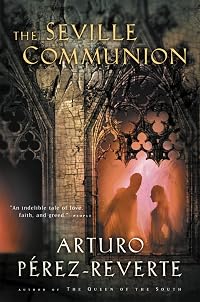
The Seville Communion
by Arturo Pérez-Reverte
On This Page
Description
A hacker breaks into the pope's computer, asking him to save from demolition a 17th century church in Seville. The Vatican dispatches handsome Father Lorenzo Quart who quickly attracts the attention of an aristocratic beauty embroiled in the affair. By the author of The Flanders Panel.Tags
Recommendations

































Member Reviews
This book begins as an exercise in cynicism. Right up at the front you have that declaration that the characters are imaginary, intended, I think, to get you to suspend your suspension of disbelief. At one point one of the characters refers to others as characters in a story. The characters are all, at least partly stereotypes, the three villains being a case in point. The novel itself is so noirist that the author seems to be making a cynical point about how an entire novel can be constructed out of entirely unoriginal elements. The orange trees of Seville are described at one point as "obligatory": even the city is something fatalistically determined.
All very cerebral, and I should stress that the author never lets any of this get in show more the way of a damn good story.
Then, beginning really with the drum skin speech at the end of chapter VIII he really starts to explore the human consequences of living in such a world and at times he touches on things that are really quite beautiful. show less
All very cerebral, and I should stress that the author never lets any of this get in show more the way of a damn good story.
Then, beginning really with the drum skin speech at the end of chapter VIII he really starts to explore the human consequences of living in such a world and at times he touches on things that are really quite beautiful. show less
I read The Flanders Panel and Club Dumas many years ago, and I remember liking them and had put Arturo Pérez-Reverte in the same category as Iain Pears. This novel did not quite reach these expectations. It is a slow, almost plodding, thriller. The main character Father Lorenzo Quart, a priest who works for the Vatican’s Institute for External Affairs (the Pope’s CIA?). Quart is sent to Seville to follow up on a message that a hacker placed in the Pope’s computer requesting help in saving a Seville small church that is under treat to be “decommissioned.”
Quart himself is an interesting character, soldierly and savvy. While he is not overly religious, he sees himself as a Templar Knight, devoted to the cause and obedient to the show more community, more than the ineffable transcendence that is the raison d’être of the community itself. At one point, he explains that he could have easily joined the military rather than the Church. However, as interesting as he is, most of Quart’s supporting cast are all one-dimensional caricatures. They are fun to read about but not necessarily plausible. Much of the book is taken up with the machinations (some silly and outlandish) of the people who want to make sure the church can be destroyed so that they can use its prime real estate. Because of this, the “mystery” itself develops late. However, it does hold a surprise or two.
The book’s descriptions of Seville and its history are lovely, and really give the reader a sense of the city’s identity. (I was in Seville on a package tour in the late 1980s and only remember the big tourist attractions. This makes me want to plan a return trip.)
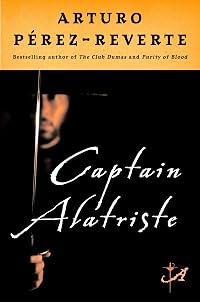
This book was not as good as I hoped, but I plan on continuing to read more books by Pérez-Reverte. Next, I think I am going to look into his Captain Alatriste series, which is about a 17th-century swordsman for hire. show less
Quart himself is an interesting character, soldierly and savvy. While he is not overly religious, he sees himself as a Templar Knight, devoted to the cause and obedient to the show more community, more than the ineffable transcendence that is the raison d’être of the community itself. At one point, he explains that he could have easily joined the military rather than the Church. However, as interesting as he is, most of Quart’s supporting cast are all one-dimensional caricatures. They are fun to read about but not necessarily plausible. Much of the book is taken up with the machinations (some silly and outlandish) of the people who want to make sure the church can be destroyed so that they can use its prime real estate. Because of this, the “mystery” itself develops late. However, it does hold a surprise or two.
The book’s descriptions of Seville and its history are lovely, and really give the reader a sense of the city’s identity. (I was in Seville on a package tour in the late 1980s and only remember the big tourist attractions. This makes me want to plan a return trip.)
This book was not as good as I hoped, but I plan on continuing to read more books by Pérez-Reverte. Next, I think I am going to look into his Captain Alatriste series, which is about a 17th-century swordsman for hire. show less
I like Perez-Reverte and this is the third of his books that I have read, starting with The Flanders Panel and followed by The Club Dumas (97:15). Each is a mystery, but mysteries written with elegance, interesting characters, and interesting themes and ruminations on the bigger questions of life. The first centred on finding the identity of a murderer through a chess moves received in the mail while trying at the same time to decipher the significance of the depiction of a chess game in a Flanders panel. The second dealt with a search for an ancient copy of a book by Alexander Dumas and was complicated with the influence of ancient texts on alchemy. The Seville Communion takes another tact altogether, and begins with a computer hacker show more breaking into the private files of the Pope, in Rome, to warn him of strange goings-on, and death in a small church in Seville. Father Lorenzo Quart, from the internal security forces of the Vatican, is sent to investigate in Seville and to try to find the identity of the hacker. Father Quart runs into quite a cast of characters: Sister Gris Marsala, a restoration specialist (the church is falling down) from California; Father Ferrao, the simple, devoted, blunt, and even coarse parish priest determined to keep the church open (its site is the prize for real estate speculators); Pencho Gavira, a senior, ambitious bank official much tied up with trying to get the church property; his beautiful wife, Macarena; and her mother, a Duchess from another age; Pencho's assistant who gambles much more than he can afford to and runs afoul of moneylenders; and a wonderful comic trio of inept henchmen (although one is a woman) hired by the assistant to follow Quart and eventually to kidnap Ferrao. Quart is viewed with suspicion by all sides as the meddlesome envoy from Rome who just wants to smooth everything over in order to avoid any embarrassment to the Vatican, or as someone who might thwart the schemes being hatched to obtain the church property. At first unsympathetic, and a "good soldier" who is doing as ordered, Quart comes to understand the passions that drive Ferrao and Gris to keep the church open, and to maintain the link and the solace that it represents for the poor people of the parish. Perez-Reverte's books do not lead to cataclysmic climaxes, indeed the endings almost seem anti-climatic, but getting there is so pleasurable because he writes so well and so intelligently and he ponders bigger questions such as, in this book, the meaning of faith and service and honesty with oneself and with others. show less
I suppose that most of us have about a one in a million chance of ever speaking directly to the Pope. The Holy Father, spiritual leader of millions of people, is also one of the most closely guarded personages on the planet. But it is the 21st century, and even the Pope has a computer. In Perez-Reverte's novel, someone has used this fact to beat the odds. It is eleven minutes before midnight (Vespers) when a hacker breaks into the Vatican computer system and leaves a plea upon the Holy Father's personal computer: Holy Father, In Seville there is a place where merchants are threatening the house of God and where a small 17th century church kills to defend itself…
It is the kind of plea which neither the Pope nor Vatican Security can show more ignore. Which is how Father Lorenzo Quart came to be sent to Seville to find both the church and the author of the message. Quart arrives to find that the church in question is Our Lady of the Tears, and already two people have died mysteriously within its crumbling, sacred walls.
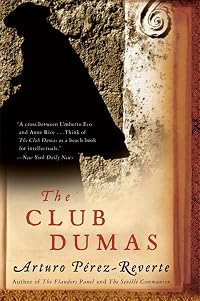
Perez-Reverte has been a kind of literary secret for the last few years. A Spanish writer, whose works have only recently been available in this country, he is the kind of author that reading people love to push onto their friends. "You won't ever have heard of this guy, but you have to read this! This guy is great!" His first book was The Flanders Panel, an intricate and delicious murder mystery where the first victim died in the 15th century and the murderer plays a mean game of chess. His second book, The Club Dumas, follows a shadowy character into the world of rare books, where the price of a first edition is as much as your life is worth.
Like his earlier books, The Seville Communion is a modern murder investigation with a historical mystery behind it. Quart discovers that Our Lady of the Tears is the sight of an eighteenth century love affair gone awry. A noble lady falls in love with a pirate, but her family disapproves. Her desperate letters to him are intercepted. His to her are destroyed, and she goes slowly mad waiting for word from him. The lady lies buried in the crypt of the church, but it is said that her ghost still walks.
Quart is too skeptical by nature to believe in fairy tales, although this one touches him. But there is no denying that there is some sort of force at work in the church. Already two people have died under circumstances that police can only describe as "tragic accidents". A railing gave way at just the wrong time, causing one man to fall to his death. A piece of the damaged plaster ceiling came loose, and crashed down upon the head of another. Our Lady of the Tears has been slated for condemnation. Was it just coincidence that the two people killed were assessing how best to bring the church down?
There is a banker in who would like to put up luxury condos in its place. He has the support of the Archbishop of Seville. The precarious existence of the church is defended by only a few- a nun who would like to restore it to its former glory, the parish priest who feels that the spiritual needs of his flock come before the possibilities of real estate, and a woman who goes to mass every Sunday- a descendent of the mad lady who lies in the crypt. None of these suspects seem to be the likely source of Vespers. Certainly none of them were in the church when the ceiling came down.
As Father Quart delves into the mystery surrounding the church, he realizes why someone felt the need to call upon the Pope for help. The struggle for Our Lady of the Tears is about more than a million-dollar real estate deal (the diocese in Seville actually stands to gain from the sale). It is a struggle about the nature of faith. Quart, whose worldly nature had somewhat jaded his idea of faith, finds himself faced with humble people whose faith in God carries more force than all of the wheeling and dealing of all of the bankers in the city. Could it truly be that God wants the church to stand?
The Seville Communion is one of those great books with many levels to it. It is more than a murder mystery and more than a thriller about the machinations of Vatican politics. The Seville Communion questions the role of the Church in society and the role of the spiritual in our lives. Like Father Quart, the reader finds that the struggle for Our Lady of the Tears is struggle for our soul. show less
It is the kind of plea which neither the Pope nor Vatican Security can show more ignore. Which is how Father Lorenzo Quart came to be sent to Seville to find both the church and the author of the message. Quart arrives to find that the church in question is Our Lady of the Tears, and already two people have died mysteriously within its crumbling, sacred walls.
Perez-Reverte has been a kind of literary secret for the last few years. A Spanish writer, whose works have only recently been available in this country, he is the kind of author that reading people love to push onto their friends. "You won't ever have heard of this guy, but you have to read this! This guy is great!" His first book was The Flanders Panel, an intricate and delicious murder mystery where the first victim died in the 15th century and the murderer plays a mean game of chess. His second book, The Club Dumas, follows a shadowy character into the world of rare books, where the price of a first edition is as much as your life is worth.
Like his earlier books, The Seville Communion is a modern murder investigation with a historical mystery behind it. Quart discovers that Our Lady of the Tears is the sight of an eighteenth century love affair gone awry. A noble lady falls in love with a pirate, but her family disapproves. Her desperate letters to him are intercepted. His to her are destroyed, and she goes slowly mad waiting for word from him. The lady lies buried in the crypt of the church, but it is said that her ghost still walks.
Quart is too skeptical by nature to believe in fairy tales, although this one touches him. But there is no denying that there is some sort of force at work in the church. Already two people have died under circumstances that police can only describe as "tragic accidents". A railing gave way at just the wrong time, causing one man to fall to his death. A piece of the damaged plaster ceiling came loose, and crashed down upon the head of another. Our Lady of the Tears has been slated for condemnation. Was it just coincidence that the two people killed were assessing how best to bring the church down?
There is a banker in who would like to put up luxury condos in its place. He has the support of the Archbishop of Seville. The precarious existence of the church is defended by only a few- a nun who would like to restore it to its former glory, the parish priest who feels that the spiritual needs of his flock come before the possibilities of real estate, and a woman who goes to mass every Sunday- a descendent of the mad lady who lies in the crypt. None of these suspects seem to be the likely source of Vespers. Certainly none of them were in the church when the ceiling came down.
As Father Quart delves into the mystery surrounding the church, he realizes why someone felt the need to call upon the Pope for help. The struggle for Our Lady of the Tears is about more than a million-dollar real estate deal (the diocese in Seville actually stands to gain from the sale). It is a struggle about the nature of faith. Quart, whose worldly nature had somewhat jaded his idea of faith, finds himself faced with humble people whose faith in God carries more force than all of the wheeling and dealing of all of the bankers in the city. Could it truly be that God wants the church to stand?
The Seville Communion is one of those great books with many levels to it. It is more than a murder mystery and more than a thriller about the machinations of Vatican politics. The Seville Communion questions the role of the Church in society and the role of the spiritual in our lives. Like Father Quart, the reader finds that the struggle for Our Lady of the Tears is struggle for our soul. show less
Alerted (by a hacker's message on the Pope's personal computer) to mysterious goings-on in a small church in Seville, the Vatican sends a priest in to investigate. He encounters a corrupt bishop (in case we can't recognize a villain from his perfunctory description, the author mentions Opus Dei, so the audience knows it's time to boo and hiss - a literary device worthy of second-rate Victorian melodrama. I would have liked the book better if there was less of this silly bad guy/good guy shorthand), a bizarre old parish priest and his idealistic assistant, a leftist nun, a beautiful seductive Andalusian noblewoman.... There was a bit too much of the caricature about many of the characters, and I found that it detracted from the book. The show more dénouement in which the hacker is revealed was a bit far-fetched as well, although amusing. show less
`The Seville Communion' is the fourth book by Arturo Perez-Reverte that I've read in recent months, but the first non-Captain Alatriste work. The book opens with a modern twist: a hacker has intruded into the Vatican's inner sanctum - and left a message on the Pope's own PC! Two deaths have occurred at a small church slated for razing and redevelopment in Seville and someone is trying to get the Pope's attention. The Vatican dispatches Father Lorenzo Quart, a priest with smoking good looks, to investigate.
Creating a sense of place is one of Perez-Reverte's strong suits and he takes the reader to the heart of ancient Andalucian Seville such as its famed cathedral with the Giralda, the Muslim bell tower. The author also creates show more interesting and distinctive characters (including some long dead) that make the reader care about the story. A trio of quasi-comic quasi-criminals who could have jumped right off the pages of Elmore Leonard provide an element of humor.
Quart pursues the mystery somewhat distractedly, as a local beauty presents a challenge to his vow of abstinence. Are the deaths really murders or the accidents the authorities presume? Caused by ghosts? Powerful banking and bishopric interests align against the old church. An anachronistic priest, an idiosyncratic nun, an old duchess and her beautiful daughter defend it. An oily journalist lurks persistently in the background.
A good story with some nice twists at the end, excellent character development, and a strong sense of time and place make `The Seville Communion' well worth a read. show less
Creating a sense of place is one of Perez-Reverte's strong suits and he takes the reader to the heart of ancient Andalucian Seville such as its famed cathedral with the Giralda, the Muslim bell tower. The author also creates show more interesting and distinctive characters (including some long dead) that make the reader care about the story. A trio of quasi-comic quasi-criminals who could have jumped right off the pages of Elmore Leonard provide an element of humor.
Quart pursues the mystery somewhat distractedly, as a local beauty presents a challenge to his vow of abstinence. Are the deaths really murders or the accidents the authorities presume? Caused by ghosts? Powerful banking and bishopric interests align against the old church. An anachronistic priest, an idiosyncratic nun, an old duchess and her beautiful daughter defend it. An oily journalist lurks persistently in the background.
A good story with some nice twists at the end, excellent character development, and a strong sense of time and place make `The Seville Communion' well worth a read. show less
I'm a big fan of Arturo Perez-Reverte and I really wanted to love this book. In fact, I did love it - right up until the closing paragraphs. Better to have kept the hacker a secret than to spoil a fabulous book with a cheesy reveal.
He has a tremendous talent for bringing a place to life - I could close my eyes and picture the streets and restaurants and quiet spaces of the city he described. The action was intense and the characters were interesting. The involvement of the Church and the differing agendas of the priests involved made for a compelling cast. If only I could un-read the last chapter.
He has a tremendous talent for bringing a place to life - I could close my eyes and picture the streets and restaurants and quiet spaces of the city he described. The action was intense and the characters were interesting. The involvement of the Church and the differing agendas of the priests involved made for a compelling cast. If only I could un-read the last chapter.
Members
- Recently Added By
Published Reviews
ThingScore 88
Seville is known for its barbers, its Gypsy temptresses, its Latin lovers; for the tomb (if not the actual body) of Christopher Columbus, bullfights, orange blossoms, Holy Week processions and an extraordinary mix of Arab, Baroque and Renaissance architecture. Julius Caesar conquered it; the Roman Emperors Hadrian and Trajan were born nearby; the Vandals, Visigoths, Moors and crusaders show more grudgingly passed it on to one another. It was the site of the Spanish Inquisition's first auto-da-fe, but, most important, the home port of Spain's bounteous New World empire. ''Dramatic extravagance,'' V. S. Pritchett once observed, ''is in the Sevillian nature.''
And dramatic extravagance is what the former journalist Arturo Perez-Reverte provides in ''The Seville Communion,'' his third thriller (following ''The Flanders Panel'' and ''The Club Dumas'') to be published in English and the second to be translated by Sonia Soto. Perez-Reverte writes with wit, narrative economy, a sharp eye for the telling detail and a feel for history. ''The Seville Communion'' is good fun, as entertaining as it often is silly. . . .
Almost all of Perez-Reverte's characters are plausible, but usually as types. His vivid descriptions of the city, like his stories of Seville's outsize romantic and heroic past, are more resonant. Good at making the reader want answers, he is less good at giving satisfying ones. Finally, motive and explanation are too stagy and, more disappointing, the murderer is too peripheral to the psychological heart of the story. There's also a lot of facile talk about splendid buildings and elaborate ritual as a ''means of entrancing the masses'' because ''naked faith can't be sustained.'' Much of this seems filched from the Cliffs Notes to Dostoyevsky's ''Grand Inquisitor.'' Still, you'd have to be a remarkably faithless reader not to want to visit Seville after finishing this flavorful confection. show less
And dramatic extravagance is what the former journalist Arturo Perez-Reverte provides in ''The Seville Communion,'' his third thriller (following ''The Flanders Panel'' and ''The Club Dumas'') to be published in English and the second to be translated by Sonia Soto. Perez-Reverte writes with wit, narrative economy, a sharp eye for the telling detail and a feel for history. ''The Seville Communion'' is good fun, as entertaining as it often is silly. . . .
Almost all of Perez-Reverte's characters are plausible, but usually as types. His vivid descriptions of the city, like his stories of Seville's outsize romantic and heroic past, are more resonant. Good at making the reader want answers, he is less good at giving satisfying ones. Finally, motive and explanation are too stagy and, more disappointing, the murderer is too peripheral to the psychological heart of the story. There's also a lot of facile talk about splendid buildings and elaborate ritual as a ''means of entrancing the masses'' because ''naked faith can't be sustained.'' Much of this seems filched from the Cliffs Notes to Dostoyevsky's ''Grand Inquisitor.'' Still, you'd have to be a remarkably faithless reader not to want to visit Seville after finishing this flavorful confection. show less
added by PLReader
"Reading Perez-Reverte is one of the most choice pleasures contemporary fiction offers."
added by bookfitz
Lists

Crime and Mysteries to Read
746 works; 31 members

2015 UpROOTed
28 works; 1 member

Crime-Solving Clerics
57 works; 3 members
Author Information

74+ Works 37,901 Members
Novelist and former journalist Arturo Pérez-Reverte Gutiérrez was born in Cartagena, Spain on November 25, 1951. He started his journalistic career writing for the Spanish newspaper Pueblo and later for Television Espanola - the Spanish state owned television, in the role of war correspondant. He worked as a war correspondent from 1973 to1994 show more before becoming a full-time writer. His first novel, El húsar, which was set in the Napoleonic Wars, was published in 1986, and he is well-known internationally for his popular Captain Alatriste fiction series, which takes place in 17th-century Europe. Pérez-Reverte has been elected to the Spanish Royal Academy. (Bowker Author Biography) show less
Some Editions
Awards and Honors
Series
Belongs to Publisher Series
Work Relationships
Common Knowledge
- Canonical title
- The Seville Communion
- Original title
- La piel del tambor
- Original publication date
- 1995
- People/Characters
- Father Lorenzo Quart; Macarena Bruner; Don Priamo Ferro; Pencho Gavira; Gris Marsala
- Important places
- Seville, Andalusia, Spain; Vatican City
- Related movies
- Quart (2007 | 4 episodes | IMDb)
- Epigraph
- He carries a sword for a reason. He is God's agent.
Bernard de Clairvaux, Eulogy of the Templar Militia (Chapter 1)
When I arrive in a city, I always ask who are the twelve most beautiful women, the twelve richest men, and the man who could have me hanged.
Stendhal, Lucien Leuwen (Chapter 2) - Dedication
- To Amaya, for her friendship,
to Juan, for keeping at me,
and to Rodolfo, for doing his bit - First words
- At the beginning of May, Lorenzo Quart received the order that would take him to Seville.
- Last words
- (Click to show. Warning: May contain spoilers.)The eyes that were the last thing Honorato Bonafe saw before he was struck down by the wrath of God.
- Blurbers
- Cheuse, Alan
- Original language
- Spanish
Classifications
- Genres
- Fiction and Literature, Mystery, Historical Fiction
- DDC/MDS
- 863.64 — Literature & rhetoric Spanish Literature Spanish fiction 20th Century 1945-2000
- LCC
- PQ6666 .E765 .P513 — Language and Literature French, Italian, Spanish and Portuguese literatures Spanish literature Individual authors, 1961-2000
- BISAC
Statistics
- Members
- 2,689
- Popularity
- 6,909
- Reviews
- 57
- Rating
- (3.59)
- Languages
- 17 — Czech, Danish, Dutch, English, Finnish, French, German, Greek, Hungarian, Italian, Lithuanian, Norwegian (Bokmål), Polish, Portuguese, Russian, Croatian, Spanish
- Media
- Paper, Audiobook, Ebook
- ISBNs
- 78
- UPCs
- 1
- ASINs
- 17