On This Page
Description
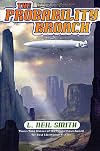
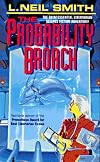
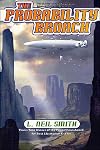
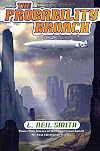
Denver detective Win Bear, on the trail of a murderer, discovers much more than a killer. He accidentally stumbles upon the probability broach, a portal to a myriad of worlds--some wildly different from, others disconcertingly similar to our own. Win finds himself transported to an alternate Earth where Congress is in Colorado, everyone carries a gun, there are gorillas in the Senate, and public services are controlled by private businesses.Tags
Recommendations





















Member Recommendations
fulner The gun slignger starts an adventure where or protagonist must find where he is. The probability broach is based on a 20th century PI who accidentally stumbles into another demention after trying to find a usually murder with unusual weaponry.
20
fulner Which reality is real? Are they all? What will this mean for the future of humanity and comedy?
20
fulner Political Thriller to the max
fulner The probably broach is like Atlas Shrugged meets inter-dimensional time travel.
fulner Healing our World examines how libertarianism can solve the problems of the 20th century. The probability broach is a fictional work that examines what the 20th century may have looked like if libertarians had been there guiding principles of the US at its founding in the 18th century.
fulner Demons of air in Darkness introduces the ideas of Stargate to the familiar world or DS9. The probability broach explorers similar ideas but focuses instead from the point of a late 20th century PI who end up somewhere he quickly learns isn't where he thinks it is.
Member Reviews
It's 1987, and the once great United States has fallen into decline. Owning gold is outlawed, energy is being rationed, and the government is rolling back pension benefits. Everything sucks, but detective Win Bear hardly notices. His life is pretty grim as it is and he has stopped expecting more out of life. Ultimately, he's not too surprised when a seemingly normal homicide case gets him into hot water. Now people are planting bombs in his apartment and it's a race against the assassins to get to the bottom of the secret they're trying to cover up.
The secret turns out to be the existence of another, parallel world. During a shoot out, Win gets thrown into a strange dimension by an explosion. This new world is shiny and clean. There are show more hover cars, massively powerful computers, and apparently no real aging. Unfortunately, there are still people trying to kill him. His new friends help to orient him but they all must work together to overcome a massive conspiracy to take two worlds hostage.
This book is ... bad. Even beyond the fantasy of the political view, the characters are all interchangeable and bland. Win Bear is actively unlikeable and most of the plot was either too boring to follow or just plain convoluted. And the *shudder* sex scenes were repulsive. The dialogue between the couple made me want to vomit. Only an extremely insecure man would create a female character who is always complementing the protagonist's junk. Gag. show less
The secret turns out to be the existence of another, parallel world. During a shoot out, Win gets thrown into a strange dimension by an explosion. This new world is shiny and clean. There are show more hover cars, massively powerful computers, and apparently no real aging. Unfortunately, there are still people trying to kill him. His new friends help to orient him but they all must work together to overcome a massive conspiracy to take two worlds hostage.
This book is ... bad. Even beyond the fantasy of the political view, the characters are all interchangeable and bland. Win Bear is actively unlikeable and most of the plot was either too boring to follow or just plain convoluted. And the *shudder* sex scenes were repulsive. The dialogue between the couple made me want to vomit. Only an extremely insecure man would create a female character who is always complementing the protagonist's junk. Gag. show less
The Probability Broach is as close to a libertarian utopia as any realistic anarchist dares get. It's also a very detailed alternate history. Most writers of alternate history are content to detail when that history deviates from ours or set their stories in the resulting world with brief references to how things change. Smith gives us a detailed timeline of how things change when one extra word is added to the Declaration of Independence and George Washington is shot in the Whiskey Rebellion.
However, Smith unsuccessfully tries for a Heinlein style. His slang is awkward. The hero's romance reeks of bad Chandler imitations, and there is a little bit too much gun stuff even for me, a lifetime NRA member.
This book was originally published show more in 1980, and there are jarring elements of the seventies here which don't quite work like a tyrannical America justified by an energy crisis or the talking chimps and dolphins much loved in seventies' sf. show less
However, Smith unsuccessfully tries for a Heinlein style. His slang is awkward. The hero's romance reeks of bad Chandler imitations, and there is a little bit too much gun stuff even for me, a lifetime NRA member.
This book was originally published show more in 1980, and there are jarring elements of the seventies here which don't quite work like a tyrannical America justified by an energy crisis or the talking chimps and dolphins much loved in seventies' sf. show less
In The Probability Broach author L. Neil Smith combines a hardboiled detective story with an alternate universe and a heavy dose of libertarian preaching. And yet it works. His storytelling ability is strong enough to overcome the blatantly didactic purpose behind the story.
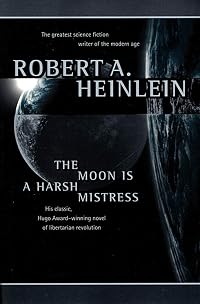
I agree with the reviewer who said this book is for niche tastes (although given I do to some extent fit the niche, my rating is correspondingly higher.) This is libertarian science fiction--indeed it could be described as libertarian porn: that kind of book where you, if you're inclined that way politically, rather revel in the rare experience of seeing your ideas (or at least the ideas you've debated with fellow libertarians) brought to life. There are works of libertarian science fiction, or works labeled as such, I think mainstream readers can enjoy--and not even notice the political tilt. I would describe myself as having been politically a typical liberal in my teens when I discovered Robert Heinlein, but I loved his The Moon is a show more Harsh Mistress completely oblivious to any libertarian message until I found it listed as libertarian science fiction when I became involved in the movement. Similarly there are works by Poul Anderson, Vernor Vinge and James P. Hogan called libertarian science fiction which I'd recommend to non-libertarian friends as good yarns, imaginative and well-written, that don't hit someone as overly polemical.
I can't imagine that being the case with The Probability Broach as much as I personally enjoy it. The book reads to me as one big in-joke in its alternate history and its anarcho-capitalist armed society. I can't see this book as sparking off a conversion experience. I can't imagine anyone who wasn't already exposed to these ideas taking them seriously enough to enjoy them--or even lightly enough to enjoy them. Nor do I think the uninitiated are even going to "get" such things as William F. Buckley and Ayn Rand's cameos in this book. As it is, this book ascribes to a version of libertarianism even most self-described libertarians would consider extreme. That said, did I find it fun? I admit I did. Except darn it, my city of New York didn't get where it did because of political pull--Alexander Hamilton's or anyone else's. I have three words for you: Deep water port. show less
I can't imagine that being the case with The Probability Broach as much as I personally enjoy it. The book reads to me as one big in-joke in its alternate history and its anarcho-capitalist armed society. I can't see this book as sparking off a conversion experience. I can't imagine anyone who wasn't already exposed to these ideas taking them seriously enough to enjoy them--or even lightly enough to enjoy them. Nor do I think the uninitiated are even going to "get" such things as William F. Buckley and Ayn Rand's cameos in this book. As it is, this book ascribes to a version of libertarianism even most self-described libertarians would consider extreme. That said, did I find it fun? I admit I did. Except darn it, my city of New York didn't get where it did because of political pull--Alexander Hamilton's or anyone else's. I have three words for you: Deep water port. show less
L. Neil Smith's first book, a science fiction novel with an alternate history in its alternate world. This book is as goofy as all get-out (my father's term), but still a lot of fun. The book shows the radical, free-wheeling, mind-blowing aspect of libertarianism as a perfect fit for popular science fiction. What more can be said?
Oh, gotta love the apes toting guns. Nice touch.
Yes, liking this would have to qualify as a Guilty Pleasure.
Oh, gotta love the apes toting guns. Nice touch.
Yes, liking this would have to qualify as a Guilty Pleasure.
(Original Review, 1980)
As for me, conflict of all kinds is a most important part of what I look for in a story. This certainly includes good (or even just "passable") vs evil, so I agree with Chip to that extent. But denigrating FOUNTAINS OF PARADISE because it was a classic "engineer vs problem" story seems to show an awfully limited set of preferences. There certainly is conflict in the "engineer vs problem" story; it's just not "person vs person" conflict. The real world (being neither evil nor good) can interfere with the best laid plans, and this conflict, and its resolution, can fascinate me for hours. Similarly, social systems pose conflicts, and stories than have people going up against those systems pose conflicts that are not show more necessarily "good vs evil," but rather personal values vs values that are alleged to be supra-personal. I can understand the feeling that a society that does not create those conflicts must be, in some sense, artificial. That same feeling must exist for the kid who never lived outside the South Bronx who is shown a book that takes place in Scarsdale. The kinds of problems that exist in Scarsdale are both unbelievable and uninteresting to the kid from the other environment. This, however, does not make that environment and those problems really unreal or universally uninteresting. Somehow, the slum kid has got to be shown that there are other worlds, before that kid can deal with the problems of those worlds. That's the way comments that belittle stories with "societies that work" strike me. SF lets us look beyond the problems of our wretched little societies to see that societies portrayed in books like the PROBABILITY BROACH are potentially real and interesting. And that's a major reason why I read SF.
If an author is going to go into all the trouble of creating a universe, which every author does, some more successfully than others, why put in evil or irritants?
The obvious answer to this is that very few people will find such a universe believable --- and believability is the primary requirement of a constructed universe. I know that I/ wouldn't believe in such a universe outside of a children's fantasy; that's one of the reasons I disliked THE PROBABILITY BROACH --- the author just assumed that everything would work out for the very best over 200 years of history. Certainly the failings of a universe help drive the plot. Consider Heinlein's description of how he writes a story: "I put interesting characters into serious difficulties, and by the time I can hear them talking the story is done." (quote >20 years old). I'll further point out that if matters hadn't gone downhill from first book to sequel neither WIZARD nor RINGWORLD ENGINEERS could be anything more than another/ travelogue --- and I'd rather travel myself than read somebody else's rehashing of the same territory, however imaginary. If a character is not in some tight place, his choices can be no more significant than the choice of orange or grapefruit juice for breakfast; it's only when penalties are attached to all possible choices that the situation is interesting. (David Gerrold described this in his book on what was right and wrong with STAR TREK, saying that the best episodes [with the possible exception of the two comedies] could be summarized as "Captain Kirk has to make a choice between
-- Earth's history and the woman he loves
..." (can't remember the other examples offhand).)
[2018 EDIT: This review was written at the time as I was running my own personal BBS server. Much of the language of this and other reviews written in 1980 reflect a very particular kind of language: what I call now in retrospect a “BBS language”.] show less
As for me, conflict of all kinds is a most important part of what I look for in a story. This certainly includes good (or even just "passable") vs evil, so I agree with Chip to that extent. But denigrating FOUNTAINS OF PARADISE because it was a classic "engineer vs problem" story seems to show an awfully limited set of preferences. There certainly is conflict in the "engineer vs problem" story; it's just not "person vs person" conflict. The real world (being neither evil nor good) can interfere with the best laid plans, and this conflict, and its resolution, can fascinate me for hours. Similarly, social systems pose conflicts, and stories than have people going up against those systems pose conflicts that are not show more necessarily "good vs evil," but rather personal values vs values that are alleged to be supra-personal. I can understand the feeling that a society that does not create those conflicts must be, in some sense, artificial. That same feeling must exist for the kid who never lived outside the South Bronx who is shown a book that takes place in Scarsdale. The kinds of problems that exist in Scarsdale are both unbelievable and uninteresting to the kid from the other environment. This, however, does not make that environment and those problems really unreal or universally uninteresting. Somehow, the slum kid has got to be shown that there are other worlds, before that kid can deal with the problems of those worlds. That's the way comments that belittle stories with "societies that work" strike me. SF lets us look beyond the problems of our wretched little societies to see that societies portrayed in books like the PROBABILITY BROACH are potentially real and interesting. And that's a major reason why I read SF.
If an author is going to go into all the trouble of creating a universe, which every author does, some more successfully than others, why put in evil or irritants?
The obvious answer to this is that very few people will find such a universe believable --- and believability is the primary requirement of a constructed universe. I know that I/ wouldn't believe in such a universe outside of a children's fantasy; that's one of the reasons I disliked THE PROBABILITY BROACH --- the author just assumed that everything would work out for the very best over 200 years of history. Certainly the failings of a universe help drive the plot. Consider Heinlein's description of how he writes a story: "I put interesting characters into serious difficulties, and by the time I can hear them talking the story is done." (quote >20 years old). I'll further point out that if matters hadn't gone downhill from first book to sequel neither WIZARD nor RINGWORLD ENGINEERS could be anything more than another/ travelogue --- and I'd rather travel myself than read somebody else's rehashing of the same territory, however imaginary. If a character is not in some tight place, his choices can be no more significant than the choice of orange or grapefruit juice for breakfast; it's only when penalties are attached to all possible choices that the situation is interesting. (David Gerrold described this in his book on what was right and wrong with STAR TREK, saying that the best episodes [with the possible exception of the two comedies] could be summarized as "Captain Kirk has to make a choice between
-- Earth's history and the woman he loves
..." (can't remember the other examples offhand).)
[2018 EDIT: This review was written at the time as I was running my own personal BBS server. Much of the language of this and other reviews written in 1980 reflect a very particular kind of language: what I call now in retrospect a “BBS language”.] show less
This is the first Ficton work I have read by L. Neil Smith, and I highly recommend it to EVERYONE.
If you like mysteries, it's for you, if you like, Science Fiction, its for you, if you like Political Thrillers, its for you, if you like Libertarian policies, its for you.
This book was written in 1980 and takes place in the "near future" in a community where the EPA has regulated A/C to being not allowed for private use, to forcing most competiive businesses to close etc.
Our lead Character, Detective Win Bear, is called to the scene of the crime when yet another gang shooting. When he fins some strange coins and a strange membership card. When he investigates he ends up being in a large explosions at the University and Win is shipped, show more somewhere, its not clear at first whether there is an elaborate hoax, time travel, or what.
He's gunned down and ends up finding his identical self. They spend the rest of the book fighting for what is his, standing up to the news of nuclear war coming because he got here, and really, I don't want to go into too much, the desk jacket itself gives away far too much of this,and you really REALY need to read this. show less
If you like mysteries, it's for you, if you like, Science Fiction, its for you, if you like Political Thrillers, its for you, if you like Libertarian policies, its for you.
This book was written in 1980 and takes place in the "near future" in a community where the EPA has regulated A/C to being not allowed for private use, to forcing most competiive businesses to close etc.
Our lead Character, Detective Win Bear, is called to the scene of the crime when yet another gang shooting. When he fins some strange coins and a strange membership card. When he investigates he ends up being in a large explosions at the University and Win is shipped, show more somewhere, its not clear at first whether there is an elaborate hoax, time travel, or what.
He's gunned down and ends up finding his identical self. They spend the rest of the book fighting for what is his, standing up to the news of nuclear war coming because he got here, and really, I don't want to go into too much, the desk jacket itself gives away far too much of this,and you really REALY need to read this. show less
Members
- Recently Added By
Lists

Top Five Books of 2015
811 works; 240 members

Prometheus Award Winners
16 works; 1 member

Top Five Books of 2016
795 works; 228 members

Good (mostly) modern science fiction
40 works; 4 members

The Five Books That Represent Us
391 works; 148 members
Author Information

40+ Works 3,969 Members
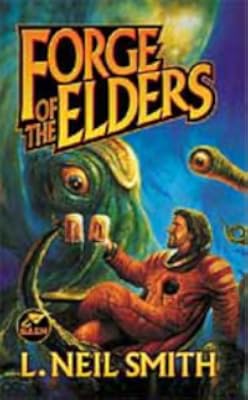
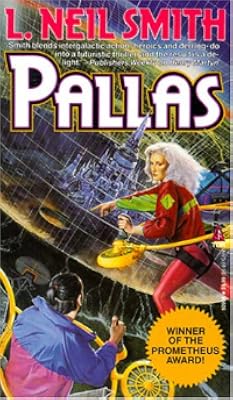
L. Neil Smith is the three-time winner of the Prometheus Award for Best Libertarian Fiction for his novels Pallas (1993), Forge of the Elders (2000), and The Probability Broach (1980). As founder and National Coordinator of the Libertarian Second Amendment Caucus, publisher of the on-line magazine The Libertarian Enterprise, and a Life member of show more the National Rifle Association, Smith is renowned for his prominence in the Libertarian movement, of which he has been a part for more than thirty-five years. Author of more than twenty books, Smith has been hailed for his ability to combine adventure, humor, and rivetingly original political concepts to create more compellingly than any other writer, novels that embody Libertarian concepts. He currently resides in Fort Collins, Colorado, with his wife and daughter. show less
Awards and Honors
Awards
Series

Work Relationships
Has the adaptation
Common Knowledge
- Canonical title
- The Probability Broach
- Original publication date
- 1980
- People/Characters
- Win Bear; Lucille Kropotkin; Clarissa Olson; Manfred von Richtofen; John Jay Madison
- Important places
- Denver, Colorado, USA; Laporte, NAC
- Epigraph
- My movement to the Chair of Government will be accompanied by feelings not unlike those of a criminal who is going to the place of his execution. --George Washington Feruary 4, 1789
- First words
- ... would cease operations early next month.
- Last words
- (Click to show. Warning: May contain spoilers.)But there's plenty of time to wait and see for yourself.
- Disambiguation notice
- Please do not combine "The Probability Broach" with "The Probability Broach: The Graphic Novel". The graphic Novel is a derivative work by L. Neil Smith and Scott Biester, very different from the original.
Classifications
Statistics
- Members
- 369
- Popularity
- 84,988
- Reviews
- 10
- Rating
- (3.41)
- Languages
- English, German
- Media
- Paper, Ebook
- ISBNs
- 5
- ASINs
- 3