
On This Page
Description
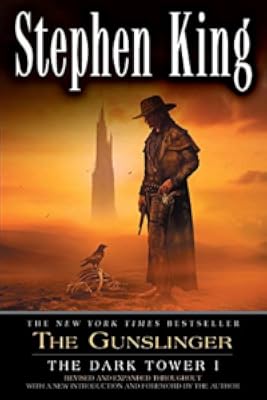
"An impressive work of mythic magnitude that may turn out to be Stephen King's greatest literary achievement" (The Atlanta Journal-Constitution), The Gunslinger is the first volume in the epic Dark Tower Series. A #1 national bestseller, The Gunslinger introduces readers to one of Stephen King's most powerful creations, Roland of Gilead: The Last Gunslinger. He is a haunting figure, a loner on a spellbinding journey into good and evil. In his desolate world, which mirrors our own in show more frightening ways, Roland tracks The Man in Black, encounters an enticing woman named Alice, and begins a friendship with the boy from New York named Jake. Inspired in part by the Robert Browning narrative pum, "Childe Roland to the Dark Tower Came," The Gunslinger is "a compelling whirlpool of a story that draws one irretrievable to its center" (Milwaukee Sentinel). It is "brilliant and fresh.and will leave you panting for more" (Booklist). show lessTags
Recommendations




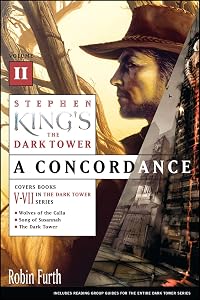




Member Recommendations
The Dark Tower, Books 1-3: The Gunslinger, The Drawing of the Three, and The Waste Lands by Stephen King
Valjeanne While The Gunslinger Book 1 is not one of my favorite books by Stephen King, one should read it to provide the backdrop to the sequels. The Drawing of the Three (especially) and The Waste Lands are much more engaging and two of King's most brilliant novels.
72
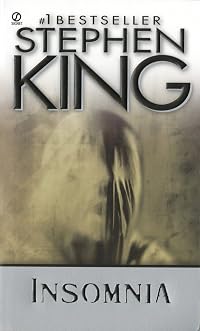
sturlington Insomnia introduces the Crimson King, the big baddie from The Dark Tower series.
31

emren Whirlwind in the Thorn Tree is a love letter to the Dark Tower series. Now read the original!
Afalstein Book in the same series, with many of the same characters and a very similar tone.
24

fulner The gun slignger starts an adventure where or protagonist must find where he is. The probability broach is based on a 20th century PI who accidentally stumbles into another demention after trying to find a usually murder with unusual weaponry.
Member Reviews
A character with a Once and Future King backstory does a Lord of the Rings plot but it ends up getting a little Annihilation-y. And it’s all a western.
Okay, admittedly that description makes this book seem really amazing and right up my alley, and in some ways, it was pretty cool. I loved a lot about the premise. There’s some great imagery. I didn’t mind that it was slow and sometimes confusing and didn’t explain a lot about itself-- in fact, I’d say those were mostly positives for me. But in general, the execution left a lot to be desired.
Here’s some thoughts, in no particular order:
Women. We have the following female characters in the book: 1) Allie, who immediately wants to have sex with the Roland, then gets clingy, and show more then later Roland shoots her in the head (to save her, guys, don’t worry). 2) The preacher, who Roland immediately wants to have sex with, and who has her demon pregnancy aborted with Roland’s gun (?? not really what was going on there), and who later Roland shoots four times in the head (it was in self-defense!). 3) Roland’s mother, who’s infidelity and sexual activity fascinates Roland, and who Roland mentions offhand that he killed (“by then I was a matricide”, no other context). 4) An oracle demon thing, who is absolutely completely wild for sex with men in general, and Roland in specific, and is trapped in a magical prison forever. 5) A prostitute who never speaks, and is also killed by Roland.
Like, what! is! going! on!!?!
Linguistics. I thought the Lord of the Rings comparison, which King himself brings up specifically in his introduction, is especially interesting to consider. Certainly there are some superficial similarities-- a journey-quest populated by archetypes, a supernatural world, a meditation on the decay of a great(?) civilization.
However, starting the book with this comparison in mind also left me disappointed with some things about The Gunslinger… most noticeably, King’s experimentation with linguistics. Like, great, you have a “high speech” that has T-V distinction, cool that’s interesting… but then why are your verb forms the same for both? Is that on purpose, because the T-V distinction has been reintroduced to your language artificially or something? OR are you just kind of throwing “thee”s around because you want to do some cool linguistics stuff like JRR Tolkien? My guess is the latter, since the extent of the difference between the three dialects present (Jake, high speech, everyone else) is mostly a few vocab words. Actually, in retrospect, there may not even be T-V distinction, High Speech might only use “thee” exclusively just to sound formal and it isn’t a familiar form at all? I don’t know, I don’t have the book with me.
Okay, so maybe we find out in a later book that the whole High Speech thing is just something a group of people totally made up in a kind of scattershot way to make themselves seem more important, in which case, complaints totally rescinded, that’s great. But right now, saying “will thee” instead of “wilt thou” is just going to annoy me.
Structure. I’ve already said that I don’t mind the slowness of parts of the book. I’m all for an atmospheric journey. But at one point near the beginning when he’s in the desert, I believe there’s a flashback (Allie says what happened with the Man in Black) within a flashback (Roland talks about what happened in Tull) within a flashback (Roland remembers spending the night at Brown’s at the edge of the desert). That’s a bit much.
The Continuing Series. Okay, I’ve heard this book is a bit of a slog, and really you need to read the whole series before you can come back and appreciate it. This may be true. I’m still torn about whether I want to keep reading the series. On the one hand, there is a lot of unexplained stuff that I’d be interested to find out more about, and I am interested to know what happens to Roland. On the other hand, was this book annoying enough to me that I’ll just look up the series summary on Wikipedia? We’ll see. Ultimately, I’m a big believer that the first book in a series should be able to stand mostly on its own, and this one did not
Tell you what, if any of you tell me that in the next book there is a single female character who 1) talks AND 2) does not want to have sex with Roland AND 3) doesn’t die, I will go ahead and read it.
Okay, that’s enough thoughts. Three stars is maybe a little generous, but hey, it’s better than anything I would have been able to write at nineteen. show less
Okay, admittedly that description makes this book seem really amazing and right up my alley, and in some ways, it was pretty cool. I loved a lot about the premise. There’s some great imagery. I didn’t mind that it was slow and sometimes confusing and didn’t explain a lot about itself-- in fact, I’d say those were mostly positives for me. But in general, the execution left a lot to be desired.
Here’s some thoughts, in no particular order:
Women. We have the following female characters in the book: 1) Allie, who immediately wants to have sex with the Roland, then gets clingy, and show more then later Roland shoots her in the head (to save her, guys, don’t worry). 2) The preacher, who Roland immediately wants to have sex with, and who has her demon pregnancy aborted with Roland’s gun (?? not really what was going on there), and who later Roland shoots four times in the head (it was in self-defense!). 3) Roland’s mother, who’s infidelity and sexual activity fascinates Roland, and who Roland mentions offhand that he killed (“by then I was a matricide”, no other context). 4) An oracle demon thing, who is absolutely completely wild for sex with men in general, and Roland in specific, and is trapped in a magical prison forever. 5) A prostitute who never speaks, and is also killed by Roland.
Like, what! is! going! on!!?!
Linguistics. I thought the Lord of the Rings comparison, which King himself brings up specifically in his introduction, is especially interesting to consider. Certainly there are some superficial similarities-- a journey-quest populated by archetypes, a supernatural world, a meditation on the decay of a great(?) civilization.
However, starting the book with this comparison in mind also left me disappointed with some things about The Gunslinger… most noticeably, King’s experimentation with linguistics. Like, great, you have a “high speech” that has T-V distinction, cool that’s interesting… but then why are your verb forms the same for both? Is that on purpose, because the T-V distinction has been reintroduced to your language artificially or something? OR are you just kind of throwing “thee”s around because you want to do some cool linguistics stuff like JRR Tolkien? My guess is the latter, since the extent of the difference between the three dialects present (Jake, high speech, everyone else) is mostly a few vocab words. Actually, in retrospect, there may not even be T-V distinction, High Speech might only use “thee” exclusively just to sound formal and it isn’t a familiar form at all? I don’t know, I don’t have the book with me.
Okay, so maybe we find out in a later book that the whole High Speech thing is just something a group of people totally made up in a kind of scattershot way to make themselves seem more important, in which case, complaints totally rescinded, that’s great. But right now, saying “will thee” instead of “wilt thou” is just going to annoy me.
Structure. I’ve already said that I don’t mind the slowness of parts of the book. I’m all for an atmospheric journey. But at one point near the beginning when he’s in the desert, I believe there’s a flashback (Allie says what happened with the Man in Black) within a flashback (Roland talks about what happened in Tull) within a flashback (Roland remembers spending the night at Brown’s at the edge of the desert). That’s a bit much.
The Continuing Series. Okay, I’ve heard this book is a bit of a slog, and really you need to read the whole series before you can come back and appreciate it. This may be true. I’m still torn about whether I want to keep reading the series. On the one hand, there is a lot of unexplained stuff that I’d be interested to find out more about, and I am interested to know what happens to Roland. On the other hand, was this book annoying enough to me that I’ll just look up the series summary on Wikipedia? We’ll see. Ultimately, I’m a big believer that the first book in a series should be able to stand mostly on its own, and this one did not
Tell you what, if any of you tell me that in the next book there is a single female character who 1) talks AND 2) does not want to have sex with Roland AND 3) doesn’t die, I will go ahead and read it.
Okay, that’s enough thoughts. Three stars is maybe a little generous, but hey, it’s better than anything I would have been able to write at nineteen. show less
An inauspicious start to what I am reliably assured becomes one of the great fantasy sequences in print. In fact, the reputation of The Dark Tower series by Stephen King is just about the only reason why I am not inclined to go in too hard on The Gunslinger, its first volume. I would not want to look retroactively silly after I have read a few more of the books.
But at the moment, the only thing incredible about this first book is its mediocrity. The concept is an interesting one (inspired by the atmospheric Browning poem 'Childe Roland to the Dark Tower Came'), and the very first line – "The man in black fled across the desert, and the gunslinger followed" (pg. 3) – cements its simple, mysterious appeal. That said, the world the show more gunslinger inhabits is not built up with much care and assurance. What the 'Dark Tower' is remains a mystery, and though this is fine in order to keep the reader reading, nothing else about the world is explained either. On page 164, Roland says "My father had by then taken control of his katet, you must ken – the Tet of the Gun – and was on the verge of becoming Dinh of Gilead, if not all In-World." None of these things are explained anywhere in the book, even obliquely, and they are far from the only examples. The reader is lost rather than immersed, and the book ends without resolution to even a single one of its threads.
As a reader you can guess at what is going on, but at this early stage in the series it seems pointless. The final chapters offer a ray of light – presenting to us an image of parallel worlds – but for the most part the book is a hodge-podge of Biblical, Western and fantasy motifs, seemingly chosen based on what King thought sounded cool at any particular moment. The characters slip about on the page (for example, sometimes they have accents, sometimes they don't; and sometimes we are told they have no sense of humour, but in the next chapter they are laughing) and they talk in riddles that are not so much mysterious as confusing. The fantasy equivalent of anachronisms abound – i.e. things that don't fit in the world and pull you out of the story – and the prose is surprisingly verbose for King.
The book as a whole reminded me of a generic videogame: its quest, its dialogue, its rail-shooter plotting and its 'cool' upgrades. Of course, Stephen King would not know this in 1982 – and I just realised when writing this that it's probably The Dark Tower which inspired the tone of such RPGs. With that sort of influence in the series' future, I am not prepared to give up after a false start. I am told that a land of plenty lies ahead, though upon closing the first book it still seems that only desert extends to the horizon. Mayhaps, in the volumes to come, there will be mountains. show less
But at the moment, the only thing incredible about this first book is its mediocrity. The concept is an interesting one (inspired by the atmospheric Browning poem 'Childe Roland to the Dark Tower Came'), and the very first line – "The man in black fled across the desert, and the gunslinger followed" (pg. 3) – cements its simple, mysterious appeal. That said, the world the show more gunslinger inhabits is not built up with much care and assurance. What the 'Dark Tower' is remains a mystery, and though this is fine in order to keep the reader reading, nothing else about the world is explained either. On page 164, Roland says "My father had by then taken control of his katet, you must ken – the Tet of the Gun – and was on the verge of becoming Dinh of Gilead, if not all In-World." None of these things are explained anywhere in the book, even obliquely, and they are far from the only examples. The reader is lost rather than immersed, and the book ends without resolution to even a single one of its threads.
As a reader you can guess at what is going on, but at this early stage in the series it seems pointless. The final chapters offer a ray of light – presenting to us an image of parallel worlds – but for the most part the book is a hodge-podge of Biblical, Western and fantasy motifs, seemingly chosen based on what King thought sounded cool at any particular moment. The characters slip about on the page (for example, sometimes they have accents, sometimes they don't; and sometimes we are told they have no sense of humour, but in the next chapter they are laughing) and they talk in riddles that are not so much mysterious as confusing. The fantasy equivalent of anachronisms abound – i.e. things that don't fit in the world and pull you out of the story – and the prose is surprisingly verbose for King.
The book as a whole reminded me of a generic videogame: its quest, its dialogue, its rail-shooter plotting and its 'cool' upgrades. Of course, Stephen King would not know this in 1982 – and I just realised when writing this that it's probably The Dark Tower which inspired the tone of such RPGs. With that sort of influence in the series' future, I am not prepared to give up after a false start. I am told that a land of plenty lies ahead, though upon closing the first book it still seems that only desert extends to the horizon. Mayhaps, in the volumes to come, there will be mountains. show less
A man known as the gunslinger is in pursuit of a mysterious man in black. Who this gunslinger is and what he wants will be revealed slowly over the course of the book, along with the details of the mysterious fantasy world we find him in. One thing's for sure: he's not going to let the man in black get away from him, no matter how much desert he must cross or what he'll have to sacrifice.
The Gunslinger is a fantasy novel with a Western feel to it. The setting includes a vast desert, a small town with little more than a bar and a church, and uncharted wilderness beyond. The main character is stoic and emotionally hardened, the kind of man who does what he feels he has to. And of course that includes leaving some bullet-riddled bodies show more behind him.
Unique in this world is that the gunslinger is the only character who seems to own operating guns. Meanwhile, magic is real and demons a real threat. The worldbuilding in this book gives few explanations, tossing out new concepts and hoping the reader can either guess what terms mean and how things work or else wait patiently for more clues to be given later.
The main character is almost equally mysterious, with a name that isn't revealed until many pages in and motivations that remained unclear to me even after I reached the ending. There are long sections of backstory given, both for him and certain other characters, but I suspect to get the full answers would require reading the entire series. In this book, you'll mainly gain a greater understanding of how the gunslinger came to be the person he is, including some hints at why he's so emotionally distant.
The writing quality is excellent, including a liberal sprinkling of clever lines. Often a description would catch me by surprise and make me pause to consider. Other times, it describes an experience few people have likely had before in a way that makes it easy to conceptualize, like when the characters are travelling through a vast tunnel and we're treated to such lines as: "There was no fuel in this rock womb, and what they had brought with them was going rapidly to ash. At times the urge to strike a light was well-nigh insatiable. They had discovered one could grow as hungry for light as for food.". This book is practically begging you to stop and savor the prose.
On the negative side, however, the main character was raised in a clearly sexist society and doesn't seem to have progressed beyond it in any way. Neither does the narrative do anything to challenge him or to present the reader with female characters who define themselves rather than being defined by their relationships with men. Nearly all the female characters were sexualized, and this was often presented as the most important thing about them or one of the few important things about them. The female character I found most interesting was given this treatment, was present only for a portion of the story, and then was ever after referred to with an explanation of who she'd been. As if the author was expecting the reader to have forgotten about her completely. Meanwhile, some of the male characters who appeared only briefly in backstory were afterwards referred to by name alone, with a clear expectation that readers should remember them. This is the kind of book where women exist mainly to be mothers or sisters or servants or sexual partners to men, and you shouldn't go in expecting anything else.
But if you're willing to give the book a shot in spite of that, I would say that its strengths lie in the writing and the (male) characterization. Whether you'll enjoy the book likely comes down to whether you enjoy the writing style and characters of the same mold as the gunslinger. If you're willing to strap in for the ride and go wherever the author takes you, you'll find a steadily unfolding narrative with new discoveries around every turn. You'll probably want to stay on for the whole series to see how it ends. But if you don't have the stomach for long stretches of toxic masculinity, it's best to find a different book. show less
The Gunslinger is a fantasy novel with a Western feel to it. The setting includes a vast desert, a small town with little more than a bar and a church, and uncharted wilderness beyond. The main character is stoic and emotionally hardened, the kind of man who does what he feels he has to. And of course that includes leaving some bullet-riddled bodies show more behind him.
Unique in this world is that the gunslinger is the only character who seems to own operating guns. Meanwhile, magic is real and demons a real threat. The worldbuilding in this book gives few explanations, tossing out new concepts and hoping the reader can either guess what terms mean and how things work or else wait patiently for more clues to be given later.
The main character is almost equally mysterious, with a name that isn't revealed until many pages in and motivations that remained unclear to me even after I reached the ending. There are long sections of backstory given, both for him and certain other characters, but I suspect to get the full answers would require reading the entire series. In this book, you'll mainly gain a greater understanding of how the gunslinger came to be the person he is, including some hints at why he's so emotionally distant.
The writing quality is excellent, including a liberal sprinkling of clever lines. Often a description would catch me by surprise and make me pause to consider. Other times, it describes an experience few people have likely had before in a way that makes it easy to conceptualize, like when the characters are travelling through a vast tunnel and we're treated to such lines as: "There was no fuel in this rock womb, and what they had brought with them was going rapidly to ash. At times the urge to strike a light was well-nigh insatiable. They had discovered one could grow as hungry for light as for food.". This book is practically begging you to stop and savor the prose.
On the negative side, however, the main character was raised in a clearly sexist society and doesn't seem to have progressed beyond it in any way. Neither does the narrative do anything to challenge him or to present the reader with female characters who define themselves rather than being defined by their relationships with men. Nearly all the female characters were sexualized, and this was often presented as the most important thing about them or one of the few important things about them. The female character I found most interesting was given this treatment, was present only for a portion of the story, and then was ever after referred to with an explanation of who she'd been. As if the author was expecting the reader to have forgotten about her completely. Meanwhile, some of the male characters who appeared only briefly in backstory were afterwards referred to by name alone, with a clear expectation that readers should remember them. This is the kind of book where women exist mainly to be mothers or sisters or servants or sexual partners to men, and you shouldn't go in expecting anything else.
But if you're willing to give the book a shot in spite of that, I would say that its strengths lie in the writing and the (male) characterization. Whether you'll enjoy the book likely comes down to whether you enjoy the writing style and characters of the same mold as the gunslinger. If you're willing to strap in for the ride and go wherever the author takes you, you'll find a steadily unfolding narrative with new discoveries around every turn. You'll probably want to stay on for the whole series to see how it ends. But if you don't have the stomach for long stretches of toxic masculinity, it's best to find a different book. show less
The Gunslinger, the start of Stephen King's magnum opus The Dark Tower, is such a strange read. It's broken into 5 parts that read sort of like inter-related short stories that is also a semi-cohesive whole. The plot can be summarized by the book's opening line:
The man in black fled across the desert and the gunslinger followed.
Such a catchy opener! Too bad I had a hard time getting into the story. The reader is dropped into the middle of a weird, post-apocalyptic western-style world with very little explanation of who our characters are, what their motivations are or what's going on at all. As more of the gunslinger's background is revealed in flashbacks there are hints that there is some great purpose to this relentless hunt across show more the desert though this reader is still left wondering what that purpose is.Yes, the two finally meet and the man in black gives a long soliloquy philosophical that was quite interesting. It just wasn't enough to feel like any of my questions were answered at all. The gunslinger not a likable or sympathetic character, being ruthless in his pursuit of the man in black, making for a frustrating read. The most enjoyable part of the book are the world that is similar to ours yet different enough to be unsettling in a way I ended up liking.
I have been told that this is the weakest book in the series and encouraged to give the second book a try before deciding if I want to stop. I admit I am curious to see where the story goes next though I'm in no great rush to continue. show less
The man in black fled across the desert and the gunslinger followed.
Such a catchy opener! Too bad I had a hard time getting into the story. The reader is dropped into the middle of a weird, post-apocalyptic western-style world with very little explanation of who our characters are, what their motivations are or what's going on at all. As more of the gunslinger's background is revealed in flashbacks there are hints that there is some great purpose to this relentless hunt across show more the desert though this reader is still left wondering what that purpose is.
I have been told that this is the weakest book in the series and encouraged to give the second book a try before deciding if I want to stop. I admit I am curious to see where the story goes next though I'm in no great rush to continue. show less
Despite being the book that kicked off Stephen King’s Dark Tower series I originally read it third, during the long wait between The Waste Lands and Wizard and Glass, oddly enough I never felt that this spoiled my reading of the series; it marks the only time I know of that I’ve managed to read a series out of order. The Gunslinger is based loosely off of the Robert Browning poem “Childe Roland to the Dark Tower Came,” a poem based off of a line from Shakespeare’s King Lear, a line itself referencing a traditional fairy tale, a fairy tale which may have been inspired by an old Scottish ballad. Which is all fascinating, if slightly confusing, but perhaps more fascinating is that The Gunslinger, and the rest of the novels in the show more series, create something of a unifying mythology for most of Stephen King’s novels.But that is perhaps getting a bit ahead of myself. The Gunslinger is at its heart a tale of one man’s quest for revenge. The titular gunslinger, a dusty knight errant by way of Clint Eastwood (an image immortalized by the always awesome art of Michael Whelan), wanders across a dusty landscape both eerily similar and frighteningly different from our own world. The gunslinger’s, Roland Deschain’s, world has “moved on” and has been transformed into a post-apocalyptic wasteland crossed with a parallel dimension. Of course The Gunslinger only scratches at the depth and breadth of Roland’s world and the hints a ties to King’s other work only comes later.Given its inspiration it isn’t a small surprise that the language of The Gunslinger takes on a more poetic tone. There is a cadence to the prose here that is very different from the almost workaday tone of King’s other fiction. While it isn’t particularly jarring I wouldn’t be surprised if at its initial release the fluid nature of that narrative put off the everyday mainstream King reader. While King has been long associated with the horror genre his works have crossed so far into the mainstream that a book like The Gunslinger (or Eyes of the Dragon) really stands out from the pack. It is, in my opinion, some of his best work. It is hard to argue with languid descriptions, such as the novel’s opening vision of the desert:
The desert was the apotheosis of all deserts, huge, standing to the sky for what looked like eternity in all directions. It was white and blinding and waterless and without feature save for the faint, cloudy haze of the mountains which sketched themselves on the horizon and the devil-grass which brought sweet dreams, nightmares, death.The opening words of that first sentence are ones that stick with you. There are a million other little gems that King sprinkles liberally across the narrative, particularly when it comes to Roland’s thoughts about himself: “The only contingency he had not learned how to bear was the possibility of his own madness.” and later:
Not for the first time the gunslinger tasted the smooth, loden taste of soul-sickness. The shell in his fingers, manipulated with such unknown grace, was suddenly horrific, the spoor of a monster. he dropped it into his palm, made a fist, and squeezed it with painful force. Had it exploded, in that moment he would have rejoiced at the destruction of his talented hand, for its only true talent was murder.It’s some absolutely brilliant fiction and some frequently stirring prose.If I’m to be completely candorous here I should point out that the Dark Tower series marks my first brush with the post-apocalyptic genre (King, is of course no stranger to apocalypses chronicling at least two more in The Stand and later in Cell). As I mentioned when talking about The Forest of Hands and Teeth the best post-apocalyptic novels embrace a sense of discovery, how things happened aren’t explained in detail but hinted at through ephemera and debris left behind. This is element that King handles expertly in The Gunslinger. While the world is startlingly different from our own it is one littered with the remnants of both its own past and our own present (or the present that existed when the novel was written, natch). The song Hey Jude being played in a dusty saloon, a trip through an abandoned subway station littered with the corpses of the dead caught going about their day-to-day business are neatly juxtaposed with giant mutated freaks, strange linguistic quirks (“I say thankya”), and flashbacks to a very medieval themed training (complete with lords, ladies, other sundry nobilit, a scheming adviser, and gruff arms master) except instead of swords there are guns.While my experience is somewhat dimmed by the memories of how the series meanders a bit towards its end, a feeling I admit may change upon a more linear and chronologically compact reading, I’m pretty jazzed to continue with The Drawing of the Three. As has been reported by various sources on the internet Ron Howard has been tapped to translate the series from fiction into a movie trilogy and I’m very much excited to see how that works. Sci-fi horror fantasy post-apocalyptic westerns that tie together a single author’s (with at least one pseudonym) fiction in its near entirety are hardly a common occurrence and the scope of the Dark Tower series really is something to marvel at so if you’ve yet to experience this series I highly highly recommend giving it a try. show less
Immersed in a shadowy and gritty fantasy realm woven with religious undertones, Stephen King's narrative grips you forcefully, compelling you to absorb every word, evoking a visceral response – a quality that defines his writing. His exploration of the dark and morbid facets of death is evident, as is typical in his works.
However, a notable drawback is the absence of a clear sense of progression or resolution. The reader traverses this grim journey without discernible directional cues, creating a somewhat disorienting experience.
The narrative's use of flashbacks within flashbacks proves to be both disruptive and seamlessly integrated. Some instances jar the reader, while others effortlessly enhance the unfolding story.
In summary, it's show more a compelling read, offering a brief introduction to this intricate world. Yet, the lingering feeling persists that not much has truly transpired; perhaps, though, this is a deliberate setup for a more expansive and captivating plotline in the future. show less
However, a notable drawback is the absence of a clear sense of progression or resolution. The reader traverses this grim journey without discernible directional cues, creating a somewhat disorienting experience.
The narrative's use of flashbacks within flashbacks proves to be both disruptive and seamlessly integrated. Some instances jar the reader, while others effortlessly enhance the unfolding story.
In summary, it's show more a compelling read, offering a brief introduction to this intricate world. Yet, the lingering feeling persists that not much has truly transpired; perhaps, though, this is a deliberate setup for a more expansive and captivating plotline in the future. show less
“The man in black fled across the desert, and the gunslinger followed.” : with this phrase we have both an opening sentence and a summary of The Gunslinger.
The search for the Man in Black, by Roland, our hero, has been going on for years and now he is closer than never. We go along as his search takes him through a town, the desert, the mountains; we meet some people (and some monsters) along the way, some stick around for a very short amount of time, some for even less. Some things are learnt – by us and by Roland - but the narrative is mysterious, as mysterious as the reasons behind his search . All we know is that the Man in Black is his connection to a larger quest – that of the Dark Tower. Throughout the 200 pages of the show more book we have glimpses of Roland’s past and his training as a gunslinger, we learn that he is the last of them and that he has no family or friends left in the world. He has nothing but memories to get by, but memories that he tries to leave behind along with his emotions as he can not afford either in his relentless pursuit.
The gunslinger, reminded me quite a lot of Strider or Aragorn of Lord of The Rings fame, in his physical description and some of his actions but not all of them. Whereas Aragorn was a highly honourable man, we have the feeling that in his quest, Roland can not afford to be moral. In fact in one of his flashbacks to his childhood his father tells him: (…) it is not your place to be moral, (…), Morals may be beyond you. I realise then that the gunslinger, is the epitome of the Man with no Name, as best explained by Thea is her recent opening post for the Western week ,- He is an outsider, shrouded in mystery. He plays by his own rules, and makes decisions that will benefit himself, according to his own views of justice or questionable morals. Although the line between right and wrong is blurred for this man, he will surprise occasionally by showing his soft spot for the helpless and downtrod...but at the same time is a bounty hunter that partakes in less than lawful activities.
And we do have the feeling that Roland is all of the above and will stop at nothing. In fact, some of his actions irked me to no end and at some points I hated him. But as with all good anti-heroes there is enough in him that attracts us as much as it repulses – and I could not help but to want to know more about him, about his past and what the future will bring.
Ultimately, I could not put the book down. Probably because of Mr King’s fantastic portrait of a weird world and its characters which completely sucked me in. The book has a feel of old Western – with the desert, a saloon, the guns, the fact that there seems to be no advanced technology around and yet we know that this can not , possibly, be the past – it can only be the future - people sing Hey Jude and there are mentions of large buildings, a subway that no longer works, a trip to the moon (which the gunslinger doubts ever happened) and yet we never know for certain what happened , only that something went very wrong at some point.
But that is not what matters to the gunslinger – what matters to him, for reasons yet unknown but which concerns a vow he was sworn, is indeed the Dark Tower; and when he finally catches up with the Man in Black a conversation goes on that enlighten what the Tower is: a nexus of all worlds, of all universes, of time. And he gives counsel on the steps Roland must take in order to reach the Tower: the first one being the obscure Drawing of the Three – which is where his journey will truly begin.
The Gunslinger is the opening of a series of 7 books, The Dark Tower series, which is considered to be Stephen King’s Magnum Opus. Even though this short book is fabulously weird and gripping it seems to be nothing but a tiny appetiser of wonders to come. Wonders that I intend to devour as soon as possible. Bring it on.
Notable quotes/parts: I love his interactions with Jake, a lost boy he found in The Station, part 2 of the book. They connect and theirs is a bond of love undoubtedly. But the gunslinger mind is a mind set in one thing and one thing alone and since he was a teenager he has known that some things, some friends, need to be sacrified in his way - *SPOILERS* it has happened with David, his hawk friend who died for him and it happens with Jake who he lets die when it comes to the point of choosing to save him or to carry on after the Man in Black. A very sad turn of events.
Additional Thoughts: It took Stephen King over 12 years to write this book. And it was inpired by the poem Childe Roland to the Dark Tower Came by Robert Browning which also inpired this fabulous painting by Thomas Moran:
You can find the poem here: Childe Roland
Verdict: Weird, scary, poignant. A fantastic opening to what seems to be a marvelous series.
Rating: 8. Excellent.
Full Review at:
http://thebooksmugglers.blogspot.com/2008/04/book-review-gunslinger.html show less
The search for the Man in Black, by Roland, our hero, has been going on for years and now he is closer than never. We go along as his search takes him through a town, the desert, the mountains; we meet some people (and some monsters) along the way, some stick around for a very short amount of time, some for even less. Some things are learnt – by us and by Roland - but the narrative is mysterious, as mysterious as the reasons behind his search . All we know is that the Man in Black is his connection to a larger quest – that of the Dark Tower. Throughout the 200 pages of the show more book we have glimpses of Roland’s past and his training as a gunslinger, we learn that he is the last of them and that he has no family or friends left in the world. He has nothing but memories to get by, but memories that he tries to leave behind along with his emotions as he can not afford either in his relentless pursuit.
The gunslinger, reminded me quite a lot of Strider or Aragorn of Lord of The Rings fame, in his physical description and some of his actions but not all of them. Whereas Aragorn was a highly honourable man, we have the feeling that in his quest, Roland can not afford to be moral. In fact in one of his flashbacks to his childhood his father tells him: (…) it is not your place to be moral, (…), Morals may be beyond you. I realise then that the gunslinger, is the epitome of the Man with no Name, as best explained by Thea is her recent opening post for the Western week ,- He is an outsider, shrouded in mystery. He plays by his own rules, and makes decisions that will benefit himself, according to his own views of justice or questionable morals. Although the line between right and wrong is blurred for this man, he will surprise occasionally by showing his soft spot for the helpless and downtrod...but at the same time is a bounty hunter that partakes in less than lawful activities.
And we do have the feeling that Roland is all of the above and will stop at nothing. In fact, some of his actions irked me to no end and at some points I hated him. But as with all good anti-heroes there is enough in him that attracts us as much as it repulses – and I could not help but to want to know more about him, about his past and what the future will bring.
Ultimately, I could not put the book down. Probably because of Mr King’s fantastic portrait of a weird world and its characters which completely sucked me in. The book has a feel of old Western – with the desert, a saloon, the guns, the fact that there seems to be no advanced technology around and yet we know that this can not , possibly, be the past – it can only be the future - people sing Hey Jude and there are mentions of large buildings, a subway that no longer works, a trip to the moon (which the gunslinger doubts ever happened) and yet we never know for certain what happened , only that something went very wrong at some point.
But that is not what matters to the gunslinger – what matters to him, for reasons yet unknown but which concerns a vow he was sworn, is indeed the Dark Tower; and when he finally catches up with the Man in Black a conversation goes on that enlighten what the Tower is: a nexus of all worlds, of all universes, of time. And he gives counsel on the steps Roland must take in order to reach the Tower: the first one being the obscure Drawing of the Three – which is where his journey will truly begin.
The Gunslinger is the opening of a series of 7 books, The Dark Tower series, which is considered to be Stephen King’s Magnum Opus. Even though this short book is fabulously weird and gripping it seems to be nothing but a tiny appetiser of wonders to come. Wonders that I intend to devour as soon as possible. Bring it on.
Notable quotes/parts: I love his interactions with Jake, a lost boy he found in The Station, part 2 of the book. They connect and theirs is a bond of love undoubtedly. But the gunslinger mind is a mind set in one thing and one thing alone and since he was a teenager he has known that some things, some friends, need to be sacrified in his way - *SPOILERS* it has happened with David, his hawk friend who died for him and it happens with Jake who he lets die when it comes to the point of choosing to save him or to carry on after the Man in Black. A very sad turn of events.
Additional Thoughts: It took Stephen King over 12 years to write this book. And it was inpired by the poem Childe Roland to the Dark Tower Came by Robert Browning which also inpired this fabulous painting by Thomas Moran:
You can find the poem here: Childe Roland
Verdict: Weird, scary, poignant. A fantastic opening to what seems to be a marvelous series.
Rating: 8. Excellent.
Full Review at:
http://thebooksmugglers.blogspot.com/2008/04/book-review-gunslinger.html show less
Members
- Recently Added By
Lists

Best Fantasy Novels
821 works; 361 members

Read the book and saw the movie
1,170 works; 192 members

Best Post-Apocalyptic Stories
143 works; 88 members
NPRs your picks: top 100 Sci-Fi/Fantasy books
297 works; 80 members

Best Horror Books
281 works; 85 members
Top 5 Books by Stephen King
27 works; 18 members

Stories About Other Worlds
145 works; 13 members

Amazon's 100 Science Fiction & Fantasy Books to Read in a Lifetime
87 works; 23 members

20th Century Literature
1,161 works; 55 members

Survey of Science Fiction and Fantasy
101 works; 13 members
Stephen King Bibliography
77 works; 3 members

Dark Books for Winter Reading
71 works; 11 members

1980s
356 works; 23 members
Top 100 to Read before you Die
109 works; 7 members
Mind Expanding Books by hackerkid
581 works; 8 members

Tagged Parallel Worlds
43 works; 11 members
Speculative Fiction to Read
706 works; 32 members
Dystopian and Apocalyptic Literature
350 works; 74 members

To Read - Horror
137 works; 14 members

Plan to Listen Audiobooks
63 works; 1 member

Books I Re-read (...and re-read... and re-read)
25 works; 2 members

Biggest Disappointments
606 works; 168 members

Books Read in 2016
4,666 works; 197 members

Books Read in 2005
174 works; 7 members

Lesser known books of well known authors
39 works; 17 members

Books Read
30 works; 1 member

Books Read in 2020
4,379 works; 123 members

Recommended Fantasy Books
77 works; 5 members

Books With Our Favorite First Lines
168 works; 104 members

Books Read in 2017
4,249 works; 130 members

Weird West
13 works; 1 member

KING of Scare
48 works; 2 members

Eerie eTales
192 works; 3 members

Sinister AudioTales
65 works; 1 member

2024
34 works; 1 member

Ranking
66 works; 1 member

KayStJ's to-read list
1,616 works; 11 members

Protagonists - Men
32 works; 2 members

Books Read in 2003
257 works; 7 members

Unread books
1,063 works; 87 members
Stories of Good Versus Evil
22 works; 7 members

Strange Westerns
11 works; 4 members

Dark Tower Books
47 works; 2 members
Witches and Wizards Oh My
135 works; 12 members

Fiction For Men
142 works; 11 members

Jarett's Books
86 works; 1 member
BingoDOG - Genre Benders
74 works; 14 members
American Lit for Eng 11 Research Project
368 works; 6 members

Books Read in 2014
2,343 works; 89 members
Five star books
1,755 works; 108 members
Books Read in 2015
3,299 works; 126 members

Books on my Kindle
162 works; 3 members

Books Read in 2002
197 works; 8 members
Stephen King books
81 works; 1 member

Best Antiheroes and Antiheroines
119 works; 7 members

Best Science Fiction Novels
816 works; 430 members

Favourite Books
1,817 works; 316 members
Talk Discussions
Past Discussions
November 2010's SK Flavor of the Month - The Gunslinger in King's Dear Constant Readers (May 2018)
Author Information

966+ Works 867,771 Members
Stephen King was born in Portland, Maine, on September 21, 1947. After graduating with a Bachelor's degree in English from the University of Maine at Orono in 1970, he became a teacher. His spare time was spent writing short stories and novels. King's first novel would never have been published if not for his wife. She removed the first few show more chapters from the garbage after King had thrown them away in frustration. Three months later, he received a $2,500 advance from Doubleday Publishing for the book that went on to sell a modest 13,000 hardcover copies. That book, Carrie, was about a girl with telekinetic powers who is tormented by bullies at school. She uses her power, in turn, to torment and eventually destroy her mean-spirited classmates. When United Artists released the film version in 1976, it was a critical and commercial success. The paperback version of the book, released after the movie, went on to sell more than two-and-a-half million copies. Many of King's other horror novels have been adapted into movies, including The Shining, Firestarter, Pet Semetary, Cujo, Misery, The Stand, and The Tommyknockers. Under the pseudonym Richard Bachman, King has written the books The Running Man, The Regulators, Thinner, The Long Walk, Roadwork, Rage, and It. He is number 2 on the Hollywood Reporter's '25 Most Powerful Authors' 2016 list. King is one of the world's most successful writers, with more than 100 million copies of his works in print. Many of his books have been translated into foreign languages, and he writes new books at a rate of about one per year. In 2003, he received the National Book Foundation Medal for Distinguished Contribution to American Letters. In 2012 his title, The Wind Through the Keyhole made The New York Times Best Seller List. King's title's Mr. Mercedes and Revival made The New York Times Best Seller List in 2014. He won the Edgar Allan Poe Award in 2015 for Best Novel with Mr. Mercedes. King's title Finders Keepers made the New York Times bestseller list in 2015. Sleeping Beauties is his latest 2017 New York Times bestseller. (Bowker Author Biography) Stephen King is the author of more than thirty books, all of them worldwide bestsellers. Among his most recent are "Hearts in Atlantis", "The Girl Who Loved Tom Gordon", "Bag of Bones", & "The Green Mile". "On Writing" is his first book of nonfiction since "Danse Macabre", published in 1981. He served as a judge for Prize Stories: The Best of 1999, The O. Henry Awards. He lives in Bangor, Maine with his wife, novelist Tabitha King. King's book, The Bazaar of Bad Dreams: Stories, made the 2015 New York Times bestseller list. (Publisher Provided) show less
Some Editions
Awards and Honors
Awards
Notable Lists
Series

Belongs to Publisher Series
Work Relationships
Is contained in
Contains
Has the adaptation
Was inspired by
Has as a commentary on the text
Has as a concordance
Has as a student's study guide
Common Knowledge
- Canonical title
- The Gunslinger
- Original title
- The Dark Tower I: The Gunslinger; The Gunslinger
- Alternate titles
- The Dark Tower: The Gunslinger
- Original publication date
- 1982
- People/Characters*
- Roland Deschain
- Important places
- Mid-World; Mohaine Desert, Mid-World; Tull, Mid-World; Cyclopean Mountains, Mid-World; Western Sea, Mid-World; In-World (show all 9); Tull, In-World; Gilead, In-World; New York, New York, USA
- Related movies
- The Dark Tower (2017 | IMDb)
- Epigraph
- ...a stone, a leaf, an unfound door; of a leaf, a stone, a door. And of all the forgotten faces.
Naked and alone we came into exile. In her dark womb, we did not know our mother's face; from the prison of her flesh have w... (show all)e come into the unspeakable and incommunicable prison of this earth.
Which of us has known his brother? Which of us has looked into his father's heart? Which of us has not remained forever prison-pent? Which of us is not forever a stranger and alone?
...O lost, and by the wind grieved, ghost, come back again.
--Thomas Wolfe Look Homeward, Angel - Dedication
- To Ed Ferman, who took a chance on these stories, one by one.
- First words
- The man in black fled across the desert and the gunslinger followed.
- Quotations
- The man in black fled across the desert, and the gunslinger followed.
Go, then. There are other worlds than these. - Last words
- (Click to show. Warning: May contain spoilers.)The gunslinger waited for the time of the drawing and dreamed his long dreams of the Dark Tower, to which he would someday come at dusk and approach, winding his horn, to do some unimaginable final battle.
- Original language
- English
- Canonical DDC/MDS
- 813.54
- Canonical LCC
- PS3561.I483
*Some information comes from Common Knowledge in other languages. Click "Edit" for more information.
Classifications
Statistics
- Members
- 26,076
- Popularity
- 168
- Reviews
- 542
- Rating
- (3.79)
- Languages
- 23 — Chinese, Czech, Danish, Dutch, English, Estonian, Finnish, French, German, Greek, Hungarian, Italian, Japanese, Norwegian (Bokmål), Polish, Portuguese, Romanian, Russian, Slovak, Spanish, Swedish, Turkish, Ukrainian
- Media
- Paper, Audiobook, Ebook
- ISBNs
- 200
- UPCs
- 4
- ASINs
- 74