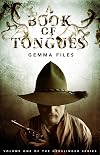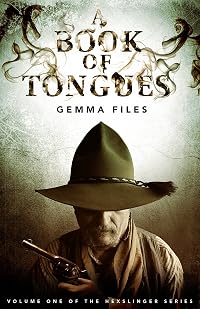
On This Page
Description
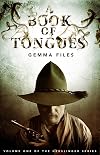
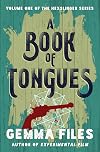
Black Quill Award Winner, Best Small Press Chill (2011) Nominee for the 2011 Best Novel Spectrum Award Two years after the Civil War, Pinkerton agent Ed Morrow has gone undercover with one of the weird West's most dangerous outlaw gangs-the troop led by "Reverend" Asher Rook, ex-Confederate chaplain turned "hexslinger," and his notorious lieutenant (and lover) Chess Pargeter. Morrow's task: get close enough to map the extent of Rook's power, then bring that knowledge back to help Professor show more Joachim Asbury unlock the secrets of magic itself. Magicians, cursed by their gift to a solitary and painful existence, have never been more than a footnote in history. But Rook, driven by desperation, has a plan to shatter the natural law that prevents hexes from cooperation, and change the face of the world-a plan sealed by an unholy marriage-oath with the goddess Ixchel, mother of all hanged men. To accomplish this, he must raise her bloodthirsty pantheon from its collective grave through sacrifice, destruction, and apotheosis. Caught between a passel of dead gods and monsters, hexes galore, Rook's witchery, and the ruthless calculations of his own masters, Morrow's only real hope of survival lies with the man without whom Rook cannot succeed: Chess Pargeter himself. But Morrow and Chess will have to literally ride through Hell before the truth of Chess's fate comes clear-the doom written for him, and the entire world. show lessTags
Recommendations








Member Recommendations
MyriadBooks For the Aztec gods.

MyriadBooks For the blending of western plus other, the available loyalties, and the lack of easy choices.
12
GirlMisanthrope Kiernan's well-researched, thick and juicy prose reminds me of Gemma File's writing.
GirlMisanthrope Both authors are so adept at horror that you are left with a tangible feeling of "ick" at book's end.
Sandwich76 Weird west short stories
Member Reviews
Files is an intensely visceral writer, delivering fantasy/horror with the glee of a razor-wielding psychopath; just the thing for my Clive Barker kick. But enough about Barker, Files is her own author, and while the similarities are there (Rook reminds me completely of Barker's Nix, another magician with delusions of godhood), Barker has only laid the groundwork for the next generation, a generation Files could prove herself a leader. She is equally fearless in gore, grotesqueries, and sex (boy, is she fearless in sex, in all its glories and fluids), but her style is brilliant and complex, a gorgeous mixture of goth and grit that completely transforms the material into something magical. Not many people, I suspect, could mash together show more lovecraftian-style horror with Old West patois with such panache.
Read the rest of the review here. show less
Read the rest of the review here. show less
A Book of Tongues, Vol. 1 of The Hexslinger Series, Gemma Files. Chizine Publications.
Reviewed by Leah Bobet.
Original review at http://www.ideomancer.com/?p=285 .
The first thing I noticed on picking up A Book of Tongues was that Gemma Files can *write*.
The prologue to this novel — Files’s first, although she’s had several short story collections published through Prime Books — is two pages long. And by the end of it, picky reader that I am, I was already in love with the precision, the lushness, the hard slice of the language. Files infuses descriptions of the horrific with the same kind of visceral, odd beauty as Caitlin R. Kiernan: you simultaneously cringe back and are drawn closer to the page. Her metaphors are show more unconventional enough to catch your attention, but not so much as to halt you on the page or confuse. It’s prose you can slide into like a hot bath — okay, a very ominous, apocalyptic hot bath. Even before considering the quick-driven plot, the looping structure, the Old West setting flavoured with Aztec and Maya mythologies and haunted by Aztec and Maya hells, A Book of Tongues is beautiful to read.
But the real triumph of A Book of Tongues is in its characterization. Files takes the three players in her love triangle — less actually a love triangle than one of attraction and insecurity and power — and renders them in terrifically objective but compassionate detail. Asher Rook, Chess Pargeter, and Ed Morrow one and all are betrayers, killers, occasionally truly irredeemable, but the shuffling of perspectives on their deeds and motives as they carve their way through their alternate Old West makes them all terribly human. They’re deeply wounded and confused. They dig themselves in too deep and way over their heads. They try very, very hard. They’re still, after all that, amazingly bad men. But it’s very quickly difficult not to find sympathy for each, no matter how they hurt each other — and just about everyone they meet. Through her three protagonists, Files presents an exquisitely complicated and nonjudgmental view of human nature, which, paired with the traditionally (or stereotypically) white-hat-versus-black-hat Western setting, is twice as powerful as it might be in another genre.
That flat inability to derive bad guys and good guys, to keep one character in the same box too long, might be the true driving force behind this story. Stripped down to the core of the desert landscape, unable to rely on the backing of either the outlaw gang Rook leads or Morrow’s Pinkerton bosses, facing down a deific force that isn’t good or bad, but just has no use for a Judeo-Christian notion of morality, every decision the protagonists make is vital and while they are terribly, terribly alone. It’s the very definition of narrative stakes: every choice matters. Only their choices matter. Every regret will be bigger than the world.
It’s that, combined with the cloud of literal apocalyptic doom that builds, slowly but implacably, throughout the novel, that makes A Book of Tongues very, very hard to put down, and that which has it sitting at the top of my list of best novels I’ve read this year, never mind best debuts. This is a first novel from a writer very much in command of her craft; one both intellectually and emotionally captivating. Highly recommended. show less
Reviewed by Leah Bobet.
Original review at http://www.ideomancer.com/?p=285 .
The first thing I noticed on picking up A Book of Tongues was that Gemma Files can *write*.
The prologue to this novel — Files’s first, although she’s had several short story collections published through Prime Books — is two pages long. And by the end of it, picky reader that I am, I was already in love with the precision, the lushness, the hard slice of the language. Files infuses descriptions of the horrific with the same kind of visceral, odd beauty as Caitlin R. Kiernan: you simultaneously cringe back and are drawn closer to the page. Her metaphors are show more unconventional enough to catch your attention, but not so much as to halt you on the page or confuse. It’s prose you can slide into like a hot bath — okay, a very ominous, apocalyptic hot bath. Even before considering the quick-driven plot, the looping structure, the Old West setting flavoured with Aztec and Maya mythologies and haunted by Aztec and Maya hells, A Book of Tongues is beautiful to read.
But the real triumph of A Book of Tongues is in its characterization. Files takes the three players in her love triangle — less actually a love triangle than one of attraction and insecurity and power — and renders them in terrifically objective but compassionate detail. Asher Rook, Chess Pargeter, and Ed Morrow one and all are betrayers, killers, occasionally truly irredeemable, but the shuffling of perspectives on their deeds and motives as they carve their way through their alternate Old West makes them all terribly human. They’re deeply wounded and confused. They dig themselves in too deep and way over their heads. They try very, very hard. They’re still, after all that, amazingly bad men. But it’s very quickly difficult not to find sympathy for each, no matter how they hurt each other — and just about everyone they meet. Through her three protagonists, Files presents an exquisitely complicated and nonjudgmental view of human nature, which, paired with the traditionally (or stereotypically) white-hat-versus-black-hat Western setting, is twice as powerful as it might be in another genre.
That flat inability to derive bad guys and good guys, to keep one character in the same box too long, might be the true driving force behind this story. Stripped down to the core of the desert landscape, unable to rely on the backing of either the outlaw gang Rook leads or Morrow’s Pinkerton bosses, facing down a deific force that isn’t good or bad, but just has no use for a Judeo-Christian notion of morality, every decision the protagonists make is vital and while they are terribly, terribly alone. It’s the very definition of narrative stakes: every choice matters. Only their choices matter. Every regret will be bigger than the world.
It’s that, combined with the cloud of literal apocalyptic doom that builds, slowly but implacably, throughout the novel, that makes A Book of Tongues very, very hard to put down, and that which has it sitting at the top of my list of best novels I’ve read this year, never mind best debuts. This is a first novel from a writer very much in command of her craft; one both intellectually and emotionally captivating. Highly recommended. show less
For a debut novel (heck, for a novel, period), A Book of Tongues is a fantastic western fantasy. Two years following the American Civil War, Ed Morrow, an agent for the Pinkertons, must infiltrate an outlaw gang led by "Reverend" Asher Rook, an former Confederate chaplain turned hexslinger, and his deadly lieutenant Chess Pargeter. Morrow's task is simple: find out how powerful Rook is, and bring that information to help Professor Joachim Asbury unlock the secrets of magic himself.
Meanwhile, Aztec goddess Ixchel wants Rook and Pargeter for her own selfish purposes, and they, as well as many others, outlaws and lawmakers alike, will have to go through hell to stop her from changing the world forever.
I don't think I can fully describe how show more fun this book was to read. I'm not usually a fan of westerns, but this is hardly your ordinary western. The American West is gritty, dirty, and violent, yet it is rendered into something surreal and beautiful thanks to Files' eloquent prose. Mayan and Aztec mythologies are given central stage and become a recurring theme, and the darker aspects of their respective pantheon offers great material for a horror novel.
Interestingly enough, despite the fact that the story is told by Morrow's point of view, he isn't the most compelling character, as he is merely an observer. His subjects, Rook and Pargeter in particular, are far more fascinating, as is their relationship, which is given much importance. Rook is a tortured soul, trapped between sorcery and religion, yet accepting both. As such, he makes use of Scripture to carry out his powerful spells. Pargeter, on the other hand, despises magic under any form, but tolerates the one Rook uses only because he loves him.
A Book of Tongues is very graphic, with the violence as well as the sex. Chess embodies both, being a very sexual and deadly being, for reasons that become more evident as the story advances. As such, the very descriptive homosexual acts and merciless murders serve as a plot device and powerful character development.
The relationship between Rook and Chess, and incidentally that of Rook and Ixchel, is a complicated one, at best. In both relationships, one person is always subjected to another. In the former, Chess is the submissive one, Rook intentionally in the dark as to why he keeps him at his side. Rook, on the other hand, is subjected to Ixchel, although he is always in a position of mistrust towards the goddess, where a continual power struggle is present. These two relationships, of which Rook is the common denominator, creates an interesting dynamic.
Gemma Files, in her debut novel, takes seemingly disparate themes and successfully weaves them as if they were always meant for each other. The blood, dirt and grit common to the gunslinger era is deftly combined with the dark beauty of ancient mythology, and the mystery of magic and sorcery. All these combined make for a compelling and exciting read.
4.5/5 show less
Meanwhile, Aztec goddess Ixchel wants Rook and Pargeter for her own selfish purposes, and they, as well as many others, outlaws and lawmakers alike, will have to go through hell to stop her from changing the world forever.
I don't think I can fully describe how show more fun this book was to read. I'm not usually a fan of westerns, but this is hardly your ordinary western. The American West is gritty, dirty, and violent, yet it is rendered into something surreal and beautiful thanks to Files' eloquent prose. Mayan and Aztec mythologies are given central stage and become a recurring theme, and the darker aspects of their respective pantheon offers great material for a horror novel.
Interestingly enough, despite the fact that the story is told by Morrow's point of view, he isn't the most compelling character, as he is merely an observer. His subjects, Rook and Pargeter in particular, are far more fascinating, as is their relationship, which is given much importance. Rook is a tortured soul, trapped between sorcery and religion, yet accepting both. As such, he makes use of Scripture to carry out his powerful spells. Pargeter, on the other hand, despises magic under any form, but tolerates the one Rook uses only because he loves him.
A Book of Tongues is very graphic, with the violence as well as the sex. Chess embodies both, being a very sexual and deadly being, for reasons that become more evident as the story advances. As such, the very descriptive homosexual acts and merciless murders serve as a plot device and powerful character development.
The relationship between Rook and Chess, and incidentally that of Rook and Ixchel, is a complicated one, at best. In both relationships, one person is always subjected to another. In the former, Chess is the submissive one, Rook intentionally in the dark as to why he keeps him at his side. Rook, on the other hand, is subjected to Ixchel, although he is always in a position of mistrust towards the goddess, where a continual power struggle is present. These two relationships, of which Rook is the common denominator, creates an interesting dynamic.
Gemma Files, in her debut novel, takes seemingly disparate themes and successfully weaves them as if they were always meant for each other. The blood, dirt and grit common to the gunslinger era is deftly combined with the dark beauty of ancient mythology, and the mystery of magic and sorcery. All these combined make for a compelling and exciting read.
4.5/5 show less
A western horror story full of gay gunslingers and the Pinkerton men they seduce – sometimes you can understand why people ask writers where they get their ideas, because Gemma Files sure had a humdinger of one with this first novel. Throw in some Mayan mythology and a lot of magic, and you’ve got a plot that comes at you so fast and furiously that you have to put the book down just to catch your breath.
A Book of Tongues is Volume One of the Hexslinger Series, to be continued (soon, I hope) in A Rope of Thorns. Two characters dominate this volume: Chess Pargeter, an incredible shot who thinks as little of killing another man as you or I think of killing a mosquito; and his lover, Reverend Asher Elijah Rook, an ex-Confederate show more chaplain who becomes imbued with magic when he undergoes the punishment meant for another man. The story is told mostly from the point of view of Edward Morrow, a Pinkerton man sent to infiltrate Rook’s gang and get a reading on his magical abilities.
Rook is a reluctant hexslinger, one who uses Bible verses to shape and charge his magic only when he sees no other alternative – at least, that’s the case at the outset of the novel. He falls into a life of crime pretty much by accident, the same way he falls into a sexual and emotional relationship with Chess, but once started down that road, he has to figure out how to deal with it all. He wrestles mightily with all of this, none of which he asked for; some might say he became a bad man solely because he chose to be a good man on one occasion.
Chess believes he is simply a gunslinger who happens to be a homosexual. The son of a San Francisco whore, he seems himself as something similar, a man who uses sex to get what he wants – except when it comes to Rook. He fascinates men who consider themselves heterosexual, and they seem to fall in love with him – truly in love – with surprising ease. Is this Chess’s own magic, or is there something else going on here?
Morrow tries to figure the whole thing out, and to measure the magic Rook gives off for a special study the Pinkertons are doing, but he finds himself involved in the gang more deeply than he expected. When Rook goes on a sort of magical mystery tour and drags Chess and Morrow along, things get very ugly.
Files writes about graphic sex and violence in way that does not spare her readers in the slightest. You’re likely to wind up with things you’d rather not have in your head, in a kind of detail that you can’t easily shake out. Yet despite this, or maybe because of it, the pace of A Book of Tongues starts to flag around the middle of the book. Files, who has written plenty of short fiction, doesn’t yet seem to have the pacing of a novel figured out, much less the pacing of a series of at least two books. The power of the images she builds with her horrific descriptions dissipates the longer she writes, so that one becomes inured to it and wants merely to know what happens next, and becomes impatient with yet another bloody scene.
There is a strong talent at work here. As Files polishes her work and her technique, I expect that she will be writing novels strong enough to compete with the best in the horror field. Despite my misgivings about the pacing of A Book of Tongues, I’m left wanting to know what happens next to these characters. I’ll definitely be seeking out A Rope of Thorns. show less
A Book of Tongues is Volume One of the Hexslinger Series, to be continued (soon, I hope) in A Rope of Thorns. Two characters dominate this volume: Chess Pargeter, an incredible shot who thinks as little of killing another man as you or I think of killing a mosquito; and his lover, Reverend Asher Elijah Rook, an ex-Confederate show more chaplain who becomes imbued with magic when he undergoes the punishment meant for another man. The story is told mostly from the point of view of Edward Morrow, a Pinkerton man sent to infiltrate Rook’s gang and get a reading on his magical abilities.
Rook is a reluctant hexslinger, one who uses Bible verses to shape and charge his magic only when he sees no other alternative – at least, that’s the case at the outset of the novel. He falls into a life of crime pretty much by accident, the same way he falls into a sexual and emotional relationship with Chess, but once started down that road, he has to figure out how to deal with it all. He wrestles mightily with all of this, none of which he asked for; some might say he became a bad man solely because he chose to be a good man on one occasion.
Chess believes he is simply a gunslinger who happens to be a homosexual. The son of a San Francisco whore, he seems himself as something similar, a man who uses sex to get what he wants – except when it comes to Rook. He fascinates men who consider themselves heterosexual, and they seem to fall in love with him – truly in love – with surprising ease. Is this Chess’s own magic, or is there something else going on here?
Morrow tries to figure the whole thing out, and to measure the magic Rook gives off for a special study the Pinkertons are doing, but he finds himself involved in the gang more deeply than he expected. When Rook goes on a sort of magical mystery tour and drags Chess and Morrow along, things get very ugly.
Files writes about graphic sex and violence in way that does not spare her readers in the slightest. You’re likely to wind up with things you’d rather not have in your head, in a kind of detail that you can’t easily shake out. Yet despite this, or maybe because of it, the pace of A Book of Tongues starts to flag around the middle of the book. Files, who has written plenty of short fiction, doesn’t yet seem to have the pacing of a novel figured out, much less the pacing of a series of at least two books. The power of the images she builds with her horrific descriptions dissipates the longer she writes, so that one becomes inured to it and wants merely to know what happens next, and becomes impatient with yet another bloody scene.
There is a strong talent at work here. As Files polishes her work and her technique, I expect that she will be writing novels strong enough to compete with the best in the horror field. Despite my misgivings about the pacing of A Book of Tongues, I’m left wanting to know what happens next to these characters. I’ll definitely be seeking out A Rope of Thorns. show less
A wicked, dirty, sexy, audacious western horror novel.
I am in awe of Gemma Files. She inhabits multiple characters, setting each apart with language, thought, habits. The Reverend Asher Elijah Rook rises from the dead. Chess Pargeter falls in love with him. Ed Morrow, a badge-carrying 'Pink', follows them both on a trail of pure mayhem and madness. The prose is dense and atmospheric. It gets murky when the Mayan and Aztec gods and goddesses emerge, and I found myself skimming over some of those parts. I fell in love with Ms. Files' description of black magic, practiced by people who are 'hexes'. It's dark and spooky and you yourself will be wrapped around the Rev's finger. Or maybe Chess's; he is quite the charmer. Who wants to turn show more this into an HBO series?!!! show less
I am in awe of Gemma Files. She inhabits multiple characters, setting each apart with language, thought, habits. The Reverend Asher Elijah Rook rises from the dead. Chess Pargeter falls in love with him. Ed Morrow, a badge-carrying 'Pink', follows them both on a trail of pure mayhem and madness. The prose is dense and atmospheric. It gets murky when the Mayan and Aztec gods and goddesses emerge, and I found myself skimming over some of those parts. I fell in love with Ms. Files' description of black magic, practiced by people who are 'hexes'. It's dark and spooky and you yourself will be wrapped around the Rev's finger. Or maybe Chess's; he is quite the charmer. Who wants to turn show more this into an HBO series?!!! show less
A Book of Tongues is a wonderfully brutal read, all the more so, because Gemma Files manages to finagle sympathy for what could otherwise be a rather unsympathetic group of characters. Many of these characters are not what you would call nice. Chess is an unapologetic murderer; Rook is desperate and ruthless; and even Morrow is a liar.
Files' merciless prose reaches out and reveals what they're made of as each of these rough-shod gentlemen is trapped, bound like a fly into the webbing of the story. They're lives quickly become interwoven, and eventually they learn that they'll need each other to find their way out.
At first Chess' character is the hardest to sympathize with, as he is the most openly violent and cruel. And because you see show more him through the lens of first Morrow and then Rook, it's hard to get a read on him other than his love of absinthe and bloodshed and his desire for Rook. But by the end of the book, as more and more of Chess and how he's put together is slowly revealed, it was Chess that I came to love the most. I feel deep rooted sympathy for him and what has befallen him in his life. He has had the hardest road, and in the face of it has stood up and laughed in its face. More than any other of the characters I want him to succeed; I want him to win.
A Book of Tongues is very graphic, not only in blood and gore (of which there is plenty), but also in sexual situations. Sometimes the events were so vivid in my mind that I didn't quite know what to do with them, and I had to lower the book for a moment and take a breath before continuing.
This is the kind of horror that leaves you shaken (in more ways than one), with your head spinning, and not quite sure where you stand. While actually reading the book, I don't know I could actually say that I liked it -- the experience was a little to visceral for that -- but that now I'm done reading I desperately want to read more. Thankfully, A Book of Tongues is book one of a trilogy, and the sequel, A Rope of Thorns comes out this June. show less
Files' merciless prose reaches out and reveals what they're made of as each of these rough-shod gentlemen is trapped, bound like a fly into the webbing of the story. They're lives quickly become interwoven, and eventually they learn that they'll need each other to find their way out.
At first Chess' character is the hardest to sympathize with, as he is the most openly violent and cruel. And because you see show more him through the lens of first Morrow and then Rook, it's hard to get a read on him other than his love of absinthe and bloodshed and his desire for Rook. But by the end of the book, as more and more of Chess and how he's put together is slowly revealed, it was Chess that I came to love the most. I feel deep rooted sympathy for him and what has befallen him in his life. He has had the hardest road, and in the face of it has stood up and laughed in its face. More than any other of the characters I want him to succeed; I want him to win.
A Book of Tongues is very graphic, not only in blood and gore (of which there is plenty), but also in sexual situations. Sometimes the events were so vivid in my mind that I didn't quite know what to do with them, and I had to lower the book for a moment and take a breath before continuing.
This is the kind of horror that leaves you shaken (in more ways than one), with your head spinning, and not quite sure where you stand. While actually reading the book, I don't know I could actually say that I liked it -- the experience was a little to visceral for that -- but that now I'm done reading I desperately want to read more. Thankfully, A Book of Tongues is book one of a trilogy, and the sequel, A Rope of Thorns comes out this June. show less
(Re-posted from http://theturnedbrain.blogspot.com)
I follow and read a lot of book review blogs. Like, a lot. Sometimes I feel like I read more book reviews then, you know, actual books. Some people question the worth of reading reviews, because after all books are highly subjective and what one person likes you might not and so on. But I think you have to approach reading reviews in the right way. I mean, if there’s a reviewer whose tastes always line up with yours then you might avoid a book just because they didn’t like it, but I think any good reviewer provides enough information that even if they didn’t like the book, you can take their review and make up your own mind.
Which brings me to Gemma Files’ “Book of Tongues.” show more A book I had never heard of until Calico Reaction posted a review of it. Now, Calico was not a fan of this book, indeed she didn’t even finish it. But she neatly outlines the things that didn’t work for her personally, and they kinda sounded like things that would work for me. So I tracked the book down, and I’m very glad I did.
I honestly don’t understand why this book is not getting more mentions across the reviewing corner of the blogosphere. Not because it’s necessarily fantastically awesome, (although I rather think it is), but because it’s hugely ambitious. I think it’s the kinda book that you have to feel strongly about, either love it or hate it, and it’s these kind of books I’m used to seeing discussions of.
It’s set right after the American civil war in an America where some people are “hex’s.” That is, men or women with some pretty trippy magical powers that manifest on the onset of menstruation (if you’re a women) or upon suffering serious bodly harm (if you’re a man). A really cool twist on the idea is that to hex’s can not spend any long length of time together as they will involuntarily suck the power out of each other until one is dead. When being hung for a crime he didn’t commit Reverend Asher Rook learns he has some serious power going on, and he turns outlaw along with the rest of his army regiment. (Regement? Unit? I don’t know, I’m not down with military lingo…)
This regiment includes one Chess Pargeter, also known as the reason I loved this book so very much. He’s a whore turned Reverend Rook’s fiercely loyal lover, he’s an indiscriminate murderer, he’s more than a little bit crazy and he definitely makes the book for me. The best character I can think of to compare Chess to is George R. R. Martin’s Jamie Lannister. You start out completely disgusted by him, and by the end he’s your absolute favourite (at least if you’re me). Not that I’m equating being gay with having an incestuous relationship with your sister! It’s more the way that Chess kills so freely and so gleefully, he seems wholly without empathy and it’s easy to dislike him. But by the time the novel ended my heart had broken for him ten times over, and I was cheering for him to come out on top. The transition is completely natural, I couldn’t even tell you the moment Chess went from zero to hero for me, and without changing the core of his character either.
It took George Martin four massive tomes to pull that off with Jamie, and Gemma Files does it in just a couple of hundred of too short pages. Impressive? Very. The other characters were just as skilfully crafted. The character arc of Reverend Rook was just as dramatic as Chess’s, and the skill it took to pull it off even more impressive. There is an almost complete lack of women, but given the setting and nature of the book I’m willing to forgive that. (And while the female hex Songbird felt a little flat to me, I loved Chess’s mother, so I’m confident in Files’ ability to write a female characer). The only character I was a little disappointed with is Ed Morrow, our main POV character. He spends most of his time observing and commenting upon Rook and Chess, so we don’t really get to see much of who he himself is. Files does hint at greater depths inside of him, so hopefully the honourable Mr. Morrow will grow a bit in the next books.
The writing style and structure is what I think will divide the people who read this book into those who like and those who don’t. It’s told in an odd mix of flash backs and present day scenes. I say odd because it feels uneven, like there will be three flashbacks and then a present scene and then a flash back and then five present scenes… Like when your iPod shuffle randomly throws up five songs out of ten by the same band? The flashbacks and present day scenes are not quite randomly placed, but not quite structured either, and it sticks out. The writing itself is highly stylised. I think Files definitely captured the voice of the setting. Think the southern twang that leaps of every page of a Sookie Stackhouse novel, or the British manners of Naomi’s Novik’s Temeraire books. If by the end of a novel I’m reading it in my head with an accent, then the author has been effective.
I will say that some of it got a little confusing for me. All of the Aztec names started to run together, but that’s probably because I am entirely unfamiliar with Aztec legends beyond what I’ve learnt from Mountain Goats albums. And there is a lot of religion. Like, A LOT. Rook’s powers come from the bible, like he reads a phrase and havoc is wrought. (Think turned people into pillars of salt, plagues of locusts, ect). Actually, and this coming from a die hard atheist, I found it be pretty unique and interesting. Normally I can’t stop yawning when reading about characters struggling with their religion and god and what have you, but Files definitely handled it pretty well. And she couldn’t very well have avoided it, with Rook being a once pious Reverend now killing people left and right and enthusiastically sodomising his boyfriend every chance he gets.
It is the first part in a trilogy, and the ending is definitely a first part of a trilogy kind of ending. So if you have the patience you might want to wait until they’re all out, but if you’re anything like me you’ll be snapping the next one up as soon is you can! show less
I follow and read a lot of book review blogs. Like, a lot. Sometimes I feel like I read more book reviews then, you know, actual books. Some people question the worth of reading reviews, because after all books are highly subjective and what one person likes you might not and so on. But I think you have to approach reading reviews in the right way. I mean, if there’s a reviewer whose tastes always line up with yours then you might avoid a book just because they didn’t like it, but I think any good reviewer provides enough information that even if they didn’t like the book, you can take their review and make up your own mind.
Which brings me to Gemma Files’ “Book of Tongues.” show more A book I had never heard of until Calico Reaction posted a review of it. Now, Calico was not a fan of this book, indeed she didn’t even finish it. But she neatly outlines the things that didn’t work for her personally, and they kinda sounded like things that would work for me. So I tracked the book down, and I’m very glad I did.
I honestly don’t understand why this book is not getting more mentions across the reviewing corner of the blogosphere. Not because it’s necessarily fantastically awesome, (although I rather think it is), but because it’s hugely ambitious. I think it’s the kinda book that you have to feel strongly about, either love it or hate it, and it’s these kind of books I’m used to seeing discussions of.
It’s set right after the American civil war in an America where some people are “hex’s.” That is, men or women with some pretty trippy magical powers that manifest on the onset of menstruation (if you’re a women) or upon suffering serious bodly harm (if you’re a man). A really cool twist on the idea is that to hex’s can not spend any long length of time together as they will involuntarily suck the power out of each other until one is dead. When being hung for a crime he didn’t commit Reverend Asher Rook learns he has some serious power going on, and he turns outlaw along with the rest of his army regiment. (Regement? Unit? I don’t know, I’m not down with military lingo…)
This regiment includes one Chess Pargeter, also known as the reason I loved this book so very much. He’s a whore turned Reverend Rook’s fiercely loyal lover, he’s an indiscriminate murderer, he’s more than a little bit crazy and he definitely makes the book for me. The best character I can think of to compare Chess to is George R. R. Martin’s Jamie Lannister. You start out completely disgusted by him, and by the end he’s your absolute favourite (at least if you’re me). Not that I’m equating being gay with having an incestuous relationship with your sister! It’s more the way that Chess kills so freely and so gleefully, he seems wholly without empathy and it’s easy to dislike him. But by the time the novel ended my heart had broken for him ten times over, and I was cheering for him to come out on top. The transition is completely natural, I couldn’t even tell you the moment Chess went from zero to hero for me, and without changing the core of his character either.
It took George Martin four massive tomes to pull that off with Jamie, and Gemma Files does it in just a couple of hundred of too short pages. Impressive? Very. The other characters were just as skilfully crafted. The character arc of Reverend Rook was just as dramatic as Chess’s, and the skill it took to pull it off even more impressive. There is an almost complete lack of women, but given the setting and nature of the book I’m willing to forgive that. (And while the female hex Songbird felt a little flat to me, I loved Chess’s mother, so I’m confident in Files’ ability to write a female characer). The only character I was a little disappointed with is Ed Morrow, our main POV character. He spends most of his time observing and commenting upon Rook and Chess, so we don’t really get to see much of who he himself is. Files does hint at greater depths inside of him, so hopefully the honourable Mr. Morrow will grow a bit in the next books.
The writing style and structure is what I think will divide the people who read this book into those who like and those who don’t. It’s told in an odd mix of flash backs and present day scenes. I say odd because it feels uneven, like there will be three flashbacks and then a present scene and then a flash back and then five present scenes… Like when your iPod shuffle randomly throws up five songs out of ten by the same band? The flashbacks and present day scenes are not quite randomly placed, but not quite structured either, and it sticks out. The writing itself is highly stylised. I think Files definitely captured the voice of the setting. Think the southern twang that leaps of every page of a Sookie Stackhouse novel, or the British manners of Naomi’s Novik’s Temeraire books. If by the end of a novel I’m reading it in my head with an accent, then the author has been effective.
I will say that some of it got a little confusing for me. All of the Aztec names started to run together, but that’s probably because I am entirely unfamiliar with Aztec legends beyond what I’ve learnt from Mountain Goats albums. And there is a lot of religion. Like, A LOT. Rook’s powers come from the bible, like he reads a phrase and havoc is wrought. (Think turned people into pillars of salt, plagues of locusts, ect). Actually, and this coming from a die hard atheist, I found it be pretty unique and interesting. Normally I can’t stop yawning when reading about characters struggling with their religion and god and what have you, but Files definitely handled it pretty well. And she couldn’t very well have avoided it, with Rook being a once pious Reverend now killing people left and right and enthusiastically sodomising his boyfriend every chance he gets.
It is the first part in a trilogy, and the ending is definitely a first part of a trilogy kind of ending. So if you have the patience you might want to wait until they’re all out, but if you’re anything like me you’ll be snapping the next one up as soon is you can! show less
Members
- Recently Added By
Lists

LGBTQ+ Speculative Fiction
821 works; 51 members

New Weird Fiction
69 works; 12 members
Author Information

34+ Works 1,232 Members
Some Editions
Awards and Honors
Awards
Distinctions
Notable Lists
Series

Work Relationships
Is contained in
Common Knowledge
- Canonical title
- A Book of Tongues
- Original publication date
- 2010
- People/Characters
- Ash Rook; Chess Pargeter; Ed Morrow
- Blurbers
- Rowe, Michael; Kiernan, Caitlin R.
Classifications
Statistics
- Members
- 268
- Popularity
- 120,943
- Reviews
- 24
- Rating
- (3.81)
- Languages
- English
- Media
- Paper, Audiobook, Ebook
- ISBNs
- 8
- ASINs
- 5