
Caitlín R. Kiernan
Author of The Drowning Girl
About the Author
Disambiguation Notice:
Kiernan is gender fluid and uses they/them pronouns.
Series
Works by Caitlín R. Kiernan
Reimagining Lovecraft: Four Tor.com Novellas: (The Ballad of Black Tom, The Dream-Quest of Vellit Boe, Hammers on Bone, Agents of Dreamland) (2017) — Contributor — 24 copies, 1 review
False/Starts II 14 copies
The Girl Who Would Be Death #2 8 copies
The Girl Who Would Be Death #3 7 copies
The Girl Who Would Be Death #4 6 copies
False Starts 6 copies
On the Road to Jefferson 4 copies
Persephone 3 copies
The Worm in My Mind's Eye 3 copies
Riding the White Bull {short story} 3 copies
Emptiness Spoke Eloquent 3 copies
The Colliers' Venus (1893) 3 copies
Pickman’s other model (1929) 3 copies
The Belated Burial 3 copies
Study for "Estate" 3 copies
La Peau Verte 3 copies
As Red As Red 3 copies
The Bone's Prayer 2 copies
The Maltese Unicorn 2 copies
Onion (short story) 2 copies
A Redress for Andromeda 2 copies
Goggles (c. 1910) 2 copies
The Pearl Diver 2 copies
The Long Hall on the Top Floor 2 copies
Nor the Demons Down Under the Sea 2 copies
Galápagos 2 copies
The Drowned Geologist 2 copies
Giants in the Earth 2 copies
Ode To Katan Amano 2 copies
Escape Artist 2 copies
Sirenia digest 1 copy
A Season of Broken Dolls 1 copy
The Dreaming 9-12 (KIERNAN) 1 copy
The Dead and the Moonstruck 1 copy
The King of Birds 1 copy
The Dreaming: Souvenirs 1 copy
The Dreaming: Many Mansions 1 copy
The Dreaming: The Gyres 1 copy
The Dreaming: Fox and Hounds 1 copy
The Ape's Wife [short story] 1 copy
Standing Water 1 copy
On The Reef 1 copy
Untitled Monster Doodle #1 1 copy
Untitled Monster Doodle #2 1 copy
Pony 1 copy
Bainbridge 1 copy
So Runs the World Away 1 copy
Bela's Plot 1 copy
Sirenia Digest, Vol. 17, No. 07 [186] July 2021, A Barrenness of Daffodils, a Lerna of Ills (Part 1) 1 copy
Sirenia Digest, Vol. 20, No. 8 [223]. 2024 August, Daughter of Hounds. Chapter 3, Wild Things 1 copy
Sirenia Digest, Vol. 20, No. 12 [227]. December 2024 Forests of the Night: Lycanthrope Triptych 1 copy
Ode to Edvard Munch 1 copy
Estate 1 copy
Mercy Brown 1 copy
The Melusine 1 copy
Associated Works
Are You Loathsome Tonight? A Collection of Short Stories (1998) — Afterword, some editions — 639 copies, 7 reviews
The Year's Best Science Fiction: Twenty-Second Annual Collection (2005) — Contributor — 577 copies, 11 reviews
Love in Vein II : Eighteen More Tales of Vampiric Erotica (1997) — Contributor — 513 copies, 7 reviews
The Thackery T. Lambshead Cabinet of Curiosities: Exhibits, Oddities, Images, and Stories from Top Authors and Artists (2011) — Contributor — 487 copies, 17 reviews
American Fantastic Tales : Terror and the Uncanny from the 1940's to Now (2009) — Contributor — 299 copies, 5 reviews
The Year's Best Fantasy and Horror: Fifteenth Annual Collection (2002) — Contributor — 276 copies, 4 reviews
The Best Science Fiction and Fantasy of the Year Volume Six (2012) — Contributor — 162 copies, 4 reviews
The Best Science Fiction and Fantasy of the Year Volume Seven (2013) — Contributor — 154 copies, 3 reviews
The Best Science Fiction and Fantasy of the Year Volume Eight (2014) — Contributor — 116 copies, 6 reviews
Dreams from the Witch House: Female Voices of Lovecraftian Horror (2015) — Contributor — 102 copies, 2 reviews
Screams from the Dark: 29 Tales of Monsters and the Monstrous (2022) — Contributor — 100 copies, 2 reviews
Lethal Kisses: 18 Tales of Sex, Horror, and Revenge (1996) — Contributor, some editions — 75 copies, 5 reviews
The Best Science Fiction and Fantasy of the Year Volume Nine (2015) — Contributor — 73 copies, 3 reviews
The Best Science Fiction and Fantasy of the Year Volume Ten (2016) — Contributor — 59 copies, 3 reviews
The Mammoth Book of Nightmare Stories: Twisted Tales Not to Be Read at Night! (2019) — Contributor — 54 copies
Fantasy Magazine, Issue 59 (December 2015) - Queers Destroy Fantasy! Special Issue (2015) — Contributor — 49 copies
The Best Science Fiction and Fantasy of the Year Volume Twelve (2018) — Contributor — 47 copies, 2 reviews
New York Fantastic: Fantasy Stories from the City that Never Sleeps (2017) — Contributor — 43 copies, 1 review
Last Drink Bird Head : A Flash Fiction Anthology for Charity (2009) — Contributor — 33 copies, 1 review
Searchers After Horror: New Tales of the Weird and Fantastic (2014) — Contributor — 30 copies, 3 reviews
Brave New Worlds {Second Edition ebook} — Contributor, some editions — 11 copies
High Fantastic: Colorado's Fantasy, Dark Fantasy and Science Fiction (1995) — Contributor — 7 copies
Tagged
Common Knowledge
- Canonical name
- Kiernan, Caitlín R.
- Legal name
- Kiernan, Caitlín Rebekah
- Other names
- Wright, Kenneth Robert (birth name)
- Birthdate
- 1964-05-26
- Gender
- genderfluid
- Education
- University of Alabama at Birmingham
University of Colorado at Boulder - Occupations
- paleontologist
writer - Agent
- Merrilee Heifetz (Writers House)
- Nationality
- Ireland (birth)
USA - Birthplace
- Dublin, Ireland
- Places of residence
- Birmingham, Alabama, USA
Atlanta, Georgia, USA
Providence, Rhode Island, USA
Leeds, Alabama, USA
Trussville, Alabama, USA - Map Location
- USA
- Disambiguation notice
- Kiernan is gender fluid and uses they/them pronouns.
Members
Discussions
THE DEEP ONES: "Black Ships Seen South of Heaven" by Caitlin R. Kiernan in The Weird Tradition (June 2024)
THE DEEP ONES: "The Well of Stars and Shadow" by Caitlín R. Kiernan in The Weird Tradition (September 2023)
THE DEEP ONES: "Houses Under the Sea" by Caitlin R. Kiernan in The Weird Tradition (May 2021)
Reviews

The Tindalos Asset is the third and likely final slender novel in Kiernan's Tinfoil Dossier series. It introduces a new central character, while pulling along several from the earlier books. This character Ellison Nicodemo is the "asset" of the title, a subordinate agent of the deep black intelligence directorate referred to as "Albany" in this series. Usage in this book shows that the "Dreamland" of the previous volume's title does also denominate this same outfit. (I had noted its show more ambiguity there.)
I was startled that the title of the first chapter was a quote from Leah Hirsig--but Kiernan seems to have received it via its use as a song title by Coil: "Paint me as a dead soul." In the appended author's note, they list all the music that was integral to the composition of the story (168). It's no secret that these books are built around neo-Lovecraftian yog-sothothery, and this one is as much as anything an updated and re-imagined "Call of Cthulhu," with generous bits of "Dagon" and "The Shadow over Innsmouth." Frank Belknap Long's "The Hounds of Tindalos" is of course a significant source as well, and Kiernan ties its notions to the Manhattan Project, among other space-time problems.
Following the precedent in Black Helicopters, this book's chapters are episodes presented under dates that are not in linear sequence, ranging from 1956 to 2151. The chronological core of the story is in January 2018, around the time it was written. This sort of time-loose montage effect has a self-similar relationship to the entire Tinfoil Dossier series, and I think the books could be read with enjoyment in any order. Indeed there seems to be some confusion among readers about the sequence of the first two books, since Black Helicopters, the one Kiernan calls "first," was expanded and re-published as a series element after Agents of Dreamland.
Looking back on the series as a whole, its mixture of the weird horror Lovecraft canon with espionage and a certain measure of sympathy for the "monsters" is a common ground with other recent/current series: the Laundry Files of Charles Stross and the Innsmouth Legacy of Ruthanna Emrys. Kiernan's more experimental style definitely makes these books distinctive, though. There really aren't any of the comedic elements that Stross uses, and there's more of a high-tragic sensibility despite the fact that the Tinfoil Dossier books are much shorter than their comparanda.
This work is rife with extra-textual and inter-textual allusions, which supply a lot of the enjoyment. Given its manageable size and convoluted presentation, I think there is a good chance I could return to it in the future for a profitable re-read. show less
I was startled that the title of the first chapter was a quote from Leah Hirsig--but Kiernan seems to have received it via its use as a song title by Coil: "Paint me as a dead soul." In the appended author's note, they list all the music that was integral to the composition of the story (168). It's no secret that these books are built around neo-Lovecraftian yog-sothothery, and this one is as much as anything an updated and re-imagined "Call of Cthulhu," with generous bits of "Dagon" and "The Shadow over Innsmouth." Frank Belknap Long's "The Hounds of Tindalos" is of course a significant source as well, and Kiernan ties its notions to the Manhattan Project, among other space-time problems.
Following the precedent in Black Helicopters, this book's chapters are episodes presented under dates that are not in linear sequence, ranging from 1956 to 2151. The chronological core of the story is in January 2018, around the time it was written. This sort of time-loose montage effect has a self-similar relationship to the entire Tinfoil Dossier series, and I think the books could be read with enjoyment in any order. Indeed there seems to be some confusion among readers about the sequence of the first two books, since Black Helicopters, the one Kiernan calls "first," was expanded and re-published as a series element after Agents of Dreamland.
Looking back on the series as a whole, its mixture of the weird horror Lovecraft canon with espionage and a certain measure of sympathy for the "monsters" is a common ground with other recent/current series: the Laundry Files of Charles Stross and the Innsmouth Legacy of Ruthanna Emrys. Kiernan's more experimental style definitely makes these books distinctive, though. There really aren't any of the comedic elements that Stross uses, and there's more of a high-tragic sensibility despite the fact that the Tinfoil Dossier books are much shorter than their comparanda.
This work is rife with extra-textual and inter-textual allusions, which supply a lot of the enjoyment. Given its manageable size and convoluted presentation, I think there is a good chance I could return to it in the future for a profitable re-read. show less
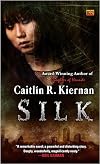
The author clearly loves language, and loves descriptions and every reader who loves those too will enjoy Silk immensely. It is a first novel, so there is some tendency to overindulge herself – there is hardly a sentence here that does not contain at least one metaphor or two similes, but Caitlín Kiernan’s prose is so luscious and sensuous that complaining about this in the face of so much too enjoy would seem rather petty.
Kiernan is usually classified as an author of horror fiction, show more and for good reasons, I am sure; but in this particular novel the horror seems almost incidental and marginal, while the main focus of the story rests on the lives of a group of people in a small town in the United States, all of them young, all of them mentally scarred in some way and existing on the fringes of society. For most of Silk, it is not even quite sure whether the horrors they experience have any external source besides drugs; but while the visions they live through might not be real, their tragic consequences very much are. Interestingly, even though all of the novel’s main characters are misfits and outsiders, the narrative’s conflicts are not about them versus the mainstream of the society whose margins they live on (although Kiernan does not leave any doubt that they are being marginalized) but rather about the characters either battling with or surrendering to their own inner demons, whether it is by taking drugs, by repeatedly falling in love with the wrong kind of person or any of the countless other possibilities of hurting oneself.
While the novel’s catastrophe is initialized by a group of town bullies, that enounter is entirely random, and in the end it are the characters themselves who bring about their downfall – there is not a single character in Silk who is not in way or another bent on self-destruction, and while some manage to escape that urge, it proves fatal for others. Even when events take a turn from psychological and drug-induced horror towards the distinctly supernatural at the end the demons still remain largely internalized, or appear as the external expression of a damaged interior (that might be a disturbed psyche as well as a conflicted community).
But – and this, I think, is where Silk gets really interesting – if it appears that all the novel’s characters are severely damaged and can relate to their own self only by self-destructing, it becomes clear (for some characters soon, for others later in the novel) that all of them have been traumatized in some way, that the original damage was done to them by outside forces, and the deformations of their psyche are the scars of that damage; the misfits and outcasts were made not born, and born by the structures (mostly familial) of the very society that stigmatizes them. This might not be the most original of insights, but it is no less true for that, and what makes Silk so good a novel is that it never needs to make any of this explicit to get it across, but keeps it implied in the story, in the characters, and in the imagery woven through the novel. And of course above all in Caitlín Kiernan’s superbly evocative writing that conjures up an atmosphere of slowly thickening claustrophobia, gradually closing in on the characters like a spider-spun cocoon. She is already such a skilled and accomplished writer in her debut novel that it is easy to forgive her the occasional swerve into overly purple prose, and I am very keen on reading more of her works. show less
Kiernan is usually classified as an author of horror fiction, show more and for good reasons, I am sure; but in this particular novel the horror seems almost incidental and marginal, while the main focus of the story rests on the lives of a group of people in a small town in the United States, all of them young, all of them mentally scarred in some way and existing on the fringes of society. For most of Silk, it is not even quite sure whether the horrors they experience have any external source besides drugs; but while the visions they live through might not be real, their tragic consequences very much are. Interestingly, even though all of the novel’s main characters are misfits and outsiders, the narrative’s conflicts are not about them versus the mainstream of the society whose margins they live on (although Kiernan does not leave any doubt that they are being marginalized) but rather about the characters either battling with or surrendering to their own inner demons, whether it is by taking drugs, by repeatedly falling in love with the wrong kind of person or any of the countless other possibilities of hurting oneself.
While the novel’s catastrophe is initialized by a group of town bullies, that enounter is entirely random, and in the end it are the characters themselves who bring about their downfall – there is not a single character in Silk who is not in way or another bent on self-destruction, and while some manage to escape that urge, it proves fatal for others. Even when events take a turn from psychological and drug-induced horror towards the distinctly supernatural at the end the demons still remain largely internalized, or appear as the external expression of a damaged interior (that might be a disturbed psyche as well as a conflicted community).
But – and this, I think, is where Silk gets really interesting – if it appears that all the novel’s characters are severely damaged and can relate to their own self only by self-destructing, it becomes clear (for some characters soon, for others later in the novel) that all of them have been traumatized in some way, that the original damage was done to them by outside forces, and the deformations of their psyche are the scars of that damage; the misfits and outcasts were made not born, and born by the structures (mostly familial) of the very society that stigmatizes them. This might not be the most original of insights, but it is no less true for that, and what makes Silk so good a novel is that it never needs to make any of this explicit to get it across, but keeps it implied in the story, in the characters, and in the imagery woven through the novel. And of course above all in Caitlín Kiernan’s superbly evocative writing that conjures up an atmosphere of slowly thickening claustrophobia, gradually closing in on the characters like a spider-spun cocoon. She is already such a skilled and accomplished writer in her debut novel that it is easy to forgive her the occasional swerve into overly purple prose, and I am very keen on reading more of her works. show less
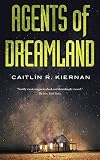
I'm ashamed to admit this is my first time reading Kiernan. I now see what I've been missing.
I loved this novella SO. MUCH. It's ambiguous and pulpy and weird and horrific all at once; you don't know what the hell is going on but that doesn't matter because it's such a good read anyway. The writing walks a delicate balance, providing just enough detail so that what is left to the imagination is entirely and wonderfully nightmarish. I'd read a seven-book series set in this universe but at the show more same time, this slim volume stands so strongly on its own.
This was such a fun read. I'm already eager for more Kiernan and I'm mad at myself for not picking up this author's work sooner. show less
I loved this novella SO. MUCH. It's ambiguous and pulpy and weird and horrific all at once; you don't know what the hell is going on but that doesn't matter because it's such a good read anyway. The writing walks a delicate balance, providing just enough detail so that what is left to the imagination is entirely and wonderfully nightmarish. I'd read a seven-book series set in this universe but at the show more same time, this slim volume stands so strongly on its own.
This was such a fun read. I'm already eager for more Kiernan and I'm mad at myself for not picking up this author's work sooner. show less
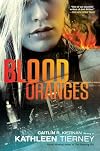
I finally found the monsters!
If you like your monsters to be brooding, passably human centerfolds with a desperate need to be loved and an obsession with haute couture, this is not your book, and thank the gods for that! The bookstore shelves are already buckling under the weight of all those books. If you like your monsters to be weirdly other and your protagonist to kick ass despite being a self-deprecating screw-up, you're going to love this gritty story that manages to be a fun and show more compelling page-turner while thumbing it's nose at the "ParaRom" genre. I devoured this book quickly and very much look forward to the next book in the series. show less
If you like your monsters to be brooding, passably human centerfolds with a desperate need to be loved and an obsession with haute couture, this is not your book, and thank the gods for that! The bookstore shelves are already buckling under the weight of all those books. If you like your monsters to be weirdly other and your protagonist to kick ass despite being a self-deprecating screw-up, you're going to love this gritty story that manages to be a fun and show more compelling page-turner while thumbing it's nose at the "ParaRom" genre. I devoured this book quickly and very much look forward to the next book in the series. show less
Lists
LGBTQIA Horror (2)
Ghosts (1)
Awards


You May Also Like


Associated Authors
Statistics
- Works
- 302
- Also by
- 173
- Members
- 8,725
- Popularity
- #2,741
- Rating
- 3.7
- Reviews
- 282
- ISBNs
- 162
- Languages
- 10
- Favorited
- 43
