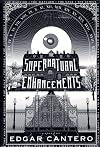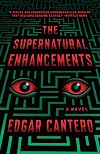
The Supernatural Enhancements
by Edgar Cantero
On This Page
Description
"When twentysomething A., the European relative of the Wells family, inherits a beautiful yet eerie estate set deep in the woods of Point Bless, Virginia, it comes as a surprise to everyone--including A. himself. After all, he never knew he had a 'second cousin, twice removed' in America, much less that his eccentric relative had recently committed suicide by jumping out of the third floor bedroom window--at the same age and in the same way as his father had before him"--Amazon.com.Tags
Recommendations

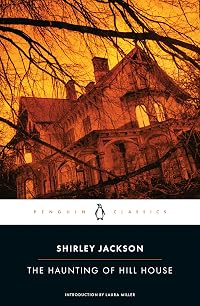
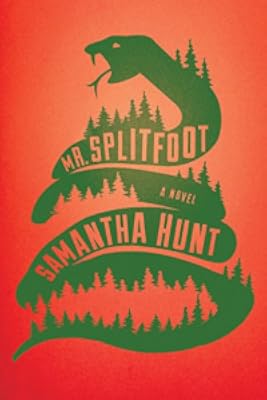
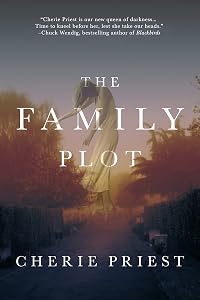
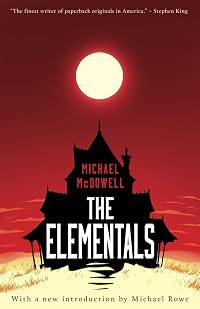

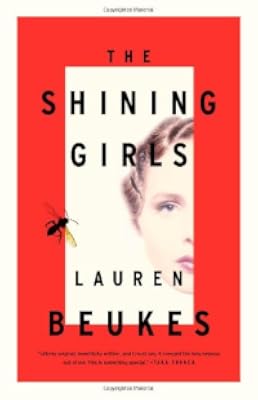
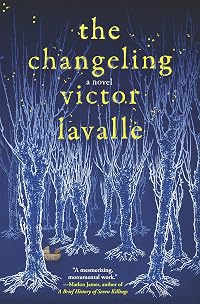
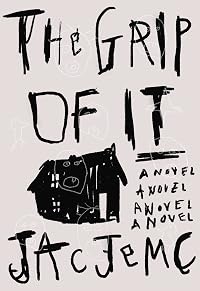
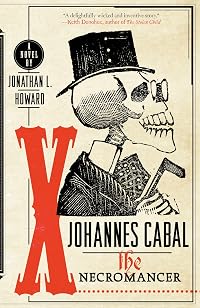
Member Recommendations
dizzyweasel Ephemera, found footage, photos, scripts add to the narrative to unfold the mystery.
10
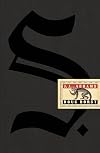
S. by Doug Dorst
by darsaster
Member Reviews
If you have ever considered living in a house because it's rumored to be haunted, then Edgar Cantero's The Supernatural Enhancements (Doubleday, August 12, 2014) is next up on your "to read" list.
The story, set in November and December 1995, begins when our hero, A., unexpectedly inherits his long-lost cousin's mansion "and all of its contents." A., a slightly shiftless 23 year old student, makes a beeline from Europe for Axton House, located in Point Bless, Virginia. A. and his traveling companion, Niamh (pronounced "Neve"), happily take up residence in their sprawling new home. Encounters with the locals indicate that the house has a "history," that A. and Niamh may not be its sole occupants, that they might be sharing their space show more with a ghost, the eponymous "supernatural enhancement."
But The Supernatural Enhancements is not merely a ghost story. A.'s relative, Wells, committed suicide at age 50--on the anniversary of his father's suicide at the same age. Yet more eerie, Wells left in his study a note with an encrypted clue, the significance of which A. and Niamh only discover after a burglary. Wells was up to some strange stuff, pursuing the study of some occult knowledge, access to which is available to A. and Niamh only through hints and accidents.
Early in the novel, when it is just becoming clear that Axton house may have a ghost and that Wells was up to some pretty odd stuff, A. comments on one of his favorite TV shows, The X-Files. An avowed atheist, A. nonetheless echoes the sentiment of the famous poster from Mulder's office: "I want to believe." Looking around at the congregants at the church service Niamh forced him to attend, A. feels not contempt, but envy. Really, as A. and Niamh find themselves in ever more complicated and bizarre situations, the story becomes about credulity: Are you able to believe that there might be more to something than its surface might suggest?
Cantero narrates the story using a variety of "documentary" formats, including A.'s journal entries, letters home to Aunt Liza, Niamh's notepad (she is a mute and communicates through writing), and audio and video recorder footage. The effect may take some getting used to on the part of some readers, but it works: Cantero achieves a smooth narrative flow early on. Cantero's decision to approach the story this way is canny: It roots the reader in the world as A. and Niamh experience it, and also limits the reader's exposure to outside knowledge. In effect, readers know what A. and Niamh know, at least insofar as they report their findings in their letters and journal entries. Ultimately, this results in a deepening of the mystery, as, for instance, readers read a transcript of a video that (purportedly) shows A.'s encounter with the ghost. Of course, exposure to primary documents is a fraught exercise: Can you trust what the authors are telling you?
Part of what makes The Supernatural Enhancements so fun to read is the fun Cantero has with his characters. A. is immediately recognizable, a young twentysomething male with a slightly indifferent air, who is nonetheless thoughtful and well-intentioned. Niamh, 17, is something of a pixie, engaging in such cute activities as sledding across the mansion's roof. Afflicted with muteness, it is Niamh who acquires the audiovisual equipment that is employed throughout the house and which is ultimately responsible for large parts of the story. A. and Niamh do what any young people in possession of an old mansion might do: They make spaghetti dinners and eat in the large formal dining room, they map the floors (leaving a trail of chickpeas on the floor to the bathroom on their first night), and they watch The X-Files. There is an obvious romantic subplot that A. scrupulously avoids, adding tension to their relationship.
The Supernatural Enchancements defies expectations. The novel becomes darker in tone as A. is drawn deeper into Wells' mysteries, but only the canniest of readers will have a notion of what's to come. The story's climax is swift and shocking, and all the more affecting for it. Of course, I can't divulge details here (no spoilers!), but when an author has you yelling, "No! NO!" it's a sign that he has successfully pulled you into his story.
The Supernatural Enchanements is less a ghost story than it is a tale of the fantastic, of encounters with the occult, and of solving puzzles and finding treasure--all while young and, supposedly, carefree. Cantero balances the darkness with whimsy, so readers expecting creeping dread and buckets of gore are warned away. So, too, are readers who might be put off by the epistolary style. That said, The Supernatural Enchancements is a fun book (and that's meant in the best possible sense) and a fine story: A great success for Edgar Cantero. Highly recommended for fans of the fantastic. show less
The story, set in November and December 1995, begins when our hero, A., unexpectedly inherits his long-lost cousin's mansion "and all of its contents." A., a slightly shiftless 23 year old student, makes a beeline from Europe for Axton House, located in Point Bless, Virginia. A. and his traveling companion, Niamh (pronounced "Neve"), happily take up residence in their sprawling new home. Encounters with the locals indicate that the house has a "history," that A. and Niamh may not be its sole occupants, that they might be sharing their space show more with a ghost, the eponymous "supernatural enhancement."
But The Supernatural Enhancements is not merely a ghost story. A.'s relative, Wells, committed suicide at age 50--on the anniversary of his father's suicide at the same age. Yet more eerie, Wells left in his study a note with an encrypted clue, the significance of which A. and Niamh only discover after a burglary. Wells was up to some strange stuff, pursuing the study of some occult knowledge, access to which is available to A. and Niamh only through hints and accidents.
Early in the novel, when it is just becoming clear that Axton house may have a ghost and that Wells was up to some pretty odd stuff, A. comments on one of his favorite TV shows, The X-Files. An avowed atheist, A. nonetheless echoes the sentiment of the famous poster from Mulder's office: "I want to believe." Looking around at the congregants at the church service Niamh forced him to attend, A. feels not contempt, but envy. Really, as A. and Niamh find themselves in ever more complicated and bizarre situations, the story becomes about credulity: Are you able to believe that there might be more to something than its surface might suggest?
Cantero narrates the story using a variety of "documentary" formats, including A.'s journal entries, letters home to Aunt Liza, Niamh's notepad (she is a mute and communicates through writing), and audio and video recorder footage. The effect may take some getting used to on the part of some readers, but it works: Cantero achieves a smooth narrative flow early on. Cantero's decision to approach the story this way is canny: It roots the reader in the world as A. and Niamh experience it, and also limits the reader's exposure to outside knowledge. In effect, readers know what A. and Niamh know, at least insofar as they report their findings in their letters and journal entries. Ultimately, this results in a deepening of the mystery, as, for instance, readers read a transcript of a video that (purportedly) shows A.'s encounter with the ghost. Of course, exposure to primary documents is a fraught exercise: Can you trust what the authors are telling you?
Part of what makes The Supernatural Enhancements so fun to read is the fun Cantero has with his characters. A. is immediately recognizable, a young twentysomething male with a slightly indifferent air, who is nonetheless thoughtful and well-intentioned. Niamh, 17, is something of a pixie, engaging in such cute activities as sledding across the mansion's roof. Afflicted with muteness, it is Niamh who acquires the audiovisual equipment that is employed throughout the house and which is ultimately responsible for large parts of the story. A. and Niamh do what any young people in possession of an old mansion might do: They make spaghetti dinners and eat in the large formal dining room, they map the floors (leaving a trail of chickpeas on the floor to the bathroom on their first night), and they watch The X-Files. There is an obvious romantic subplot that A. scrupulously avoids, adding tension to their relationship.
The Supernatural Enchancements defies expectations. The novel becomes darker in tone as A. is drawn deeper into Wells' mysteries, but only the canniest of readers will have a notion of what's to come. The story's climax is swift and shocking, and all the more affecting for it. Of course, I can't divulge details here (no spoilers!), but when an author has you yelling, "No! NO!" it's a sign that he has successfully pulled you into his story.
The Supernatural Enchanements is less a ghost story than it is a tale of the fantastic, of encounters with the occult, and of solving puzzles and finding treasure--all while young and, supposedly, carefree. Cantero balances the darkness with whimsy, so readers expecting creeping dread and buckets of gore are warned away. So, too, are readers who might be put off by the epistolary style. That said, The Supernatural Enchancements is a fun book (and that's meant in the best possible sense) and a fine story: A great success for Edgar Cantero. Highly recommended for fans of the fantastic. show less
A mysterious suicide and a haunted house? I'm in.
This novel started off really differently. The story is told through various means including audio and video recordings, A’s day to day diary, and a most disturbing dream journal, letters to an ‘Aunt Liza’, as well as various excerpts from books that they use in their research. At first I wasn't sure I was going to be able to deal with the way the story is told. The journal entries didn't bother me--they read basically like first person prose. The notes back and forth between A. and Niamh were effective and really brought Niamh to life for me (I completely adored her). But the surveillance video descriptions bugged me in the beginning. The characters themselves were mysterious and show more quirky in the most appealing way. We’re given very little detail on the two (other than the fact that they’re X-File fans which should have caused me to like them on that principle alone, but no) or anything about A. (or why he’s only referred to as A. because that’s just weird) or Niamh and their strange relationship; only that Niamh likes A. but she’s underage so it’s pointless. (Or so we’re led to believe). The two sleep in a bed described as “big enough for each of us to throw an orgy without her guests disturbing mine”. And she apparently sleeps there because she’s there to protect him, which makes total sense.
Then, something happened. I realized: This is NOT a ghost story. It's a mystery. And the author was doing things that soon had me completely intrigued. He created characters I really, really liked, dropping clues at the perfect pace, and playing on my total geek side with investigations into encrypted codes and..... Before long, the video and audio transcription parts were suddenly more captivating than regular prose would have been.
What I'm not entirely sure about is the ending. I can't quite place my finger on what exactly bothers me about it. It was a little too fast compared to the pacing of the rest of the novel. Maybe the twist was a little too far out? I'm not entirely sure, but I closed the book a bit confused in the ending. However, I am tempted to read it again simply because of the ending, in search of hints that might make it more meaningful to me. I also felt at the end could have gone on for a bit more, my opinion, of course. I will have to look into more books by Cantero.
That last said, I definitely recommend the book. It's unique style, the literary bent, the mystery, and the characters all sucked me in despite the fact that I had totally expected something else. Totally loved it, and I'm going to buy this Ebook soon. 5 stars. show less
This novel started off really differently. The story is told through various means including audio and video recordings, A’s day to day diary, and a most disturbing dream journal, letters to an ‘Aunt Liza’, as well as various excerpts from books that they use in their research. At first I wasn't sure I was going to be able to deal with the way the story is told. The journal entries didn't bother me--they read basically like first person prose. The notes back and forth between A. and Niamh were effective and really brought Niamh to life for me (I completely adored her). But the surveillance video descriptions bugged me in the beginning. The characters themselves were mysterious and show more quirky in the most appealing way. We’re given very little detail on the two (other than the fact that they’re X-File fans which should have caused me to like them on that principle alone, but no) or anything about A. (or why he’s only referred to as A. because that’s just weird) or Niamh and their strange relationship; only that Niamh likes A. but she’s underage so it’s pointless. (Or so we’re led to believe). The two sleep in a bed described as “big enough for each of us to throw an orgy without her guests disturbing mine”. And she apparently sleeps there because she’s there to protect him, which makes total sense.
Then, something happened. I realized: This is NOT a ghost story. It's a mystery. And the author was doing things that soon had me completely intrigued. He created characters I really, really liked, dropping clues at the perfect pace, and playing on my total geek side with investigations into encrypted codes and..... Before long, the video and audio transcription parts were suddenly more captivating than regular prose would have been.
What I'm not entirely sure about is the ending. I can't quite place my finger on what exactly bothers me about it. It was a little too fast compared to the pacing of the rest of the novel. Maybe the twist was a little too far out? I'm not entirely sure, but I closed the book a bit confused in the ending. However, I am tempted to read it again simply because of the ending, in search of hints that might make it more meaningful to me. I also felt at the end could have gone on for a bit more, my opinion, of course. I will have to look into more books by Cantero.
That last said, I definitely recommend the book. It's unique style, the literary bent, the mystery, and the characters all sucked me in despite the fact that I had totally expected something else. Totally loved it, and I'm going to buy this Ebook soon. 5 stars. show less
If you write an “experimental” novel that steps way outside the conventional story-telling norms, it better be for a good reason. It better be to good effect. The methods you use better be the only way to tell the tale, at least the most effective way to tell it. And it better not annoy. And for fuck’s sake, don’t use them all at once.
No one told Cantero that though. Holy crap what a wreck of a novel that is extremely weak in the telling and worse in making it have any importance in the end. Elaborate charades, signs and circumstances for absolutely nothing. The whole thing reads like some cutesy inside joke that was self-published for chucks with his friends.
No one told Cantero that though. Holy crap what a wreck of a novel that is extremely weak in the telling and worse in making it have any importance in the end. Elaborate charades, signs and circumstances for absolutely nothing. The whole thing reads like some cutesy inside joke that was self-published for chucks with his friends.
This is a fun read. It has a classic horror beginning: a guy inherits a mansion from a relative he didn't know existed, moves into the mansion and immediately weird things start happening. The unnamed main character begins to suspect that his relative was murdered, and finds clues throughout the house that lead him to evidence of murders, ghosts, and secret societies. He begins to realize that his own life is in danger if he doesn't solve the mystery. It's a classic set-up, but Cantero and his characters know that they're in a trope and do their best to subvert it.
All in all, this is funny and creepy and entertaining. It has some weak points - it can be confusing keeping all of the characters straight, and sometimes the action is hard show more to follow.
The book takes the format of a collection of documents: letters, transcripts of recordings, descriptions of surveillance videos, handwritten conversations between the main character and his non-speaking girlfriend. This format is hard to pull off, and sometimes it's a little clumsy and contrived, but for the most part, it works. show less
All in all, this is funny and creepy and entertaining. It has some weak points - it can be confusing keeping all of the characters straight, and sometimes the action is hard show more to follow.
The book takes the format of a collection of documents: letters, transcripts of recordings, descriptions of surveillance videos, handwritten conversations between the main character and his non-speaking girlfriend. This format is hard to pull off, and sometimes it's a little clumsy and contrived, but for the most part, it works. show less
Even in a genre tolerant of oddness, The Supernatural Enhancements is going to be a mixed read for most readers. It’s described by the publishers as a ‘paranormal thriller,’ but I’d adjust that and say it has a strong adventure story feel with mystical elements that slow down the pacing. The elements sound like a perfect elevator pitch: a bequeathed and haunted mansion, a treasure hunt, a mysterious society. The main characters are a twenty-three year old English A., who promptly quits his “studies” to travel to his new house in America with his only friend, Niamh, a mute with a distinct talent for electronics. They meet the neighbors, are visited by a mysterious men, there are Events In The Nighttime, and things generally show more progress along adventure lines.
It is the narrative structure which will likely prove most challenging to overcome. There’s a short two page introduction which grounds the reader, then Part One begins with the date, November 4, 1995, and the title, “A.’s Diary.” After a couple of pages, a ‘Letter to Aunt Liza” follows, then a brief excerpt from ‘Niamh’s Notepad.’ It follows this general layout, although at one point in the third letter to Aunt Liza, it seems to drop this conceit and note a conversation with Mr. Knox, supposedly a friend of the dead uncle. Once Niamh buys a camera security system, the narrative includes ‘Security Videotape: Location,” written in a tv-script-type format. Once A. and Niamh discover the mystery, they work on solving various codes, and the narrative starts to include “Except from Samuel Mandalay’s ARS Cryptographica, London, 1977.” (This appears to be a spoof; a Google search turns up a French site on ancient to modern techniques that will teach the reader, but no Mandalay mentioned). There’s also a couple of ‘photos’ of legal documents, random letters from the deceased uncle, cryptographs, dream journal entries, newspaper excerpts, etc. In short, a variety of styles, formats, and perspectives that are supposed to help the reader feel like they are on a journey of discovery as well, but result in a very disjointed narrative.
To pull together a tale with a narrative like that, an author really needs to have a strong plot with strong characters, so that the reader feels invested. It reminded me of the 1990s series, Griffin and Sabine by Nick Bantock, in which an artist exchanges letters and momentos with a mysterious woman on a distant island who seems to be having dreams of his current artwork. That story was smaller and less fragmented, so I felt it worked better. For me, the structure in Cantero’s story never gives us insight into Niamh’s history, only her current actions and what she writes on her notepad. We get the most from A., but again, concerned as it is with the mystery, we actually know very little about him. We get the strongest sense of the grounds and the house, although A. deceptively notes, “We have merely perceived a circular sequence of empty halls, large windows, fireplaces, chandeliers, spiderwebs, canopies, and a cluttered desk on every floor.”
The story seems to begin very slowly, and very comfortably, but starts to delve into fascinating and disturbing dreams A. is having. This is 'Part One' of the book, and is almost exactly half the page count. In 'Part Two,' the puzzle-solving piece takes front seat. 'Part Three' is the most comic-book and incongruous of the sections, and likely accounts for the 'thriller' in the official description. The mood in all three pieces is very different, as is the plotting. My guess is that Cantero's earlier background in comics/graphic novels is showing through. In fact, my one-word review would be ‘disjointed.’ Lots of good elements here, but I think they needed more transitions or links to really pull them together to make a story that will appeal to genre readers. show less
It is the narrative structure which will likely prove most challenging to overcome. There’s a short two page introduction which grounds the reader, then Part One begins with the date, November 4, 1995, and the title, “A.’s Diary.” After a couple of pages, a ‘Letter to Aunt Liza” follows, then a brief excerpt from ‘Niamh’s Notepad.’ It follows this general layout, although at one point in the third letter to Aunt Liza, it seems to drop this conceit and note a conversation with Mr. Knox, supposedly a friend of the dead uncle. Once Niamh buys a camera security system, the narrative includes ‘Security Videotape: Location,” written in a tv-script-type format. Once A. and Niamh discover the mystery, they work on solving various codes, and the narrative starts to include “Except from Samuel Mandalay’s ARS Cryptographica, London, 1977.” (This appears to be a spoof; a Google search turns up a French site on ancient to modern techniques that will teach the reader, but no Mandalay mentioned). There’s also a couple of ‘photos’ of legal documents, random letters from the deceased uncle, cryptographs, dream journal entries, newspaper excerpts, etc. In short, a variety of styles, formats, and perspectives that are supposed to help the reader feel like they are on a journey of discovery as well, but result in a very disjointed narrative.
To pull together a tale with a narrative like that, an author really needs to have a strong plot with strong characters, so that the reader feels invested. It reminded me of the 1990s series, Griffin and Sabine by Nick Bantock, in which an artist exchanges letters and momentos with a mysterious woman on a distant island who seems to be having dreams of his current artwork. That story was smaller and less fragmented, so I felt it worked better. For me, the structure in Cantero’s story never gives us insight into Niamh’s history, only her current actions and what she writes on her notepad. We get the most from A., but again, concerned as it is with the mystery, we actually know very little about him. We get the strongest sense of the grounds and the house, although A. deceptively notes, “We have merely perceived a circular sequence of empty halls, large windows, fireplaces, chandeliers, spiderwebs, canopies, and a cluttered desk on every floor.”
The story seems to begin very slowly, and very comfortably, but starts to delve into fascinating and disturbing dreams A. is having. This is 'Part One' of the book, and is almost exactly half the page count. In 'Part Two,' the puzzle-solving piece takes front seat. 'Part Three' is the most comic-book and incongruous of the sections, and likely accounts for the 'thriller' in the official description. The mood in all three pieces is very different, as is the plotting. My guess is that Cantero's earlier background in comics/graphic novels is showing through. In fact, my one-word review would be ‘disjointed.’ Lots of good elements here, but I think they needed more transitions or links to really pull them together to make a story that will appeal to genre readers. show less
The premise of the story is A.’s inheritance of Axton House upon the suicide of his American second cousin. He brings with him a companion, Niamh, a mute teen with a larger-than-life personality. Together, they settle into their new house, complete with its missing butler, mysterious noises and light displays, and a reputation hundreds of years long. A. and Niamh soon discover that Uncle Ambrose had his fair share of secrets, including a secret society meeting for which even the servants could not attend. The story follows A. and Niamh’s search for answers in the mysterious Axton House, something that is anything but ordinary.
The entire novel has an otherworldly feel to it. This is in part due to the fact that all of the characters show more in the novel sound and act like they are from a different era entirely. Niamh, with her witty notes, her punk appearance, and her amazing technological skills, feels like the only one who truly belongs in the twentieth century. Even A. tends to talk and to act like a turn-of-the-century lord of the manor at times. Modern references out of his mouth are consistently unexpected and jarring, as if they do not belong to his character. Similarly, the secret society itself is right out of a British novel, complete with mysterious nicknames, key positions within the society, and its exclusivity. Axton House itself is isolated, as all haunted houses are, and A.’s and Niamh’s forays into an inhabited area rarely mention outside characters. As Uncle Ambrose never sought to update Axton House any more than necessary, it too feels like a relic and out of place in modern society. This ethereal atmosphere is not creepy or frightening; it makes the entire story very dream-like, as if it is all in a reader’s imagination and not something written down on paper. Since dreams are a key theme in The Supernatural Enhancements, it makes sense that the atmosphere of the novel would be similarly eerie and sometimes just plain weird.
The dream element is the crux of the novel, bringing with it the science or science fiction, the fantasy, and even the thriller aspects of the story. However, between the genre mash-up and the unearthly atmosphere, there comes a point in the novel when readers will have to sit back and just go with everything that unfolds. For example, within all the notes and transcripts and security footage, there lie several philosophical and scientific passages about recording dreams directly from the mind. Depending on a reader’s patience level with such scientific discourse, readers can either consider it entirely theoretical and skim over it all or read it in depth and try to determine how it fits into the rest of the story. This is also true of the ending. Readers are certainly able to try to figure out how it is all going to end, but The Supernatural Enhancements is the type of story that is much more satisfactory when one is a passive reader rather than an active one.
The Supernatural Enhancements is very much entertainment for entertainment’s sake. The format and the multiple genres into which it falls make it nearly impossible to take it seriously, and this is perfectly acceptable if not desirable. The characters are so irreverent and yet pompous that they cannot be anything but fictional. Similarly, the story gives off a suppressed mirth vibe to let readers know it is okay to find it silly and implausible. Taking this burden away from the reader allows one to sit back and relax as A. and Niamh hunt for answers and uncover several surprising secrets.
The Supernatural Enhancements is one of those novels that is difficult to categorize and even more difficult to describe. There are elements of a haunted house story, a coming-of-age story, a mystery, a treasure hunt story, a thriller, a spy novel, a science fiction novel, and a fantasy novel within its pages. The format of Mr. Cantero’s story is just as eclectic. It uses everything from letters to transcripts to advertisements to invoices to diary entries security footage to audio recordings to plain, ordinary dialogue. It would be easy to dismiss The Supernatural Enhancements as gimmicky or even suffering from the literary equivalent of multiple personality disorder. However, to do so would be to ignore this fabulous, original, and fun story. show less
The entire novel has an otherworldly feel to it. This is in part due to the fact that all of the characters show more in the novel sound and act like they are from a different era entirely. Niamh, with her witty notes, her punk appearance, and her amazing technological skills, feels like the only one who truly belongs in the twentieth century. Even A. tends to talk and to act like a turn-of-the-century lord of the manor at times. Modern references out of his mouth are consistently unexpected and jarring, as if they do not belong to his character. Similarly, the secret society itself is right out of a British novel, complete with mysterious nicknames, key positions within the society, and its exclusivity. Axton House itself is isolated, as all haunted houses are, and A.’s and Niamh’s forays into an inhabited area rarely mention outside characters. As Uncle Ambrose never sought to update Axton House any more than necessary, it too feels like a relic and out of place in modern society. This ethereal atmosphere is not creepy or frightening; it makes the entire story very dream-like, as if it is all in a reader’s imagination and not something written down on paper. Since dreams are a key theme in The Supernatural Enhancements, it makes sense that the atmosphere of the novel would be similarly eerie and sometimes just plain weird.
The dream element is the crux of the novel, bringing with it the science or science fiction, the fantasy, and even the thriller aspects of the story. However, between the genre mash-up and the unearthly atmosphere, there comes a point in the novel when readers will have to sit back and just go with everything that unfolds. For example, within all the notes and transcripts and security footage, there lie several philosophical and scientific passages about recording dreams directly from the mind. Depending on a reader’s patience level with such scientific discourse, readers can either consider it entirely theoretical and skim over it all or read it in depth and try to determine how it fits into the rest of the story. This is also true of the ending. Readers are certainly able to try to figure out how it is all going to end, but The Supernatural Enhancements is the type of story that is much more satisfactory when one is a passive reader rather than an active one.
The Supernatural Enhancements is very much entertainment for entertainment’s sake. The format and the multiple genres into which it falls make it nearly impossible to take it seriously, and this is perfectly acceptable if not desirable. The characters are so irreverent and yet pompous that they cannot be anything but fictional. Similarly, the story gives off a suppressed mirth vibe to let readers know it is okay to find it silly and implausible. Taking this burden away from the reader allows one to sit back and relax as A. and Niamh hunt for answers and uncover several surprising secrets.
The Supernatural Enhancements is one of those novels that is difficult to categorize and even more difficult to describe. There are elements of a haunted house story, a coming-of-age story, a mystery, a treasure hunt story, a thriller, a spy novel, a science fiction novel, and a fantasy novel within its pages. The format of Mr. Cantero’s story is just as eclectic. It uses everything from letters to transcripts to advertisements to invoices to diary entries security footage to audio recordings to plain, ordinary dialogue. It would be easy to dismiss The Supernatural Enhancements as gimmicky or even suffering from the literary equivalent of multiple personality disorder. However, to do so would be to ignore this fabulous, original, and fun story. show less
I am indeed writing from Axton House, about to turn in for the very first night; Niamh and I share a bed big enough for each of us to throw an orgy without her guests disturbing mine. Glew gave us a tour around the house this evening, but we haven't really seen it. Not in the way you meant that day, when you said that a passenger on a ship doesn't see the ropes the way a sailor sees them. Having seen the house would mean being able to go around it and predict which room awaits behind each double door. Having seen the house would mean to understand the use of each room and each piece of furniture. We haven't seen the house. We have merely perceived a circular sequence of empty halls, large windows, fireplaces, chandeliers, spiderwebs, show more canopies, and a cluttered desk on every floor. (...)
I don't think I'd be able to find any of those rooms right now if my life depended on it. In fact, I wouldn't dare go to sleep had Niamh not laid a trail of chickpeas to the nearest bathroom.
No trace of ghosts so far, but we'll stay alert.
Tomorrow morning I plan to start socializing around. We also have to find the missing butler, Strückner. Niamh and I agree it's not a good name for a butler.
- from A.'s November 4, 1995 letter to Aunt Liza
This is one of those books I wish I could look at with different eyes before recommending it to anybody. Because epistolic narrative through miscellaneous documents plus essentially nameless co-main character (initialled only as A.) plus haunted house story plus treasure hunt plus a splash of philosophy equals Amy reads this and, if it's well done, flipping LOVES it. (And it was well done! And I did love it! Hooray!)
There are plenty of elements here that could be very annoying depending on your pet peeves list, and a couple of seams show (such as a slight lack of familiarity with certain American legal issues), and it has one of those wonderful endings that, let's say, leave more questions than answers (sequel, please!). But taken together, the whole thing just works, and it is pure, gleeful fun. I definitely do recommend it. show less
I don't think I'd be able to find any of those rooms right now if my life depended on it. In fact, I wouldn't dare go to sleep had Niamh not laid a trail of chickpeas to the nearest bathroom.
No trace of ghosts so far, but we'll stay alert.
Tomorrow morning I plan to start socializing around. We also have to find the missing butler, Strückner. Niamh and I agree it's not a good name for a butler.
- from A.'s November 4, 1995 letter to Aunt Liza
This is one of those books I wish I could look at with different eyes before recommending it to anybody. Because epistolic narrative through miscellaneous documents plus essentially nameless co-main character (initialled only as A.) plus haunted house story plus treasure hunt plus a splash of philosophy equals Amy reads this and, if it's well done, flipping LOVES it. (And it was well done! And I did love it! Hooray!)
There are plenty of elements here that could be very annoying depending on your pet peeves list, and a couple of seams show (such as a slight lack of familiarity with certain American legal issues), and it has one of those wonderful endings that, let's say, leave more questions than answers (sequel, please!). But taken together, the whole thing just works, and it is pure, gleeful fun. I definitely do recommend it. show less
Members
- Recently Added By
Published Reviews
ThingScore 75
****
The Medium is the Message.
If you are looking for a gothic ghost story, look somewhere else. The Supernatural Enhancements, by Edgar Cantero is a lot of things, but it certainly isn’t a simple story plainly told. It starts out looking like a haunted house story, and slowly but surely morphs into...something else. As a dedicated reviewer I can only tell you so much, but trust me on this; show more if you take your time, and read carefully this book will grow and change into something quite surprising. One of the things that takes getting used to is the way that the story itself is told; through a series of journal entries, ciphers, letters, and even found video footage.
A, a twenty-something European inherits, from unknown and distant American relatives, inherits a beautiful but eerie estate in the woods of Virginia. He soon discovers that the relative killed himself the same way and at the same age as his father did. So A, along with Niamh, his mute teenage punk companion, start investigating the history of Axton House, expecting to find it haunted.
There are ghosts, but that is the least of the mysteries that they discover. One of Mr. Cantero’s clever strategies is the way he toys with the cliches of the genre; Axton House has a creepy garden maze, a forbidding basement chamber, and a missing butler who may have the key to unlocking all of these questions. The only thing missing was a crumbling tower and some wasted moors.
What’s more the reason behind the idiosyncratic style become evident, and after a while I stopped noticing the novel’s techniques, and started to enjoy the story. The characters are strong and vivid, particularly Niamh, who is wonderful. My hat is off to Mr. Cantero for managing to bring a character so vividly to life through nothing more than notes passed between her and A. Even A became more than just a narrator after a while. Before long I was enjoying the investigation into a mystic, society that used Axton house for their secret meetings. I am a fan of cryptography, but the ciphers were a bit much, and I admit that I had to skim a bit here and there. No harm, though.
As I said this book requires some patience; the pace is deliberate, and I found myself flipping back quite a bit to properly appreciate how some of the plot turns were set up. There are very few big gosh-wow! moments, and a lack of shocking scenes. A and Niamh are a little too hip, and Mr. Cantero is a bit too smart for that. Their reactions to what’s going on around them is classic post-modern hipster, and it’s quite refreshing.
All of this is part of a plan, and I really wish that I could reveal it, but I abhor spoilers. While the final revelations make sense I thought that they came a little later than I would have liked, so the end feels a bit rushed compared to the rest of the novel, and the climax felt a bit out of place, but I still enjoyed this unusual take on a classic tale, and I commend Mr. Cantero for his bold choices. Now I want you to do the same, and read The Supernatural Enhancements.
Review by: Mark Palm
Full Reviews Available at: http://www.thebookendfamily.weebly.co... show less
The Medium is the Message.
If you are looking for a gothic ghost story, look somewhere else. The Supernatural Enhancements, by Edgar Cantero is a lot of things, but it certainly isn’t a simple story plainly told. It starts out looking like a haunted house story, and slowly but surely morphs into...something else. As a dedicated reviewer I can only tell you so much, but trust me on this; show more if you take your time, and read carefully this book will grow and change into something quite surprising. One of the things that takes getting used to is the way that the story itself is told; through a series of journal entries, ciphers, letters, and even found video footage.
A, a twenty-something European inherits, from unknown and distant American relatives, inherits a beautiful but eerie estate in the woods of Virginia. He soon discovers that the relative killed himself the same way and at the same age as his father did. So A, along with Niamh, his mute teenage punk companion, start investigating the history of Axton House, expecting to find it haunted.
There are ghosts, but that is the least of the mysteries that they discover. One of Mr. Cantero’s clever strategies is the way he toys with the cliches of the genre; Axton House has a creepy garden maze, a forbidding basement chamber, and a missing butler who may have the key to unlocking all of these questions. The only thing missing was a crumbling tower and some wasted moors.
What’s more the reason behind the idiosyncratic style become evident, and after a while I stopped noticing the novel’s techniques, and started to enjoy the story. The characters are strong and vivid, particularly Niamh, who is wonderful. My hat is off to Mr. Cantero for managing to bring a character so vividly to life through nothing more than notes passed between her and A. Even A became more than just a narrator after a while. Before long I was enjoying the investigation into a mystic, society that used Axton house for their secret meetings. I am a fan of cryptography, but the ciphers were a bit much, and I admit that I had to skim a bit here and there. No harm, though.
As I said this book requires some patience; the pace is deliberate, and I found myself flipping back quite a bit to properly appreciate how some of the plot turns were set up. There are very few big gosh-wow! moments, and a lack of shocking scenes. A and Niamh are a little too hip, and Mr. Cantero is a bit too smart for that. Their reactions to what’s going on around them is classic post-modern hipster, and it’s quite refreshing.
All of this is part of a plan, and I really wish that I could reveal it, but I abhor spoilers. While the final revelations make sense I thought that they came a little later than I would have liked, so the end feels a bit rushed compared to the rest of the novel, and the climax felt a bit out of place, but I still enjoyed this unusual take on a classic tale, and I commend Mr. Cantero for his bold choices. Now I want you to do the same, and read The Supernatural Enhancements.
Review by: Mark Palm
Full Reviews Available at: http://www.thebookendfamily.weebly.co... show less
added by thebookendfamily
Lists

Scary ghost stories - no zombies, vampires or werewolves, please
53 works; 20 members

Top Five Books of 2014
1,064 works; 398 members

Ghosts
278 works; 18 members

ALA The Reading List
490 works; 28 members

Books Read in 2017
4,249 works; 130 members

Haunted Places and Ghost Stories Reading List
99 works; 4 members

At the Library
217 works; 1 member
Author Information

8+ Works 3,144 Members
Edgar Cantero is a writer and cartoonist from Barcelona. His books are written in Catalan, Spanish, and English. He is the author of "The Supernatural Enhancements" (2014) and "Meddling Kids" (2017). His book "Dormir amb Winona Ryder", won the 2007 Joan Crexells Award. (Bowker Author Biography)
Awards and Honors
Awards
Common Knowledge
- Canonical title
- The Supernatural Enhancements
- Original title
- The Supernatural Enhancements
- Original publication date
- 2014-08-12
- People/Characters
- A.; Niamh Connell; Curtis Knox; Caleb Ford; Mr. Glew; Mark Strückner (show all 23); Dr. Vanessa Belknap; Frank Brodie; Monique Brodie; Ken Matsuo; Edward Cutler; Daniel Vasquez; Silas Long; Jeff Stillwall; Eli Kingston; Detective Morgan Summers; Sam Mitchel; Kraus; Hank S. Blagowitz; Donna; Deputy Ted Miller; Esther Hutchinson; Aunt Liza
- First words
- The following collection of documents details the events that occurred at Axton House, 1 Axton Road, Point Bless, Virginia, during the months of November and December of 1995.
- Last words
- (Click to show. Warning: May contain spoilers.)"Thank you," said Aunt Liza, playing with a ringlet of dark brown hair. "I work hard for it."
- Blurbers
- Taylor, Justin
Classifications
Statistics
- Members
- 775
- Popularity
- 36,110
- Reviews
- 49
- Rating
- (3.66)
- Languages
- English, French, German, Spanish
- Media
- Paper, Ebook
- ISBNs
- 13
- ASINs
- 8