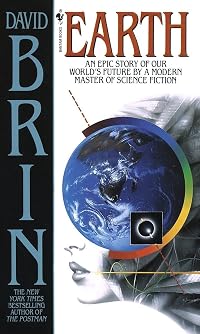
Earth
by David Brin 
On This Page
Description
In this classic hard science fiction-thriller by the New York Times-bestselling author of Startide Rising, a man-made black hole threatens the future of Earth. Scientist Alex Lustig has created a tiny, yet very destructive, problem-a microscopic black hole that he accidentally dropped into Earth's core. Now, racing to keep it from consuming the planet, he begins to suspect something even stranger is going on. Something linked to civilization's expanding information web. And with the planet show more overpopulated and neglect taking its toll on the environment, there are those who demand a harsh solution: that Mother Earth would be better off without humanity at all . . . A Finalist for the Hugo Award for Best Novel "The Moby-Dick of the whole Earth movement." -Locus "A powerful, cautionary tale." -San Francisco Chronicle "Brin has conceived his story on a supremely ambitious scale, and executed it with all of the skills at his command." -Chicago Sun-Times "It is indeed a book that anyone interested in the survival of our terrifying species should read." -Interzone. show lessTags
Recommendations




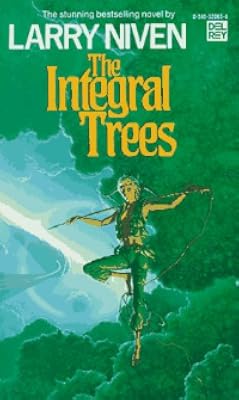
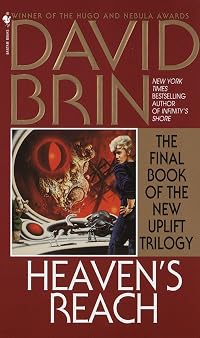
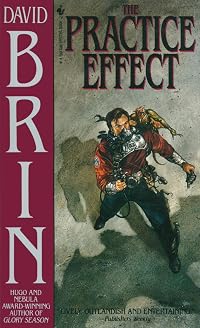
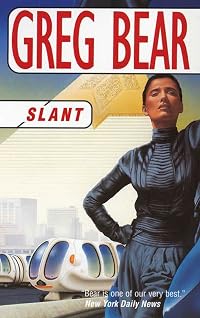




Member Recommendations
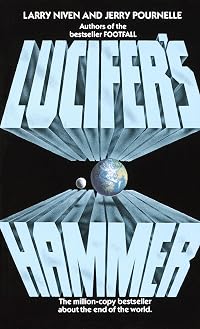
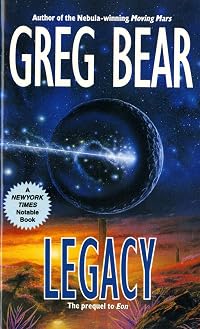
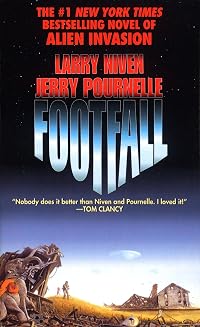
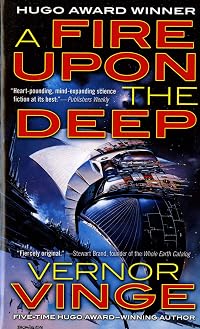
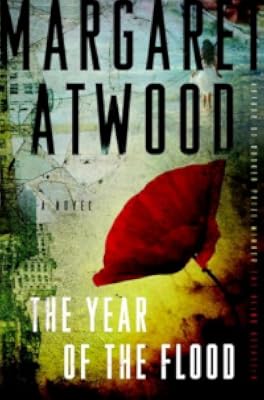
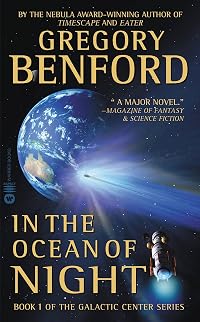
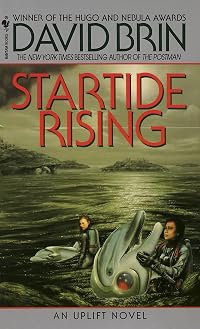
psybre A masterfully-written fiction that looks at the impact of the internet and technology from the lens of a third-world community, "Earth" on a more personal, microcosmic scale.
Sassm Both books are set in a 'near future' environment and (incidentally to the main plots) have a jolly good go at predicting how communication technology will shape society. The books are very different, but the similarities are such that a reader who was interested by Earth will probably also be intrigued by the much earlier book Stand on Zanzibar.
11

Member Reviews
My reactions to reading this novel in 1991. Some spoilers follow.
I liked this novel for one reason: Brin’s skill at building and portraying a world fifty years in the future. I agree with Brin’s Afterword statement that this is one of the hardest types of sf to write. Fifty years is just long enough to change some things significantly (beyond the one or two trend extrapolation of a near-future short story) but not enough to allow any wild speculation (at least not plausibly) on the part of the author. Brin does a good job at covering technological, social, and political change. And the fact that he used the Dos Passos style endears him to me. I regard it as one of the best sf styles.
The best part of this novel is Brin’s portrayal show more of the Net. Brin postulates many uses for hypermedia, world-sprawling grid of cheap information from special interest groups, fanzines, data gathering, political actions, religious junk mail (a Buddhistic group asking if you’re a reincarnated bodhisativa) to sabotage programs that force people to the dreaded Emily Post program before they again send their words out on the Net.
I liked his Helvetian War. He explains his reason for creating it in the Afterword: to have a conflict that echoes in his characters’ minds like World War II and Vietnam do in previous generations and gives some plausible reasons why the world would decide to beat up on innocuous Switzerland.
While most of the characters in this novel didn’t elicit any strong reactions from me one way or another, I really liked the disaffected youths of Bloomington: Remi, Roland, and Crat. In the year 2038, I'll be one of those old guys they're angry at. But, unfortunately, Brin doesn’t do much with their characters. They seem to serve primarily as symbols. After meeting Joseph Moyers who causes them to examine the direction of their lives, they each take symbolic paths. Remi, ultimatley disaffected, goes out in a blaze of glory in a gangfight; Roland learns the meaning of courage, sacrifice, and heroism when he gives his life in a UN raid on a dealer in animal product contraband; Crat becomes our symbol of the despair of the dispossessed of Sea State and the hope of the novel’s end. (Brin, in the Afterword, admits he exaggerated the probable extent of seal level rise due to the Greenhouse Effect).
I also appreciated Daisy McClennon, the eco-fascist. Some may find her character extreme, but she seems all too realistic to me. I also liked Glen Spivey not turning out to be the evil military figure so many, especially Teresa Tikhana (who I found rather annoying), thought him to be.
I liked Brin taking to task those who see Western culture and science as to blame for the environmental crisis. For Brin, wise technology is a way to solve problems. He acknowledges that today’s technological solutions sometimes becomes tomorrow’s problem but argues, in the Afterword, that that should not stop us from seeking solutions. And Brin rightly points out that the future creeps in day by day to become giant changes only noticeable in hindsight.
But there were many things I didn’t like in the novel. I didn’t mind the super science plot of singularity building and gravity beams, but I thought the end bit with it being used as cheap space dirve to save Earth was predictable. As was Daisy McClennon being swept away in a Mississippi that broke through its confining levee. As was a mothballed Atlantis that reaches space again (and where exactly did Atlantis get enough memory space in its computer to run the program that directs the grazer?). The literal incarnation of Gaia was annoying too.
And what was really annoying was the final, vaguely explained battle of surrogate champions -- Jenny Wolling’s tiger and Daisy McClennon’s dragon -- for Gaia and man’s fate. This smacked of the same plot flaw that ruined Brin’s excellent The Postman with its end battle with the souped-up commando. Perhaps Brin frequently resorts to the battle of champion-ending habitually. I guess what I object to is the “everything but the kitchen sink” ending of this novel culminating with the possibility that reporter Pedro Manella is an alien. I realize that Brin thematically tied up everything -- the nature of consciousness, the ultimate value of technology to the environment and man’s place in it, the dichotomy and chaotic relationship of cooperation and competition, the nature of Gaia -- but the ending seemed jarring, contrived -- especially the tiger-dragon fight. show less
I liked this novel for one reason: Brin’s skill at building and portraying a world fifty years in the future. I agree with Brin’s Afterword statement that this is one of the hardest types of sf to write. Fifty years is just long enough to change some things significantly (beyond the one or two trend extrapolation of a near-future short story) but not enough to allow any wild speculation (at least not plausibly) on the part of the author. Brin does a good job at covering technological, social, and political change. And the fact that he used the Dos Passos style endears him to me. I regard it as one of the best sf styles.
The best part of this novel is Brin’s portrayal show more of the Net. Brin postulates many uses for hypermedia, world-sprawling grid of cheap information from special interest groups, fanzines, data gathering, political actions, religious junk mail (a Buddhistic group asking if you’re a reincarnated bodhisativa) to sabotage programs that force people to the dreaded Emily Post program before they again send their words out on the Net.
I liked his Helvetian War. He explains his reason for creating it in the Afterword: to have a conflict that echoes in his characters’ minds like World War II and Vietnam do in previous generations and gives some plausible reasons why the world would decide to beat up on innocuous Switzerland.
While most of the characters in this novel didn’t elicit any strong reactions from me one way or another, I really liked the disaffected youths of Bloomington: Remi, Roland, and Crat. In the year 2038, I'll be one of those old guys they're angry at. But, unfortunately, Brin doesn’t do much with their characters. They seem to serve primarily as symbols. After meeting Joseph Moyers who causes them to examine the direction of their lives, they each take symbolic paths. Remi, ultimatley disaffected, goes out in a blaze of glory in a gangfight; Roland learns the meaning of courage, sacrifice, and heroism when he gives his life in a UN raid on a dealer in animal product contraband; Crat becomes our symbol of the despair of the dispossessed of Sea State and the hope of the novel’s end. (Brin, in the Afterword, admits he exaggerated the probable extent of seal level rise due to the Greenhouse Effect).
I also appreciated Daisy McClennon, the eco-fascist. Some may find her character extreme, but she seems all too realistic to me. I also liked Glen Spivey not turning out to be the evil military figure so many, especially Teresa Tikhana (who I found rather annoying), thought him to be.
I liked Brin taking to task those who see Western culture and science as to blame for the environmental crisis. For Brin, wise technology is a way to solve problems. He acknowledges that today’s technological solutions sometimes becomes tomorrow’s problem but argues, in the Afterword, that that should not stop us from seeking solutions. And Brin rightly points out that the future creeps in day by day to become giant changes only noticeable in hindsight.
But there were many things I didn’t like in the novel. I didn’t mind the super science plot of singularity building and gravity beams, but I thought the end bit with it being used as cheap space dirve to save Earth was predictable. As was Daisy McClennon being swept away in a Mississippi that broke through its confining levee. As was a mothballed Atlantis that reaches space again (and where exactly did Atlantis get enough memory space in its computer to run the program that directs the grazer?). The literal incarnation of Gaia was annoying too.
And what was really annoying was the final, vaguely explained battle of surrogate champions -- Jenny Wolling’s tiger and Daisy McClennon’s dragon -- for Gaia and man’s fate. This smacked of the same plot flaw that ruined Brin’s excellent The Postman with its end battle with the souped-up commando. Perhaps Brin frequently resorts to the battle of champion-ending habitually. I guess what I object to is the “everything but the kitchen sink” ending of this novel culminating with the possibility that reporter Pedro Manella is an alien. I realize that Brin thematically tied up everything -- the nature of consciousness, the ultimate value of technology to the environment and man’s place in it, the dichotomy and chaotic relationship of cooperation and competition, the nature of Gaia -- but the ending seemed jarring, contrived -- especially the tiger-dragon fight. show less
Earth is as vast and wide as its title character. Set 50 years in the future, it depicts an Earth fully feeling the effects of global warming, where refugees from flooded lands have built a floating country called Sea State; where recycling, conservation and Gaia worship have become religions; where no one can venture out in the sun without extreme protection and endangered animals are sheltered in life arks. On this Earth, the Net has become the only legitimate forum for debate, information sharing and decision making. On this Earth, secrecy has been outlawed, the result of a devastating war against Switzerland that has destroyed all notions of hidden bank accounts and squirreled-away piles of wealth. The elderly record every moment show more with goggles to prevent crime, and privacy no longer exists.
In this setting, a physicist — experimenting with microscopic black holes — discovers an unusual singularity deep inside the planet that is voraciously consuming its mass. He enlists the help of his mentor and a billionaire geologist to figure out a way to dislodge it, and in so doing, discovers that the tiny black hole can be used to focus a beam of gravity that can either be a destructive, unstoppable weapon or a very useful means of lifting things off the planet and moving them through space. As their activities become apparent, they are joined by a relentless investigative journalist and a former Space Shuttle pilot who witnessed the destruction of a space station and death of her husband as a result of one of these “gazers.” The group is frantically trying to control the singularity, but others — governments, clandestine groups, a lone environmental warrior with extreme ideas — have other plans for how to use its power.
I reread Earth because of my renewed interest in global warming and the efforts of groups like Worldchanging, where I believe Brin is a contributor. Also, I wanted to see if any of Brin’s future predictions were coming true, now 17 years after the book was published. I do think technology and the Net are becoming as pervasive and as critical to our global society as he predicted. The eroding of privacy and other civil rights in favor of safety has definitely become a threat as cameras and similar technologies become more ubiquitous and wearable. But I feel we are still firmly entrenched in “TwenCen” mode, unwilling to give up even a little luxury to preserve what really is our only home (although the optimist in me says the tide is turning on that issue, too).
Brin offers hope — in the ingenuity of human thinking, especially under crisis situations; in the discovery of unimagined technologies that are as likely to save us as destroy us; and in the tenaciousness of our species. Let just hope that this part of his vision is one that comes true. show less
In this setting, a physicist — experimenting with microscopic black holes — discovers an unusual singularity deep inside the planet that is voraciously consuming its mass. He enlists the help of his mentor and a billionaire geologist to figure out a way to dislodge it, and in so doing, discovers that the tiny black hole can be used to focus a beam of gravity that can either be a destructive, unstoppable weapon or a very useful means of lifting things off the planet and moving them through space. As their activities become apparent, they are joined by a relentless investigative journalist and a former Space Shuttle pilot who witnessed the destruction of a space station and death of her husband as a result of one of these “gazers.” The group is frantically trying to control the singularity, but others — governments, clandestine groups, a lone environmental warrior with extreme ideas — have other plans for how to use its power.
I reread Earth because of my renewed interest in global warming and the efforts of groups like Worldchanging, where I believe Brin is a contributor. Also, I wanted to see if any of Brin’s future predictions were coming true, now 17 years after the book was published. I do think technology and the Net are becoming as pervasive and as critical to our global society as he predicted. The eroding of privacy and other civil rights in favor of safety has definitely become a threat as cameras and similar technologies become more ubiquitous and wearable. But I feel we are still firmly entrenched in “TwenCen” mode, unwilling to give up even a little luxury to preserve what really is our only home (although the optimist in me says the tide is turning on that issue, too).
Brin offers hope — in the ingenuity of human thinking, especially under crisis situations; in the discovery of unimagined technologies that are as likely to save us as destroy us; and in the tenaciousness of our species. Let just hope that this part of his vision is one that comes true. show less
I am about to make an unfair comparison. Earth is no Stand on Zanzibar. I say this recognizing that it is unfair to compare any work to a classic like Zanzibar. (Although, really, just how unfair is it?. Zanzibar won the Hugo, Earth was nominated. That’s pretty close.) Unfairness aside, I was instantly drawn to the parallel as I began reading the book. (In fact, the author even brings up Zanzibar, as well as The Sheep Look Up, in his afterward.) In Earth, Brin has placed us in the near future (50 years) and juxtaposed the stories of the main characters with the news and events of the time. He has attempted to give the reader the future shock feel of a media we think we know, but in a way that is still unfamiliar. All these are similar show more to Zanzibar. However, where Zanzibar reaches heights of “freneticism“, Earth merely gives us a taste, seemingly stepping back from the true immersion and shock that would make us feel a part of this uncomfortable time. It is as though we are being allowed to dip into the effect of this future without being allowed to truly experience it. A tourist’s guide to 50 years from now.
But, again, I must admit the comparison is still unfair. Earth not really trying to do the same thing as Zanzibar. There is a different story being told. Rather than focusing on humanity’s efforts to destroy itself, there is a bigger disaster waiting - a black hole circling inside the earth. But ecological disaster and the other aspects of our attempts to eradicate ourselves are still important (if not primarily central) to the story. Brin brings it all to the story - governmental disaster, ecological disaster, zoological disaster, botanical disaster, monetary disaster - and that damnable black hole that is there ready to bludgeon the final nail in our coffin.
You see, notwithstanding all the negative comparisons to Zanzibar, this is still a good book. The intertwined stories are well told (stretched a few times, but, hey…) And the concepts are intriguing. The fact that there is a black hole in the earth is only the beginning of the physics tricks pulled. Plus, Brin is an excellent writer and the 100 or so pages that really build to the climax are well-crafted - they move to their conclusion at a faster and faster pace while still catching us up on each individual we have grown to know. So, with all that in mind, this is ultimately the stuff of good science fiction - intriguing technology, interesting people, imminent disaster, and (without really providing a spoiler) solutions that are unexpected but fit within the framework of the story. And, good writing.
No, this is not Stand on Zanzibar (although it has sent me back to reread that classic and, if you haven‘t read it, you really should.) But it still stands above some of the other work out there. And it can stand on its own quite nicely, thank you. show less
But, again, I must admit the comparison is still unfair. Earth not really trying to do the same thing as Zanzibar. There is a different story being told. Rather than focusing on humanity’s efforts to destroy itself, there is a bigger disaster waiting - a black hole circling inside the earth. But ecological disaster and the other aspects of our attempts to eradicate ourselves are still important (if not primarily central) to the story. Brin brings it all to the story - governmental disaster, ecological disaster, zoological disaster, botanical disaster, monetary disaster - and that damnable black hole that is there ready to bludgeon the final nail in our coffin.
You see, notwithstanding all the negative comparisons to Zanzibar, this is still a good book. The intertwined stories are well told (stretched a few times, but, hey…) And the concepts are intriguing. The fact that there is a black hole in the earth is only the beginning of the physics tricks pulled. Plus, Brin is an excellent writer and the 100 or so pages that really build to the climax are well-crafted - they move to their conclusion at a faster and faster pace while still catching us up on each individual we have grown to know. So, with all that in mind, this is ultimately the stuff of good science fiction - intriguing technology, interesting people, imminent disaster, and (without really providing a spoiler) solutions that are unexpected but fit within the framework of the story. And, good writing.
No, this is not Stand on Zanzibar (although it has sent me back to reread that classic and, if you haven‘t read it, you really should.) But it still stands above some of the other work out there. And it can stand on its own quite nicely, thank you. show less
Take a solar mix of elements. Condense small lumps and accrete them to a midsized globe. Set it just the right distance from the flame and rotate gently. The crust should bubble and then simmer for the first few million years. Rinse out excess hydrogen under a wash of sunlight. Pound with comets for one eon, or until a film of liquid forms. Keep rotating under an even heat for several billion years. Then wait...
I found this book absolutely gripping. I was reading it in every spare moment of every day, grabbing it even if I knew I only had time to read a paragraph or two. The plausibility of this near-future world (even more surprising, given that this book was written 20 years ago already) made it all the more haunting and disturbing. I show more generally consider myself to be pretty environmentally conscious, and even for me reading this book caused me to see little things I do differently. This, I think, is its greatest strength.
There were myriad different story-lines intertwined here, but Brin does a good job of introducing them at a reasonable pace so that as a reader, you don't become confused. I absolutely loved the story of Nelson, the uneducated but fierce Canadian ex-pat, who becomes embroiled in the drama of primates. On the other hand, I found the character of Daisy completely unbelievable and off-putting from the first - clearly the greatest stretch Brin asks you to make. Jen Wolling was likewise a character I felt little sympathy for.
I was a bit let down by the way the story was brought to a head. All but the last 150 pages or so of this book was brilliant. The ending... not so much. Suddenly the most implausible aspects of the storyline come together to play the largest roles, and this was unfortunate. The software which Jen is working through strains the imagination, and the idea of consciousness being used here is introduced pretty fast and loose. Even the physics eventually becomes (even more) out there, to the point where the denouement loses all credibility. This would have been a 5-star rating but for the disappointing ending. It's certainly still a novel worth reading, though, and I would recommend it - if for nothing else, then because it provides a much-needed shift in the perspective from which we view our world, and our impact on it. show less
I found this book absolutely gripping. I was reading it in every spare moment of every day, grabbing it even if I knew I only had time to read a paragraph or two. The plausibility of this near-future world (even more surprising, given that this book was written 20 years ago already) made it all the more haunting and disturbing. I show more generally consider myself to be pretty environmentally conscious, and even for me reading this book caused me to see little things I do differently. This, I think, is its greatest strength.
There were myriad different story-lines intertwined here, but Brin does a good job of introducing them at a reasonable pace so that as a reader, you don't become confused. I absolutely loved the story of Nelson, the uneducated but fierce Canadian ex-pat, who becomes embroiled in the drama of primates. On the other hand, I found the character of Daisy completely unbelievable and off-putting from the first - clearly the greatest stretch Brin asks you to make. Jen Wolling was likewise a character I felt little sympathy for.
I was a bit let down by the way the story was brought to a head. All but the last 150 pages or so of this book was brilliant. The ending... not so much. Suddenly the most implausible aspects of the storyline come together to play the largest roles, and this was unfortunate. The software which Jen is working through strains the imagination, and the idea of consciousness being used here is introduced pretty fast and loose. Even the physics eventually becomes (even more) out there, to the point where the denouement loses all credibility. This would have been a 5-star rating but for the disappointing ending. It's certainly still a novel worth reading, though, and I would recommend it - if for nothing else, then because it provides a much-needed shift in the perspective from which we view our world, and our impact on it. show less
Earth tries covers an amazing amount of ground. When I started reading it I had no idea how long ago Brin wrote it. The man is nearly a prophet!
I did find it gripping but also demanding. Some characters we follow are just meat for the story's vast grinder. The plot layers on heaping portions of wild speculation, one right after the other.
By the end I was dazzled, culture-shocked, and felt like I'd travelled a very long way. I enjoyed it but I think it is impossible to be outstanding (5 stars rating, to me) in such an epic story. I'm not saying Brin did a bad job, just that the job is too much for one book.
Certain threads tickled me greatly. I loved the Helvetican war as a historical backdrop. I loved the Settler/Ra-Boy future gangs and show more their surveillance society. I enjoyed the contrast between Maori myth and modern science though it felt a bit clumsy, like we were beaten over the head with it. A touch more subtlety would have been appreciated.
I felt let down, just a little, by the family of Daisy, her daughter, and dad. The plotting around them was critical to the story but didn't hang together as well as other threads. I'm not objecting to Daisy's inhumanity. We see that in too many people around us today. Something about the family's interactions felt tacked on. And the extended family (the hidden wealthy villains) was kept too well hidden from the reader. The people behind the other gravity sites were far too faceless.
Four solid stars from me. A lengthy read but worth it. show less
I did find it gripping but also demanding. Some characters we follow are just meat for the story's vast grinder. The plot layers on heaping portions of wild speculation, one right after the other.
By the end I was dazzled, culture-shocked, and felt like I'd travelled a very long way. I enjoyed it but I think it is impossible to be outstanding (5 stars rating, to me) in such an epic story. I'm not saying Brin did a bad job, just that the job is too much for one book.
Certain threads tickled me greatly. I loved the Helvetican war as a historical backdrop. I loved the Settler/Ra-Boy future gangs and show more their surveillance society. I enjoyed the contrast between Maori myth and modern science though it felt a bit clumsy, like we were beaten over the head with it. A touch more subtlety would have been appreciated.
I felt let down, just a little, by the family of Daisy, her daughter, and dad. The plotting around them was critical to the story but didn't hang together as well as other threads. I'm not objecting to Daisy's inhumanity. We see that in too many people around us today. Something about the family's interactions felt tacked on. And the extended family (the hidden wealthy villains) was kept too well hidden from the reader. The people behind the other gravity sites were far too faceless.
Four solid stars from me. A lengthy read but worth it. show less
Arg! I don't care about any of these people. Also, casual misogyny for the lose. You try to tell me this is a future on limited resources, but she has plants watered?! And orange juice from Oregon brought to her in Texas?! Give me a break.
This is not an easy read in spite of the well written, accessible prose, some good characterization, and some exciting scenes. The difficulty is due to the ambitious scope of the book which seems to necessitate numerous plot strands, myriad characters, and frequent expositions and infodumps. Personally I am not wired for reading nonfiction, I am always grateful to novelists who manage to impart some new knowledge to me packaged in their fiction. Indeed, I am also grateful to David Brin for the bits of knowledge I picked up from this book about astronomy, homeostasis, biology and such. Unfortunately during the first half of this book I had the feeling that entertainment is not a priority for Brin in the composition of this book, I am not show more even sure it is of secondary importance. Halfway through the book I was frankly a little bored and took a break to read some other books and I resumed reading it a week later. I did not want to abandon it all together because the major plot strand is very interesting (and I paid full price for the book!). I am glad I persevered because the second half of the book makes it all worthwhile.
Set in 2038 (written in 1990) the basic plot of Earth is about a man-made tiny little black hole that is accidentally dropped into the Earth and begins to devour the planet from the inside atom by atom; left unchecked there would eventually be nothing left of our planet. A team of scientists go after this little runaway black hole and make some startling discoveries in the process. The lost little black hole is an attempt to create a cheap new source of energy, as human civilization is in a state of general dystopia approaching the point of apocalyptic collapse. The maximum sustainable human population has been passed and food is scarce, and the cities are polluted. This is a world Brin is cautioning us away from.
While the book grew on me, exponentially in the second half, I think it could have benefited from being about 200 pages shorter. I feel that it would have been much tighter and better paced and easier to read. More often than not my eyes start to glaze over when I read the exposition passages, but in all fairness to Brin I think he explains the science better than most sci-fi writers that I have read, unfortunately, there is just a little too much of it here for me. Brin clearly cares very much about the environmental issues he raised in this book, almost to the detriment of the story. However, he is a gifted storyteller, and he does write good prose and dialogue. The central characters in the book are quite well developed and believable, but there are just too many of them. The narrative is based on multiple viewpoints as expected, but it caused the early part of the novel to feel fragmented, particularly as some of the point of view characters do not seem to be of much consequence in the grand scheme of things. Brin does bring most of the strands together by the end though, and the explosive (not to mention implosive) climax is quite thrilling. While I don't believe that it is the job of science fiction to predict the future, Earth is successfully prophetic on several counts; the advent of the worldwide web, e-mails, spams, web forums, citizen reporters, global warming and rising sea levels etc. Hopefully, the imminent collapse of the planet's environment won't be one of them, but then that is Brin's main motivation for writing the book I think.
At the end of the day, I would just about rate this book at 4 stars, probably something like 3.8 or some similarly silly decimals. Worth a read if you have the time and patience. My next Brin book will be from his famed Uplift saga. show less
Set in 2038 (written in 1990) the basic plot of Earth is about a man-made tiny little black hole that is accidentally dropped into the Earth and begins to devour the planet from the inside atom by atom; left unchecked there would eventually be nothing left of our planet. A team of scientists go after this little runaway black hole and make some startling discoveries in the process. The lost little black hole is an attempt to create a cheap new source of energy, as human civilization is in a state of general dystopia approaching the point of apocalyptic collapse. The maximum sustainable human population has been passed and food is scarce, and the cities are polluted. This is a world Brin is cautioning us away from.
While the book grew on me, exponentially in the second half, I think it could have benefited from being about 200 pages shorter. I feel that it would have been much tighter and better paced and easier to read. More often than not my eyes start to glaze over when I read the exposition passages, but in all fairness to Brin I think he explains the science better than most sci-fi writers that I have read, unfortunately, there is just a little too much of it here for me. Brin clearly cares very much about the environmental issues he raised in this book, almost to the detriment of the story. However, he is a gifted storyteller, and he does write good prose and dialogue. The central characters in the book are quite well developed and believable, but there are just too many of them. The narrative is based on multiple viewpoints as expected, but it caused the early part of the novel to feel fragmented, particularly as some of the point of view characters do not seem to be of much consequence in the grand scheme of things. Brin does bring most of the strands together by the end though, and the explosive (not to mention implosive) climax is quite thrilling. While I don't believe that it is the job of science fiction to predict the future, Earth is successfully prophetic on several counts; the advent of the worldwide web, e-mails, spams, web forums, citizen reporters, global warming and rising sea levels etc. Hopefully, the imminent collapse of the planet's environment won't be one of them, but then that is Brin's main motivation for writing the book I think.
At the end of the day, I would just about rate this book at 4 stars, probably something like 3.8 or some similarly silly decimals. Worth a read if you have the time and patience. My next Brin book will be from his famed Uplift saga. show less
Members
- Recently Added By
Published Reviews
De auteur behoort tot de betere, meer wetenschappelijk gerichte s.f.-schrijvers, die recent bekendheid verwierven. 'Aarde' speelt in 2038 en draait om de spectaculaire strijd om twee 'zwaartekracht-singulariteiten'; daaromheen weeft Brin echter talrijke andere verhaallijnen en problemen die hij de volgende 50 jaar ziet ontwikkelen en die hij met uitgebreide '2038'-documentatie illustreert. show more Kernvraag is onze verhouding tot de Aarde die hij als een intelligent organisme voorstelt, waarvan terloops een biografie wordt ingelast en die ten slotte een hoofdrol blijkt te spelen. Het singulariteiten-conflict overtuigt weinig en heel wat theorie verzwaart de tekst, maar vele voorspellingen en inzichten en suggesties boeien en verrassen wèl.
(Biblion recensie, R.C.L. Smets.) show less
(Biblion recensie, R.C.L. Smets.) show less
added by karnoefel
Lists

Best Science Fiction Novels
816 works; 426 members

Recommended Apocalyptic Novels
53 works; 24 members

Beginner's Guide to Climate Fiction
24 works; 7 members

Dystopian and Apocalyptic Literature
350 works; 74 members

20th Century Literature
1,161 works; 54 members

One Book, Many Authors
441 works; 40 members

Books I've Read More Than Once
602 works; 49 members

Books Read in 2025
4,128 works; 98 members

Books Read in 2007
326 works; 8 members

Blue Pyramid 1,276 Best Books of All Time
1,248 works; 32 members

Fiction to Read for Earth Day
50 works; 8 members

Disasters in Fiction
3 works; 1 member

Mississippi River in Books
20 works; 3 members

BingoDOG - Books With Natural Disasters: Fiction
39 works; 11 members

Future Visions
7 works; 2 members

Geology - Fiction
13 works; 2 members

Favourite Books
1,820 works; 316 members
Favorite Science Fiction
457 works; 220 members
Author Information

153+ Works 40,455 Members
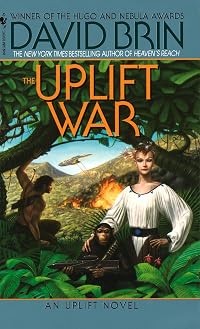
David Brin is a scientist, writer, and public speaker. He was born in Pasadena, California, on October 9, 1950. Brin attended the California Institute of Technology (Caltech) and later earned a doctorate at the University of California. He accepted a position as an engineer at Hughes Aircraft Company. Brin is a former fellow at the California show more Space Institute and serves on several government and nongovernment advisory committees dealing with issues involved with technological growth. Brin has lectured all over the world on such topics as space flight, ecology, and the search for extraterrestrial life. Brin deals with global warming, the destruction of the ozone layer, and pollution of Earth. His 1987 novel, The Uplift War, received the Hugo Award and the Locus Award. His novels have been translated into 20 languages. (Bowker Author Biography) show less
David Brin is a LibraryThing Author, an author who lists their personal library on LibraryThing.
Some Editions
Awards and Honors
Awards
Work Relationships
Contains
Common Knowledge
- Canonical title*
- Erde
- Original title
- Earth
- Original publication date
- 1990-06
- People/Characters
- Ra Boys
- Dedication
- To our common mother
- First words
- First came a supernova, dazzling the universe in brief, spendthrift glory before ebbing into twisty, multispectral clouds of new-forged atoms.
- Original language
- English
*Some information comes from Common Knowledge in other languages. Click "Edit" for more information.
Classifications
Statistics
- Members
- 2,576
- Popularity
- 7,410
- Reviews
- 42
- Rating
- (3.85)
- Languages
- 7 — Dutch, English, French, German, Italian, Portuguese, Spanish
- Media
- Paper, Audiobook, Ebook
- ISBNs
- 19
- ASINs
- 19