
Heart of the Comet
by Gregory Benford, David Brin
On This Page
Description
Gregory Benford and David Brin come together in this bold collaboration about our near human future in space. Prescient and scientifically accurate, Heart of the Comet is known as one of the great hard SF novels of the 1980s. First published in 1986, it tells the story of an ambitious manned mission to visit Halley's Comet, alter its orbit, and mine it for resources. But all too soon, native cells-that might once have brought life to Earth-begin colonizing the colonists. As factions battle show more over the comet's future-and that of Earth-only love, courage, and ingenuity can avert disaster and spark a new human destiny. show lessTags
Recommendations
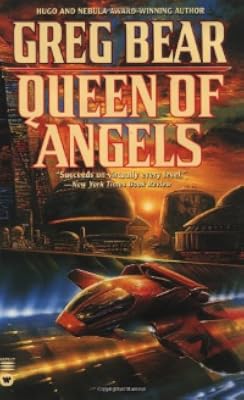
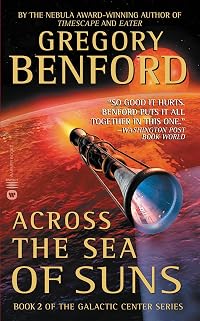
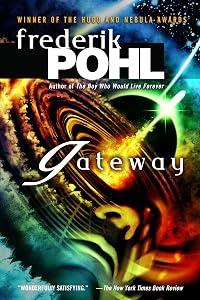
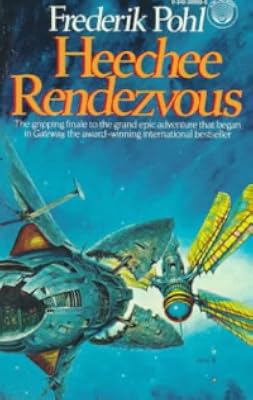
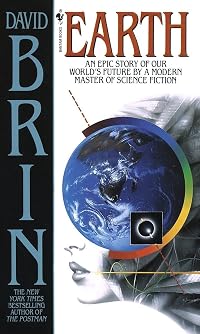



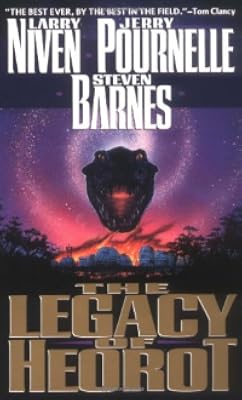
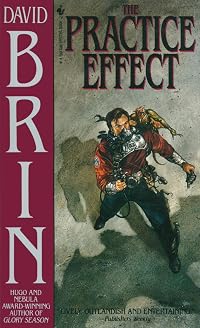
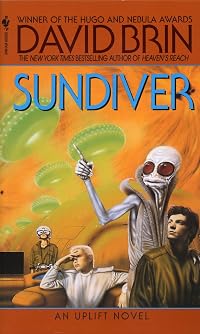
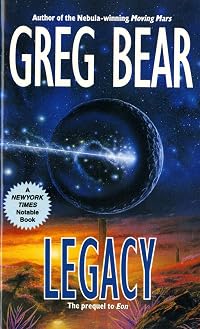


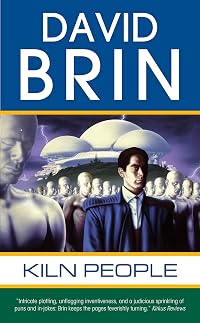



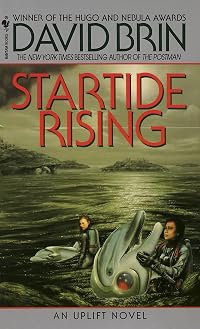
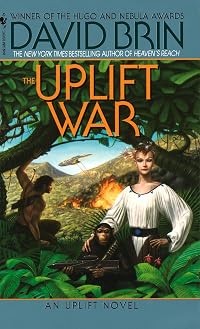
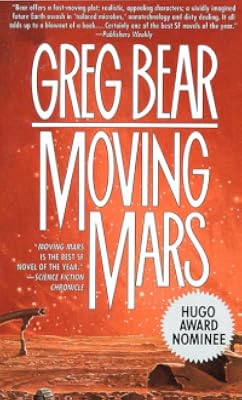

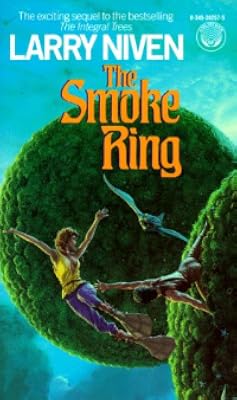




Member Recommendations
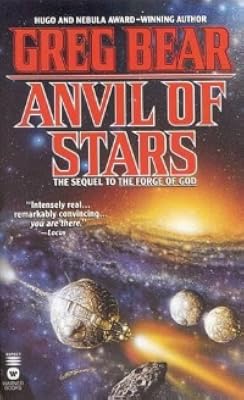
jseger9000 The stories of both books are quite different, however both explore landing on Halley's Comet
20
tetrachromat Both have strong themes of colonization and bio-engineering.
01
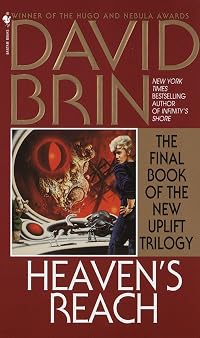
Earth by David Brin
by sturlington
Member Reviews
The plot concerns an attempt to colonize Halley’s Comet.
I would not say that Heart of the Comet is a great novel. It is hard, hard science fiction, which can make it difficult to follow for many readers. Characterization is often sacrificed for exploring the many ‘what ifs’ posited. But regardless, this book did get me thinking and actually even changed my mind about something, both signs of a book that’s worth reading.
In the future, hibernation technology has been developed, so it is possible for the story to follow the same set of characters over 100+ years as they convene with the comet, build their colony and settle in underground chambers for a trip to the outer solar system, then back around the sun.
There they discover show more that primitive life is already established on the comet. At first, it is a battle for survival as the molds and worms, multiplying in the heat generated by the colony, almost take over the habitat while causing a plethora of deadly diseases. But the colonists eventually adapt to the alien lifeforms and even enter into symbiotic relationships with some of them in order to better survive their hostile environment. The comet’s life becomes sources of food, light, even protection for some from the vacuum of space, while the colonists change too in their relationship to that life — they are no longer strictly human anymore. This incites a conflict with the people back home on Earth, who are terrified of allowing the comet back into the inner solar system, forcing the colonists to accept that Halley is now their permanent home, and where are they going to go?
There is a lot more going on in this book, which I won’t get into, but the principle thing the novel got me thinking about was how adaptable humankind is. It seemed perfectly believable that we could settle in such an implausible, hostile, alien environment and not only survive, but make it home. This got me thinking about global warming. Yes, the effects of global warming may be devastating to our current way of life, but maybe the approach of trying to stop or reverse it isn’t the best one. Maybe we should be thinking instead of how we can adapt to the changes, and how we can make the changes work for us.
Adaptability has been our greatest weapon in the battle for survival as a species, after all. I’m not arguing that we need to make all of nature over to suit us, bend it to our will — this approach has clearly caused the problems we are now facing. But we should be thinking about how we can adapt ourselves to these changes, while using our ingenuity to survive the period of change.
A book worth reading is a book that helps you think about the world in a new way. Heart of the Comet was such a book for me. show less
I would not say that Heart of the Comet is a great novel. It is hard, hard science fiction, which can make it difficult to follow for many readers. Characterization is often sacrificed for exploring the many ‘what ifs’ posited. But regardless, this book did get me thinking and actually even changed my mind about something, both signs of a book that’s worth reading.
In the future, hibernation technology has been developed, so it is possible for the story to follow the same set of characters over 100+ years as they convene with the comet, build their colony and settle in underground chambers for a trip to the outer solar system, then back around the sun.
There they discover show more that primitive life is already established on the comet. At first, it is a battle for survival as the molds and worms, multiplying in the heat generated by the colony, almost take over the habitat while causing a plethora of deadly diseases. But the colonists eventually adapt to the alien lifeforms and even enter into symbiotic relationships with some of them in order to better survive their hostile environment. The comet’s life becomes sources of food, light, even protection for some from the vacuum of space, while the colonists change too in their relationship to that life — they are no longer strictly human anymore. This incites a conflict with the people back home on Earth, who are terrified of allowing the comet back into the inner solar system, forcing the colonists to accept that Halley is now their permanent home, and where are they going to go?
There is a lot more going on in this book, which I won’t get into, but the principle thing the novel got me thinking about was how adaptable humankind is. It seemed perfectly believable that we could settle in such an implausible, hostile, alien environment and not only survive, but make it home. This got me thinking about global warming. Yes, the effects of global warming may be devastating to our current way of life, but maybe the approach of trying to stop or reverse it isn’t the best one. Maybe we should be thinking instead of how we can adapt to the changes, and how we can make the changes work for us.
Adaptability has been our greatest weapon in the battle for survival as a species, after all. I’m not arguing that we need to make all of nature over to suit us, bend it to our will — this approach has clearly caused the problems we are now facing. But we should be thinking about how we can adapt ourselves to these changes, while using our ingenuity to survive the period of change.
A book worth reading is a book that helps you think about the world in a new way. Heart of the Comet was such a book for me. show less
This book is a fun read that kept me up waaay too late to finish it.
Don't let the age of the book scare you, it could have been written a couple of years ago just as easily.
There are two big plot drivers in this book, the politics of small and large groups including a straight up love triangle, and Halley's Comet itself.
The comet parts are straight up hard sci-fi, with realistic sounding discussions of orbits, heating and outgassing and much much more. The biology on the other hand to my completely untrained mind get pretty out of hand pretty quickly. No matter, overall it's a great way to keep the whole thing moving along.
The book has several examples of small group dynamics - what happens when you put a very small group of people in show more a small area and put them under very high stress for long periods of time.
The resulting racism is probably foreshadowed too much, but once it bubbles over it seems all too depressingly real, and again and again drives the comet's inhabitants up to and over the brink.
Oddly the bulk of the conflict just evaporates for no real reason shortly before the conclusion, and that magical transition to utopia is probably my biggest beef with the book. The ending that comes out of that and the miraculous biology falls a bit flat.
Well worth reading, a great start and a weak ending producing a solid and a half stars. show less
Don't let the age of the book scare you, it could have been written a couple of years ago just as easily.
There are two big plot drivers in this book, the politics of small and large groups including a straight up love triangle, and Halley's Comet itself.
The comet parts are straight up hard sci-fi, with realistic sounding discussions of orbits, heating and outgassing and much much more. The biology on the other hand to my completely untrained mind get pretty out of hand pretty quickly. No matter, overall it's a great way to keep the whole thing moving along.
The book has several examples of small group dynamics - what happens when you put a very small group of people in show more a small area and put them under very high stress for long periods of time.
The resulting racism is probably foreshadowed too much, but once it bubbles over it seems all too depressingly real, and again and again drives the comet's inhabitants up to and over the brink.
Oddly the bulk of the conflict just evaporates for no real reason shortly before the conclusion, and that magical transition to utopia is probably my biggest beef with the book. The ending that comes out of that and the miraculous biology falls a bit flat.
Well worth reading, a great start and a weak ending producing a solid and a half stars. show less
A bit dated and somewhat clunky, but full of interesting themes and some great ideas, covering a wide gamut of sci-fi motifs.
Great work of sci-fi, an interesting idea explored and thought out with hard science and great characters.
"Heart of the Comet" held my attention and was quick read for me. It raised many question for me to ponder. All these ideas were mixed into an passable action adventure story.
Signed by both authors
Compuesta de exiliados de un mundo devastado por el miedo y los conflictos políticos, la valerosa tripulación multinacional de Halley se está dividiendo a causa de los prejuicios y diferencias que la han acompañado desde su lugar de origen. Pero cuando aparece una especie de musgo en los pozos y corredores excavados en el núcleo del cometa, todos deben unirse en la lucha por la mera supervivencia. El futuro de la colonia Halley, y quizá de toda la humanidad, queda en manos de sólo tres personas que demuestran su capacidad para dirigirlo
Jul 14, 2022Spanish
Members
- Recently Added By
Published Reviews
ThingScore 63
In this, the Year of the Comet, the reader is well advised to be cautious in the selection of reading matter with Comet in the title. Many comet-ose works of fiction and nonfiction are appearing on the racks to cash in on the swell of public interest. This cautionary note in no way applies to "Heart of the Comet," a scary, poetic, exciting, and ultimately encouraging novel that will be on show more recommended reading lists long after Halley has returned to the remote outer reaches of the solar system. show less
added by jimcripps
An uneasy collaboration, then, bulging with ideas but with all the seams and patches showing: promising work that cries out for a thoroughgoing edit and rewrite.
added by jimcripps
Lists

Best Science Fiction Novels
816 works; 426 members

Science Fiction
42 works; 7 members

Schisms in transhumanity - SF
34 works; 1 member

Wishlist
50 works; 1 member

BingoDOG - Scientists in Fiction
111 works; 17 members

Books Read in 2008
335 works; 8 members

Books Read in 2023
5,638 works; 147 members
Author Information

239+ Works 22,553 Members
Gregory Benford, was born on January 30, 1941 in Mobile, Alabama. He is a physicist and science fiction writer who earned his Ph.D. from the University of California, San Diego, in 1967. He is a Woodrow Wilson Fellow and a consultant for NASA. Benford's first novel "Deeper than the Darkness" (1970), which was revised as "The Stars in Shroud" show more (1978), gave him notice as a serious Science Fiction writer. His most popular work is "Timescape" (1980), which was the winner of the Nebula and John W. Campbell Memorial Awards; it presented a hard physics approach to limited time travel. "In the Ocean of Night" (1977), "Across the Sea of Suns" (1984), "Great Sky River" (1987), "Tides of Light" (1989) and "Furious Gulf" (1994) were all a part of the Galactic Cluster Series. He has also written the juvenile novel "Jupiter Project" (1975), "Against Infinity" (1983) and the thriller "Artifact" (1985). He has been nominated for 12 Nebula Awards (winning for "Timescape" and for the novelette, "If the Stars are Gods"). Benford, writing alternately with Bruce Sterling, produces science fact articles for the Magazine of Fantasy and Science Fiction. They took over after the death of regular columnist Isaac Asimov. He has also co-edited theme anthologies with Martin H. Greenburg, which include "Hitler Victorious" (1986), "Nuclear War" (1988), "What Might Have Been, Volume 1: Alternate Empires" (1988), "Volume 2: Alternate Heroes" (1989) and "Volume 3: Alternate Wars." (Bowker Author Biography) show less

153+ Works 40,434 Members
David Brin is a scientist, writer, and public speaker. He was born in Pasadena, California, on October 9, 1950. Brin attended the California Institute of Technology (Caltech) and later earned a doctorate at the University of California. He accepted a position as an engineer at Hughes Aircraft Company. Brin is a former fellow at the California show more Space Institute and serves on several government and nongovernment advisory committees dealing with issues involved with technological growth. Brin has lectured all over the world on such topics as space flight, ecology, and the search for extraterrestrial life. Brin deals with global warming, the destruction of the ozone layer, and pollution of Earth. His 1987 novel, The Uplift War, received the Hugo Award and the Locus Award. His novels have been translated into 20 languages. (Bowker Author Biography) show less

David Brin is a LibraryThing Author, an author who lists their personal library on LibraryThing.
Some Editions
Series
Belongs to Publisher Series
Common Knowledge
- Canonical title*
- Im Herzen des Kometen
- Original title
- Heart of the Comet
- Original publication date
- 1986-03
- People/Characters
- Carl Osborn; Saul Lintz; Virginia Herbert; Virginia Kaninamanu Herbert; JonVon; Spacer Second Class Otis Sergeov
- Important places
- Halley's Comet
- Epigraph
- He that leaveth nothing to chance
will do few things ill,
but he will do very few things.
- Halifax - First words
- Kato died first.
- Last words
- (Click to show. Warning: May contain spoilers.)She calculated the probable evolution of Carl Osborn's new species of Man, and of her own phylum, and was pleased. Reproduction, adaptation -- these problems were vast, but she felt herself equal to them.
And as for Planetary Humanity . . . By her calculations, the new phylum and the old species would not meet again for four thousand years. Good. There was time enough to think about it. - Original language
- English
*Some information comes from Common Knowledge in other languages. Click "Edit" for more information.
Classifications
Statistics
- Members
- 1,291
- Popularity
- 18,897
- Reviews
- 8
- Rating
- (3.62)
- Languages
- 5 — English, French, German, Italian, Spanish
- Media
- Paper, Audiobook, Ebook
- ISBNs
- 21
- ASINs
- 14