On This Page
Description
Twenty-third century Earth, ravaged by climate change, looks backwards to the holy ideal of a pre-industrial Eden. Political power has been grabbed by a few powerful families and their green saints. Millions of people are imprisoned in teeming cities; millions more labour on Pharaonic projects to rebuild ruined ecosystems. On the moons of Jupiter and Saturn, the Outers, descendants of refugees from Earth's repressive regimes, have constructed a wild variety of self-sufficient cities and show more settlements: scientific utopias crammed with exuberant creations of the genetic arts; the last outposts of every kind of democratic tradition. The fragile detente between the Outer cities and the dynasties of Earth is threatened by the ambitions of the rising generation of Outers, who want to break free of their cosy, inward-looking pocket paradises, colonise the rest of the Solar System, and drive human evolution in a hundred new directions. On Earth, many demand pre-emptive action against the Outers before it's too late; others want to exploit the talents of their scientists and gene wizards. Amid campaigns for peace and reconciliation, political machinations, crude displays of military might, and espionage by cunningly wrought agents, the two branches of humanity edge towards war . . . show lessTags
Recommendations
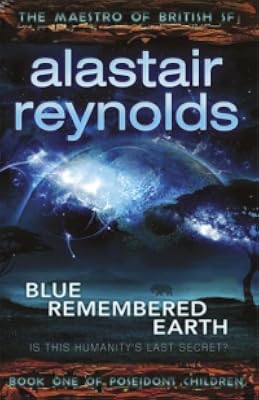

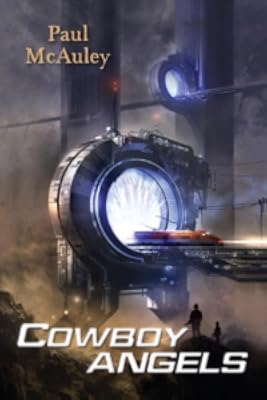


Member Recommendations

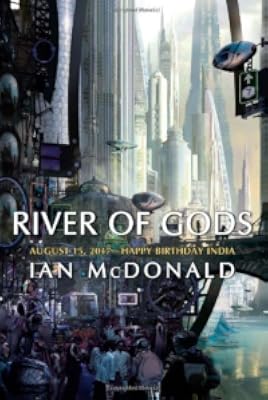
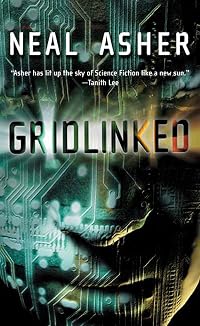
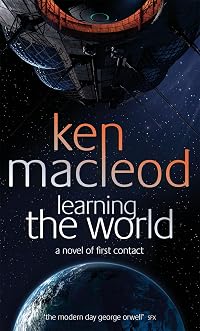
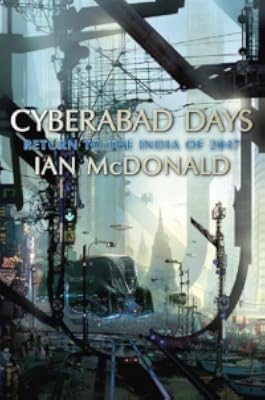
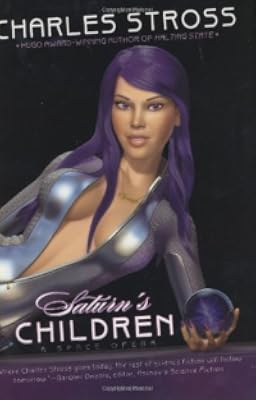
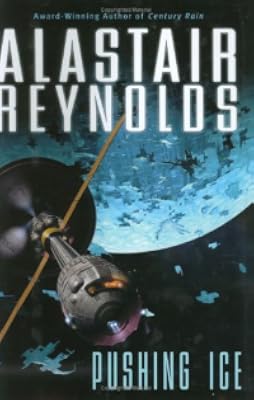
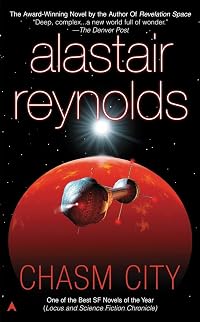
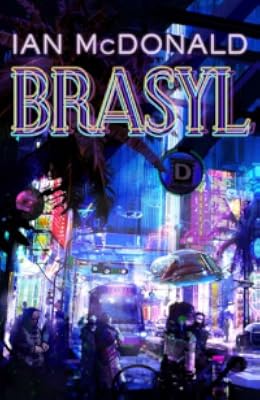
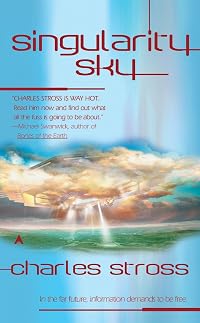
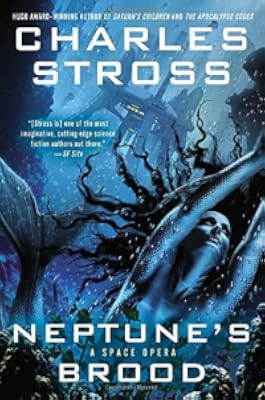
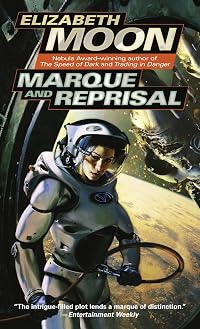
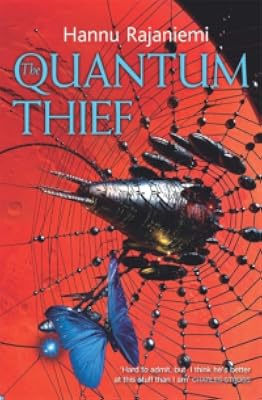
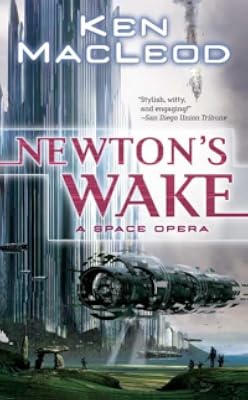
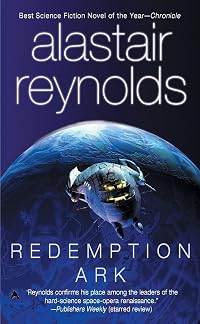
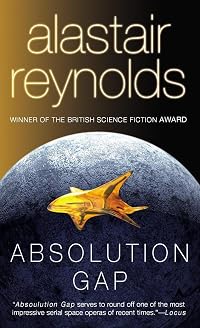
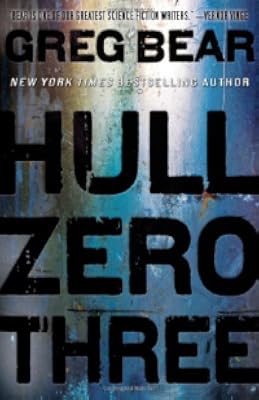
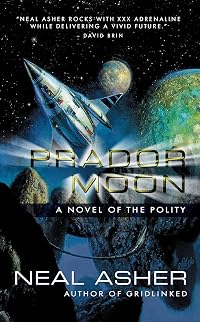
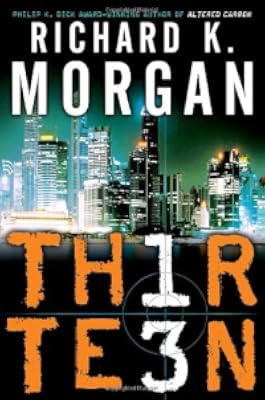
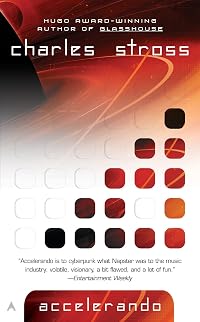
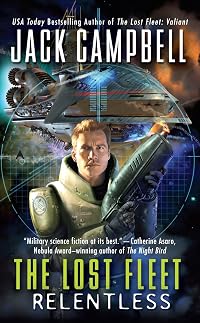
tetrachromat Both tell stories of how humanity uses genetic engineering to construct habitats and survive in space.
Member Reviews
The Quiet War, by Paul J McAuley.
This was the book I read over Christmas, and I like McAuley, so that wan't a problem, but do you know what I prefer? For years I'd save books by a particular author for my Christmas book, the one I actually dipped into on Christmas Day, and lay about in front of the fireplace with on Stephen's Day, and that was Kim Newman. Paul McAuley won't mind, they're good mates. But there hasn't been a Kim Newman novel in years! Where's my new Kim Newman novel? Fair enough, there was The Man From The Diogenes Club and Secret Files Of The Diogenes Club, fix-up novels with more than enough new material to justify their purchase, but, frankly, I devoured them as soon as I got them. No will power, me. But where's the show more English Ghost Story book or the new Anno Dracula book? I want them! I want them noooooow! So I can put them aside for eleven months until next Christmas.
McAuley, on the other hand, well, his last two books were relatively poor. Cowboy Angels wasn't up to much and Players was downright mediocre. For heaven's sake, Paul! You wrote Fairyland! FAIRYLAND! One of the best science fiction novels of the nineties! Not to mention White Devils, whch was, amongst other things, a Michael Crichton book by someone who isn't scared shitless of science and who didn't structure their entire book around that fear.
The Quiet War is a return to form, a space opera about the growing schism between a conservative, ruthless Earth-based society and the more adventurous, genetically advanced but fatally complacent settlements scattered throughout the solar system. The book charts the slow buildup to war through the eyes of an ambitious geneticist, a hard-nosed bio-engineer, a gung ho fighter pilot, a genetically engineered sleeper agent and a ruthlessly ambitious diplomat.
McAuley's a reliably good writer, and this stuff is potter's clay in his hands. An entertaining mix of hard science fiction, espionage, social upheaval, political intrigue and high tech warfare, it turned out to be a damned fine Christmas Day book. show less
This was the book I read over Christmas, and I like McAuley, so that wan't a problem, but do you know what I prefer? For years I'd save books by a particular author for my Christmas book, the one I actually dipped into on Christmas Day, and lay about in front of the fireplace with on Stephen's Day, and that was Kim Newman. Paul McAuley won't mind, they're good mates. But there hasn't been a Kim Newman novel in years! Where's my new Kim Newman novel? Fair enough, there was The Man From The Diogenes Club and Secret Files Of The Diogenes Club, fix-up novels with more than enough new material to justify their purchase, but, frankly, I devoured them as soon as I got them. No will power, me. But where's the show more English Ghost Story book or the new Anno Dracula book? I want them! I want them noooooow! So I can put them aside for eleven months until next Christmas.
McAuley, on the other hand, well, his last two books were relatively poor. Cowboy Angels wasn't up to much and Players was downright mediocre. For heaven's sake, Paul! You wrote Fairyland! FAIRYLAND! One of the best science fiction novels of the nineties! Not to mention White Devils, whch was, amongst other things, a Michael Crichton book by someone who isn't scared shitless of science and who didn't structure their entire book around that fear.
The Quiet War is a return to form, a space opera about the growing schism between a conservative, ruthless Earth-based society and the more adventurous, genetically advanced but fatally complacent settlements scattered throughout the solar system. The book charts the slow buildup to war through the eyes of an ambitious geneticist, a hard-nosed bio-engineer, a gung ho fighter pilot, a genetically engineered sleeper agent and a ruthlessly ambitious diplomat.
McAuley's a reliably good writer, and this stuff is potter's clay in his hands. An entertaining mix of hard science fiction, espionage, social upheaval, political intrigue and high tech warfare, it turned out to be a damned fine Christmas Day book. show less
Some of the best new science-fiction I've read in a long time. McAuley takes us on a sprawling ecological space opera from a post-ecological collapse earth, to the transhuman moons of the outer system. The war of the title is notably quiet, it's a war of subversion and deceit, much like this book inverts the typical action-packed space opera tropes. But it's smart, insightful, full of fantastic images, and best of all, has three capable female main characters.
This is a novel of the high frontier. It is set in the 23rd century and man has spread out as far as Jupiter and Saturn where they have small functioning states. On Earth we are recovering from environmental and economic collapse and environmental repair is almost a religion. There is mistrust between the 'outers' those humans who live around the outer planets and those who still live on Earth. Some want a closer harmony between the two factions however others would prefer a more violent relationship between them. The atmosphere is heavily influenced by the annihilation of the Mars settlement a century earlier by the Chinese.
The book tells of the phony war, and the little flare-ups as the solar system gradually drifts inexorably into a show more real war. It alternates between the five main characters but unlike some other books that use this technique I felt myself equally interested in all of the main characters. There wasn't a section I hoped would finish soon so that I could get back to reading about my favourite character. Each of the characters have a limited perspective of the bigger picture - although all have their role (willing or unwilling) to play. You have to take notice of all the characters to build up the bigger picture in your head.
The book seems to have some marketing suggesting it is a new 'space opera' and some reviewers have mentioned 'space opera' within their reviews. I think to read this as a space opera and compare it to others in that sub-genre is essentially incorrect. It is constructed entirely differently to a space-opera and shares none of the wide-screen gosh-wow nature of the space opera. What it is, is a very taut book about two societies slipping into war - replete with some great writing. I certainly expect this to be up there challenging for the BSFA or Clarke Awards. show less
The book tells of the phony war, and the little flare-ups as the solar system gradually drifts inexorably into a show more real war. It alternates between the five main characters but unlike some other books that use this technique I felt myself equally interested in all of the main characters. There wasn't a section I hoped would finish soon so that I could get back to reading about my favourite character. Each of the characters have a limited perspective of the bigger picture - although all have their role (willing or unwilling) to play. You have to take notice of all the characters to build up the bigger picture in your head.
The book seems to have some marketing suggesting it is a new 'space opera' and some reviewers have mentioned 'space opera' within their reviews. I think to read this as a space opera and compare it to others in that sub-genre is essentially incorrect. It is constructed entirely differently to a space-opera and shares none of the wide-screen gosh-wow nature of the space opera. What it is, is a very taut book about two societies slipping into war - replete with some great writing. I certainly expect this to be up there challenging for the BSFA or Clarke Awards. show less
This is a fabulous, inventive and science-laden tale of competing ideologies and the lead up to war over them. McAuley creates a vivid picture of two societies: that of "Greater Brazil" here on an Earth which is reclaiming and reviving the land and resources after environmental devastation (with such fervor that it has become a religion), and that of the "outers", people (and their descendants) who moved away from earth into the frontier of the outer solar system, creating different and comfortable enclaves for themselves as they went. I particularly enjoyed McAuley's choice in making his two brilliant geneticists, one from each group, women. I've read a fair number of McAuley's novels and if this book isn't his best, it's one of them
The genre of science fiction has a number of problems that work against it. One of them is that if an author is sticking strictly to what we know about a particular environment or setting, their stories might turn out to look very similar to other works that share that setting - and therefore may falsely give the impression (to an inexperienced reader) that the genre only offers a limited range of new experiences. Paul McAuley's The Quiet War suffers from this drawback.
The story is set partly on a future Earth where ecological disaster has resulted in devastation - the "Overturn" - and the growth of Brazil as a new world superpower, holding sway over both North and South America. The rest of the story is set amongst the moons of Jupiter show more and Saturn. For those used to absorbing their science fiction through visual media, we are firmly in the territory of The Expanse, which is unfortunate, as this novel precedes The Expanse by a couple of years. But the resemblances are there: an Earth in recovery from disaster, interplanetary travel via advanced fusion-drive spaceships, colonies on Jovian and Saturnian moons whose inhabitants are thought of as "Outers", and those colonies are dependant on a range of innovative technologies to create habitable environments.
And yet: McAuley's specialism is in botany and biology, and his colonists rely on genetic and bio-engineering to better adapt to their surroundings. This is one of the early issues with the book, as in the first quarter, McAuley does rather go a bit overboard on the info-dumping. Get past that, and there is a reasonable story about interplanetary political intrigue, with high-tech action set pieces to satisfy those who like that sort of thing. Characterisation is adequate, though McAuley introduces two characters in the opening chapters who then disappear for a large section of the book. Perhaps the most interesting of these is Dave 8, a cloned super-soldier created by the Brazilian government - or rather, one of the more important generals from the pre-eminent family in Brazilian politics - for unspecified missions in space. Dave 8's training is delivered in a Catholic seminary, and this setting and the internal doubts and questions of Dave 8 probably form the more interesting character of the book, precisely because a Catholic assassin may well be outside many readers' experience.
Otherwise, the casual reader might think that this was a bog-standard work of "military science fiction", which it is not. And it certainly isn't a fast-paced adventure story. Yet for those willing to engage with this book on a more intellectual level, there is plenty to engage with. show less
The story is set partly on a future Earth where ecological disaster has resulted in devastation - the "Overturn" - and the growth of Brazil as a new world superpower, holding sway over both North and South America. The rest of the story is set amongst the moons of Jupiter show more and Saturn. For those used to absorbing their science fiction through visual media, we are firmly in the territory of The Expanse, which is unfortunate, as this novel precedes The Expanse by a couple of years. But the resemblances are there: an Earth in recovery from disaster, interplanetary travel via advanced fusion-drive spaceships, colonies on Jovian and Saturnian moons whose inhabitants are thought of as "Outers", and those colonies are dependant on a range of innovative technologies to create habitable environments.
And yet: McAuley's specialism is in botany and biology, and his colonists rely on genetic and bio-engineering to better adapt to their surroundings. This is one of the early issues with the book, as in the first quarter, McAuley does rather go a bit overboard on the info-dumping. Get past that, and there is a reasonable story about interplanetary political intrigue, with high-tech action set pieces to satisfy those who like that sort of thing. Characterisation is adequate, though McAuley introduces two characters in the opening chapters who then disappear for a large section of the book. Perhaps the most interesting of these is Dave 8, a cloned super-soldier created by the Brazilian government - or rather, one of the more important generals from the pre-eminent family in Brazilian politics - for unspecified missions in space. Dave 8's training is delivered in a Catholic seminary, and this setting and the internal doubts and questions of Dave 8 probably form the more interesting character of the book, precisely because a Catholic assassin may well be outside many readers' experience.
Otherwise, the casual reader might think that this was a bog-standard work of "military science fiction", which it is not. And it certainly isn't a fast-paced adventure story. Yet for those willing to engage with this book on a more intellectual level, there is plenty to engage with. show less
In this sweeping novel of conflict between a future Earth where authoritarian governments are still pulling things together after a post-ecological collapse and a "Belter" civilization reaching towards a post-human state; one follows five point-of-view characters: 1. A clone warrior raised from conception to be a military tool. 2. A hot-shot pilot who is remade to cybernetically bond with his ship. 3. An imperious "gene wizard" who seeths over being treated as being little more than the hired help of the aristocratic family she serves. 4. An ecological engineer who finds herself forever on the run due a gut-level unwillingness to play other people's games. 5. An on-the-make diplomat/spy who is driven to distraction over his inability to show more finish off the engineer.
I like this novel a great deal and think it's one of the best hard SF stories I've read in awhile, but that you have so many POV characters running around but all essentially from the same society (Greater Brazil) does seem a little problematic at times. One might like a little more perspective from a character from another of the Terran states, or from the outer-planet society they seek to bring to heel. It's about the only thing that I'm marking this novel down for. show less
I like this novel a great deal and think it's one of the best hard SF stories I've read in awhile, but that you have so many POV characters running around but all essentially from the same society (Greater Brazil) does seem a little problematic at times. One might like a little more perspective from a character from another of the Terran states, or from the outer-planet society they seek to bring to heel. It's about the only thing that I'm marking this novel down for. show less
There is not much to say about this novel, not because it is bad but because it is extremely good. In fact there is nothing to find fault with. The setting is the solar system, after Earth has been devastated by global warming, and is beginning to rebuild, while thriving colonies have been established on the moons of Saturn and Jupiter.
All sounds idyllic but it is not. Earlier, colonists from the Moon fled to Jupiter and Saturn after the colony on Mars was nuked by China. Earth is now controlled by three power blocs, Greater Brazil, the European Union and the Pacific Community. All are run by powerful families who squabble behind the scenes. The poor live in overcrowded cities, denied access to the regenerating countryside. Science is show more fostered, but mainly to create weapons, sometimes involving brutal biological and psychological re-structuring of people.
In stark contrast, the descendants of the Moon colonists, known as the Outers, live in free communities, run by continuous e-ballots. They delve into the physical and biological sciences, especially genetic engineering, to improve their technologies and bodies and to spread new forms of life by creating new ecosystems on previously sterile moons. The 'Quiet War', a low-intensity conflict with little all out fighting, deliberately engineered by factions in Greater Brazil, breaks out after a reconciliation mission to build an Earth-like habitat on Callisto is sabotaged.
On one hand the novel succeeds as a classic space opera, with a militaristic regime trying to control freedom-loving individualists. There is plenty of action, from a ground assault on a domed city to balletic space battles, using clever weapons and some effective 'dumb' ones, like asteroids used as missiles. Heinlein would be proud. On the other hand, this is very 'modern' science fiction, with subtle insights into politics, very well drawn characters on both sides, awe inspiring new science, like organisms adapted to life in a vacuum on cold, dead moons and beautiful, poetic descriptions of vistas on the various moons and planets. This book is a perfect blend of a mainstream novel with a rigorous approach to science fiction.
I liked it so much I bought the sequel, Gardens of the sun, as soon as it came out, despite being a habitual mass market paperback miser. show less
All sounds idyllic but it is not. Earlier, colonists from the Moon fled to Jupiter and Saturn after the colony on Mars was nuked by China. Earth is now controlled by three power blocs, Greater Brazil, the European Union and the Pacific Community. All are run by powerful families who squabble behind the scenes. The poor live in overcrowded cities, denied access to the regenerating countryside. Science is show more fostered, but mainly to create weapons, sometimes involving brutal biological and psychological re-structuring of people.
In stark contrast, the descendants of the Moon colonists, known as the Outers, live in free communities, run by continuous e-ballots. They delve into the physical and biological sciences, especially genetic engineering, to improve their technologies and bodies and to spread new forms of life by creating new ecosystems on previously sterile moons. The 'Quiet War', a low-intensity conflict with little all out fighting, deliberately engineered by factions in Greater Brazil, breaks out after a reconciliation mission to build an Earth-like habitat on Callisto is sabotaged.
On one hand the novel succeeds as a classic space opera, with a militaristic regime trying to control freedom-loving individualists. There is plenty of action, from a ground assault on a domed city to balletic space battles, using clever weapons and some effective 'dumb' ones, like asteroids used as missiles. Heinlein would be proud. On the other hand, this is very 'modern' science fiction, with subtle insights into politics, very well drawn characters on both sides, awe inspiring new science, like organisms adapted to life in a vacuum on cold, dead moons and beautiful, poetic descriptions of vistas on the various moons and planets. This book is a perfect blend of a mainstream novel with a rigorous approach to science fiction.
I liked it so much I bought the sequel, Gardens of the sun, as soon as it came out, despite being a habitual mass market paperback miser. show less
Members
- Recently Added By
Published Reviews
ThingScore 88
This novel is one of the best SF novels of the past couple of years. It is fullthroatedly SFnal, distinctly "hard."
added by sdobie
Though flawed, The Quiet War makes you want more precisely because there's so much promise in its primary characters and settings. McAuley makes science incredibly exciting, and you'll have his weird images and ideas in your brain for days after you put the book down. War may not have been the best plot device to get this story in motion, but the vacuum organisms and communes on Uranus make show more this a novel well worth your time. show less
added by PhoenixTerran
Lists

Space Colonization
100 works; 26 members

Religious Science Fiction
70 works; 20 members

io9 Book Club
70 works; 4 members

Arthur C. Clarke Award Winners and Shortlisted Books
219 works; 14 members

ALA The Reading List
490 works; 28 members
Author Information

138+ Works 6,606 Members
Some Editions
Awards and Honors
Awards
Distinctions
Notable Lists
Series

Work Relationships
Is contained in
Common Knowledge
- Canonical title
- The Quiet War
- Original title
- The Quiet War
- Original publication date
- 2008
- Epigraph
- "The Herr Doctor does not know about peoples."
-- William Golding, Free Fall - Dedication
- For Russell Schecter,
and for Georgina, naturellement - Publisher's editor
- Anders, Lou
- Blurbers
- Baxter, Stephen
Classifications
Statistics
- Members
- 654
- Popularity
- 44,400
- Reviews
- 29
- Rating
- (3.43)
- Languages
- 6 — Czech, English, French, German, Polish, Romanian
- Media
- Paper, Ebook
- ISBNs
- 12
- ASINs
- 6