On This Page
Description
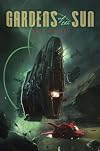
The Quiet War is over, but the victory is fragile and riven by vicious internal politics. After a conflict fought to contain the expansionist, post-human ambitions of the Outers, the future is as uncertain as ever.Tags
Recommendations








Member Recommendations
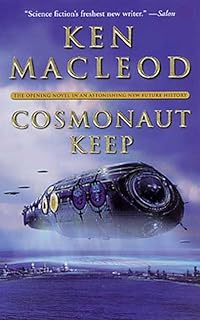
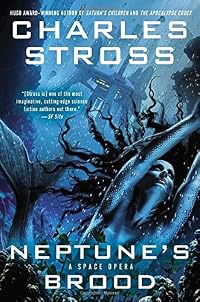
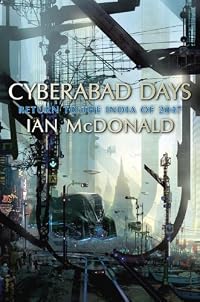
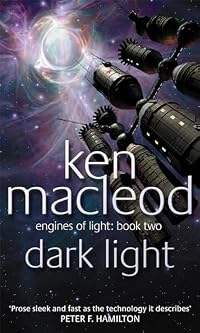
AlanPoulter Both novels speculate realistically about long-range space exploration and colonisation
Member Reviews
This book is a direct sequel to Paul McAuley's 2008 novel The Quiet War. It continues the stories of that novel's various protagonists as they negotiate the peace imposed by Greater Brazil and the other two major Earth powers on the outer worlds. Some choose to move outwards and find new worlds to colonise; others return to Earth and try to pick up the work of reconstruction and rewilding following the ecological collapse of the previous century. But the excesses of the ruling families of Greater Brazil become too much for many in the former United States, and revolution is in the air.
I took to this novel rather better than I did The Quiet War, finding myself beginning to take a quite direct interest in the stories of the various show more protagonists. At the same time, I also found myself reflecting on that novel and my reaction to it. In my review of The Quiet War, I commented on the similarities between these books and James S.A. Corey's series of novels The Expanse (and the associated tv series), which has a similar setting, both in terms of the action of those novels and their political setting. As I said in my review of The Quiet War, one of the features of the science fiction genre is that if different writers choose the same setting, the science of that setting – the physics, the biology and so on – dictate that there will be considerable similarities between those stories. So it is with the Corey novels and these two books by McAuley. There are the same chunks of real estate; they are the same distances apart, travel between them takes the same sort of time, and human activity is limited by the availability of key resources, specifically water and oxygen. Both sequences require the development of advanced propulsion methods – the Epstein Drive in The Expanse and the “fast fusion” drives in the McAuley books – to help move the stories on in a reasonable timescale, though in both cases there is little in the way of unspecified hand-waving future technology to strain the reader's credulity.
Where the two sets of stories do differ, though, is in their treatment of the science-fictional apparatus. In The Expanse, we get a highly political set of action adventures, with well-drawn characters who are nonetheless fairly identifiable types – the Everyman Hero, an Everywoman Hero, a Pilot, a Tough Guy, a Blunt Politician, a Tough Space Marine, a Rebel Leader and so on. The tech shows few radical departures from our own state of knowledge other than those needed to make the story work, and the descriptive writing is sufficient to allow the reader to visualise the setting and follow the story. These elements are present in the McAuley novels – and especially in Gardens of the Sun – but many aspects are better developed. There is a lot of politics in the McAuley; in Gardens of the Sun, we see more of the military dictatorship imposed by Greater Brazil, and slowly we realise that it is not just the exercise of authoritarian power that is on display here, but actual Fascism, with the ruling families using force to impose their will just because they can, and denouncing the practice of democracy as outdated and the root cause of the Earth's ruination. The scientific basis of the society, especially in the outer worlds, is front and centre; whilst McAuley doesn't engage in the amount of exposition of the underlying bio-engineering he did in The Quiet War, it is made perfectly clear that bio-engineering and nanotechnology, in the form of the vacuum organisms (artificial plant analogues that capture the weak sunlight to extract water and metals from underground and enable them to be collected), make life in the outer worlds possible. So much of the plot hinges on the availability of habitats and resources, and the way that availability influences the decisions characters take. It also drives many of the characters and their motivations – we have the “gene wizards”, Avernus and Sri Hong-Owen who were introduced in The Quiet War. They are driving much of the action, even though we never met Avernus in the first novel and only get to meet them towards the end of this one, whilst Sri Hong-Owen's story arc is the other way around. Other characters – an Everywoman Hero, a Pilot, a Spy and a Diplomat of dubious trustworthiness – are all given their turn on the stage but all, at some point or another in the story, step outside their given roles and behave in more human ways than we might expect.
I found myself engaging with this novel rather more than I did its predecessor, which was a pleasant surprise. Towards the end, we find a theme of transhumanism emerging from the logical working out of the plot; this sets the scene for the next novel in the sequence, In the Mouth of the Whale, which moves the action on into new worlds and new characters. The stories started in The Quiet War are brought to conclusion in Gardens of the Sun and new stories are set out for us.
However, I did not find the novel without fault. Although there is some quite effective prose describing the various worlds and their stern and desolate beauty, McAuley seems to have become carried away and there are many sentences without verbs. Some have verbs but neither subject nor object. And some are excessively long. I don't know if this is an authorial tic or just very poor sub-editing; I don't remember coming across this sort of writing in The Quiet War; or if I did, then it wasn't as intrusive as I found it here. Is this what passes for “artistic” writing these days? And I had to chuckle when, in an action sequence set on our Moon, a character launches himself from a mountain crag “into thin air”. “Incredibly thin,” I thought, “if not non-existent”. But then again, having someone launch themselves into thin vacuum might have been even sillier.
In the hands of a less accomplished author, this might have been a serious problem. But McAuley's command of his conception of life in the outer worlds and the events he puts his characters through is strong enough to withstand this sort of failing. A reader unused to science fiction might quibble at this; and although McAuley restricts the scientific expositions, there is enough biochemistry vocabulary used to put off readers determined to understand every word, in the misplaced belief that to read science fiction is to need to understand the science at every touch and turn. Whilst I would say that Paul McAuley is one of the primary practitioners of the science fictional art working in Britain today, I would not recommend this book as a starting point to either the story or the genre; but if you have read The Quiet War, Gardens of the Sun makes a satisfactory conclusion to the stories started in that book. show less
I took to this novel rather better than I did The Quiet War, finding myself beginning to take a quite direct interest in the stories of the various show more protagonists. At the same time, I also found myself reflecting on that novel and my reaction to it. In my review of The Quiet War, I commented on the similarities between these books and James S.A. Corey's series of novels The Expanse (and the associated tv series), which has a similar setting, both in terms of the action of those novels and their political setting. As I said in my review of The Quiet War, one of the features of the science fiction genre is that if different writers choose the same setting, the science of that setting – the physics, the biology and so on – dictate that there will be considerable similarities between those stories. So it is with the Corey novels and these two books by McAuley. There are the same chunks of real estate; they are the same distances apart, travel between them takes the same sort of time, and human activity is limited by the availability of key resources, specifically water and oxygen. Both sequences require the development of advanced propulsion methods – the Epstein Drive in The Expanse and the “fast fusion” drives in the McAuley books – to help move the stories on in a reasonable timescale, though in both cases there is little in the way of unspecified hand-waving future technology to strain the reader's credulity.
Where the two sets of stories do differ, though, is in their treatment of the science-fictional apparatus. In The Expanse, we get a highly political set of action adventures, with well-drawn characters who are nonetheless fairly identifiable types – the Everyman Hero, an Everywoman Hero, a Pilot, a Tough Guy, a Blunt Politician, a Tough Space Marine, a Rebel Leader and so on. The tech shows few radical departures from our own state of knowledge other than those needed to make the story work, and the descriptive writing is sufficient to allow the reader to visualise the setting and follow the story. These elements are present in the McAuley novels – and especially in Gardens of the Sun – but many aspects are better developed. There is a lot of politics in the McAuley; in Gardens of the Sun, we see more of the military dictatorship imposed by Greater Brazil, and slowly we realise that it is not just the exercise of authoritarian power that is on display here, but actual Fascism, with the ruling families using force to impose their will just because they can, and denouncing the practice of democracy as outdated and the root cause of the Earth's ruination. The scientific basis of the society, especially in the outer worlds, is front and centre; whilst McAuley doesn't engage in the amount of exposition of the underlying bio-engineering he did in The Quiet War, it is made perfectly clear that bio-engineering and nanotechnology, in the form of the vacuum organisms (artificial plant analogues that capture the weak sunlight to extract water and metals from underground and enable them to be collected), make life in the outer worlds possible. So much of the plot hinges on the availability of habitats and resources, and the way that availability influences the decisions characters take. It also drives many of the characters and their motivations – we have the “gene wizards”, Avernus and Sri Hong-Owen who were introduced in The Quiet War. They are driving much of the action, even though we never met Avernus in the first novel and only get to meet them towards the end of this one, whilst Sri Hong-Owen's story arc is the other way around. Other characters – an Everywoman Hero, a Pilot, a Spy and a Diplomat of dubious trustworthiness – are all given their turn on the stage but all, at some point or another in the story, step outside their given roles and behave in more human ways than we might expect.
I found myself engaging with this novel rather more than I did its predecessor, which was a pleasant surprise. Towards the end, we find a theme of transhumanism emerging from the logical working out of the plot; this sets the scene for the next novel in the sequence, In the Mouth of the Whale, which moves the action on into new worlds and new characters. The stories started in The Quiet War are brought to conclusion in Gardens of the Sun and new stories are set out for us.
However, I did not find the novel without fault. Although there is some quite effective prose describing the various worlds and their stern and desolate beauty, McAuley seems to have become carried away and there are many sentences without verbs. Some have verbs but neither subject nor object. And some are excessively long. I don't know if this is an authorial tic or just very poor sub-editing; I don't remember coming across this sort of writing in The Quiet War; or if I did, then it wasn't as intrusive as I found it here. Is this what passes for “artistic” writing these days? And I had to chuckle when, in an action sequence set on our Moon, a character launches himself from a mountain crag “into thin air”. “Incredibly thin,” I thought, “if not non-existent”. But then again, having someone launch themselves into thin vacuum might have been even sillier.
In the hands of a less accomplished author, this might have been a serious problem. But McAuley's command of his conception of life in the outer worlds and the events he puts his characters through is strong enough to withstand this sort of failing. A reader unused to science fiction might quibble at this; and although McAuley restricts the scientific expositions, there is enough biochemistry vocabulary used to put off readers determined to understand every word, in the misplaced belief that to read science fiction is to need to understand the science at every touch and turn. Whilst I would say that Paul McAuley is one of the primary practitioners of the science fictional art working in Britain today, I would not recommend this book as a starting point to either the story or the genre; but if you have read The Quiet War, Gardens of the Sun makes a satisfactory conclusion to the stories started in that book. show less
While I consider "The Quiet War" to be one of the better hard SF novels I've read in awhile, I have to admit that I'm not quite as enthusiastic about the follow-on work. Much of this is due to the sense of let-down that the main POV characters find themselves afflicted with, as they work through their own individual versions of purgatory. Pilot Cash Baker is coping with being just another screwed-up war vet after being cast aside when his patron is purged. Diplomatic dirty-jobs specialist Loc Ifrahim finds himself marking time and seething about not being rewarded according to his inflated self-image. Clone hitman Dave #7 is disappointed in his quest to win the woman he loves. Big-science maven Sri Hong-Owen continues to be taunted by show more her inability to control the gene wizard Avernus. Finally, Greater Brazil dissident Macy Minnot remains on the run with her new community. All these people will participate in the revolution that's coming against the powers in Greater Brazil that incited the war, but I have to admit that climax had a pat flavor to it all, as there's no character interaction that has quite the zip that the contest of wills between Ifrahim and Minnot the first book provided. Then again, no one said that Purgatory was fun. show less
In The Quiet War, all plot lines ran towards and finally converged in the title-giving war as their focus. In Gardens of the Sun – not so much a sequel as the second half of the novel – all of the lines diverge again from that point, spread out into many different direction, but, like having passed through a prism, changed from what they were before.
There are many stories about war, science fiction or otherwise, but not a lot, science fiction or otherwise, who pay much attention to what happens after the war is over, to both victors and defeated. The events of recent years have shown how much of an oversight that is, and Gardens of the Sun takes that lesson very much to heart, with McAuley spinning out the parallels to contemporary show more events even more distinctly than he did in The Quiet War. He picks up all the threads from that novel, although there is some shift in emphasis – while Macy Minnot is still very much in the foreground, Sri Hong-Owen makes only a few appearances, instead we get a lot of chapters with pilot Cash Baker who point of view is mostly used to show us what is happening in Greater Brazil while the rest of the characters are spread out all over the Solar system.
So there are both structural and conceptual reasons why Gardens of the Sun is lacking some of the focus that The Quiet War had, and while the reasons make sense, they do make of the later novel a somewhat less compelling read. It’s still excellent stuff though, and definitely will not be the last thing by McAuley I’ve read. show less
There are many stories about war, science fiction or otherwise, but not a lot, science fiction or otherwise, who pay much attention to what happens after the war is over, to both victors and defeated. The events of recent years have shown how much of an oversight that is, and Gardens of the Sun takes that lesson very much to heart, with McAuley spinning out the parallels to contemporary show more events even more distinctly than he did in The Quiet War. He picks up all the threads from that novel, although there is some shift in emphasis – while Macy Minnot is still very much in the foreground, Sri Hong-Owen makes only a few appearances, instead we get a lot of chapters with pilot Cash Baker who point of view is mostly used to show us what is happening in Greater Brazil while the rest of the characters are spread out all over the Solar system.
So there are both structural and conceptual reasons why Gardens of the Sun is lacking some of the focus that The Quiet War had, and while the reasons make sense, they do make of the later novel a somewhat less compelling read. It’s still excellent stuff though, and definitely will not be the last thing by McAuley I’ve read. show less
In his earlier book, [The Quiet War], Paul McAuley introduced us to the solar system of the future—teeming with life as human have migrated out away from an Earth which is recovering very slowly from environmental devastation. McAuley introduced us to this future Earth and the various people and fractions who inhabit it and also introduced us to the "Outers" - the people who have moved out further into the solar system to colonize the moons of Saturn...etc. The Outers, as they are referred to by those in power on Earth, have a more progressive philosophy around using gene therapy to adapt to and better their surroundings. A little tweaking can be a good thing.
The story is rich and complex and laced thoroughly through with much biology show more and other sciences (McAuley is a biologist of some kind by education and training). It's chock full of ideas and different philosophies played out on this solar-system-sized stage with a full complement of interesting, credible characters - including women. In fact, the two geniuses in this story - one on Earth and one an "Outer" - are women.
Long story short, Earth launches a war against the Outers and "wins". Gardens of the Sun picks up the story of the aftermath of that war. We revisit all of the main characters of the first book (about 5 or 6) and a host of secondary characters and see how they're faring - or not. I dare not tell to much here.
I think these two books are McAuley's best works—of the many I've read (but admittedly have forgotten much of). It's best recommended for those who enjoy SF with a thick biological bend and a fictional future world as complex as the one we currently live in. While the overarching theme might centered around genetics and post-humanism, there is a lot of other thoughtful bits which makes this duology a great place to lose oneself for several days. show less
The story is rich and complex and laced thoroughly through with much biology show more and other sciences (McAuley is a biologist of some kind by education and training). It's chock full of ideas and different philosophies played out on this solar-system-sized stage with a full complement of interesting, credible characters - including women. In fact, the two geniuses in this story - one on Earth and one an "Outer" - are women.
Long story short, Earth launches a war against the Outers and "wins". Gardens of the Sun picks up the story of the aftermath of that war. We revisit all of the main characters of the first book (about 5 or 6) and a host of secondary characters and see how they're faring - or not. I dare not tell to much here.
I think these two books are McAuley's best works—of the many I've read (but admittedly have forgotten much of). It's best recommended for those who enjoy SF with a thick biological bend and a fictional future world as complex as the one we currently live in. While the overarching theme might centered around genetics and post-humanism, there is a lot of other thoughtful bits which makes this duology a great place to lose oneself for several days. show less
One or two nice ideas cannot rescue this dull and plodding book, whose characters mostly fail to come to life. A future history narrative built on the conceit that Brazil becomes the major power in the Americas in a resource-depleted world (yet one bizarrely capable of systemwide space capability), the book lacks either the tight plot focus or epic scale usually required to support sprawling multiple viewpoints, and consequently reads like a journalist's novelisation of ill-understood events.
(Reprinted from the Chicago Center for Literature and Photography [cclapcenter.com]. I am the original author of this essay, as well as the owner of CCLaP; it is not being reprinted illegally.)
As I mentioned when reviewing the first book in this series, The Quiet War, there's a reason that genres become known as "genres" in the first place, which is that the majority of books that end up being written in that genre will end up appealing to only a narrow crowd, mostly by offering up in a fetishistic way all the touchstones that those genre fans are looking for in that genre; that's why, for example, successful crime novels tend to feature an endless amount of cackling serial killers, and successful romance novels an endless amount of show more sweaty shirtless sailors, even while such details tend to make non-fans of those genres roll their eyes in exasperation. And so too is it the case with science-fiction, with these books by McAuley being a perfect example of Star-Wars-style "space operas," which essentially crib together a dozen different memes floating around in the world of contemporary SF to tell a plot-heavy, character-light story, none of the details particularly original but adding up to a pleasant read by the end: there is for example the idea of a post-apocalyptic Earth, being rebuilt by a post-disaster population that have all become radical environmentalists; their conflict with the "space libertarians" who long ago went out and settled the rest of the solar system; these libertarians' experiments in Singularity-style "post-human" biology; the cold war between these groups that eventually turns into a hot war, and then devolves into Shakespearean/Machivellian complexity; and even an Orson-Scott-Card-style secret army of genetically modified unstoppable warriors developed by Earth's military. McAuley puts all these elements together in a way sure to please existing SF fans, but that will most likely make non-fans sort of shrug and mutter, "Meh;" and like I said, that's the essence of what a literary genre is all about, is that most of that genre's fans are specifically looking for that shopping list of details I just mentioned, and are in general perfectly happy with subpar plotting and sometimes clunky writing as long as these genre details are delivered. It's a middle-of-the-road book, one that quietly comes and goes from the literary world without making much of an impression, which is why today it gets a middle-of-the-road score.
Out of 10: 7.5 show less
As I mentioned when reviewing the first book in this series, The Quiet War, there's a reason that genres become known as "genres" in the first place, which is that the majority of books that end up being written in that genre will end up appealing to only a narrow crowd, mostly by offering up in a fetishistic way all the touchstones that those genre fans are looking for in that genre; that's why, for example, successful crime novels tend to feature an endless amount of cackling serial killers, and successful romance novels an endless amount of show more sweaty shirtless sailors, even while such details tend to make non-fans of those genres roll their eyes in exasperation. And so too is it the case with science-fiction, with these books by McAuley being a perfect example of Star-Wars-style "space operas," which essentially crib together a dozen different memes floating around in the world of contemporary SF to tell a plot-heavy, character-light story, none of the details particularly original but adding up to a pleasant read by the end: there is for example the idea of a post-apocalyptic Earth, being rebuilt by a post-disaster population that have all become radical environmentalists; their conflict with the "space libertarians" who long ago went out and settled the rest of the solar system; these libertarians' experiments in Singularity-style "post-human" biology; the cold war between these groups that eventually turns into a hot war, and then devolves into Shakespearean/Machivellian complexity; and even an Orson-Scott-Card-style secret army of genetically modified unstoppable warriors developed by Earth's military. McAuley puts all these elements together in a way sure to please existing SF fans, but that will most likely make non-fans sort of shrug and mutter, "Meh;" and like I said, that's the essence of what a literary genre is all about, is that most of that genre's fans are specifically looking for that shopping list of details I just mentioned, and are in general perfectly happy with subpar plotting and sometimes clunky writing as long as these genre details are delivered. It's a middle-of-the-road book, one that quietly comes and goes from the literary world without making much of an impression, which is why today it gets a middle-of-the-road score.
Out of 10: 7.5 show less
A rather disappointing sequel to The Quiet War. McAuley spent far too much time telling us about things and nowhere near enough letting us listen to the characters. It got better by the last third of the book but by then the damage had been done. Even the plot failed to excite me—I expected a grand finale to all the scheming and maneuvering but everything just felt flat at the end.
Members
- Recently Added By
Author Information

138+ Works 6,587 Members
Some Editions
Awards and Honors
Distinctions
Notable Lists
Series

Belongs to Publisher Series
Heyne Allgemeine Reihe (53374)
Heyne Science Fiction & Fantasy (53374)
Work Relationships
Is contained in
Common Knowledge
- Canonical title*
- Sonnenfall
- Original title
- Gardens of the Sun
- Original publication date
- 2009-10-01
- People/Characters
- Macy Minnot; the spy (Felice Gottschalk); Cash Baker; Loc Ifrahim; Avernus; Sri Hong-Owen (show all 8); Alder Hong-Owen; Newton Jones
- Dedication
- For Stephen Baxter,
and for Georgina, encore, toujours. - First words
- A hundred murdered ships swung around Saturn in endless ellipses.
- Last words
- (Click to show. Warning: May contain spoilers.)They won't reach the stars. But their brothers and sisters will.
- Publisher's editor
- Anders, Lou
- Original language*
- Englisch
*Some information comes from Common Knowledge in other languages. Click "Edit" for more information.
Classifications
Statistics
- Members
- 285
- Popularity
- 112,486
- Reviews
- 15
- Rating
- (3.70)
- Languages
- English, French, German, Polish
- Media
- Paper, Ebook
- ISBNs
- 10
- ASINs
- 3