
David Brin
Author of The Postman
About the Author
David Brin is a scientist, writer, and public speaker. He was born in Pasadena, California, on October 9, 1950. Brin attended the California Institute of Technology (Caltech) and later earned a doctorate at the University of California. He accepted a position as an engineer at Hughes Aircraft show more Company. Brin is a former fellow at the California Space Institute and serves on several government and nongovernment advisory committees dealing with issues involved with technological growth. Brin has lectured all over the world on such topics as space flight, ecology, and the search for extraterrestrial life. Brin deals with global warming, the destruction of the ozone layer, and pollution of Earth. His 1987 novel, The Uplift War, received the Hugo Award and the Locus Award. His novels have been translated into 20 languages. (Bowker Author Biography) show less
Series
Works by David Brin
The Transparent Society: Will Technology Force Us to Choose Between Privacy and Freedom? (1998) — Author — 524 copies, 10 reviews
Star Wars on Trial: Science Fiction and Fantasy Writers Debate the Most Popular Science Fiction Films of All Time (2006) — Editor — 194 copies, 5 reviews
Contacting Aliens: An Illustrated Guide to David Brin's Uplift Universe (2002) — Author — 168 copies, 1 review
Uplift: The Complete Original Trilogy (Sundiver / Startide Rising / The Uplift War) (1980) 87 copies
The Second Foundation Trilogy: Foundation's Fear, Foundation and Chaos, Foundation's Triumph (2004) 21 copies
King Kong Is Back!: An Unauthorized Look at One Humongous Ape! (Smart Pop series) (2005) — Editor — 19 copies
Extreme Planets: A Science Fiction Anthology of Alien Worlds (Chaosium fiction) (2014) — Contributor — 15 copies, 1 review
Startide Rising, Part I 4 copies
Glory Season, Part II 3 copies
Startide Rising, Part II 3 copies
A Professor at Harvard 2 copies
Uplift: 6 - Infinity's Reef 2 copies
Maré alta estelar 2 copies
The Smartest Mob 2 copies
Snowdance (Out of Time Book 8) 2 copies
Fortitude 2 copies
Filhos do exílio 2 copies
Out of Time Yanked! 1 copy
The Startide Effect 1 copy
Stare jest piękne 1 copy
The Ancient Ones 1 1 copy
Existence 2: A létezés titka 1 copy
News From 2025 1 copy
The Other Side of the Hill 1 copy
Shoresteading 2 1 copy
Shoresteading 1 1 copy
I Could've Done Better 1 copy
Dogma of Otherness [essay] 1 copy
Existence Excerpt 1 copy
The Ancient Ones 5 1 copy
The Ancient Ones 2 1 copy
Transition Generation 1 copy
Uplift saga's, books 1 - 7 1 copy
Visions of the Future 1 copy
The Log {short story} 1 copy
Mars Opposition 1 copy
Rainbows End 1 copy
The Ancient Ones 4 1 copy
The Ancient Ones 3 1 copy
Associated Works
Seven Seasons of Buffy: Science Fiction and Fantasy Writers Discuss Their Favorite Television Show (2003) — Contributor — 415 copies, 10 reviews
Future Visions: Original Science Fiction Inspired by Microsoft (2015) — Contributor — 260 copies, 5 reviews
Isaac Asimov's Wonderful Worlds of Science Fiction, Volume 9: Robots (1989) — Contributor — 121 copies, 2 reviews
Gateways: A Feast of Great New Science Fiction Honoring Grand Master Frederik Pohl (2010) — Contributor — 111 copies, 2 reviews
Great Science Fiction Stories By the World's Greatest Scientists (1985) — Author — 56 copies, 2 reviews
Before They Were Giants: First Works from Science Fiction Greats (2010) — Contributor — 54 copies, 2 reviews
Speculative Japan: Outstanding Tales of Japanese Science Fiction and Fantasy (2007) — Preface — 54 copies
Aliens: The Complete History of Extra Terrestrials: From Ancient Times to Ridley Scott (2017) — Foreword, some editions — 16 copies
Alternative Theologies: Parables for a Modern World (Alternatives Book 3) (2018) — Contributor — 13 copies
ZomerSFeer : nieuwe verhalen van John Barnes, David Brin, Walter Jon Williams (1996) — Contributor — 8 copies
The Profession of Science Fiction: SF Writers on Their Craft and Ideas (1992) — Contributor — 6 copies
Starshipsofa Stories Vol 3 — Contributor — 4 copies
Tagged
Common Knowledge
- Legal name
- Brin, Glen David
- Birthdate
- 1950-10-06
- Gender
- male
- Education
- California Institute of Technology (BS|Astronomy|1973)
University of California, San Diego (MS|Electrical Engineering|1978)
University of California, San Diego (PhD|Space Physics|1981) - Occupations
- writer
Public speaker
NASA consultant - Organizations
- California Space Institute
Science Fiction and Fantasy Writers of America - Agent
- Danny Baror
- Relationships
- Brin, Herb (father)
- Nationality
- USA
- Birthplace
- Glendale, California, USA
- Places of residence
- San Diego, California, USA
- Associated Place (for map)
- California, USA
Members
Discussions
Serious about it in Good Show Sir! — bad science fiction and fantasy covers (May 21)
***Group Read: The Postman in 75 Books Challenge for 2011 (April 2011)
Science Fiction: Post-industrial, forest planet, retainment dam? in Name that Book (June 2009)
Reviews
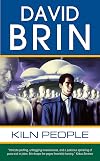
In this hard-boiled detective novel set in the future, Brin gleefully plays with the concepts of identity and immortality.
In this future, we have figured out how to clone short-lived, clay versions of ourselves, which can then go out and do the work while the originals enjoy lives of leisure. Since the copies are expendable, they are often assigned risky tasks or sent out to do chores or other drudgery. But since the copies possess all the memories and consciousness of the original, they show more are cursed with a knowledge of how brief their lives are, and their only fulfillment comes from making it back home to download their memories into the original, in that way achieving a kind of afterlife. Layered on top of all that is a mystery told from the points of view of a private investigator and several of his copies unraveling a conspiracy case culminating in a plot by a mad scientist to achieve godhood, and this becomes a very complicated plot indeed. Good thing Brin tells it with a sense of fun and humor. show less
In this future, we have figured out how to clone short-lived, clay versions of ourselves, which can then go out and do the work while the originals enjoy lives of leisure. Since the copies are expendable, they are often assigned risky tasks or sent out to do chores or other drudgery. But since the copies possess all the memories and consciousness of the original, they show more are cursed with a knowledge of how brief their lives are, and their only fulfillment comes from making it back home to download their memories into the original, in that way achieving a kind of afterlife. Layered on top of all that is a mystery told from the points of view of a private investigator and several of his copies unraveling a conspiracy case culminating in a plot by a mad scientist to achieve godhood, and this becomes a very complicated plot indeed. Good thing Brin tells it with a sense of fun and humor. show less
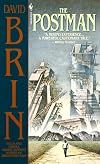
I really loved this book. It was a gripping tale of Gordon Krantz, an American survivor of the Doomwar that has left America (and presumably the rest of the world) in a state of near pre-industrialization disarray. After being robbed, Gordon stumbles upon a long-deceased postal service worker and takes over his uniform. Not long after he realizes that the people he encounters are treating him differently - almost with reverence - because of the uniform. They take it as a sign of hope for show more recovery, and after a while, Gordon stops disabusing them...
This was a wonderfully written book that asks big questions and provides answers that are refreshing and complicated. A great ride. show less
This was a wonderfully written book that asks big questions and provides answers that are refreshing and complicated. A great ride. show less
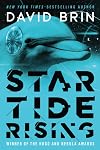
Rereading Startide Rising in David Brin’s new polished-up Open Road edition, I was struck by what a six-ring circus it is. Chapters seldom run more than five or ten pages, and almost every chapter takes us to a different theater of operations. It is a testament to Brin’s skill at this point in his career that he can give us so many characters and plotlines to follow without ever becoming muddled, as the first novel in the series undoubtedly did.
It is fair to say that he has done more show more with the idea of uplifting animals to sapience than any other writer. His hold on the concept is just about as firm as Terry Pratchett’s hold on the idea of a Discworld. Each of his dolphins and chimps stands out with their own personal quirks. His speculations on the connection between language and sapience are still worth a thought.
Forty years out, Startide holds up. show less
It is fair to say that he has done more show more with the idea of uplifting animals to sapience than any other writer. His hold on the concept is just about as firm as Terry Pratchett’s hold on the idea of a Discworld. Each of his dolphins and chimps stands out with their own personal quirks. His speculations on the connection between language and sapience are still worth a thought.
Forty years out, Startide holds up. show less

I remember reading Brin’s Uplift novels many years ago and quite enjoying them, although something about them never sat quite well with me. I no longer remember what that was, although I’ve never made an effort to seek out his novels since. But Glory Season was nominated for the Hugo Award, and is set on a world of cloned women, so it sounded like it might be worth a go.
So I was surprised to discover Brin is actually a pretty bad writer – sloppy, a tendency to stretch his story long show more past what the narrative can bear, with a handful of good ideas buried under a mass of banal detail. Characters change hair colour between paragraphs, a woman described as Chuychin (one of the cloned women clans) becomes half-Chuchyin a couple of sentences later. The writing is mostly clumsy, but occasionally manages an easy readability.
The world of Stratos was settled millennia before by a group who wanted to create a society that was safe for women. They needed men to “spark” their parthagenetic clones, but they limited the male libido to a single season of each year, and allowed them to also produce non-clone children (needed to replace the men, of course, but also daughters). The clones live in clans, each of which fulfils some sort of “niche”, or specialisation, in Stratoin society. Non-clone daughters, known as vars, hope to find niches and so get permission to start their own clans of clones.
Maia and Leie are twin vars, who leave their clan on their majority to seek their fortune. They sign aboard a pair of coal hauliers travelling down the coast. Maia stumbles across a conspiracy to supply a drug to men which triggers their libido out of season. From there, it spirals into a plot between two hardline factions, at the centre of which is a recently-arrived scout from the interstellar society the founders of Stratos left millennia before. Maia learns more about her world’s history, about the Game of Life, which is important to the men of the world, and about humanity on worlds other than Stratos.
In the best of hands, that’s a lot to cover, but Brin still manages to make it drag over 600 pages. At one point, Maia and her companions are trapped in a room with a hidden exit, and Brin spends over twenty pages explaining how they eventually discover the exit. For huge chunks of the book, Maia has no agency, and is little more than a witness to elements of the world-building Brin wants to show off. It makes for an aggravating read.
There are also many similarities between Glory Season and Mary Gentle’s Golden Witchbreed. The plots are vaguely similar, although Brin’s novel is told from the perspective of a native of the world, not a visitor – but the same lost past, a high tech war fought thousands of years earlier, and an ancient high tech citadel… Coincidence, or did Glory Season simply “borrow” elements of Golden Witchbreed‘s plot? Glory Season may have been nominated for the Hugo, but Golden Witchbreed is greatly superior (it was nominated for the BSFA, but lost to Tik-Tok).
Discovering Brin was a worse writer than I’d remember was not a surprise. Spotting the resemblances between Glory Season and Golden Witchbreed was. I’ve no idea if Brin had knowledge of Gentle’s novel. I would like to think not, but it was definitely published in the US. Even so, on its own merits alone, Glory Season is not very good: overly long, and its poor writing works against its few good ideas. show less
So I was surprised to discover Brin is actually a pretty bad writer – sloppy, a tendency to stretch his story long show more past what the narrative can bear, with a handful of good ideas buried under a mass of banal detail. Characters change hair colour between paragraphs, a woman described as Chuychin (one of the cloned women clans) becomes half-Chuchyin a couple of sentences later. The writing is mostly clumsy, but occasionally manages an easy readability.
The world of Stratos was settled millennia before by a group who wanted to create a society that was safe for women. They needed men to “spark” their parthagenetic clones, but they limited the male libido to a single season of each year, and allowed them to also produce non-clone children (needed to replace the men, of course, but also daughters). The clones live in clans, each of which fulfils some sort of “niche”, or specialisation, in Stratoin society. Non-clone daughters, known as vars, hope to find niches and so get permission to start their own clans of clones.
Maia and Leie are twin vars, who leave their clan on their majority to seek their fortune. They sign aboard a pair of coal hauliers travelling down the coast. Maia stumbles across a conspiracy to supply a drug to men which triggers their libido out of season. From there, it spirals into a plot between two hardline factions, at the centre of which is a recently-arrived scout from the interstellar society the founders of Stratos left millennia before. Maia learns more about her world’s history, about the Game of Life, which is important to the men of the world, and about humanity on worlds other than Stratos.
In the best of hands, that’s a lot to cover, but Brin still manages to make it drag over 600 pages. At one point, Maia and her companions are trapped in a room with a hidden exit, and Brin spends over twenty pages explaining how they eventually discover the exit. For huge chunks of the book, Maia has no agency, and is little more than a witness to elements of the world-building Brin wants to show off. It makes for an aggravating read.
There are also many similarities between Glory Season and Mary Gentle’s Golden Witchbreed. The plots are vaguely similar, although Brin’s novel is told from the perspective of a native of the world, not a visitor – but the same lost past, a high tech war fought thousands of years earlier, and an ancient high tech citadel… Coincidence, or did Glory Season simply “borrow” elements of Golden Witchbreed‘s plot? Glory Season may have been nominated for the Hugo, but Golden Witchbreed is greatly superior (it was nominated for the BSFA, but lost to Tik-Tok).
Discovering Brin was a worse writer than I’d remember was not a surprise. Spotting the resemblances between Glory Season and Golden Witchbreed was. I’ve no idea if Brin had knowledge of Gentle’s novel. I would like to think not, but it was definitely published in the US. Even so, on its own merits alone, Glory Season is not very good: overly long, and its poor writing works against its few good ideas. show less
Lists
Future Visions (1)
Nebula Award (1)
Wishlist (1)
Same Title (1)
First Novels (1)
Best Dystopias (2)
Favourite Books (3)
1980s (1)
Read These Too (1)
Science Fiction (1)
Awards


You May Also Like


Associated Authors
Statistics
- Works
- 153
- Also by
- 81
- Members
- 40,411
- Popularity
- #436
- Rating
- 3.8
- Reviews
- 626
- ISBNs
- 476
- Languages
- 17
- Favorited
- 162


