
Gregory Benford
Author of Timescape
About the Author
Gregory Benford, was born on January 30, 1941 in Mobile, Alabama. He is a physicist and science fiction writer who earned his Ph.D. from the University of California, San Diego, in 1967. He is a Woodrow Wilson Fellow and a consultant for NASA. Benford's first novel "Deeper than the Darkness" show more (1970), which was revised as "The Stars in Shroud" (1978), gave him notice as a serious Science Fiction writer. His most popular work is "Timescape" (1980), which was the winner of the Nebula and John W. Campbell Memorial Awards; it presented a hard physics approach to limited time travel. "In the Ocean of Night" (1977), "Across the Sea of Suns" (1984), "Great Sky River" (1987), "Tides of Light" (1989) and "Furious Gulf" (1994) were all a part of the Galactic Cluster Series. He has also written the juvenile novel "Jupiter Project" (1975), "Against Infinity" (1983) and the thriller "Artifact" (1985). He has been nominated for 12 Nebula Awards (winning for "Timescape" and for the novelette, "If the Stars are Gods"). Benford, writing alternately with Bruce Sterling, produces science fact articles for the Magazine of Fantasy and Science Fiction. They took over after the death of regular columnist Isaac Asimov. He has also co-edited theme anthologies with Martin H. Greenburg, which include "Hitler Victorious" (1986), "Nuclear War" (1988), "What Might Have Been, Volume 1: Alternate Empires" (1988), "Volume 2: Alternate Heroes" (1989) and "Volume 3: Alternate Wars." (Bowker Author Biography) show less
Image credit: By sarahfelicity.
Series
Works by Gregory Benford
Alternate Empires (What Might Have Been, Vol. 1) (1989) — Editor; Contributor — 237 copies, 2 reviews
The Wonderful Future That Never Was: Flying Cars, Mail Delivery by Parachute, and Other Predictions from the Past (Popular Mechanics) (2010) 191 copies, 8 reviews
What Might Have Been, Volumes 1 & 2: Alternate Empires, Alternate Heroes (1990) — Editor — 185 copies, 2 reviews
What Might Have Been, Volumes 3 & 4 : Alternate Wars, Alternate Americas (1992) — Editor — 71 copies
Popular Mechanics The Amazing Weapons That Never Were: Robots, Flying Tanks & Other Machines of War (2012) 32 copies
The Second Foundation Trilogy: Foundation's Fear, Foundation and Chaos, Foundation's Triumph (2004) 21 copies
Sucker Bait/Un-Man/to the Storming Gulf (Bart Science Fiction Tirplet, No 1) (1988) — Author — 21 copies
Matter's End [short fiction] 8 copies
Down the River Road 6 copies
Zoomers {short story} 6 copies
Anomalies [short fiction] 6 copies
A Worm in the Well {novelette} 6 copies
Dark Sanctuary 5 copies
Alphas [short fiction] 5 copies
What Might Have Been, Volumes I-IV 4 copies
The Voice {short story} 4 copies
A Desperate Calculus 4 copies
Dark Heaven 4 copies
The Man Who Wasn't There 3 copies
Proselytes [short fiction] 3 copies
And The Sea Like Mirrors 3 copies
Terrestri alla prova 3 copies
Reasons not to Publish [short story] 3 copies
West Wind Falling 3 copies
The Hydrogen Wall 3 copies
High Abyss 3 copies
A Cold Dry Cradle [short fiction] 3 copies
What Might Have Been 3 copies
The Clear Blue Seas of Luna 3 copies
Bridges to Science Fiction and Fantasy: Outstanding Essays from the J. Lloyd Eaton Conferences (2018) 3 copies
Brink 3 copies
The First Commandment 2 copies
Threads of Time [novella] 2 copies
Doing Alien 2 copies
A snark in the night (novella) 2 copies
Shakers of the Earth 2 copies
Inima Cometei 2 copies
Caveat Time Traveler [short story] 2 copies
Seti Library: Mars Mat 2 copies
Slices 2 copies
Stars in Shroud-Can: Grassy Knoll 2 copies
Slow Symphonies Of Mass And Time 2 copies
Star crossing 2 copies
Seti Library: Black Smoker 2 copies
Across the Sea of Suns, Part 2 2 copies
How It All Went [short story] 2 copies
Penumbra [short story] 2 copies
En El Océano De La Noche 1 copy
Vremenski pejzaž 1 copy
Natură moartă cu timp 1 copy
Early Bird 1 copy
I Could've Done Better 1 copy
What Did You Do Last Year? — Editor — 1 copy
Jupiter Project 1 1 copy
Across the Sea of Suns & Timescape & Jupiter Project & foundation's Fear & Cosm ( Set of 5 Books ) 1 copy
The Scarred Man 1 copy
Oltre Plutone 1 copy
The Best of Greg Benford 1 copy
Short Fiction Collection 1 copy
On the Edge (short story) 1 copy
Mammoth Dawn 1 copy
Soon Comes Night 1 copy
Newton Sleep [novella] 1 copy
Shadows of the Lost 1 copy
Twenty-Two Centimeters 1 copy
The Semisent [short story] 1 copy
The Sigma Structure Symphony 1 copy
Warstory 1 copy
Goldilocks Problem 1 copy
We Could Do More 1 copy
Shall We Take A Little Walk? 1 copy
Station Spaces 1 copy
Pebble Among the Stars 1 copy
Paradise Afternoon 1 copy
Seti Library: Orbitfall 1 copy
The Man Who Sold the Stars 1 copy
Blood's a Rover 1 copy
The Fourth Dimension 1 copy
Beyond Pluto 1 copy
Vortex {short story} 1 copy
The Pain Gun 1 copy
Leaving Night [short story] 1 copy
A Life with a Semisent 1 copy
Sleepstory (Novelette) 1 copy
Cadenza (short story) 1 copy
The Bigger One (short story) 1 copy
Immortal Night (short story) 1 copy
Time Guide (short story) 1 copy
Stand-In (short story) 1 copy
Knowing Her (short story) 1 copy
Side Effect (short story) 1 copy
Touches (short story) 1 copy
Leviathan (short story) 1 copy
Associated Works
Seeing Further: The Story of Science, Discovery, and the Genius of the Royal Society (2010) — Contributor — 1,158 copies, 19 reviews
What Is Your Dangerous Idea? Today's Leading Thinkers on the Unthinkable (2007) — Contributor — 674 copies, 8 reviews
The Best Alternate History Stories of the 20th Century (2001) — Contributor — 618 copies, 10 reviews
The Year's Best Science Fiction: Twentieth Annual Collection (2003) — Contributor — 526 copies, 1 review
The Year's Best Science Fiction: Twenty-Fifth Annual Collection (2008) — Contributor — 511 copies, 3 reviews
The Year's Best Science Fiction: Fifteenth Annual Collection (1998) — Contributor — 469 copies, 2 reviews
The Year's Best Science Fiction: Twenty-Fourth Annual Collection (2007) — Contributor — 458 copies, 6 reviews
The Year's Best Science Fiction: Ninth Annual Collection (1992) — Contributor — 457 copies, 4 reviews
The Year's Best Science Fiction: Fourteenth Annual Collection (1997) — Contributor — 447 copies, 2 reviews
The Ascent of Wonder: The Evolution of Hard SF (1994) — Introduction; Contributor — 438 copies, 6 reviews
The Mammoth Book of Extreme Science Fiction: New Generation Far-Future SF (2006) — Contributor — 351 copies, 7 reviews
The Norton Book of Science Fiction: North American Science Fiction, 1960-1990 (1993) — Contributor — 346 copies, 6 reviews
The Year's Best Science Fiction: Seventh Annual Collection (1990) — Contributor — 311 copies, 2 reviews
Lord of the Fantastic: Stories in Honor of Roger Zelazny (1998) — Contributor — 176 copies, 1 review
The Way It Wasn't : Great Science Fiction Stories of Alternate History (1996) — Contributor — 164 copies, 4 reviews
The Year's Best Science Fiction: Thirty-Fourth Annual Collection (2017) — Contributor — 148 copies, 4 reviews
The Science Fiction Hall of Fame, Volume Four: Nebula Winners 1970-1974 (1986) — Contributor — 133 copies, 1 review
Loosed upon the World: The Saga Anthology of Climate Fiction (2015) — Contributor — 132 copies, 4 reviews
Gateways: A Feast of Great New Science Fiction Honoring Grand Master Frederik Pohl (2010) — Contributor — 113 copies, 2 reviews
Carbide Tipped Pens: Seventeen Tales of Hard Science Fiction (2016) — Contributor — 109 copies, 6 reviews
Nebula Awards 31: SFWA's Choices For The Best Science Fiction And Fantasy Of The Year (Nebula Awards Showcase) (1997) — Contributor — 97 copies
Best Science Fiction Stories of the Year Eighth Annual Collection (1979) — Contributor — 66 copies, 2 reviews
Nebula Awards 29: SFWA's Choices For The Best Science Fiction And Fantasy Of The Year (Nebula Awards Showcase) (1995) — Contributor — 57 copies
Great Science Fiction Stories By the World's Greatest Scientists (1985) — Author — 56 copies, 2 reviews
Nebula Awards 22: Sfwa's Choices for the Best Science Fiction and Fantasy 1986 (Nebula Awards Showcase) (1988) — Contributor — 53 copies, 1 review
Nebula Awards 21: Sfwa's Choices for the Best Science Fiction and Fantasy, 1985 (Nebula Awards Showcase) (1986) — Contributor — 44 copies, 2 reviews
Fourth Planet from the Sun: Tales of Mars from the Magazine of Fantasy and Science Fiction (2005) — Contributor — 44 copies, 4 reviews
Visions of Tomorrow: Science Fiction Predictions that Came True (2010) — Contributor — 40 copies, 1 review
Light Years and Dark: Science Fiction and Fantasy of and for Our Time (1984) — Contributor — 37 copies
Life Beyond Us: An Original Anthology of SF Stories and Science Essays (2023) — Contributor — 36 copies, 1 review
Analog Science Fiction/Science Fact: Vol. XCVIII, No. 6 (June 1978) (1978) — Contributor — 28 copies
L. Ron Hubbard Presents Writers of the Future, Volume 40 (2024) — Contributor — 27 copies, 9 reviews
Analog Science Fiction/Science Fact: Vol. XCV, No. 9 (September 1975) (1975) — Contributor — 24 copies, 1 review
Spaceships and Spells: A Collection of New Fantasy and Science-fiction Stories (1987) — Contributor — 24 copies
The Magazine of Fantasy and Science Fiction June 1995, Vol. 88, No. 6 (1995) — Science columnist — 22 copies
The Magazine of Fantasy and Science Fiction September 2000, Vol. 99, No. 3 (2000) — Contributor — 19 copies
The Magazine of Fantasy and Science Fiction May 1995, Vol. 88, No. 5 (1995) — Contributor — 15 copies
Isaac Asimov's Science Fiction Magazine: Vol. 13, No. 4 [April 1989] (1989) — Contributor — 15 copies
Extreme Planets: A Science Fiction Anthology of Alien Worlds (Chaosium fiction) (2014) — Contributor — 15 copies, 1 review
Alien Worlds : three novellas of science fiction by award winning authors (1976) — Contributor — 14 copies
Analog Science Fiction and Fact: Vol. CXXII, No. 7 & 8 (July/August 2002) (2002) — Contributor — 14 copies, 1 review
The Magazine of Fantasy and Science Fiction April 1992, Vol. 82, No. 4 (1992) — Columnist — 13 copies
Strangest of All — Contributor — 13 copies
The Magazine of Fantasy and Science Fiction, 53. Die Trägheit des Auges. (1979) — Contributor, some editions — 12 copies
Isaac Asimov's Science Fiction Magazine: Vol. 15, No. 14 [December 1991] (1991) — Contributor — 11 copies
Isaac Asimov's Science Fiction Magazine: Vol. 6, No. 2 [February 1982] (1982) — Contributor — 11 copies
The Magazine of Fantasy and Science Fiction October 1989, Vol. 77, No. 4 (1989) — Author — 11 copies
The Magazine of Fantasy and Science Fiction August 1998, Vol. 95, No. 2 (1998) — Contributor — 11 copies, 1 review
Worlds of If Science Fiction 153, March/April 1971 (Vol. 20, No. 10) (1971) — Contributor — 9 copies
Heyne Science Fiction Jahresband 1991. 8 Romane und Erzählungen prominenter SF- Autoren. (1993) — Contributor — 8 copies
Isaac Asimov's Science Fiction Magazine: Vol. 15, No. 11 [October 1991] (1991) — Contributor — 8 copies
Tagged
Common Knowledge
- Legal name
- Benford, Gregory Albert
- Other names
- Blake, Sterling
Albert, Lincoln - Birthdate
- 1941-01-30
- Gender
- male
- Education
- University of California, San Diego (PhD|1967)
University of Oklahoma (BS|1963) - Occupations
- physicist
university professor
novelist
screenwriter - Organizations
- Science Fiction and Fantasy Writers of America
- Awards and honors
- Guest of Honour, Eastercon, UK (1985)
Woodrow Wilson Fellowship
Visiting Fellow (Cambridge University)
Lord Foundation Award (for contributions to science and the public comprehension of it)
United Nations Medal in Literature (1990)
Jack Williamson Lectureship (2005) - Relationships
- Benford, Jim (brother)
- Nationality
- USA
- Birthplace
- Mobile, Alabama, USA
- Places of residence
- California, USA
- Associated Place (for map)
- USA
Members
Discussions
Millitary SF with alien invaders and mecha suits in Name that Book (December 2018)
Sci-fi thriller with artifact (black cube) on cover in Name that Book (October 2007)
Reviews
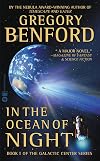
1.5 stars rounded down to 1.
First, a bit of backstory. I actually started this series, not knowing it was a series, back in the 80s. I'd picked up Across the Sea of Suns (book #2) through a sci-fi book club as a teen. Upon reading it, I realized that it wasn't a standalone but a sequel. However, there was enough backstory that it didn't matter. But then the ending was left wide open, so I knew that it was, in fact, a series. I was not amused and subsequently forgot about the series for show more decades.
By chance, while perusing through one of the local library's book sales, I came across Sailing Bright Eternity and discovered that it was the last book in a six-book saga. I bought it, and it has sat on my nightstand for years hence. So when I spotted this book last summer, I knew that I should go back and read the whole series start-to-finish. Besides, I really liked the titles of the books.
I might be regretting that decision.
This book was written from 1972-1977 and parts were published in If magazine over that time. The book starts in 1999 and runs through 2019 (reprints bumped those dates back 20 years). There is so much 70s dreck hanging over this story that it's downright suffocating. Everything that was ugly about the 70s is concentrated and perpetuated for forty years! The Clean Air Act never accomplished anything, people passively gave up their cars for mass transit because Detroit and Tokyo couldn't innovate, Moore's Law failed to materialize, and the US never snapped out of its economic funk and continued to slowly slide into turpitude. It's enough to make me want to thank Reagan for his "Morning in America" pep rally speeches just to avoid this rubbish.
What arises out of this miasma is a new religious movement dubbed The New Sons. As far as I can tell, it's an amalgam of hippies, Eastern philosophy, Old Testament Christianity, and mysticism that infects the country and the world. Traditional religions are powerless before it and are soon negotiating for inclusion. It comes across as wholly implausible and schlocky. Maybe if I'd been trapped in Haight-Ashbury and my girlfriend was seduced by a bunch of hippies, I'd believe it. In essence, this is what happens to the protagonist, Nigel Walmsley.
Nigel is an insufferable, self-absorbed, patronizing jerk. A certain comment he made regarding a potential asteroid impact in India makes me think he might even be racist. He thinks he's right about everything and disobeys orders because he's right, damnit! What sucks is that too often he is right. But who wants to give that guy the satisfaction? He's a bit of a hypocrite: After witnessing a New Sons' bonfire ritual, he calls it a "license for public rutting" then goes home to have a three-way. Said three-way is Benford's rather clumsy way of informing the reader about Nigel's polyamorous relationship. What's worse is that most of the other characters in the novel are pathetic: power mad bureaucrats and passive aggressive religious zealots. In his relationship, Alexandria seems about ready to pass away from ennui (yes, she's ill, but Benford doesn't take advantage of her lucid moments to develop her character) while Shirley is always angry at Nigel for something. Too much of this book—almost a third—is spent detailing this relationship. While there's some hope for him by the end of the novel, after reading his stream of consciousness babble, I can't help but think he's just going to be a different flavor of insufferable, self-absorbed, patronizing jerk going forward.
So is there anything good here? Yeah, sure. Nigel's encounters with the aliens and anything involving Dr. Ichiro and Nikka. There's the "big idea" that attempts to answer the Fermi Paradox. But there isn't enough of this to counter the swamp of bad I had to slog through.
Now I probably shouldn't be so critical of a book that was written over 40 years ago and was one of Benford's first works, but this was a book that was nominated for both the Nebula and Locus awards. Sure, I'll give him points for the concept, but he lacked vision. How is there a space program if the economic malaise of the 70s never ends and only worsens? He was a physicist at a prominent university; how did he not hear about the advances underway with microelectronics? I gotta use a fax machine on the Moon 50 years after we set foot on it? Maybe we can excuse him for not foreseeing the innovations that would drive the last decades of the 20th century(I'll even forgive him for including Bigfoot—it was the 70s after all) , but not his characters' behavior. Benford writes this damnably sexist scene where Alexandria's doctor won't tell her his prognosis of her medical condition until after Nigel arrives from work, and even then, he directs his conversation to Nigel as if Alexandria is no more than a sick pet. She was an executive at American Airlines negotiating a deal with a Brazilian company! How can Benford do that to her?
Maybe, this book probably would've been easier to deal with reading it right after it was finished, trapped in the 70s, but by 1980 this book's days were numbered. show less
First, a bit of backstory. I actually started this series, not knowing it was a series, back in the 80s. I'd picked up Across the Sea of Suns (book #2) through a sci-fi book club as a teen. Upon reading it, I realized that it wasn't a standalone but a sequel. However, there was enough backstory that it didn't matter. But then the ending was left wide open, so I knew that it was, in fact, a series. I was not amused and subsequently forgot about the series for show more decades.
By chance, while perusing through one of the local library's book sales, I came across Sailing Bright Eternity and discovered that it was the last book in a six-book saga. I bought it, and it has sat on my nightstand for years hence. So when I spotted this book last summer, I knew that I should go back and read the whole series start-to-finish. Besides, I really liked the titles of the books.
I might be regretting that decision.
This book was written from 1972-1977 and parts were published in If magazine over that time. The book starts in 1999 and runs through 2019 (reprints bumped those dates back 20 years). There is so much 70s dreck hanging over this story that it's downright suffocating. Everything that was ugly about the 70s is concentrated and perpetuated for forty years! The Clean Air Act never accomplished anything, people passively gave up their cars for mass transit because Detroit and Tokyo couldn't innovate, Moore's Law failed to materialize, and the US never snapped out of its economic funk and continued to slowly slide into turpitude. It's enough to make me want to thank Reagan for his "Morning in America" pep rally speeches just to avoid this rubbish.
What arises out of this miasma is a new religious movement dubbed The New Sons. As far as I can tell, it's an amalgam of hippies, Eastern philosophy, Old Testament Christianity, and mysticism that infects the country and the world. Traditional religions are powerless before it and are soon negotiating for inclusion. It comes across as wholly implausible and schlocky. Maybe if I'd been trapped in Haight-Ashbury and my girlfriend was seduced by a bunch of hippies, I'd believe it. In essence, this is what happens to the protagonist, Nigel Walmsley.
Nigel is an insufferable, self-absorbed, patronizing jerk. A certain comment he made regarding a potential asteroid impact in India makes me think he might even be racist. He thinks he's right about everything and disobeys orders because he's right, damnit! What sucks is that too often he is right. But who wants to give that guy the satisfaction? He's a bit of a hypocrite: After witnessing a New Sons' bonfire ritual, he calls it a "license for public rutting" then goes home to have a three-way. Said three-way is Benford's rather clumsy way of informing the reader about Nigel's polyamorous relationship. What's worse is that most of the other characters in the novel are pathetic: power mad bureaucrats and passive aggressive religious zealots. In his relationship, Alexandria seems about ready to pass away from ennui (yes, she's ill, but Benford doesn't take advantage of her lucid moments to develop her character) while Shirley is always angry at Nigel for something. Too much of this book—almost a third—is spent detailing this relationship. While there's some hope for him by the end of the novel, after reading his stream of consciousness babble, I can't help but think he's just going to be a different flavor of insufferable, self-absorbed, patronizing jerk going forward.
So is there anything good here? Yeah, sure. Nigel's encounters with the aliens and anything involving Dr. Ichiro and Nikka. There's the "big idea" that attempts to answer the Fermi Paradox. But there isn't enough of this to counter the swamp of bad I had to slog through.
Now I probably shouldn't be so critical of a book that was written over 40 years ago and was one of Benford's first works, but this was a book that was nominated for both the Nebula and Locus awards. Sure, I'll give him points for the concept, but he lacked vision. How is there a space program if the economic malaise of the 70s never ends and only worsens? He was a physicist at a prominent university; how did he not hear about the advances underway with microelectronics? I gotta use a fax machine on the Moon 50 years after we set foot on it? Maybe we can excuse him for not foreseeing the innovations that would drive the last decades of the 20th century
Maybe, this book probably would've been easier to deal with reading it right after it was finished, trapped in the 70s, but by 1980 this book's days were numbered. show less

Ick.
It's not poorly written and has lots of interesting bits and pieces, but the book of the whole has no focus.
Over and over it sets up a typical hard sf setting and problem, then resolves it with very soft sci-fi hand waving. Neither fish or fowl, it's just a lumpy dogs breakfast.
The climax is an honest to god (pun intended) deus ex machina that left me wondering if I should be smoking the stuff the main characters seem to enjoy so much.
It's book one of a series, at least I can give up show more on the lot without spending any more time. show less
It's not poorly written and has lots of interesting bits and pieces, but the book of the whole has no focus.
Over and over it sets up a typical hard sf setting and problem, then resolves it with very soft sci-fi hand waving. Neither fish or fowl, it's just a lumpy dogs breakfast.
The climax is an honest to god (pun intended) deus ex machina that left me wondering if I should be smoking the stuff the main characters seem to enjoy so much.
It's book one of a series, at least I can give up show more on the lot without spending any more time. show less

This science-fiction classic is lauded for marrying hard physics-based sci fi with strong character stories, but the characters were precisely the reason I didn’t like the book. The plot is intriguing: in a future (actually 1998) plagued by environmental catastrophes, a couple of physicists hatch a plan to send a message back in time, hoping that the scientists of the past can avert the catastrophe. But I couldn’t get into the story because all of the characters were unlikeable, show more stereotyped or just plain flat.
For example, in an early chapter, the wife of one of the physicists is approached by a squatter asking for some milk for her child. She refuses, saying she only has enough for her family. Okay, I can understand that reaction; food supplies are obviously running short. But then, a few days later, she hosts a lavish dinner party for her friends, where she serves three desserts! This brought to mind what I most dislike about humans and what is really at the root of a lot of our problems, including climate change: that we can rationalize that avoiding our own minor discomforts and deprivations is more important than helping to meet the basic needs of a fellow human being. I really couldn’t like any of the characters after that scene, no matter how hard they tried to save the world. show less
For example, in an early chapter, the wife of one of the physicists is approached by a squatter asking for some milk for her child. She refuses, saying she only has enough for her family. Okay, I can understand that reaction; food supplies are obviously running short. But then, a few days later, she hosts a lavish dinner party for her friends, where she serves three desserts! This brought to mind what I most dislike about humans and what is really at the root of a lot of our problems, including climate change: that we can rationalize that avoiding our own minor discomforts and deprivations is more important than helping to meet the basic needs of a fellow human being. I really couldn’t like any of the characters after that scene, no matter how hard they tried to save the world. show less

La historia transcurre en dos frentes:
1998. La Tierra está sometida a un desastre ecológico sin precedentes, los océanos están siendo arrasados por diferentes tipos de contaminación provenientes de fertilizantes, lo que ha provocado toda una serie de reacciones en todos los niveles. En Cambridge reside John Renfrew, un físico que está trabajando en un proyecto que podría salvar el planteta: mediante taquiones (partículas que viajan más rápido que la luz) se pueden mandar mensajes show more al pasado avisando de los peligros futuros y así darles solución y cambiar la historia. Además de Renfrew, los capítulos de esta parte de la novela tienen como protagonistas a Marjorie, la esposa de John; a Peterson, un miembro del Consejo Mundial de Energía; y Markham, matemático que trabaja con Renfrew.
1962. La Jolla, California. Gordon Bernstein trabaja en un experimento realizando diversas mediciones, cuando detecta un ruido residual. Lo que aparentemente parece un simple ruido, resulta ser un mensaje sin sentido, del cuál no se sabe la procedencia. Bernstein es el protagonista absoluto de estos capítulos, que tienen como base de la trama su experimento y los problemas a los que se ve abocado en su universidad, donde las relaciones con el resto de colegas y el publicar artículos, lo son todo para un joven profesor. La relación con su pareja, Penny, profesora de literatura, completa esta parte de la historia.
'Cronopaisaje' fue una novela que obtuvo cuatro de los más prestigiosos premios de la ciencia ficción: el Hugo, el Nebula, el Premio de la Asociación Británica y el John W. Campbell. Pero esto no siempre es síntoma para encontrarse una gran novela. Quien espere una historia con acción trepidante, no la va a encontrar aquí. Todo transcurre pausadamente, siendo la base principal del libro las relaciones de los personajes. La parte científica está bien resuelta, sobre todo las paradojas temporales, que Benford explica de manera correcta, y problemas como ¿qué pasaría si un mensaje enviado al pasado provocase la muerte de mi abuelo? ¿dejaría de existir? ¿y entonces el mensaje nunca se hubiese enviado? están bien resueltos. Estas explicaciones, que intentan acercarse a la ciencia desde un punto de vista realista, dan verisimilitud a la novela.
El libro no me ha gustado excesivamente. Quise leerlo pensando que me encontraría una buena historia de ciencia ficción, pero lo cierto es que bien podría pasar por una historia costumbrista. Pese a no aburrir, carece de interés en algunas partes, y no deja imágenes memorables. En este sentido, me quedo únicamente con la parte de Bernstein y Penny. show less
1998. La Tierra está sometida a un desastre ecológico sin precedentes, los océanos están siendo arrasados por diferentes tipos de contaminación provenientes de fertilizantes, lo que ha provocado toda una serie de reacciones en todos los niveles. En Cambridge reside John Renfrew, un físico que está trabajando en un proyecto que podría salvar el planteta: mediante taquiones (partículas que viajan más rápido que la luz) se pueden mandar mensajes show more al pasado avisando de los peligros futuros y así darles solución y cambiar la historia. Además de Renfrew, los capítulos de esta parte de la novela tienen como protagonistas a Marjorie, la esposa de John; a Peterson, un miembro del Consejo Mundial de Energía; y Markham, matemático que trabaja con Renfrew.
1962. La Jolla, California. Gordon Bernstein trabaja en un experimento realizando diversas mediciones, cuando detecta un ruido residual. Lo que aparentemente parece un simple ruido, resulta ser un mensaje sin sentido, del cuál no se sabe la procedencia. Bernstein es el protagonista absoluto de estos capítulos, que tienen como base de la trama su experimento y los problemas a los que se ve abocado en su universidad, donde las relaciones con el resto de colegas y el publicar artículos, lo son todo para un joven profesor. La relación con su pareja, Penny, profesora de literatura, completa esta parte de la historia.
'Cronopaisaje' fue una novela que obtuvo cuatro de los más prestigiosos premios de la ciencia ficción: el Hugo, el Nebula, el Premio de la Asociación Británica y el John W. Campbell. Pero esto no siempre es síntoma para encontrarse una gran novela. Quien espere una historia con acción trepidante, no la va a encontrar aquí. Todo transcurre pausadamente, siendo la base principal del libro las relaciones de los personajes. La parte científica está bien resuelta, sobre todo las paradojas temporales, que Benford explica de manera correcta, y problemas como ¿qué pasaría si un mensaje enviado al pasado provocase la muerte de mi abuelo? ¿dejaría de existir? ¿y entonces el mensaje nunca se hubiese enviado? están bien resueltos. Estas explicaciones, que intentan acercarse a la ciencia desde un punto de vista realista, dan verisimilitud a la novela.
El libro no me ha gustado excesivamente. Quise leerlo pensando que me encontraría una buena historia de ciencia ficción, pero lo cierto es que bien podría pasar por una historia costumbrista. Pese a no aburrir, carece de interés en algunas partes, y no deja imágenes memorables. En este sentido, me quedo únicamente con la parte de Bernstein y Penny. show less
Lists
Awards


You May Also Like


Associated Authors
Statistics
- Works
- 239
- Also by
- 233
- Members
- 22,580
- Popularity
- #938
- Rating
- 3.6
- Reviews
- 333
- ISBNs
- 494
- Languages
- 16
- Favorited
- 28