
Arthur C. Clarke (1917–2008)
Author of 2001: A Space Odyssey
About the Author
Arthur C. Clarke was born in Minehead, Somerset, England, on December 16, 1917. During World War II, he served as a radar specialist in the RAF. His first published piece of fiction was Rescue Party and appeared in Astounding Science, May 1946. He graduated from King's College in London with honors show more in physics and mathematics, and worked in scientific research before turning his attention to writing fiction. His first book, Prelude to Space, was published in 1951. He is best known for his book 2001: A Space Odyssey, which was later turned into a highly successful and controversial film under the direction of Stanley Kubrick. His other works include Childhood's End, Rendezvous with Rama, The Garden of Rama, The Snows of Olympus, 2010: A Space Odyssey II, 2062: Odyssey III, and 3001: The Final Odyssey. During his lifetime, he received at least three Hugo Awards and two Nebula Awards. He died of heart failure on March 19, 2008 at the age of 90. (Bowker Author Biography) show less
Series
Works by Arthur C. Clarke
Prelude to Mars : An Omnibus Containing the Complete Novels Prelude to Space and The Sands of Mars and Sixteen Short Stories (1965) 312 copies, 3 reviews
The Science Fiction Hall of Fame, Volume Three: Nebula Winners 1965-1969 (1982) — Editor — 248 copies, 1 review
Arthur C. Clarke's July 20, 2019: Life in the 21st Century (Omni Book) (1986) — Editor; Selection, Introduction & Epilogue — 196 copies, 5 reviews
Arthur C. Clarke - 2001: A Space Odyssey, The City and the Stars, The Deep Range, A Fall of Moondust, Rendezvous with Rama (1985) 173 copies
Astounding Days: A Science Fictional Autobiography (A Bantam spectra book) (1989) 171 copies, 2 reviews
A Space Odyssey: The Complete Set (2001: A Space Odyssey; 2010: Odyssey Two; 2061: Odyssey Three; 3001: The Final Odyssey) (2000) 108 copies
From the Ocean, from the Stars; An Omnibus Containing the Complete Novels: The Deep Range and the City and the Stars, and Twenty-Four Short Stories. (1962) 86 copies
From Narnia to a Space Odyssey : The War of Ideas Between Arthur C. Clarke and C.S. Lewis (2003) 70 copies, 4 reviews
The Lion of Comarre and Other Stories: The Collected Stories of Arthur C. Clarke, 1937-1949 (2001) — Author — 32 copies, 2 reviews
Before Eden [short fiction] 18 copies
Future Histories (Award-winning Science Fiction Writers Predict Twenty Tomorrows for Communications) (1997) 14 copies
Das große Arthur C. Clarke Lesebuch. Die sieben Sonnen - Die letzte Generation - Im Mondstaub versunken. (1986) 12 copies
Stanley Kubrick Collection — Writer — 12 copies
Selected Works of Arthur C. Clarke: The Deep Range, The Trigger, The Ghost from the Grand Banks, Richter IO (2016) 12 copies
The Songs of Distant Earth and Other Stories: The Collected Stories of Arthur C. Clarke, 1956-1961 (2001) 11 copies
History Lesson 11 copies
Bibliothek der besten SF- Stories. Die fünfziger Jahre I. ( 1950 - 1954 ). (SF- Spezial). (1981) — Contributor — 8 copies
The Other Tiger 6 copies
The Hammer of God [short fiction] 6 copies
Quarantine 5 copies
The Sentinel: 10 Short Stories 4 copies
Retreat from Earth 4 copies
Terra Imperial - 1 4 copies
Vikram Sarabhai memorial lectures 4 copies
The Telephone's first century--and beyond: Essays on the occasion of the 100th anniversary of telephone communication (1977) 4 copies
Clarke Arthur C. : Nine Billion Names of God (Signet) by Arthur Charles Clarke (1987-03-06) 3 copies
Terrestri alla prova 3 copies
The Arthur C. Clarke Collection: 2001 A Space Odyssey/Transit of Earth/Fountains of Paradise/Childhood's End (1995) 3 copies
Der Stern: Erzählung 3 copies
Alter Your Life 3 copies
Whacky 3 copies
Arthur C. Clarke's Visions of Tomorrow: Childhood's End; the Fountains of Paradise; Rendezvous with Rama (1974) 2 copies
Improving the Neighbourhood 2 copies
The Wire Continuum [short story] 2 copies
On Golden Seas (short story) 2 copies
The Castaway 2 copies
Radio Times 25th September 1993 2 copies
Box Essencial Arthur C. Clarke 2 copies
Interplanetary Flight Astronautics 2 copies
O Jardim de Rama (Rama, #3) 2 copies
From the Ocean, from the Stars 2 copies
Terra Imperial - 2 2 copies
Pesme daleke Zemlje 2 copies
Pad mesečeve prašine 2 copies
Cuna 2 copies
År 2001 2 copies
A Master's Collection: 2001: A Space Odyssey; Islands in the Sky; The Nine Billion Names of God; The Other Side of the Sky; The Sands of Mars (1979) 2 copies
Talks with the Masters: Conversations with Isaac Asimov, Ray Bradbury, Arthur C. Clarke, and James Gunn (2018) 2 copies
Wyspa delfinów 2 copies
Reverie 2 copies
My Four Feet on the Ground [essay] 2 copies
When The Twerms Came 2 copies
The Collected Stories of Arthur C. Clarke 1937 1999: The Best of Arthur C. Clarke, 1937-1999 2 copies
Great Cradle 1 copy
SFX No. 24 April 1997 1 copy
Die Vakuum-Atmer: Erzählung 1 copy
Science-fictionverhalen 5 1 copy
Arthur C. Clarke's Mysterious World - 2-DVD Set ( Mysterious World ) [ NON-USA FORMAT, PAL, Reg.2 Import - United Kingdom ] (2008) 1 copy
Arthur C Clarke trio: The Foundations of Paradise; Prelude to Space & Reach for Tomorrow (1982) 1 copy
Odisea dos , 2010 : 1 copy
Photography May 1970 1 copy
Tales of Ten Worlds 1 copy
A Exploração do Espaço 1 copy
Det tavse århundrede 1 copy
Mânia lui Dumnezeu 1 copy
Leul din Comarre 1 copy
The Exploration of Space 1 copy
Rendez-Vous com Rama Livro 1 1 copy
Terra Imperial I Livro 2 1 copy
Otto racconti 1 copy
Terra Imperial II Livro 2 1 copy
Matica Zemlja 1 copy
Ka spuštanju noći 1 copy
A Somda do Tempo 1 copy
Argosy February 1959 1 copy
The Star 1 copy
A Ilha dos Golfinhos 1 copy
Kolevka 1 copy
Duboko poniranje 1 copy
Os Náufragos de Selene 1 copy
S druge strane neba 1 copy
No Morning After 1 copy
2001 Uzay Macerası 1 copy
En las profundidades 1 copy
Regreso a titán 1 copy
El matrtillo de Dios 1 copy
Cantos de la lejana tierra 1 copy
Challenge of The Sea, The 1 copy
O Berço dos Super Humanos 1 copy
Beyond Jupiter 1 copy
Biblioteca de selecciones del Reader's Digest. Cuaderno prohibido. Madame Curie. El invierno de nuestra amargura. La nave que se hundió en la luna. — Contributor — 1 copy
NAUFRAGÉS DE LA LUNE 1 copy
A távoli Föld dalai 1 copy
Regreso a Titan 1 copy
The garden of Rama 1 copy
Chants de la Terre Lointaine 1 copy
O Fim da Infância 1 copy
O Outro Lado do Céu 1 copy
La Centinela 1 copy
Stub for "The Deep Range" 1 copy
Furdur Veraldar 1 copy
Cánticos de la lejana tierra 1 copy
Isten kilencmilliárd éve 1 copy
La exploración del espacio 1 copy
Лунная пыль [Повесть] 1 copy
The Final Odfysey 1 copy
Delfīnu sala : [stāsts] 1 copy
Zkazky z planety Země 1 copy
Cánticos en la lejana tierra 1 copy
Venus prime 1 copy
Béklyó 1 copy
Childhood’s End 1 copy
El ojo del tiempo 1 copy
Il volto del futuro 1 copy
Le Guide del tramonto 1 copy
Vento solar, O 1 copy
A mentés 1 copy
Castaway 1 copy
Τά μυστήρια τοῦ κόσμου 1 copy
Superiority 1 copy
Exile of the eons 1 copy
The Songs of Distant Earth 1 copy
Avijet zagonetnih sila 1 copy
Vesmírná Odysea 1 copy
2001: odisséia espacial, baseado no roteiro cinematográfico de Stanley Kubrick e Arthur C. Clarke 1 copy
As areias de Marte 1 copy
Robot rivista 1 copy
Travel by Wire 1 copy
O outro lado do céu 1 copy
Before Eden 1 copy
A Cidade e as Estrelas 1 copy
The Mountain and the Stars 1 copy
Double Pack films: 2001: A Space Odyssey [and] No Reservations — Author — 1 copy
Childhood’s End 1 copy
Isole cosmiche 1 copy
A gyermekkor vége 1 copy
Földfény 1 copy
Mélység 1 copy
Odyssey 2: 2010 1 copy
Odyssey 1: 2001 1 copy
Collected Short Fiction 1 copy
The Stroke of the Sun 1 copy
Expedição à Terra 1 copy
anti crepúsculo 1 copy
Expectition To Earth 1 copy
O homem e o espaço 1 copy
I guardiani del mare 1 copy
Dinossauros! 1 copy
Satyajit and Stanley [essay] 1 copy
Spaceguard [essay] 1 copy
The Joy of Maths [essay] 1 copy
Message to Mars [essay] 1 copy
Encyclical [essay] 1 copy
Good-bye, Isaac [essay] 1 copy
Minehead Made Me [essay] 1 copy
Gene Roddenberry {essay} 1 copy
A Choice of Futures [essay] 1 copy
Marconi Symposium [essay] 1 copy
The Birth of HAL [essay] 1 copy
The Century Syndrome {essay} 1 copy
Credo [essay] 1 copy
Life in the Fax Lane [essay] 1 copy
Back to 2001 {essay} 1 copy
Writing to Sell {essay} 1 copy
Willy and Chesley {essay} 1 copy
The Sea of Sinbad [essay] 1 copy
Bucky [essay] 1 copy
Satellites and Saris [essay] 1 copy
A Time Odyssey Trilogy Consisting of Time's Eye, Sunstorm, and First Born (A Time Odyssey) (2007) 1 copy
The Snows of Olympus [essay] 1 copy
Toilets of the Gods [essay] 1 copy
Man and Sea 1 copy
Science and Society [essay] 1 copy
The Gay Warlords [essay] 1 copy
Eyes on the Universe [essay] 1 copy
Of Mind and Matter [essay] 1 copy
Beyond Babel {essay} 1 copy
God and Einstein [essay] 1 copy
Possible, That's All [essay] 1 copy
When the Aliens Come [essay] 1 copy
Next -- the Planets! [essay] 1 copy
Radio Universe [essay] 1 copy
Man in the Moon {essay} 1 copy
Things in the Sky [essay] 1 copy
Question Time {essay} 1 copy
Which Way Is Up? {essay} 1 copy
Oh for the wings [essay] 1 copy
The Sun [essay] 1 copy
Where's Everybody {essay} 1 copy
The Star of the Magi [essay] 1 copy
Meteors [essay] 1 copy
Vacation in Vacuum {essay} 1 copy
Playboy Interview 1 copy
Rockets [essay] 1 copy
Kalinga Prize Speech [essay] 1 copy
The Uses of the Moon {essay} 1 copy
Winding Up {essay} 1 copy
The Great Reef [essay] 1 copy
The First Wreck [essay] 1 copy
Capricorn to Cancer [essay] 1 copy
Eclipse [essay] 1 copy
Voyages to the Moon {essay} 1 copy
Undersea Holiday [essay] 1 copy
Flying Saucers [essay] 1 copy
Science Fiction Review Monthly Magazine, Review of Imperial Earth by Baird Searls, 2/76, p. 3 1 copy
The loophole 1 copy
Earthlight [novella] 1 copy
Rama Bahçesi 1 1 copy
Le Fontane Del Paradiso 1 copy
The Stroke of the Sun 1 copy
Arthur C Clarke Collection 1 copy
Unsere Zukunft Im Weltall 1 copy
Svijet zagonetnih sila 1 copy
Sunborn 1 copy
The Sands of Mars 1 copy
O lume ascunsa 1 copy
Castle of Frankenstein Magazine. "2001: A Space Odyssey," An Analysis by Dan Bates, "Spring/69, p. 7 1 copy
"2010" Bookmarks 1 copy
As melhores histórias de viagem no tempo: Os contos dos autores mais consagrados da ficção científica (2017) 1 copy
Fantastic Universe Magazine, "The Other Tiger," 6&7/53, p. 116; & "The Pacifist," 10/56, p. 4 1 copy
Crime on Mars {short story} 1 copy
Город и звёзды 1 copy
Associated Works
Journey to the Centre of the Earth (1867) — Introduction, some editions — 17,771 copies, 267 reviews
The Science Fiction Hall of Fame, Volume One: The Greatest Science Fiction Stories of All Time (1970) — Contributor — 2,115 copies, 34 reviews
The Case for Mars: The Plan to Settle the Red Planet and Why We Must (1996) — Foreword, some editions — 883 copies, 15 reviews
Arthur C. Clarke's Venus Prime: Breaking Strain (1987) — Introduction, some editions — 707 copies, 12 reviews
Arthur C. Clarke's Venus Prime: Maelstrom (1988) — Introduction, some editions — 533 copies, 3 reviews
The Big Book of Science Fiction: The Ultimate Collection (2016) — Contributor — 522 copies, 8 reviews
Arthur C. Clarke's Venus Prime: Hide and Seek (1989) — Introduction, some editions — 498 copies, 1 review
The Year's Best Science Fiction: Tenth Annual Collection (1993) — Contributor — 479 copies, 5 reviews
First on the Moon: A Voyage With Neil Armstrong, Michael Collins and Edwin E. Aldrin, Jr. (1970) — Epilogue — 462 copies, 6 reviews
Venus Prime - Volume 4 - The Medusa Encounter (1990) — Introduction, some editions — 462 copies, 4 reviews
Arthur C. Clarke's Venus Prime: The Diamond Moon (1990) — Introduction, some editions — 397 copies, 2 reviews
Arthur C. Clarke's Venus Prime: The Shining Ones (1991) — Introduction, some editions — 331 copies, 2 reviews
An Encyclopedia of Claims, Frauds, and Hoaxes of the Occult and Supernatural (1995) — Introduction — 311 copies, 1 review
The Arbor House Treasury of Great Science Fiction Short Novels (1980) — Contributor — 190 copies, 1 review
Adaptations: From Short Story to Big Screen: 35 Great Stories That Have Inspired Great Films (2005) — Contributor — 136 copies, 1 review
The Science Fiction Hall of Fame, Volume Four: Nebula Winners 1970-1974 (1986) — Contributor — 135 copies, 1 review
Isaac Asimov's Magical Worlds of Fantasy, Volume 8: Devils (1987) — Contributor — 109 copies, 2 reviews
Isaac Asimov Presents : The Golden Years of Science Fiction, 5th Series (1985) — Contributor — 103 copies
The Prentice Hall Anthology of Science Fiction and Fantasy (2000) — Contributor — 102 copies, 2 reviews
Isaac Asimov Presents : The Golden Years of Science Fiction, 4th Series (1984) — Contributor — 101 copies, 1 review
Isaac Asimov's Wonderful Worlds of Science Fiction, Volume 2: The Science Fictional Olympics (1984) — Contributor — 98 copies, 1 review
They Came From Outer Space: 12 Classic Science Fiction Tales That Became Major Motion Pictures (1980) — Contributor — 91 copies, 1 review
The Collected Jorkens, Vol. 1: The Travel Tales of Mr. Joseph Jorkens and Jorkens Remembers Africa (2005) — Foreword — 89 copies, 1 review
No, But I Saw the Movie: The Best Short Stories Ever Made Into Film (1960) — Contributor — 80 copies, 3 reviews
The Infinite Arena: Seven Science Fiction Stories About Sports (1977) — Contributor — 75 copies, 1 review
Moonrise: The Golden Age of Lunar Adventures (British Library Science Fiction Classics) (2018) — Contributor — 69 copies, 3 reviews
Famous Fantastic Mysteries: 30 Great Tales of Fantasy and Horror from the Classic Pulp Magazines Famous Fantastic Mysteries & Fantastic Novels (1991) — Contributor — 67 copies, 1 review
SF: The Year's Greatest Science-Fiction and Fantasy: 3rd Annual Volume (1958) — Contributor — 66 copies, 2 reviews
A Century of Science Fiction 1950-1959 : The Greatest Stories of the Decade (1996) — Contributor — 63 copies, 2 reviews
The Colours of Infinity: The Beauty, The Power and the Sense of Fractals (2004) — Contributor — 62 copies, 2 reviews
Nebula Awards 27: SFWA's Choices for the Best Science Fiction and Fantasy of the Year (1993) — Contributor — 61 copies, 1 review
Isaac Asimov's Magical Worlds of Fantasy, Volume 11: Curses (1939) — Contributor — 60 copies, 1 review
Great Science Fiction Stories By the World's Greatest Scientists (1985) — Author — 56 copies, 2 reviews
Three in Time: Classic Novels of Time Travel (White Wolf Rediscovery Trio, Vol. 1) (1997) — Foreword — 53 copies, 2 reviews
Menace of the Machine: The Rise of AI in Classic Science Fiction (2019) — Contributor — 46 copies, 1 review
Nebula Awards 21: Sfwa's Choices for the Best Science Fiction and Fantasy, 1985 (Nebula Awards Showcase) (1986) — Contributor — 44 copies, 2 reviews
Fourth Planet from the Sun: Tales of Mars from the Magazine of Fantasy and Science Fiction (2005) — Contributor — 44 copies, 4 reviews
Isaac Asimov's Science Fiction Magazine: Vol. 1, No. 1 [Spring 1977] (1977) — Contributor, some editions — 38 copies, 1 review
The Seventh Science Fiction Megapack: 25 Modern and Classic Stories (2013) — Author, some editions — 38 copies
Grave Predictions: Tales of Mankind’s Post-Apocalyptic, Dystopian and Disastrous Destiny (2016) 35 copies, 7 reviews
Transformations II: Understanding American History Through Science Fiction (1974) — Contributor — 32 copies
Reader's Digest Condensed Books 1961 v04: Ring of Bright Water / The Judas Tree / The Edge of Sadness / A Fall of Moondust / A Christmas Carol / Summer of Pride (1961) — Author — 22 copies
Van Jules Verne tot Isaac Asimov de vijftig beste science fiction verhalen (1981) — Contributor — 17 copies, 1 review
Postscripts Magazine, Issue 15: Worldcon 2008 Special (2008) — Contributor, some editions — 15 copies
Fremde aus dem All. Lübbes Auswahlband. Science Fiction-Geschichten. (1982) — Contributor, some editions — 15 copies
Androids, Time Machines and Blue Giraffes: A Panorama of Science Fiction (1973) — Contributor — 13 copies, 1 review
The Magazine of Fantasy and Science Fiction July 1956, Vol. 11, No. 1 (1956) — Contributor — 9 copies
The Magazine of Fantasy and Science Fiction January 1957, Vol. 12, No. 1 (1957) — Contributor — 9 copies, 1 review
Science fiction omnibus 5 copies
The Magazine of Fantasy and Science Fiction June 1956, Vol. 10, No. 6 (1956) — Contributor — 5 copies
Tider skal komme : 15 langtidsvarsler : en science fiction-antologi — Contributor — 5 copies
Reader's Digest Condensed Books: Dunkirk to Alamein • The Winter of Our Discontent • The Day Lincoln Was Shot • A Fall of Moondust (1962) — Author — 4 copies
New Worlds Science Fiction 124, November 1962 — Contributor — 3 copies
Omni Magazine October 1989 — Contributor — 2 copies
Den elektriske myre og andre science fiction-fortællinger (1984) — Author, some editions — 2 copies, 1 review
Rex Lardner Selects the Best of Sports Fiction — Contributor — 2 copies
Μεγάλη Ανθολογία Ε.Φ. 1. (1934 - 1950) — Contributor — 1 copy
Two Complete Science-Adventure Books Spring 1951 — Contributor — 1 copy
Argosy: December 1964 — Contributor — 1 copy
Hva' nu hvis -? : science fiction - fremtidstænkning (1989) — Author, some editions; Author, some editions — 1 copy, 1 review
RDCBLP v043 The Suitcases | The Burning City | Arnie, the Darling Starling | The Nine Billion Names of God (1984) — Author — 1 copy
De vorst van het Robbeneiland; Marnie; Het regimentsbal; Avontuur in het maanstof — Contributor — 1 copy, 1 review
Tagged
Common Knowledge
- Canonical name
- Clarke, Arthur C.
- Legal name
- Clarke, Arthur Charles
- Other names
- O'Brien, E. G.
Willis, Jack - Birthdate
- 1917-12-16
- Date of death
- 2008-03-19
- Gender
- male
- Education
- Huish's Grammar School, Taunton
King's College, London (BA|1948) - Occupations
- writer
novelist
scientist
researcher
radar instructor - Organizations
- Royal Air Force
British Interplanetary Society
Underwater Explorers Club
International Space University (Chancellor, 1989 - 2004)
Moratuwa University, Sri Lanka (Chancellor, 1979 - 2002)
Institute for Cooperation in Space (Honorary Board Chair) (show all 9)
National Space Society (Board of Governors)
H. G. Wells Society (Distinguished Vice President)
Science Fiction and Fantasy Writers of America - Awards and honors
- Knight Bachelor (2000)
Sri Lankabhimanya (2005)
Order of the British Empire (Commander, 1989)
Royal Astronomical Society (Fellow, 1950)
National Academy of Engineering (1986)
Stuart Ballantine Medal (1963) (show all 10)
Marconi Prize (1982)
Kalinga Prize for the Popularization of Science (1961)
SFWA Grand Master (1985)
SF Hall Of Fame (1997) - Relationships
- Greenwald, Jeff (friend)
- Cause of death
- respiratory complications
heart failure
post polio syndrome - Nationality
- UK
Sri Lanka (resident guest status) - Birthplace
- Minehead, Somerset, England, UK
- Places of residence
- Minehead, Somerset, England, UK
Unawatuna, Sri Lanka
Colombo, Sri Lanka - Place of death
- Colombo, Sri Lanka
- Burial location
- Borella Kanattha General Cemetery, Colombo, Sri Lanka
- Map Location
- England, UK
Members
Discussions
Found: Non fiction, sci-fi read the book 25+ years ago. in Name that Book (April 2022)
Cabell reference in science fiction story in The Rabble Discuss Cabell: James Branch Cabell &c (September 2021)
Found: Arthur C Clarke quote - which book? in Name that Book (July 2021)
Sci-Fi Short Story Futuristic Setting Heist in Name that Book (September 2015)
YA SciFi Boy exploring old sections of his city discovers abandoned trains to other cities. in Name that Book (September 2015)
The RENDEZVOUS WITH RAMA Discussion Thread in TBR Challenge (September 2014)
Rendezvous with Rama, by Arthur C. Clarke in Group Reads - Sci-Fi (June 2012)
Arthur C. Clarke, 1917-2008 in Authors In Memoriam (March 2008)
Reviews

Update: a day later.
I'm still thinking about this novel today. I don't know the history of sci fi, but if Clarke was the original of these recurring themes, then he definitely deserves props for that, much like he and Kubrik do for 2001: A Space Odyssey. I could edit my review below to be less disappointed, less persnickety. But then I'd have to do the same for other works (eg. Frankenstein by Mary Wollstonecraft Shelley). Yes, I've run into this dilemma before and probably will again: how show more to read older classic works that were The First but in whatever way don't meet today's scientific knowledge or societal advancements, or even taste? (Many old novels drive me up the wall with their strange, disjointed endings, like Frankenstein or even Robinson Crusoe and Mill on the Floss.)
If you have ideas on this conundrum, I would be most receptive--and not persnickety--to hear them.
CONTAINS SPOILERS
For all his trail-blazing imagination, Clarke's imagination went only so far. With his Grandpappy Sci Fi reputation, I thought he fell surprisingly short of being visionary. Not even outstandingly prophetic.
For me the prime example was that, in spite of being an atheist himself, he couldn't get away from a cosmic superpower entity, the Overmind. But not only that, it is an entity in communication with the novel's last interstellar beings standing, the Overlords who admired, obeyed, and lamented not being deemed worthy of being consummated into it. Clarke dismisses all the world's religions and gods only to envision another unfathomable, inexplicable One.
And apparently for all his powers of imagination, Clarke was unable to imagine a future without 1950s misogyny. Women are still "girls" and have no function outside the home in the plot.
Additionally, but more forgivably, the technology, compared to the world we live in now, was clunky and only vaguely and only sometimes on the mark with the real advancements made a mere 20, 30 years later. Not as prophetic as, say, cartoon Dick Tracy's watch in the 1930s.
He had a nice take on Time not being an arrow in one direction, and used it well in plotting his story. Truth be known, I don't read much science fiction so that could be quite old hat even when he wrote this work.
I noticed that many of the ideas here are foreshadows for the 1968 film (and perhaps his novelization of it as well), 2001: A Space Odyssey. Which, I might add, also includes misogyny and white-male-centricity.
"NOW A SYFY MINISERIES EVENT" is emblazoned on the cover of the copy I read. There's a pictorial snapshot that looks like they did something different with the original work, reflecting no scene I found while reading. I hope the 2015 miniseries included some contemporary sensibility updates.
In the end, we have to ask, what was Clarke saying about humanity. That there is some force greater than science, what we consider the paranormal? That we should pity the Overlords who have mastered science but can't procreate and thus don't have the capacity for a special mutation that would make them worthy of God, I mean Overmind, to want to absorb, instead relegating them to only being worthy of doing its bidding? Isn't all that straight from the pages of the Old Testament, and its seeming direction for the End of Man as well, or what?
Hmph. I expected more. Or different.
I gave it 2 stars because the premise was at least good enough that it kept me thinking ahead, even as it disappointed me. I give it another star for some cleverness, like the moment the Overloads appear for the first time to humanity in shocking recognizability. I got a big kick out of that, although he turned it into a less interesting premise I thought it hinted at. Also it was cool that humans were not allowed to be cruel to animals. Amen to that, although that didn't seem to be integral to the Overmind's grand plan but rather something that the Overlords uniquely endorsed. They were the epitome of peacefulness, and that is in contradiction to the Overmind's juggernaut--from a mere human perspective, that is--which they must ultimately obey. (Is that Purgatory?)
For now, I won't be reaching out to read more Clarke. For me, it includes the same endless, unanswerable issues that religious suppositions do.
Sadly, I'm also trying not to let this book change my previous high esteem of the abstract end of the Kubrick film that seemed to say something more, something less confused, than this earlier Clarke work did. show less
I'm still thinking about this novel today. I don't know the history of sci fi, but if Clarke was the original of these recurring themes, then he definitely deserves props for that, much like he and Kubrik do for 2001: A Space Odyssey. I could edit my review below to be less disappointed, less persnickety. But then I'd have to do the same for other works (eg. Frankenstein by Mary Wollstonecraft Shelley). Yes, I've run into this dilemma before and probably will again: how show more to read older classic works that were The First but in whatever way don't meet today's scientific knowledge or societal advancements, or even taste? (Many old novels drive me up the wall with their strange, disjointed endings, like Frankenstein or even Robinson Crusoe and Mill on the Floss.)
If you have ideas on this conundrum, I would be most receptive--and not persnickety--to hear them.
CONTAINS SPOILERS
For all his trail-blazing imagination, Clarke's imagination went only so far. With his Grandpappy Sci Fi reputation, I thought he fell surprisingly short of being visionary. Not even outstandingly prophetic.
For me the prime example was that, in spite of being an atheist himself, he couldn't get away from a cosmic superpower entity, the Overmind. But not only that, it is an entity in communication with the novel's last interstellar beings standing, the Overlords who admired, obeyed, and lamented not being deemed worthy of being consummated into it. Clarke dismisses all the world's religions and gods only to envision another unfathomable, inexplicable One.
And apparently for all his powers of imagination, Clarke was unable to imagine a future without 1950s misogyny. Women are still "girls" and have no function outside the home in the plot.
Additionally, but more forgivably, the technology, compared to the world we live in now, was clunky and only vaguely and only sometimes on the mark with the real advancements made a mere 20, 30 years later. Not as prophetic as, say, cartoon Dick Tracy's watch in the 1930s.
He had a nice take on Time not being an arrow in one direction, and used it well in plotting his story. Truth be known, I don't read much science fiction so that could be quite old hat even when he wrote this work.
I noticed that many of the ideas here are foreshadows for the 1968 film (and perhaps his novelization of it as well), 2001: A Space Odyssey. Which, I might add, also includes misogyny and white-male-centricity.
"NOW A SYFY MINISERIES EVENT" is emblazoned on the cover of the copy I read. There's a pictorial snapshot that looks like they did something different with the original work, reflecting no scene I found while reading. I hope the 2015 miniseries included some contemporary sensibility updates.
In the end, we have to ask, what was Clarke saying about humanity. That there is some force greater than science, what we consider the paranormal? That we should pity the Overlords who have mastered science but can't procreate and thus don't have the capacity for a special mutation that would make them worthy of God, I mean Overmind, to want to absorb, instead relegating them to only being worthy of doing its bidding? Isn't all that straight from the pages of the Old Testament, and its seeming direction for the End of Man as well, or what?
Hmph. I expected more. Or different.
I gave it 2 stars because the premise was at least good enough that it kept me thinking ahead, even as it disappointed me. I give it another star for some cleverness, like the moment the Overloads appear for the first time to humanity in shocking recognizability. I got a big kick out of that, although he turned it into a less interesting premise I thought it hinted at. Also it was cool that humans were not allowed to be cruel to animals. Amen to that, although that didn't seem to be integral to the Overmind's grand plan but rather something that the Overlords uniquely endorsed. They were the epitome of peacefulness, and that is in contradiction to the Overmind's juggernaut--from a mere human perspective, that is--which they must ultimately obey. (Is that Purgatory?)
For now, I won't be reaching out to read more Clarke. For me, it includes the same endless, unanswerable issues that religious suppositions do.
Sadly, I'm also trying not to let this book change my previous high esteem of the abstract end of the Kubrick film that seemed to say something more, something less confused, than this earlier Clarke work did. show less

"Rendezvous With Rama" was my introduction to Clarke when I first read it, back in the mid-'70s, and I was enamoured of its hard-SF nature, its concise telling, its brilliant BDO, and the perfect final line. Upon learning that Denis Villeneuve was to helm a new film, I knew I had to revisit it with older eyes. I am both glad and chagrined that I did so, and the glamour is gone from my eyes.
The best parts of RwR are all those that involve Rama itself and its investigation; fortunately, these show more occupy most of the text. As the crew of the Endeavour experience each step into Rama, and every new object and circumstance associated with it, the reader shares them vicariously; also, the brief window of opportunity allowed by the shared orbit prevents Clarke and the story from wallowing in unnecessary side-plots (a trait I wish more current authors would adopt). Best of all is the indifference the human explorers meet: Rama's own story lies elsewhere.
However, sticking points in RwR are Clarke's shibboleths written large. His characters are thin, yes. What's much more galling and artificial is that once again Clarke shows that _who_ his characters are was always less important to him than _what_ they are. Clarke finds it necessary to identify the doctor as "Surgeon Commander" throughout the book instead of "Dr. Ernst" or even "Laura." Likewise, we have "Commander Norton," every other officer or sergeant by rank, and the litter of Honourable Mr Ambassadors, Professor Doctors, and Sirs that make up odious advisory committees. Clarke loved ranks, he loved titles, and he could not perceive a world in which use of such titles was not compulsory. Sorry, but people don't really _talk_ that way.
A final bone to pick concerns a minor thread in RwR, one Clarke may have been encouraged to include by the publisher for length and texture, but one that presents such an ethical violation that I doubt it would see print today. It seems the Space Survey has genetically engineered a slave population of sterile primates for use as menial labor aboard ships. They have no rights, cannot speak, are fully expendable (conditions for euthanising them is clearly discussed), and are somehow more cost-efficient than bots or drones. Actually, the crew have NO bots, drones, or RC tools or toys of any kind: why is that? Even Jacques Cousteau used RC cameras. Maybe GMO slaves made it all more science-fictiony? Shame on you, Clarke.
Altogether, this still rates a solid 3.5 because what female characters there are are pretty cool and capable, because Jimmy Pak is a fun character, and Rama remains among the Most Bodacious BDOs in the SF canon. show less
The best parts of RwR are all those that involve Rama itself and its investigation; fortunately, these show more occupy most of the text. As the crew of the Endeavour experience each step into Rama, and every new object and circumstance associated with it, the reader shares them vicariously; also, the brief window of opportunity allowed by the shared orbit prevents Clarke and the story from wallowing in unnecessary side-plots (a trait I wish more current authors would adopt). Best of all is the indifference the human explorers meet: Rama's own story lies elsewhere.
However, sticking points in RwR are Clarke's shibboleths written large. His characters are thin, yes. What's much more galling and artificial is that once again Clarke shows that _who_ his characters are was always less important to him than _what_ they are. Clarke finds it necessary to identify the doctor as "Surgeon Commander" throughout the book instead of "Dr. Ernst" or even "Laura." Likewise, we have "Commander Norton," every other officer or sergeant by rank, and the litter of Honourable Mr Ambassadors, Professor Doctors, and Sirs that make up odious advisory committees. Clarke loved ranks, he loved titles, and he could not perceive a world in which use of such titles was not compulsory. Sorry, but people don't really _talk_ that way.
A final bone to pick concerns a minor thread in RwR, one Clarke may have been encouraged to include by the publisher for length and texture, but one that presents such an ethical violation that I doubt it would see print today. It seems the Space Survey has genetically engineered a slave population of sterile primates for use as menial labor aboard ships. They have no rights, cannot speak, are fully expendable (conditions for euthanising them is clearly discussed), and are somehow more cost-efficient than bots or drones. Actually, the crew have NO bots, drones, or RC tools or toys of any kind: why is that? Even Jacques Cousteau used RC cameras. Maybe GMO slaves made it all more science-fictiony? Shame on you, Clarke.
Altogether, this still rates a solid 3.5 because what female characters there are are pretty cool and capable, because Jimmy Pak is a fun character, and Rama remains among the Most Bodacious BDOs in the SF canon. show less
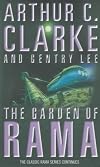
There's a scene towards the end of the sixth Harry Potter book where Harry and Dumbledore find a small basin of water with a much-needed magical item at the bottom of it. The water is cursed, though, and they can't simply reach in and grab the item, nor scoop out the water; the water has to be drunk in its totality before the item can be attained. And you just know that water's going to taste bad. Think the purified essence of a thousand Domino's pizzas and then multiply that by three. Yes, show more that bad. Anyway, Dumbledore realises what has to be done and makes Harry promise to keep feeding him the water, glass by painful glass, and not to stop no matter what happens. Well sure enough it gets unpleasant, immediately they start Dumbledore starts begging Harry to stop, weeping and ranting; Harry meanwhile pleads, cajoles, and lies to his headmaster in order to get him to drink one more glass, one more glass, one more glass. Reading The Garden of Rama is pretty much like that: I'd promised myself I was going to finish the Rama series and so had to get through this book, and so I persevered through it all, shovelling page after page of toxic drivel down my throat no matter how bad it got.
I'm afraid this review isn't going to have much structure or narrative flow. There were too many things wrong with the book to make this anything more than a long list of free flowing criticisms. Besides, the book didn't bother having any structure or narrative flow so feel free to pretend that my review itself is some kind of meta-criticism if you like.
Where to start? Well, the title makes no sense for one. In [b:Rendezvous with Rama|1930977|Rendezvous with Rama|Arthur C. Clarke|http://photo.goodreads.com/books/1288718658s/1930977.jpg|1882772] the main characters rendezvoused with a spacecraft dubbed Rama. In [b:Rama II|10612691|Rama II (Rama, #2)|Arthur C. Clarke|http://photo.goodreads.com/books/1298827472s/10612691.jpg|1907786] an identical looking spacecraft, dubbed Rama II, came to the solar system to be investigated. And in [b:Rama Revealed|112517|Rama Revealed (Rama, #4)|Arthur C. Clarke|http://photo.goodreads.com/books/1171659410s/112517.jpg|828267] I assume the secrets of the whole Rama thing will be, well, revealed (although see below). So then, this book must be about some great big vegetable patch in the spacecraft, right? Alas not. A settlement built within the ship is christened New Eden, and they have plants and stuff there, but that's pretty much the only relation to any garden in the book. Maybe this first criticism is overly pedantic, but it seems the choice of title here was either overly mundane or meaningless.
Next on my gripe list is the acknowledgements section (yes, we haven't made it to page one yet). Gentry Lee thanks his wife for "conversations about the nature of the female" since the book is primarily told from Nicole Wakefield's perspective. Indeed the first part of the book is told as excerpts from her journal. So does Gentry Lee manage to transcend sex differences in this journal section? Do his wife's suggestions seamlessly meld into a convincing catalogue of thoughts from a woman trapped in an alien environment and getting pregnant left, right, and centre? No. No, no, and no. Instead we get utterly bog-standard first person prose, except every ten pages or so there will be a cringe inducing paragraph along the lines of "So my husband didn't put the toilet seat down today. What is it with men and not doing that? Huh? As a woman it really gets my goat. You know what I'm talking about ladies, oh yes." I've no doubt Mrs Lee gave her husband numerous insights into "the nature of the female" but he hasn't used them to make a believable character, he's just shoehorned a few of these bad stand-up routines into the main text.
And while we're talking about the believability of our esteemed protagonist Nicole, let me ask you a question, dear reader. If you had to start the human civilisation again from scratch, how many people do you think you'd need to ensure enough genetic diversity to make the new civilisation tenable? I seem to recall a figure mentioned in The Matrix Reloaded for the number of humans needed to rebuild Zion is twenty three. Stephen Baxter makes this a big plot point at the end of [b:Ark|2111628|Ark|Stephen Baxter|http://ecx.images-amazon.com/images/I/510IXN1IsyL._SL75_.jpg|2117036] and agonises that forty six people with maximal genetic variation might just be okay. A quick straw poll amongst my friends with backgrounds in the biological sciences reckoned that quite a bit more than that would be needed. There's evidence that the human population fell to less than 15 000 once, and that maybe 500-1000 humans could breed their way away from extinction. So, with all that in mind, how many people does Dr Nicole des Jardins Wakefield, hero of Garden of Rama, think are necessary to breed their way out of trouble? Fifteen thousand, like the actual human population after the Toba eruption? Maybe one thousand, which some research suggests is a safe minimum? Perhaps only one hundred and sixty as determined by American anthropologist John Moore? Or only one hundred, as suggested by my biology friends after three glasses of wine and two minutes to think about the problem? Maybe Baxter was right with forty six, or the Wachowski brothers with twenty three? Well, Dr Nicole, what's your answer?Two.
I'm sorry, what? There are three adults on Rama at the start of the book — two men and one woman. Nicole and her husband Richard have two daughters at which point Nicole starts wondering about how her daughters are going to continue the species. Clearly they need a man, preferably one each. So, she decides, she needs to pop out a couple of sons. Luckily, though, "one of [her] major areas of specialty during [her] medical training was genetics, especially hereditary defects." Phew! Looks like she'll realise the futility of all this and stop dooming all these kids to a lonely future in space. But no! There's more. At this point of the book Nicole is 41 years old and worries how many more babies she can have. She decides she has to have a son and preferably with Michael, the other guy on Rama with her. So then the next generation will consist of two girls and a guy, all of them either half- or full-siblings. And obviously that's a genetically viable group if ever I saw one. To be fair, Nicole doesn't just want kids with Michael to get some more genetic diversity, that'd be silly, she also picks him because both of her husband's kids are girls, while two out of the three kids that Michael has had back on Earth were boys, so having a son would be pretty much guaranteed with Mike but nigh on impossible with Dick. And here was me thinking it was fifty/fifty with both of them.
So Nicole tells her (emotionally insecure and already quite jealous) husband she wants to get it on with Michael for scientific purposes, i.e. so their daughters will have a half-brother to shag later in life. And then she's surprised when he gets upset. Aggh! Stop, Harry, I can't take anymore! Later, after having had two sons with Michael, Richard shows up and she has a third daughter with him. Her main concern? That she's already paired up in her mind her two daughters and two sons, so daughter number three doesn't have a brother to make babies with. Aggh! No more, Harry! Please! The folly of the whole thing is only pointed out to her later by her thirteen year old daughter, who decides to marry seventy-two year old Uncle Michael, because marrying her half-brothers would be incest. Aggh! Enough, enough! And on a tangentially related note, Michael's two sons with Nicole sometimes refer to him as dad and sometimes as Uncle Michael, and similarly they sometimes call Richard dad and sometimes Uncle Richard. Why?
Part two of the book reveals the purpose of Rama, how it was made, and so on. Most of the big questions are answered, which leaves one major question: what exactly is left to be revealed in Rama Revealed? We don't yet know who the over-arching authority is behind the whole thing, but it's some alien or another and frankly I don't think "It turns out Rama was built by Zylorgs from planet Herpes" is particularly fulfilling. On the subject of Rama's mission, it seems fundamentally flawed. It's supposed to catalogue the spacefaring species of the galaxy by flying through star systems, luring these species aboard, and then taking them back to The Node. From there Rama is refitted with biomes to support larger numbers of these species and messages are sent to each of these species' planets to the effect of "We're coming back, prepare a few thousand of your species to come and live on Rama for an unspecified length of time. Then the whole thing flies back around the galaxy, picking up these species for observation. Frankly this sounds like a rubbish way for an ultra advanced society to study other species, as proved by the fact that Rama only "captured" its three humans by a huge fluke.
Rama's mission is only slightly less believable than Earth's reaction to it. The human race of the original Rendezvous with Rama has spread across the solar system and, excitable Mercurians aside, the biggest problem it seems to face is an overabundance of petty bureaucracy. Gentry Lee ruthlessly deconstructs this world in Rama II, with a huge economic slump occurring just after the first novel's events that sets Earth back a century or so and obliterates its space programme. By the time Rama II begins, seventy years after its predecessor, the slump has lifted enough for a mediocre space programme to exist, but the military still decide to destroy Rama when it comes near Earth. Their missiles are ruthlessly efficient at tracking the spacecraft as they try (and fail) to obliterate it, but in this book it's claimed that Earth had believed the craft was destroyed. Apparently they fired their nuclear missiles at it and then everyone started staring at the ground saying "Yup, I'm so sure we destroyed that thing I'm not even going to look up and check."
So when Earth is informed in the 2240s, forty years after Rama II, that they need to send two thousand individuals to Rama, do they rejoice at the chance to redeem themselves, to fix past mistakes, to send their best and brightest to discover the secrets of the Universe? No, the shady council that rules the world decides it's all a hoax perpetrated by those pesky Chinese, so they send their best and brightest and a whole ship full of rapists and murderers to Mars. If there happens to be a honking great spacecraft in the vicinity of Mars then they'll board that, if not they'll start a new Martian colony. Of course they don't tell all these people going to Mars that they might end up in an alien spaceship until they're actually in the alien spaceship.
Of these two thousand people it seems that about twelve are half-decent human beings, that's including Nicole, Richard, and some of their kids. Since the kids were in stasis for their entire teenage lives they all have to deal with being, essentially, a child in an adult's body. Gentry Lee obviously deals with this in a delicate and thought-provoking manner: Patrick is shy with girls, Eleanor is perfectly fine, and Katie becomes a nymphomaniac. Wow! Of these twelve normal people, half are unceremoniously killed in a scene near the end of the book, and the humans in the colony happily let a Japanese mob boss take over. No one seems bothered that there's little food, the weather system is broken, and a hundred other problems, because the mob boss starts a war with another biome in Rama. Such flagrant clichés can work if they're told well, alas that's not the case here.
Despite the three hundred or so five star reviews here on Goodreads, I'm pretty sure I'm not the only one who struggled to find the resolve to finish this book. The editors apparently had the same problem. As the book goes on more and more typoes start appearing: spelling errors, punctuation where it doesn't belong, and so on. One of the few solaces I could take was that this book is trashy pop science fiction, not hard science fiction, so powering through its six hundred pages was not difficult, just unpleasant.
With all that in mind, I'm now off to read Rama Revealed, hopeful in the knowledge that things surely can't get worse. Can they? show less
I'm afraid this review isn't going to have much structure or narrative flow. There were too many things wrong with the book to make this anything more than a long list of free flowing criticisms. Besides, the book didn't bother having any structure or narrative flow so feel free to pretend that my review itself is some kind of meta-criticism if you like.
Where to start? Well, the title makes no sense for one. In [b:Rendezvous with Rama|1930977|Rendezvous with Rama|Arthur C. Clarke|http://photo.goodreads.com/books/1288718658s/1930977.jpg|1882772] the main characters rendezvoused with a spacecraft dubbed Rama. In [b:Rama II|10612691|Rama II (Rama, #2)|Arthur C. Clarke|http://photo.goodreads.com/books/1298827472s/10612691.jpg|1907786] an identical looking spacecraft, dubbed Rama II, came to the solar system to be investigated. And in [b:Rama Revealed|112517|Rama Revealed (Rama, #4)|Arthur C. Clarke|http://photo.goodreads.com/books/1171659410s/112517.jpg|828267] I assume the secrets of the whole Rama thing will be, well, revealed (although see below). So then, this book must be about some great big vegetable patch in the spacecraft, right? Alas not. A settlement built within the ship is christened New Eden, and they have plants and stuff there, but that's pretty much the only relation to any garden in the book. Maybe this first criticism is overly pedantic, but it seems the choice of title here was either overly mundane or meaningless.
Next on my gripe list is the acknowledgements section (yes, we haven't made it to page one yet). Gentry Lee thanks his wife for "conversations about the nature of the female" since the book is primarily told from Nicole Wakefield's perspective. Indeed the first part of the book is told as excerpts from her journal. So does Gentry Lee manage to transcend sex differences in this journal section? Do his wife's suggestions seamlessly meld into a convincing catalogue of thoughts from a woman trapped in an alien environment and getting pregnant left, right, and centre? No. No, no, and no. Instead we get utterly bog-standard first person prose, except every ten pages or so there will be a cringe inducing paragraph along the lines of "So my husband didn't put the toilet seat down today. What is it with men and not doing that? Huh? As a woman it really gets my goat. You know what I'm talking about ladies, oh yes." I've no doubt Mrs Lee gave her husband numerous insights into "the nature of the female" but he hasn't used them to make a believable character, he's just shoehorned a few of these bad stand-up routines into the main text.
And while we're talking about the believability of our esteemed protagonist Nicole, let me ask you a question, dear reader. If you had to start the human civilisation again from scratch, how many people do you think you'd need to ensure enough genetic diversity to make the new civilisation tenable? I seem to recall a figure mentioned in The Matrix Reloaded for the number of humans needed to rebuild Zion is twenty three. Stephen Baxter makes this a big plot point at the end of [b:Ark|2111628|Ark|Stephen Baxter|http://ecx.images-amazon.com/images/I/510IXN1IsyL._SL75_.jpg|2117036] and agonises that forty six people with maximal genetic variation might just be okay. A quick straw poll amongst my friends with backgrounds in the biological sciences reckoned that quite a bit more than that would be needed. There's evidence that the human population fell to less than 15 000 once, and that maybe 500-1000 humans could breed their way away from extinction. So, with all that in mind, how many people does Dr Nicole des Jardins Wakefield, hero of Garden of Rama, think are necessary to breed their way out of trouble? Fifteen thousand, like the actual human population after the Toba eruption? Maybe one thousand, which some research suggests is a safe minimum? Perhaps only one hundred and sixty as determined by American anthropologist John Moore? Or only one hundred, as suggested by my biology friends after three glasses of wine and two minutes to think about the problem? Maybe Baxter was right with forty six, or the Wachowski brothers with twenty three? Well, Dr Nicole, what's your answer?
I'm sorry, what? There are three adults on Rama at the start of the book — two men and one woman. Nicole and her husband Richard have two daughters at which point Nicole starts wondering about how her daughters are going to continue the species. Clearly they need a man, preferably one each. So, she decides, she needs to pop out a couple of sons. Luckily, though, "one of [her] major areas of specialty during [her] medical training was genetics, especially hereditary defects." Phew! Looks like she'll realise the futility of all this and stop dooming all these kids to a lonely future in space. But no! There's more. At this point of the book Nicole is 41 years old and worries how many more babies she can have. She decides she has to have a son and preferably with Michael, the other guy on Rama with her. So then the next generation will consist of two girls and a guy, all of them either half- or full-siblings. And obviously that's a genetically viable group if ever I saw one. To be fair, Nicole doesn't just want kids with Michael to get some more genetic diversity, that'd be silly, she also picks him because both of her husband's kids are girls, while two out of the three kids that Michael has had back on Earth were boys, so having a son would be pretty much guaranteed with Mike but nigh on impossible with Dick. And here was me thinking it was fifty/fifty with both of them.
So Nicole tells her (emotionally insecure and already quite jealous) husband she wants to get it on with Michael for scientific purposes, i.e. so their daughters will have a half-brother to shag later in life. And then she's surprised when he gets upset. Aggh! Stop, Harry, I can't take anymore! Later, after having had two sons with Michael, Richard shows up and she has a third daughter with him. Her main concern? That she's already paired up in her mind her two daughters and two sons, so daughter number three doesn't have a brother to make babies with. Aggh! No more, Harry! Please! The folly of the whole thing is only pointed out to her later by her thirteen year old daughter, who decides to marry seventy-two year old Uncle Michael, because marrying her half-brothers would be incest. Aggh! Enough, enough! And on a tangentially related note, Michael's two sons with Nicole sometimes refer to him as dad and sometimes as Uncle Michael, and similarly they sometimes call Richard dad and sometimes Uncle Richard. Why?
Part two of the book reveals the purpose of Rama, how it was made, and so on. Most of the big questions are answered, which leaves one major question: what exactly is left to be revealed in Rama Revealed? We don't yet know who the over-arching authority is behind the whole thing, but it's some alien or another and frankly I don't think "It turns out Rama was built by Zylorgs from planet Herpes" is particularly fulfilling. On the subject of Rama's mission, it seems fundamentally flawed. It's supposed to catalogue the spacefaring species of the galaxy by flying through star systems, luring these species aboard, and then taking them back to The Node. From there Rama is refitted with biomes to support larger numbers of these species and messages are sent to each of these species' planets to the effect of "We're coming back, prepare a few thousand of your species to come and live on Rama for an unspecified length of time. Then the whole thing flies back around the galaxy, picking up these species for observation. Frankly this sounds like a rubbish way for an ultra advanced society to study other species, as proved by the fact that Rama only "captured" its three humans by a huge fluke.
Rama's mission is only slightly less believable than Earth's reaction to it. The human race of the original Rendezvous with Rama has spread across the solar system and, excitable Mercurians aside, the biggest problem it seems to face is an overabundance of petty bureaucracy. Gentry Lee ruthlessly deconstructs this world in Rama II, with a huge economic slump occurring just after the first novel's events that sets Earth back a century or so and obliterates its space programme. By the time Rama II begins, seventy years after its predecessor, the slump has lifted enough for a mediocre space programme to exist, but the military still decide to destroy Rama when it comes near Earth. Their missiles are ruthlessly efficient at tracking the spacecraft as they try (and fail) to obliterate it, but in this book it's claimed that Earth had believed the craft was destroyed. Apparently they fired their nuclear missiles at it and then everyone started staring at the ground saying "Yup, I'm so sure we destroyed that thing I'm not even going to look up and check."
So when Earth is informed in the 2240s, forty years after Rama II, that they need to send two thousand individuals to Rama, do they rejoice at the chance to redeem themselves, to fix past mistakes, to send their best and brightest to discover the secrets of the Universe? No, the shady council that rules the world decides it's all a hoax perpetrated by those pesky Chinese, so they send their best and brightest and a whole ship full of rapists and murderers to Mars. If there happens to be a honking great spacecraft in the vicinity of Mars then they'll board that, if not they'll start a new Martian colony. Of course they don't tell all these people going to Mars that they might end up in an alien spaceship until they're actually in the alien spaceship.
Of these two thousand people it seems that about twelve are half-decent human beings, that's including Nicole, Richard, and some of their kids. Since the kids were in stasis for their entire teenage lives they all have to deal with being, essentially, a child in an adult's body. Gentry Lee obviously deals with this in a delicate and thought-provoking manner: Patrick is shy with girls, Eleanor is perfectly fine, and Katie becomes a nymphomaniac. Wow! Of these twelve normal people, half are unceremoniously killed in a scene near the end of the book, and the humans in the colony happily let a Japanese mob boss take over. No one seems bothered that there's little food, the weather system is broken, and a hundred other problems, because the mob boss starts a war with another biome in Rama. Such flagrant clichés can work if they're told well, alas that's not the case here.
Despite the three hundred or so five star reviews here on Goodreads, I'm pretty sure I'm not the only one who struggled to find the resolve to finish this book. The editors apparently had the same problem. As the book goes on more and more typoes start appearing: spelling errors, punctuation where it doesn't belong, and so on. One of the few solaces I could take was that this book is trashy pop science fiction, not hard science fiction, so powering through its six hundred pages was not difficult, just unpleasant.
With all that in mind, I'm now off to read Rama Revealed, hopeful in the knowledge that things surely can't get worse. Can they? show less
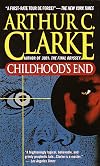
Childhood's End taps two themes that it's hard not to root for.
One is that we, human beings, have almost unlimited potential. We are meant to be more than we are. Clarke's story tells of "Overlords" who arrive suddenly, in incomprehensible spaceships, representing a civilization of a scale and technology well beyond our ken. But we have been recognized for our potential, to join and contribute to that civilization (provided we don't blow it, kill ourselves, and destroy our planet first).
The show more other is that we have in fact been selected and are being looked after, by a kind of father/mother who can shepherd us toward realizing our potential. Here, our "Overlords" are midwives, incapable of the same kind of potential as us but capable of seeing us through our adolescence.
These are invigorating self-images that Clarke plays out. And he builds an entertaining story around them, unfolding them for us.
I couldn't help likening Clarke's vision here to his own 2001 (check out the story "The Sentinel" that provides the basis for that movie) and, maybe more esoteric, Nietzsche's Thus Spoke Zarathustra, in which Zarathustra similarly midwives the exceptional human from the "merely human" to the "more than human". show less
One is that we, human beings, have almost unlimited potential. We are meant to be more than we are. Clarke's story tells of "Overlords" who arrive suddenly, in incomprehensible spaceships, representing a civilization of a scale and technology well beyond our ken. But we have been recognized for our potential, to join and contribute to that civilization (provided we don't blow it, kill ourselves, and destroy our planet first).
The show more other is that we have in fact been selected and are being looked after, by a kind of father/mother who can shepherd us toward realizing our potential. Here, our "Overlords" are midwives, incapable of the same kind of potential as us but capable of seeing us through our adolescence.
These are invigorating self-images that Clarke plays out. And he builds an entertaining story around them, unfolding them for us.
I couldn't help likening Clarke's vision here to his own 2001 (check out the story "The Sentinel" that provides the basis for that movie) and, maybe more esoteric, Nietzsche's Thus Spoke Zarathustra, in which Zarathustra similarly midwives the exceptional human from the "merely human" to the "more than human". show less
Lists
A Novel Cure (1)
Wishlist (1)
Read in 2007 (1)
Strange Cities (1)
Futurism Works (1)
Elevenses (1)
Next in Series (1)
Allie's Wishlist (1)
Ranking (1)
Page Turners (1)
Check Library (1)
Formative books (1)
SF Masterworks (1)
Read (1)
My TBR (1)
Overdue Podcast (1)
1970s (1)
Epic Fiction (1)
Favorite Series (1)
Five star books (3)
al.vick-series (2)
Solar System (3)
SF Masterworks (5)
Моноліт (4)
Unread books (4)
SF - To Read (2)
Best Dystopias (1)
Folio Society (1)
Science Fiction (1)
1960s (1)
Classic Sci-Fi (1)
1980s (1)
Nebula Award (2)
Favourite Books (2)
Comfort Reads (2)
1950s (2)
um actually (2)
Awards


You May Also Like


Associated Authors
Statistics
- Works
- 849
- Also by
- 365
- Members
- 130,636
- Popularity
- #53
- Rating
- 3.7
- Reviews
- 1,939
- ISBNs
- 2,183
- Languages
- 33
- Favorited
- 456

