
Clifford D. Simak (1904–1988)
Author of City
About the Author
Series
Works by Clifford D. Simak
I Am Crying All Inside and Other Stories: The Complete Short Fiction of Clifford D. Simak Book 1 (2015) 154 copies, 8 reviews
The Big Front Yard: And Other Stories (The Complete Short Fiction of Clifford D. Simak Book 2) (2015) 89 copies
The Ghost of a Model T: And Other Stories (The Complete Short Fiction of Clifford D. Simak Book 3) (2015) 76 copies
Grotto of the Dancing Deer: And Other Stories (The Complete Short Fiction of Clifford D. Simak Book 4) (2016) 63 copies, 2 reviews
New Folks' Home: And Other Stories (The Complete Short Fiction of Clifford D. Simak Book 6) (2016) 61 copies
Good Night, Mr. James: And Other Stories (The Complete Short Fiction of Clifford D. Simak Book 8) (2016) 59 copies
Bring Back Yesterday / The Trouble With Tycho (Classic Ace Double, D-517) (1960) 58 copies, 2 reviews
The Shipshape Miracle: And Other Stories (The Complete Short Fiction of Clifford D. Simak Book 10) (2017) 56 copies
No Life of Their Own: And Other Stories (The Complete Short Fiction of Clifford D. Simak Book 5) (2016) 53 copies
The Thing in the Stone: And Other Stories (The Complete Short Fiction of Clifford D. Simak) (2017) 52 copies, 1 review
Earth for Inspiration: And Other Stories (The Complete Short Fiction of Clifford D. Simak) (2016) 48 copies
Buckets of Diamonds: And Other Stories (The Complete Short Fiction of Clifford D. Simak Book 13) (2023) 30 copies
Epilog: And Other Stories (The Complete Short Fiction of Clifford D. Simak Book 14) (2023) 25 copies
The Works of Clifford D. Simak Volume One: Grotto of the Dancing Deer and Other Stories, Heritage of Stars, and City (2017) 20 copies
The Works of Clifford D. Simak Volume Two: Good Night, Mr. James and Other Stories; Time and Again; and Way Station (2017) 13 copies
Obras estelares de la ciencia ficcion: El hombre del bicentenario; Estacion de transito (Serie Hugo) (1987) — Author — 12 copies
The Thing In The Stone [short story] 12 copies
The Works of Clifford D. Simak Volume Four: The Big Front Yard and Other Stories, Time Is the Simplest Thing, and The Goblin Reservation (2018) 10 copies
Strangers No More: Tales of Alien Life by Science Fiction Masters Isaac Asimov, Philip José Farmer, Marion Zimmer Bradley and More! (2017) 9 copies
Shotgun Cure 8 copies
Construction Shack [short story] 8 copies
The Answers [short story] 7 copies
Sunspot Purge 7 copies
Condition of Employment 6 copies
Lulu 6 copies
Terra Insólita (1) 6 copies
Beachhead [short story] 6 copies
The Fence [short story] 6 copies
The Works of Clifford D. Simak Volume Three: I Am Crying All Inside and Other Stories, Highway of Eternity, and Project Pope (2018) 6 copies
Final Gentleman 5 copies
Galaxy, Teil 5: Eine Auswahl der besten Stories aus dem amerikanischen Science Fiction Magazin Galaxy (1966) — Contributor — 5 copies
Target Generation [short story] 5 copies
Small Deer 5 copies
A Estrada da Eternidade A 5 copies
How-2 5 copies
The Solar System: Our New Front Yard 5 copies
Retrograde Evolution [short story] 5 copies
A boneca do destino - 2 4 copies
The Civilization Game [short story] 4 copies
Limiting Factor [short fiction] 4 copies
Aesop {novelette} 4 copies
Paradise {novelette} 4 copies
The Simple Way {novelette} 4 copies
Galaxy 9 - Eine Auswahl der besten Stories aus dem Schience Fiction Magazine Galaxy (1967) — Contributor — 4 copies
Short Fiction 4 copies
Idiot's Crusade 3 copies
Neighbor [novelette] 3 copies
Operation Stinky 3 copies
Death Scene 3 copies
Honorable Opponent 3 copies
Masquerade 3 copies
Hermit of Mars 3 copies
As Flores Que Pensam 3 copies
Onde Mora o Mal 3 copies
Sette ombre azzurre 3 copies
To Walk a City Street [short story] 3 copies
Terra Insólita (2) 3 copies
Hobbies {novelette} 3 copies
Census {novelette} 3 copies
Full Cycle 3 copies
The Spaceman's Van Gogh 3 copies
The World of the Red Sun 3 copies
City (short story) 3 copies
Party Line 3 copies
Projecto Papa 1 2 copies
Gli extraterrestri 2 copies
Nacht über dem Mars 2 copies
Worlds of Clifford Simak - Volume 1 2 copies
Short Science Fiction Collection 067 2 copies
A revolta das máquinas 2 2 copies
Ring around the Sun; All flesh is grass; They walked like men; The werewolf principle; and, The visitors 2 copies, 1 review
Что может быть проще времени 2 copies
Rule 18 2 copies
Terra Insólita - volume 2 2 copies
Shadow World [short story] 2 copies
Junkyard 2 copies
Projecto Papa - 1 2 copies
Hunch 2 copies
A revolta das máquinas - 2 2 copies
The Money Tree 2 copies
A revolta das máquinas - 1 2 copies
Dusty Zebra [short story] 2 copies
Horrible Example 2 copies
Reunion On Ganymede 2 copies
Projecto Papa - 2 2 copies
" Izbrannoe". 1 copy
Eterna: roman 1 copy
Die Kolonie Der Kobolde, 1 copy
[No title] 1 copy
Projekt papież 1 copy
Ludojad 1 copy
Bractwo Talizmanu 1 copy
Cmentarna planeta 1 copy
Zasada wilkołaka 1 copy
Racconti - Volume 1 1 copy
terra insólita 2 1 copy
Racconti - Volume 2 1 copy
A város 1 copy
Город 1 copy
The World That Couldn't Be 1 copy
Alieni e no 1 copy
L'ospite del senatore Horton 1 copy
Всякая плоть - трава 1 copy
Os visitantes - 1 1 copy
Os visitantes - 2 1 copy
The World Doesn't End 1 copy
Czas jest najprostszą rzeczą 1 copy
Eternita' perduta. 1 copy
The Wind from the Sun 1 copy
Порождения разума 1 copy
Всякая плоть - трава 1 copy
Stranieri nell'universo 1 copy
Deixemo-los no Céu 1 copy
Los mundos de Clifford Simak 1 copy
Projecto Papa 2 1 copy
Os Visitantes - 2 1 copy
terra insólita 1 1 copy
Lobby 1 copy
Installment Plan 1 copy
The Sitters 1 copy
Tranzitna stanica 1 copy
Terra Insólita, 1 1 copy
Infiltration 1 copy
Shadow of Life 1 copy
Clerical Error 1 copy
The Trouble with Ants 1 copy
Os Visitantes - 1 1 copy
Worrywart 1 copy
all'ombra di tyco 1 copy
Target Generation 1 copy
Carbon Copy 1 copy
Grad 1 copy
Prehistoric man 1 copy
Spaceship In A Flask 1 copy
Tools 1 copy
Epilog [Short Story] 1 copy
The Asteroid of Gold 1 copy
Voices For The Future 1 copy
The Double Bill Symposium 1 copy
Empire and Other Works of Science Fiction by Clifford D. Simak (Unexpurgated Edition) (Halcyon Classics) (2010) 1 copy
Härjapõlvlaste kaitseala 1 copy
O Deus impossível 1 copy
PROJECT POPE by CLIFFORD D SIMAK Del Rey 1981 BCE Hardcover [Hardcover] Clifford D Simak (1964) 1 copy
Ingenieros Del Cosmos 1 copy
alerteau Horlas - Ces Féroce Qornts - Les immortels - La Croisade de Ténèbres - Galaxie No 18 1 copy
Visa dzīvība zaļo : [romāns] 1 copy
Поколение, достигшее цели 1 copy
O mundo dos túmulos 1 copy
Tempo senza tempo 1 copy
Os Visitantes II Livro 2 1 copy
O Mundo do Caos Livro 1 1 copy
Os Visitantes I Livro 2 1 copy
Projecto Papa 2 Livro 2 1 copy
Onde Mora O Mal Livro 1 1 copy
Terra insólita - 1 1 copy
Czarodziejska pielgrzymka 1 copy
Seekers Of Tomorrow 1 copy
Three in One 1 copy
Mundo Paralelo 1 copy
As Cidades Mortas 1 copy
Associated Works
The Science Fiction Hall of Fame, Volume One: The Greatest Science Fiction Stories of All Time (1970) — Contributor — 2,111 copies, 34 reviews
The Science Fiction Hall of Fame, Volume Two B: The Greatest Science Fiction Novellas of All Time (1973) — Contributor — 917 copies, 11 reviews
The Big Book of Science Fiction: The Ultimate Collection (2016) — Contributor — 522 copies, 8 reviews
The Mammoth Book of Extreme Science Fiction: New Generation Far-Future SF (2006) — Contributor — 352 copies, 7 reviews
The Norton Book of Science Fiction: North American Science Fiction, 1960-1990 (1993) — Contributor — 346 copies, 6 reviews
Isaac Asimov's Wonderful Worlds of Science Fiction, Volume 9: Robots (1989) — Contributor — 121 copies, 2 reviews
Best Science Fiction Stories of the Year Fifth Annual Collection (1976) — Contributor — 107 copies, 1 review
Bodyguard and Four Other Short Science Fiction Novels from Galaxy (2021) — Contributor — 93 copies, 2 reviews
Creatures from Beyond: Nine Stories of Science Fiction and Fantasy (1975) — Contributor — 89 copies, 1 review
The World That Couldn't Be and 8 Other Novelets From "Galaxy" (1959) — Contributor — 86 copies, 5 reviews
Best Science Fiction Stories of the Year Fourth Annual Collection (1975) — Contributor — 84 copies, 3 reviews
The Infinite Arena: Seven Science Fiction Stories About Sports (1977) — Contributor — 75 copies, 1 review
The Frozen Planet and Four Other Science-Fiction Novellas (1966) — Contributor — 64 copies, 2 reviews
Isaac Asimov Presents : The Golden Years of Science Fiction, 3rd Series (1984) — Contributor — 62 copies
Nature's Warnings: Classic Stories of Eco-Science Fiction (British Library Science Fiction Classics) (2020) — Contributor — 35 copies
Analog Science Fiction/Science Fact: Vol. C, No. 4 (April 1980) (1980) — Contributor — 29 copies, 1 review
Analog Science Fiction/Science Fact: Vol. XC, No. 3 (November 1972) (1972) — Contributor — 27 copies
The Wild Years 1946-1955 (Amazing Science Fiction Anthology Series) (1987) — Contributor — 27 copies
Analog Science Fiction/Science Fact: Vol. XC, No. 4 (December 1972) (1972) — Contributor — 26 copies
Van Jules Verne tot Isaac Asimov de vijftig beste science fiction verhalen (1981) — Contributor — 17 copies, 1 review
The Magazine of Fantasy and Science Fiction October 1971, Vol. 41, No. 4 (1971) — Contributor — 14 copies
Worlds of If Science Fiction 164, January/February 1973 (Vol. 21, No. 9) (1973) — Contributor — 14 copies
The Magazine of Fantasy and Science Fiction June 1960, Vol. 18, No. 6 (1960) — Contributor — 12 copies
Science Fiction Omnibus: The Best Science Fiction Stories: 1949, 1950 (1952) — Contributor — 11 copies
The Magazine of Fantasy and Science Fiction January 1960, Vol. 18, No. 1 (1960) — Contributor — 9 copies
Drie SF-romans — Contributor — 5 copies
I Premi Hugo 1976-1983 — Contributor — 4 copies
Fantastic stories of imagination. No. 081 (July 1961) — Contributor — 3 copies
Cratere e caverna — Contributor — 3 copies
Fantastic stories of imagination. No. 101 (March 1963) — Contributor — 3 copies
Millemondi Primavera 2001: Nuove avventure nell'ignoto — Contributor — 2 copies
Future Science Fiction No. 31 — Contributor — 2 copies
Μεγάλη Ανθολογία Ε.Φ. 1. (1934 - 1950) — Contributor — 1 copy
Galaxy Science Fiction No. 25 - British Release — Contributor — 1 copy
Tagged
Common Knowledge
- Legal name
- Simak, Clifford Donald
- Birthdate
- 1904-08-03
- Date of death
- 1988-04-25
- Gender
- male
- Education
- University of Wisconsin-Madison
- Occupations
- journalist
writer - Organizations
- Minneapolis Star and Tribune (1939-1976)
Astounding Stories
Science Fiction and Fantasy Writers of America - Awards and honors
- SFWA Grand Master (1976)
Minnesota Academy of Science Award (1967)
Bram Stoker Award (Lifetime Achievement ∙ 1988)
First Fandom Hall of Fame Award (1973)
Damon Knight Memorial Grand Master Award (1976)
Science Fiction Writers of America Nebula Grand Master Award (1977) (show all 7)
Jupiter Award (1978) - Agent
- Blassingame, McCauley & Wood (60 East 42nd St., New York, NY 10017)
- Relationships
- Simak, Ellen (daughter)
Kuchenberg, Agnes (wife)
Simak, Richard Scott (son) - Nationality
- USA
- Birthplace
- Millville, Wisconsin, USA
- Places of residence
- Millville, Wisconsin, USA
Excelsior, Minnesota, USA
Minnetonka, Minnesota, USA - Place of death
- Minneapolis, Minnesota, USA
- Burial location
- Lakewood Cemetery, Minneapolis, Minnesota, USA
- Associated Place (for map)
- Minnesota, USA
Members
Discussions
trying to find a short story in Science Fiction Fans (January 2013)
Reviews
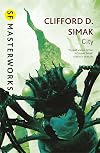
This book could almost be retitled The World According To Simak because it seems to sum up his view of his fellow humans: one way and another, that’s what all the dogs, robots, mutants and ants in City are—various pictures of us.
The dogs, I think, are the way Simak wished humans could be: uncomplicated, intelligent but amiable, content (like him) to just sit on the porch in the sun listening to the birds singing. Then there are the ‘robots’, who aren’t robots at all; these show more are humans too, but servile ones this time who do all the work. There are the ‘mutants’, which are Simak’s picture of experts of all kinds—or intellectuals rather, smart-asses, know-it-alls, wiseguys smirking and sniggering from behind their hands, people (in Simak’s view) too clever for their own good. And lastly there are the ants: these are us yet again, but seen from above in a sort of bird’s-eye view of humanity: scurrying and teeming everywhere, building cities, mindlessly covering the green of his beloved Wisconsin in brick and concrete. Meanwhile, all the actual humans in City vanish in one way or another, and I got the impression that this was wishful thinking on the author’s part: Simak’s understated way of saying to the rest of us, ‘I wish you’d all just shove off and leave me in peace.’
I didn’t dislike City because it’s strange (I love surreal and strange) or incoherent (which it is, particularly scientifically). I didn’t even baulk at most of Simak’s pictures of humanity—I’ve spent much of my own life watching with the same dismay the woods and meadows of England being tarmacked and concreted over. But then the penny finally dropped. One glaring thing about the Websters, the human family whose story we’re largely following here, is that we never once see any of them cleaning a kitchen say, doing the laundry, weeding the garden or lugging heavy bags of groceries up the steep gravel drive to the Big House. The ‘robots’ (i.e. the servants, the drudges—the staff) do all that sort of thing. ‘Leave me in peace’ really means ‘Leave me in peace to sit out here on my porch, glass of whiskey balanced on my knee, watching the world go by, setting the world straight, while my loyal and obedient staff of lesser mortals do all the work.’ It’s an unpleasant, and all-too-familiar, picture of an ‘ideal’ world. show less
The dogs, I think, are the way Simak wished humans could be: uncomplicated, intelligent but amiable, content (like him) to just sit on the porch in the sun listening to the birds singing. Then there are the ‘robots’, who aren’t robots at all; these show more are humans too, but servile ones this time who do all the work. There are the ‘mutants’, which are Simak’s picture of experts of all kinds—or intellectuals rather, smart-asses, know-it-alls, wiseguys smirking and sniggering from behind their hands, people (in Simak’s view) too clever for their own good. And lastly there are the ants: these are us yet again, but seen from above in a sort of bird’s-eye view of humanity: scurrying and teeming everywhere, building cities, mindlessly covering the green of his beloved Wisconsin in brick and concrete. Meanwhile, all the actual humans in City vanish in one way or another, and I got the impression that this was wishful thinking on the author’s part: Simak’s understated way of saying to the rest of us, ‘I wish you’d all just shove off and leave me in peace.’
I didn’t dislike City because it’s strange (I love surreal and strange) or incoherent (which it is, particularly scientifically). I didn’t even baulk at most of Simak’s pictures of humanity—I’ve spent much of my own life watching with the same dismay the woods and meadows of England being tarmacked and concreted over. But then the penny finally dropped. One glaring thing about the Websters, the human family whose story we’re largely following here, is that we never once see any of them cleaning a kitchen say, doing the laundry, weeding the garden or lugging heavy bags of groceries up the steep gravel drive to the Big House. The ‘robots’ (i.e. the servants, the drudges—the staff) do all that sort of thing. ‘Leave me in peace’ really means ‘Leave me in peace to sit out here on my porch, glass of whiskey balanced on my knee, watching the world go by, setting the world straight, while my loyal and obedient staff of lesser mortals do all the work.’ It’s an unpleasant, and all-too-familiar, picture of an ‘ideal’ world. show less

3.75 (2nd read. Upgraded from my original rating of "high 2")
Natives have a psychic connection with trees grown from seeds brought to Earth from another planet; other humans telepathically sense an all-powerful, uncaring presence deep at the centre of the universe; a stranger from afar flees from an entity that may or may not be in his mind; some robots find purpose in servitude of their creators, some "wild" robots have their "project" for constructing a vast, technological idol, and other show more robots zealously adopt a Christianity outgrown by humanity: the reader is presented with a choice of gods and mythological narratives. Several characters journey in parallel with differing perspectives on faith, technology, and purpose. There are theories, there is conjecture, there are strong implications, but there is a lack of certainty and there are no "complete" answers.
A Choice of Gods, at 160 pages, is very short; but it has a gentle, quiet and pensive pace that would fool you into thinking it's quite a bit longer. On my initial read, some years ago, I was not sold. Now going in with different expectations, I liked it quite a lot. Simak has been a favourite of mine for a long time, but I also see him as a flawed writer. He still can't help but overexplain some ideas, and the dialogue can be stilted. But there are some wonderful passages here, the ideas are compelling, and thematically I think it allows for a lot of thought-food. How does the lack of technology and a prolonged lifespan impact humanity's development as a species? Can an ever-growing, ever-learning machine ever be considered "human" in some regard, if it mimics human life in every way except for its technological makeup? Can it outgrow its makers and become "more" human? What is a soul, and what does it mean to possess one? What are we to make of a religion, such as Christianity, when it only survives because a group of intelligent machines choose to keep it alive after humanity has long abandoned it?
Other themes touched upon include nature vs. technology, human evolution, and colonialism. Some people dismiss the book as anti-technology, but I think that's an extreme view. (Spoilers follow) This theme is not even apparent until towards the end of the book, where it is presented from two perspectives; both Earth inhabitants and ex-Earth inhabitants are shown to have developed in different ways, with very differing views, but both sides are also shown to be arrogant. There are soft parallels with H.G. Wells' The Time Machine, where the two separated remnants of humanity have been unalterably changed by their environments, although it is not a matter of class in this case. Those without technology learned to do without and evolved to make up for what they lacked in that field, whereas those that retained technology continued to progress and achieve similar goals through technological means. I also think the strong narrative regarding machines developing beyond their programming and almost becoming "more human" than their creators is enough to put to bed the idea that the novel is explicitly anti-technology. A Choice of Gods seems to present a choice of narratives, rather than hitting you over the head with just one. show less
Natives have a psychic connection with trees grown from seeds brought to Earth from another planet; other humans telepathically sense an all-powerful, uncaring presence deep at the centre of the universe; a stranger from afar flees from an entity that may or may not be in his mind; some robots find purpose in servitude of their creators, some "wild" robots have their "project" for constructing a vast, technological idol, and other show more robots zealously adopt a Christianity outgrown by humanity: the reader is presented with a choice of gods and mythological narratives. Several characters journey in parallel with differing perspectives on faith, technology, and purpose. There are theories, there is conjecture, there are strong implications, but there is a lack of certainty and there are no "complete" answers.
A Choice of Gods, at 160 pages, is very short; but it has a gentle, quiet and pensive pace that would fool you into thinking it's quite a bit longer. On my initial read, some years ago, I was not sold. Now going in with different expectations, I liked it quite a lot. Simak has been a favourite of mine for a long time, but I also see him as a flawed writer. He still can't help but overexplain some ideas, and the dialogue can be stilted. But there are some wonderful passages here, the ideas are compelling, and thematically I think it allows for a lot of thought-food. How does the lack of technology and a prolonged lifespan impact humanity's development as a species? Can an ever-growing, ever-learning machine ever be considered "human" in some regard, if it mimics human life in every way except for its technological makeup? Can it outgrow its makers and become "more" human? What is a soul, and what does it mean to possess one? What are we to make of a religion, such as Christianity, when it only survives because a group of intelligent machines choose to keep it alive after humanity has long abandoned it?
Other themes touched upon include nature vs. technology, human evolution, and colonialism. Some people dismiss the book as anti-technology, but I think that's an extreme view. (Spoilers follow) This theme is not even apparent until towards the end of the book, where it is presented from two perspectives; both Earth inhabitants and ex-Earth inhabitants are shown to have developed in different ways, with very differing views, but both sides are also shown to be arrogant. There are soft parallels with H.G. Wells' The Time Machine, where the two separated remnants of humanity have been unalterably changed by their environments, although it is not a matter of class in this case. Those without technology learned to do without and evolved to make up for what they lacked in that field, whereas those that retained technology continued to progress and achieve similar goals through technological means. I also think the strong narrative regarding machines developing beyond their programming and almost becoming "more human" than their creators is enough to put to bed the idea that the novel is explicitly anti-technology. A Choice of Gods seems to present a choice of narratives, rather than hitting you over the head with just one. show less
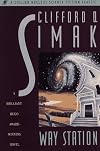
Four paragraphs:
"And there she sat, with the wild red and gold of the butterfly poised upon her finger, with the sense of alertness and expectancy and, perhaps, accomplishment shining on her face. She was alive, thought Enoch, as no other thing he knew had ever been alive. The butterfly spread its wings and floated off her finger and went fluttering, unconcerned, unfrightened, up across the wild grass and the goldenrod of the field."
"They would say he was a madman; that he had run them off show more at gunpoint. They might even say that he had kidnapped Lucy and was holding her against her will. They would stop at nothing to make him all the trouble that they could. He had no illusions about what they might do, for he knew the breed, vindictive in their smallness--little vicious insects of the human race."
"He sensed the crashing down of not only his own personal world, but all the hopes of Earth. With the station gone, Earth once more would be left in the backwaters of the galaxy, with no hope of help, no chance of recognition, no realization of what lay waiting in the galaxy. Standing alone and naked, the human race would go on in its same old path, fumbling its uncertain way toward a blind, mad future."
"It was something that was past all description--a mother's love, a father's pride, the adoration of a sweetheart, the closeness of a comrade, it was all of these and more. It made the farthest distance near and turned the complex simple and it swept away all fear and sorrow, for all of there being a certain feeling of deep sorrow in it, as if one might feel that never in his lifetime would he know an instant like this, and that in another instant he would lose it and never would be able to hunt it out again. But that was not the way it was, for this ascendant instant kept going on and on."
Four paragraphs to capture the beauty, the conflict, the despair and the peace contained in only 210 pages.
Set in 1960, published in 1963, Way Station represents its time perfectly. Simak was in love with the early ideas of science fiction: space travel; the miraculous devices; the potential of humanity; intergalactic language; the aliens of unusual being; the idea of intergalactic federation. He also saw the flip side: small-minded violence, suspicion, spying, power plays, nuclear war. His lead character is a man named Enoch Wallace, born in 1840 on a small Wisconsin farm. After fighting in the Civil War under Ulysses Grant, Enoch returns to the farm. Before long, he is alone in the house he grew up in, but his solitude does not last. A very unusual visitor comes one night with a proposal for him.
The language, while rather clear and simple, fittingly captures the the simple and elemental beauty of the rural Wisconsin landscape, and the ongoing wonder Wallace has for alien peoples and cultures. Simak did a marvelous job of developing the feel of a 120 year-old-man immersed in his head, both memories and his self-taught explorations. The time span was impressive and the historical snapshots integrated smoothly.
The narrative uses straightforward language to explore philosophical questions most of us have had, the moments we find hope for humanity, and those moments we despair. While that might sound like a slow read, parallel with these musings are Wallace's small-scale drama with a neighbor girl and her thoughtless family, and a large-scale drama with being spied upon by the CIA. They give focus to his musings and structure the conflict.
The first time through, I struggled a little withthe shadow-people. I was not sure how they fit in, except to perhaps show fallibility and isolation of Enoch. The second read, I'm wondering if they represent even more intimately the internal struggles of the philosophical issues Wallace is grappling with, as well as his social isolation .
This is a slow, evocative book that fully deserves to win the Hugo again. It isn't sexy according to modern tastes of action, multi-perspective narrative or violence. But that is exactly why I recommend it: to have a glimpse of the sci-fi age that struggled with the philosophical underpinnings of the glories of science and exploration, that made room for the big question--what it means to be human. It truly is a brilliant book to pose these questions as it does, with so many contrasts that lend meaning and perspective. Rural Wisconsin, outer space. A young deaf-mute woman and a man who communicates with aliens. A Civil-War era human immersing himself in learning and concepts that would stun modern physics and mathematicians. The lady-slipper plants hidden along a trail, and an alien-built house concealing an intergalactic way station.
Really a lovely book. Four and a half stars on a moonless night. Library-worthy.
Cross posted at http://clsiewert.wordpress.com/2013/01/05/way-station-by-clifford-d-simak-or-cla... show less
"And there she sat, with the wild red and gold of the butterfly poised upon her finger, with the sense of alertness and expectancy and, perhaps, accomplishment shining on her face. She was alive, thought Enoch, as no other thing he knew had ever been alive. The butterfly spread its wings and floated off her finger and went fluttering, unconcerned, unfrightened, up across the wild grass and the goldenrod of the field."
"They would say he was a madman; that he had run them off show more at gunpoint. They might even say that he had kidnapped Lucy and was holding her against her will. They would stop at nothing to make him all the trouble that they could. He had no illusions about what they might do, for he knew the breed, vindictive in their smallness--little vicious insects of the human race."
"He sensed the crashing down of not only his own personal world, but all the hopes of Earth. With the station gone, Earth once more would be left in the backwaters of the galaxy, with no hope of help, no chance of recognition, no realization of what lay waiting in the galaxy. Standing alone and naked, the human race would go on in its same old path, fumbling its uncertain way toward a blind, mad future."
"It was something that was past all description--a mother's love, a father's pride, the adoration of a sweetheart, the closeness of a comrade, it was all of these and more. It made the farthest distance near and turned the complex simple and it swept away all fear and sorrow, for all of there being a certain feeling of deep sorrow in it, as if one might feel that never in his lifetime would he know an instant like this, and that in another instant he would lose it and never would be able to hunt it out again. But that was not the way it was, for this ascendant instant kept going on and on."
Four paragraphs to capture the beauty, the conflict, the despair and the peace contained in only 210 pages.
Set in 1960, published in 1963, Way Station represents its time perfectly. Simak was in love with the early ideas of science fiction: space travel; the miraculous devices; the potential of humanity; intergalactic language; the aliens of unusual being; the idea of intergalactic federation. He also saw the flip side: small-minded violence, suspicion, spying, power plays, nuclear war. His lead character is a man named Enoch Wallace, born in 1840 on a small Wisconsin farm. After fighting in the Civil War under Ulysses Grant, Enoch returns to the farm. Before long, he is alone in the house he grew up in, but his solitude does not last. A very unusual visitor comes one night with a proposal for him.
The language, while rather clear and simple, fittingly captures the the simple and elemental beauty of the rural Wisconsin landscape, and the ongoing wonder Wallace has for alien peoples and cultures. Simak did a marvelous job of developing the feel of a 120 year-old-man immersed in his head, both memories and his self-taught explorations. The time span was impressive and the historical snapshots integrated smoothly.
The narrative uses straightforward language to explore philosophical questions most of us have had, the moments we find hope for humanity, and those moments we despair. While that might sound like a slow read, parallel with these musings are Wallace's small-scale drama with a neighbor girl and her thoughtless family, and a large-scale drama with being spied upon by the CIA. They give focus to his musings and structure the conflict.
The first time through, I struggled a little with
This is a slow, evocative book that fully deserves to win the Hugo again. It isn't sexy according to modern tastes of action, multi-perspective narrative or violence. But that is exactly why I recommend it: to have a glimpse of the sci-fi age that struggled with the philosophical underpinnings of the glories of science and exploration, that made room for the big question--what it means to be human. It truly is a brilliant book to pose these questions as it does, with so many contrasts that lend meaning and perspective. Rural Wisconsin, outer space. A young deaf-mute woman and a man who communicates with aliens. A Civil-War era human immersing himself in learning and concepts that would stun modern physics and mathematicians. The lady-slipper plants hidden along a trail, and an alien-built house concealing an intergalactic way station.
Really a lovely book. Four and a half stars on a moonless night. Library-worthy.
Cross posted at http://clsiewert.wordpress.com/2013/01/05/way-station-by-clifford-d-simak-or-cla... show less

This SF novel from 1965 centers on one Bradshaw Carter, a down-on-his-luck small-town guy who finds himself in the middle of a series of strange events, including an impassable barrier around the town, calls for him on telephones that should not actually function as telephones, and a wealthy businessman giving him fifteen hundred dollars because mysterious voices told him to. All of which turns out to be courtesy of intelligent extra-dimensional alien flowers who either want to invade the show more Earth or to be humanity's friends. It's not at all clear which.
It's all pleasantly ridiculous, and although it's not played as humor, there's a sort of charmingly droll feeling to it all. And I was genuinely interested by the question of whether the alien flowers were friend or foe. It's a question that gets resolved at the end in an odd and rather abrupt fashion, admittedly, but I found enjoyable, anyway.
Simak was a very prolific writer, and his stuff ranged from the really good to the entirely forgettable. I feel like this is one that ought to be remembered more than it maybe is, because it's still fun. show less
It's all pleasantly ridiculous, and although it's not played as humor, there's a sort of charmingly droll feeling to it all. And I was genuinely interested by the question of whether the alien flowers were friend or foe. It's a question that gets resolved at the end in an odd and rather abrupt fashion, admittedly, but I found enjoyable, anyway.
Simak was a very prolific writer, and his stuff ranged from the really good to the entirely forgettable. I feel like this is one that ought to be remembered more than it maybe is, because it's still fun. show less
Lists
SF Masterworks (1)
Awards


You May Also Like


Associated Authors
Statistics
- Works
- 389
- Also by
- 205
- Members
- 25,410
- Popularity
- #823
- Rating
- 3.7
- Reviews
- 575
- ISBNs
- 734
- Languages
- 20
- Favorited
- 58

