On This Page
Description
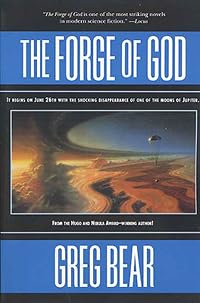
On July 26, Arthur Gordon learns that Europa, the sixth moon of Jupiter, has disappeared. Not hiding, not turned black, but gone. On September 28th, Edward Shaw finds an error in the geological records of Death Valley. A cinder cone was left off the map. Could it be new? Or, stranger yet, could it be artificial? The answer may be lying beside it-a dying Guest who brings devastating news for Edward and for Planet Earth. As more unexplained phenomena spring up around the globe-a granite show more mountain appearing in Australia, sounds emanating from the earth's core, flashes of light among the asteroids-it becomes clear to some that the end is approaching, and there is nothing we can do. In The Forge of God, award-winning author Greg Bear describes the final days of the world on both a massive, scientific scale and in the everyday, emotional context of individual human lives. Facing the destruction of all they know, some people turn to God, others to their families, and a few turn to saviors promising escape from a planet being torn apart. Will they make it in time? And who gets left behind to experience the last moments of beauty and chaos on earth? Nominated for a Nebula Award for Best Novel in 1987 and for Hugo and Locus Awards in 1988, The Forge of God is an engrossing read, breathtaking in its scope and in its detail. show lessTags
Recommendations
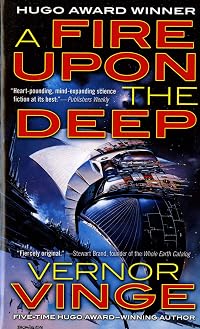
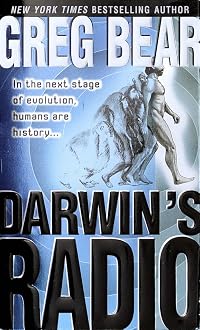
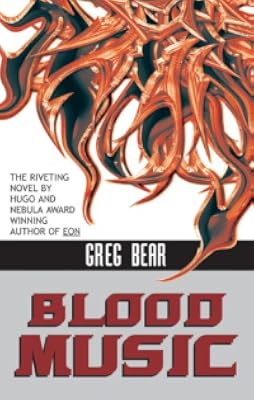
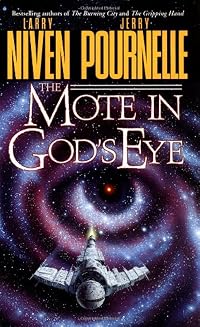





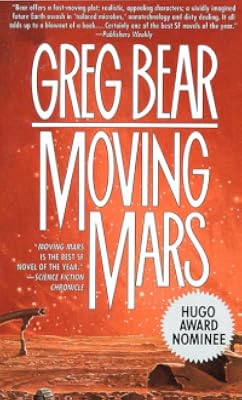
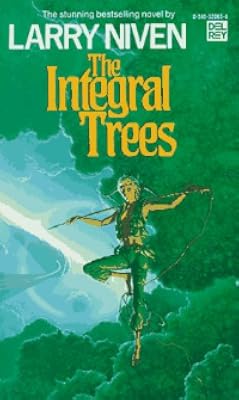
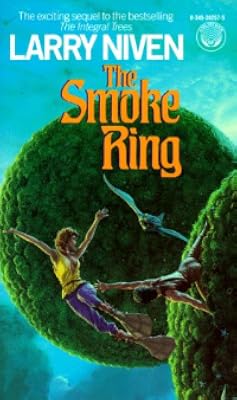
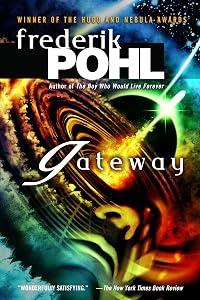

Member Recommendations
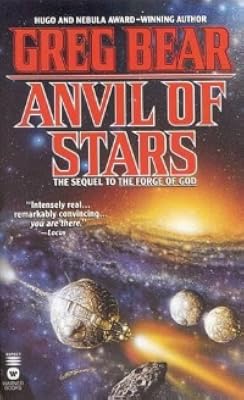
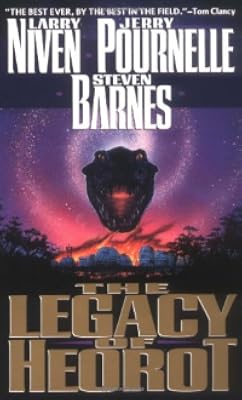
sturlington Aliens attack Earth
Member Reviews
An impressive novel of planetary apocalypse, 'The Forge of God' (1987) is, at one level, just another science fiction tale of Earth as victim of incomprehensible galactic struggles. It rises above that with its eerie ability to evoke planetary destruction as it might be seen by us, the destroyed.
Greg Bear deals with only good and weak people. His picture of their reactions to extinction is plausible. One suspects that not-so-good and bad people might react in very different ways but, despite the horror, Bear remains an inveterate humanist. He is not interested in bad people.
The novel, of course, channels Arthur C. Clarke and it owes something to the 'berserker' planet-destroying machines of Fred Saberhagen's novels. The ideas are not show more original yet the implementation holds our attention.
There is something to think about here. One solution to the Fermi Pradox is that a civilisation has sent out war machines to destroy any civilisation on the verge of becoming space travellers in order to ensure that it can face no future 'planetary security' threat.
Honestly, given the mind-set of the average neo-conservative who might well one day command a Department of Planetary Security, who is not to say that future humans, if first in the race to build an interstellar civilisation, would not engage in a similar exercise in genocide.
In Saberhagen's universe, the self-replicating machines are masterless doomsday machines left over from a war between interstellar powers. Their antagonists are heroic humans but Bear here has humans as mere victims with the interstellar powers still engaged in their war.
There is a nod to American religious sensibilities as the two sides represent evil and good from a human perspective (a degree of moral ambiguity only appears in the last two pages). The 'bad' aliens seem particularly adept at 'maskirovka' and the humans are just a little stupid and trusting.
Some of Bear's expected tropes are here - that nod to the border between science and religion, academic and journalist protagonists, protection of family under extreme conditions, the compromises and fixes of government bureaucracy, bursts of credible (in 1987) 'hard science'.
Where he scores is in getting across the sheer 'otherness' of the alien, unknowable (perhaps like 'God') in its support for mankind and in its choices on the one side and possessed with a single-minded manipulative callousness on the other.
The implication (very Arthur C. Clarke this) is of humanity as still childlike in terms of its place in the universe but with the potential to become not merely adult but (in the last pages) dangerously so - 'To those who killed earth, beware her children!' Biblical vengeance will come, American-style.
The focus (barring a few brief sojourns in the Pacific, albeit on an American research vessel, and passing mentions of Australia, Mongolia and the 'Soviets') is wholly centred on the good old US of A ... to destroy the Earth is to destroy America and that perhaps is the ultimate crime!
Still, it is an above average well written science fiction horror-thriller that makes you care for characters who are well-drawn in a plot that is well constructed. The descriptions of the final day of destruction are a worthy counterpart to the canvases of John Martin. show less
Greg Bear deals with only good and weak people. His picture of their reactions to extinction is plausible. One suspects that not-so-good and bad people might react in very different ways but, despite the horror, Bear remains an inveterate humanist. He is not interested in bad people.
The novel, of course, channels Arthur C. Clarke and it owes something to the 'berserker' planet-destroying machines of Fred Saberhagen's novels. The ideas are not show more original yet the implementation holds our attention.
There is something to think about here. One solution to the Fermi Pradox is that a civilisation has sent out war machines to destroy any civilisation on the verge of becoming space travellers in order to ensure that it can face no future 'planetary security' threat.
Honestly, given the mind-set of the average neo-conservative who might well one day command a Department of Planetary Security, who is not to say that future humans, if first in the race to build an interstellar civilisation, would not engage in a similar exercise in genocide.
In Saberhagen's universe, the self-replicating machines are masterless doomsday machines left over from a war between interstellar powers. Their antagonists are heroic humans but Bear here has humans as mere victims with the interstellar powers still engaged in their war.
There is a nod to American religious sensibilities as the two sides represent evil and good from a human perspective (a degree of moral ambiguity only appears in the last two pages). The 'bad' aliens seem particularly adept at 'maskirovka' and the humans are just a little stupid and trusting.
Some of Bear's expected tropes are here - that nod to the border between science and religion, academic and journalist protagonists, protection of family under extreme conditions, the compromises and fixes of government bureaucracy, bursts of credible (in 1987) 'hard science'.
Where he scores is in getting across the sheer 'otherness' of the alien, unknowable (perhaps like 'God') in its support for mankind and in its choices on the one side and possessed with a single-minded manipulative callousness on the other.
The implication (very Arthur C. Clarke this) is of humanity as still childlike in terms of its place in the universe but with the potential to become not merely adult but (in the last pages) dangerously so - 'To those who killed earth, beware her children!' Biblical vengeance will come, American-style.
The focus (barring a few brief sojourns in the Pacific, albeit on an American research vessel, and passing mentions of Australia, Mongolia and the 'Soviets') is wholly centred on the good old US of A ... to destroy the Earth is to destroy America and that perhaps is the ultimate crime!
Still, it is an above average well written science fiction horror-thriller that makes you care for characters who are well-drawn in a plot that is well constructed. The descriptions of the final day of destruction are a worthy counterpart to the canvases of John Martin. show less
By no means a good book, but it's enjoyable and almost always holds one's attention.
The drawbacks are those common enough in airport novels: pointless descriptions (Bear is especially fond of detailing people's appearance--height, build, degree of balding), dodgy diction ('an unenthused wrist') descriptions and terms that call to mind an author's boning up on relevant subjects. There's a problem with balance, as well; e.g. the very long description. of characters' idyllic visit to Yosemite Park whilst er there's an interesting apocalypse going on. To be fair, though, Bear doesn't throw in brand names and hot sexy babes, he forbears following up the thriller elements and despite the inclusion of a dying friend and a beloved child he show more doesn't sink into sentimentailty. I can't imagine caring two straws about any of the characters but to me at least that doesn't matter one whit; in fact, I'm more bothered by characters eating hamburgers, boiled eggs, and iceberg lettuce despite knowing that their meals are numbered.
The ominous slowly-revealed threat to the earth is dead cool as is the nature of the helpers, the Guardians. The newspaper article in the denouement is a bit too cliched for my taste: Yay humanity! And though that doesn't quite give the book a Hollywood ending, I'd have preferred I think a passage showing POV of the guardians/babysitters putting the existence of humans in perspective.
A satisfying book if you're in a forgiving mood. It won't set you pondering but it could be far worse. show less
The drawbacks are those common enough in airport novels: pointless descriptions (Bear is especially fond of detailing people's appearance--height, build, degree of balding), dodgy diction ('an unenthused wrist') descriptions and terms that call to mind an author's boning up on relevant subjects. There's a problem with balance, as well; e.g. the very long description. of characters' idyllic visit to Yosemite Park whilst er there's an interesting apocalypse going on. To be fair, though, Bear doesn't throw in brand names and hot sexy babes, he forbears following up the thriller elements and despite the inclusion of a dying friend and a beloved child he show more doesn't sink into sentimentailty. I can't imagine caring two straws about any of the characters but to me at least that doesn't matter one whit; in fact, I'm more bothered by characters eating hamburgers, boiled eggs, and iceberg lettuce despite knowing that their meals are numbered.
The ominous slowly-revealed threat to the earth is dead cool as is the nature of the helpers, the Guardians. The newspaper article in the denouement is a bit too cliched for my taste: Yay humanity! And though that doesn't quite give the book a Hollywood ending, I'd have preferred I think a passage showing POV of the guardians/babysitters putting the existence of humans in perspective.
A satisfying book if you're in a forgiving mood. It won't set you pondering but it could be far worse. show less
It's goddamned exhilarating... You can see the end of things, you can see a plan - or at least some outline of a plan - and it's horrifying, it's grand." (pg. 245)
The Forge of God is another one of those hidden gems which I had left unread on my shelf for many months and then, after finally reading it, getting angry at myself for having left it so long. It is an intriguing, classy science-fiction novel about the end of the world, rooted in scientific plausibility and highly imaginative and evocative acts of epic destruction.
The book is, for the most part, a sci-fi mystery. One of Jupiter's moons has disappeared and a dying alien creature arrives in Death Valley, warning of the Earth's imminent destruction. The first part of the book show more unravels these mysteries; just like the bewildered characters, the reader tries to make sense of the events and the phenomena which are occurring, only for new curveballs to be thrown in at every step. Whilst some other reviewers have disparaged this first section of the book, I found it very engrossing. Many, many questions and hypotheses are raised, only to be shot down or revised as circumstances change. There is an incredible sense of foreboding throughout the novel: we know roughly what is coming - the total, merciless destruction of Earth - but we don't know how, or indeed why.
These questions of 'how' and 'why' are the main strengths of the novel. The 'how' question is easier to address; as mentioned above, author Greg Bear roots his novel in scientific plausibility. I'm no physicist, or even a dedicated hard sci-fi reader, but Bear's plot did make sense to my layman's mind. I've always been fascinated by the sheer epic scale implied by astronomy, physics and the natural world, and Bear's novel satisfied these interests of mine and then some. As for all the science talk itself, it was communicated rather clearly by the author, even if a few times I had to re-read a passage in order to get my head around some of the concepts.
The 'why' question is more difficult to answer, partly because I don't want to reveal any spoilers, but also because although a number of the mysteries are resolved, there was a surprising lack of closure on a number of questions. Indeed, some of the early mysteries turn out to be red herrings. ([[ spoilers ]] Why all the subterfuge with the robots early on and the thing about nuking the rocks? What purpose did that serve? Why did the escape hatch close on Rogers? Why was there all that talk about Captain Cook and the Hawaiians and how humankind might be able to fight back, only for there to be no hint at all as to how they could? Was it just that the bad aliens didn't want any humans to know what was happening so none could escape - the 'beware Earth's children' bit at the end and all that? [[ end spoilers ]]) Maybe some of these mysteries will be answered in the second book, Anvil of Stars, but I think a lot of them will be left to lie. However, this is not a major criticism of the book, because it is so jam-packed with stimulating ideas that you can't expect the author to answer everything you want to know.
Despite my exasperation about some tantalising questions left unanswered, I was appreciative of the fact that Bear doesn't spoon-feed us answers. Nowhere is this more apparent than in the enigmatic nature of the aliens. There are probably at least two - maybe more - alien factions at play in the novel, and we never know who we should be rooting for to save mankind. Just as you think you might be figuring it out, there is another little nugget of doubt thrown in. For example, some of the phenomena seem ominous but turn out to be acts by the 'good' aliens to try and save Earth. We're never one-hundred percent sure who's good or bad, or whether there are indeed rescuers or just more deceivers. ([[ spoilers ]] In fact, I have the suspicion that the 'good' aliens at the end may even be the planet-eaters themselves. Read pages 324-5: the 'Moms' make their Ships from the dead material of the Earth - just as they claimed the 'bad' aliens would - and stoke the hatred of the survivors of humankind into joining them. The 'battles' in the sky may be an Operation Fortitude-esque simulation to play to the gallery of humankind. They want humankind to help destroy another planet - ostensibly the planet-eaters' homeland: could it be it is all just a ruse to get new allies for further destruction by pretending to lead a crusade? [[ end spoilers ]]). This speculation may be obsolete or erroneous to those who have read the second book, but the fact that I'm even going off on speculative tangents is evidence enough of how stimulating Bear's ideas were.
All in all, the book is incredibly exciting, stimulating and, yes, horrifying. The second part of the book, which deals in explicit detail the destruction of the planet, is incredibly emotional reading. Even those reviewers who disliked the earlier parts of the book praise this section, and rightly so. We are given a view of the Earth from space - a jewel in the blackness. And we think, please don't destroy it, please. It's so beautiful. From the point of view of the characters (not as cardboard as others have suggested) we witness, from outer orbit but also from the perspective of humans trapped on the planet itself, the act of our unique and beautiful home being not just violently destroyed but mercilessly and systematically dismantled. Bear weaves an ending which eulogises and encompasses both the natural beauty of the Earth itself and the redeeming features of humankind, which is struggling gamely to meet the end with dignity and courage.
But for all the fine writing qualities evident especially in the second part of this book, it is the ideas which make The Forge of God a must-read. I've always respected books which assume the reader has a certain level of intelligence and doesn't talk down to you. Above all, the novel is about humankind coming to terms with its own insignificance in the universe (pale blue dot, indeed) when faced with a seemingly-omnipotent alien force (hence the God comparisons prevalent throughout), and how it responds with very human emotions, both good and bad. It makes you root not for one character or another, but for the human race itself, and makes you proud of our innate qualities and compassions even despite our technological and intellectual inferiority to these intergalactic bullies. For a sci-fi novel of modest length to summon up such profound and heady thoughts... well, it's just incredible reading." show less
The Forge of God is another one of those hidden gems which I had left unread on my shelf for many months and then, after finally reading it, getting angry at myself for having left it so long. It is an intriguing, classy science-fiction novel about the end of the world, rooted in scientific plausibility and highly imaginative and evocative acts of epic destruction.
The book is, for the most part, a sci-fi mystery. One of Jupiter's moons has disappeared and a dying alien creature arrives in Death Valley, warning of the Earth's imminent destruction. The first part of the book show more unravels these mysteries; just like the bewildered characters, the reader tries to make sense of the events and the phenomena which are occurring, only for new curveballs to be thrown in at every step. Whilst some other reviewers have disparaged this first section of the book, I found it very engrossing. Many, many questions and hypotheses are raised, only to be shot down or revised as circumstances change. There is an incredible sense of foreboding throughout the novel: we know roughly what is coming - the total, merciless destruction of Earth - but we don't know how, or indeed why.
These questions of 'how' and 'why' are the main strengths of the novel. The 'how' question is easier to address; as mentioned above, author Greg Bear roots his novel in scientific plausibility. I'm no physicist, or even a dedicated hard sci-fi reader, but Bear's plot did make sense to my layman's mind. I've always been fascinated by the sheer epic scale implied by astronomy, physics and the natural world, and Bear's novel satisfied these interests of mine and then some. As for all the science talk itself, it was communicated rather clearly by the author, even if a few times I had to re-read a passage in order to get my head around some of the concepts.
The 'why' question is more difficult to answer, partly because I don't want to reveal any spoilers, but also because although a number of the mysteries are resolved, there was a surprising lack of closure on a number of questions. Indeed, some of the early mysteries turn out to be red herrings. ([[ spoilers ]] Why all the subterfuge with the robots early on and the thing about nuking the rocks? What purpose did that serve? Why did the escape hatch close on Rogers? Why was there all that talk about Captain Cook and the Hawaiians and how humankind might be able to fight back, only for there to be no hint at all as to how they could? Was it just that the bad aliens didn't want any humans to know what was happening so none could escape - the 'beware Earth's children' bit at the end and all that? [[ end spoilers ]]) Maybe some of these mysteries will be answered in the second book, Anvil of Stars, but I think a lot of them will be left to lie. However, this is not a major criticism of the book, because it is so jam-packed with stimulating ideas that you can't expect the author to answer everything you want to know.
Despite my exasperation about some tantalising questions left unanswered, I was appreciative of the fact that Bear doesn't spoon-feed us answers. Nowhere is this more apparent than in the enigmatic nature of the aliens. There are probably at least two - maybe more - alien factions at play in the novel, and we never know who we should be rooting for to save mankind. Just as you think you might be figuring it out, there is another little nugget of doubt thrown in. For example, some of the phenomena seem ominous but turn out to be acts by the 'good' aliens to try and save Earth. We're never one-hundred percent sure who's good or bad, or whether there are indeed rescuers or just more deceivers. ([[ spoilers ]] In fact, I have the suspicion that the 'good' aliens at the end may even be the planet-eaters themselves. Read pages 324-5: the 'Moms' make their Ships from the dead material of the Earth - just as they claimed the 'bad' aliens would - and stoke the hatred of the survivors of humankind into joining them. The 'battles' in the sky may be an Operation Fortitude-esque simulation to play to the gallery of humankind. They want humankind to help destroy another planet - ostensibly the planet-eaters' homeland: could it be it is all just a ruse to get new allies for further destruction by pretending to lead a crusade? [[ end spoilers ]]). This speculation may be obsolete or erroneous to those who have read the second book, but the fact that I'm even going off on speculative tangents is evidence enough of how stimulating Bear's ideas were.
All in all, the book is incredibly exciting, stimulating and, yes, horrifying. The second part of the book, which deals in explicit detail the destruction of the planet, is incredibly emotional reading. Even those reviewers who disliked the earlier parts of the book praise this section, and rightly so. We are given a view of the Earth from space - a jewel in the blackness. And we think, please don't destroy it, please. It's so beautiful. From the point of view of the characters (not as cardboard as others have suggested) we witness, from outer orbit but also from the perspective of humans trapped on the planet itself, the act of our unique and beautiful home being not just violently destroyed but mercilessly and systematically dismantled. Bear weaves an ending which eulogises and encompasses both the natural beauty of the Earth itself and the redeeming features of humankind, which is struggling gamely to meet the end with dignity and courage.
But for all the fine writing qualities evident especially in the second part of this book, it is the ideas which make The Forge of God a must-read. I've always respected books which assume the reader has a certain level of intelligence and doesn't talk down to you. Above all, the novel is about humankind coming to terms with its own insignificance in the universe (pale blue dot, indeed) when faced with a seemingly-omnipotent alien force (hence the God comparisons prevalent throughout), and how it responds with very human emotions, both good and bad. It makes you root not for one character or another, but for the human race itself, and makes you proud of our innate qualities and compassions even despite our technological and intellectual inferiority to these intergalactic bullies. For a sci-fi novel of modest length to summon up such profound and heady thoughts... well, it's just incredible reading." show less
A powerful end-of-the-world story, with a twist - there are survivors, with a mission. The destruction of the Earth is written in quite excruciating detail, which is intentional.
++++++++++++++++++++++++++++++++++++++++++++++++++++++++++++++++++++++++++++++++++++++++++++++++++++++++++++++
I first read this novel shortly after it came out in the late 1980s; I always remembered it after that for the destruction of the Earth, and indeed my short review above, written a few years ago, focuses exclusively on that. My recollection was that the novel dragged a little for me in the middle section where the awful truth of what is happening dawns on the characters. But it had stayed with me and I decided, almost at random, that I wanted to re-read show more it now, in 2015.
I was struck by how well-constructed the novel is, and how it shakes off science-fictional cliché. The factionalism within the US Government is well described; and the Christian fundamentalism of the President, which may have seemed a bit fantastic in the middle 1980s, rings chillingly truer now. The military's reaction and glacial bureaucracy when confronted with an alien and a group of humans who have been in contact with it also rings true.
One thing I had a slight problem with was the book's archaic nature with respect to modern technology. The book was written in the mid-1980s and was set in the mid-1990s. But there are no mobile phones, and computer technology is not as advanced as it actually was by the mid-90s. And lest you think I'm being irritatingly modern here, I can tell you that I remember both the 1990s and 1980s! It's not Bear's fault, of course. No-one grasped how quickly the new technologies would change all our lives. Bear had the misfortune to be writing on the very cusp of change; as a result, the technological mismatch between fiction and reality is more glaring than if the novel had been written in the 1970s, 60s or even the 50s. We wouldn't expect a writer from those times to get such a near-future scenario right; but with Bear writing so close to our own time, the dislocation of our memories to the story is particularly jarring, though not terminally so.
As to the characters, I found them believable if a little stereotyped. I certainly had no problem visualising them as people. But there are few female characters. One thing I particularly liked was the subversion of so many science-fictional tropes, from the two First Contact situations (neither of which match our expectations), through the Government alien conspiracy (there isn't one), the reaction of the general population to impending doom (I'd like to think we'd be as rational and resigned as this in reality), and above all, the Hidden Alien Masters taking control of humans - except, of course, they aren't masters, their control isn't what it seems, and their motives are noble.
All in all, then, still a novel that I'd recommend, as long as you can look past the book's shortcomings. The sequel, Anvil of Stars, is a very different novel. show less
++++++++++++++++++++++++++++++++++++++++++++++++++++++++++++++++++++++++++++++++++++++++++++++++++++++++++++++
I first read this novel shortly after it came out in the late 1980s; I always remembered it after that for the destruction of the Earth, and indeed my short review above, written a few years ago, focuses exclusively on that. My recollection was that the novel dragged a little for me in the middle section where the awful truth of what is happening dawns on the characters. But it had stayed with me and I decided, almost at random, that I wanted to re-read show more it now, in 2015.
I was struck by how well-constructed the novel is, and how it shakes off science-fictional cliché. The factionalism within the US Government is well described; and the Christian fundamentalism of the President, which may have seemed a bit fantastic in the middle 1980s, rings chillingly truer now. The military's reaction and glacial bureaucracy when confronted with an alien and a group of humans who have been in contact with it also rings true.
One thing I had a slight problem with was the book's archaic nature with respect to modern technology. The book was written in the mid-1980s and was set in the mid-1990s. But there are no mobile phones, and computer technology is not as advanced as it actually was by the mid-90s. And lest you think I'm being irritatingly modern here, I can tell you that I remember both the 1990s and 1980s! It's not Bear's fault, of course. No-one grasped how quickly the new technologies would change all our lives. Bear had the misfortune to be writing on the very cusp of change; as a result, the technological mismatch between fiction and reality is more glaring than if the novel had been written in the 1970s, 60s or even the 50s. We wouldn't expect a writer from those times to get such a near-future scenario right; but with Bear writing so close to our own time, the dislocation of our memories to the story is particularly jarring, though not terminally so.
As to the characters, I found them believable if a little stereotyped. I certainly had no problem visualising them as people. But there are few female characters. One thing I particularly liked was the subversion of so many science-fictional tropes, from the two First Contact situations (neither of which match our expectations), through the Government alien conspiracy (there isn't one), the reaction of the general population to impending doom (I'd like to think we'd be as rational and resigned as this in reality), and above all, the Hidden Alien Masters taking control of humans - except, of course, they aren't masters, their control isn't what it seems, and their motives are noble.
All in all, then, still a novel that I'd recommend, as long as you can look past the book's shortcomings. The sequel, Anvil of Stars, is a very different novel. show less
Some thoughts upon reading this novel in 1989 -- with some spoilers.
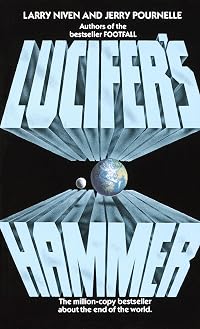
This novel has the feel of Larry Niven and Jerry Pournelle's Lucifer's Hammer with its multiple characters and widescale panoramic view though its concerns are emotional and spiritual and not political. (Larry Niven even as a veiled cameo as sf writer Lawrence van Cott.)
This novel features one of the greatest first words from an alien intelligence: "I am sorry, but there is bad news."
The characterization was brilliant. You really cared about these characters. While mass religious movements thrive on the coming apocalypse, Bear downplays that element unlike so many anti-religious authors. The military is competent.
Bear does not give us looting, strange cults, massive show more hedonism, riots when humanity waits the end, but I think his spiritual, emotional vision of people accepting, however reluctantly, the end is very credible. People wait with dignity and in the company of loved ones at the places they love best, their homes.
One of the book's blurbs emphasises Bear's ode to the Earth. It is here. The most lengthy descriptions involve the Earth, its life and death. The book opens with that and ends with long descriptions of Yosemite Park's grandeur.
I did have a few quibbles. I don't read Latin so missed out on most of the headings' significance. Second the rescue of humanity by a second group of aliens seemed like a bit of a concession to tradition (apocalyptic books almost always have humanity surviving in some state) and optimism. While relatively well handled, I thought the "Network" was the weakest part of the book. Still the presence of the Arks in space -- I like them saving culture as well as species and the Moms enigmatic references to the Law and punishment of "the planet-eaters" -- gave a chance for humanity to witness the destruction of Mother Earth. More importantly, the end, with Man avenging Earth's death and finding another home on the terraformed Mars (like Earth lovingly, lengthily described) fits in with the tone and philosophy of Bear's Blood Music: with man's evolution (technologically or here by cosmic agencies) comes poignancy at loss, startling transformation (here it is in Man's physical and emotional home, in Blood Music it is his very biology and intellect), and evitable change. Like an individual growing old we suffer loss and gain new, sometimes joyous and grand, experience. Bear weaves the experiences and emotions of life to cosmic events. Like the planet-eaters, he wastes little. show less
This novel has the feel of Larry Niven and Jerry Pournelle's Lucifer's Hammer with its multiple characters and widescale panoramic view though its concerns are emotional and spiritual and not political. (Larry Niven even as a veiled cameo as sf writer Lawrence van Cott.)
This novel features one of the greatest first words from an alien intelligence: "I am sorry, but there is bad news."
The characterization was brilliant. You really cared about these characters. While mass religious movements thrive on the coming apocalypse, Bear downplays that element unlike so many anti-religious authors. The military is competent.
Bear does not give us looting, strange cults, massive show more hedonism, riots when humanity waits the end, but I think his spiritual, emotional vision of people accepting, however reluctantly, the end is very credible. People wait with dignity and in the company of loved ones at the places they love best, their homes.
One of the book's blurbs emphasises Bear's ode to the Earth. It is here. The most lengthy descriptions involve the Earth, its life and death. The book opens with that and ends with long descriptions of Yosemite Park's grandeur.
I did have a few quibbles. I don't read Latin so missed out on most of the headings' significance. Second the rescue of humanity by a second group of aliens seemed like a bit of a concession to tradition (apocalyptic books almost always have humanity surviving in some state) and optimism. While relatively well handled, I thought the "Network" was the weakest part of the book. Still the presence of the Arks in space -- I like them saving culture as well as species and the Moms enigmatic references to the Law and punishment of "the planet-eaters" -- gave a chance for humanity to witness the destruction of Mother Earth. More importantly, the end, with Man avenging Earth's death and finding another home on the terraformed Mars (like Earth lovingly, lengthily described) fits in with the tone and philosophy of Bear's Blood Music: with man's evolution (technologically or here by cosmic agencies) comes poignancy at loss, startling transformation (here it is in Man's physical and emotional home, in Blood Music it is his very biology and intellect), and evitable change. Like an individual growing old we suffer loss and gain new, sometimes joyous and grand, experience. Bear weaves the experiences and emotions of life to cosmic events. Like the planet-eaters, he wastes little. show less
This is a compelling and, I think, unique story about the destruction of the Earth.
The hook is that mysterious new mountains have appeared without warning in Death Valley and Australia. An alien emerges from the Death Valley mountain and lets us know that hostile alien-built machines intend to destroy the Earth. So, how do we react to that news? What, if anything, can we do against such superior technology? Why would aliens want to destroy us, and why would other aliens want to oppose them? Bear does his best to answer these questions in interesting ways. When the destruction of the Earth does arrive, it is well written and wrenching. As much as I don't want to, I can imagine myself there.
My only quibble with this novel is that Bear's show more lead characters, the ones who think about things and do things, are all male. This is a common fault with white-guy science fiction. There are female characters, realistic ones, but they function as supports and sounding boards, not as active participants in the story. Otherwise, though, the story held my attention all the way through. It is a good addition to the canon of apocalyptic SF. show less
The hook is that mysterious new mountains have appeared without warning in Death Valley and Australia. An alien emerges from the Death Valley mountain and lets us know that hostile alien-built machines intend to destroy the Earth. So, how do we react to that news? What, if anything, can we do against such superior technology? Why would aliens want to destroy us, and why would other aliens want to oppose them? Bear does his best to answer these questions in interesting ways. When the destruction of the Earth does arrive, it is well written and wrenching. As much as I don't want to, I can imagine myself there.
My only quibble with this novel is that Bear's show more lead characters, the ones who think about things and do things, are all male. This is a common fault with white-guy science fiction. There are female characters, realistic ones, but they function as supports and sounding boards, not as active participants in the story. Otherwise, though, the story held my attention all the way through. It is a good addition to the canon of apocalyptic SF. show less
Classic "big ideas, weak characters" sci fi that kept me guessing and second guessing where the narrative was going, giving up the ambiguity for a mostly expected ending. The story veers toward hard sci-fi but suffers some from being written in the 80s, the almost 40 years of science since having changed a lot of what is cutting edge at the time of writing (string theory for example). It's also a bit quaint now reading about the very beginnings of the internet age and the special forums for astro obsessives.
Overall a good read with a satisfying ending that doesn't really need a sequel, even though he did write one.
Overall a good read with a satisfying ending that doesn't really need a sequel, even though he did write one.
Members
- Recently Added By
Published Reviews
Bear brengt voldoende ideeen samen voor een tiental romans: Europa, de zesde maan van Jupiter, verdwijnt zomaar; in Australie duikt een replica op van Ayers Rock, waar robots uitkomen die het begin van Het Millenium aankondigen, in tegenspraak met een onaards wezen dat verkondigt dat de Aarde gedoemd is tot vernietiging door een naderende wereldbouwer. Deze en andere plotgegevens worden samen show more verwerkt in een SF-roman die de 'hardcore' (hi-tech SF) combineert met verderreikende elementen zoals vragen omtrent het godsbestaan, boete en humanitaire strekkingen. Bear schrijft zowel 'high fantasy' als 'harde' SF, waaronder deze laatste roman kan gerekend worden, maar er zijn teveel personages, teveel verwikkelingen. Een moeilijk boek, dat weet te boeien door de ideeenrijkdom en de bizarre plotwendingen, waarbij Bear de cliches van het genre keurig vermijdt, en dat de meer ervaren SF lezer zeker zal aanspreken.
(NBD|Biblion recensie, E.C. Bertin.) show less
(NBD|Biblion recensie, E.C. Bertin.) show less
added by karnoefel
The disappearance of one of Jupiter's moons, the appearance of "little green men" in Australia and the American Southwest, and the sudden presence of unidentifiable objects on a collision course inside the Earth's core add up to the inescapable conclusion that the Earth has been invaded by an enemy it cannot fight. Powerfully and gracefully written, the latest novel by the author of Eon and show more Blood Music stands far above most examples of "doomsday" science fiction. Recommended. show less
added by cmwilson101
Lists

Best Science Fiction Novels
816 works; 426 members
Survey of Classic Science Fiction
171 works; 47 members

Best Books With Aliens
67 works; 10 members

Books Read in 2012
816 works; 34 members

Books Read in 2023
5,638 works; 147 members

Books Read in 2026
2,061 works; 69 members
Author Information

Greg Bear was born in San Diego, California, on August 20, 1951. He received a Bachelor of Arts degree from San Diego State University in 1973. At age 14, he began submitting pieces to magazines and at 15 he sold his first story to Robert Lowndes' Famous Science Fiction. It would be five years before he sold another piece, but by 23 he was selling show more stories regularly. He has written more than 30 science fiction and fantasy books and has won numerous awards for his work. In 1984, Hardfought and Blood Music won the Nebula Awards for best novella and novelette; Blood Music went on to win the Hugo Award. The novel version of that story, also called Blood Music, won the Prix Apollo in France. In 1987, Tangents won the Hugo and Nebula awards for best short story. He also won a Nebula in 1994 for Moving Mars and in 2001 for Darwin's Radio. Both Dinosaur Summer and Darwin's Radio have been awarded the Endeavour for best novel published by a Northwest science fiction author. He is also an illustrator and his work has appeared in Galaxy, Fantasy and Science Fiction, and Vertex, and in both hardcover and paperback books. He was a founding member of ASFA, the Association of Science Fiction Artists. His works include City at the End of Time, Hull Zero Three, The Mongoliad, Mariposa, Halo: Cryptum, Halo: Primordium and Halo: Silentium. (Bowker Author Biography) show less
Some Editions
Awards and Honors
Awards
Series

Belongs to Publisher Series
Work Relationships
Has the (non-series) sequel
Common Knowledge
- Original title
- The Forge of God
- Original publication date
- 1987-09
- People/Characters
- Arthur Gordon; Trevor Hicks; Edward Shaw
- Important places
- Vandenberg Air Force Base, California, USA; Australia
- Dedication
- For Alan Brennert, who gave me hell on TV.
- First words
- Arthur Gordon stood in the darkness by the bank of the Rogue River, having walked a dozen yards away from his house and family and guests, momentarily weary of company.
- Quotations
- For a moment, and no more, he felt himself slide into a spiritual ditch, a little quiet gutter of despair. To simply give up, give in, open his arms to the darkness, shed all responsibility to country, to wife and son, to him... (show all)self. To end the game--that was all it was, no? Take his piece from the board, watch the board swept clean, a new game set up. Rest. Oddly, coming out of that gutter, he took encouragement and strength from the thought that if indeed they were going to be swept from the board, he could then rest, and there would be an end. Funny how the mind works.
- Last words
- (Click to show. Warning: May contain spoilers.)To those who killed Earth; beware her children!
That is how the balance is kept. - Blurbers
- Lambe, Dean R.
- Original language
- English
Classifications
Statistics
- Members
- 2,905
- Popularity
- 6,209
- Reviews
- 65
- Rating
- (3.62)
- Languages
- 8 — Czech, Dutch, English, German, Italian, Korean, Lithuanian, Spanish
- Media
- Paper, Audiobook, Ebook
- ISBNs
- 30
- UPCs
- 1
- ASINs
- 16