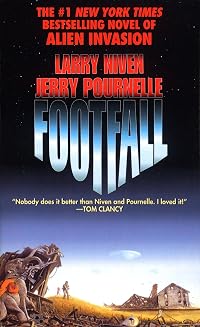
Footfall
by Larry Niven, Jerry Pournelle
On This Page
Description
The earth faces a terrible challenge from alien invaders from space in this novel by the authors of Mote in God's Eye (1975). They first appear as a series of dots on astronomical plates, heading from Saturn directly toward Earth. Since the ringed planet carries no life, scientists deduce the mysterious ship to be a visitor from another star. The world's frantic efforts to signal the aliens go unanswered. The first contact is hostile: the invaders blast a Soviet space station, seize the show more survivors, and then destroy every dam and installation on Earth with a hail of asteriods. Now the conquerors are descending on the American heartland, demanding servile surrender--or death for all humans. show lessTags
Recommendations

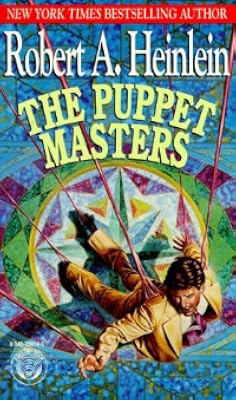
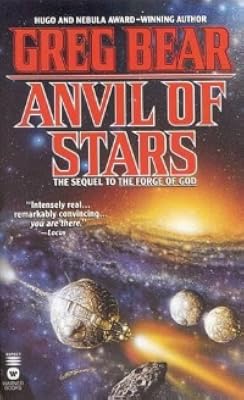
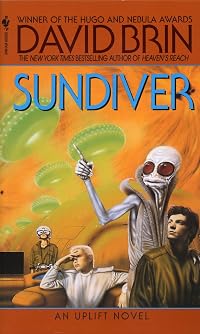
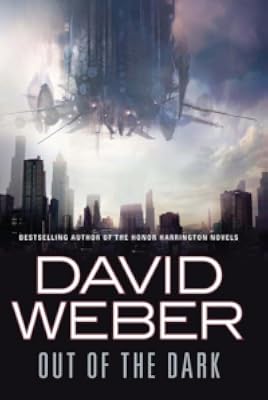













Member Recommendations
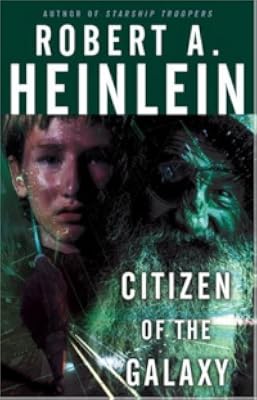
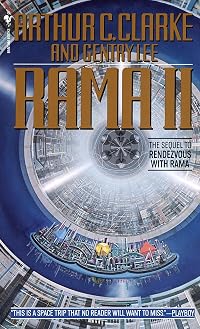
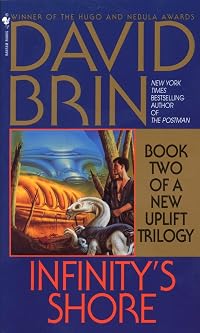
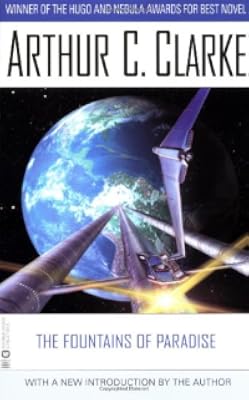
sturlington Aliens attack Earth
Member Reviews
I strongly suspect and freely admit that my expectations going into a book substantially impact my enjoyment and ratings. I seem to be unable to manage this. Well, I went into this particular book with low expectations. It’s a 1985 hard sci-fi dealing with first contact and alien invasion. I prefer my sci-fi with a little less science and a little more wonder and atmosphere than most hard sci-fi. But dang it if I didn’t enjoy the heck out of this one. Sure, it starts a bit slow, it’s mildly misogynistic, a tad bloated, and it features gun toting baby elephants as the invading aliens. That’s right, small elephant-like aliens with a bifurcated truck that splits again with creating four digits on each trunk. This is no spoiler as show more it’s shown on the front cover (at least on my hardbound). Even the book’s characters can’t help but laugh the first time they see the aliens. But like the plot, there’s more beneath the wrinkly skinned exterior.
Let’s start with the plot, on the surface, it’s straight-forward. Aliens are approaching with a large generation ship, and they haven’t just come for our peanuts. The authors (yes, plural - Niven and Pournelle) do a skillful job of slowly revealing the aliens and their motivation, culture, and capabilities. I appreciated how not only were humans confused about the alien’s herd thinking, but the aliens are equally confused about our individualistic approach. It takes a while to get beneath the alien’s thick skin and really understand their backstory, society, and ethos, which is well thought-out and helps to drive a number of plot points. This is what really kept me turning pages and make this book fun.
It’s also epic (sort of like the movie Independence Day was epic). There were over a hundred characters and dozens of locations. The plot has plenty of twists and turns, nothing mind-blowing, but satisfyingly unpredictable. With Niven and Pournelle as ringmasters, I assume the science is accurate enough, and takes on some big technical challenges (especially the ending). The story is also a good blend of intrigue, suspense, and action.
The book isn’t perfect. I think it could have been trimmed in some places and expanded in others. I would have love to experience things like how the aliens dealt with jungle warfare and meet their first earth elephant. Instead, we are told about these events briefly and second hand. Meanwhile, we get to experience much detailed and tedious government organization and decision-making firsthand. Also, the aliens come across a bit thick. This is somewhat cleverly explained, but I still was bothered balancing their impressive capabilities with their lackluster intelligence. Of course, aliens might say the same thing about us.
An alien invasion extravaganza, driven by a slow reveal of the alien race’s history, purpose, and abilities, that makes for an entertaining tale by putting the entire planet in peril. Four stampeding stars! show less
Let’s start with the plot, on the surface, it’s straight-forward. Aliens are approaching with a large generation ship, and they haven’t just come for our peanuts. The authors (yes, plural - Niven and Pournelle) do a skillful job of slowly revealing the aliens and their motivation, culture, and capabilities. I appreciated how not only were humans confused about the alien’s herd thinking, but the aliens are equally confused about our individualistic approach. It takes a while to get beneath the alien’s thick skin and really understand their backstory, society, and ethos, which is well thought-out and helps to drive a number of plot points. This is what really kept me turning pages and make this book fun.
It’s also epic (sort of like the movie Independence Day was epic). There were over a hundred characters and dozens of locations. The plot has plenty of twists and turns, nothing mind-blowing, but satisfyingly unpredictable. With Niven and Pournelle as ringmasters, I assume the science is accurate enough, and takes on some big technical challenges (especially the ending). The story is also a good blend of intrigue, suspense, and action.
The book isn’t perfect. I think it could have been trimmed in some places and expanded in others. I would have love to experience things like how the aliens dealt with jungle warfare and meet their first earth elephant. Instead, we are told about these events briefly and second hand. Meanwhile, we get to experience much detailed and tedious government organization and decision-making firsthand. Also, the aliens come across a bit thick. This is somewhat cleverly explained, but I still was bothered balancing their impressive capabilities with their lackluster intelligence. Of course, aliens might say the same thing about us.
An alien invasion extravaganza, driven by a slow reveal of the alien race’s history, purpose, and abilities, that makes for an entertaining tale by putting the entire planet in peril. Four stampeding stars! show less
When I picked up this book I wasn't expecting great literature. It was, after all, about an alien invasion. I was looking for something light and fun. But I found it so irritating, it finally took a sheer act of will for me to finish it.
I could write pages about what made the book so bad. This is only an outline:
1.) Characterizations. The characters were cartoons. They had no depth. That was perhaps inevitable, given the fact that the novel's dramatis personae, listed in the front of the book, consists of four pages! That's too many characters, even for a novel of over 500 pages. A reader can't get a sense of any of them. Do any of them have emotional lives? Hard to tell, given that the premise of the book is literally earth-shattering, show more and there's no indication that anybody's carries any trauma over it. A lot of people die, but is anyone devastated, even when losing friends, family, mates? All just seem to shake it off and life goes on.
Worst are the characterizations of women. One of the major characters is a major in Army Intelligence who becomes adviser to the President. Yet she's portrayed as a real nitwit who giggles all the time in the middle of meetings and flirts with the head of the President's Secret Service detail even the most important things are going on.
The portrayals of the alien females are no better. The aliens apparently have an even stronger patriarchal civilization than the Earthlings do. (Must be a universal law of nature in Niven-Pournelle's view?
2.) Dialogue. When the characters are cartoons, I suppose you can't expect them to talk like real people. But did the "sound" of it have be so painful? Which leads to . . .
3.) The writing in general. Who can take this kind of writing seriously:
[SCENE: The aliens have invaded Kansas by parachuting in. Reports are coming in to the President and his advisers, and they are curious to know what they look like.]
The Admiral lifted the phone. "Carrell . . . Yes, put the photographs up on the big screens. Let everyone see what we're up against."
There were five screens. One by one they filled with pictures of baby elephants. Some hung from paper airplanes and wore elevator shoes. Others were on foot. All carried weirdly shaped rifles.
Laughter sounded on the floor below, but it soon died away as the screen showed photographs of ruined buildings and wrecked cars, with alien shapes in the foreground. Bodies lay at the background of most of the pictures.
Jenny studied the photographs. They were quite good; the photographer who'd taken them said she'd sold to Sports Illustrated and other major magazines. That's the enemy.
"They do look like elephants," Admiral Carrel said.
"Yes, sir," Jenny said. "But they're not really elephants."
"No. They're invaders," General Toland said.
Even when Niven-Pournelle happen upon a happy turn-of-phrase, they botch it. When the alien mothership suffers significant damage, they write that sounds from its hull sounded like that of a "smashed banjo." That's a clever metaphor. And Niven-Pournelle must have themselves also thought so, because they then use the same metaphor three more times in the next few pages!
And if there were a word I could eliminate from their vocabulary, it would be "grin." Everybody's prompted to grin in this book for one reason or another. (Funny reaction, in the midst of an alien invasion.) If you excised all the times the word, "grin," is used in the book, there would be significant gaps in the text. Get Niven-Pounelle a thesaurus!
4.) Gratuitous ridiculousness. If the above quote isn't enough to illustrate this point (baby elephants riding parachuting under paper airplanes while wearing elevator shoes?), note that among the heroes are a swashbuckling Congressman and a bevy of science fiction writers. The SF writers are brought in to advise the President because they would seemingly know more about planning strategically against aliens than Pentagon types who have spent thousands of hours gaming all sorts of scenarios against possible invaders. Just because SF involves speculative thinking, who says that the SF writers speculations in this case are going to be better than anyone else's?
5.) An intriguing idea squandered. There is an idea at the center of the novel, but it remains seriously unexplored. The idea is that much of the carnage that is created between the aliens and the humans results basically because of fundamental cultural misunderstanding. Because the two civilizations carry different assumptions about interpersonal interactions, including conflict, they essentially kill what they don't understand. This is a important insight, having echoes in human history from ancient imperialism to US involvement in SE Asia and the Middle East. Maybe it was too uncomfortable for Niven-Pournelle to explore too deeply (as I understand they hold pretty right-wing beliefs), so they just let it go. show less
I could write pages about what made the book so bad. This is only an outline:
1.) Characterizations. The characters were cartoons. They had no depth. That was perhaps inevitable, given the fact that the novel's dramatis personae, listed in the front of the book, consists of four pages! That's too many characters, even for a novel of over 500 pages. A reader can't get a sense of any of them. Do any of them have emotional lives? Hard to tell, given that the premise of the book is literally earth-shattering, show more and there's no indication that anybody's carries any trauma over it. A lot of people die, but is anyone devastated, even when losing friends, family, mates? All just seem to shake it off and life goes on.
Worst are the characterizations of women. One of the major characters is a major in Army Intelligence who becomes adviser to the President. Yet she's portrayed as a real nitwit who giggles all the time in the middle of meetings and flirts with the head of the President's Secret Service detail even the most important things are going on.
The portrayals of the alien females are no better. The aliens apparently have an even stronger patriarchal civilization than the Earthlings do. (Must be a universal law of nature in Niven-Pournelle's view?
2.) Dialogue. When the characters are cartoons, I suppose you can't expect them to talk like real people. But did the "sound" of it have be so painful? Which leads to . . .
3.) The writing in general. Who can take this kind of writing seriously:
[SCENE: The aliens have invaded Kansas by parachuting in. Reports are coming in to the President and his advisers, and they are curious to know what they look like.]
The Admiral lifted the phone. "Carrell . . . Yes, put the photographs up on the big screens. Let everyone see what we're up against."
There were five screens. One by one they filled with pictures of baby elephants. Some hung from paper airplanes and wore elevator shoes. Others were on foot. All carried weirdly shaped rifles.
Laughter sounded on the floor below, but it soon died away as the screen showed photographs of ruined buildings and wrecked cars, with alien shapes in the foreground. Bodies lay at the background of most of the pictures.
Jenny studied the photographs. They were quite good; the photographer who'd taken them said she'd sold to Sports Illustrated and other major magazines. That's the enemy.
"They do look like elephants," Admiral Carrel said.
"Yes, sir," Jenny said. "But they're not really elephants."
"No. They're invaders," General Toland said.
Even when Niven-Pournelle happen upon a happy turn-of-phrase, they botch it. When the alien mothership suffers significant damage, they write that sounds from its hull sounded like that of a "smashed banjo." That's a clever metaphor. And Niven-Pournelle must have themselves also thought so, because they then use the same metaphor three more times in the next few pages!
And if there were a word I could eliminate from their vocabulary, it would be "grin." Everybody's prompted to grin in this book for one reason or another. (Funny reaction, in the midst of an alien invasion.) If you excised all the times the word, "grin," is used in the book, there would be significant gaps in the text. Get Niven-Pounelle a thesaurus!
4.) Gratuitous ridiculousness. If the above quote isn't enough to illustrate this point (baby elephants riding parachuting under paper airplanes while wearing elevator shoes?), note that among the heroes are a swashbuckling Congressman and a bevy of science fiction writers. The SF writers are brought in to advise the President because they would seemingly know more about planning strategically against aliens than Pentagon types who have spent thousands of hours gaming all sorts of scenarios against possible invaders. Just because SF involves speculative thinking, who says that the SF writers speculations in this case are going to be better than anyone else's?
5.) An intriguing idea squandered. There is an idea at the center of the novel, but it remains seriously unexplored. The idea is that much of the carnage that is created between the aliens and the humans results basically because of fundamental cultural misunderstanding. Because the two civilizations carry different assumptions about interpersonal interactions, including conflict, they essentially kill what they don't understand. This is a important insight, having echoes in human history from ancient imperialism to US involvement in SE Asia and the Middle East. Maybe it was too uncomfortable for Niven-Pournelle to explore too deeply (as I understand they hold pretty right-wing beliefs), so they just let it go. show less
3/5
The literary equivalent of an alien invasion blockbuster movie from the 80's/90's. I'm not sure to what extent Footfall created the tropes found in those movies, but it certainly contains a whole lot of them.
Footfall is a first-contact invasion novel following too many human characters to count, and an interesting elephant look-alike race of aliens known as the 'Fithp'. The Fithp traveled to our solar system from Alpha Centauri over the course of 75 years in a generation ship, with over half of their population in some sort of stasis. The Fithp see Earth as a good approximation for their own ruined planet, and wish to take it for their own, by force if necessary.
The strengths of Footfall lie mostly in the aliens themselves, much show more like in The Mote In God's Eye, another novel written by the Niven/Pournelle team a decade earlier. The Fithp are extremely detailed and well planned. Niven and Pournelle must have spent many hours fleshing out their politics, class structure, religion, history, ideals/ethics, and physiology to the point where they sometimes feel more rooted in reality than some of the human characterization. I especially enjoyed the sometimes eluded too but never fully explained 'predecessor' species, that left the Fithp with stone tablets inscribed with many technological and scientific advancements. This leads to the notion that the Fithp are ahead of the curve in some areas, but are still relatively young or naive as a space-faring species goes. The obfuscation inherent in myth and legend allowed me to come to my own conclusions as the the origin of the Fithp in a pleasing way.
The book can be gripping and has moments of well-paced, seriously big actions sequences and twists that kept me coming back for more. The authors do a good job of building tension, especially towards the conclusion of the novel, though the actual concluding page is a bit of a let down. It's certainly entertaining, in an 80's sort of way. I chuckled out loud at how over the top and ridiculous some of the twists were, but mostly in a positive way. I mentioned that Footfall contains a lot of the tropes associated with the alien invasion genre, but I'm downright surprised that nobody has adapted the novel wholesale for the screen. It seems almost purpose built for that exact purpose.
A decidedly conservative undertone is consistent throughout the book, but not in a way that breeds nuanced discussion. Niven and Pournelle take the time to insert cracks at their own personal bugaboos. For example, the lack of federal spending on a space program, in comparison to it's spending on 'welfare checks', or lack of creative military spending, specifically when it comes to space. They also make their opinion on communism and the USSR in general known, to the point that the Russian characters are complete caricatures of themselves. I do understand the context in which the novel was written but these things do make the novel feel dated for it's age.
The novel feels it's age in other ways too, though. There are some generally seedy portrayals of the relationship between men and women, and a gross fixation with sex and appearance that seemingly all male characters have, things that by the 80's I feel less forgiving about. In the novel, the US government brings in a group of retired SF writers to be a sort of think-tank for problem solving surrounding the aliens. Several of these writers are transparent representation of the authors of the novel. I personally didn't find this whole sub-plot nearly as funny or cute as it feels that Niven and Pournelle did. It felt self aggrandizing in a major way, and seriously tacky. Finally I'll say that the book simply has too many characters to keep track of. The sheer breadth of character work here means that none of the characters are deep enough to be noteworthy. There's hardly any character development over nearly 500 pages.
I feel about Footfall much the same I do about The Mote In God's Eye. Both are entertaining and have world class aliens, but are critically flawed in ways that make them hard to read at times. Footfall specifically I think could've used a major edit to trim the fat and make things more sleek. Making the pacing even faster I think would've only helped, and the lack of character work would've been more excusable. I have a few more of this team's work, but now I think I know what I'll be getting when I choose to dive into them. show less
The literary equivalent of an alien invasion blockbuster movie from the 80's/90's. I'm not sure to what extent Footfall created the tropes found in those movies, but it certainly contains a whole lot of them.
Footfall is a first-contact invasion novel following too many human characters to count, and an interesting elephant look-alike race of aliens known as the 'Fithp'. The Fithp traveled to our solar system from Alpha Centauri over the course of 75 years in a generation ship, with over half of their population in some sort of stasis. The Fithp see Earth as a good approximation for their own ruined planet, and wish to take it for their own, by force if necessary.
The strengths of Footfall lie mostly in the aliens themselves, much show more like in The Mote In God's Eye, another novel written by the Niven/Pournelle team a decade earlier. The Fithp are extremely detailed and well planned. Niven and Pournelle must have spent many hours fleshing out their politics, class structure, religion, history, ideals/ethics, and physiology to the point where they sometimes feel more rooted in reality than some of the human characterization. I especially enjoyed the sometimes eluded too but never fully explained 'predecessor' species, that left the Fithp with stone tablets inscribed with many technological and scientific advancements. This leads to the notion that the Fithp are ahead of the curve in some areas, but are still relatively young or naive as a space-faring species goes. The obfuscation inherent in myth and legend allowed me to come to my own conclusions as the the origin of the Fithp in a pleasing way.
The book can be gripping and has moments of well-paced, seriously big actions sequences and twists that kept me coming back for more. The authors do a good job of building tension, especially towards the conclusion of the novel, though the actual concluding page is a bit of a let down. It's certainly entertaining, in an 80's sort of way. I chuckled out loud at how over the top and ridiculous some of the twists were, but mostly in a positive way. I mentioned that Footfall contains a lot of the tropes associated with the alien invasion genre, but I'm downright surprised that nobody has adapted the novel wholesale for the screen. It seems almost purpose built for that exact purpose.
A decidedly conservative undertone is consistent throughout the book, but not in a way that breeds nuanced discussion. Niven and Pournelle take the time to insert cracks at their own personal bugaboos. For example, the lack of federal spending on a space program, in comparison to it's spending on 'welfare checks', or lack of creative military spending, specifically when it comes to space. They also make their opinion on communism and the USSR in general known, to the point that the Russian characters are complete caricatures of themselves. I do understand the context in which the novel was written but these things do make the novel feel dated for it's age.
The novel feels it's age in other ways too, though. There are some generally seedy portrayals of the relationship between men and women, and a gross fixation with sex and appearance that seemingly all male characters have, things that by the 80's I feel less forgiving about. In the novel, the US government brings in a group of retired SF writers to be a sort of think-tank for problem solving surrounding the aliens. Several of these writers are transparent representation of the authors of the novel. I personally didn't find this whole sub-plot nearly as funny or cute as it feels that Niven and Pournelle did. It felt self aggrandizing in a major way, and seriously tacky. Finally I'll say that the book simply has too many characters to keep track of. The sheer breadth of character work here means that none of the characters are deep enough to be noteworthy. There's hardly any character development over nearly 500 pages.
I feel about Footfall much the same I do about The Mote In God's Eye. Both are entertaining and have world class aliens, but are critically flawed in ways that make them hard to read at times. Footfall specifically I think could've used a major edit to trim the fat and make things more sleek. Making the pacing even faster I think would've only helped, and the lack of character work would've been more excusable. I have a few more of this team's work, but now I think I know what I'll be getting when I choose to dive into them. show less
I think it's time to rest from the Niven-Pournelle twosome. This effort doesn't seem to be as good, though it is more complicated and quite proficient in theory. The aliens are small elephants with two trunks and that's hard to overcome with a leap of the imagination. But if you should do that, well, you have to imagine them able to fire rifles with the trunk and clawed hooves. If you can manage that, I hope you can grok the language and their family surnames, such as Chintithpit-mang (the "mang" being the family name). It's an interesting enough story, but it is strrrretched out toooo loooong with its 581 pages (any good story shouldn't take more than 300 pages, tops m-- Andy's rule). Just know you are going to have to read this show more slooooowly and long. show less
This is another entry in the alien invasion genre, one of the longest running plots in science fiction. War of the Worlds, probably the most well known work in this category, first appeared in print in 1897 (the novel in 1898). Hollywood spawned too many alien invasion movies to count in the 1950s and 60s. After a bit of a break—disaster movies and sci-fi adventures dominated the 70s—the sub-genre diversified. Some aliens were just stopping by to say "Hi" (Close Encounters of the Third Kind, E.T., Starman), while some were here to eat us (numerous horror movies). Footfall stuck to the invasion part, but mixed things up a bit.
Footfall was published in 1985, takes place in 1995, but feels like 1975. How do I mean that? Culturally. show more It's a vibe I get. Men are men, and women need men. Everyone is either getting laid or deciding if they should get so-and-so in the sack. It doesn't matter that the aliens are bombing the place; people are sizing up members of the opposite sex for their nookie potential. And in a scene both funny and cringey, the aliens, while raiding Earth, raid a movie rental store and grab some porn. The aliens watch the porn and are confused by it, demanding their human prisoners to explain it to them. Not that the aliens were prudes, they were just as obsessed with their mating season as the humans with their... well, I guess we don't have a "season."
It also feels like it was written for the big screen or maybe a TV series. It has a huge cast full of stereotypes with no real character development. There's a bit of bloat to it with dialogue that one might expect in a screenplay, particularly near the end with endless comm chatter. With proper editing this probably could've been 100 pages shorter. Definite popcorn material.
I initially read this in the 80s as a teenager. I liked it then, but I don't like it as much now. The aliens were cool, even if they were just baby elephants with bifurcated trunks. There was a concerted effort into developing their culture. They weren't an all-knowing sophisticated race—they seem to have stumbled upon the technology that enabled them to cross the interstellar void. Their dealings with humans left them stressed. Some of their soldiers seemed to be getting PTSD. Their confusion over how humans behave showed that they really didn't do their homework. If the whole story had been them trying to figure out humans and how to conquer them, it would've made for a more enjoyable story.
Read Mark Monday's review for another take. show less
Footfall was published in 1985, takes place in 1995, but feels like 1975. How do I mean that? Culturally. show more It's a vibe I get. Men are men, and women need men. Everyone is either getting laid or deciding if they should get so-and-so in the sack. It doesn't matter that the aliens are bombing the place; people are sizing up members of the opposite sex for their nookie potential. And in a scene both funny and cringey, the aliens, while raiding Earth, raid a movie rental store and grab some porn. The aliens watch the porn and are confused by it, demanding their human prisoners to explain it to them. Not that the aliens were prudes, they were just as obsessed with their mating season as the humans with their... well, I guess we don't have a "season."
It also feels like it was written for the big screen or maybe a TV series. It has a huge cast full of stereotypes with no real character development. There's a bit of bloat to it with dialogue that one might expect in a screenplay, particularly near the end with endless comm chatter. With proper editing this probably could've been 100 pages shorter. Definite popcorn material.
I initially read this in the 80s as a teenager. I liked it then, but I don't like it as much now. The aliens were cool, even if they were just baby elephants with bifurcated trunks. There was a concerted effort into developing their culture. They weren't an all-knowing sophisticated race—they seem to have stumbled upon the technology that enabled them to cross the interstellar void. Their dealings with humans left them stressed. Some of their soldiers seemed to be getting PTSD. Their confusion over how humans behave showed that they really didn't do their homework. If the whole story had been them trying to figure out humans and how to conquer them, it would've made for a more enjoyable story.
Read Mark Monday's review for another take. show less
They don’t write ‘em like this anymore! Admittedly, some would say with good reason…. but it brought back memories of all the fat paperbacks I sat up nights reading in the 80s. Cold War… teletypes… cassette tapes… Betamax machines… the Space Shuttle Challenger plays a key role in the final battle scene. I thought this book was a real hoot, like War of the Worlds written by Tom Clancy. (My copy had a blurb from Clancy on the cover!)
OK, OK, it *is* almost impossible to keep track of the hundreds of characters (there is a list inside the front of the book – always a sure sign of trouble)… there are plot holes you could drive a truck through… the aliens, well, to be honest most of the characters are not particularly show more believable, ESPECIALLY THE WOMEN!.... the science is somewhat laughable nowadays… and the ending was abrupt and unsatisfying. show less
OK, OK, it *is* almost impossible to keep track of the hundreds of characters (there is a list inside the front of the book – always a sure sign of trouble)… there are plot holes you could drive a truck through… the aliens, well, to be honest most of the characters are not particularly show more believable, ESPECIALLY THE WOMEN!.... the science is somewhat laughable nowadays… and the ending was abrupt and unsatisfying. show less
A big sprawling alien invasion novel that can't help but be fun to read. There are logic gaps big enough to drive a "herd" through, but if you can get past those, it's worth the read just for the sheer fun of something of this size. I found myself reading the last 100 pages with anticipation and throughly enjoyed it but a warning, I am a sucker for these kind of novels.
Members
- Recently Added By
Lists

Best Science Fiction Novels
816 works; 430 members

Best First Contact Stories
33 works; 16 members

Best Fantasy Novels
821 works; 358 members

It Came From the Skies!
7 works; 3 members

Books I Read Before The Invention Of The Internet.
144 works; 1 member

Books Read in 2025
4,091 works; 97 members
Favorite Science Fiction
456 works; 218 members
Author Information

333+ Works 98,385 Members
Larry Niven received his B.A. in mathematics in 1962. His first novel, World of Ptavvs (1966), was a success and launched his career. Niven has won five Hugos and one Nebula award, testimony that his colleagues in the science fiction world respect his work. Perhaps Niven's most well-known creation is Ringworld, a distant planet that may be taken show more as a metaphor for Earth, as it was once great but has since fallen into decay. (Bowker Author Biography) show less

148+ Works 40,553 Members
Jerry Eugene Pournelle was born in Shreveport, Louisiana on August 7, 1933. During the Korean War, he served in the U. S. Army. He received a B.S. in psychology in 1955, an M.S. in psychology in 1958, and a Ph.D. in political science in 1964 from the University of Washington. He worked for Boeing and NASA where he worked on the Mercury, Gemini, show more and Apollo missions. He also advised the federal government on military matters and space exploration. He wrote science fiction and helped popularize the military science fiction genre. His first novel, Red Heroin, was published in 1969 under the pen name Wade Curtis. His other novels published under his own name included Janissaries, Starswarm, and The Mercenary. He also wrote novels with Larry Niven including Oath of Fealty, The Mote in God's Eye, Lucifer's Hammer, Inferno, Escape from Hell, and Footfall. Pournelle was widely credited as the first major author to write a published novel entirely on a computer. He wrote a witty advice columns for computer users in Byte magazine. He received the John W. Campbell Award for Best New Writer of 1973. He died of heart failure on September 8, 2017 at the age of 84. (Bowker Author Biography) show less
Some Editions
Awards and Honors
Awards
Distinctions
Series
Belongs to Publisher Series
Work Relationships
Contains
Common Knowledge
- Original title
- Footfall
- Original publication date
- 1985-05
- People/Characters
- Linda Crichton Gillespie (a Washington debutante); Jeanette Crichton (sister of Linda Crichton Gillespie); Richard Owen (astronomer); Mary Alice Mouton (astronomer); Major General Edmund Gillespie (USAF | astronaut); David Coffey (President of the United States) (show all 122); Jeanne Coffey (First Lady, U.S.); The Honorable Wesley T. Dawson (Congresswoman from California); Carlotta Trujillo Dawson (wife of Wesley T. Dawson); Roger Brooks (Special Assignments Reporter, Washington Post); James Frantz (White House Chief of Staff); Henry Morton (Vice President); Arthur Hart (Secretary of State); Hap Aylesworth (Special Assistant to the President for Political Affairs); Ted Griffin (Secretary of Defense); Admiral Thorwald Carrell (National Security Advisor); Peter McCleve (Attorney General); Alan Rosenthal (Secretary of the Treasury); Connie Fuller (Secretary of Commerce); Arnold Biggs (Secretary of Agriculture); Jack Clybourne (Presidential Protection Unit, Secret Service); Academician Pavel Aleksandrovich Bondarev (Director, Lenin Institute); Lorena Polinova; Marina Nikolayevna Bondarev; Boris Ogarkov (Part Secretary at the Institute); Andrei Pyatigorskiy (Assistant Director, Lenin Institute); General Nikolai Nikolayevich Narovchatov (Party Third Secretary, later Party First Secretary); Chairman Anatoliy Vladimirovich Petrovskiy (Chairman of the Supreme Soviet); Ilya Trusov (Chairman of the KGB); Dmitri Parfenovich Grushin (KGB officer); Marshal Leonid Edmundovich Shavyrin (Marshal of the Long Range Strategic Rocket Forces); Harry Reddington (unemployed minstrel); Jeri Wilson (Senior Editor, Harris Wickes Press); Melissa Wilson (her daughter); William Adolphos Shakes; Kevin Shakes; Miranda Shakes; Isadore Leiber; Clara Leiber; George Tate-Evans; Vicki Tate-Evans; Jack McCauley; Harriet McCauley; Martin Carnell (Show-dog breeder); Ken Dutton (Bookstore manager); Cora Donaldson (friend of Ken Dutton); Sarge Harris (friend of Ken Dutton); Patsy Clevenger (friend of Ken Dutton); Anthony Graves (friend of Ken Dutton); Maximilian Rohrs (general contractor, Bellingham); Evelyn Rohrs (former Washington socialite); Ben Lafferty (Sheriff, Whatcom County, Washington); Leigh Young (Deputy Sheriff); Whitey Lowenthal (welder); Carol North (citizen of Lauren, Kansas); Rosalee Pinelli (citizen of Lauren, Kansas); Colonel Arvid Pavlovich Rogachev (Commander of Kosmograd); Nikolai (onetime Sergeant, Red Air Force); Aliana Aleksandrovna Tutsikova (Deputy Commander); Giselle Beaumont (French scientist); The Honorable Giorge N'Bruhna (Nigerian politician); Captain John Greeley (USAF | astronaut); Headmaster Pastempeh-keph; Advisor Fathisteh-tulk; K'turfookeph (the Herdmaster's mate); Chowpeentulk (Advisor's mate); Fookerteh (the Herdmaster's son); Attackmaster Koothfektil-rusp; Defensemaster Tantarent-fid; Breaker-Two Takpusseh (later Takpusseh-yamp); Breaker-One Raztupisp-minz; Fistareth-thuktun (priest and historian); Koolpooleh (male assistant to Fistareh-thuktun); Paykurtank (female assistant to Fistareh-thuktun); Octuple leader Pretheeteh-damb; Tashayamp (female assistant to Takpusseh | later his mate); Octuple Leader Chintithpit-mang (sleeper); Shreshleemang (Chintithpit-mang's mate); Eight-cubed Leader Harpanet; Eight-cubed Leader Siplistepth; Rashinggith (warrior | Year Zero Fithp); Birithart-yamp (warrior in Africa); Pheegorun (warrior in Africa, died by spear); Thiparteth-fuft (guard officer); Sergeant Ben Mailey (U.S. Army); Sherry Atkinson (the Threat Team); Robert Anson (the Threat Team); Virginia Anson (the Threat Team); Nat Reynolds (the Threat Team); Joe Ranson (the Threat Team); Wade Curtis (the Threat Team); Jane Curtis (the Threat Team); Bob Burnham (the Threat Team); Lieutenant General Harvey Toland (U.S. Army); The Honorable Joe Dayton (Speaker of the House); Senator Alexander Haswell (President Pro Tem of the Senate); Senator Raymond Carr (Senator from Kansas); Juana Trujillo Morgan (wife of Major Morgan); Lieutenant Colonel Joe Halverson (Kansas National Guard); Major David Morgan (Kansas National Guard); Captain Evan Lewis (Kansas National Guard); Corporal Jimmy Lewis (Kansas National Guard); Captain George Mason (Kansas National Guard); John Woodward (prisoner); Carrie Woodward (prisoner); Alice McLennon (prisoner); Gary Capeheart (prisoner); Ensign Jeff Franklin (crewman, Michael); Hamilton Gamble (crewman, Michael); Arthur Grace Pelz (crewman, Michael); Jason Daniels (crewman, Michael); Samuel Cohen (crewman, Michael); Roy Culzer (shuttle pilot); Jay Hadley (shuttle pilot); Commander Anton Villars (Captain, USNS Ethan Allen); Colonel Julius Carter (U.S. Special Forces); Lieutenant Jack Carruthers (U.S. Special Forces); Lieutenant Ivan Semeyusov (Soviet Expeditionary Force); Brant Chisholm (farmer); Katje Chisholm (wife fo Brant Chisholm); Mvubi (warrior); Niklaus van der Stel (Afrikaner Commando)
- Important places
- Saturn; Kansas; Alpha Centauri
- Important events
- Cold War; asteroid impact
- Dedication
- To Robert Gleason
- First words
- Within its broad array of nested rings, the planet was a seething storm.
- Quotations
- Shuttle three, Challenger, was already lost to sight. Roy caught sight of a gunship's yellow flame just before it disappeared into a missile explosion. "Maneuvering. Stand by." Roy's sense of balance protested as Jay turned t... (show all)he Shuttle. "What have we got?" "Missiles. We've got five miles per second on those snout ships. The missiles only get one pass. They can't hit us if we keep veering. " "You hope." "Semper fi, mac. Let me know when you think you have a shot at something." "Yeah, sure." The missiles were in the main compartment, and the big bay doors weren't open. The ring of green lights dropped away aft. "Go, baby, go." Roy prayed. Talking to the ship. Why not? What else can I do? "Maybe we should open the bay." "No point." The dreadful green lights were fading. "Our missiles can't reach them either. Save 'em for Mommy Dearest. How long before we're in range?" "Maybe an hour, if we don't get hurt, and they don't get more acceleration." Roy poked numbers into Atlantis's computer. "Looks to me like they're pouring on all they have." "So are we. Roy - " "Yeah?" "General Gillespie said Michael might not make it." "Yeah, I heard." "That leaves it up to us." " Well, there's Challenger." "Heard from Big Jim lately?" "No." Big Jim Farr. Six four, only he managed to lose two inches in the official records. Laurie Culzer and Jane Farr and five kids were sharing a house in Port Angles. "Think he's had it, Joe." "I think we act like he's out." "Which leaves us." "Which leaves us. Maneuvering. Stand by."
- Last words
- (Click to show. Warning: May contain spoilers.)Together they stepped forward and set their feet on the Herdmaster's Advisor's chest.
- Blurbers
- MacDonald, John D.; Herbert, Frank; Clancy, Tom
- Original language
- English
Classifications
Statistics
- Members
- 3,399
- Popularity
- 4,946
- Reviews
- 41
- Rating
- (3.69)
- Languages
- 9 — Dutch, English, German, Hebrew, Italian, Portuguese, Russian, Spanish, Swedish
- Media
- Paper, Audiobook, Ebook
- ISBNs
- 19
- ASINs
- 18